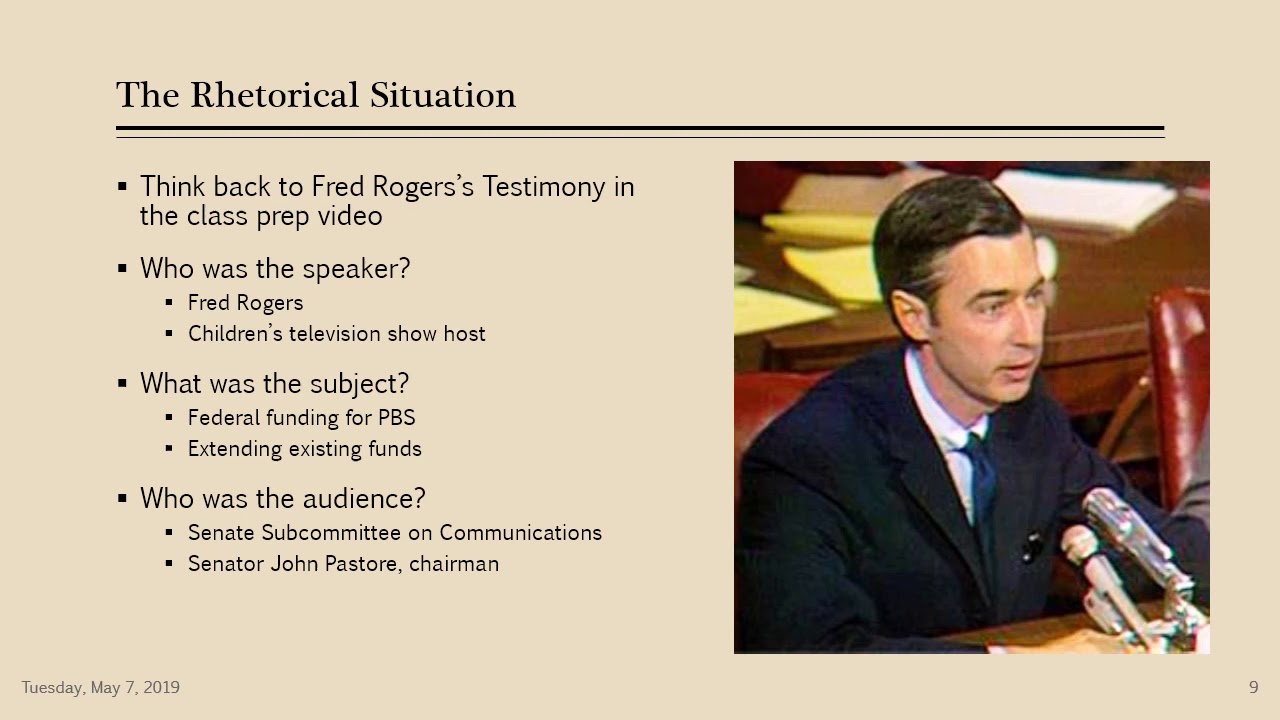
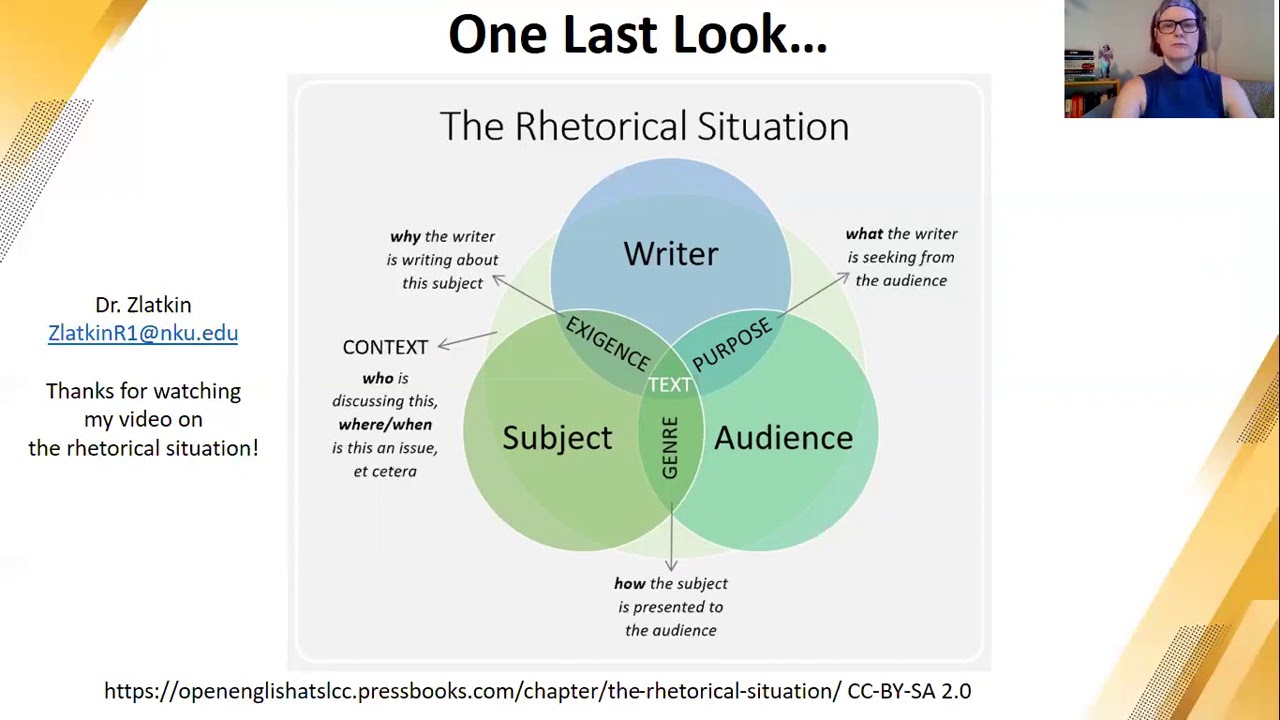
hey guys welcome back to coach hall writes in today's ap lang faq video we're going to be talking about the rhetorical situation so what is it and why do you need to know this in order to write a rhetorical analysis essay when you're looking at a non-fiction text like a speech a letter or even a longer work of nonfiction you're going to need to identify the rhetorical situation so you're going to start by identifying the writer or speaker and then the audience the context and exigence so context is like historical context and exigence is like
the catalyst what prompted the writer to write then you need to look for the purpose and the message now those tend to come in later because you might be able to infer the purpose or message before you've actually read it depending on what it is but as you read the passage those two things should become more clear so one thing to keep in mind is that there are two acronyms that are commonly used in ap line classes i know there are more than just these two but the two that i've heard the most are soapstone
and space cat now i used to teach soapstone i've moved over to space cat but to be perfectly honest they get you to the same place i just happen to like space cat a little bit better so if you're like what on earth are those things soapstone or soap if we're looking at the rhetorical situation stands for speaker occasion audience and purpose so occasion just means the context and the exigence it's sort of combined into the word occasion and then space stands for speaker purpose audience context and exigence it's one thing to be able to
list off the different elements of the rhetorical situation but it's another thing entirely to actually be able to analyze these elements effectively as you're writing a rhetorical analysis essay so i want to show you guys something that i made for my students over the summer my hope is that this will help them as they tackle rhetorical analysis so i'm sorry it's cut off a little bit but you can see that there are different tabs here this one is for the speaker so there are questions that you want to ask yourself now i have included these
in previous videos but i thought it would be good to put these all in one place so you want to ask yourself why is the speaker the right person to write this piece what are his or her credentials how would you characterize that person and then i've got some sentence frames over there on the right and also an example so if you're curious about how to analyze the speaker those are some things that you might consider now for purpose a lot of times students latch on to one purpose and then they repeat that phrasing throughout
the whole essay especially when you're writing a timed essay and there's a lot of pressure it can be really difficult to vary your verb choice and one of the things that you're going to want to do as you write an essay is make sure that you're using rhetorically accurate verbs you want to be very specific so this particular slide just shows different purposes and some synonyms for those purposes now there could be other purposes out there as well but these are some of the ones that are most common so now let's talk about the audience
some passages like a letter or a speech might have a very obvious audience but other times an article for instance might have a less obvious audience so you might have to think about who would be reading this particular publication or based on the subject of the article who would be interested in this but one thing to keep in mind is that you want to ask yourself what are the audience's needs desires and values and then you also want to ask yourself what is the relationship between the speaker and the audience because that can help you
understand some of the choices that the writer is making so these are just some things that i would suggest for the audience as you can see we've got some more sentence frames here and also an example so i know ap lang is not a history class however i do believe that there is a close relationship between english and history and so because of that it's important to understand the historical context because sometimes the historical context greatly influences what a writer writes or what a speaker says and so one thing you need to do is actually
read the prompt because the prompt is going to tell you when the speech was delivered or when the letter was written and so you need to know that take a second to ask yourself what do i know about this time period what was going on locally nationally or globally you don't have to be a history expert but chances are you might know something that's relevant if you do have a lot of background knowledge about a particular topic it is appropriate to weave it into your essay if it is relevant but don't go off on a
tangent because this is not a history lesson so now let's talk about the exigence a lot of times there are going to be some clues about the exigence in the prompt so for instance if it says that it is a commencement speech that means that it is a graduation speech presumably the person was invited to speak to the graduates if it is a eulogy it's a funeral speech so presumably the person had some sort of close relationship with the person who passed away and they've been asked to speak it could be a convention speech for
a political convention or it could be that they're writing a letter and maybe they are writing in response to a letter that they've already received so these are things that relate to the exigence the final component of the rhetorical situation is the message or the argument so what is the overall takeaway that the audience is supposed to have or what is the main point that the writer is trying to make now sometimes prompts are going to actually tell you the message of blank or the argument of blank but you don't want to just take the
words that are given in the prompt and repeat them over and over again that is a surface level message or a surface level argument you want to actually dig a little bit deeper so i've included several questions here on this slide these are things that you can ask yourself in order to hopefully not only understand the message better but also to develop your commentary if you are an aplan teacher and you would like your own copy of the slideshow that i showed in this video i will include a link to it as well as a
link to similar slideshows in the description box below if you found this video helpful please do me a huge favor and give the video a thumbs up also make sure that you're subscribed with your notifications turned on and until next time guys happy writing