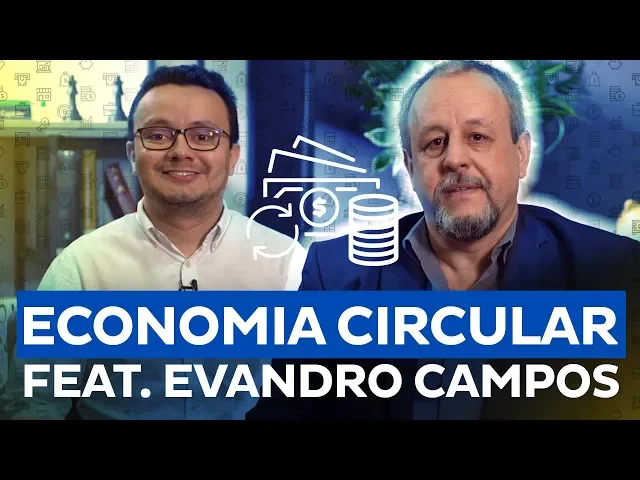
What's up, kids, this is another video of the channel EconomicaMENTE. Today we are going to say something very interesting: what is Circular Economy? If you want to know more about this concept, follow us!
Today we welcome here to talk about this concept our friend Evandro Campos, who is a student of the USP/Esalq MBA and will tell us a bit about the central idea linked to Circular Economy. Evandro, firstly, thank you for accepting the invitation and the challenge of explain here for those who follow us this idea of "Circular Economy". And to begin with, I wanted to ask you: What is Circular Economy?
What motivated this idea? And, more than that, in what is based our current model and how has the Circular Economy been changing that perception of our current model little by little? Thank you, Haroldo, for the opportunity.
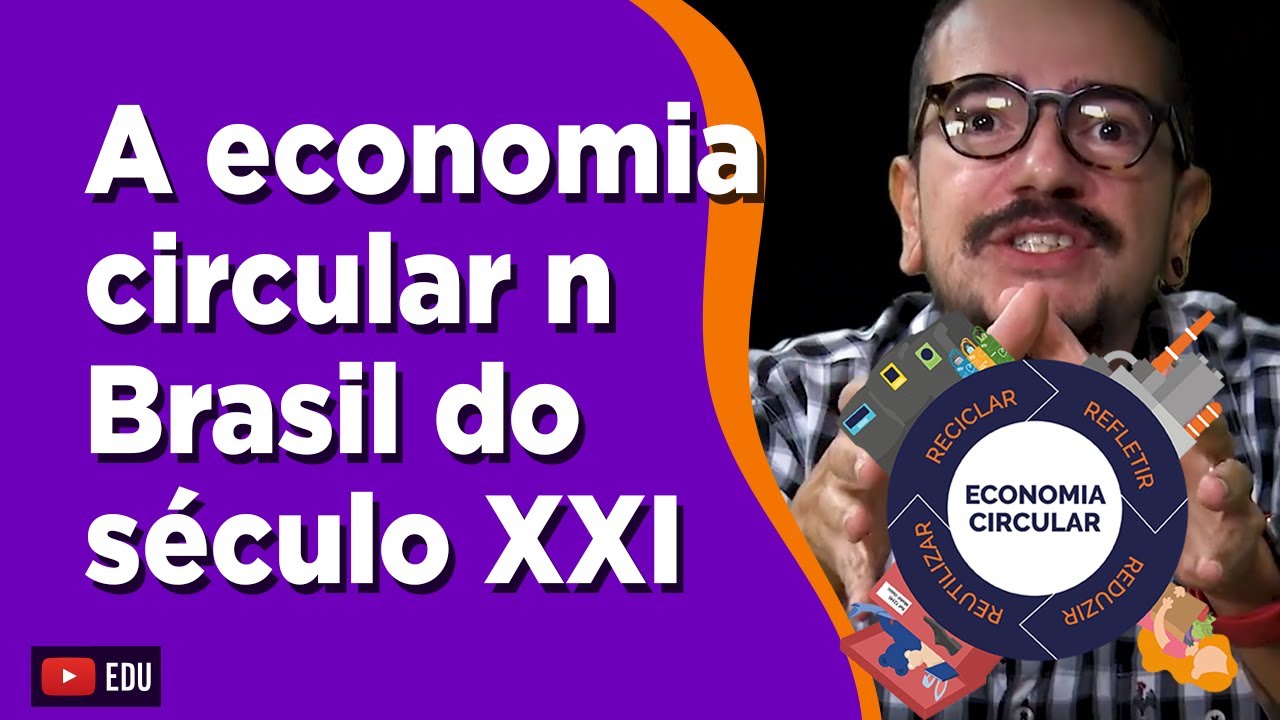
Circular Economy, in fact, is an economic system based, mainly, in the extraction, processing and disposal product and property after their useful life, then we have that try to minimize these wastes being generated, review the flow of production and also to objectify a little the extraction from the nature, because these inputs are finite products, . This idea of the Circular Economy, it changes a little the current model we have today, where you have the process of production, the process of consumption and discarding. When we look at this view of the Circular Economy, it changes somewhat the way of thinking in the sense of we reusing these residues.
Talk a little more to us about how is this idea, in fact, of a closed circle of consumption continuity. The idea is precisely that you don't have the disposal and use these products in new forms. So, you minimize the waste.
The correct way would be no waste, so we have to think from the reversal of the flow, how is the product designed and its use after period of the product. - It is very common who is watching, and even have doubts about Circular Economy, the person says: "Oh, he's talking about recycling. " This is not the central idea, so I want you to also explore a little bit: Is Circular Economy the same as recycling?
Or, if it is or is not, what are the differences and similarities between the concepts? No, recycling is not the same thing, it is an item that we can use to implement the Circular Economy. In general, it helps you optimize the next step.
Have you realized the following, that recycling is a central point, but, the Circular Economy, is based on much more than this recycling issue? And taking advantage of what we are talking about recycling, a point central is the following: how do we look at companies? And how are companies looking at these residues and, in fact, as this waste to be used for the creation of a new product, that is, closing this cycle?
Tell who's watching us a little bit about which are these new products or what has been generated from these residues. So the intention is that, you see, in the last years the world has been working at a much stronger pace then you have to be looking at that residue in the end. Companies today are aiming to certify both the part of the extraction of the input, the reutilization of it, because it uses the process of these companies, the transformation undergoes a design or a redesign of the entire flow used in that chain and the disposal part becomes the input for the following chain.
So, this has become like a Circular Economy, it is an economy where everyone wins, is what we call "win-win", not only one will win, but everyone will. We have to worry about the society, we have to think about waste disposal and redesign of all the flow used in the system. Quick break for water!
Evandro, what is very interesting of what you said and if the we insert a little of our vision of Economy here, that is, if people to think about the growth rate of the world's population and where it is concentrated, we're also automatically talking about increasing the volume of residues. That is, we are generating enormous pressure on the goods and on the consumption of materials of the planet itself in general and, when we talk about this, we are talking about Circular Economy also as the idea of mindset change, in the way of thinking about our current business model, not just the current business model, but how we use our products. Give an example to who is watching us, how can we can think about this change in the way we look at our products mainly on the perspective of the Circular Economy?
The interesting thing is that when we talk about Circular Economy it seems to us to be a recent issue, but it is not. There are schools of thought that develop the entire product design and this has no precise date, there wasn't a particular person who started it, but there was a current of growth from the late 1970s. There are several schools in the world that look at this and we have all this redesign of the products and we have as examples the aluminum coffee capsules, that we have today, you have all the benefit of eliminating the extraction of aluminum from the nature, then you already make use of this input and, in turn, part of the coffee is used to make the fertilizer of plant vases.
It is not an exquisite product, it is a product that is added to other inputs so that it has a quality, but you close the entire cycle of it, you minimize the extraction, you transform the internal process of the product and you eliminate or reduce the impact of the disposal of this product in the nature. Gabi said that your mother is at the bus station and wants to talk to you urgently and she does not know what it is for. My mother wants to come back, I have to request a Uber ride for her.
My mother lost the cell phone. Tell Gabi to request it. You can see that, in the end, Circular Economy is present in your daily life.
Evandro, let's tease here about a law that has spun a discussion, especially in Rio de Janeiro, about the prohibition of the plastic straw. What is the correlation of this idea of the ban on the plastic straw or, if we think about it, the cigarette butt, anyway, where is this in the context of the Circular Economy? We can cite as an example the day of cleaning we had in the oceans, on the beaches, where among the products found in nature, we have mainly the aforementioned straws and also, curiously, cigarette butt has become an item that has occurred especially on the beaches, and this comes from the inconvenient disposal done in nature, and that comes back to a term, I always play with everyone, that is the primordial word in the world: education.
So, look how interesting: as I put it, Circular Economy goes through a change of the way of thinking, and this change of thinking depends on education and a point I want to instigate in you, Evandro, and I'm instigating this because Evandro, besides being an expert in this area, has sought to take these concepts precisely to the basis, that is, the schools. So, I wanted you to tell a bit of your experience in bringing these concepts of education and mainly on the central ideas of Circular Economy for schools and how do can we, from education, from schools, start to change our way of using, exploring and even disposal of residues. This idea of mine came from an tip from a coworker because she introduced me the subject of Circular Economy.
As I have two teenagers at home, I started to think a little about how to pass on this idea beforehand for students, not only the matter of sustainability, environment, but the concept itself. And, talking to USP São Carlos teachers I noticed that the students get there without this knowledge, so it takes you a while to develop this is in their minds, and we can take a lot of advantage well before university. Getting there, many times, with concepts and ideas to be explored and to be used, so this brings a benefit, a speed in product development in the future.
So my idea came out of it. What we perceive today is the impact that this has generated in nature, so we have to think of a way to extract this impact in a benefit of a product, so when we talk about the straws, today we have in the world five rivers that feed all straws, almost, that appear in the oceans and Brazil is one of them. So the impact sometimes of a straw is not only in the matter of filth, is the environmental impact for animals that are involved in this biosphere, is the question of beach cleaning and also the reuse of this plastic as an input to a chain.
A point that is cool and would be interesting to put here, Evandro, for who is watching us now, that is watching a video of Economy, how do I get tangible, that is, take this idea of Circular Economy into the home of who is watching us. What are practical examples of actions they can take on a daily basis and that, in fact, are looking inward: "Ah, that is an effective action of Circular Economy. " - We can cite as an example the matter of condos, right?
Today a large part of the population live in condos, so you can correctly separate the waste we have at home in the organic part of the waste generated, from organic waste you can make a composting if you feel like it. Or we can simply separate the plastic materials, the part card, paper, newspaper, and give a correct destination for this disposal. Not just separate and the condo throw it in the trash, right?
So it's no use getting in the separate dump. This product will be joined with others and will not have a correct destination. So you have to check where this product is being sent and being captured by a new process.
What is cool is that we speak here of a concept that can be applied in your daily life. And, furthermore, Evandro, how can the person, or who is watching us, look for other examples, mainly about industrial area? What other examples we have mainly in the area of industrial processing?
- We can cite as an example, here, the matter of reuse of oil discarded by the food industries. Today there are chemicals that allow it to be added to this discarded oil and make possible another use of this leftover process. Another example we have today very present in our day to day is the matter of plastic bags.
When we go to the supermarket, We see biodegradable bag. In fact, it is biodegradable, but its destination has to be in a correct way, regardless of whether we put organic garbage or a recyclable product. It has to be treated differently, it can't go to a dump.
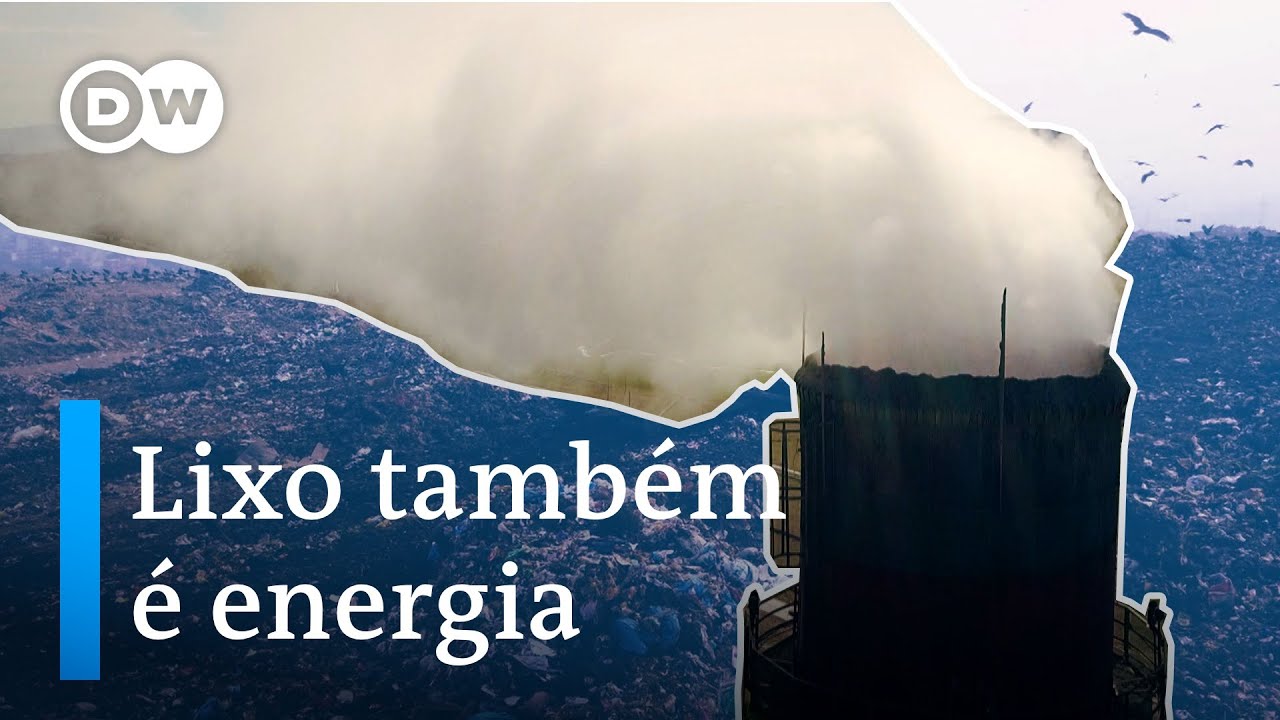
If it goes to a dump, due to the lack of oxygen, it is no longer biodegradable, then this disposal has to be done in a correct way. Talking about dump, one thing you may not know, but that is very common, your trash can become energy or fuel. Let's look a little, too, Evandro, at these matters.
Explain to those who are watching us what is this idea of producing energy, or even fuel, from the trash. Yeah, the garbage, in its composition, organic waste, mainly, produces gas. And this gas can be used in a way to make heating or some other destination.
. . So you have to have all the treatment of that garbage in a specific terrain that makes it possible to capture, store, and transport that gas to a more correct destination, right?
So we do have this use. - To close this video, Evandro, I wanted you to put it here in a quite simple way what are the general impacts that we can see from this increase of residues? Be what we lived in the past of the overload on the planet, or even of the migratory movements that we are going to see.
So I wanted you to put this to us to wrap up, this central idea of Circular Economy, precisely Circular Economy, this idea of closing the cycle, for you to conclude our video today. - Yeah, that matter is quite interesting because we have a date that year, on the first of August. It is not to be celebrated, but to be well observed, it is the day of the overload that occurred on the planet.
So, on the first of August we reached a level of consumption of our inputs that would be for the year in August. That is, we are consuming much more than we can regenerate, this is a very strong matter, because, if there is an increase, at a certain moment there is going to lack input for everyone, right? So, that has an effect, mainly climatic effects, strongly associated with this, right?
And, in recent years, we have noticed the beginning of a population migration due to these effects. There is an FAU study in which they imagine that in 2050 there will be 143 million people migrating around the world due to climate change and there will be a concentration in Asia, in Africa, and especially in Latin America. Kids, you've realized the following: when we are looking at Circular Economy, we are also talking about a new model about the way we look from production to the final destination of residues within Economy.
Therefore this also goes through a change of mindset, the way we see the system of production and consumption. So, for us to wrap up too, there is a very strong principle in economics, that when a person does the best for you, indirectly they're doing the best for society as a whole. This is an economic principle that we are going to talk about more here, because it impacts directly on our lives and, more than this, for us to wrap this video up, see that Economy is also linked to the central pillar, which is Sustainability, and this is an idea brought within the concept of Circular Economy.
Thank you guys! Evandro, thanks for the participation, it was a pleasure. - It was my pleasure, thank you!
I hope you join us, like and send your criticisms and suggestions for our channel, thanks!