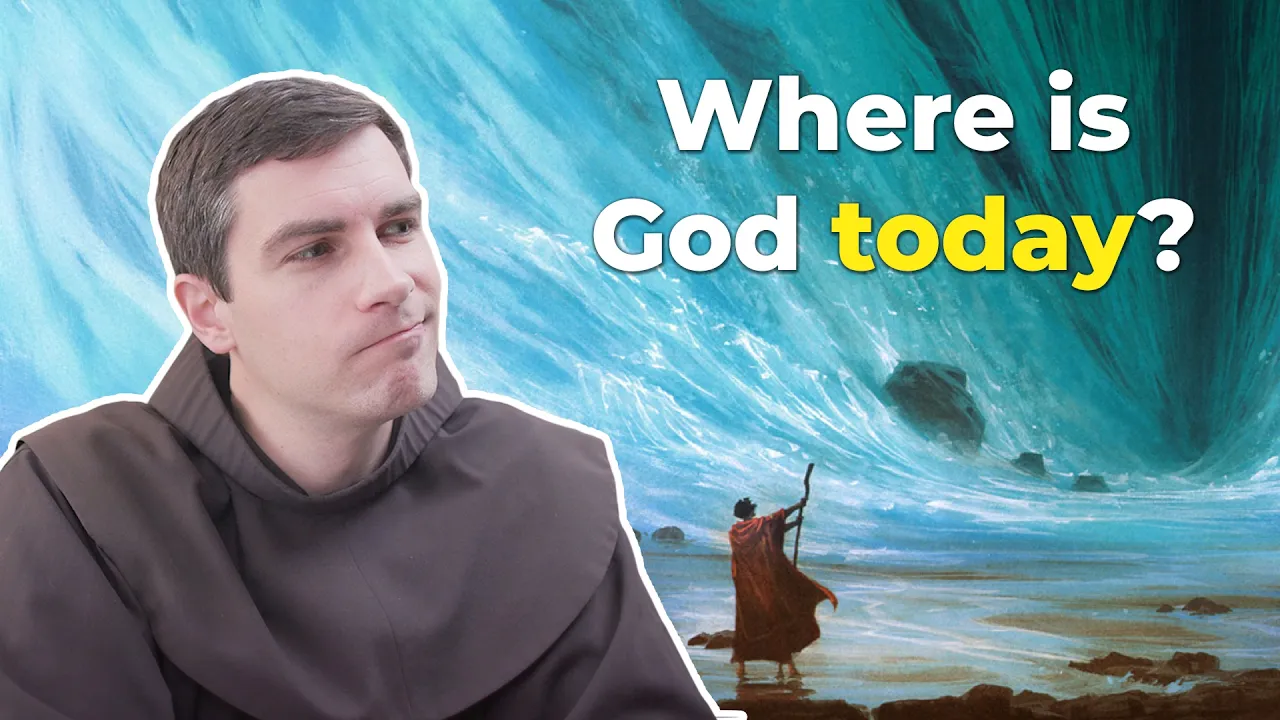
Why doesn’t God perform miracles like he did before? I think there are a lot of great answers, but the best came to me while watching Star Wars, Jurassic Park, and SpongeBob. Stick with me for a second.
In the Old Testament, God was on fire. Mostly as a matter of speech but you know sometimes literally as well. On so many occasions, God did something extraordinary that no one had ever seen before or could explain with human reason.
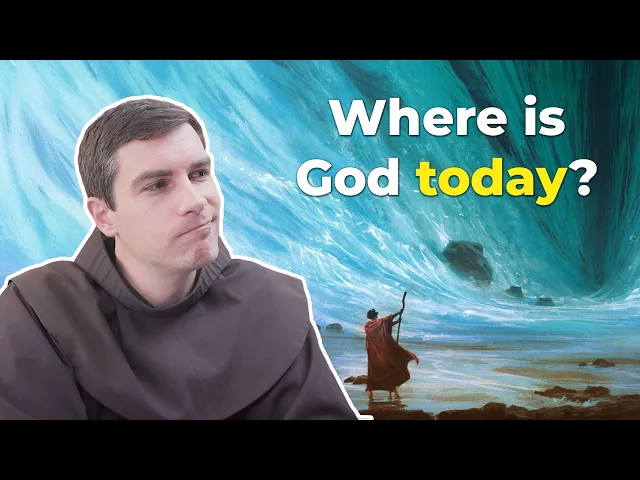
We’re talking fire and brimstone raining down from heaven, a river turning into blood, the sun standing still so that the Israelites could keep battling, feeding hundreds of people with only 20 loaves of bread, the Red Sea parting to help the Hebrew people escape, and people being miraculously cured of diseases, to name just a few. It seemed that whenever the people were in trouble, whenever an impossible situation was before them, God was there, clearing their path and making his presence known. Which, I guess you could say, raises an uncomfortable question for us as Christians: Why doesn’t God perform miracles today like he did before?
For many, this is a point of great contention, causing people to doubt faith itself. Without clear signs, they begin to wonder if God is incapable of miracles, if he’s unwilling to care for us anymore, or worst of all, if his absence now proves that the stories of old were just exaggerations and there was never a God to begin with. While I think there are any number of good explanations for this which you can pause and read for yourself, I want to think a little outside the box for a second and present what I think is the most practical answer to the question, a lesson I learned from, of all places, movies.
Like this scene, from the original Star Wars. Or this one, from Jurassic Park. Or this all-time classic from the Spongebob movie.
In each of these scenes, the protagonists are absolutely stuck in impossible situations with no hope of survival. They’ve exhausted their abilities and are about to give up hope. Until, out of nowhere, a sudden, improbable, unexpected force comes from outside of the scene to resolve everything without the need for the protagonist to do anything.
Han Solo comes out of nowhere to shoot down the tie fighter. The T-Rex appears for no logical reason inside of the building to attack the velociraptors. David Hasselhoff shows up on the beach, turns himself into a boat, and then shoots Spongebob and Patrick with his pecs back home just in the nick of time.
Like I said, all-time classic. What we see in each of these scenes is a narrative device called deus ex machina, literally “God in the Machine. ” In ancient Greek plays, characters representing the gods, sometimes suspended from above the stage, would suddenly intervene into the lives of the protagonists, and bring resolution an issue.
Today, the trope continues to be used even if literal gods are nowhere to be seen. Out of nowhere, because of nothing that protagonist did or could have ever done on their own, salvation comes to them at the last moment. You can see why a device like this would be so common in storytelling.
Moments like these provide a rush of excitement. Pushed to the point of despair, the sudden moment of salvation brings a whiplash of emotions, often causing movie goers to applaud with joy and relief. It’s a thrilling and immediately gratifying narrative trope.
And on the one hand, it’s a wonderful call to faith. There are so many things that are outside of our control, so many situations where God is the only one who can save us. Reminding ourselves that we are not the sole authors of our own life, that we rely on God to intervene, can be a wonderful addition to any movie.
On the other hand… it can be kind of lazy writing and wholly unsatisfying if you think about it for a minute. In many cases, writers use this trope because they’ve gotten to the end of the story and don’t know how to end it. Oh no, it looks like I’ve written myself into a corner with no logical conclusion… no worries, I’ll just have this random thing that had no backstory or explanation come in at the end to fix everything instantly.
Yay! Because of this, the characters are often left feeling a bit unfinished, and their victory unearned. While it’s true that they get a happy ending, they did nothing to bring about that ending themselves.
It wasn’t their decision, their intuition, their heroism that saved the day, it was something else that took care of everything while they sat and watched. As a result, the viewer is often left a bit unsatisfied, and ultimately, unmotivated. The reason that we go to movies is to hear compelling stories, stories that resonate with our lives, that inspire us, that speak some truth to us that ultimately changes us.
As I said before, there’s something important about trusting in God to intervene on our behalf and it’s wonderful to see miracles unfold, but that can’t be the only lesson God wants us to learn, can it? To always be passive, waiting for things to happen TO us rather than using our agency to do something ABOUT our problems, seems incomplete. The far more compelling stories are the ones in which the protagonist overcomes an obstacle, learns something important, changes the world around them.
It may be with the HELP of others, for sure, but ultimately, there is at least SOME sense of agency in them that they contributed to their happy ending. We want our protagonists to be a part of the story, not just passive receivers of it. This is what we expect from good movies, and I think there is something revelatory about our faith as well.
I think God wants the same thing for us in faith. In a time when the people were lost and stiff-necked, wandering in the darkness, we needed God to do nearly everything for us. We needed the extraordinary spectacles, the other-worldly signs, the unexplained miracles to get our attention and take care of all of our problems.
How could God have expected the people of ancient Israel to fix their own problems? It just wasn’t possible, and so God did it all. But I don’t think that we’re in the same situation.
We are people who have encountered the living God in Jesus. We know of the ultimate mysteries of the Incarnation and the Resurrection. Most of all, we have been adopted by God in baptism, filled with the Holy Spirit in confirmation, and have become united with Jesus Christ through the Eucharist.
We are a people who have received the complete deposit of faith—knowing where we come from and where we’re going. The Holy Spirit not only dwells in us but is embodied in the life and teaching of the Church. We are not a lost and stiff-necked people, wandering in the darkness needing God to do everything for us.
This is not what we want and it is not what God wants for us. I believe that it is time not to passively wait for God to take care of everything, but for us to actively work WITH God, at his command and on his behalf. We may not be able to bring about our own salvation or conquer death on our own—the big things are still left to him—but what is stopping us from using the gifts of the Spirit already within us to end world hunger, to build just societies, to teach the faith to all nations, to be agents of faith, hope, and love to everyone we meet?
What I’m suggesting is not that we simply do everything on our own, that we be the authors of our own lives or gods in ourselves—this is not some new age self-help message. What I’m saying is that maybe the biggest reason that God doesn’t perform extraordinary miracles for us anymore is because he knows that it’s much more meaningful if we play a part in it ourselves, and so has given us everything we need to accomplish it with him and is waiting for us to do our part. Now, does this mean that God never intervenes, or that intervention is necessarily bad?
Of course not. He has and continues to perform miracles all around us. The point I’m making is simply that God doesn’t want intervention to replace conversion, for us to do nothing but passively wait for his miracle.
He wants to accomplish extraordinary things through us, so that we won’t just receive faith, we’ll live it as well.