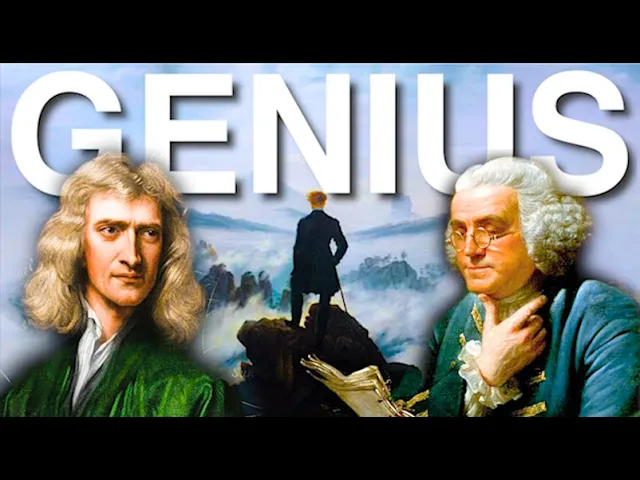
a polymath has wide-ranging knowledge and learning Think of Leonardo da Vinci Ben Franklin and Isaac Newton Today we set out to answer three key questions What made these minds so special Are there true polymaths alive today And perhaps most importantly can we become polymaths ourselves If you enjoy today's video subscribe to my newsletter in the description And without further ado let's get onto the video I wish to begin with a case study of a man named Sabine Bearing Gould who embodies a trait found commonly in the great polymaths Take this excerpt from the magazine The
Weak Baring Gould seems to have been the sort of person who really did go throughout his life without ever having an unwritten thought He wrote compulsively with an almost inhuman energy sitting down to work every day and not leaving off until he felt like he had finished His daily quota was 3,000 words When he had completed a book he would make his own copy and send it off to the publishers Within a week he'd be working on something else It was this need to write that seems to have been the driving force behind his reading
as much as his insatiable curiosity I wish now to provide some history and context around the existing scholarship This next section is largely taken from a fantastic essay by Peter Burke Looking back from our own time the 17th century appears to have been a golden age of polymaths with intellectual giants vividly described at the time as monsters of aryudition We remember Newton for instance who not only made well-known contributions to mathematics optics and mechanics but also studied and wrote about alchemy theology and chronology Or Newton's rival in the field of calculus Libnets who is now
remembered as a philosopher but also contributed to the knowledge of history languages law mathematics and theology But in this great 17th century an intractable problem was beginning to emerge Complaints about what we would call information overload and about the fragmentation of knowledge multiplied For example Robert Burton made the point in dramatic fashion when in 1621 he wrote about the vast chaos and confusion of books We were oppressed with them Our eyes ache with reading Our fingers are turning Another well-known complaint came from the French librarian Adrien Balle who feared the return of barbarism as a
result of the multitude of books which grows every day in prodigus fashion Everyone felt that so many books made it increasingly difficult to identify what was actually worth reading Even the widely read Libnets wrote of the horrible heap of books that is constantly increasing Commenius wrote "Metaphysicians sing to themselves alone Natural philosophers chant their own praises Astronomers dance by themselves Ethical thinkers make their laws for themselves Politicians lay their own foundations Mathematicians rejoice over their own triumphs And theologians rule for their own benefit Kmenius dreamed of reuniting the fragments into what he called pansophia a
universal wisdom that would lead to the reform of the world Moving our way through history we see that by the early 19th century a second crisis of knowledge was becoming visible As scientific expeditions brought more information experiments became more numerous and books became cheaper Information anxiety revived the specialization we see in universities especially since the 19th century is a kind of defense mechanism against this great deluge of information We surely need not only a history but also a psychology and sociology of polymaths Polymaths obviously need an overdose of curiosity a formidable memory and both the
ability and the desire to work long hours They are often competitive driven to succeed They are unable to concentrate their attention a capacity that observers often describe in a negative manner as absent-mindedness Polymaths also have a gift for drawing analogies seeing connections between apparently disperate fields as in the case of Thomas Young who studied tides and imagined light as waves Polymaths also must find a social niche that will give them the leisure to study think and write Religious orders have often provided polymaths with such a niche Feejo was a Benedictine monk while Kercher was a
Jesuit Other polymaths such as Buffoon inherited wealth Humbled for instance was an independent scholar whose wealth gave him not only the leisure but also the opportunity to make the famous expedition to South America where he made most of his discoveries I began to think of the world today and wondered whether polymaths could survive A polymath today more so than ever must primarily focus on the mechanisms that give rise to the world As we've seen the number of things to know are so vast that really no one can ever hope to know all the different types
of minerals fila debt instruments The only reasonable path would be to try to understand the underlying structures that give rise to the wide variety of products Someone who I think embodies this idea well is Daniel Smtenberger who is the most impressive modern polymath I've came across I found that he spends a lot of time talking about things like game theory arms races and collective action problems which he sees as the deeper social structures that can help explain a lot of our largest problems including climate change technology and weapons advancements our monetary system and many others
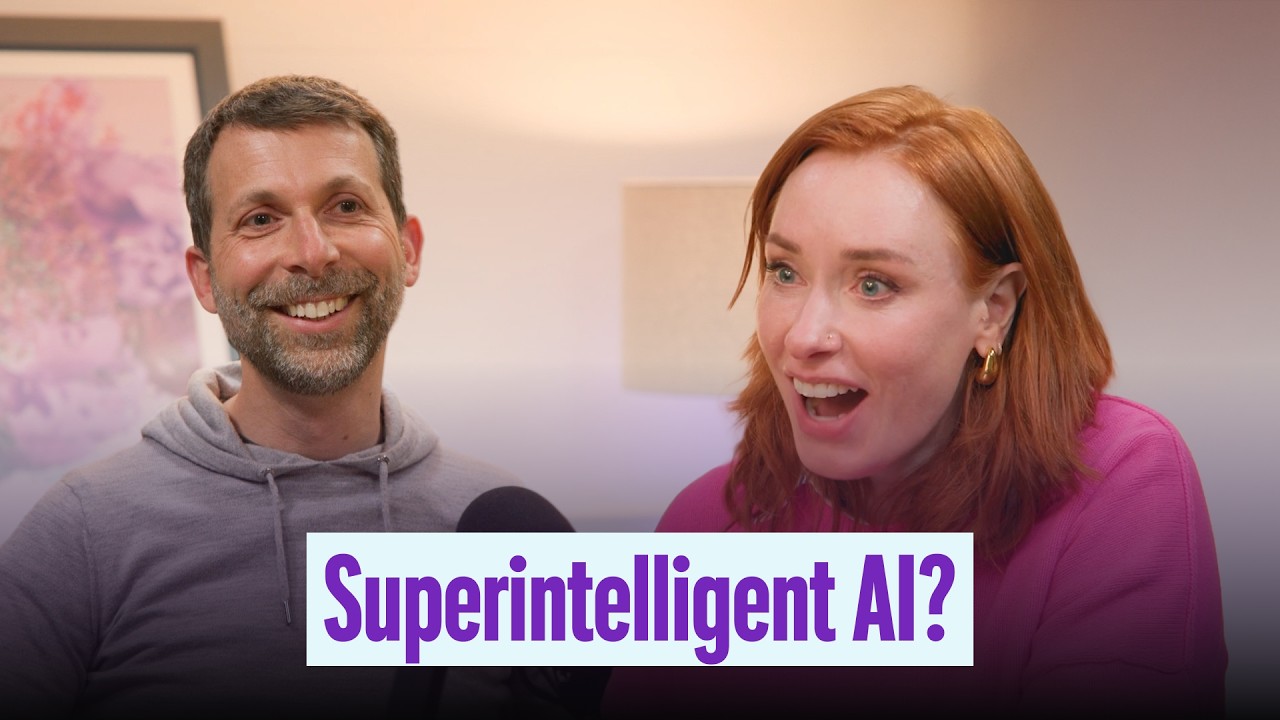
Another case study I want to examine is a man named Yosha Bach Yoshabach is the only other person I've seen being even close to rivaling Daniel in his polymathic ability Yosha is primarily a computer scientist but uses his understanding of how machines learn to understand how other intelligent systems think He argues that consciousness emerges from an information processing system capable of creating internal models of itself and the world He frequently engages in debates on the nature of self arguing that what we consider the self is an illusion a mental model constructed by the brain for
practical purposes And in his Psychology Today article I found the closing remarks from Yosha just to be so strange and so fascinating The article writes "Sentient machines are the baddies in science fiction But Bach says that what comes after them should really worry us Consciousness he thinks is a passing phase in the history of the universe Hyper advanced AIs will no longer have any use for it They will have learned all there is to learn Consciousness is a model of conflicts that you need to resolve with your attention Box says And once you can do
stuff automatically optimally you don't have to be conscious anymore The worst part won't be our own uncertain fate in the world of machines It's that a universe without consciousness will become a relentless utilitarian place I think it will be very boring Boach says the machines will make the trains run on time but see no point to self-expression no art science and probably no squirrels says Boach This idea that the universe creates the mirror that can reflect for an instant of its existence that is really an accident It must be admitted that polymaths come at the
risk of being superficial From the 17th century onwards some wide-ranging scholars have been described as charlatans A second risk run by Polymass is what we call Leonardo syndrome leaving projects unfinished because new ones seem so enticing This was the case for Libets for instance as it was for Thomas Young to whom a colleague once wrote "I have universal regret that your versatility so widely engaged You were unable to press on with your discoveries and bring them to the pitch of perfection." Going back to our original three questions what made these minds special Are there true
polymaths alive today And can we become polymaths ourselves Hopefully through this video I've provided some light and some context to help you figure out the answers to those questions So what do I think I think polymaths are essential for the future Not despite their scattered interests but because of them What about you Do you think online learning and the accessibility of knowledge will actually create more polymaths Or do you think that we're holding polymaths to too high a pedestal and that they don't deserve all this high praise Please share your thoughts in the comments below
and I hope to see you again next time Damn Max