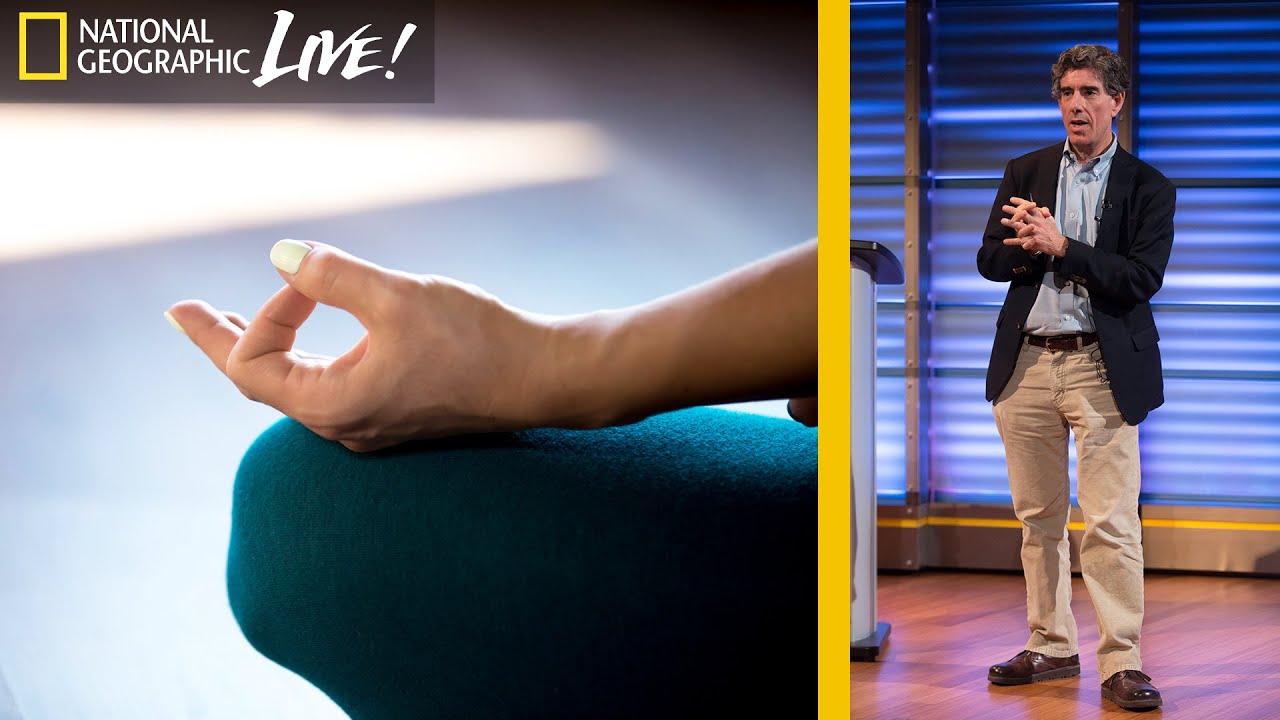
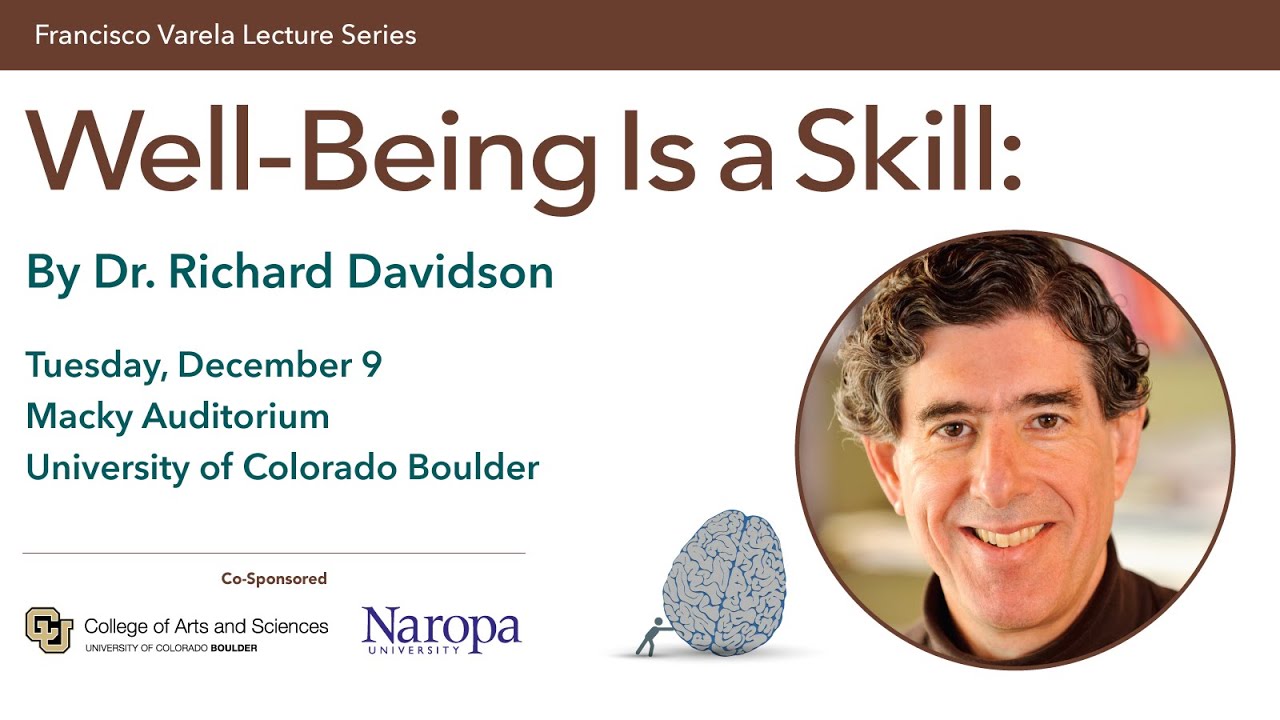
I was a product of the 60s and I had a very idealistic view of wanting to change the world and I still do richard davidson is a well renowned neuroscientist but i think of him as an explorer mapping our brains incredible possibilities and leading the way to a deeper scientific understanding of everything from memories to happiness I had an intuition that the human mind was kind of the next scientific frontier and that if there were some way to cultivate more positive minds we can change the world for the better I began with most of my
focus on the negative side of things and then when I met the Dalai Lama in 1992 he asked me why have you been using the tools of modern neuroscience just to study anxiety and stress and fear and depression why can't you use those same tools to study kindness and compassion and it was like what just the total wake-up call for me and that is in fact what we've been doing since that critical moment one of the first ways in which we decided to begin with something that His Holiness encouraged us to do which is to
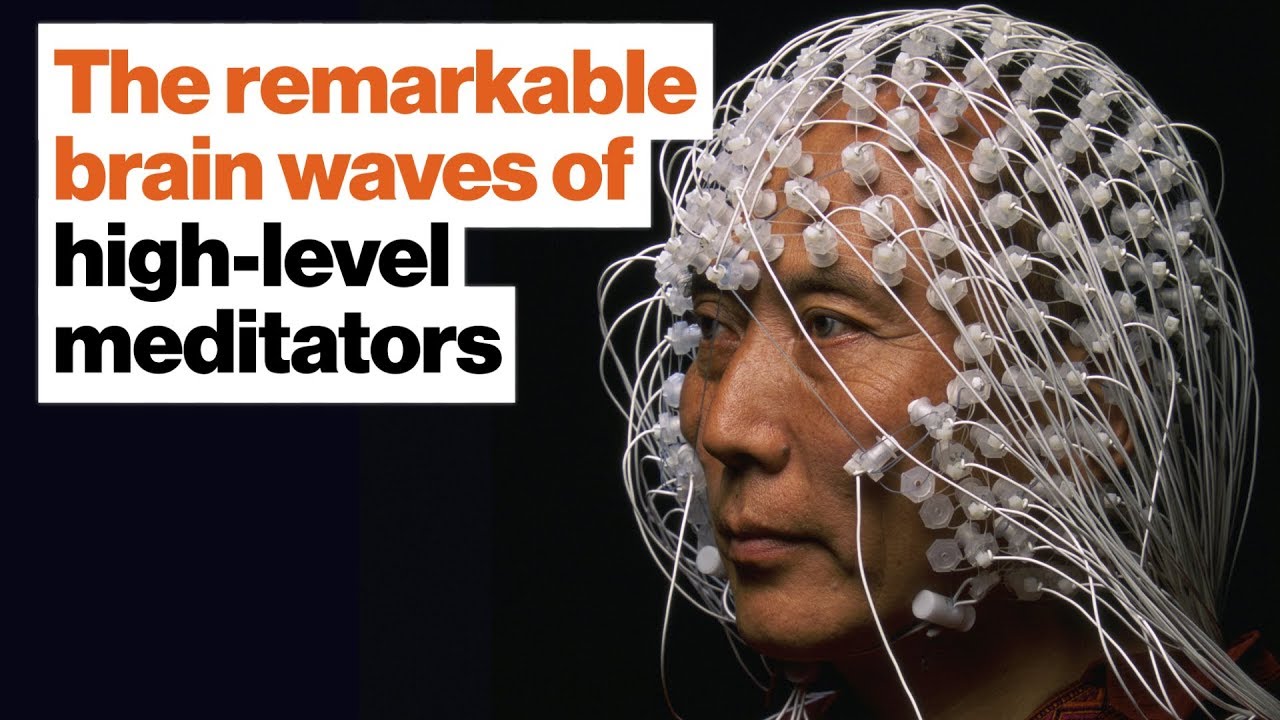
test individuals who spent years training their mind and these people have spent on average about thirty four thousand hours of lifetime practice and so in that particular experiment we were looking for signs in brain electrical signals to ascertain whether those signals when individuals are actually meditating showed anything unusual and what we found was remarkable gamma is a brain rhythm that is occurring at roughly 40 cycles per second and in the brains of the advanced Tibetan meditators we found the presence of these gamma oscillations that went on for tens of minutes and their very high amplitude
the brains were also significantly different when they weren't meditating and if these differences reflect the enduring traces if you will and it gives us some clue that in fact the baseline state of these individuals is transformed as a consequence of their practice around here we talk about healthy minds and well-being as skills all of the scientific research is leading inevitably to this conclusion these simple ancient practices and that were developed 2,500 years ago are now being tracked with instruments that have just become available in human history for the first time we use MRI to analyze
the structure of the brain the function of the brain we can actually see changes in subtle blood flow to different regions of the brain and so there is undeniable evidence that practices to cultivate well-being influence the functioning of the brain most of the time our brains are being shaped unwittingly the invitation in all of this work is that we can actually take more responsibility for the shaping of our own brains by engaging in healthy habits of mind one of the important constituents of well-being we call resilience we can actually track the brain circuits that are
responsible for this we have shown that we can actually influence these brain circuits through training then we can take someone who was not so resilient and improve their results and they actually show improvements in their well-being I think that one of the important insights around work is that the mind can be transformed that we all are born with a capability for change and that the seeds of living a life that is compassionate that's kind that's generous is within each of us and if we all believe that I am absolutely convinced from world would be a
much better and happier place you