with thousands of years of Maritime history It is believed that there could be as many as 3 million undiscovered shipwrecks scattered across the ocean floor each with their unique story join me for today's video we're exploring 15 of the most mysterious shipwrecks in the world starting with number 15 the SS Central America the SS Central America often called the ship of gold was a 280 ft or 85 M side wheel steamer that played a significant role in the maritime history of the US during the mid 19th century built in 1852 and originally named the SS
George law The Vessel was designed to transport passengers and cargo between the east coast and Central America particularly during the California Gold Rush its main route ran between New York City and the Panama ismith where passengers would then travel Overland to the Pacific coast and continue on to California the SS Central America though would go on to become famous due to its sinking in September 1857 a disaster that resulted in the loss of a huge quantity of gold the ship set sail from Aspen Wall which is now in Cologne in Panama on September 3rd 1857
carrying a cargo of about 3 tons of gold from the California mines on September 9th The Vessel encountered a hurricane off the coast of the Carolinas and despite the crew's best efforts the ship's engines failed and the SS Central America began taking on water over the next 2 days the situ situation worsened and the ship ultimately sank on September the 12th the sinking had significant economic repercussions contributing to the Panic of 1857 a financial crisis that saw the collapse of several Banks and businesses in the United States the loss of the gold shipment valued at
approximately $2 million at the time or about $300 million today severely impacted the financial stability of the nation for over a century the location of the wreck of the SS Central America was a with it lying more than 7,000 ft or 2100 M below the surface in 1988 however the Shipwreck was located by a team led by Tommy Thompson using advanced technology and deep sea submersibles and they managed to recover a huge Trove of treasure including gold coins bars and dust number 14 the endurance the endurance was a polar exploration vessel famously used for sir
Ernest shackleton's Imperial trans Antarctic expedition originally launched in 1912 in Norway and named Polaris the three-masted barkantine was constructed by the renowned ship Builder chrisan Jacobson in sandord designed specifically for Arctic hunting Polaris was strong and durable featuring a reinforced Hull capable of withstanding the harsh ice conditions in 1914 Shackleton acquired the ship renamed her endurance and prepared for his ambitious Expedition aimed at making the first land Crossing of Antarctica from the wed sea to the Ross sea the endurance set sail from Plymouth England on August 8th 1914 and reached the wed Sea by January
of the following year the Expedition soon encountered severe ice conditions though and by January 18th endurance became trapped in the pack ice despite Shackleton and his crew's efforts to free the ship the ice held it fast effectively turning it into a winter camp for the 28 men on board for 10 months the endurance drifted with the ice moving slowly northward Shackleton and his men adapted to their predicament maintaining morale and preparing for the possibility of abandoning the ship by October 27th the pressure of the ice began to crush the ship's Hull and Shackleton ordered the
crew to abandon the endurance the men salvaged supplies and lifeboats before the ship finally sank on November 21st amazingly the entire crew of the endurance was eventually rescued but the whereabouts of the ship became a mystery that was until early 2022 when an expedition finally founded at a depth of almost 10,000 ft or 3,000 M because of its location it'll probably never be removed so what remains on the vessel will likely remain a mystery forever number 13 the Hunley the Hunley was a submarine that was developed during the American Civil War and became the first
known to have sunk an enemy vessel constructed in 1863 it was the product of a Confederate plan to break the union blockade designed by Horus Lawson Hunley James mclintoch and Baxter Watson it was hand powerered with a crew of eight operating a crankshaft that turned the vessel's propeller the Hunley was 40 ft or 12 M long shaped like a cylinder with tapered ends and had a diameter of about 4T or 1.2 M making it cramped and challenging to maneuver the submarine's design featured Bast tanks that could be flooded or pumped out to control buoyancy and
it was equipped with diving planes for emerging and surfacing its primary weapon was a spar torpedo an explosive device mounted on a long pole extending from the bow this torpedo was intended to be rammed into the hull of an enemy ship and then detonated the hunley's operational history was though fraught with difficulties during testing and training exercises the submarine sank twice but they continued to recover it fix it and send it back out into service it was on the night of February 17th 1864 that the Hunley went out on its most famous Mission and managed
to Ram its Spar torpedo into the hull of the honic causing a massive explosion that sank the warship the Hunley didn't survive the mission though as shortly after signaling its success it disappeared the exact cause of its sinking remains a subject of debate among historians and researchers with theories ranging from damage caused by the torpedo explosion to Accidental flooding or mechanical failure the Hunley lay undiscovered on the ocean floor for over a century until it was found in 1995 and raised in 2000 its recovery provided valuable insights into Civil War era technology and submarine design
but even with the wreckage it remains a mystery why it actually sank number 12 the Andre adoria the andread dorum was an Italian luxury ocean liner that was built by onaldo shipyards in Genoa and launched on June 16th 1951 as one of the most advanced and luxurious liners of her time she measured 700 ft or 213 m in length with a beam of 90 ft or 27 M and a gross tonnage of just over 29,000 tons the ship featured five lavish dining rooms three swimming pools and various other features that made it the height of
opulence and comfort with interiors that were decorated with Italian art making the andread DOR a floating Showcase of Italian culture and design on July 25th 195 6 the Andre adoria was on the final leg of a journey from Genoa to New York City when tragedy struck late in the evening in a dense fog off the coast of Nantucket Massachusetts The Vessel collided with the MS Stockholm a Swedish passenger liner the Stockholm's reinforced icebreaking bow sliced into the starboard side of the Andre Ador creating a massive gash and compromising several water tie compartments this breach caused
the ship to list severely to starboard despite the severity of the Collision the evacuation of the andread DOR was relatively orderly the crew and passengers faced significant challenges due to the ship's heavy list which made many lifeboats unusable but the response from nearby ships including the IL def France and the Stockholm itself was quick and the passengers and crew were soon evacuated to safety the Andre Ador eventually sank the following morning and it became a mystery how such an advanced ship managed to get itself into this situation the subsequent inquiries highlighted issues such as radar
use ship speed in fog and the design of watertight compartments but no single Factor was blamed for the incident today the wreck lies in around 240 ft or 73 M of water and has become a popular albeit dangerous site for divers the ship's deteriorating structure and strong currents have made it one of the most challenging and hazardous wreck Dives in the world often referred to as the Mount Everest of diving number 11 the RMS Carpathia the RMS Carpathia which was a transatlantic passenger steam ship became famous for being one of the first to respond to
the sinking of the RMS Titanic in 1912 but would later go on to meet a watery end itself built in Newcastle upon th in England the carpathio was launched on August 6th 1902 and was initially designed for immigrant traffic from Eastern Europe to the United States offering cost-effective accommodations compared to kunard more luxurious liners measuring 558 ft or 170 m in length with a beam of 64 ft or almost 20 M and a gross tonnage of over 13,000 tons it was powered by twin quadruple expansion steam engines which drove twin screws enabling a maximum speed
of around 14 knots amazingly the ship and crew were able to navigate the ice fields of the North Atlantic to respond to Titanic's distress call and were on the scene of the disaster within just 2 hours helping to save hundreds of people after the rescue the Carpathia was continuing its commercial service until the outbreak of World War I and during the war was requisitioned by the British government for use as a troop ship on July 17th 1918 while sailing in a convoy from Liverpool to Boston the carpathio was struck by three Torpedoes fired from the
German submarine u55 the attacks caused the ship to sink off the coast of Ireland and was for a long time completely lost it was for decades a mystery as to how the ship had been lost but some of the questions were answered by its rediscovery in 1999 artifacts that were found on board helped to understand what had happened to the Carpathia but also shed further light on the events that night the Titanic sank establishing the vessel's place in Maritime history number 10 the USS monitor the USS monitor was an ironclad warship of the American Civil
War that revolutionized Naval Warfare with its innovative design commissioned in 1861 and launched on January 30th 1862 the monitor was the brainchild of Swedish American engineer John Ericson its construction marked a significant departure from traditional wooden warships focusing more on iron armor and advanced engineering the monitor's most distinctive feature was its revolving turret which housed two powerful 11-in dalren guns this turret could rotate 360° allowing the monitor to fire in any direction without repositioning the entire ship an innovation that drastically improved the vessel's combat Effectiveness and set a new standard for Naval artillery the vessel's
overall design was also groundbreaking it had a low free board meaning its deck was just above the water line which minimized its Target profile and the hull was made almost entirely of iron providing significant protection against enemy fire the monitor measured 179 ft or just under 55 m in length and crucially had a draft of only 10 1/2 ft or just over 3 m making it suitable for operations in Shallow Waters the monitor's first and most famous engagement was the Battle of Hampton Roads on March 9th 1862 this Clash saw the monitor face off against
the CSS Virginia another ironclad warship and was an important battle because it was the first meeting in combat of Ironclad warships signaling the end of the era of wooden War warships the Monitor and the Virginia fought to a draw but the monitor's performance demonstrated the superiority of Ironclad technology and secured its place in Naval History despite the Innovative design the monitor had limitations its low free board made it susceptible to rough seas and it struggled with ventilation and crew Comfort these issues became evident on December 31st 1862 when the monitor sank during a storm off
Cape Hatteras North Carolina and it was lost for more more than 100 years the wreck of the USS monitor was then rediscovered in 1973 and in 1975 it was designated as the first US Marine Sanctuary over the years various artifacts have been recovered from the wreck including the turret which now resides at the Mariners Museum in Newport News Virginia these artifacts provided valuable insights into the construction and operation of this pioneering warship number nine the HMS Terror the HMS Terror was a bomb vessel of the royal Navy and it was first launched in June of
1813 before going on to play a significant role in Naval operations during the 19th century initially designed for bombarding Coastal fortifications it was equipped with mortars and it was reinforced to withstand The Recoil of their fire its tough construction also made it particularly suitable for later adaptations and the Expeditions in icy waters in 1836 under the command of Captain George back the HMS Terror was dispatched on an Arctic Expedition to Hudson Bay the Expedition aimed to discover the fate of previous Explorations and to chart unknown regions The Voyage though faced numerous challenges including severe ice
conditions that trapped it for 10 months despite the hardships the Expedition contributed valuable knowledge about arctic navigation and survival the HMS terror's most famous and final mission was the Franklin expedition of 1845 alongside its sister ship the HM arabus the terror was tasked with navigating the last Uncharted sections of the Northwest Passage under the command of Sir John Franklin the Expedition set sail from England with high hopes and extensive preparations the ships were outfitted with the latest technology including steam engines and reinforced hulls to tackle the ice heat conditions despite the preparations the HMS Terror
and HMS arabus became icebound in the Victoria Strait near King William Island and eventually sank the wrecks were only rediscovered in 2014 and 2016 off the coast of King William Island in what is now Nuna Canada the discoveries provided valuable insights into just what had happened to the two vessels and how difficult it used to be to operate in Frozen conditions number eight the Mary Rose the Mary Rose was one of the most famous ships in British history commissioned by King Henry VII and built between 1509 and 1511 it was one of the earliest purpose
built War warships the marry Rose was a formidable vessel in the English Navy participating in campaigns against France Scotland and Britany its design was Innovative for its time featuring a Sleek Hall a high for Castle and an AF Castle which provided strategic advantages in Naval battles the ship was equipped with a combination of large RW iron and bronze cannons capable of firing heavy projectiles that could devastate enemy ships despite the capabilities the merry Rose met its on July 19th 1545 during the battle of the solent against the French invasion Fleet while attempting to engage the
enemy the ship suddenly healed over and sank the exact cause of the sinking remains a topic of debate among historians with theories ranging from a sudden gust of wind to human error or structural instability due to modifications made over the years some accounts suggest that the ship might have been overloaded with equipment contributing to its sudden capsize the Mary Rose lay beneath the solent waters for over four centuries until its rediscovery in 1971 by Marine archaeologist Alexander mcke and his team this discovery marked the beginning of one of the most significant Maritime archaeological projects in
history the ship was raised from the seabed in 1982 and it was hoped that the mystery May finally be solved now housed in a dedicated Museum in Portsmith historic dockyard it's still not been possible to determine why exactly it sank but the thousands of artifacts that were recovered from the ship including weapons tools and personal items offer a detailed and fascinating look at the daily lives of the sailors and the ship's operation moving on to number seven the USS Koga the USS conastoga which was a tugboat built in 1903 by the Maryland Steel company holds
a mysterious place in Maritime history initially constructed for commercial use the conastoga was acquired by the US Navy in 1917 during World War I and it would play an important role in supporting Naval operations during its commercial use the conastoga served various roles primarily assisting with Towing and Salvage operations The Vessel was 170 ft or 52 m in length and capable of powerful towing capacities its design reflected the Practical needs of early 20th century Maritime Industries emphasizing durability and versatility the acquisition of the Koga for the War saw it being fitted with armaments including a
3-in gun to defend against potential threats the vessel's primary mission was to perform Towing Salvage and rescue operations the conastoga served well and in the post-war years it continued to operate along the US east coast and in the Caribbean performing a variety of essential tasks however it'll be best remembered for its mysterious Disappearance in 1921 on March 25th of that year the Koga departed from the May Island Naval Shipyard in California Bound for American Samoa and was never seen again its disappearance sparked a massive search operation involving multiple ships and aircraft despite extensive efforts no
trace of the vessel was found leading to one of the most enduring Maritime mysteries in US Naval History for decades the fate of the conastoga remained unknown fueling speculation the mystery though was finally solved to an extent in 2016 when the National Oceanic and Atmospheric Administration announced the discovery of the koga's wreck off the coast of California's farralon Islands the investigation revealed that the vessel had likely encountered a severe storm shortly after departing the island leading to its sinking but for some reason it was 30 mil or 50 km off its intended course number six
the Vasa the Vasa a Swedish warship from the 17th century was commissioned by King Gustavus Adolphus and was intended to be a symbol of Sweden's Naval strength built between 1626 and 1628 in the Stockholm Shipyard the Vasa was designed to be one of the most powerful warships of its era featuring a vast array of armaments and elaborate decorations with intricate carvings depicting Bible scenes mythical figures and Swedish royalty all intended to display the might and sophistication of the Swedish Empire and crucially 64 bronze cannons it was one of the most heavily armed vessels of its
time there was though a major problem with its design the ship's towering structure made it topheavy and unstable so on August 10th 1628 when the Vasa set sail on its maiden voyage from Stockholm Harbor it healed over when a gust of wind struck its sail water rushed in through the gunports and within minutes the Vasa sank to the bottom of the harbor it was one of the biggest embarrassments in Maritime history but no one was ultimately held accountable for the sinking instead authorities tried to forget all about it and for over three centuries the Vasa
lay forgotten on the seabed preserved by the cold Waters of the Stockholm Harbor it wasn't until the late 1950s that Andre frenzen a Swedish Naval archaeologist rediscovered the Vasa and his efforts led to the ship salvage in 1961 amazingly the ship was raised almost intact offering a unique Time Capsule of 17th century Naval Warfare ship building and daily life now on display at the Vasa Museum in Stockholm which opened in 1990 it's one of Sweden's most popular tourist attractions number five the Santo Antonio the Santo Antonio a Portuguese merchant ship was part of a fleet
that sailed from Lisbon Laden with a rich cargo that included copper silver coins ingots and possibly spices and other Goods destined for trade in northern Europe in the early 16th century Portugal was the dominant Maritime power and its ships were frequent visitors to points across Europe Santo Antonio I's Journey was part of this extensive network of trade that connected Portugal to the rest of the continent it would though meet its end on the 19th of January 1527 when it encountered severe weather conditions as it navigated the treacherous Waters of the English Channel the loss of
the Santo Antonio was a significant event as it was one of the more prominent wrecks of the period drawing considerable attention the local population like many Coastal communities of the time was used to salvaging goods from shipwrecks so following the rec there was a concerted effort to recover the valuable cargo from The Remains historical records indicate that both local inhabitants and representatives of the crown were involved in the Salvage operations reports from the time describe the recovery of large quantities of copper and silver which have had highly prized but in the centuries that followed the
story of the Santo Antonio faded into local lore becoming part of the rich tapestry of Maritime history associated with carwall in the 20th century advances and underwater archaeology and Diving technology allowed for renewed efforts to explore and document the site of the wreck these modern investigations have uncovered artifacts and provided further evidence of the ship's cargo and its significance and interestingly have raised questions about whether it did sink purely because of the storm or because it was either overfilled with cargo or potentially even sabotaged number four the SS bimo the SS bimo probably the most
famous gohost ship of all is is one of the biggest Maritime Mysteries the steel H cargo steam ship was built in 1914 in Sweden and was originally operated by the Hudson's Bay Company repurposed for the fur trade making regular voyages between trading posts along the northern coast of Canada it transported pelts from Trappers and Traders back to markets in Europe and brought essential supplies to the remote communities its final Journey began in October of 1931 when it became trapped in pack ice near Barrow in Alaska the C initially waited for the ice to break up
hoping to continue their Journey but as the ice refused to thaw and the weather worsened they abandoned the ship temporarily setting up a camp nearby when a severe blizzard hit the crew lost sight of the bimo and when things calmed the ship had vanished they assumed it had sunk in the storm but a few days later a seal hunter spotted The Vessel a drift some miles away the crew managed to retrieve some of the cargo but the ice conditions prevented them from salvaging the ship believing the ship to be doomed the Hudson Bay Company ordered
the crew to return home surprisingly though the bimo did not sink and was seen repeatedly over the following years floating aimlessly in the Arctic Waters it became known as the Ghost Ship of the Arctic for the next several days it was cited numerous times often in remote and icy regions and was spotted as far away as the bow for sea while many attempts were made to board it and gain control conditions always prevented this from being possible and it continued to flow on aimlessly the last confirmed sighting of the bimo was in 1969 38 years
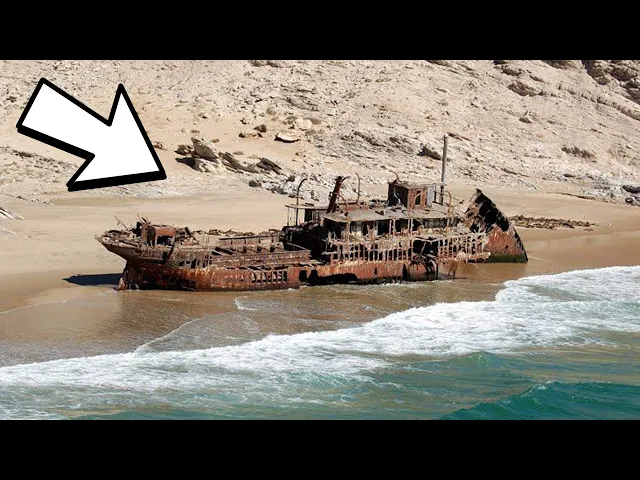
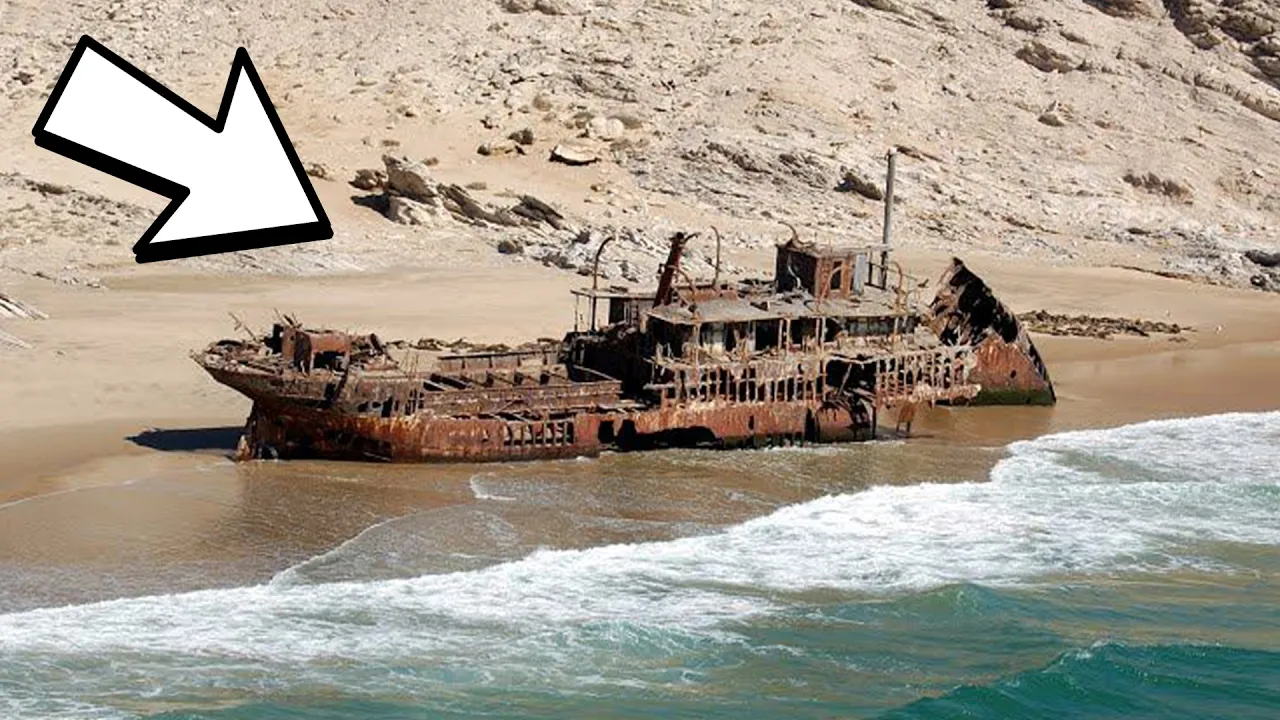
after its abandonment and now despite numerous searches and reports the ultimate fate of the vessel remains unknown while it likely succumb to the Arctic conditions eventually there's also the chance that one day it might be seen again still lost after almost a century number three the Edward Bolan you usually ually expect to find shipwrecks at the bottom of the ocean or at least along a coastline but there's one that mysteriously is in the middle of a desert the Edward Bolan was a 2200 ton steamer built in 1890 and operated by the werman line a prominent
Shipping Company of the era designed for cargo it primarily operated along the West African Coast facilitating trade and transportation between Germany and its African colonies it carried a variety of goods including Machinery textile and other essential Commodities playing a vital role in the economic activities of the German Empire in September 1909 though the Edward Bolan embarked on what would be its final voyage the ship was traveling to table Bay in South Africa carrying cargo that included machinery and construction materials on the 5th of September while navigating through dense fog the ship ran a ground near
Conception Bay along the skeleton Coast efforts to refloat the ship were to no avail and the harsh environment with treacherous Waters and the Relentless Namib Desert made rescue operations extremely difficult the crew and passengers managed to disembark safely but the Edward Bolan was left to the elements over the years the desert has encroached further Inland and the Edward Bolan now rests about, 1300 ft or 400 m from the current Shoreline the dry arid conditions of the Namib Desert preserved the wreck remarkably well and the skeletal remains of the ship partially buried in sand present a
mystifying sight adding to the strange landscape along the coast are several other shipwrecks too including the otavi and the MV dun Eden Star as well as being fascinating sites they've also become a stark warning to other ships sailing past because of its strange appearance the area around the wreck has now become a popular destination for adventurous tourists and photographers drawn by its Eerie ghostly appearance it's also become a popular location for TV shows and movies recently featuring as a nuclear landscape in the adaptation of Fallout number two the San Jose the San Jose which was
seen as the Holy Grail of shipwrecks is one of the most famous Spanish gallion in history it was launched in 1698 as part of the Spanish Fleet designed to transport goods and wealth from the colonies in the Americas back to Spain this period was marked by intense Maritime rivalry especially between Spain and its European adversaries such as England and France the Spanish treasure fleets were heavily guarded and closely monitored as They Carried immense wealth critical to funding Spain's Ambitions and maintaining the empire in 1708 the San Jose was part of a treasure Fleet preparing to
return to Spain from the Caribbean it was heavily Laden with gold silver and precious gems acquired from the Spanish colonies in Peru and Colombia the fleet's journey was dangerous not just because of the treacherous Seas but also due to the everpresent threat of attack from enemy ships on June 8th the San Jose encountered a British Squadron commanded by Charles wager near cenia Columbia a fierce battle took place and the British Keen to capture the treasure Laden gallion relentlessly pursued the San Jose during the confrontation the Spanish vessel suffered a catastrophic explosion likely caused by a
hit to its gunpowder magazines and the ship sank rapidly taking with it an estimated treasure worth billions of dollars in today's currency with artifacts from the site including cannons Ceramics and personal items of the crew all which contribute to our understanding of Maritime history there was a matter of the precious medals still believed to be worth hundreds of millions of dollars the discovery of the San Jose in 2015 has led to discussions about the preservation and study of underwater historical sites Colombia which considers the wreck part of its National Heritage faces challenges in protecting the
site from looters and ensuring that the artifacts are preserved and studied responsibly internationally the wreck has also caused debates over maritime law and the ownership of shipwrecks particularly those with significant historical and financial value the San Jose story continues to evolve as new technologies and international collaborations aim to explore and preserve this remarkable find Spain has laid claim to the treasures on board but so have the countries that valuable objects have been taken from meaning that the enduring mystery of the San Jose will no longer be about where it is but who has the right
to what's there number one the doo particularly with old ships that were made from wood there's usually only so long they can survive underwater before they deteriorate beyond recognition in some circumstances ships can last a lot longer though and that's what happened with the Doos which is regarded as the oldest known shipwreck in the world discovered off the coast of the small Greek island of Doos in the aian sea the bronze AG shipwreck dates back to around 4,200 years ago giving a unique glimpse into early seaf ing communities the Doos wreck was first discovered in
1975 by Greek archaeologist Peter th Morton who was conducting underwater surveys in the aan th Morton's team identified the site by spotting a large scatter of ceramic artifacts of the seabed a depth of about 100 ft or about 30 m these artifacts were later confirmed to belong to a single shipwreck one that was older than had been seen before subsequent excavations were carried out by The helenic Institute of Marine archaeology from 19 1989 to 1992 they revealed a huge selection of artifacts including Pottery tools and stone anchors which provided significant evidence about the ship's cargo
and the period it belonged to the site was meticulously documented with hundreds of ceramic pieces being cataloged and analyzed from all this the most important finds from the doo shipwreck were the large quantities of pottery these included M4 which are large storage jars typically used for transporting liquids such as wine or oil as well as various types of bowls and jugs the pottery's design and construction were similar to those of the early helak period aligning with the estimated date of the Shipwreck as well as the Ceramics the excavation uncovered Stone anchors showing the ship's anchoring
methods and suggesting that the vessel was quite a large one for its time capable of carrying a substantial cargo other artifacts included millstones which were likely used for grinding grain and revealed a lot about the types of goods that were transported by these ancient Traders because of its age the doo shipwreck holds huge archaeological and historical significance for several reasons firstly it provides concrete evidence of early seaf Fairing and Maritime trade in the aian region showing the advanced ship building skills of ancient civilizations the cargo also proves that trade networks were established and that goods
were transported across considerable distances allowing for cultural and economic exchanges the pottery found at the site also offers valuable in insights into the daily lives and practices of these early communities by studying the design manufacturing techniques and contents of these ceramic vessels researchers can infer aspects of diet storage and Trade Practices during the Bronze Age with research continuing into the site and the objects that have been found there little of the wooden vessel itself remains but elements of it do and have shown the construction techniques that were used as for why it sank and who
operated it these May maybe Mysteries that will probably be impossible to solve thanks for watching everyone I'll see you next time thank you to our channel members