Alan: This episode is brought to you by Squarespace, the all-in-one platform to build a beautiful online presence. Iroh: ♬♬ Leaves from the vine ♬♬ ♬♬ Falling so slow ♬♬ Jono: He is known as a happy character. That's not because he hasn't had problems.
Iroh: I was never angry with you. Jono: It's because he chooses peace. Iroh: I was afraid you lost your way.
Jono: He carries within him a lot of pain. It's because he chooses gratitude. It's because he chooses happiness.
It's because he chooses not to be defined by his mistakes, but to learn from them and to share that wisdom. Iroh: There's nothing wrong with a life of peace and prosperity. Jono: You get one life and you're the one who steers the ship.
So steer in a direction that brings you joy. Zuko: What are you old gasbags talking about? Alan: Hello and welcome to Cinema Therapy.
I'm Alan Seawright, a professional filmmaker who needs therapy. I'm joined by my co-host. .
. Jono: Jonathan Decker, licensed therapist who loves movies. What do you got for me?
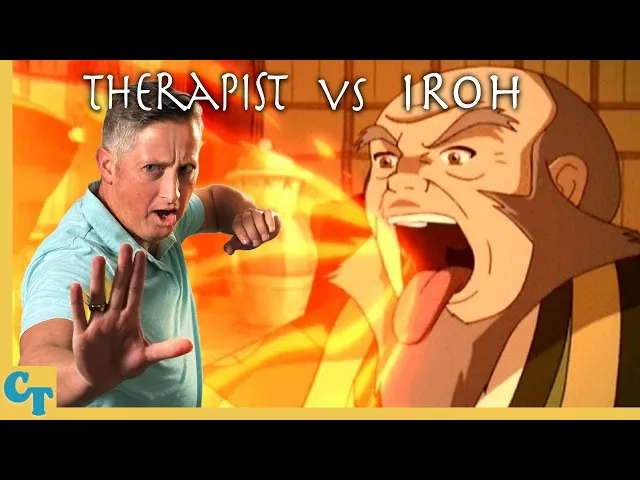
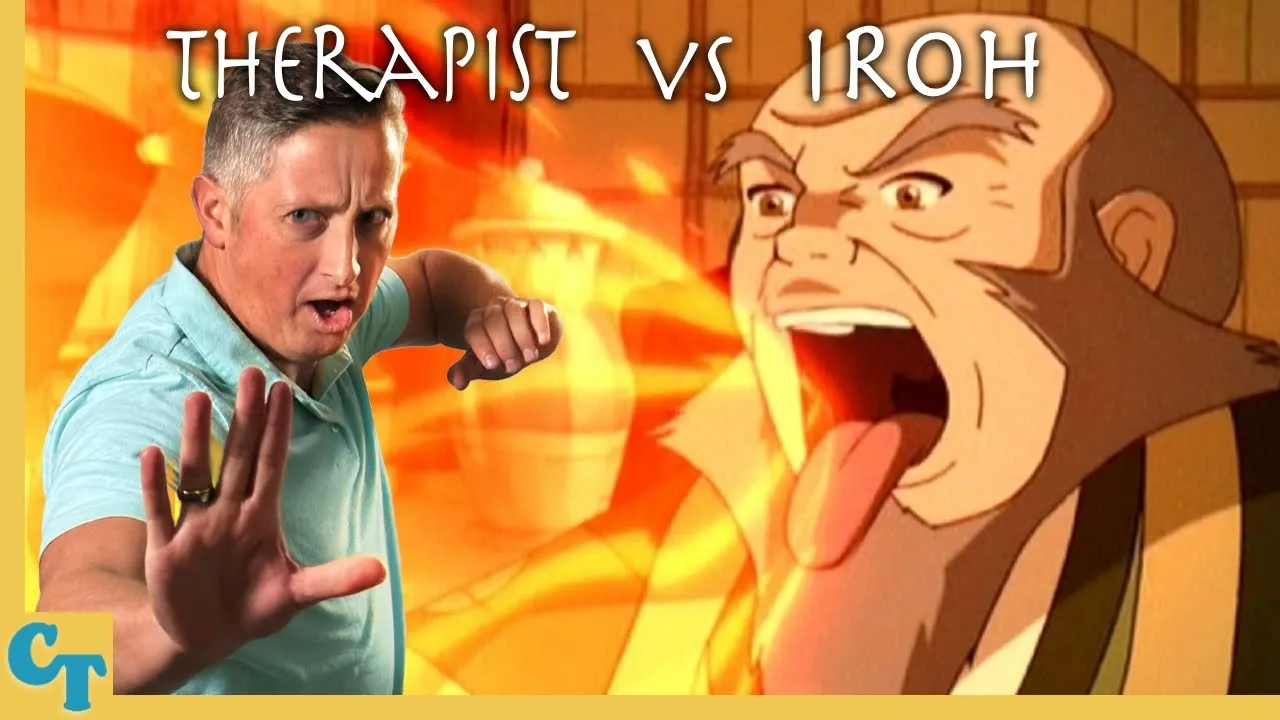
Alan: Well, you're a therapist, and you react to things. And I'm going to have you react to the greatest therapist ever in history and see if you can beat him in a. .
. therapy off. Jono: Uncle Iroh?
Alan: It's Uncle Iroh. Yeah. Jono: Well, the moment you said greatest therapist ever, I'm like, Uncle Iroh.
Alan: It's. . .
Yeah, you knew who it's got to be. Yep. So, uh.
. . Jono: So, wait, I'm going toe to toe with Iroh?
Alan: Going toe to toe with Iroh, and I get to watch you lose for the first time ever. Iroh: So this isn't therapist reacts. Jono: This is therapist versus.
Alan: Therapist vs Iroh. Jono: You're putting me in there with a monster. Jono: A loving monster of wisdom and wit, who is going to kick my ass.
Alan: He's the Drgon of the West, mother[beeper]. I brought a ringer. Jono: More like the Ivan Drgon of the West.
I must break you. Jono: Maybe we can make this therapist agrees with Iroh? I.
. . Not versus.
I'll try and find something. I'll try and find something to push back on. It's just hard because the man just.
. . Alan: He's just.
. . He's right.
Jono: He literally spits fire. Iroh: Fire is the element of power. The people of the Fire Nation have desire and will, and the energy and drive to achieve what they want.
Earth is the element of substance. The people of the Earth Kingdom are diverse and strong. They are persistent and enduring.
Air is the element of freedom. The Air Nomads detached themselves from worldly concerns, and found peace and freedom. Also, they apparently had pretty good senses of humor.
Water is the element of change. The people of the Water Tribe are capable of adapting to many things. They have a deep sense of community and love that holds them together through anything.
Zuko: Why are you telling me these things? Iroh: It is important to draw wisdom from many different places. If we take it from only one place, it becomes rigid and stale.
Understanding others, the other elements, and the other nations, will help you become whole. Zuko: All these four elements talk is sounding like Avatar stuff. Iroh: It is the combination of the four elements in one person that makes the Avatar so powerful.
But it can make you more powerful too. You see, the technique I am about to teach you is one I learned by studying the Waterbenders. Jono: I feel like we're always at war with each other.
On a large scale, but also in our homes, right? And in our neighborhoods. And just.
. . We have different viewpoints.
Different experiences that contribute to those viewpoints, the formation of those viewpoints. Jono: And then we kind of pridefully get entrenched in, I have the right one, so you have to have the wrong one. Alan: Right.
Jono: And I either have to convince you and convert you, and if I don't convince you and convert you, you're the enemy, or at the very least, you're an idiot. Alan: Right. Yeah.
Jono: Right? And Iroh approaches life from this completely different way, which is, frankly, the foundation of family therapy. Everyone's behavior makes sense to them.
Everyone's perspective makes sense to them. And if you have enough humility to say, Help me to see what you're thinking and why you're doing what you're doing, help me to see through your eyes so that I can not only understand you, but also learn and grow myself. That is how bridges are built.
Jono: Have you seen our Cinema Therapy website? It was so easy to build and customize our site using Squarespace. Alan: Squarespace has so many templates to choose from with a wide variety of styles and formats and looks.
Jono: So once we found a template that really worked for us, Fluid Engine. . .
Alan: The design system for Squarespace. Jono: Made it super easy to customize. Alan: We added our own colors, fonts, and personal touches to make it our own brand and style, baby.
Jono: Almost as stylish as that man bun Uncle Iroh was rocking, am I right? Alan: Nothing. Nothing could be as stylish as Uncle Iroh.
Jono: What is with you today? You're scaring people. Especially me.
Alan: They have built-in tools, like video blocks and extensions for lots of platforms, so our website can be a hub to link to all of our other stuff. Jono: Youtube, Patreon, our upcoming events, our merch and popcorn stores, and so much more. So whether you need to build a website for your new tea shop.
. . Alan: Or you're offering a new course on how to play Pai Sho like a real master.
. . Jono: Or to promote your new book, sharing all of your maxims, metaphors, and nuggets of wisdom.
. . Alan: Squarespace has a template that will work for you, and you won't have to spend months building a website or learn how to HTML bend.
Jono: All of Squarespace's resources, like transferred domains, pre-built layouts, customizable templates, and the Squarespace Help Center, make it quick and simple to build a website. Alan: Check out Squarespace. com for a free trial, and when you're ready to launch, go to Squarespace.
com/CinemaTherapy and use code CINEMATHERAPY to get 10% off your first purchase of a website or domain. Jono: Well, now that our website is done, I'm going to go get some quality hot springs time. Alan: Ooh, I'll bring the tea and then make sure we sit six feet apart.
Jono: No need. Iroh: I just want our new place to look nice in case someone brings home a lady friend. Zuko: This city is a prison.
I don't want to make a life here. Iroh: Life happens wherever you are, whether you make it or not. Now come on.
I found us some new jobs, and we start this afternoon. Jono: The first clip was more about relationships, right? This is more of a cognitive behavioral piece.
This is a bit more a psychology of shifting your way of thinking so that you can experience joy and peace. Jono: Their circumstances, for the time being, can't change. Alan: Yeah.
Jono: So shifting your thinking and shifting the way you behave, like, I'm gonna spruce up the place with flowers. I got us some jobs. Jono: Like, Iroh is.
. . Alan: May bring a girl home.
Jono: May bring a girl. He's approaching this with, How I think shades and colors everything. And what I choose to do shades and colors everything.
We're here. Let's make the best of it. And Zuko is stuck in, We're here, it sucks, I don't want to be here.
This isn't my mission. This isn't the life I want. Alan: Yeah, life will be good if I'm out there.
If I find the Avatar, if I'm doing this. Right? Jono: And Iroh's trying to teach him that life can be good now.
Alan: Yeah. Jono: And that's not to say, You can't continue with your mission of finding the Avatar. You can't continue with your mission and purpose that you have for yourself.
Jono: But if you wait until you achieve it to be happy, then you'll never be happy. Alan: Yeah. Jono: And we've talked about this before.
The concept of, people aren't happy until they're satisfied. Jono: The issue with a lot of those people is they're never satisfied. Alan: Right.
Jono: Therefore they're never happy. And Iroh is a wonderful example of, we don't have to be satisfied, yet we can still pursue goals and pursue more out of life, Jono: while being grateful every day for what is. Alan: Right.
Jono: And that is. . .
He's kicking my ass, Alan. Alan: He's he's pretty freaking good at this. Jono: Yeah.
Alan: He's pretty good at it. Iroh: Oh, that's very sweet. Jono: You're right.
The sound design. Alan: Yeah. Huge.
Aang: Toph thinks you give pretty good advice. And great tea. Iroh: The key to both is proper aging.
What's on your mind? Aang: Well, I met with this guru who was supposed to help me master the Avatar State and control this great power. But to do it, I had to let go of someone I love.
And I just couldn't. Iroh: Perfection and power are overrated. I think you are very wise to choose happiness and love.
Aang: What happens if we can't save everyone and beat Azula without the Avatar State? What if I'm not powerful enough? Iroh: I don't know the answer.
Sometimes life is like this dark tunnel. You can't always see the light at the end of the tunnel. But if you just keep moving.
. . You will come to a better place.
Jono: And so here it's a bit of Carl Rogers. Carl Rogers was one of the trailblazers in psychotherapy, and he is the one who pioneered unconditional positive regard. Basically, he said, the people who came before me made people feel judged.
Jono: You got a lot of problems and I, the almighty therapist, am going to fix you. Alan: Yeah. Jono: And Carl Rogers is the first one who struck on what people need is to feel loved and accepted.
Alan: Right. Jono: And so we can address problematic behaviors or thinking patterns that aren't serving you. But what you need to know is that you have worth and that you're loved.
And Iroh does this in spades. Jono: And what I love about him is he gives sincere compliments so easily. Alan: Yeah.
Jono: His eyes are always open for things that he can say and mean. And so when Aang comes to him for advice, Iroh. .
. The first thing he says is, I think you are wise, to Aang. Jono: "I think you are wise to prize relationships and connection over perfection and power".
Alan: Yeah. Jono: You know, I think that's wonderful. So first of all, the pursuit of perfection is exhausting and you're never going to get there.
The pursuit of connection can also be exhausting, but you can get there, Alan: You can achieve it. Jono: You can achieve it. Alan: And once you achieve it, it will be replenishing.
Jono: Yes. Alan: And no longer be exhausting. Jono: Yes, exactly.
In a healthy relationship, it's replenishing with, like, little pockets of exhausting. But it's all offset by, This restores me. This connection restores me.
Which, the pockets of exhausting is just my way of saying, healthy relationships take work, but it's worth it. Alan: Well, and frankly, in at least for me, I don't know if there's any research to back this up. The pockets of exhausting are generally me working on my own, so that I can maintain the connection.
Like, the connection is there and it's going to be fine, but it's me having to go, Oh, I'm in the wrong. I have to work on that. Jono: Yes, I would agree.
In my own personal experience, that's been what I felt as well. Alan: Yeah. Jono: I also love his, you know, You can't see more than a couple of steps ahead of you.
You keep moving, you arrive to a better place. Alan: And one thing that Iroh almost always does, Alan: is relate his genius storytelling and therapeutic concepts. .
. Jono: Yeah. Alan: .
. . to a metaphor that is in the world that they're currently dealing with, right?
Alan: He's talking about a tunnel. They're in a tunnel. Jono: Yeah.
Alan: He relates things to tea regularly because it's literally the only thing he cares about. Alan: Tea and Pai Sho. Jono: Well, he likes the hot springs.
Zuko: Get out of the water. Iroh: Very well. Zuko: On second thought, why don't you take another few minutes?
Jono: Well, and finding something in your immediate surroundings to teach about, or to relate the concept that you're trying to convey. . .
through the lens that. . .
of something that the person already enjoys and understands Jono: is literally what the show is. Alan: Yeah. Iroh: Hey!
It is usually best to admit mistakes when they occur. And to seek to restore honor. Angry Man: When I'm through with you, kids, the window won't be the only thing that's broken!
Iroh: But not this time. Run! Jono: Can we take a second to appreciate the animation on these kids faces?
The two on the right are really doing it for me. Alan: The one on the far right just looks like my oldest son all the time. This show knows, like, it has massive tonal pivots and it knows so well when to deploy.
Alan: Silly old-school, just cartoon stuff. Jono: Yeah. Alan: So when they exit frame here, there's a whole ton of squash stretched, like they rev up their legs and then go.
The hat stays and then, like, yanks after them. I mean, it's freaking Looney Tunes [beep]. And it's amazing.
Jono: It is usually best to admit mistakes when they occur. Alan: I mean that's kind of your whole thing, right? Accountability kink.
Jono: Well, and my accountability kink comes from a of a very painful place of being an avoider for so long and that biting me in the ass. And so it's always best to come clean. Jono: And the sooner you do it, the less scary it'll be.
Alan: Yeah. Jono: And to restore honor. But not this time.
Run! Jono: There's also times where the people you've pissed off are scary. Alan: Uh huh.
Jono: And you should just get the hell out of there. Alan: You can deal with the problem, if it's necessary, later, Alan: when the big giant guy isn't going to pound you into the dirt. Jono: Yes.
Iroh: Here is your tea. You seem a little too young to be traveling alone. Toph: You seem a little too old.
Iroh: [laughs] Perhaps I am. Toph: I know what you're thinking. I look like I can't handle being by myself.
Iroh: I wasn't thinking that. Toph: You wouldn't even let me pour my own cup of tea. Iroh: I poured your tea because I wanted to, and for no other reason.
Toph: People see me and think I'm weak. They want to take care of me, but I can take care of myself by myself. Iroh: You sound like my nephew.
Always thinking you need to do things on your own without anyone's support. There is nothing wrong with letting people who love you help you. Not that I love you.
I just met you. Jono: You and Iroh share several traits, but one that comes to mind here is you receive a roast really well. Like when she.
. . When he says, You seem a little too young to be traveling alone.
And she says, You seem a little too old. And instead of being offended or defensive, he just laughs. And he goes, Maybe you're right.
Alan: Maybe you're right. Iroh: Plus, we'll pay your weight in gold. June: Make it your weight, and we got a deal.
Iroh: Ha ha, you got it! Alan: This is a point of pride for me. And it is a point of pride because I actually.
. . Like, it's not arrogance.
Like, this is actual pride. I can handle things like that because. .
. Alan: Two reasons: I hated myself so much for so long. .
. Jono: Yeah. Alan: .
. . that there's nothing anyone can ever say Alan: that is more hurtful than what I said about myself to myself.
Jono: Yeah. Alan: That's one thing. And the second thing is I put enough work in to understand that most of that isn't true.
Alan: And the stuff that is true is funny. Jono: Yeah. Jono: And that you can own.
Yeah. Alan: And I can own it. And it's like, Okay, fine.
Jono: And I've honestly been. . .
I haven't told you this, but I've been working to follow your example in this more and just own my [beep]. And when people called me out on it or teased me about it, that I can be like, Yeah, that's true, that's fair. Alan: I'm working on it.
Jono: But I relate to that, like, because I also had decades of self-loathing. Jono: And the more I come to love all of me, including the, you know, not the choicest cuts of me. Alan: Yeah.
Jono: The easier it's just to say, Yeah, that's true. That is something I'm working on. The other thing is how important it is to let other people help you when they offer, especially.
Jono: But also when they don't, and you need to ask. Alan: Yeah. Jono: I think a lot of people struggle with accepting help.
Jono: We're happy to give help because we feel powerful and virtuous when we're helping others. Alan: Sure. Jono: But accepting help is harder because we feel weak.
Alan: Yeah. Jono: And that's bull crap. If that's true, then we're all weak, and then we can just accept that.
But there's no weakness in needing help. Everybody does. And being able to ask for it, or accept it when it's offered is a virtue.
It's not a vice, it's a strength. It's not a weakness. Jono: If you're enjoying this, we've got, like, a long Director's Cut.
Alan: It's really long. Jono: On our Patreon of me versus Iroh. Check that out now.
Alan: There's also a Patreon exclusive episode, you can only watch it on Patreon, where we compare and contrast Azula and Katara, who have a surprisingly similar journey but end up in very, very different places. Jono: You look like such a mess right now. And it's perfect.
Alan: I'm. . .
I'm in bits. Iroh: We have a chance for a new life here. If you start stirring up trouble, we could lose all the good things that are happening for us.
Zuko: Good things that are happening for you. Have you ever thought that I want more from life than a nice apartment and a job serving tea? Iroh: There's nothing wrong with a life of peace and prosperity.
I suggest you think about what it is that you want from your life, and why. Zuko: I want my destiny. Iroh: What that means is up to you.
Jono: Zuko is looking at his destiny as something that is out there, waiting for him to claim that. Something that's written in the stars and preordained and. .
. Alan: Well, and it's been given to him by his father. Jono: Yeah.
What the expectations are, who he's supposed to be. Alan: Right. Jono: And Iroh is trying to get Zuko to open up to.
. . First of all, your father's a douche, so don't trust his value judgments on anything.
And secondly, you get one life and you're the one who steers the ship. So steer in a direction that brings you joy. Iroh: It's time for you to look inward and begin asking yourself the big questions.
Who are you, and what do you want? Jono: And for Iroh, what brings him joy is a life of peace and prosperity. I know people who are always chasing the next big dream, who are always chasing the next big thing, and are always moving forward with ambition and drive.
And honestly, I don't think that's bad. I. .
. [Alan grunts in feelings] Alan: What? Nothing.
Jono: Honestly, I applaud them and that's who they are. But I relate so hard to this. Just like.
. . Definitely work hard for what you.
. . To be secure and to be comfortable and then enjoy it.
Iroh: This man wants to give us our own tea shop in the upper ring of the city. Zuko: I'll try to contain my joy. Alan: This greatest example to me of this, and the difference between us is as soon as this show, like, started working and it became a thing where we could actually, like, we can take care of our families doing this.
You were like, great, done. You're like, This is what I want to do. Jono: Oh, with life.
Yeah. I was like, this is it. Alan: This is it.
Okay. We're gonna do this forever. And.
. . I, within about two weeks, was like, So we need to make a short film.
And, uh, how are we going to parlay this into a feature career for me? And, I mean, I'll keep doing the show, but, like, what else can we do? Jono: Yeah, it was only just recently, because I know you still have ambitions to do features and stuff like that, but it was only recently that you said to me, I still want to do feature films, but if this is all I do.
. . Alan: It's okay.
Yeah. Jono: How wonderful is that? You know, like, it's maybe.
. . Or maybe it's okay.
Alan: No, it is wonderful. It's wonderful. Like, what we get to do is wonderful, and I'm so thankful to all of you for watching.
And I'm thankful to you and and to our producer and all our whole team and everybody. Alan: Like, it's incredible that we get to talk about movies. .
. Jono: Yeah. Alan: .
. . and TV shows and cry for a living.
Jono: Yeah. Alan: I would also like to make people cry. Jono: Yeah, yeah.
Alan: I want to be the one who makes people cry. Not the one who crying through their making is done. Alan: Wait.
I had a way to say that that was not stupid [beep]. Jono: Yeah. I wanna be part of the people that make meaning.
Oh, I'm gonna cry. Iroh: [groans and yawns] Zuko: Uncle. .
. I know you must have mixed feelings about seeing me. But I want you to know I am so, so sorry, Uncle.
I am so sorry and ashamed of what I did. I don't know how I can ever make it up to you, but I-- Jono: It's so awesome. Zuko: How can you forgive me so easily?
I thought you would be furious with me. Iroh: I was never angry with you. I was sad because I was afraid you lost your way.
Zuko: I did lose my way. Iroh: But you found it again. And you did it by yourself.
And I am so happy you found your way here. Zuko: It wasn't that hard, Uncle. You have a pretty strong scent.
Alan: What a beautiful, beautiful moment. Jono: Well, and such a pure moment of. .
. . .
. redemption on Zuko's part, but on Iroh's part, Zuko didn't need to be redeemed. Jono: Zuko was always good.
What hurt him was that Zuko didn't see it. Alan: Yeah. Jono: That Zuko didn't realize, Your worth was always there, your goodness was always there.
And I've been trying for three damn seasons to get you to see that. And you finally do. I love how hard he grabs him and yanks him into a hug.
I mean, it is just. . .
It's wonderful. And it goes from that. .
. that hard [umpff] to tender. Jono: And I love that Iroh caresses Zuko's hair.
Alan: Yep. Jono: You know, this was my first time going through Avatar. .
. Recently when we were doing these batch of episodes, and so I don't know all the actors names, but the second Iroh, I think, does a really great job of honoring the first with his performance. Alan: Yeah, sometimes as an actor, you can play the accent.
Jono: Yeah. Alan: Right? Instead of playing the character.
Jono: Yeah. Alan: And he is very much playing the character with his vocal work. Alan: You know, he's doing a pretty decent imitation.
Jono: Yeah. Alan: But, you know, if you're paying attention, you can tell. Jono: Well, that's the thing.
He doesn't always sound like Iroh, but he always feels. Alan: Yeah. Jono: He always feels like Iroh.
Yeah. Alan: Yep. Alan: Speaking to that laughter through tears thing.
Like. . .
Alan: It feels like a big tonal shift to have that joke at the end. Jono: Uh huh. Alan: But the reason the joke lands and doesn't feel like a wild shift in tone is because the joke that he makes a) you know, makes sense in character, Alan: but it b) it also makes sense in context.
Jono: Yeah. Alan: He's joking and saying, You had a strong scent. But what he means and what we know and what we understand that he means is, Alan: Following you was easy.
You left a trail that I could follow. Jono: Yeah. Alan: You made it easy.
Jono: Your example. Yeah. Jono: Oh, no.
. . Iroh: Happy birthday, my son.
If only I could have helped you. ♬♬ Leaves from the vine ♬♬ ♬♬ Falling so slow ♬♬ ♬♬ Like fragile tiny shells ♬♬ ♬♬ Drfting in the foam ♬♬ ♬♬ Little soldier boy. .
. ♬♬ [his voice breaking] ♬♬ Come marching home ♬♬ ♬♬ Brave soldier boy. .
. ♬♬ ♬♬ Comes marching home ♬♬ Jono: Oh, gosh. .
. Jono: So I guess what I would say about this. .
. As long as we're likening Iroh to a therapist, is that. .
. Therapists are people. And they've got their own struggles and trials and pains and mistakes.
And what makes Iroh such a powerful teacher. . .
He talks about proper aging. It's not just growing old, it's living a life and learning a lot of things the hard way. You know, I had a good experience in our Hook episode, talking a bit more about my struggles, and there's going to be more to come of that on this channel.
If you see me as any source of wisdom, it's not because I've got it all perfect. I've made a lot of missteps. The things I share, and I know the things you share, are born of.
. . Here's things we've learned from study.
Here's things we've learned by doing things right. And here's a whole lot of things we've learned by doing things wrong. Alan: By getting the [beep] kicked out of us.
Jono: And Iroh has done that. You know, he feels like he failed his son. He feels like a lot of the choices he made earlier in life, he deeply regrets.
And yet, at the same time, it's hard to completely regret Jono: the things that got you to where you are. Alan: Yeah. Jono: You know, there's a phrase that I really like, and I think you would probably resonate with this, which is, I love me.
I've worked hard to become who I am. Jono: You know? Alan: Yeah.
Jono: So yeah, I, I went through this entire episode looking for something to disagree with Iroh on, and I didn't find a damn thing. Alan: The winner and undisputed heavyweight champion of the world - Zaddy Iroh. Jono: Yeah.
Alan: Even this. Like, he's grieving and hurting and he's demonstrating. .
. He's okay with it. Jono: Yeah.
Alan: He's okay that he's grieving and hurting. He's not trying to hide it. He's not trying to cover it up.
He's taking the time that he needs to feel what he needs. Jono: All the happiness that we've seen from him, because he is known as a happy character. Jono: Like, he's got.
. . Alan: Like, happy-go-lucky.
Jono: Yeah, he's got chill for days, right? Things. .
. And he's at peace and he's joyous. And that's not because he hasn't had problems, nor is it because he's forgotten his problems.
He carries within him a lot of pain. It's because he chooses peace. It's because he chooses gratitude.
It's because he chooses happiness. It's because he chooses not to be defined by his mistakes, but to learn from them and to share that wisdom. Right?
He doesn't hate himself. And that's the thing is, like, you look at his past, he could be a tortured character who hates himself. Alan: Oh, yeah, easily.
Jono: And I would wager at some point in his journey he was. Alan: Almost certainly. Jono: But he's gotten to this place of, I love me, I love life, I love people, and I want to share what I've learned.
And folks, that's us. Like, if you look at us as. .
. . .
. harbingers of any sort of truth. .
. First of all, we've blown it a lot of times. Alan: And we will continue to do so.
Jono: And. . .
Alan: Stay tuned. Jono: Yeah, well. .
. Alan: It's gonna get weird. Jono: And not everything we say, you know, there are earlier episodes that now we've got a few years more and we're like, Oh, I wouldn't say that now.
Or I have a different perspective on this now. And. .
. But we're just doing the best we can to. .
. . .
. to be Irohs, you know, I think that's. .
. I think that's an aspiration for all of us is to do the best you can to be an Iroh, Jono: and to spread light and love. Alan: Yep.
Alan: So, until next time. Jono: ♬♬ Leaves from the vine ♬♬ ♬♬ Falling so slow ♬♬ [Alan wails] ♬♬ Like little tiny ship ♬♬ Internet Dad: And. .
. watch Avatar. [Alan wails in the background] Alan: Thanks, Jono.
Jono: We want to thank our Patrons for supporting the channel and getting a bunch of exclusive bonus content. People like. .
. [Alan still crying] Jono: I got this. BoredBlossoms#01.
Phoenix Storm. Sam Smith. Amelia N.
and Zadie. Um. Alan: We love you, Patrons.
Jono: We do, we do. I hope you're happy.