The destructive power of nuclear weapons has evolved dramatically since the end of World War II. From the relatively modest yield of Little Boy dropped on Hiroshima to the monstrous power of the Soviet Union's Zar Bomba, the maximum explosive potential of these weapons reflects not just technological advancements, but shifting doctrines of deterrence, warfare, and geopolitical strategy. The Little Boy bomb dropped on Hiroshima was the first atomic bomb ever used in warfare.
It had a yield of 15 kilotons, enough to devastate the city and caused the deaths of approximately 140,000 people by the end of 1945. This weapon used a uranium 235 core and operated on a gunpe assembly mechanism. In terms of size, Little Boy measured about 10 feet or 3 m long and 1.
5 ft or 46 m in diameter with a weight of 9700 lb or 4,400 kg. Despite its historic significance, the yield of Little Boy is modest by modern standards, especially when compared to more advanced thermonuclear devices developed decades later. The detonation of Little Boy over Hiroshima resulted in an immediate and devastating impact.
The fireball from the explosion reached temperatures over 7,000° F or 3,870° C, instantly vaporizing buildings and people within a close radius. The fireball radius for Little Boy was about 1 mile or 1. 6 km in diameter with the heat intense enough to ignite fires and cause extensive burns on people several miles away.
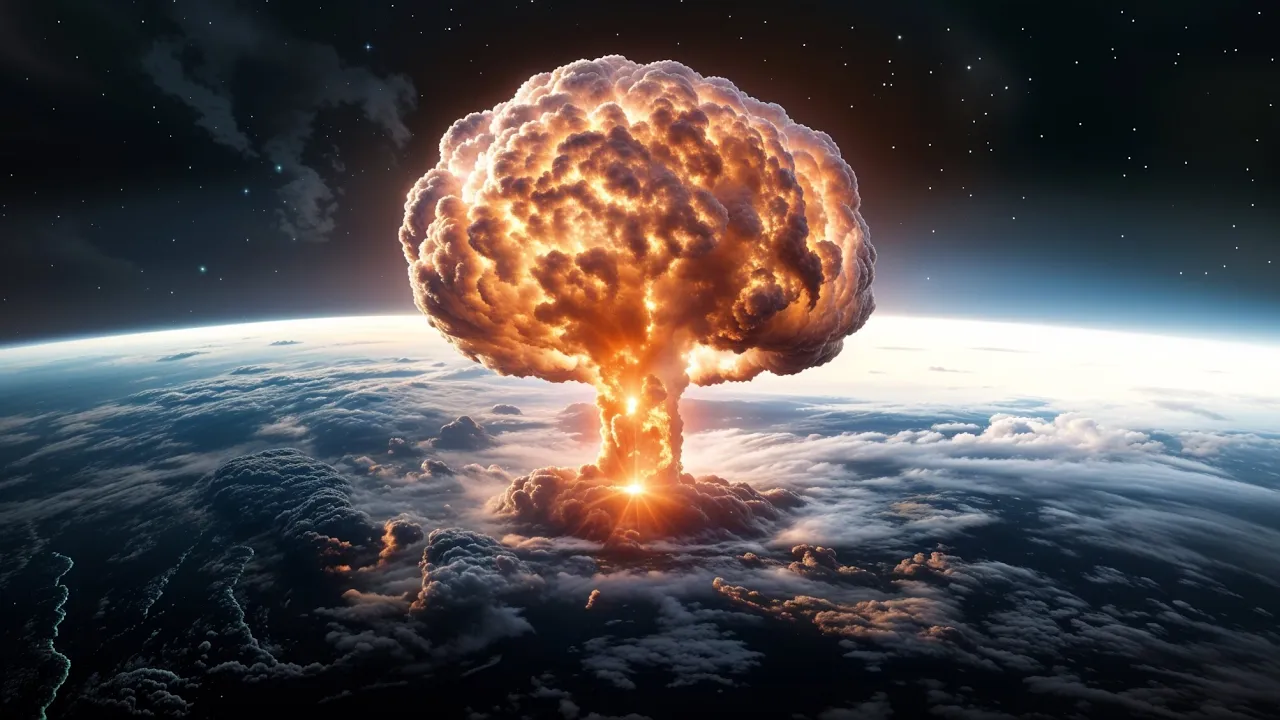
The mushroom cloud created by the explosion reached approximately 12,000 ft or 3. 7 km into the atmosphere, causing a visible signature of destruction that could be seen from miles away. The shock wave flattened 90% of the city, and the radiation released led to long-term health consequences, including radiation sickness, cancer, and genetic mutations.
The Fat Man bomb dropped on Nagasaki 3 days after Little Boy had a slightly higher yield at 21 kotons. Its dimensions were 10. 7 ft or 3.
25 m long and 5 ft or 1. 5 m in diameter, weighing in at about 10,800 lb. That's 4,900 kg.
The additional power provided by Fat Man was devastating, but it still represents a smaller portion of the potential seen in later nuclear weaponry. The impact of Fat Man on Nagasaki was catastrophic. The fireball radius for Fat Man was about 1.
5 mi or 2. 4 km, and the mushroom cloud reached about 18,000 ft or 5. 5 km into the sky.
The terrain in Nagasaki with its hills led to a more concentrated and severe destruction in certain areas. About 39,000 to 80,000 people were killed instantly. The Minute Man 3 ICBM developed during the Cold War is part of the US's land-based missile arsenal and continues to play a central role in the nuclear triad.
This missile capable of carrying multiple independently targetable re-entry vehicles or MVs can deliver warheads with yields of up to 475 kilotons per warhead. The missile itself measures 59 ft or 18 m in length and 5. 5 ft or 1.
7 m in diameter, weighing 79,000 lb or 3600 kg. With a range exceeding 10,000 km, this missile ensures that the US can respond to an attack with a devastating counter strike. A successful strike from a Minute Man 3 with a 475 kiloton warhead would obliterate a major city, leaving nothing but a massive crater and a toxic radioactive environment.
The fireball radius would be about 4 mi or 6. 4 4 km and the mushroom cloud would rise to over 100,000 ft or 20 km in the air. The blast radius would cover tens of miles with secondary effects including fires, shock waves, and nuclear fallout extending much further.
The DF5 ICBM is a critical part of China's nuclear arsenal. Designed to carry a single warhead with a yield of around 5 megat tons. The missile itself is 85 ft or 26 m long and 6.
5 ft or 2 m in diameter with a weight of about 188,000 lb or 85,000 kg. Its longrange capabilities allow it to target locations over 13,000 km away, making it a key asset for China's strategic deterrence. A 5 megat ton warhead would be capable of leveling an entire major city and potentially even larger metropolitan areas, leaving behind a devastating nuclear wasteland.
The fireball radius would reach about 5 m or 8 km. And the mushroom cloud would tower at least 40 km into the atmosphere. The RS28 Sarmat, also known as Satan 2, is a heavy ICBM capable of carrying multiple warheads or hypersonic glide vehicles.
With an estimated yield of up to 10 megat tons, this missile is one of the largest and most powerful in existence. It measures an imposing 115 ft or 35 m in length and 10 ft or 3 m in diameter with a weight of around 210,000 lb or 95,000 kg. Its size and potential yield make it a gamecher in nuclear deterrence, ensuring that any nation capable of launching the Sarmat can retaliate with overwhelming force.
The 10 megaton explosion of an RS28 would result in absolute devastation over a vast area, leaving massive destruction and radioactive fallout in its wake. The fireball radius would extend up to 10 mi or 16 km and the mushroom cloud would soar to 50 km or 164,000 ft far above the Earth's surface. The intensity of the explosion would cause global climate disruptions as the soot and ash released into the atmosphere could block sunlight, causing a nuclear winter effect that would drastically affect the environment and agriculture worldwide.
The Zar Bomba tested by the Soviet Union in 1961 is still the largest nuclear bomb ever detonated. With a staggering yield of 50 megat tons, it could have destroyed an entire country depending on the detonation site. The bomb itself was 26 ft or 8 m long, 6.
5 ft or 2 m in diameter, and weighed 27,000 lb or 12,000 kg. Its massive yield and colossal size made it more of a demonstration of Soviet nuclear capability than a practical weapon, as its destructive power was far beyond any real strategic need. The 50 megat ton explosion from the Sar Bomba would utterly obliterate everything within 60 mi or 97 km of ground zero, vaporizing all structures and causing instant and widespread death.
The fireball radius would be over 10 mi or 16 km and the mushroom cloud would rise 64 km or 210,000 ft making it visible hundreds of miles away. The sheer power of Zar Bomba demonstrated the terrifying potential for global destruction that existed during the Cold War era and it remains an icon of nuclear weaponry.