thanks Dr Juliana I really appreciate it and I'm excited to get to spend the next hour with you guys so what we're going to do is I'm going to go through and dive into a lot of things that are kind of fun and interesting as it relates to masculinity and appearance and then after we get through it uh I'm going to open it up to a Q&A because I found that as I've done this over the years in different settings this always is a bit of a paradigm shift and kind of opens up a lot
of different questions so I'm excited to have this be a bit more of a back and forth after I give you guys some context okay so the first thing I want to help you guys understand is that as we were just so eloquently told we're in this kind of cultural anomaly in the late 20th early 21st century especially within American culture where the prevailing Paradigm for men Is that real men don't care how they look and somehow it is dishonorable it's effeminate it's vain it's shallow it's superficial it's whatever pejorative that you want to throw
at it from a man's perspective to care about your appearance and those of us who are a little bit older I'm 40 years old and I grew up like most guys my age that if you expressed any real interest in your style you were belittled and ridiculed for it and so most men that are older Millennials genx in that kind of demographic had to adopt the uniform of apathy the only way that you could actually care about your style was to look like you didn't care about your style and what's so interesting about this is
it really is a complete historical anomaly if you go through and you zoom out and you look at almost any other time in history at any other culture you will find proof after proof after proof that men care about their appearance and it's something that we use as a way to express very specific aspects of masculinity how we fit within the hierarchy how we demonstrate masculine values and it's something that as we work through today it can become a very powerful tool for men in their lives to embody more confidence more sense of self to
be better communicators and be able to work through things in their personal and their professional lives so we're going to skip this because she already talked about the fact that I've got a TED Talk that I've uh that I've published a book on this but I want to give you guys a little bit of kind of a background as far as like why I'm even somebody that's worth listening to on this so I'll tell you guys that the way that I fell into this is when I was in Middle School I became hyper aware of
the relationship between the way that I looked and one how it aligned with my sense of self and how honest I felt I was being or how true to myself or authentic I was being and two what that communicated with other people and how they treated me so I grew up in Salt Lake City Utah and when I was in Middle School I attended a private Christian School and this is literally a photo from that school that was the uniform that I had to wear so the Navy Blazer the rep stri strip tie the white
button-up shirt and as most kids do in seventh and eighth grade this is when I was starting to find my identity as opposed to just being you know an appendage of my parents or whatever else and I was heavily heavily involved in BMX and snowboarding and punk rock and I wanted to look like the guy over here on the left I wanted the battle spikes and the jacket with the patches and everything else and as you can imagine these are two completely polar opposite tribes and two completely polar opposite identities and I found that I
hated how I felt when I wore the school uniform because it didn't feel authentic or honest to me and I also found that I hated how people not even my friends but in particular my friend's parents treated me when they would see the disparity between how I looked when I was at school versus how I looked when I was at home and I dressed the way that I wanted to and so I learned very early on that there's a a very strong correlation between how we visually present ourselves and then what our identity looks like
fast forward a few years I start writing a Blog about this because it becomes something that's interesting to me and that leads to my working in custom suiting for a few years I've been able to go to trade shows all over the world and be involved in in fun different projects and then for the last eight years uh I've been working one-on-one and in small groups with men to teach them about how to use their clothing as a visual tool of communication and so I get to work with some really fun really intelligent self-aware self-development
minded men and teach them about the skill set that a lot of guys miss out on okay so to give you guys a little bit of context and to help this really like to help Drive the point home I want you to First understand that we are biologically hardwired to be able to visually communicate this is something that doesn't just exist with us as humans but this even exists in the animal kingdom so for example if you take a look at Lions scientists used to believe that Lions had big mans uh because it would help
cool them down or there was it would protect their neck when they were in in fights or they were hunting or whatever else like that and then they found over the years and through various different studies that there are no functional benefits to these Mains it's purely a communicative tool it's a way to express to other Lions I'm bigger I'm scarier I'm more dominant than you are same thing with other potential Predators or competitors or anything else like that and so we see a lot of this that happens within the animal kingdom you have puffer
fish that get really big you've got gorillas that have their silver backs these are all just biologically hardwired visual cues that basically communicate I'm big I'm dangerous you don't want to mess with me so that's one of the first things that we biologically communicate with our appearances I'm dangerous don't mess with me especially for males of the species and then the second thing that we see very often and this is one of the things that's always so fun to recognize is that in the animal kingdom very often the males are more adorned and more beautiful
than the females which is obviously the opposite of what we're cultur currently culturally experiencing and the reason for this is because it communicates I'm worth procreating with I'm worth having sex with if you I will give you healthy baby and it will continue our progeny in a way that's beneficial and their survival rate is higher this is why peacocks are prettier than peens this is why you know like uh male malards will have different more beautiful feathers than females all of these different things are visual cues as far as like reproductive health and reproductive fertility
now what's so fun about this is that we still have these things that are hardwired into us but because we also have our brains and our logic and all of this intelligence that's coded into us as well we're able to turn all of these visual cues into entire visual languages where we can communicate various different different things and some of them are Universal some of them are very specific to specific cultures and different times and places but we've been able to create an entire visual language that comes across as much more articulate much more nuanced
and much more difference than just I'm big and scary or you should have sex with me okay before we jump into the next section and we start specifically talking about how this relates to men and their appearance I want to preface this by telling you guys that I'm going to be painting in some BR bro brush Strokes we're going to be talking about some of the differences between men and women both from a cultural and historical perspective also from a biological perspective I understand for some of you that may be challenging that may be offensive
and I would just encourage you to remember where you are and that being in school is one of the places where you can have your mindsets and your understandings be challenged and so if this is something that's a struggle for you sit with that and think about it and recognize that maybe I'm advocating for some things maybe I'm not but historically and culturally these things are relevant and are worth paying attention to so you know how to move forward with it in a way that's most beneficial to you and what your goals are okay so
let's move on and let's talk about some of the biggest things that men specifically are hardwired to be able to communicate with our visual appearance the first one is that for the most part across different cultures and even from a biological perspective women are valued for things like youth and innocence and sweetness and availability whereas men all for men all of those things are liabilities if men come across as young or too sweet or too innocent or too naive it means we're untested it means we're impr proven it means we're low status and we haven't
accomplished different things and so what's a challenge here is being able to communicate with your clothing a healthy respect for and understanding of where you are when it comes to your experience your age and the different dynamics that men want to typically communicate so if we look at this kid over here on the left then this happens a lot especially with you guys who are in school is a lot of times they will adopt symbols of unearned status unearned Authority or unearned age and wisdom and it creates a juxa position that actually makes them come
across as younger more naive and more untested and so this is where we get the phenomenon of like the young kid wearing the suit and thinking it makes him look more credible and authoritative and it has the opposite effect and then we see the exact opposite over here on the other side where I see a lot of men especially unfortunately men that are dressed by wives or men who are dressed by uh female stylists who apply a feminine goal to clothing versus a masculine gold of clothing and these are men who are older but they
dress like they're younger they dress in a way that's overly trendy it's overly youthful and what this communicates is I'm actually very self-conscious about my age I don't rely on my accomplishments or my wisdom or my authority I wish that I were younger and so it communicates a level of self-consciousness and a lack of confidence and so one of the first things that you need to understand whether you're designing clothing for men whether you're styling men or coaching men or whatever else is that there needs to be a good understanding of what their age is
and what correlates with that and what their level of accomplishments are and how they can use that within their particular tribes organizations groups demographics to be able to communicate that level of credibility and Authority the next thing is that there's a big difference the main thing that men want to communicate is power okay and I don't mean this in a Marxist like oppressor versus oppress power over or anything else like that I want you to understand that for most men power and there there certainly are elements of that but for most men power simply means
that I get to be safe because I have some level of control and autonomy over my life and there's two different types of power that we can have be directly manifested the first one is direct physical power and so this is where you get a lot of the warrior cultures that have existed across time and throughout history where they would embody things that would communicate direct physical power don't mess with me this goes back to the Lions and the mains or the gorillas with the silver backs it's this idea of I'm I'm dangerous and you
don't you don't want to mess with me but there's also a version of indirect power and I chose this photo of Mark Zuckerberg from back in the early 2000s because a lot of people don't realize this but what Zuckerberg was doing with his appearance was not anti or it was not apathy he wasn't really truly indifferent about his clothing this was a power move but it was more of an indirect level of power what Zuckerberg communicated and culturally what this created during the mid 2000s and 2010s was the idea of I'm so rich I'm so
competent at what I do I am so financially socially culturally powerful that I can reject your 20th century symbols of power namely the suit and I can still attain a level of success that most of you would never dream of and a lot of this ethos still exists today where it's the idea of I don't have to wear a suit the men who work for me are the ones who have to wear suits and so I want you to recognize this as you see this in your own personal life and as you're out people watching
you're on campus you see the way your professors dress you see the way that different people dress is a lot of times we have different symbols of indirect power where nobody's physically intimidated by somebody like like Mark Zuckerberg but you can be intimidated by him or recognize his power because of that indirect manifestation okay so let's dive into this and make this even a little bit more contextual and a little bit more nuanced so there's a great book that I recommend you all read especially if you're moving into the space of men's wear and understanding
how masculinity relates to clothing it's called the way of men and the main thesis of this book is the author whose name is Jack Donovan wanted to be able to understand the difference between being a good man and being good at being a man or basically separating morality from masculinity because a lot of times in different cultures and we're certainly in one of them we blend the two and we think that it's impossible to be masculine without being a good person but if we zoom out and we think about different examples I think it's safe
to say that somebody like genas Khan and all of the the things that he did and all the atrocities that he committed was probably not a good man certainly not by 21st century Western standards but I think it's also hard to argue that he wasn't a masculine man that he wasn't uh that there weren't strong correlations with what that masculinity was and so what Donovan do in this book is he breaks down the four aoral tactical Virtues Of basically what men have always been judged for in their different Societies or in their different cultures okay
and this doesn't mean that these are things that women aren't valued for or that CH that don't matter to children but these are primarily the things that matter to men within their different cultures and it's fun to see how this actually correlates so strongly with what the different visual representations are so these are strength courage Mastery and honor and let's break down all four of these and we can talk about how all of these relate to each other so the first one is strength and this is one of those things that is very easy to
see in different Warrior cultures and what's so cool about this is that it wasn't just a way to represent this to other people but it was also a way to feel more embodied by this and to be able to have this be something that was more related to self-perception than necessarily communication with other people and this is another one of the things that I think a lot of people miss that is a huge aspect when it comes to men and clothing in fact I make the argument that men actually care about clothing way more than
women do the difference is that women in general tend to see clothing as a way to communicate with other people or is mostly an aesthetic and a visual Pursuit whereas for men the power of it is as it relates and correlates with identity and who we are at our core and so a lot of times and you this is why little boys this is why we dress up as Superman or as Spider-Man or as a police officer or whoever else it's not because we are trying to communicate to other people hey I'm playing this game
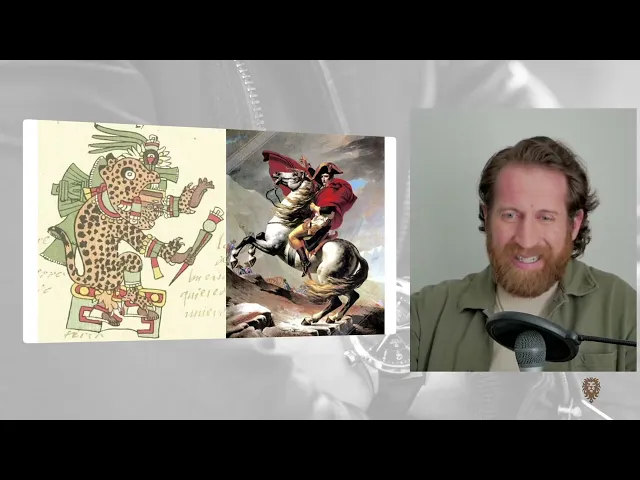
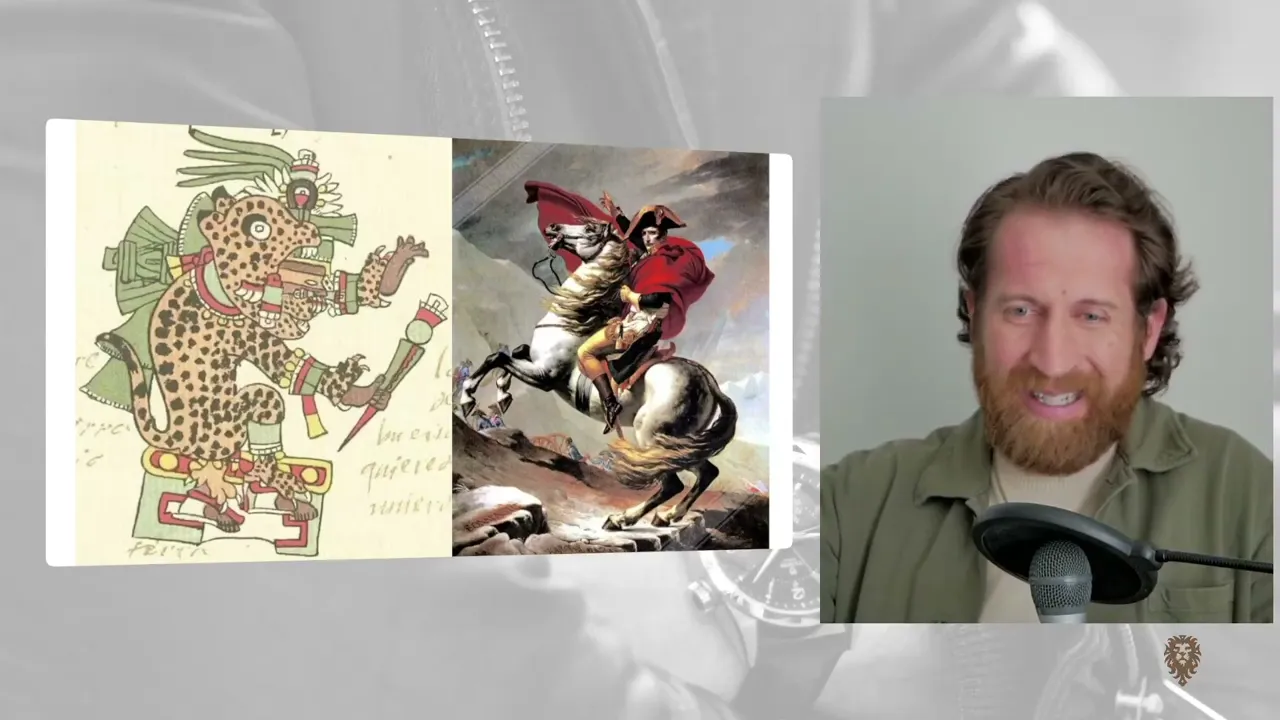
this is actually who I am but it's more about I feel like this superhero or like this person when I put this clothing on by putting this on it puts me in the mindset and it puts me in the mode of being able to accomplish this and traditional cultures would take this to an even higher level so for example this this image over here on the left this is from the Aztecs and they had two different Elite Warrior classes they had the jaguar and the Eagle Warriors and they they quite honestly believed that by Dawning
Jaguar pelts or eagle feathers or different things that represented these animals and not only the animals but the gods that these animals represented that it granted them more stealth more strength more more agility more explosiveness it made them better Warriors in battle so this idea of strength was not only something that was communicated to their enemies and made them more intimidating because oh my gosh these guys are the the elite Warriors and I don't want to mess with these guys but it also internally rewired them to feel like they were more powerful and more potent
when they were in these circumstances the same thing that we saw all throughout the 19th century with different uh Warrior regelia or Soldier regelia if you go back you can look at pre-World War I and how that changed Warfare so many different Western cultures would wear these gigantic hats and a lot of times they would signal Rank and there wasn't any physical purpose to it other than to Signal rank but also it just made these men look bigger and we are hardwired to see things that are bigger than we are as scary and intimidating and
dominating and so being able to see this kind of historical ele is one of the things that helps helps us be able to get the context of that but it didn't just happen in this historical context this is something that we still see today for example in suiting and I know suiting is continuing to make its way out and continuing to die but when you look at suiting the way that suits are designed where they've got the big lapels they've got structured shoulders and even the ones that have soft shoulders but then they have this
long open front end with these open quarters what this does is it creates a Vaper and so it communicates that I've got broad shoulders and a narrow waist which means I've got strong lean athletic dominant proportions and so even the way suiting was designed was a way and a method to communicate the masculine virtue of strength and again this is one of the things that I would encourage you guys to pay attention to and look at as you're out and about what are the things that different men wear in order to make themselves look bigger
or stronger or more dominant and then I would encourage you to be curious and see if you can determine by whether or not they're men that you know or the other things that you see about their posture their body language or anything else how much of this is rooted in confidence how much of this is rooted in self-consciousness and be able to see that a lot of times it can go both ways but there are still visual demonstrations of what strength are even in the clothes that we wear okay so that's strength let's talk about
courage courage is one of the ones that's actually very interesting because there are different historical manifestations of this you've got things like the metal of Valor which are this is a a medal that's only awarded to those who show particular bravery and and stuff like that Under Fire um but a lot of times you see it even in uh traditional cultures when it comes to like scarification or tattoos or the different things that they would only be allowed to wear especially young boys as they went through rights of Passage into becoming men and it was
something that you had to demonstrate the courage to go through you know having your hands bitten by bullet ants or being out in the wilderness and and surviving for a week without any different supplies and coming home with a with a prey that you had captured or whatever else these rights of Passage almost always included some measure of clothing or tattoos or scarification that represented the courage uh that was required in order to get through that and then we even saw this again to be able to kind of like demonstrate that there that this works
with with bad and with good men uh one of the things that you see a lot especially in like 20th century film and Cinema is that Nazi officers are almost always portrayed as having these very visible facial scars and this isn't just like a cartoon a cartoonify prior to the rise of of the Third Reich and everything else in German in the upper in the upper class schools there were fencing clubs that became very popular and the different young men who were part of this who were part of these upper echelons one of the things
that became very popular Within These fencing clubs was that you would you would get scars as a way to demonstrate your bravery and your willingness to to join these dueling clubs and to engage in these things and then these were the men because of their class because of their wealth because of their connections that were pulled in and used as officers for the Nazis and again not to demonstrate that there's any morality to this but this exists outside of a moral scale but even within 20th century civilized Western cultures scarification or different virtue or different
manifestations of courage and bravery still existed now one of the things that's so fascinating about this right now especially as we're coming out of culturally where things have been with different elements of uh online advents cancel culture um you know two different Financial crises and different things like that is that courage or at least overt displays of Courage are actually not seen as often as they used to be and more often than not and this is why a lot of men will again continue to profess that they don't care how they look because more often
than not it's safer to just keep your head down and not draw any attention to yourself and for most men there's a lack of social courage to be able to dress in a way that does draw any attention to themselves and so this is another one of the things that I would encourage you who are going into design specifically as it relates to men is to think about what are different ways that men do demonstrate courage within our current culture and how is that something that can be represented through their clothing and you can help
them be proud of and embody that even more all right let's move on to Mastery okay this is one of the things that again in Warrior classes was very obvious and apparent you had to earn the right to dress in certain ways not every Japanese soldier could dress like a samurai not every uh Aztec uh Soldier could dress like one of the uh the eagle or the azte or the uh the eagle or the Jaguar Warriors and even today within our current culture Stolen Valor exists because you you have to earn the right to be
able to dress as a soldier or a policeman or a fireman you have to attain a certain level of Mastery in order to be able to demonstrate through your clothing or in order to be able to wear your clothing and have things be represented that way we see that in different religious cultures for example the little hats that the that the pope and the Cardinals wear for the Cardinals they're red for the pope they're they're white and so it represents that status or that Mastery within that particular culture uh we see this even in different
intellectual classes that aren't necessarily physical uh you have to earn the right to wear a white lab coat this this is demonstrative of the fact that you've become a doctor and this isn't something that anybody can just buy and wear I mean you can but without that that Mastery it becomes a fake it becomes a sham and it becomes a problem not only for the fact that you're lying to other people about what the status is that you've attained but if you're an honest person it creates dissonance between who you are and what you're communicating
and you become self-conscious about it and so this is why we see things like lab coats or the green Master's jacket and golf or whatever else because it demonstrates a certain level of Mastery even in different martial arts Arts culture I train Brazilian jiu-jitsu and something as simple as the color of your belt I've seen men grown men who are very capable of violence and who are very stoic in many regards get emotional when their coach gives them a belt that is a different color now obviously it has nothing to do with the Aesthetics or
the visuals but everything to do with what is represented by the color of that belt the Mastery the labor the sacrifice the time the injuries the everything else that goes into to it and so we do still see manifestations of Mastery as it comes in today this is one of the things that's actually very interesting if you look at various different subcultures is a lot of times these demonstrations of Mastery are very subtle and very nuanced in ways that you don't get or understand unless you're part of the culture so for example let's take watches
which is one of the things that a lot of different wealthy or successful men will use as ways to symbolize things if you're not in the watch World maybe you recognize a Rolex over something else but that's it whereas guys who are in that space will recognize the different dial colors or the different faces or the different you know bracelets or this is a 38 mm versus a 40 there's all these little Nuance things that come in as a way to demonstrate Mastery it's the same thing with uh different music cultures you know if you've
got that one band t-shirt from when you went to a concert before they made it big and it was their first T there's a level of Mastery that's communicated with stuff like that okay and then the last one is honor this is one of those things that as we have moved away from being a very HonorBound society and we've become more of a individualized culture it's not the same strict thing that it used to be and so maybe a better way to think about honor is loyalty to a particular group so good example of this
over here on the right is that in different like Celtic and picked cultures uh you would wear a tarton um that was basically your family plaid every different Clan or family had a plaid that was unique to them and you earned that and wore it as a way to represent the different clan that you were from we still see this with gang cultures that you wear red or you wear blue or you wear various colors as a way to demonstrate loyalty to or honor within a different culture you go and you look at uh kind
of like Western and cowboy culture and when this first started to happen with the expansion into the West uh a boss of the Plains was the original kind of cowboy hat didn't have a lot of shape to it didn't have a lot of things that were represented by it and then as Cowboys moved and created different cultures the way that they would pinch the crown the way that they would fold the brim all of these different things became very representative of the state that you lived in or even the particular Ranch in which you worked
and and so it was something that was again very demonstrative of a loyalty to and an honor within these particular cultures or these particular tribes or these particular groups and we still see this today we just see it in very specific contexts right he did that for you guys because he's not an eagle I'm actually right and this is this is kind of fun right but tell me in what other context this man would put on makeup would put on something that's this ostentatious and is this obvious other than being able to show loyalty to
and honor within a very specific and tribal culture right this man isn't doing this to go to work he's doing this as part of the ritual and the involvement of I'm loyal to my team and I represent who these guys are and I'm I'm part of the tribe I belong here okay and so again from a design perspective from a styling or a coaching perspective how can you help these men find the different cultures to which they are loyal or to which they find honor and be able to demonstrate that within their clothing and so
all of this comes around to this idea of one of the things that I've termed and I use with my clients is the concept of EX Integrity okay basically it's an alignment of who you are on the outside is represented by or who you are on the inside is represented by who you are on the outside it aligns okay and the best way to think about this for these men for the vast majority majority of men is these three different A's so the first one is is my clothing authentic am I lying about who I
am to myself or to other people or when I see myself in the mirror do I see somebody that actually feels good and is representative of who I am I will tell you guys so 12 years ago when I started doing this coaching stuff I was more of a stylist than a coach and I would go out with clients and I would basically pick out things for them that I thought looked good or were on Trend or fit the aesthetic of what's unique to their patterns or their colors their proportions or whatever else and they
would feel really good about it when we're in the dressing room or when they're taking their after photos for me and without fail whenever I would check in on them six months later they were always back to wearing the same things that they were before we started working together because it didn't matter how good it looked if they felt like they were lying with their clothing if they felt like they were misrepresenting themselves or they were inauthentic they weren't going to wear that stuff men will always value authenticity over everything else now sadly for a
lot of guys what that means is they just play it safe because playing it neutral is better than not lying but when we can work with them and help them understand that you can have things that are honest and expressive and better than just not lying then that's where these guys can get even more authenticity this is where so many of my clients end up expressing more confidence a strong stronger sense of self more Integrity let alone more e exgr because they're no longer playing it small based on what they see in the mirror and
so they no longer feel like they're kind of limited in what that sense of self is and so the first thing is to be able to have it be authentic the second one is having it be articulate as you've noticed as we've gone through all these different slides and these different photos this is a language like anything else and I don't speak Japanese I don't speak tagalag I don't I don't speak Korean or whatever like and so those terms those those sounds that these that these different cultures create don't mean anything to me and if
we look visually at these different cultures they often don't mean anything unless you learn what that visual language is now what the challenge is with this for us in the 21st century is that we no longer have a homogeneous culture or even like different countries have their own kind of like homogeneous cultures with things like globalization and the Advent of social media we've balkanized and we've fallen into very specific subcultures or this kind of like Bland monoculture which means that being articulate is often more of a challenge and it doesn't mean it doesn't exist just
like you still see particular uh versions of slang that exist in different subcultures or businesses will use their own specific terms that are related to to them we see this happen in clothing and to help men understand that they can communicate these different virtues through that visual articulation is huge and then the last thing is that for it to be good style and for it to work it does need to be a aesthetic this is the stuff that you guys are learning in a lot of your courses as far as things like the golden ratio
and how pattern and proportion are visually affected color theory like contrast and warm versus cool tones and all of these other things and a lot of this abs absolutely does matter and one of the best ways to be able to help men understand that this matters is one it eliminates decision fatigue a lot of men get very intimidated by the idea of having to learn how to shop for clothes or I don't want to know what my colors are because it's just so overwhelming and something that's never been taught to them and they again feel
impotent because they don't know it and that's embarrassing and humiliating but if they learn how to be able to understand this and recognize that it's going to make things easier for them then it's a lot easier for them to put in the time and the effort to learn how to understand those different visual principles and at the same time if you can help them recognize that it does help them look healthier stronger leaner more athletic more charismatic more capable more friendly more open more of all of the things that they want to communicate then it
makes it easier for them to be able to glom onto and get excited about the different aesthetic visuals so I if there's anything that I can have you guys take away from this it's this idea of exgr if you who can help men whether again that's designing clothing for them or helping them learn to find and create their own style that represents something that is authentic articulate and aesthetic this is how we can get men back on track with being able to have a healthy dignified and appropriately masculine relationship with their clothing okay so that's
what I have for you guys uh I'm excited to answer questions so let's take the time that we have left and let's jump into it does that work for you