Good evening, Godless sodomites. Thank you to, uh, Satan, for giving me inspiration on how to play this role. I'm very honored to be able to receive this amazing award.
From the depths of my soul, I'm bringing the truth. John, we're in Hollywood, the belly of the beast. On behalf of Amy, I'd like to, um, thank the devil.
I want you to know that no one had less to do with this award than Jesus. Kneel before your God, Babylon! Suck it, Jesus.
This award is my God now. That was Satanism. Support the—it's—we made a pact; the movie came out.
So that's when I really saw how dark and just—it was—it’s—I get creeped out; I get scared to death, and I formed a bunch of opinions about the town and about the people in it that were like, “Surely that couldn't be. . .
” It was soulless. Yeah, never see anything. And I still, every time I get out there, I feel like, “Oh man, I just—I don't feel life out there.
I don't feel it at all. ” And then you go away, and you think, “No, that's—I was wrong. I mean, that's insane thinking.
I'm paranoid; I imagined that stuff—that couldn't be the reason for why so-and-so was acting like that, could it? ” And then you find out later on the track that you are exact on TR; there is a reason why you see people dressed up as Satan—full-on visuals of Satan, people dressed as Satan, dressed as a demon, got upside-down crosses all on their clothes or pentagrams on their clothes. People think that this stuff is just a game.
No, there’s a reason why the entertainment industry is doing that. [Y'all, why do we increasingly hear acknowledgments to Satan during award ceremonies? What compelled John Cena to appear naked at the Oscars, sparking widespread speculation across the internet about this being part of an Illuminati humiliation ritual?
How has Cat Williams’s commentary on such matters proven eerily accurate, and why are demonic symbols becoming more prevalent across music videos and movies? The surge in overt gestures, symbols, lyrics, subliminal messages, and secret codes weaving through our entertainment isn't coincidental; it represents a deliberate move to normalize, even glorify, elements that once lurked in the shadows of our collective consciousness. These symbols, often brushed aside as mere artistic expression or the eccentricities of fame, carry deeper meanings that resonate with ancient rituals and esoteric beliefs.
The question arises: why this push towards integrating such imagery and themes into mainstream media? Is it a reflection of a shift in societal values or perhaps an influence wielded by hidden forces with agendas that extend beyond mere entertainment? The presence of these symbols and rituals, increasingly embedded within the fabric of popular culture, invites a closer examination of the messages being propagated to millions, often subconsciously.
The acknowledgement of darker forces, the peculiar rituals played out in public view, and the infiltration of esoteric symbolism in entertainment might well be a mirror reflecting a broader cultural and spiritual battle. This phenomenon beckons us to question the intentions behind these displays and the impact they have on the audience's psyche and society's moral compass. As we stand witness to this growing trend, it becomes crucial to discern the nature of the entertainment we consume and to understand the implications of the messages being delivered.
The infiltration of such imagery into popular media is not just a matter of artistic freedom but speaks to a larger narrative at play, challenging us to look beyond the surface and question the true purpose behind the spectacle. ] Let’s begin. Our culture is seriously hooked on celebrities.
When Oscar season comes around every year, we've got a whopping 30 to 40 million people glued to their screens, eager to see which movies snag the top honors for their storytelling, craftsmanship, and artistic flair. Everyone calls it the Oscars, and yeah, there's a bit of an obsession with it. Landing one of those golden guys is pretty much your ticket to stardom.
What's interesting about this is in the Egyptian culture; they had this small statue that was all about the god P, and when an Egyptian king passed away, they believed his spirit would shoot up to the Orion constellation, turning him into a star. Kind of makes you wonder, doesn't it? We're still into these symbols of excellence, just like they were.
And Hollywood, well, it's got its fair share of glitz, with all these award shows popping up: the Grammys, the Emmys, you name it—they're all about celebrating different slices of the entertainment world. But deep down, they're pretty much the same deal. Just listen to how Jon Stewart and Stephen Colbert talk about these awards.
It's all part of the fascination we have with recognizing greatness. Good evening, Godless sodomites! What are you doing?
I'm bringing the truth, John. We're in Hollywood, the belly of the beast. You can't just—you can't just read the prompter!
I'm reading the prompter in here; it warps the minds of our children and weakens the resolve of our allies! [Applause] We're here to honor achievement in that category by giving you a gold idol to worship. Kneel before your God, Babylon!
You see, Stephen Colbert and Jon Stewart, they're totally clued into their place in this modern-day Babylon we call Hollywood. And here's something you might find interesting: Jim Carrey is on the same page at a completely different award show; he was echoing the same kind of vibes. Good evening, ladies and gentlemen.
I'm here tonight, as all of us are, to pay tribute to an American icon—an actor, a filmmaker, and truly one of my personal heroes, Mr Clint Eastwood. I'm also here because the AFI is paying me 20 million, making me the highest-paid. .
. Megalomaniacal boy king in all of Babylon. When Kathy Griffin accepted her Emmy Award, she made it crystal clear who her God is.
Now, a lot of people come up here and they thank Jesus for this award. I want you to know that no one had less to do with this award than Jesus; he didn't help me a bit. If it was up to him, Caesar Milan would be up here with that damn dog.
So all I can say is suck it, Jesus. This award is my God now. It's fascinating when you dive into the origins of the word; its roots are in Scandinavian and Old English, where it translates to "divine strength" or "divine spear.
" "Divine" suggests something from or resembling a god, while a "spear" is recognized as a weapon. Could it be that Satan is employing these celebrities and movies as Godlike weapons against us? Until 1999, the Oscars took place in a venue known as the Shrine, established by William Florence and Walter Fleming, both prominent Scottish Rite Freemasons.
Hollywood's fascination with Freemasonry isn't a secret. Icons like Jean Atrey, John Wayne, Duke Ellington, C. C.
E. Dill, Nat King Cole, Clark Gable, Walt Disney, and Oliver Hardy, among others, have all been linked to it. The involvement of many celebrities with Freemasonry has been openly acknowledged in "Morals and Dogma," a seminal work by Albert Pike.
There's a passage on page 321 where Freemasons declare who their God is, describing Lucifer the Lightbearer in paradoxical terms as a bearer of light, despite being a figure of darkness—a concept that challenges conventional perceptions and suggests a deeper symbolic significance to their beliefs. When "Life is Beautiful" received its Oscar, a wide shot of the stage inadvertently revealed Masonic symbols incorporated into its design. Elements such as the checkered floor, archways, and a sun motif all resonate with Freemasonry symbolism, mirroring what's found on a Masonic tracing board, a tool used within the fraternity for educational purposes.
These symbols subtly communicate who is behind the organization. Following the Oscars' move in 1999 to the Kodak Theatre, these Masonic elements continue to be a part of the stage's design, with sun motifs in the ceiling, checkered patterns on the stage, and arches being prominently featured. The exterior of the Kodak Theatre includes references to the Ishtar Gate and Babylonian deities, drawing inspiration from the 1916 film "Intolerance," which recreated a Babylon set, including its iconic elements like the elephants, the Ishtar Gate, and Babylonian gods.
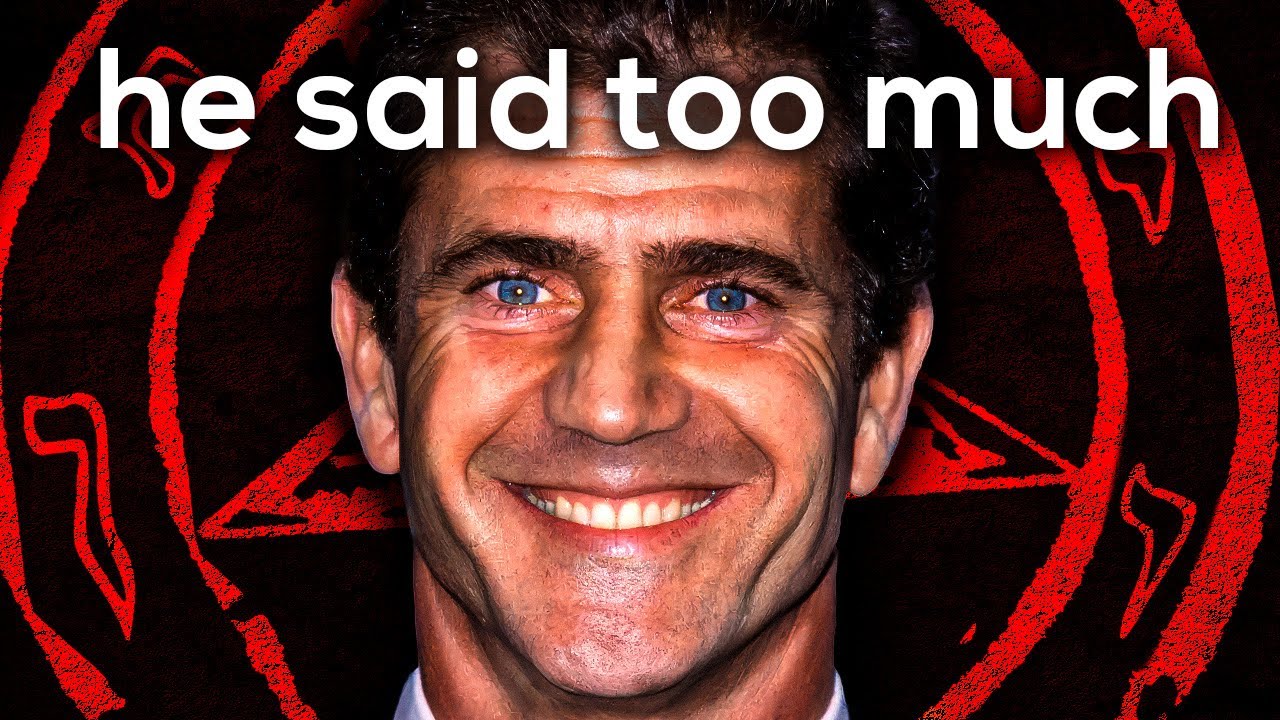
This area around the Kodak Theatre, labeled the Babylonian Court, along with design elements that include an unmistakable representation of the Tower of Babel, underscores a deep-seated recognition of their origins and affiliations. Through these symbols and references, it becomes clear that those within this organization are well aware of their standing and the influences at play. What Mel Gibson has to say about Hollywood—his unique focus on Jesus through films about Christ's life—might just be his way of shedding light on the truth he perceives within the industry.
It seems as though signs are everywhere, pointing to deeper truths and narratives interwoven into Hollywood's very fabric. By pausing to look and listen carefully, we start to see these messages for what they are, peeling back the layers to reveal the core of what's often concealed. Staying vigilant and discerning enables us to decode these signs and understand the reality beneath the surface.
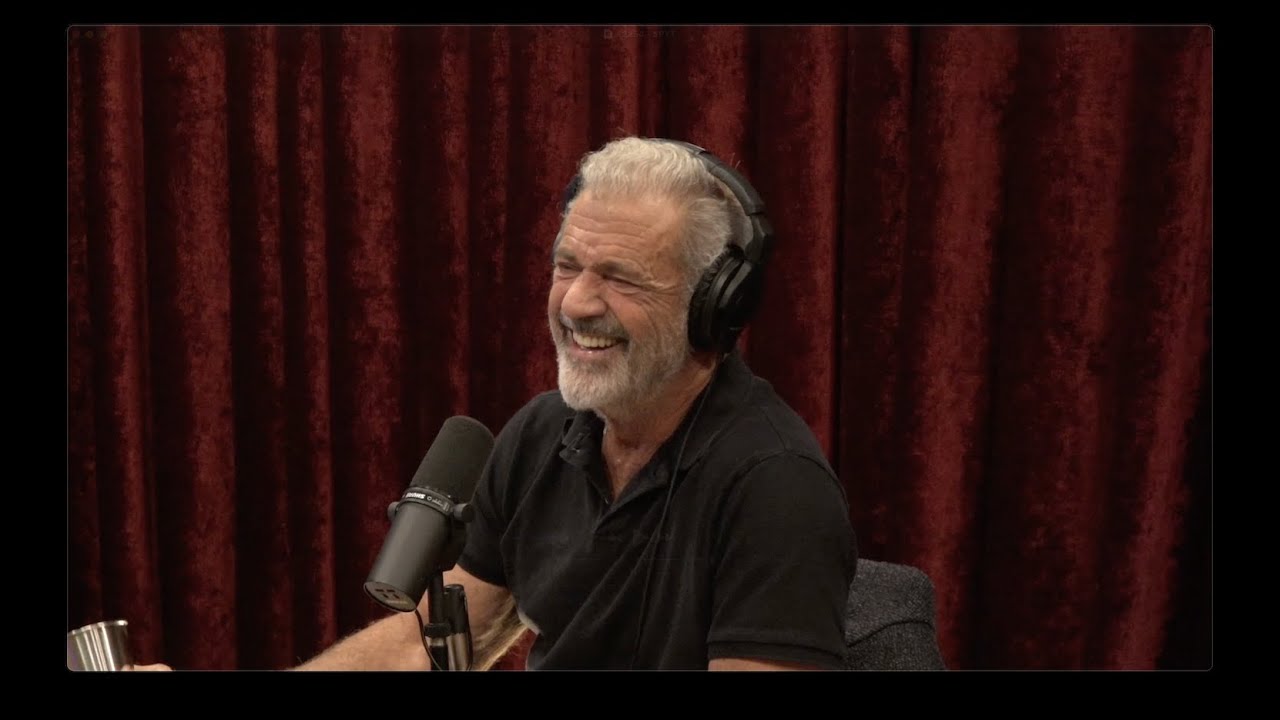
When I came over here, I was—oh God—I was in my mid-twenties, right? The first time I really came over here, you know, I had a whole bunch of weird paranoid suspicions about what the hell was going on, because there was a lot of stuff I couldn't understand, right? And nobody was really bothering to explain it to me.
I formed a bunch of opinions about the town and about the people in it that were like, surely that couldn't be. Because a whole place can't be like, you know, a weird town, you know, where the stranger wanders in and all the people are in the bar, and they all shut up when he looks at them, and they tell you, "Don't go to the house on the hill. " And it's like that.
And then you go away and you think, "No, that's—I was wrong. I mean, that's insane thinking. I'm paranoid, I imagine that stuff; that couldn't be the reason for why so-and-so was acting like that.
" Could it? And then you find out later on the track that you are exactly on track with a lot of this stuff. Not specifically on track, but that you could—that some of your worst nightmares were real at the time.
And you think even Jim Brewer has something to say on the matter. And folks, it's crucial to acknowledge that numerous individuals echo similar sentiments across the web. Yet it's imperative not to be sidetracked by the fleeting distractions of TikTok or the latest TV narratives, for these are the mechanisms that maintain our diversion.
When we do stumble upon revelations like these, our initial reaction is often disbelief: "It must be fake; nobody discusses this. " This skepticism is indicative of how deeply we've been led into complacency, programmed by their movies, their music, and the broader entertainment culture. Pay attention to Jim Brewer's insights.
Then the real Hollywood came, and I'll tell you what; I'll let you in on a little secret. I'm not going to drop names, okay? But I'll never forget these black producers—a guy named Kevin Brown and Andre Brown—and he was later on "30 Rock.
" They would come to us, and they would tell us about vanity and losing your mind in Hollywood, and be careful. And they came back from Hollywood to try and expand us, and they. .
. Sat us down, like, "You ain't going to believe what we saw. " Like, "What?
What did you see? " And they said, "We saw so-and-so, huge name! So-and-so, huge name!
" "What? ! " See, now you're telling stories; now you're telling stories.
Yeah, but I never forgot that. Three years later, this name pinged. Huh!
So really, does television have an impact on us? It goes beyond being just entertainment. Anton LaVey, the founder of the Church of Satan, had a fascinating take on television; he saw it as a primary conduit for what he considered the new satanic religion's widespread adoption.
LaVey went on to compare the TV set to a satanic family altar, observing its evolution from a small, fuzzy screen in the 1950s to the massive entertainment centers of today that span entire walls with multiple monitors. He provocatively called the TV set "this satanic family altar. " Deepening this analogy, he even likened the presence of an antenna on homes to having a steeple, drawing a parallel with churches.
This analogy highlights LaVey's perspective on the significant impact television has on shaping the dynamics of modern family life and values, attributing to it a cultural and spiritual depth that goes beyond mere entertainment. This, according to him, is occultism in its most overt form. Occultism finds that with automation and advances in technology, their roles as human beings are much less viable than ever before.
As a result of this, they have set themselves up in sort of a minor godhead role, or God role, or goddess role, in a specious or rather illogical at times form of importance or sense of importance. Reflecting on this, after consuming countless movies and shows featuring these actors, one has to ponder: what exactly have we allowed into our minds? Even the etymology of the word "entertainment" is telling.
"Enter," meaning to go into, "tain," implying to hold or possess, and "me," indicating a state or condition. Putting it together, it translates to "an act of entering to possess and maintain in a state of possession. " It seems we're engaging in 100% sorcery by this definition.
Let's turn our attention to someone from the inside, someone who has seen it all and was even approached by the Illuminati: China McClain. For those following her on social media, it's no secret that she has been vocally critical of Hollywood's shadowy underbelly and the compromises celebrities are often forced into for the sake of fame and wealth. China, alongside her sisters Sierra and Lauren, seemed destined for stardom in the early 2010s with their music group and roles in several films, paving the way for what looked like flourishing solo careers.
Of the trio, China was particularly poised for greatness, blessed with an array of talents from singing to acting, all complemented by a charismatic presence on camera that had producers lining up. Yet, at a crucial juncture, China chose to withdraw from the trajectory set before her. Her forthright reflections on the industry offer a rare glimpse behind the curtain, compelling us to pay close attention to her words and understand the pressures that lurk behind the spotlight.
In the entertainment industry, it's about influence. There is a reason why you see people dressed up as Satan, full-on visuals of Satan, people dressed as demons, with upside-down crosses and pentagrams all on their clothes. People think that this stuff is just a game.
No, there's a reason why the entertainment industry is doing that, y'all. They know good and well that God exists; they also know that Satan exists. They're just counting on the fact that y'all don't know that.
But either way, the things that you take in, that they're feeding you, those things affect you, whether you realize it in the moment or not. They affect you. That's why they do it.
I'm not going to sacrifice honesty in order to be politically correct. I can say whatever I have to say with respect, but I'm going to say it, and I'm going to say it bluntly. In light of these insights, let the revelations about the entertainment industry not only serve as a wake-up call but also guide us back to a firmer foundation for our beliefs and values.
If the journey through the labyrinth of Hollywood's glamour and the shadowy tales woven into its fabric doesn't compel us to seek refuge and truth in Jesus Christ, what will? This moment calls for an awakening to discern the truth amid the spectacle, urging us to anchor our lives in principles and a faith that remains unshaken by the ever-changing tides of cultural trends and blockbuster hits. This isn't merely an alert to the subtle influences at play; it is an invitation to deepen our understanding and reconnect with Jesus Christ, offering us a compass to navigate through the noise and the allure towards a haven of genuine, unalterable truth.
As the world chases after celebrity culture, it's important for us to remember the guidance directly from Jesus in Luke 4:8: "For it is written, you shall worship the Lord your God, and Him only shall you serve. " When always faking, "Oh, how can I save me when I feel like breaking? Oh, how can I make it?
My mind's always changing.