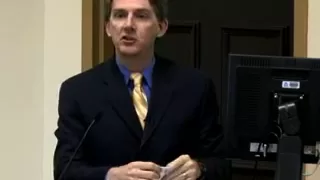
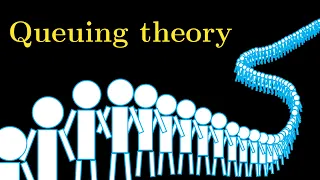
thank you for inviting me uh my name is Dick Larson I'm from MIT and my nickname is Dr q q e e as in Waiting lines and qine spelled the British way with the uh e stay stays in at the end and the ing if you play Scrabble it's great because you got five vows in a row that that's really Val valuable but every Q is a business opportunity and every Q poses problems so we're going to think about it do you know that up to uh many millions of Americans spend up to two to
three years of their waking lives in cues of various kinds they do and I can explain that if you uh want to talk to me about this so I think of our Our Lives as lives on the line lives on the line literally and figuratively and um also you could say well to cue or not to cue that should not be the question that should not be the question so how do we think about queing well when was queing Theory born well it was born by an engineer the Danish telephone engineer AK erlang in 1909
to 1915 and he was assigned the job of figuring out what the Q capacity should be of central telephone switches in Copenhagen and from then over 10,000 technical mathematical papers have been written about queuing Theory and believe me I teach some of this stuff at MIT so I know this I invented some of it myself all right I confess then but there's another aspect to Qing that was born in the mid 1950s and Walt Disney and Mickey Mouse are I would give credit to inventing this they are the mellian expert on the psychology of Qing
they're Geniuses and let me give you a simple example not a Mickey Mouse example but uh in New York City elevators after World War II high-rise buildings people found themselves living in high-rise apartment buildings buildings and they found themselves going to high-rise Office Buildings and they found rush hours for elevators just like they found rush hours for buses and cars and Subways all right so they think oh my god there were lots of complaints all of a sudden about rush hour delays for elevators in these buildings the building owners were getting complaints how do you
think about this well a traditional engineering approach here some engineer might go and say my God they really need eight elevator shafts at rush hour there are only four there's only one one solution Dynamite to building and start over again we're not going to do that okay so uh a fellow from Wharton School uh at in Philadelphia University of Pennsylvania went there and said aha we've defined the problem incorrectly it's not the duration of the weights for the elevators it's the complaints about the duration of the weights all right so if you think about that
how do I reduce the complaints you distract people you entertain people all right so in a moment of great lateral thinking inspiration this person put in one building experimental building floor to ceiling mirrors next to each of the elevators and then watch what happened guess what the complaints for elevator delay dropped to near zero problem solved nobody was complaining anymore sometimes men and women could even coily flirt with each other through the reflections isn't that interesting where they wouldn't do it with eye to eye contact a little bit too threatening and the duration of the
weights were unchanged so let's psychology of queuing is often just as important as the mathematics of queuing so that's the thing now I could tell you about loads of queuing problems there's so many cues so little time today to talk about these things uh for instance you will find amazing the actual cue discipline Associated when you pick up a telephone waiting for a dial tone you don't think about it you're actually pick up a telephone waiting for down you don't think that you're in a queue but you are and it can be a life death
Q if you're going to call 911 and that's a very bizarre queueing discipline and uh I'm prepared to talk to you about it if you want now before uh we started this evening many of you gave examples of cues you'd like me to talk about we have time to select two of these right here and you can see there are many over 20 suggestions from the audience this evening I'm going to pick out two just to indicate what my response might be to your your suggestions so number one pay admission to get into a Bank
lobby aha one of you lives in Manhattan and it's familiar with the Manhattan Savings bank now the Manhattan Savings Bank had no ATMs this is history because it's been gobbled up by a larger bank now had no ATMs had 13 branches in Manhattan and people who were well healed went there and did their transactions with a human how quaint a human face-to-face teller transaction all right well they wanted to reduce The Angst because everyone would go and do their transactions during the lunch hour and just like the elevator delays The Rush Hour the lines became
long so what's the modern equivalent to the mirrors the bank managers thought about that and they said aha let us bring in concert pianists and every day Monday through Friday from 11:45 until 1:30 we will have a concert pianist playing piano in our bank lobbies in Manhattan Savings Bank guess guess what this was so popular that this que actually people wanted to wait in queue longer and one day an entreprise uh an entrepreneur Enterprise and entrepreneur stood outside and actually sold tickets for cash to get into this Lobby that is number one okay all right
so thank you I could see you lived in Manhattan for some time thank you for that I appreciate it uh I don't want to be looking here so this is the second we only have time for one more let us see what it is from the audience oh boy you must be involved in politics multiple lawsuits in Ohio regarding Q delay in the presidential election of 2004 you knew that huh are you a lawyer for one of the sides do you know that there are over 20 lawsuits in the state of Ohio claiming that election
officials in Ohio deliberately under allocated service facilities like voting booths if throughout the state in order to make the queue so long that some people will get discouraged and leave and not vote and become disenfranchised um there was one case in a a college students who had to wait to 4:00 in the morning to vote so U I've actually participated on on one side as an advisor to to one of these lawsuits the largest one and so sometimes queuing can come up in in in weird ways it is a fact today that presidential elections and
other elections are run by local people who do not have never been exposed to Q in theory and so there as surprising as it may be there is no National Standard or even local standard for figuring out how many voting booths you should have how many helpers you should have all these sorts of things and so the queueing experiences that we experience exercise in our franchise as American citizens are extremely varied from 5 minutes up until six or seven hours and uh that that's the kind of Q science we want to we want to help
so that's the second one I don't have time this evening to go through but I can speak with you personally about the other suggestions you had here I appreciate your uh your attention this evening and if you want to talk some more give me a call at MIT be happy to talk with you