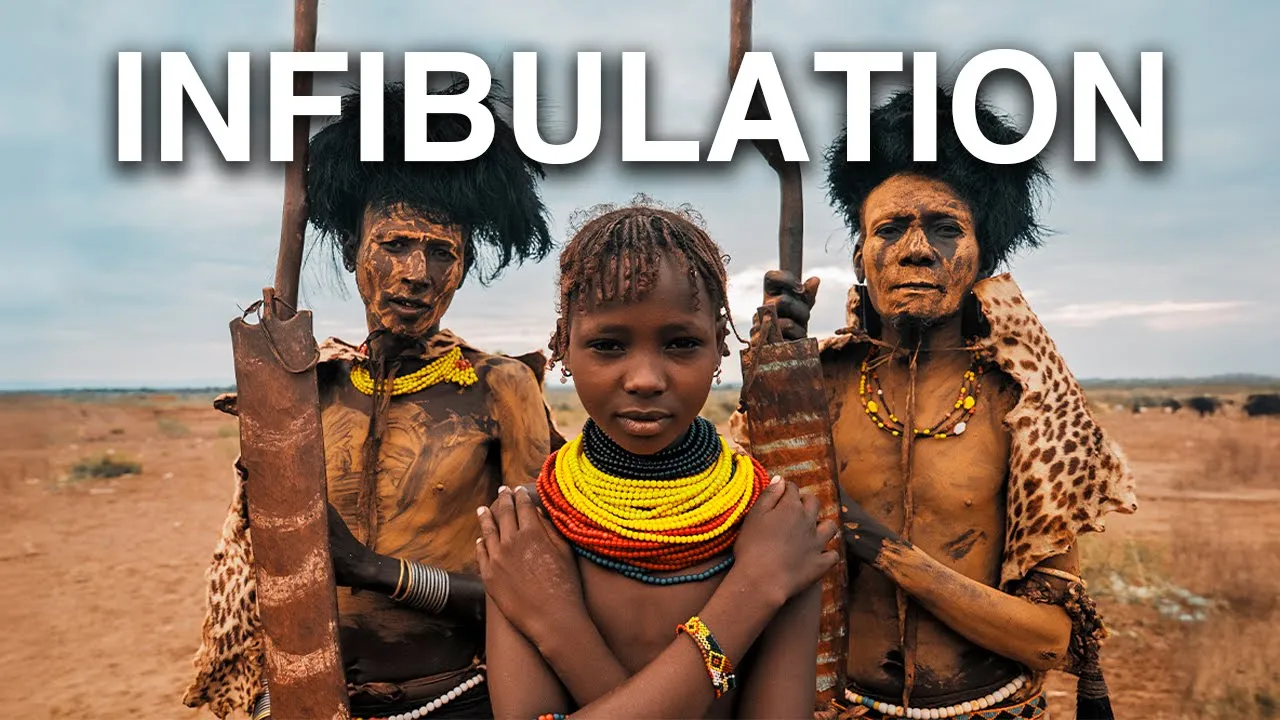
The "Dimi" is an ancient ceremony. No one will accept as a wife a girl who has not passed the "Dimi. " If the ceremony is not performed correctly, our lineage will be lost.
It will not be easy at all to document this culture that is. . .
so distant. We must call this ceremony by its real name: a partial or even total mutilation of the clitoris. If she refuses, I will convince her.
Without the "Dimi," our family is doomed. It is unacceptable for our culture. My name is Giuseppe, and I have a mission: to explore the most remote corners of the planet to meet the keepers of ancient secrets, men and women with extraordinary stories, lives capable of inspiring us and making us see the world with different eyes, and to each of them, I will ask the most important question of all: what is happiness for you?
A question so powerful that it reveals the deepest essence of humanity. Welcome to "PROJECT HAPPINESS. " This great adventure begins right here, at the Alduba market, a crossroads where the tribes of the Omo Valley, the oldest tribes on Earth, meet and interact, because this is a unique place in the world.
Imagine, these are millennia-old cultures merging and becoming immortal. Some of these tribes descend from farmers, and for this reason, they are now more structured societies with larger populations, while the groups descending from herders are more tied to nomadism, even though they are now becoming more settled, and then there are those that were once warrior tribes, where, let’s say, a certain social anarchy prevails. Immersing ourselves in this magical atmosphere is a true privilege, but we are here with a single goal: to gather information about the Daasanach tribe, one of the most unique tribes in the entire Omo Valley, because we want to live with them to discover, of course, what happiness means to them.
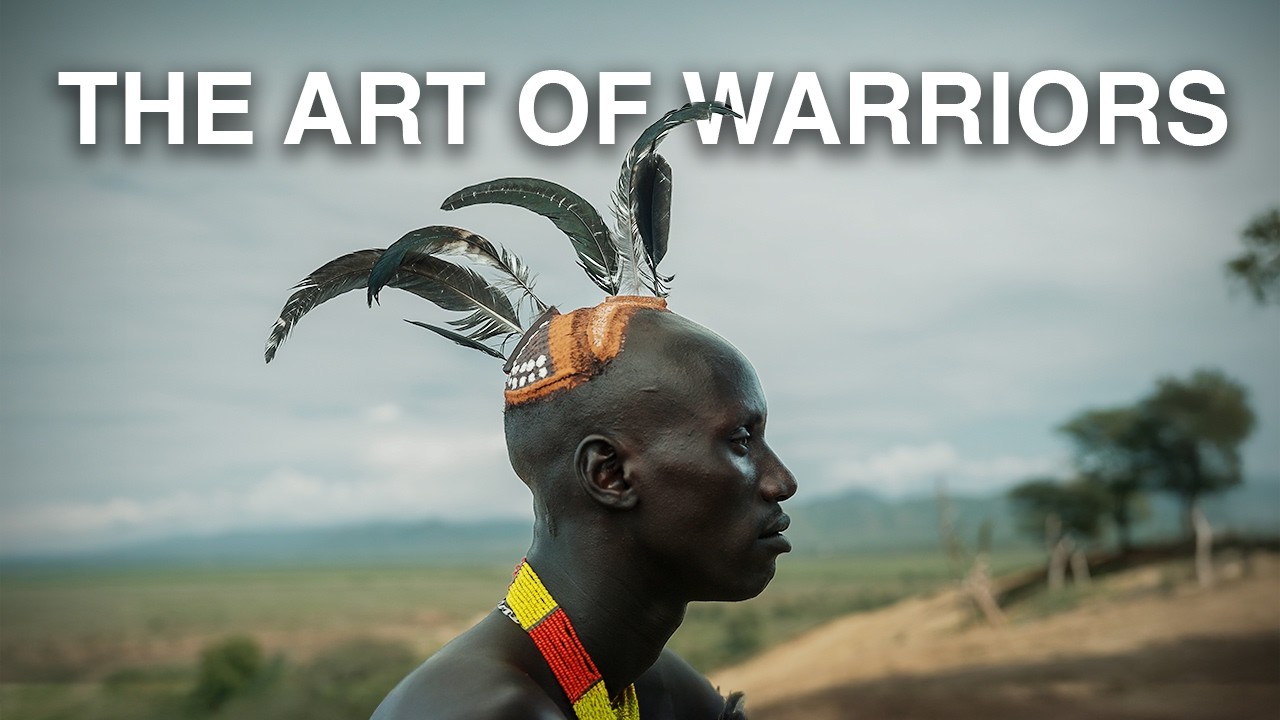
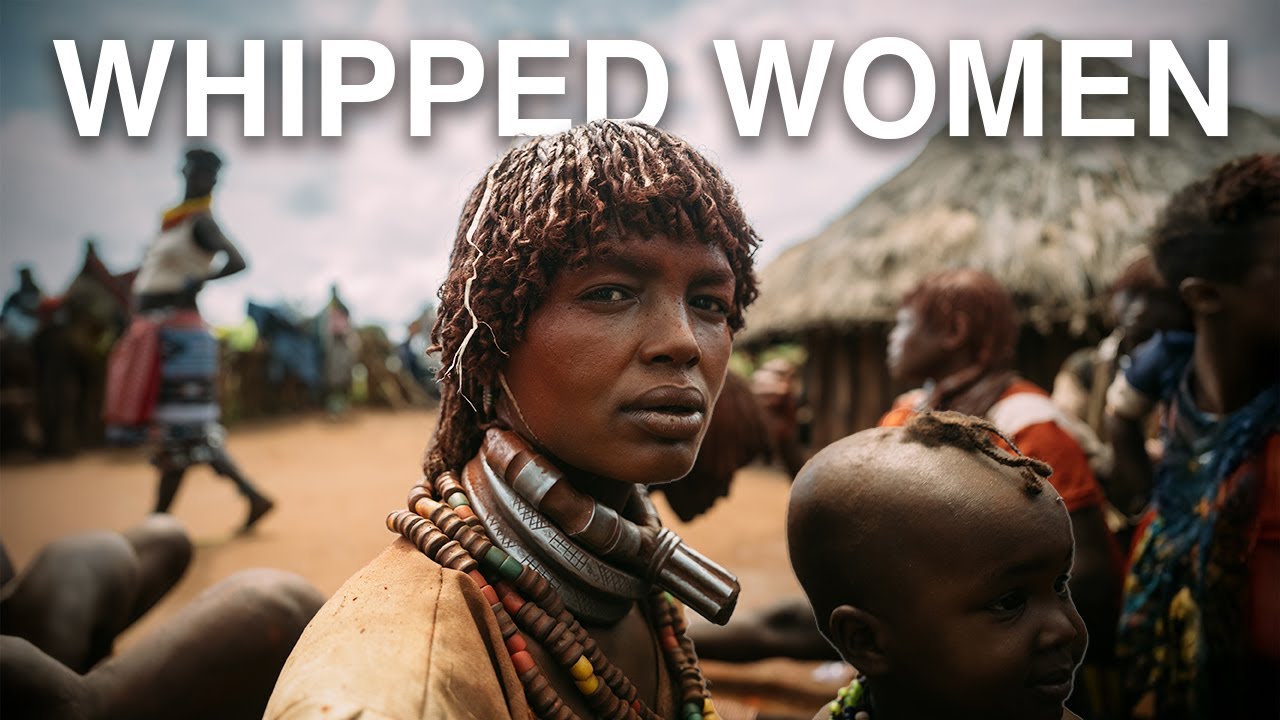
The Daasanach are a people of herders and warriors, keepers of traditions so ancient they are lost in time. Every gesture, every ritual, every mark on their bodies tells their story and their sense of belonging to the community. The Daasanach are not born as men or women; they become them.
But for women, the path is harder and marked by milestones that may seem unimaginable to us, such as genital mutilation. For them, this means proving strength, accepting sacrifice, and crossing a boundary that separates them from childhood. Only then will they be recognized as true women.
Here, tradition is law. It is not questioned; it does not change. But the road to reach their camp is long and full of surprises, like dances that suddenly take us by surprise.
Perhaps this is the most curious tribe in the entire region, now famous worldwide for moving on wooden stilts. They do it mainly to keep an eye on their livestock from above and to protect themselves from snakes hidden in the grass. While their bodies seem literally painted by the wind, white and black blend on their skin, inspired by the stripes of animals.
By now, they are quite skilled with the "ferenji," which is what they call foreigners. But the road calls, and we set off again. Now, six hours of dirt road separate us from the Daasanach village, but I want to take this opportunity to tell you about a special offer NordVPN has dedicated to our community.
Every day we browse, shop, and stay constantly connected. But how safe are we really? Cyber threats are now everywhere, phishing, malware, fraudulent sites that seem trustworthy, and just one wrong click is enough to put all your data at risk.
With NordVPN, however, your connection is encrypted, your IP is hidden, and your devices are protected 24/7. Thanks to the "Threat Protection" feature, you can block malware, dangerous sites, and annoying invasive ads, and with "Threat Protection Pro," you can even avoid fraudulent shopping sites that scam millions of people every year. But NordVPN is much more than just a VPN.
It allows you to change your virtual location to save on flights and hotels or access exclusive content from all over the world. And with just one subscription, you can protect up to 10 devices. I've left you a great deal in the link in the description.
By purchasing a two-year plan, you get 4 extra months and always have a 30-day money-back guarantee. And if you buy it by March 19, they’ll give you an additional 6 months for free, totaling 34 months for the price of 24, almost a whole extra year for free. Not bad, right?
As always, I've left a link in the description to try NordVPN with a money-back guarantee and discover all the benefits of browsing in total security. And now, we can just enjoy the scenery of this fantastic land. The journey continues, very long, but at least we have a wonderful view of the Ethiopian landscapes.
And we also get to absorb all the typical, daily customs of the Ethiopians, like our driver, who taught us that this is their toothbrush. He stopped for a moment, broke off a branch from a tree, and this became his "brush," his toothbrush, which he uses to massage his teeth. Honestly, they actually have really.
. . healthy teeth.
What is the name of this one? "Rigma. " "Rigma"?
Well. . .
the journey is long, but at least we are learning some typical customs here in Ethiopia. This is the toothbrush, at least when taking such long journeys in the middle of nature. You enjoy the landscape and massage your teeth and gums a bit while traveling.
And finally, there it is, the Daasanach village. From a distance, it almost looks like a lunar shantytown. Their low, rounded houses are made from whatever materials they can find: corrugated metal sheets, plastic sacks, pieces of torn fabric.
It's almost amusing how every time I try to prepare as much as possible for these tribes, studying their traditions and cultures, but then, every time I arrive, I am overwhelmed by a completely different reality that surprises me. Like this time, we expected a nomadic village with about ten of these tin shacks. Instead, there are hundreds and hundreds of them, stretching far and wide.
Because, in reality, we were "lucky"—we arrived at just the right moment. This very morning, the "Dimi" is about to take place, a hugely significant ceremony for them. It is a sacrifice performed on the firstborn daughters, young girls transforming into women.
In fact, all these huts belong to families from different, distant villages, but they have gathered here to celebrate the "Dimi" together. What you see behind me are symbols that tell us that inside these houses, there are girls who will participate in the "Dimi. " Like, for example, this leopard skin.
The leopard skin declares and confirms to the entire village that this family is preparing for the "Dimi. " And if you're wondering—yes, there are leopards in this village, and they are the number one enemies of the Daasanach. That is why they use it as a symbol—a symbol of passage, of transformation.
But there is another symbol you see here—let me show you—these sticks. These sticks protrude like antennas from the Daasanach houses. It is said that in this house.
. . there are three girls.
One older—see, there's a tall pole, a large stick indicating that there is a girl ready to become a woman. And two smaller ones, meaning there are two little girls. So, in all these houses, you can see there are girls.
In this one, there are two girls, and in that one, there are two more. And you can also see the leopard skin, which, believe it or not, is passed down from father to son for generations. For the "Dimi," to celebrate the "Dimi.
" It's truly fascinating to see how even the Daasanach houses have evolved over time. Because, as you can see, they are clearly made of tin sheets and scraps, waste from the modern world. But they weren't always like this—let me show you, you can clearly see the difference.
If you look here, this house is made of tin sheets, pieces of rubber, and. . .
animal skins. Before, the houses were entirely made of animal skins. Now, however, they have been replaced with metal sheets.
These obviously offer better protection from rain during the rainy season. And, of course, they are easier to find. There are fewer and fewer animals, so now, all the houses are made of tin sheets.
The most interesting thing is that they are built and assembled by the women. It is the women who take care of the house. Now, they have become these domes, tin domes, which from a distance look like lunar domes.
Let’s put it that way. The fathers of the girls prepare for the ceremony, painting their bodies with natural pigments, carefully mixing red earth, charcoal, and ash. It is an ancient ritual, passed down from father to son, and today, for them, it is a moment of pride and responsibility.
They are about to guide their daughters through a passage that will mark their lives forever. It will not be easy at all to document this culture that is so distant from our world, because, in the end, we must call this ceremony by its real name: it is called female genital mutilation. Because the culmination of the ceremony, the rite of passage from girl to woman, is excision.
That is, a partial or even total mutilation of the clitoris. The goal is to prevent the woman from ever feeling pleasure during sex, during intercourse with her husband. And so, this is what the girls must go through to become women.
This rite of passage, however, is practically mandatory for all these girls. They don’t have much choice. Because if they don’t go through with it, they won’t even be accepted by society.
They would even be treated like. . .
animals. I feel almost confused being here. It will not happen today—today is not the day of the excision.
From now until the coming months, there will be songs and ceremonies to give these girls strength and courage. Only then will they undergo this transformation, this passage. But it is also true that when I document ceremonies like this, it is difficult to remain objective.
Because the truth is, we are here, immersed in the lives of the Daasanach. Here, it is culturally accepted. It is normal, even necessary, to become a woman.
For us, it is barbaric. So, take everything I say and show you with caution. Because, clearly, I will have to try to put my emotions aside and show you this part of the world as well.
The village is buzzing with activity. Everyone is preparing for the ceremony. Right now, fathers and mothers are getting ready, decorating themselves with clay.
They are dressing in leopard skins, ostrich feathers. And now, they are about to begin the dance, the opening dance for the "Dimi" ceremony. Here, every role seems clear.
Everyone knows exactly what to do. But the more I look around, the more I feel the weight of this moment. Because it is not just a ceremony—it is the beginning of a transformation.
And while everyone around me is getting ready, I feel a tension in the air. A mix of respect and confusion, because what is about to happen will change everything—forever. When a daughter is born, we know that one day we will have to celebrate her and guide her into becoming a woman.
And we celebrate the "Dimi" ceremony when our first daughter is ready. If we did not do it, our family would have no honor. We will dance together until the cattle and goats are sacrificed, and then we will all eat together.
The parents' dance is almost hypnotic, and knowing that it hasn't changed for centuries shows how important it is in their culture. To truly understand what I am witnessing, I need to ask more questions. Why is this ceremony so important to you?
The "Dimi" is much more than a ritual. It is proof that a family has honored its history and its roots. We have all celebrated this ritual since the time of our ancestors.
Not celebrating it could have negative consequences for our people. I am proud to celebrate it for my daughter and to make her a woman. I have seen many "Dimi" ceremonies in my life, and each time it reminds me of who we are.
If you could, would you spare future women this pain? No, because the procedure is very quick. It is done with a knife, as it has always been, as all the women before us have done.
Every woman must go through this trial—it is a blessing for her life. Every detail must be perfect. The body is prepared, adorned, and carefully taken care of by the mothers.
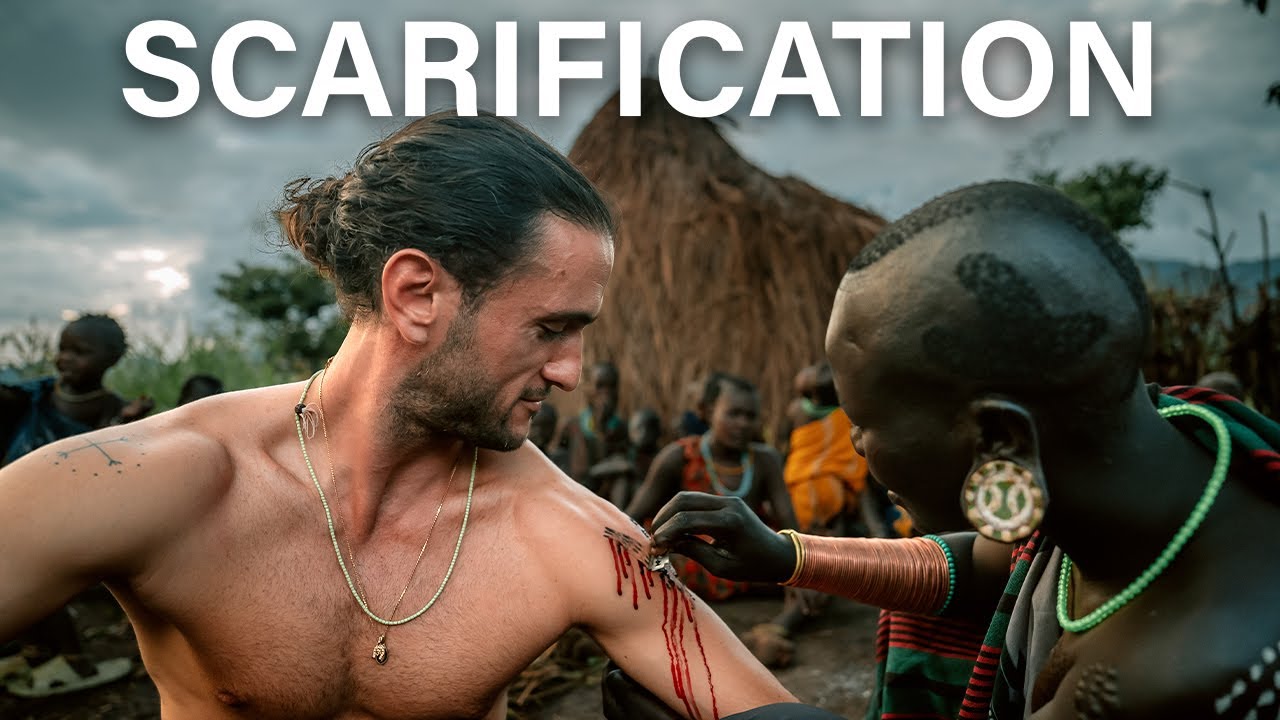
Every line on the skin, every carved mark, tells who we are. The body speaks before words do. Here, beauty is our strength, it is our courage, it is something everyone must see.
On that day, the young girls will wear women's jewelry, and their lives will change forever. Every gesture on that day has meaning. Everything must be done as it has always been done.
The elder’s hands grip the iron, preparing the skin that will soon change. It is painful, but must be faced with courage. Her skilled hands follow the ritual as it has always been performed.
The knife moves quickly, and you barely feel anything. What would happen if a girl did not participate in the "Dimi"? When a girl is mature, the ceremony must be performed.
It is usually at the age of 15 or at the first loss of blood. If she refuses, I will convince her. Without the "Dimi," our family is doomed.
It is unacceptable in our culture. Would you ever marry a girl who did not go through the "Dimi"? No one marries a woman who has not undergone the "Dimi.
" She would not be considered a woman, and I could never marry her—it would be a disgrace. One day, it will be our turn, but for now, we are still little girls. When the time comes, we will be ready, because that is how it must be.
I thought it would happen at 14, but I had to wait. Now I know that day is coming. It will be the moment when we bring honor to our family and become women.
It is our tradition, and we are not afraid. In the eyes of the younger girls, I do not see fear. For them, this transition is not a choice.
It is simply the way it has always been. And they do not ask themselves if, elsewhere in the world, some might even find it unthinkable. Because this is their reality, passed down from generation to generation, never questioned.
I can't hide the fact that there are moments like this when I feel lost. I look around and see a world so different from mine, a world where traditions and cultures are intertwined in ways I can't fully comprehend. The "Dimi" is obviously a sacred ceremony for the Daasanach, but it also leaves a weight on my heart.
In my world, practices like infibulation are seen as barbaric. And they are, because of the physical, emotional, and human consequences they bring. But here among the Daasanach, it’s not that simple, because here it is tradition, here it is identity.
And it is the way these people give meaning to life and the transition from childhood to adulthood. But this is precisely where I ask myself what my place in all this is. I am here to observe, to document, but can I really just watch without judging?
And even if the answer may seem simple, who am I to do so? Can I truly understand what it means to them? Can I grasp how deep their connection to this practice is?
I don’t know. And maybe the role of a documentary filmmaker is not to find answers, but to ask questions, to look with empathy without ever forgetting the context, and to tell a story that allows others to see what I am seeing, but without imposing a truth. And so, this time I sit here, immersed in this confusion, trying to find some balance between respect for what I am witnessing and the weight of my own values.
And sometimes it's a little harder, but maybe that's exactly the point. Telling a story doesn’t always mean solving something, it also means. .
. trying to understand.