Well, look at you. You made it. Thought maybe the sign was too faded for anyone to find us anymore, but here you are.
That’s a good start. Name’s Elijah, by the way. Elijah Whitlock.
You’ll be stuck with me for the next few hours, so might as well get to know me a bit, huh? I’m not much for small talk, and I don’t like pretending to be someone I’m not. You’ll see that real quick.
I’ve got a way of talking that some folks call “too plain,” but plain’s what keeps you alive out here. I was born ‘bout ten miles from where we’re standing, give or take. Grew up in a two-story farmhouse with a sloped roof that leaked like a sieve by the time I was seven.
My dad was a trail guide. His dad too. My mama worked in the local library, sorting books and telling off kids who tried to skip school to read the scary ones in the back.
She used to say stories were how the mountain remembered things. My granddad said stories were how the mountain warned people. I was twelve when I started tagging along on these tours.
Just to carry packs at first. You know, fill water bottles, clean out the charm bins, things like that. I didn’t speak to the guests.
Didn’t want to. I’d watch my daddy out front, though—telling stories like they mattered, not like they were just for fun. That stuck with me.
Now I’m forty-six. Been running Mountain Ridge Tours for twenty-two of those years. Company was started in ’74 by my uncle—Uncle Ray.
Called it Mountain Ridge ‘cause the name felt honest, not too shiny. But if you hear someone from town call it “The Dollar Charm Company,” well, that’s us too. Not an insult.
More like a quiet joke everyone’s in on. See, we sell charms. Iron bits.
Salt pouches. Little sage bundles tied with twine. Every one of ‘em’s a dollar.
Just a dollar, no more. Been that way since day one. Not because we’re cheap—but because they work.
And if something works, you don’t put a price tag on survival. Least, that’s how my folks raised me. Board tried to change it.
Said we should charge five bucks, then ten. Make ‘em fancy. “Luxury protection,” they called it.
I told them no. Told them that mountain things don’t like it when you get greedy. They thought I was being old-fashioned.
Maybe I am. But I’ve seen what happens when people don’t listen. Anyway.
That’s enough about me for now. You’ll hear more soon, whether you want to or not. You’re not just guests.
You’re part of this now. And there are rules. But first, I want you to breathe in deep.
Smell that? That’s pine. That’s moss.
That’s wet stone and cold dirt. Welcome to the mountains. I’ve been out on this trail more times than I’ve been to the grocery store.
I know every twist, every root that catches your boot if you’re not paying attention. I know where the moss is always damp, even in July, and which rocks never quite dry out. There are places where the light feels different and the trees lean in a little closer, but none of that means much unless you’ve walked it enough to notice.
I notice. That’s what happens when something becomes a part of your rhythm. Mountain Ridge Tours has been running since 1974.
We’ve always been small, and we’ve kept it that way on purpose. No expansion plans. No merging with anything.
Just a couple of folks who know the land, taking small groups into the woods, showing them around, telling the stories that belong to this place. It’s a job, sure, but it’s also something more settled than that. A quiet responsibility, maybe.
Something we grew into. I come from a line of people who knew these trails before they were even called trails. My grandfather used to say you could walk half the county just by following where the deer stepped.
He was one of the first professional guides around here, back when that wasn’t really a job people knew how to describe. He taught me how to read the tree line, how to watch the sky for shifts in weather, and how to keep your voice low when you’re past the ridge. I didn’t understand that one when I was a kid.
I do now. When I was twelve, I started coming along on the tours. Carried the water packs, cleaned up after the groups, listened more than I spoke.
That’s how you learn out here. You don’t jump in swinging stories around—you stay quiet and pay attention. Over time, you start to notice what people overlook.
You notice what never changes. That’s how I ended up leading the thing myself. I’ve been doing it longer than I thought I would.
People still ask the same questions, still forget their jackets, still laugh when I mention the old practices like they’re part of the show. That’s fine. I don’t mind.
What matters is what we keep doing. And one of those things is the charms. They’re nothing flashy.
Little iron loops, bits of salt, dried herbs wrapped up neat. You’ll see them tied onto people’s packs or tucked in coat pockets. We don’t make a big deal about it.
It’s just something we’ve always done. I carry one myself. Most of us do.
Now, before we start the tour, we’ve got a few rules to go over. Nothing complicated. I’ll walk you through them.
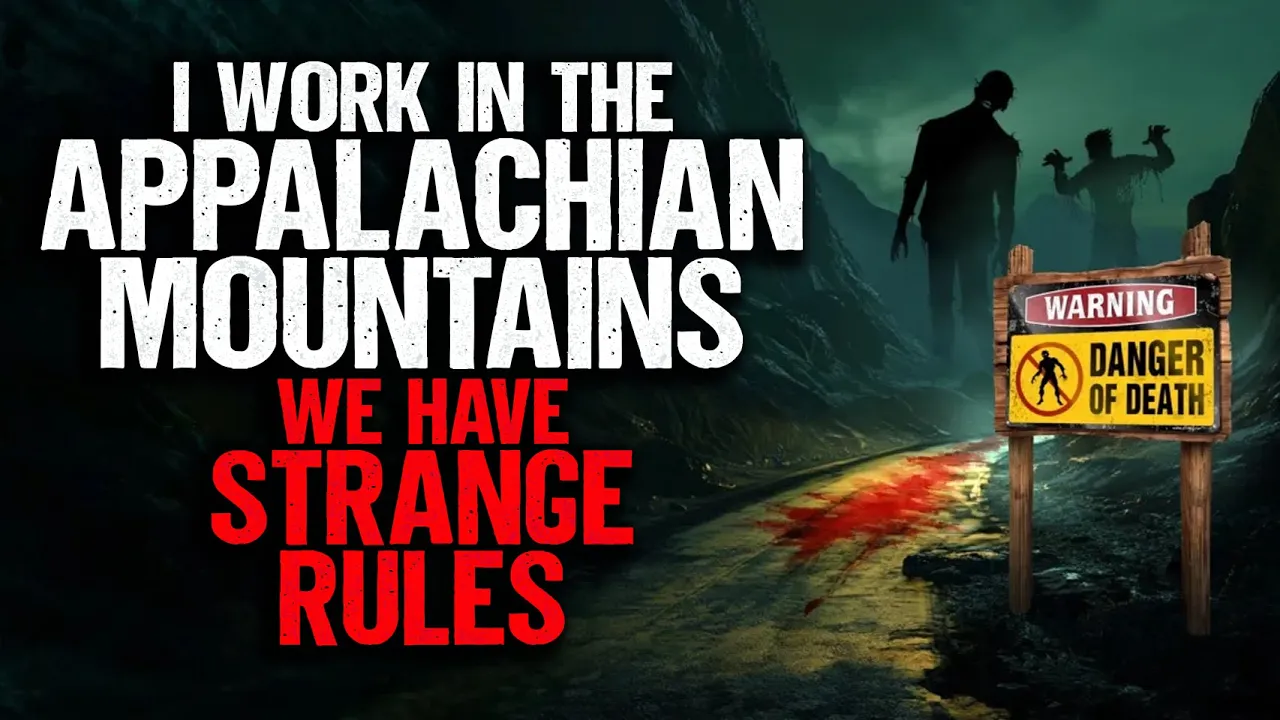
RULE 1 Most folks figure they know how to behave on a trail. They see the dirt path, maybe a wooden post or two, and figure it’s all just for show—helpful, sure, but optional if you’ve got a good sense of direction. I’ve seen people start wandering just five minutes in.
They see a deer trail cutting off to the right or some flat stone stretch off to the left and think, what’s the harm in stepping off for a bit? They always say they’re just trying to “get a better view” or “check something out real quick. ” It’s never just a quick thing.
Out here, even one step in the wrong direction has weight. So I always start with the first rule, same way every time: stay on marked trails. We keep our trails simple and easy to follow.
We don’t loop them in weird ways or send folks climbing through bramble or creek beds. Everything’s marked, and we mark it the same way people have done for generations—three short lines carved into the trees. You’ll see them along the path as we go.
Some are fresh, some are older. We keep them up to date. Three lines, vertical, spaced like someone pressing three fingers into soft wood.
Back before folks started calling it a tour, people marked safe paths like that because they learned where not to walk. And that’s the real point of it—it’s not just about where you should be. It’s about where you shouldn’t.
There are parts of these woods we don’t walk through. Not anymore. Maybe not ever, depending who you ask.
The stories are older than my family. Older than anyone who’s still alive now. They talk about something out past the marked lines, something big that moves quiet and slow and doesn’t like being stepped over.
The old folks called them Giants, though nobody ever really described them like the ones from storybooks. Every so often, a hunter or a hiker would come across a bone pit. That’s what they called them—bone pits.
Not because they were deep, not really pits at all, just circles where the earth had cleared itself out and left behind a pile of gnawed-up remains. You’d find bones cracked in strange ways, like they’d been chewed by something with too many teeth in the wrong places. They weren’t animal bones either.
Sometimes there’d be ribs too wide to belong to deer, or spines that didn’t quite match anything we know. And sometimes, if you dug around—which you shouldn’t—you’d find old things mixed in. A rusted canteen.
A cracked flashlight. Bits of canvas. Zippers.
I found one once, years back. I was with another guide, Harold—he was a much older man with back pains, had been around since I was a kid. Said he still did the tours because it gave him something to do.
We were checking the lines after a storm knocked some markers loose. Just maintenance. Nothing unusual.
And we came across a low clearing, maybe twenty yards from the marked path. The grass there was yellowed and dead. And in the middle was a scatter of bones, neat as if someone had arranged them for a photograph.
I asked Harold how long they’d been there. He crouched down, didn’t touch anything, just looked for a while. Finally he said, “These bones are new.
” Then he pointed to a bit of cloth half-buried in the edge of the clearing. “That logo stopped printing in ’91. ” And then he stood up and walked back to the trail without another word.
That’s when I started carrying ash. Older guides carry a little pouch of it, nothing fancy. Just cold fire dust from cedar or hickory, something burned all the way through.
Some of us sprinkle it along the edges of the trail. Not every time. Not everywhere.
Just the spots where it feels like the path gets too quiet, too soft under your boots. It’s not a warning for what’s coming. It’s a reminder of what’s already here.
You’ll feel it if you step wrong. Not right away. But the ground changes.
It gives a little, like stepping on mulch that’s still alive. Warmer too. I had a guy once—late fall, light was fading early—he wasn’t paying attention, stepped about three feet off trail to get a picture of a squirrel.
Took one step, maybe two. I called him back. He laughed, said something about not going far.
But when he stepped back onto the path, I saw the bottoms of his boots were dark, damp-looking. We got back to the lot before dusk, and while he was brushing off his soles, something small fell out of the tread. Looked like a pebble.
He picked it up. It was a tooth. Too small for an adult.
Too flat for an animal. Didn’t say anything to him then. No point.
Some things aren’t going to make sense right away. You don’t have to know the stories. You don’t have to believe them.
You don’t have to carry ash or charms or repeat old sayings. But you do have to stay on the marked path. That’s not just our first rule.
That’s the one every other rule depends on. It’s easy to follow. Easier than any of the others, really.
You just keep your feet where they’re supposed to be. You stay where the lines say stay. You treat the edges like a fence, not a suggestion.
And if you see a gap between the markers that looks like a shortcut, you ignore it. Because it’s not a shortcut. It’s a door you don’t want open.
So yeah—Rule One’s simple. Stay on marked trails. That’s it.
You keep your feet where the path says to go, and you enjoy the tour. We’ll take care of the rest. RULE 2 Alright.
So the first rule’s about where your feet go. The second one’s about what you bring with you. And when I say that, I don’t mean water bottles or bug spray—I mean a charm.
Something made from the right materials, meant to be kept close while you’re out here. That’s part of how we do things. You’ve probably seen them already, even if you didn’t realize what they were.
Iron nails on string. Bundles of sage wrapped in red thread. Little pouches of salt tied shut with twine.
We keep them at the station, laid out in small trays by the window. Every single one costs a dollar. Not because we’re trying to turn a profit.
The board told us we couldn’t give things away. So we chose the lowest price that would still mean something. When you pay a dollar for something and choose to carry it, it becomes yours.
That’s the idea. You took it willingly. You chose to bring it with you instead of walking past it.
That choice is the important part. People around here have used charms like these for as long as anyone can remember. The materials were always things they had on hand.
Iron from a horseshoe. Salt from the kitchen. Dred herbs from the hillside.
But they didn’t just grab random items—they used what their parents had used, and their parents before them. Each one had a meaning, and a reason for being carried. Iron’s probably the most common.
It’s steady, solid, simple. Salt was used to keep spaces clean, to keep things out. Sage and rosemary helped with clarity and protection.
Sometimes you’d see cedar or pine in a bundle, tied with hair or thread from clothing. Some people made their own, passed them down, or gave them away when a neighbor had to travel. I remember my mother tying a nail to my backpack before I ever stepped foot on the trail alone.
Said it wasn’t about fear. It was just about being mindful. My grandfather tucked a sprig of rosemary into the lining of his hat and never took it out.
Didn’t talk about it. Just did it, every day. There wasn’t anything mysterious about it.
It was part of how they lived. We’ve kept that practice going, even when people started thinking it was old-fashioned. Most of the guides wear one somewhere.
I’ve got a salt pouch stitched under the collar of my jacket, and a knot of sage twine in my left boot. Nothing showy. Just part of the uniform, the same way you check your flashlight batteries or lace your boots tight.
You prepare the same way every time. Sometimes people ask if the charms really work. I don’t try to answer that.
It’s not my job to convince anyone. What I do know is that these things have lasted for a reason. They came from people who paid close attention.
The kind who understood when the forest felt off, or when a trail went quiet too fast. You don’t throw out knowledge like that just because it got old. But more than anything, these charms remind me of two things.
First, they remind me of respect. You respect the land, and it tends to respect you back. Most of the charms we use are made from things that come from the forest itself—wood, stone, herbs, ash.
That’s not coincidence. That’s part of it. Old folks used to say that when you carry something made from the trail, the trail will recognize it.
It’ll think of you as part of itself. And when that happens, it’s more likely to look out for you. You’re not just passing through, you’re part of something.
Even if it’s just for a little while. Second, they remind me of home. My favorite charm is a small stone wrapped in red twine.
My daughter found the rock when she was six. Handed it to me like it was treasure, said I needed to carry it on every walk so I’d always find my way back. I tied the twine around it and slipped it in my pocket, then sewed the pocket shut so it couldn’t fall out.
That was twelve years ago, and it hasn’t left my side since. It reminds me that there’s someone waiting for me at the end of the trail. That I don’t just follow these rules to keep everyone else safe.
I follow them to keep myself safe too. I’ve got no interest in playing the hero out here. I’ve got people to come home to.
Always have. So when I say carry a charm, I’m not being dramatic. I’m saying—be prepared.
Walk smart. Take care of yourself. We’re not here to do anything fancy.
We’re not diving into caves or chasing legends. We’re just here to walk the land the way it’s meant to be walked. So that’s the second rule.
Carry a charm. Something real. Keep it close.
RULE 3 We’ve talked about where your feet go. We’ve talked about what you carry. Next, we need to talk about what you leave alone.
Rule Three: Don’t collect feathers. That’s one most folks don’t expect. It sounds harmless, I know.
You see a feather on the ground, it catches the light a certain way, looks like something worth keeping. You think maybe it’d be nice to bring home—tuck it in a book, show it to someone, take a picture first, then stick it in your bag. But out here, we don’t do that.
And we don’t let our guests do it either. We leave feathers where we find them. You’ll spot them all over, especially near the water or under low branches.
Mostly small ones. Grey, brown, white if it’s from an owl. And now and then, you’ll see a black one.
Longer. Heavier. Clean like it was just dropped, not like it fell off something weeks ago.
That’s when I usually step in, before someone gets too curious. The reason we don’t pick them up goes back a long way. Feathers have always meant something more than just a piece of a bird.
Around here, they were seen as messages. Not written in words—just signs that something had passed through, or left something behind. Some feathers, especially the black ones, were believed to carry weight.
Not physical, not something you could measure, but something tied to spirit or memory. Things that don’t sit easy in a backpack. Stories from the older families say that certain feathers don’t come from regular birds at all.
They belonged to animals raised by medicine women, witches, and other people who dealt with the in-between places. If one of their birds died, or was punished, or offered up, its feathers weren’t just left behind. They were marked.
Not with paint or carving, but in ways that can’t be cleaned off or seen properly. You touch one, and it stays with you. I don’t tell this to scare folks.
I just tell them what’s been passed down. There’s enough repetition in the stories that I’ve learned to listen. Too many hikers over the years picked one up thinking it’d make a good souvenir, only to end up sick within a day or two.
Same symptoms every time—chills, fever, sometimes even shaking fits, like their body forgot what normal felt like. Hospital visits. Tests that came back inconclusive.
Some get told it’s pneumonia, some get tagged with hypothermia even if the weather was warm. They’re sent home and left wondering why they can’t shake the cold. I always ask the same question when someone calls in to report it: did you take anything off the trail?
Most won’t admit it right away. Some never do. But once in a while, someone’ll call back two days later and say they found a feather in their suitcase and threw it out.
Then the fever breaks. Not always. But enough times that I take it seriously.
You don’t have to understand it. You just have to leave the feathers where they are. Now, there’s one more thing you should know about—something a little different from the rest.
There’s a crow that shows up from time to time. You’ll know it if you see it. Bigger than the others.
Doesn’t fly off right away. Watches you, tilts its head like it’s waiting for you to say something. That one’s been around longer than I’ve been doing tours.
Some of the guides say it’s the same bird every time. I don’t know how that’s possible, but I’ve seen it enough to believe it. It doesn’t bother anyone.
Stays just far enough back not to startle you. If you offer it something, it might take it. Bread, crackers, biscuit crumbs if you have them.
But what it really likes—what it always goes for—is mint-flavored Tic Tacs. Not orange, not cinnamon. Just the plain mint ones in the white box.
I don’t know who figured that out first, but now we keep a few on hand just in case. Sometimes it walks part of the trail with us. Not often, but when it does, I pay attention.
Most times it just perches in a tree, hops along behind the group, disappears and comes back again. It never makes noise. Never seems lost.
Almost like it’s checking in on things. And if someone ever does get separated from the group—which, by the way, is rare but not impossible—I tell them one thing before we go looking: if you see the crow, follow it. Doesn’t matter what direction it heads.
Just stay with it. It has a way of leading people back. Every single person who’s followed the crow has made it back to the station before sundown.
No phone calls, no GPS. They just show up, walking out of the woods like they never left the path. Some things out here don’t need explaining.
They just work. RULE 4 There’s one more rule I want to cover before we get moving. It doesn’t take place at the start of the tour, but it’s important you understand it now.
Because like everything else we do out here, it’s not just habit. It has a reason. Rule Four: We end the tour with a ritual.
Nothing complicated. Nothing showy. Just a few words spoken at the end, when we’ve made it back to the gravel and the trail’s behind us.
It doesn’t take long, and it doesn’t require anything from you except your attention. You don’t have to memorize anything or repeat after me. You just stand still, listen, and stay quiet while it’s done.
Some people think it’s a formality. Something we do for tradition’s sake, or to round things out neatly. That’s fine.
If that’s how they want to think of it, I don’t argue. But if you’ve lived here long enough, and you’ve walked the same trails over and over, you start to notice how different it feels to leave the forest without saying anything. You carry something with you when you do that, and not always in a good way.
The ritual is simple. You stop at the edge of the trail and thank the land. Not loudly.
Not to perform. Just a quiet thank-you to the space itself. To the woods, the paths, the weather that held steady.
To whatever let you pass through without trouble. You thank the forest for allowing you to walk it, and for letting you go home when you’re finished. We do that every time, no matter the weather, no matter the size of the group.
Sometimes it’s just me and one other person, and we still stop. You say the words, you mean them, and then you leave. That’s how you keep things balanced.
The land around here has always belonged to other things first. People forget that. They think because there’s a parking lot and a map and a wooden sign, that it means the land’s been claimed.
That it’s ours now. But it’s not. Never has been.
We’re guests, plain and simple. Short-lived ones, passing through someone else’s home. The old folks used to say the land keeps its own time.
That there are spirits in the trees and under the soil who were here before people showed up, and who will be here long after we’re gone. And not just spirits—there were stories of actual folk who lived out here. Fairies by the old trees that curve like doorways.
Goblins near the water, in little dips where the fog clings low. Red giants in the cliffs, far enough up the mountain that you never really get close unless you’re not paying attention to where you’re walking. I don’t know how literal it all is.
Maybe it’s more feeling than fact. But I believe the point still stands. These woods don’t belong to us.
We’re just borrowing space. That’s what the ritual’s for. It’s how you let the land know you understand the terms.
And when people forget to do it—or worse, decide not to—I’ve seen the way things change. One time, someone led a group without the proper sendoff. A new hire who thought the ritual was optional.
A few weeks after that, a windstorm hit the ridge. Strong enough to snap trees and take down power lines. It tore up three campsites and sent one of the local dogs running off for a week.
Same guide never came back after that. We don’t say the ritual stops bad things from happening. But we know enough to keep doing it anyway.
Just in case. Just to stay in good standing. .
So when we wrap up today’s walk, we’ll stop. I’ll say the words. You’ll stand still.
That’s all. A simple ending, done the same way it always is. It closes the gate behind us.
Rule Four: End the tour with a ritual. Thank the land for letting you through. Then leave it behind.
EPILOGUE Well you’ve heard the rules now. Keep your feet where they belong. Carry something that means something.
Don’t take what isn’t yours, even if it looks harmless. And when the time comes to leave, do it the right way. I know some of this might sound strange, especially if it’s your first time out here.
Maybe you’re still thinking about how the rules feel more like suggestions. Maybe you’re wondering if all this talk of charms and old trails and fairies by trees is just for effect. That’s fine.
You don’t have to believe everything right away. I’ve walked this route more times than I can count, and it’s never quite the same twice. Sometimes you see something new just off the ridge, or hear a bird call you swear you’ve never heard before.
Sometimes the crow shows up. Sometimes it doesn’t. That’s part of the experience.
We don’t control the forest. We just move through it. And now, if everyone’s ready, we’ll get started.
Stick together. Mind the markers. Take your time.
It’s not a race. Welcome to Mountain Ridge Tours. We hope you enjoy the experience.