only the paranoid survive survive the life and death battles of global businesses the Fatal decisions the risks taken the mistakes made inside the boardroom we will make an Absolut huge amount of money if we're right the highest of stakes it was a real threat for everyone driven by Innovation all I had was something that I knew as disruptive it was viewed to be impossible blinded by fear Let's ignore it cuz we don't really know what to do with it desperate times and Desperate Measures that was the day that I had to go fateful consequences so
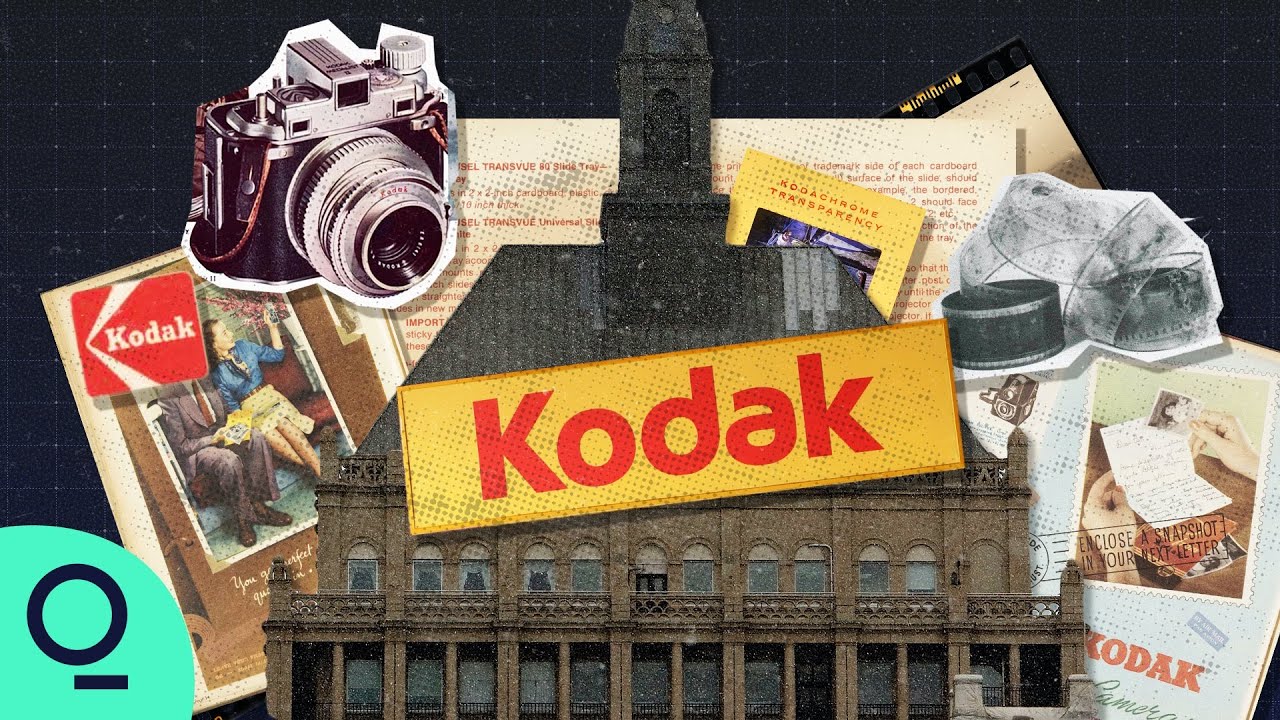
my only question would have been VI and the lessons learned the problem was they were wrong and it costs everything [Music] we're taking more of them than ever photos with a camera always at hand why not they're free and fun last year we took a whopping one trillion photos according to the latest research they're emailed shared uploaded across the world in an instant they are what you might call Kodak moments prior to Kodak of course uh Kodak moments did not exist in popular imagination um now everyone understands Kodak moments as the instant which you intuitively
feel needs to be preserved on film actually it's a 100 Years of Kodak moments because Kodak began 1880 and for the first time ever people were able to take pictures without having to go to an art studio and get a painting made or without having to go to professional photographer and have like a degaro type or a plate mate and it really took photography and made it mobile oh a Kodak moment is supposed to be a happy memory so much for the experts what about the rest of us oh a Kodak moment is when you
capture the moment of something very special that sends that picture home I don't know what the Kodak moment is I don't not know what the codak Our Moment is and what about these youngsters in a Singapore skate park do they know what a Kodak moment Isa I don't know no idea I've seen EDS TV and like [Music] YouTube system new from codc it's baffling kodc the company that pioneered photography for the masses and dominated the world of photos for a century has all but vanished for many consumers so just who is or was Kodak and
why has the Kodak moment all but disappeared to understand just what happened we have to travel back to ancient history the early 1990s Koda color VR films capturing America in all its glorious colors back then kodc was the dominant force in photography when you thought of photos you thought of Kodak Kodak was one of the Giants of its era at its peak Kodak controlled about 80% of the film Market in the United States which is the world's largest photography Market its name was synonymous uh with photography but the world was moving fast a technological Revolution
was sweeping across the globe and altering everything it touched we were changing out with the analog in with the digital in the midst of this massive and Rapid shift stood Kodak the company was huge at its peak it employed 145,000 people around the world and its profits were counted in the billions the company seemed indomitable it was the ultimate blue chip stock um it invested billions of dollars over the years in making the best possible um photographic film but the gross margin on film was close to 70% so you can imagine the kind of market
share and the kind of profitability that Kodak enjoyed for a very long time and what's more the giant Company by then a century old stood poised on the verge of an amazing breakthrough ushering in the new digital age and this man was at the Forefront I joined kak in 1973 and at that time Kodak was the place to work it was like going to work at Apple going to work at Google the first camera that I worked on at Kodak as an engineer was part of the lunar Landing program for the United States and this
camera actually went to the moon and took some of the first color shots of the Moon landscape but I was always interested in electronics my entire life so when the technology started to come around I started looking at how that applied to Imaging and that was my personal love Kodak and every time I had a chance to move my job further toward Digital Imaging I would always take that job by the time he was a vice president in the Imaging group at Kodak Strickland led a team working on a radical new form of picture taking
for the masses the world's first consumer digital camera Digital Imaging was a real excitement for me because it was viewed to be impossible the first digital images were really ugly I mean you could barely make out a person's face so it's just thinking how can you in a way way that produces a business at a cost that can be afforded combine all the Technologies it takes to come up with images that can compete with photographic images it seemed impossible to me and the first digital camera that we made was for the professional market and it
cost like $30,000 but technology was moving at break NE speed image sensors microprocessors circuits batteries storage devices all were getting smaller better and cheaper in 1991 a number of us had an idea about if we combine a number of these Technologies at Kodak into a small package we've got a digital camera and we could see that in Smalls siiz images this camera would be good enough and that's really what got me and a large part of my team interested in the idea that maybe there is really such a device as a consumer digital camera it
would be like nothing codc had made before a mass Market camera with no film tonight I'd like to show you one of the world's great cameras the Magnificent new retina reflex by Kodak kodak's business model was essentially a classic razor and Blade model where you give away razors for free because you can make money by selling blades Kodak never went into high-end uh still cameras a cheap $5 camera uses the same film as an expensive $5,000 camera almost no company can sell just cameras and make money because of course you buy one camera and you
keep it for 25 years and that has a very limited business model but if you sell film and you sell processing then you make much more money it's all about the film film had gross margins of 85% 80% huge photographic film is at the heart of codex d na its biggest Innovation and something which disrupted the existing world of Photography and it all took place in a town not far from New York I grew up near Rochester and uh my grandfather worked for Kodak he was an inventor and pretty much my uncle also worked for
Kodak everyone in Vester works for Kodak or did work for Kodak up until the ' 80s um so I was surrounded by Kodak my whole life and this is the original disruptor George Eastman the Eastman of Eastman Kodak a brilliant inventor who changed photography forever before Eastman photography was in the hands of the professionals Eastman made photography mobile no longer did you have to go to a professional's Studio One of the interesting things about the invention the innovation of the kod was to make it handh holdable and to be able to carry your camera around
with you which made it easy to take on excursions and therefore easier to make memories with Kodak further innovated in that direction by creating folding cameras that would go in your pocket what you would do is you would be able to open this up when you wanted to take a photograph and use this little prism as a viewer where You' be able to see or just range find which means just point it in the general direction of something that you want to photograph and press the shutter so when you finish with your Kodak you would
take all of the exposures and you would send the entire camera back to Kodak and Kodak would at the factory they would process the film put your negatives in sleeves they would print them all they would reload your camera and they would send the whole thing back to you and that's why George Eastman uh invented this slogan you press the button we do the rest CC approach was revolutionary but it was still a hard sell it was as corporate experts say too disruptive people needed persuading to break from the existing way of doing things and
codec came up with brilliant ways of making the pitch Kodak promoted this idea of of capturing not only happiness but Youth and hipster if you want to say sort of this quality of be staying eternally young and freezing a moment of of perfection and they marketed through the idea of the perfect nuclear family and um vacations holidays it is about that warm glow of people being away in the summer on the beach or having picnics or in the winter having sledding parties and that's what Kodak is all about sort of perfection but an almost unachievable
Perfection kodak's marketing was powerful and extensive it slipped into the Public's Consciousness changing behaviors to the company's immense profit Kodak created the Kodak movement they essentially gave you reasons to take pictures the first thing that they did did was they brought women into the fold they created an advertising Blitz which equated the idea of being a responsible housewife with somebody who keeps a meticulous record of her family's Evolution and growth and Records all the significant occasions in her family's life surprise Charlie the Kodak colorb 250 the only instant camera with the built-in flash the other
thing that Kodak did in terms of creat creating this Kodak moment was turning the idea of travel into that of vacation with Kodak this idea which essentially said uh a holiday without a Kodak is a holiday wasted if you've been somewhere and you don't have photos to show for it you might as well have not gone and its reach extended far beyond snaps of families enjoying their holidays and of its fabled Super Eight home movies during the 1950s 60s 7s and Beyond the company's pioneering technology allowed us to capture the world in extraordinary detail and
Clarity and not just this world kodak's equipment gave us some of the great images of space and the heavens above while its medical imaging allowed us to see deep into the workings of the human body underpinning everything Kodak did was consistency Global reach the same products the same quality wherever you were Kodak played a huge role in photography because for any technology to be massively used around the world you got to have a platform and the platform meets to have standards so Kodak by taking a platform and making everything lowcost but yet high quality was
able to drive the entire photographic industry um at least for 120 years for Kodak its very history and Origins defined its enormous success but as a secret project in Japan was about to reveal kodak's faith in film would prove too strong and its eventual undoing just as human beings do and companies are made of human beings at the start of the 1990s the giant American photography firm Kodak seemed Invincible for close to a century its products and marketing made Kodak the dominant force in photography if you thought of photos you thought of Kodak but everything
was about to change the digital and network world was coming fast it's interesting that throughout human existence we've always had change but what's happening is the change is getting faster and there are various estimates that the pace of change is doubling every 2 years 3 years 5 years and and it varies from technology to technology and inside codc there were some Visionaries who could see ahead we could see the potential of a consumer digital camera but there is one little problem that actually surfaced at lunch one day where I was talking with the number of
the executives in the consumer filmm business and I just happened to say oh I think my group can pull together a digital camera that's good enough for Consumer applications and the looks that I got at that time and the silence that followed kind of led me to believe that maybe this is going to be an uphill battle but so radical was the project for codc whose business was based on selling photographic film that Strickland kept it away from his bosses it was a stealth operation I realized that if I had develop that camera in Rochester
New York which is where we did most of the development it probably would have gotten killed so I went over and talked to our chief technology officer who was supportive of anything new and I said look you've got a research laboratory in Yokohama Japan what if I fund this program and we do it over in your research laboratory nobody in Rochester will know about it because nobody goes to Yokohama when they travel to Japan they go to Tokyo so in the early 1990s in a far-flung Outpost of the Kodak Empire Strickland's team set up camp
and were soon making excellent [Music] progress all was going just fine and until late 1992 a vpa marketing happened to be taking a tour of Asia and just happened to have been taken to Yokohama he just happened to go by the laboratory that was doing the camera just happened to get a demonstration of it and that meeting on Monday morning in Rochester with the executives began by him saying before our president finished he said excuse me does everybody know what Strickland's doing in Japan and I kind of tried to look innocent as best I could
could and he said I just been over last week he's developing a camera that doesn't take film and he said I saw some pictures on a computer screen and they looked pretty good to me and the body language in that room was one where I was thinking I want to hide at this point in time Strickland tipped as a possible future leader of Kodak was ordered to give a detailed account of what he'd been up to the very next day I spent the night putting together presentation creating images having a camera and I get the
presentation in about 45 minutes and I look around the room and the reaction ranged at worse from like darts and heads like this no way no fway are we going to do this the most positive was I don't get it it wasn't the first time that codex bosses had missed the promise of digital imaging as early as 1975 Kodak researchers had pioneered the first digital camera this is one of the most amazing things Kodak invented the first ever digital camera so it wasn't invented by the people who then developed it into Mass Market it was
developed by Kodak when the inventors showed their new film less photography to Kodak Executives in 1976 they were puzzled and beused the company did file a patent but then did nothing with the new technology it simply set it aside at that point the digital future seemed very far away and the Kodak Executives returned to the business of selling film there's an interesting report where the response to the management to the team that invented the first ever digital camera was reported as being that's cute but don't tell anyone by the time Don Strickland's secret consumer camera
project was discovered the world had moved on digital was gaining a rapid foothold everywhere but the view inside Kodak hadn't changed and it led to a difficult decision for him I actually lost sleep over the lack of support and also the negativity around people that did not understand and actively tried to sabotage digital photography and I lost a lot of sleep trying to figure out what to do you know ultimately I ended up leaving Kodak so what just happened maybe Kodak just asked the wrong questions today when people look back they say oh Kodak Executives
were wrong they they were afraid of cannibalization uh they were stupid or whatever that's not the case at that time when I laid out the concepts for digital camera camera I was asked very normal questions how many units will we sell over the next 5 years how profitable will the business be these are all normal questions everybody gets asked to justify a business the only problem was I couldn't answer any of them all I had was something that I knew was disruptive for a company that was founded on disruptive technology itself it seemed that Kodak
had forgotten its roots that is symptomatic of an organization that was built on Innovation and has stopped listening to the innovators there were a number of chances that Kodak had to a see the signals from the market B listen to the innovators inside C listen to the innovators outside but for some reason they were utterly determined not to do so Strickland decided to move from Kodak to a struggling young company with a reputation for Innovation and disruption it was called apple and they asked me different questions than the strategy questions at Kodak at Apple the
question is really what huge problem are you solving what incredible value are you creating and I could answer those you know digital and instant and the lack of chemicals and pollution I could answer those easily striking a licensing deal with Kodak Strickland was allowed to bring his consumer camera technology with him to Apple so what I was in the fortunate position of was having developed the camera at Kodak Kodak manufactured it and then sourced it to my group at Apple and I launched it in early 1994 as the Apple quick take 100 this is the
world's first consumer digital camera it works like this so just what lay behind kodc baffling decision to block the world's first digital consumer camera handing it and a possible future CEO into the lap of Apple if you look at incumbents in Industries they have resources and processes that are all vested in One Direction and then it's it's like trying to turn around the Titanic and you think okay here's this little disruptive innovation it doesn't fit with our gross margin it's not enough business for for us um Let's ignore it cuz we don't really know what
to do with it but ignoring it didn't mean it would go away Kodak was not paranoid enough it should have been more afraid I believe Andy Grove who used to be the CEO of Intel when he says only the paranoid survive so you have to keep looking over your shoulder what's coming and preparing uh for that Kodak was full of hubris because and perhaps rightfully so because they had created popular Photography they gave birth to popular Photography they were synonymous with popular uh photography um but they failed to break out of this world that they
had created themselves that world was based on what Kodak Executives called the silver halight strategy named after the crucial components in photographic film in short it meant prolonging the use of film and the company seemed to do everything they could to put off the Day of Reckoning trying an increasingly desperate range of hybrid Technologies such as photo CDs despite billions being spent it wasn't working the last big failure that probably convinced everybody that there really is not a hope here was when Kodak instead of going to the digital Technologies launched photoc CD in 1992 it
used digital Technologies to give more utility to film so you still used your film camera well nobody wanted to do that when that didn't work in another effort to prolong its film business Kodak turned to the fast growing Asian economies it made a huge1 billion US bet on China at the time one of the biggest ever investments in the country made by an American firm I think Kodak at that time was looking at the next big Market thinking we own almost 90% of the film Market in the US we need to look at where the
next Market is it's China and they could see a growing middle class that had the money to buy film and buy cheaper cameras and it made sense thinking let's take a successful business model and put it somewhere else but it would proved to be a hopelessly optimistic move Kodak made a number of assumptions which was one we have time the developing markets will start with film before going to digital and we will be there in China when that happens so it was a set of assumptions around success so far we've always known what our customers
wanted we've always given them what they wanted they didn't realize that consumers in China we're going to Leap Frog the whole film category and goes straight to digital as the company stumbled its competitors began booming but Kodak wouldn't give up without a fight in a letter to Kodak employees in 1997 the chief executive told staff competitors are making bold claims they claim they will dominate the future of this business we speak for the tens of thousands of people who work for Kodak when we say not on our our watch but despite its Defiance another Trend
was about to disrupt photography yet again and spell Doom for Kodak as companies fall into trouble and um they are their revenues are shrinking they begin to panic well while kodc was fighting a losing battle against a new form of Photography filmless digital snaps another massive technological change was about to make that whole battle redundant it was a technology that would sideswipe the firm and bring it to its knees the new technology in question is probably in your pocket right now the smartphone ironically it was foretold by codec but as with digital cameras the opportun
was missed when I visited Kodak in 2000 or 2001 um the person who was hitting their Digital Imaging division was an extremely uh bright fellow and very experienced uh fellow asked me casually you know what do you think of the idea if um we put a camera in a phone and at that time no one had actually heard about that so the idea in itself was a very clever idea and it wasn't that Kodak was unaware of these developments in the market it came back to creating the organizational platform from where such ideas could be
turned into products with a complete strategy uh behind it to capture value from these ideas as sales of smartphones exceeded even the wildest forecasts of a few years previously came not just new ways of communicating but new ways of taking photos the phone was what I call the killer app because to carry a separate camera is fine and people do that but once you put it in the phone that you always have with you and what's the image quality gets to be as good as you can get with a digital camera and you have video
and you have instant sharing you've got the killer app for Imaging right there in that phone [Music] this has had a profound effect on the digital camera Market smartphones had replaced dedicated cameras for many but yet again Kodak found itself left standing Kodak became so focused over time on its own product and its own business model that it lost sight of The Wider changes that were taking place in the environment why people were taking pictures and what they were doing with that so Kodak was all about orod product's business model essentially was based on the
notion of people taking pictures to preserve memories people were no longer taking pictures to preserve memories they were taking pictures to share them everyone can now take photographs on their phone and they keep those photographs on their computer uh they often don't print them there's there's no processing model left to be had they share them immediately via digital Technologies new billion dooll firms have sprung up to help us share these snaps Facebook Twitter Instagram you can share your photo with just one person or the world at the click of a button everything was a Kodak
moment now there was no price or no cost Associated by with pressing the shutter with smartphon suddenly everyone was taking pictures for a business like Kodak this was the death Nowell [Music] film isn't dead of course but today it's the province of enthusiasts and where better than Singapore's Chinatown for Avid Snappers for photographer Rachel Lim it provides a rich canvas for her work I like the way film gives you lots of surprises sometimes you know you're shooting stuff you don't really think that shot's going to work and then when you look at your negatives you
go like oh crap that looks really nice I didn't expect that turn out that way I love that that element of [Music] surprise but even for someone passionate about film-based photography she's not immune to the charms of modern technology uh yeah I use my smartphone um I use it for a lot of instances like when I'm in a public place and I want to shoot a sneaky shot and I don't want people to notice me it's those little little moments that I keep spying for and sometimes when I don't my film camera with me I
just use my phone it's quick you just snap it out I like instances where people are caught in the middle of doing something when they are completely absorbed by whatever they're doing they're lost in their own world for Rachel however handy a smartphone is nothing beats the qualities of old-fashioned photographic film it's all all about the way each grain kind of interact with each other I was really into the colors that Kodak film produced it was rich it was vibrant it's more intensified than the way uh digital pictures turn out so I felt quite sad
in a way that oh hey my teacher said that kodc is going to go down and bust and there I am falling in love with this film that's not cool Rachel is one of the fans but for most film was abandoned rapidly in favor of digital snapping the question remains why and how a company as wealthy and dominant as codc could misjudge the photographic World why didn't codc see this coming were its Executives asleep at the wheel or was this something deeper Kodak it comes down to what codc saw from Rochester New New York or
didn't see the problem is that all organizations have to look inside to make sure they do what they do as well as they can they also need to look outside to see what's going on in the market what competitors are doing and all the rest of it as organizations become more powerful more significant in terms of the fact that they are the precursor of that they stop looking out and that's when they start believing their own hype they all say well we're number one therefore we're safe no no I'm sorry the message is if you're
number one the only way is down and that's what happens it wasn't for lack of trying Kodak spent billions attempting to make up the ground it was losing to competitors as sales of smartphones rocket Ed and replace much of the existing consumer camera markets Kodak was in serious trouble Kodak did miss the boat on smartphone technology Kodak of course you know by that time it was already in trouble and as companies fall into trouble and um they are their revenues are shrinking they begin to panic and uh by then generally it is too late um
for for them to do anything by 2011 gripped by fear the company embarked on a frenzied fire sale of its valuable intellectual property a portfolio of patents valued at around $2.5 billion US was put on the market nearly a year later those 1100 patents sold for just $525 million Us by January 2012 the blea giant faced the igny of a warning from the New York Stock Exchange its shares now trailed at under a US dollar weeks later on January the 19th Kodak bowed to the inevitable and filed for chapter 11 bankruptcy protection the impact on
those who loved and worked at Kodak was huge from 2003 onwards codc closed down 13 plants and cut its Workforce by 47,000 and that was before it filed for bankruptcy Kodak going into bankruptcy I think hurt everybody and there were a lot of sad stories in that that difference very sad very personal stories and also anytime you see something that you've loved and you've worked hard at be destroyed you can't help but feel one hurt and also a bit a bit angry at that as well um the sad thing when I look at it is
from 1983 until 30 years later when it went bankrupt that's 30 years the company spent 25 billion ion doll in R&D about $25 billion and there wasn't one successful hit product in all that time that's sadder than Kodak going bankrupt or getting [Music] acquired after losing the battle for digital photography to rival camera makers and then to a new generation of smartphone users life would never be the same again for the once Mighty codak it was down certainly but maybe be not quite out uh it's impossible to say what's going to happen but it is
of course a tiny fraction of the company that it once [Music] was Kodak went from being the world's leader in photography to being a broken company in little over a decade the digital Revolution that swept the world destroyed its valuable business of selling photographic film once worth billions not going digital hurt kodc photographic uh industry in a way that it was never going to recover from and never will recover from uh it's impossible to say what's going to happen but it is of course a tiny fraction of the company that it once was and because
it didn't throw all of its energy and weight behind Digital Imaging but the story for Kodak is far from over it emerged from bankruptcy protection in 2013 albe it chastened and weakened today the old Kodak has evolved into two distinct businesses Eastman Kodak which operates in delivering Imaging Innovations for businesses and Kodak Alaris so Kodak is a new company it started 2013 it came from EAS Kodak today we have 3,500 employees across 34 countries so the company uh in the last two years is growing especially in Asia region behind the new business are Innovations developed
at the old codec such as scanning Technologies but perhaps of more value than this is the brand itself one that continues to resonate so the Kodak brand for kakaris is a very important Legacy that we We Care from from the Kodak how many customer relate kodaki as a good quality Innovation and a trust brand it's all a far cry from the company's Heyday it was a catastrophic collapse but could codex bosses have done things differently put simply was kodex decline inevitable my personal take on company's lifetime is that the thing that kills companies is their
own success more than anything else more than the competition for some the fundamentals of business success are not units sold profit margins and share prices it's something far simpler and far harder to fix it's psychology its people its attitude one of the things that is interesting is that people say that Kodak started getting like this when the digital age dawned that's not actually true because I think that Kodak started getting complacent even before then if you look at what was happening maybe late '70s early 80s in the film business Kodak was getting to the point
that it was complacent about its ability to control the whole Global photographic world for example Fuji started making significant challenges to what Kodak was doing and kodak's responses were effectively to say oh well it's only some Asian small competitor you know it's not significant we're Kodak for many years Japan's Fuji was kodak's arch rival yet Fuji survived the Advent of digital indeed it's prospered today it's valued at around1 19 billion us so how did Fuji Thrive while Kodak failed so spectacularly there are two different reactions to fear there's the companies Who start being concerned about
the eroding of their existing revenue of the inadequacy of their business model and they do something about it and and often it's quite drastic and when we talking about Fuji Fuji had to make quite a drastic cut um and they react around this Burning platform by saying all right we need to change one aspect is that Fuji Diversified more effectively moving into areas such as cosmetics and medical technology just as human beings do when companies are made of human beings and unless you get a COO that is radical and we were talking about Fuji and
how the co came in and turned towards digital and turned towards um Cosmetics did the opposite of his predecessor which for the Japanese company in Japanese culture was quite revolutionary and significant it also had a far looser corporate structure which allowed each business to run independently Fuji did not follow a strategic process like Kodak and most western companies did they follow followed the Asian way of working on plans so they would have a three-year plan or a 5-year plan which would just be reviewed constantly continuously and from that they would go step by step and
when something didn't work they would make adjustments it didn't work it would make adjustments so they relentlessly kept moving their businesses to be more successful than they were and the result is what you see today and then of course there's Apple the company that took kodak's unwanted consumer a digital camera and made it a hit I think uh the comparison of Kodak and apple is an interesting one because Apple 2 realized in the early 1990s that it had essentially failed by the late 1990s Apple was very close to being bankrupt because once again it had
become focused on its own product which was computers when Steve Jobs came back to Apple Apple changed its name from Apple computer company to Simply Apple Incorporated and what Steve Jobs did was to walk in the door and say we are no longer a computer platform company we have lost that battle so just forget it we're a consumer company and I want to stop every single thing that's not aimed at consumers people were astounded that focus is what caused Apple to turn around they came out with the iPod and later on they came out with
the iPhone so Apple moved away successfully from its existing business model and Kodak simply failed to do that when Don stricklands took his digital camera to Apple the company was on its knees yet today apple is the wealthiest company on Earth it demonstrates that to survive you have to adapt there are people that say that you know organizations have to fail at some point I don't think that's true because organizations constantly reinvent themselves if they have the ability so to do to constantly keep changing how they Supply the market the critical thing is you're accepting
that you're existing in a dynamic environment rather than a fixed environment the digital Revolution was an Epoch making event in technology and its impact has been far reaching altering the very ecosystem companies such as codec once thrived in no business it seems can escape its environment so are there lessons here from the natural world for Kodak and others of how to cope with altered circumstances Professor Antonio mono at the National University of Singapore thinks there are some intriguing parallels between business and nature and perhaps even something to be learned evolution is constantly happening and but
you essentially have to keep evolving in order to keep alive organisms uh try to adapt to their environment but um environments change and so sometimes populations uh cannot cope with environmental change businesses I suspect have the same type of lifespan they compete with other companies um they try to sell as many products as they can uh but eventually they may be overtaken by other businesses and they go extinct as well so you have to keep evolving in order to actually keep the same and to keep alive while Kodak ultimately failed because it couldn't adjust quickly
enough to a fast changing world the legacy of Kodak [Music] endures when when you shoot it with digital you have instant gratification right uh with film there's more thought process so it really depends on what the photographer is thinking and how he plans his steps yes he only have 36 shots to capture you know you work so hard then you just get one good image it's very different from digital digital photography is like yeah man that's good that's good that's good and then you know you just move on and move on and move on it's
like you don't give any appreciation for like a a good shot but this one it really pulls out the appreciation from you you know and then you're like yeah this one Picture Rocks looks pretty nice I I wasn't expecting this to turn out this way because this is one of like my older negatives that I never touched I wondered I wondered how this would turned out actually for some strange reason when you shoot it on film it comes with a lot of memories for the in for for example it's like uh you shot it at
that point of time in that day and how you were feeling and why you were there who were you with why do you purposely sh it in this way and when you're developing it right it kind of like rushes back to you so you feel nostalgic in a way and I guess maybe that's what sums it up patience and Nostalgia I wish it wasn't me I wish it was someone else that have to watch the fall of Kodak and not my time La they're one of the founding people photography and we owe a lot of
our progress for for what we're doing right now even digital cameras because Kodak was part of that stamp line in in in the history of photography maybe history will judge kodc bosses kindly few companies have lasted so long and achieved such success it has left an indelible mark on how we capture special moments Kodak of course will never be the same again uh Kodak was a veritable Giant in the field it shaped how we viewed the world uh it shaped our habits in all kinds of uh different ways and if it does survive it'll survive
in a more marginal role and which will be a bit tragic for those of us you know who grew up um admiring this fascinating company many people relate photographs with particular events events they want to remember and you still see the most photography going on at outings births marriages these events that are very very important these kind of perfect moments that one wants to encapsulate in some way people are enacting the Kodak moment over and over again they don't use Kodak anymore to do it but Kodak survives in that Legacy of the notion that what
you're doing is freezing that Perfect Memory [Music] [Music] sh [Music]