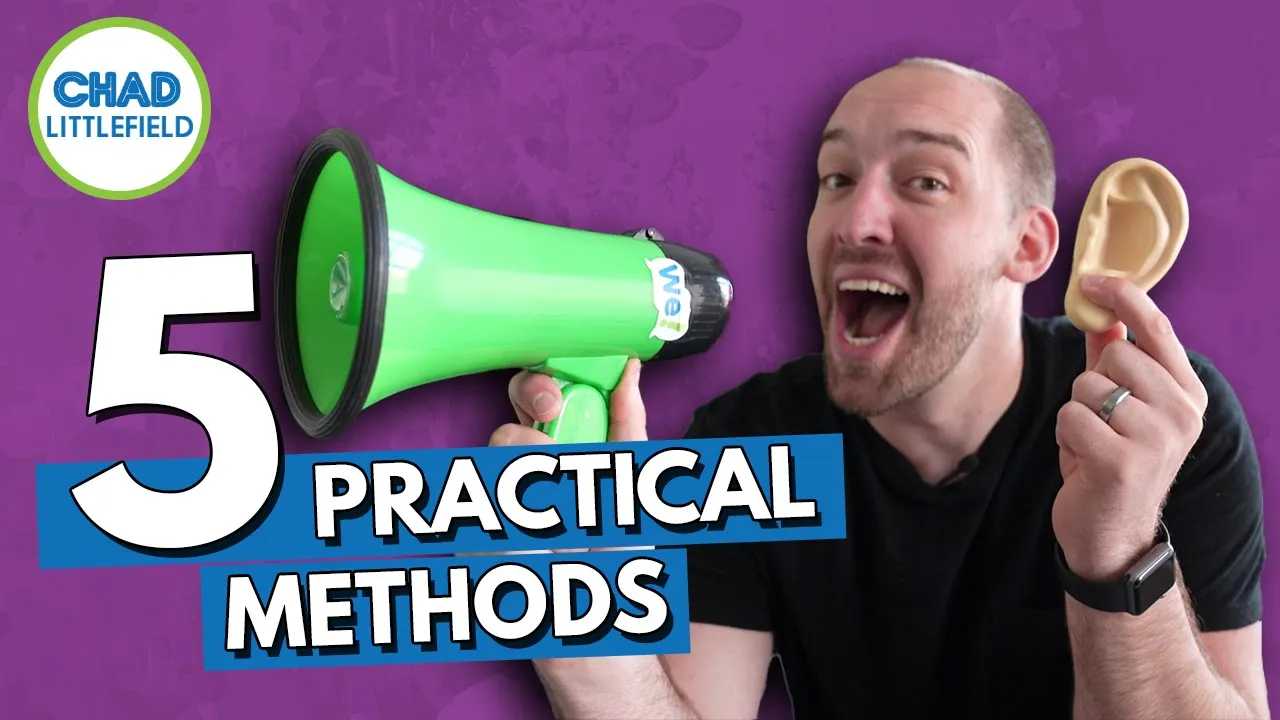
How to get people to listen to you I have a little bit of problem with the phrasing of this question, but it was asked to me and so as a professional speaker and facilitator, part of my job is getting people to listen to me. And so, in this video, I'm gonna unpack my personal 5 best strategies and methods for creating an environment where people really hear what you're trying to say. Let's get into it.
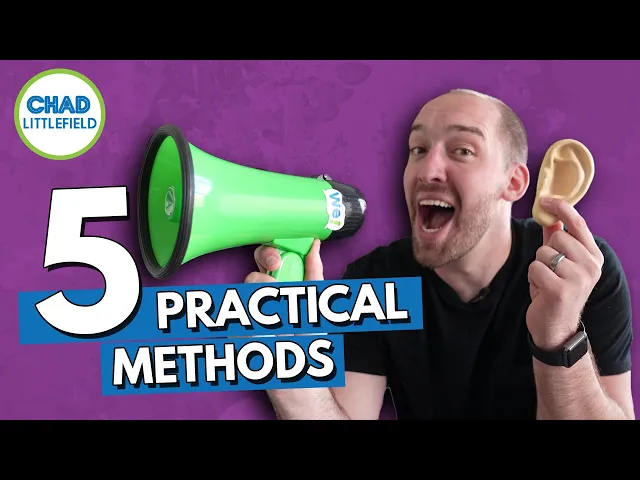
We're gonna count these down from number 5 down to number 1, but number like 100 is just get a bullhorn and yell at people really loud, not recommended, right? The way to get people to listen to you is quite the opposite of talking louder, right? If you scream louder, if you make more noise, if you're more in people's face, it's actually likely that people will be less interested in listening to you.
A handful of tactics I'm going to share with you here and as we get down to number 1, they're going to get deeper and even more impactful. But they might take a little bit of extra brain power to grab or master, but once you do, you've got them and you're good. Number 5, I'm gonna put under the whole category of attention resets.
So, you see, even in these videos, you'll see how there's cuts and there's a whoosh and a whatever that resets attention. When you are in-person, you don't have that, right? Conversation is slow, we speak at about 150 words a minute even though people can listen at upwards of 300 words a minute and so to get people to listen to you, you've got to think about what are the ways that you're resetting people's attention.
So, one way I would invite you to think about that is with the 5 senses that are embedded in most human beings. So, think about how you're using visuals. If you're just standing like this, talking a lot like this for a long period of time, it's likely that after about 18 seconds somebody is going to slightly tune out.
But it's equally likely if you're always like this and you're really intense and you just keep going that people are likely to tune out. But people might be a little bit more interested if you're talking about a concept and you're gesturing up here but then you say, "And then he came over to me and he whispered. .
. about here. " People tune in, that serves as an attention reset.
So, any big volume change, any tone or pitch change, any intensity or emotional change serves as an attention reset. Virtually, one of my favorite ways to invite people to listen is actually to direct people on how to view the experience. So, I might actually say go into gallery - view or go into speaker-view and I actually give them a little mini task that takes 3 seconds that changes what they're actually seeing on their screen to mix that up or I might invite them to rearrange people in gallery-view.
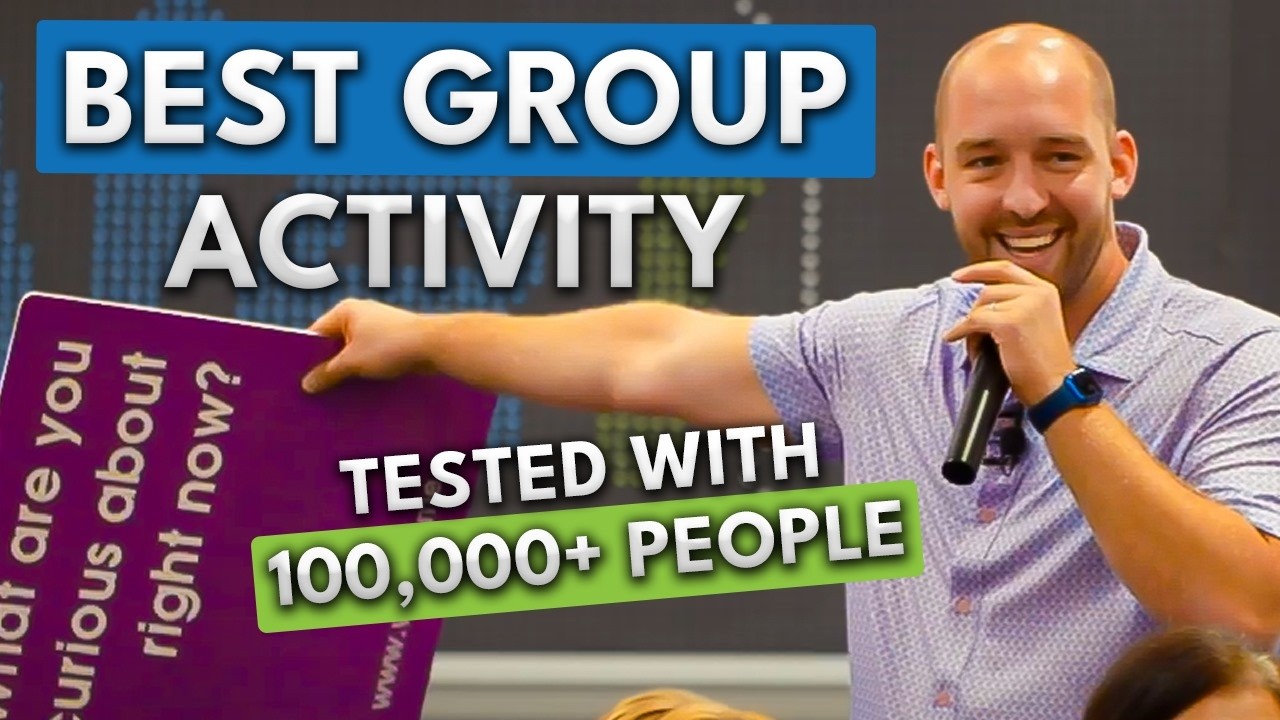
Something, again, attention reset and that ties into the next piece of doing some sort of an exercise or creating some sort of an experience is a phenomenal attention reset. Because when you ask a group to contribute to whatever you've got going on, they're much more likely to be involved. And so, one example I would use in-person quite frequently is I'd map out a spectrum.
So, I'd say, you know, let's say this wall over here represents, "I'm really introverted" and this wall over here represents "I'm really extroverted and I gain my energy from being around people. " Stand where you would fall on this spectrum and you have the group actually move. So, an exercise like that, if you're then going to talk about the difference between introversion and extroversion, by doing an exercise like that, you've invited people to use their brain to actually vote with their feet.
So, anything that you can do that invites someone's contribution or experience, and my channel is filled with examples and exercises and ideas and methods around creating experiences for groups to help make connection and engagement easy. So, yeah. I guess that was my plug to subscribe.
Number 4, I love this one. This is so deep, this could be a whole book, in fact it is. It's called Think and and it unpacked Matt Church and a few others unpack what they call the Pink Sheet Process and it's the idea of full spectrum thinking or in this case, to get people to listen to you, full spectrum speaking.
So, if I tell you a story about this time that I was in Australia with the author of this book, Matt Church, I'm accessing one part of your brain. But then if I tell you that this method has been used by tens of thousands of people around the world to transform the way that people speak, I'm using a different part of your brain, right, story versus statistic versus actually drawing out a visual model or sharing a metaphor. Kind of like full spectrum thinking is like taking your idea and putting it under a microscope to dissect all the pieces, right?
So, that metaphor reaches a different part of your brain. So, the idea of full spectrum thinking, if you want people to really listen to you, mix up the way that you're sharing and so map out your. .
. whatever you're going to be talking about by sharing a story here, a stat here, weaving in a metaphor over here and making a really salient point here. So, a big statement I might make might sound like, "Questions change your world.
" I was like, well you got to back that up, right, like I'm going to tune out unless I know. . .
although saying that statement first creates a little bit of a curiosity gap and so like, "Okay, what's up with that? " And then I might say metaphor, questions are like a key that unlocks something inside our lifetime of ungoogleable experiences and in fact, did you know that adults only ask 6 to 12 questions per day whereas kids ask 300 to 400 questions per day, on average from all the research that I could pick up. And then maybe I dive into this story where I was teaching people how to ask powerful questions to a group of students and then 3 years later, a student came back to me and said they got a job at Google because of what I taught them.
That, minus the visual model piece that I mentioned, that is some full spectrum thinking, that accesses multiple parts of people's brains. So, if you want to get people to listen to you, mix up the modes. Don't just speak about ideas and concepts for long periods of time, think about mixing it up a little bit more.
And all that said, stories are absolutely the most profound tool that causes people to lean in and say, "Whoa, what's happening right now? " and to be really tuned into what you got going on. That was a long one, this is a short one.
Number 3, intention. If you want people to listen to you, they have to know why they should listen to you beforehand. So, I was about to give a 90-minute presentation to a bunch of leaders, executives that, to be frank, didn't really want to be there in the moment and so what i said to them beforehand so that I could make them listen to me or really invite them to listen to me was, "I have designed the next 90 minutes to be a painkiller for the next 100 hours of virtual meetings that you're going to be in whether we're here or not.
" And it was a workshop on how to make virtual engagement easy and so even the critics and curmudgeons in that group were like, "Oh, yeah I am going to be on 100 hours of virtual meetings and so okay, maybe I am going to pick up some stuff here. " So, they're listening for the value that you promised, they're listening for the intention that you've put out, you've told them. It might be an outcome-focused or a future-focused intention that says, "Okay, this is what I'm looking for and I'm intrigued and I want to be there.
" A little bit similarly in some of my other videos, you might have heard me talk about this concept of a context hook, especially virtually, everybody clicks the Zoom link, we're all in totally different contexts and so having some hook to bring people into the same space and align on the same mission or idea or intention. Number 2, curiosity. Oh my gosh, my neck just cracked in so many places, that was delicious.
Curiosity about a person increases their desire to listen so much, which ties in number 1 which I'm willing to say I've heard in enough places, read in enough books, practiced in enough relationships in my life that I think that this is a universal truth. It is better to be interested than interesting. And so, taking number 2 and bring it into this idea, the more curious you are about a person before you speak anything, the more likely they will be to care about and listen to anything you have to say.
If you want to really master number 2 and number 1, I would invite you to really work on listening to understand, not listening to win. When we listen to win, we hear somebody's story and we say, "Oh, I have a story like that. Let me share that so that you can see that I fit in, I belong" when really , if you really want to get people to listen to you, listen to them.
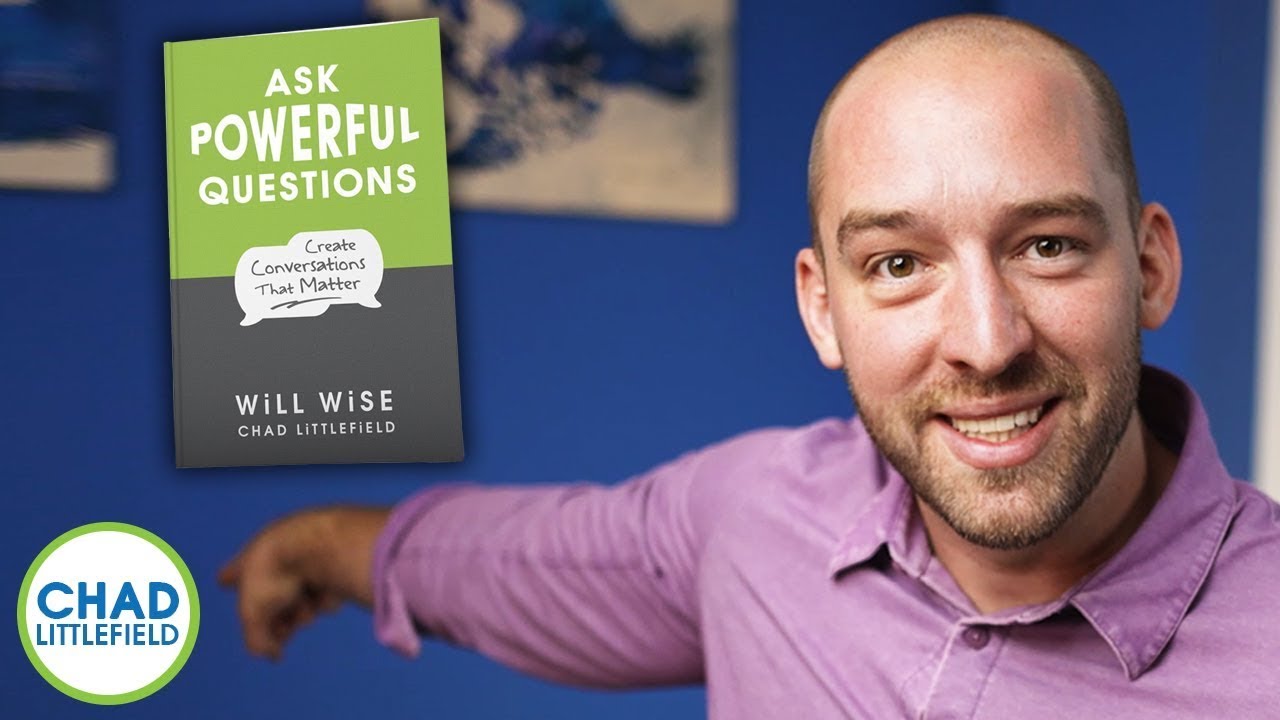
Be interested in them, ask questions about them. When they say something, don't respond in a sentence that ends in a period, respond in a sentence that ends in a question mark. You may not know this but my co-founder, Will Wise, and I wrote a little book called Ask Powerful Questions: Create Conversations That Matter and if you like this video, your brain will be exploded with joy and practical tools reading that book and you can get a free expert.
. . expert?
You get a free excerpt in the link below. I'm Chad, have an awesome day.