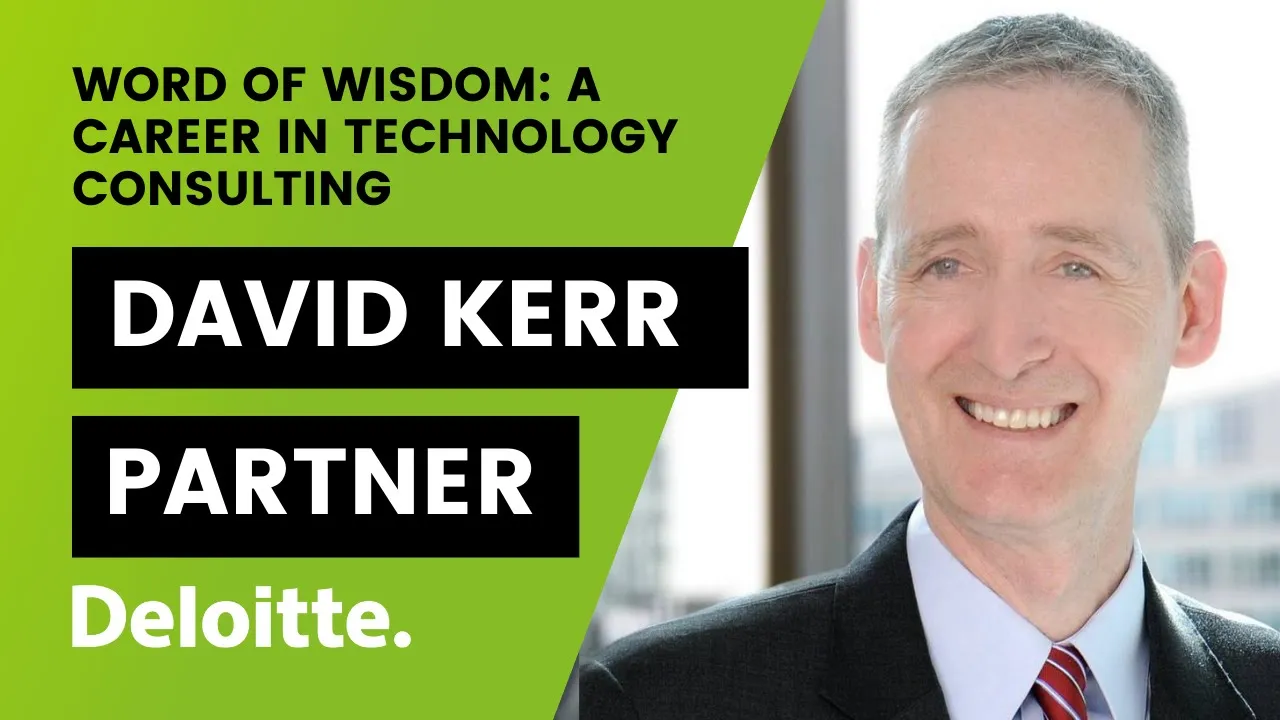
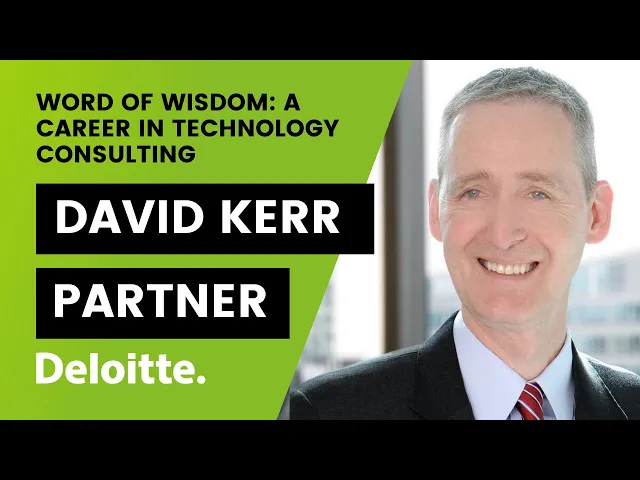
[Music] hello everyone and welcome to the first ever episode of elluminate's podcast i'm zoe a national lead here at illuminate universe and in this series we'll be interviewing some truly incredible individuals with really inspiring careers in our first episode our founder alina and national lead ria will be interviewing david kerr deloitte technology consulting partner david has more than 35 years of business leadership experience on a global and multicultural platform come along with us as we follow david's journey all the way from his time at waterloo university to where he is in his professional career today
david talks on facing change in an ever-evolving business world the importance of keeping both your options and your mind open and the most critical skills that any business leader should have so without further ado let's dive into the first iteration of illuminate universe's podcast hi david thank you so much for attending our show today now to start off we'd like to start from the very beginning what were you like in your 20s what were you like in university and what did you pick to study in university well you're asking me to think pretty far back
but nevertheless i'll give it my best shot you know the first thing i'll say when you're asking someone what were they like during university and what were they like in their 20s i think that you actually changed a lot during that time and my my thoughts going back to what i was like in high school going into university then after university lots of things change and you should expect that right and that's the great part of life is how you change and how you evolve during that time but you know to answer your question specifically
you know me going into university um i went to the university of waterloo i originally thought that i wanted to go for a business administration type of degree um but here's the reality i didn't have good enough marks to get into the school that i wanted uh university of waterloo had an interesting program that was a joint honors co-op a business option with an arts degree that you could take and i took that it was one of the best decisions i ever made in that it exposed me to the work environment earlier than i would
have been exposed i took a degree in economics i had a couple of minors in history and management studies and i had this business option they called it applied studies it's now called arts and business at university of waterloo and i had six co-op work terms and i really didn't know what i was getting into and so i i wouldn't call myself the best planner at that point in time i knew that i did not want to do certain things and sometimes you choose paths in life that are that way where you're saying i'm not
sure where i'm going but i know what i don't like so i knew i didn't want to be an engineer i didn't want to go into computer science i didn't want to go into math oriented things i did like the arts but i wasn't quite sure so i left my options open and continued to learn and take a broad set of studies that would allow me better options in the future and i certainly think that that's a piece of advice that i would give to many young people today is to do things to leave your
options open you know if you love something sure like if you want to pursue something that's very focused go for it but i think that in today's world where things are changing so often um that your external environment is changing so much that taking interdisciplinary type studies where you're learning a variety of things that you're not closing doors on certain options gives you flexibility for the future and that played into good things in the future for me in my opportunities to pursue more of a technology-oriented career for sure david that's incredible i'm actually also currently
a student at the university of waterloo and i'm studying computer science and business and taking some psych courses too so i really feel like it's super valuable to keep my options open like you said no and i i really like i've seen people do exactly what you're doing as well uh in fact my brother-in-law did that at mcmaster university where it was a business and engineering type of degree and that i think balances you a little bit and gets you exposed to more things and i think that's that's great yeah for sure now i know
that you mentioned that you didn't have a specific plan going into the future but upon graduating where did you see yourself and how did your professional career compare to that and what advice would you give to someone currently striving to attain their dream job sure so um when i was in just to give you further clarity on what i did so i took multiple co-op work terms to get me exposed to business um i got exposed during that time to um some deep work in the economics area that was my degree and then i worked
for ibm and got exposed to a number of technology-oriented uh types of types of work and they offered me a job at the end of that and i found that it was an unexpected set of challenges in the technology area that intrigued me and so i started down that path during the co-op period to say is this something that i would really like to do is this something because it wasn't something i had ever planned right uh and uh and i i found that when they offered me the opportunity to work there full-time i looked
at and said well i see an area of growth this is an industry that was growing um there were a wide variety of options to me they were going to compensate me well so that was good and that's a reality right uh and so um i felt that at the time it would be it was a logical thing for me to do to say i'm in a growing industry it's going to challenge me because there are a number of things that i don't know yet uh in that area and that i'd be prepared to say
for the next few years at least this would be a good option for me to build out my skill set and and so i went down that path not really knowing what my dream job was going to be um and and i think that that's one piece of advice that i would give to people is that of course there are dream jobs out there everyone has you know some degree of interest in certain areas to say wow if i could do that that would be fantastic but in some cases there isn't a dream job maybe
there are 10 jobs that are great jobs maybe you know it's not going to be one job that's going to that's going to get you get you where you want to go and so i viewed it as a multi-step kind of process to say for the foreseeable future this seems to be something i can grow in um they uh it was a solid company uh you know i would have multiple opportunities and they would present me with a great skill building capabilities so i think that that's something that i would certainly encourage others to think
about to say you know if you're not really sure where you're going but something challenges you um then that might be a path that might take you somewhere you don't expect as it stands i continue doing that kind of work for a long time but it wasn't my original plan wow how interesting wow so you're saying that sometimes our plans don't exactly work out the way we want them to be but there are still opportunities within it for us to leverage um i wouldn't necessarily call them setbacks but opportunities into even more exciting opportunities and
challenges exactly like and i think that that's the the preparedness for change outs in the outside world is really important so you might start a university career with a certain plan but that's four years or more right so what's going to happen in four years that are going to affect you like think for example if someone was entering the workforce as we know during covid time so now we're here in the pandemic things have changed um well maybe some of those dream career jobs don't even exist right now because businesses have shuttered or closed so
then what do you do so i i always encourage people to say don't just have one choice don't have like one thing that you're centered on but think about you know the uh the different options that you different paths that you could go down if something else happens right so or as you progress along you determine hey i like doing this versus that and and i want to explore that more and that's just part of both growing up a little bit in terms of maturity and and learning more about yourself and and also about what's
happening around you love it what a great piece of advice now david we know you talked about a solid company and we also know that you're currently a partner a technology partner at deloitte canada i can personally vouch that deloitte is a solid company because i worked there and it was my first full-time job and i just had such an incredible time there i honestly think the individuals the mentors who i met are going to play such a positive big impact for the rest of my life and that is something i am forever grateful for
in terms of building a set of required skills or business traits in order to prepare to go into the consulting or technology industry for many of our students i'm wondering what would those traits be um so to pursue something in consulting and technology well you know i i'm going to say that and i'm a bit biased this way now but i would say that everybody no matter what your discipline or interest area should learn something about technology uh personally not just how to use technology like how to use your phone but but to um learn
some coding skills learn some design thinking um learn um about um you know development methods something in the technology sphere and to be more technically literate about the capabilities of technology and the reason i say that is that um the world now is heavily influenced around technology and and from technology the pace of change that we have right now um is is influenced by technology simple i'll give you a simple example globalization of the workforce globalization of trade um and all of the economic impacts of that so the fact that we have people that are
working around the world but their location doesn't matter and the fact that we can trade internationally quite fluidly and we can buy things from around the world quite fluidly is all enabled by technology and so our economic overall wherewithal the the our overall wealth is impacted by technology uh and so uh and our social um and you know environment is also affected by technology so i think that being aware no matter what your interests are i think will be very powerful and you know we now have university courses that fully recognize that as well in
schools um close to where i live the university of waterloo stratford's campus it has a digital arts and business program and it's all about the intersection of technology and the arts uh and it's it's a very successful program it's probably the fastest growing one at uw right now so that would be the first thing say that you need to learn more and be more aware and live in the technology world the readiness for consulting and is an interesting one as well uh that that to me is is one that i think when when when people
are curious uh and like to solve problems when they like to operate in a project mode where they like to accomplish short-term achievements where they like to get involved in activities that involve teams all of those things ready you for a consulting career and also tell you do i even want to be a consultant so if you like to operate independently so and there are many of us like that if you if you like to act solo you know you want to work on something by yourself and accomplish something singularly that actually plays maybe against
being in a consulting career although you might actually be quite successful in certain roles the the ability to operate in a team environment to understand how you operate within that environment how you influence others how you cooperate and collaborate and how you build those skills and you can do that in high school you can do that in university more formally and informally all of those things tell you am i set up to be a consultant and to work in that kind of environment because that's very much the environment that we operate in very project oriented
um very collaborative and it has less to do with what i call the raw content of like what's the subject matter that you know and more about the model and how you work and how you work with others wow okay this gives us a better understanding of how students do should prepare for a career in consulting thank you so much for that david no problem yeah that's really interesting to hear because i know a lot of people are very interested in consulting so i think it's really valuable that they get a clear idea of what's
actually expected when they enter the workforce yeah no and i i will add this is something that's not unique to consulting um but i think it's really it's really critical communication skills um and so i i find interestingly that over the past number of years content has won over communications so people learning subject matter whether it be i'm in math or in engineering or i'm in certain arts programs or business programs i'm learning about the subject matter and i'm being very good at the subject matter but somehow the the ability to communicate in written form
in verbal um you know is falling by the wayside a little bit and um and i i see that in in younger people that join our teams where are looking at what they're producing going i think you could do better um and so every opportunity that anyone has now to learn how to better communicate more effectively communicate i think is really critical for sure that's an excellent piece of advice and following up with that what advice do you have for an aspiring future business leader both in general and during this interesting time that we're in
um i'll go back to um you know be ready for change right so uh i think that's you know successful business leaders will often tell you um that you know they're they've built plans they've built strategies they pursue them and they've executed on those strategies and i think that you know being well planned and understanding where you're going is is really critical um the failing that many have is they understand the long-term target but they don't understand the steps along the way uh i call those the transition steps so i'm going from point a to
point b but i have a few steps in between how am i going to get there and what happens if the path changes um or something else happens externally so the preparedness for change in between your ultimate target and now and and current state i think um is where um the the successful business leaders um are more successful so they they're able to adjust as they go along they are well planned in terms of the dependencies that they have um they're they're a better understanding of the help that they require uh and um and they
and they move along the the other aspect i would say is successful business leaders are leaders of others they're not leaders of themselves right uh and so understanding how you the the support structure that you need the team that you need to build and the team that you need to work with to achieve your goals whether they're people that work for you or people that work with you i think is really key and you know it's interesting there is a business a business leadership book and there are many of them out there um that that
give you many forms of advice i remember one and i'm going to say i don't remember which one it is but i but one thing stuck with me um was that if you look at the cases of many successful world leaders and business leaders the ones who like you look back and say wow they were more successful than average and you asked them what what were the common themes and common traits that they had all of them could plan well so they all had good planning capabilities strategic capabilities they were all smart people all that
was common the people who were more successful built a team first before they started to execute their strategy rather than execute their strategy and add people along the way and so it emphasized the notion of importance of teamwork and the importance of having the right people around you um will help you in terms of success in the future more than just through your own uh your own capabilities the last thing that i will say in this area is nothing replaces hard work there's a book called grit that that was published a few years ago and
it was a study around um what are the common traits of successful people whether they be athletes whether they be business leaders and so on and the the question was are successful athletes always the ones that have the innate talent so you know that is the fastest runner the one that actually just has better muscles in their legs or is the the best singer the one that just has better vocal cords and they just use them more right and the answer or the successful business leader do they have a higher iq in all cases the
answer is no um of course you need to have basic skills right so you know there's a there's a certain basic there it's about the intensity of the practice that you have it's about the hard how hard you work and the nature of the practicing that you do um and so um like to me what that says is you know except for those that are truly exceptional like no none all of us are not going to be olympic athletes right no matter how hard we work but it shows that anyone can be very successful based
upon the intensity of the work that they do and how they practice so i would encourage people grit is a very good book is quite applicable to many of us in in both that are mature in the business world and those who are starting out in terms of how one approaches this and and so i i encourage that wow david thank you so much i'm sure that both myself alina and the rest of the women community are going to get so much out of that so we really appreciate your time and being on our show
no no problem i'm always happy to help thank you david
![#29 - Phillip Haid [A Better Leader], Founder & CEO, Public Inc.](https://img.youtube.com/vi/Jv9ayc9Nqzw/maxresdefault.jpg)