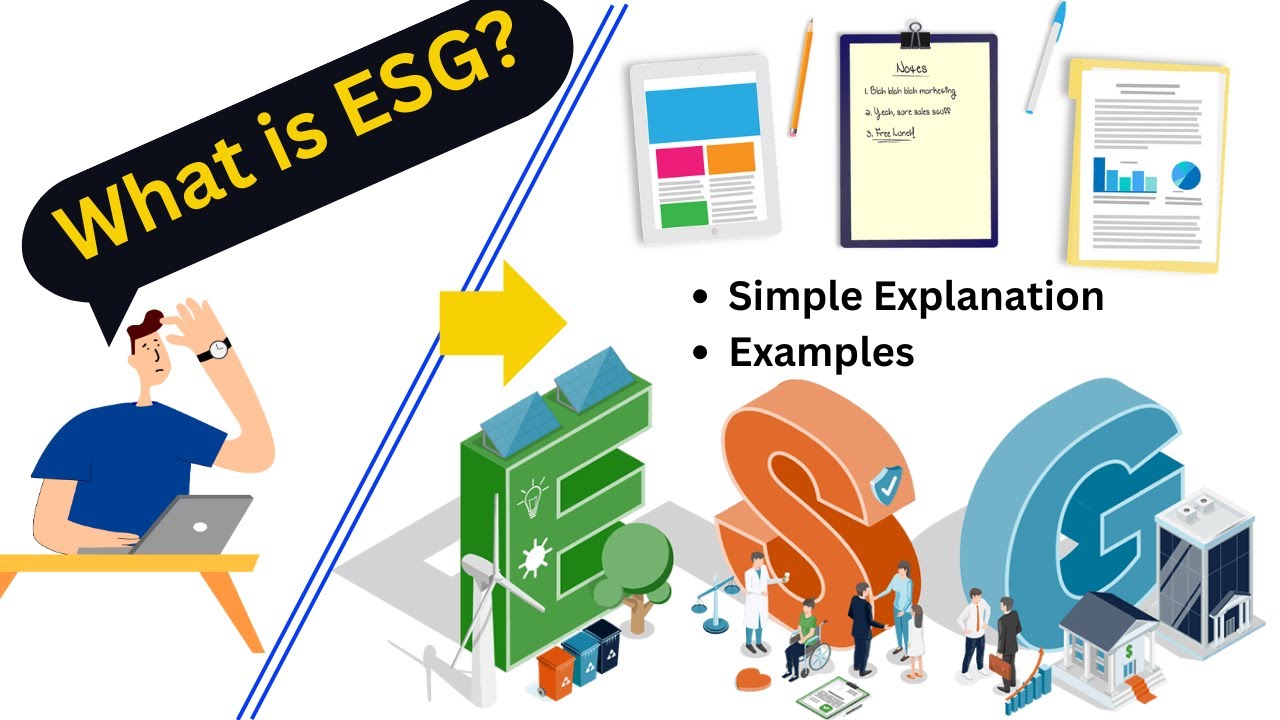
(bright music) - That's a question that's been vexing experts for a long time. So just to kinda unpack the acronym, it's environmental concerns, social concerns, and governance concerns about how a firm is run. So you can think of ESG as perhaps a risk management process where people look at risks beyond the usual conventional financial ones that are often discussed.
They try to broaden the lens and look a bit more about climate issues, workforce concerns, whether you are a responsible taxpayer in the economy, the nature of your boards, compensation, and the like. (bright music) I think the ideas behind ESG are deep and fundamental. The practice of ESG is a mess.
It is not working. And the opportunity here is to make the practice of ESG better. What are these responses looking like?
It's a combination of some regulatory action and some volunteer action on behalf of companies. NGOs in this space have been fairly vocal, so better regulation in terms of, say, labels in asset management as one response. Meaning if you say you're an ESG firm, you have to actually do more now to convince people that you're really an ESG firm.
Europe has become a bit more prescriptive, so they have something called the EU Green Taxonomy where they define what is green, they define what is good ESG. So Europe's regulatory model is fairly different from the US's regulatory model, a bit more top down, we are a bit more bottoms up. (bright music) And when I teach my climate risk collective, it's like teaching a new class every year because the field is exploding.
So the expertise needed to connect all these diverse pieces, people who can talk to climate scientists, people who can talk to bankers, people who can talk to investors, people who can talk to maybe tax policy experts, because a lot of this is through subsidies, people who can talk to governments. So you almost need some kind of connector of all these diverse hubs. And hopefully, that's where we, in business, can be useful to this debate.
Because one of the things I often discover when I talk to people in climate in other places, what do we bring as a B-school to the conversation? I would say it's awareness of trade-offs. Nothing's free.
When I have conversations sometimes with people in sustainability, but not in business, they say, "Oh, we should tax a company. " I tell them, the company is a legal fiction. There's no such thing as a company.
When you tax a company, the money has to either come out of customers, suppliers, employees, shareholders, or from creditors. They're all trade offs. So just understanding trade offs and understanding where value gets created and how does it get distributed is perhaps the biggest contribution we can make as a B-school to this debate.
And this is what, at least, I try to communicate over and over again using cases and other ideas in my classes. (bright music) The ESG train, in my mind, has left the station. And by that, what I mean is that the next generation deeply cares about the issues that we are discussing.
The role of business in society, companies have to do a bit more than purely focus on, say, short term profits. Even if you don't like hearing all this, businesses are very good at responding to where the customer's going. So all this is going to get reflected in terms of future consumption patterns.
Regardless of how you feel, in 15, 20 years, I think this will become a mainstream conversation.