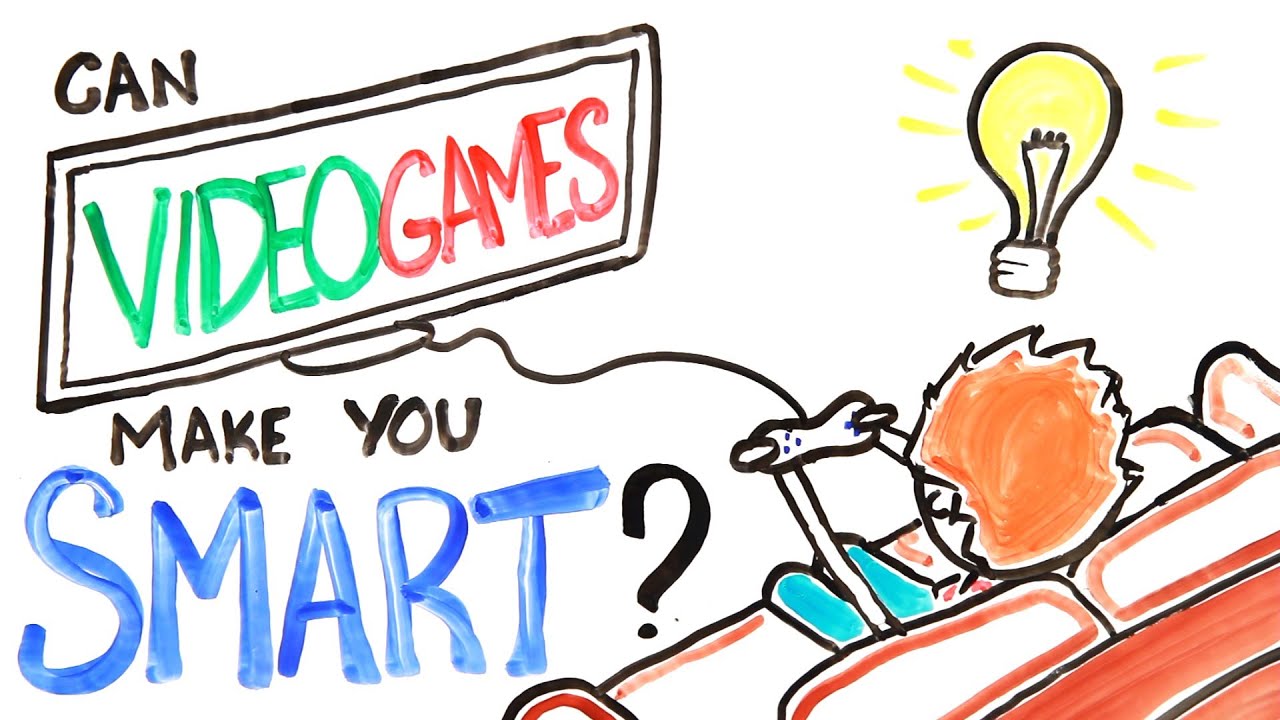
Video games are something we use to unwind Relax at the end of a hard day, and you know… feel the whole range of human emotions. Like excitement… or passion. The first thing that comes to mind when you think of gaming, is probably entertainment, and you might not think of it as a tool or exercise that you can use to improve both your short and long term cognitive abilities.
But the truth is, that might not be a convenient side effect of gaming – but the whole reason why we’re drawn to playing them in the first place, and our entire perception of what we think video games are, could be something completely different. But if you want to use video games to improve your intelligence, there are a few things you need to know first. Because understanding what’s actually going on could be the key to maximizing the positive effects of gaming instead of the negative effects.
And towards the end of this video we’ll talk about two other methods of improving your intelligence to use in combination with gaming, to give you the trifecta of Big Brain Brilliance that will translate outside of gaming and into your real life. So we’ll skip right past the all the obligatory “smashing of the like button for the youtube alogrithm and subscribing to the channel” talk (but seriously do that because we’re a small channel and everything helps) and dive right into the details of how video games can make you smarter. The first question that we have to answer is, “Is it actually true that video games can enhance your intelligence?
” To answer that question, we’ll briefly take a look at the results of a fascinating recent study conducted by the International Journal of Environmental Research and Public Health, creatively titled “The Transient and Long-Term Improvements in Cognitive Processes Following Video Games. ” Here’s the incredibly simplified cliff notes version of the study. They took a bunch of people who play a ton of video games, and another bunch of people who rarely or occasionally play video games and put them through a wide range of cognitive tests to measure the short term and long term effects that regular gaming had on their cognitive functions.
The results of the study showed a temporary improvement in short term cognitive functions, and a strong enhancement of cognitive functions in the long term. But why? The challenging thing about studies like this, and for intelligence in general, is that there are limitations - they give you an idea of ‘what happened’ but doesn’t prove or disprove why it happened.
The rest, is left up to theory. And oh theorize we will! So let’s get into it.
To understand what’s going on in your brain while you’re playing video games, we need to go back in time to when you were a … nope … that’s too far … forward a little bit, there we go! Back when you were a child. When you were growing up, you could turn everything into a game.
It started with just running around, going down slides at the playground, and really just testing the limits of experiencing the world with your senses. Then a few years later you get the drive to take all those things you learned to build things that accomplish a specific goal, like building a house or a tower out of blocks or Legos. And it doesn’t take long until you begin turning everything into a wild fantasy.
The tower of blocks becomes a kingdom, the stick in the backyard becomes a sword, and all your neighborhood friends are your fellow knights on a noble quest for the king. And play doesn’t stop as you progress into adulthood. The games just become more complicated.
You add rules, consequences for breaking the rules, and cooperation and competition with others. You see, all of these stages of play fall into Piaget’s stages of cognitive development, which later developed into the cognitive theory of constructivism. This theory suggests that intelligence changes not just by simply acquiring new knowledge, but by how your direct personal experiences construct your mental model of the world.
Play gives you the opportunity to create a multitude of simulations for ‘similar’ things that you might encounter later in your life. If you think about it, making progress in life is exactly like playing a series of games. There are physical rules that you can’t change, legal rules, and social rules that you have to abide by – and then your success is determined by how skillfully you can navigate each game throughout different stages of your life without breaking the rules.
According to the Constructivist theory, play gives you the opportunities to build the necessary skillsets of abstraction, logic, critical thinking, creativity, and problem solving, that comprise the intelligence you’ll need for all the games you’ll have play throughout the rest your life. Most people stop the practice of play, almost entirely, once they reach adulthood. But gamers have done the exact opposite.
They took the fundamentals of play, and used technology to evolve it into countless worlds of complex simulations. Then they can play them over and over and over again to make improvements by testing the results of implementing different strategies and improving the mental skillsets they need to be more successful in the game. Let’s start with the simplest, and most obvious, translation from video game skill to real life skill.
Simulators. Simulators are invaluable for pilots, they allow you to get a ton of near-real-life experience, with a ton of repetition, without the wheels ever coming off the ground. So when you’re actually in the air, and you encounter a once and a lifetime scenario, it’s not the first time you’ve encountered it – you may have done it hundreds of times in the simulator, and your brain knows exactly what you need to do.
In psychology, this cognitive skillset gained through repetition is called Automatization. Your brain likes to be efficient and use as little of its limited energy as possible. Whether its real life or a game, doing something over and over and over again causes skills, or actions, to become automatic without having to use a ton of conscious effort.
The first time you played an FPS game, something as simple as moving your crosshairs to just that right spot was… we’ll let’s just let your KD speak for itself. And then over time, you don’t even have to think about what you’re hands are doing. That’s Automatization.
And that extra energy you’re saving gets freed up to be used on other aspects of the game. While simulators make a ton of sense for translating into real-world intelligence – what about every other game genre like MOBAs, RTS games, or Battle Royals? You might think “There will never (hopefully) be a scenario in real life where I’m dropped out of an airplane in to a constricting circle where I have to battle it out with my friends to be the last team standing” While that might be true, you have to take a step back and look at the underlying skills you’re relying on that determines success or failure for every round.
Let’s use Trios in Apex Legends as an example. You hop into a lobby with three of you buddies – The first thing you’re going to do is discuss which character you’re going to choose. Now that might seem simple enough, but let’s use it as an example for breaking things down a few layers.
Each character in the game has different strengths and weaknesses. Essentially what you’re doing with your teammates is determining what role and dynamic you are going to fill throughout the match. Whether you think about it consciously or not, the array of character selections creates the first set of structure and constraints that dictates the strategy you’ll be testing for that round.
This strategy creation is a collaborative process that continues with your teammates until the moment you choose your landing location in the arena. Then the focus of the game begins to shift. As the match progresses the variables begin to change.
Other players change their positions on the map, you either find (or don’t find) different equipment in locations – and you constantly have to adapt to the changing variables, communicate real-time changes with your team, maintain situational awareness, and adjust your strategy accordingly – all while maintaining focus and reacting faster than your opponents. In real life, you might encounter a situation with this level of collaborative complexity maybe a handful of times throughout an entire year. For example, you could have a large project at work or school with multiple stakeholders, shifting variables, and requiring clear and effective communication and leadership.
Video games give you an environment where you can experiment with testing your problem solving abilities. And it allows you the creativity to try new things, even if you know they likely won’t work, just to observe the results and learn something from it. And best of all, it gives you the ability to repeat the process dozens, if not hundreds of times each night.
From the constructivist view of intelligence, these iterations of gameplay gradually shift your mental construct for what works and doesn’t based off your own experiences. “How well did I communicate with my team? What changed that got us in a bind?
What skills can I improve on and practice to do better next time? ” aren’t just questions you can ask yourself about the last game you played, they are questions that are equally valid in nearly every part of problem solving, reasoning, creativity and critical thinking for situations in your real life. Take some time to think about it, and in the comments, share some of the ways your favorite game develops and simulates real world skillsets.
It’s helpful, because once you’ve identified how those skills translate, your brain makes those connections and makes them more readily available to you outside of gaming. But what if all your friends are gamers, and you still want to get an intellectual edge over them? What about that Big Brain Trifecta we mentioned at the beginning of the video?
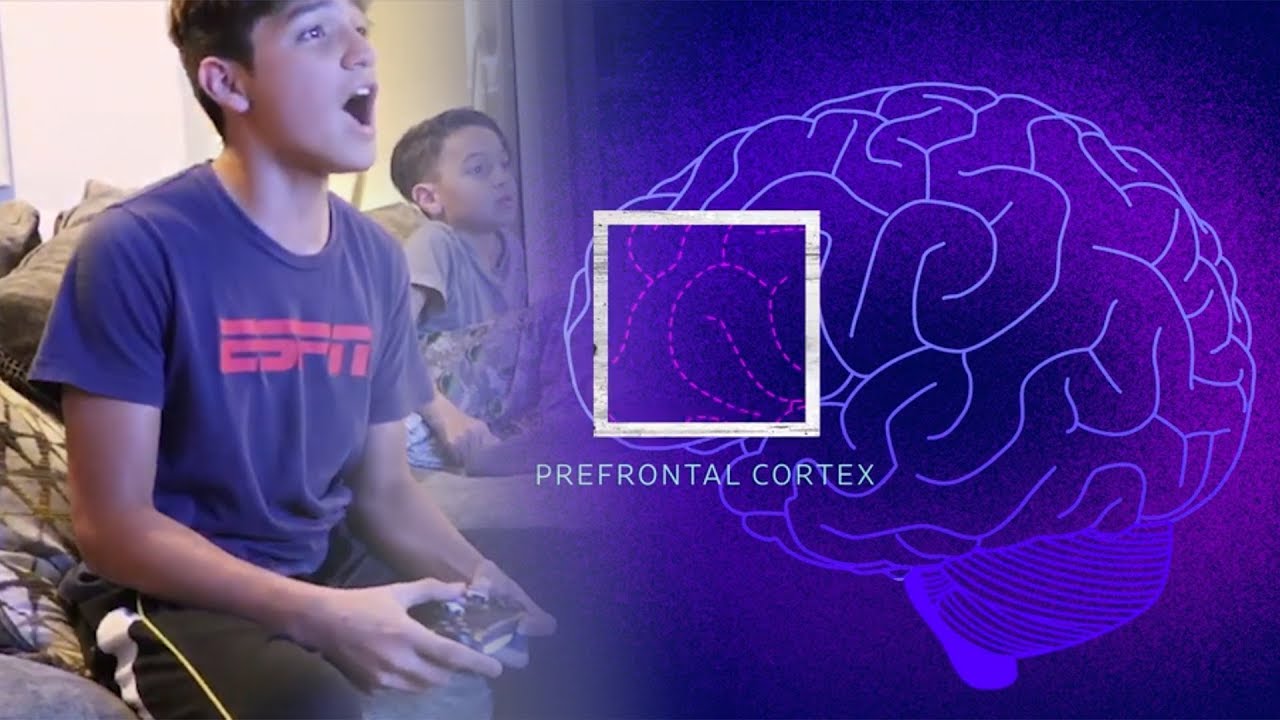
The two other methods proven to be the most effective at increase your intelligence are, exercise, and reading. And I know they both sound simple, but don’t underestimate how powerful both of these are in combination with gaming. Exercise helps increase neurogenesis, which is the formation of new neurons in your brain.
It used to be thought that neurogenesis only occurred during the early stages of human development. But now we know that it can also happen in the adult brain, only, it slows down as you get older. However, exercise keeps this process going by promoting the expression of a protein called Brain-Derived Neurotrophic Factor.
Which is responsible for regulating neurogenesis, protecting existing neurons from dying, and promoting neuroplasticity. Neuroplasticity is your brains ability to modify its connections and re-wire itself to adapt to its changing environment. … So, exactly what you want to happen when you solve problems in a video game.
Ironically enough, you can think of video games as going to the gym to work out your brain, and actual exercise, can be seen as the protein and nutrients you need to help your muscles develop. Reading may be one of the most underrated intelligence boosters in existence. Reading gives you a window into another person’s perspective.
It almost has a similar effect as firsthand experience, because you’re playing out the information in your mind. It doesn’t even matter if it’s fiction or non-fiction – fiction books help you with creative ideation, and examining different situations from a variety of characters, without ever having to experience it yourself. And non-fiction, even textbooks, are in reality the consolidation of someone’s entire life experience into explaining what they know and have found out along the way – again, without you ever having to experience it or do the work for yourself.
So if you’re looking to get smarter, the balance of gaming, exercise, and reading - are a sure-fire way to maximize your efforts as well as counter-act some of the negative aspects of gaming, especially the whole you know - sitting around for hours at a time part. Which if you think about it, is a negative aspect also shared with reading… and desk jobs… or sitting in class… But yet you never hear people talk about how unhealthy those things are… But do you know what is healthy? Smashing that like and subscribe button – because you made it all the way to the end of this video and your brain deserves a healthy hit of dopamine by turning that little thumbs up button blue!
Also we’re a new channel, and you can help drive the direction the channel takes by giving ideas for questions you want answered in upcoming videos.