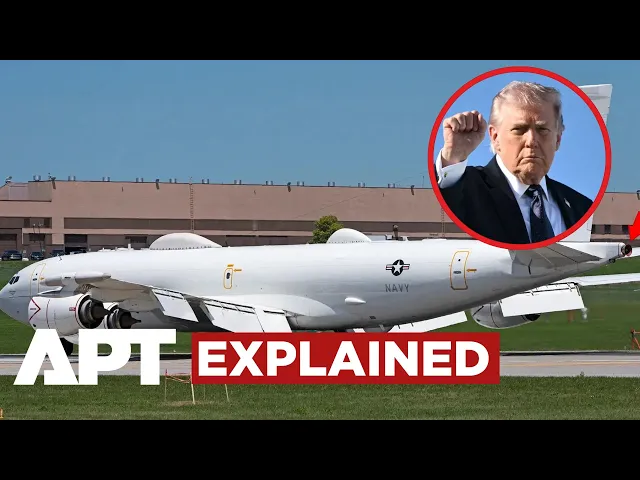
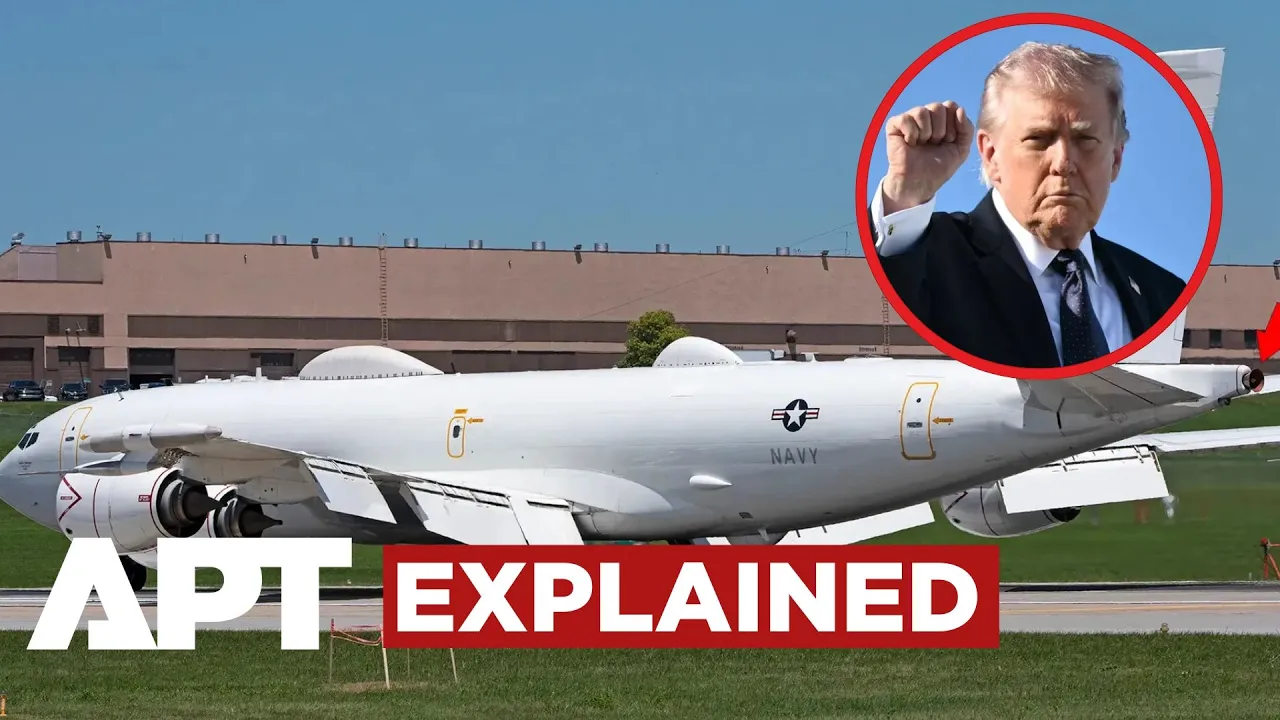
The United States military has deployed its strategic airborne command aircraft, the E6B Mercury, as tensions in the Middle East rise following the ongoing conflict involving Iran. Flight tracking data shows multiple launches of the Navy's so-called doomsday planes since February [music] 28th, a move authorized under the Trump administration in response to escalating hostilities in Thran. These aircraft built using the frames of the Boeing 707 are designed to survive nuclear conflict while maintaining command and control over US military forces.
They operate as airborne command centers, allowing President Donald Trump and senior defense officials to maintain communication with nuclear forces even if groundbased infrastructure is disrupted or destroyed. The E6B Mercury is equipped with specialized antennas capable of contacting submerged nuclear submarines, satellites, missile silos, and military installations. Central to its mission is the so-called take [music] charge and move out or takamo which enables the president to issue direct orders to Navy nuclear submarines and coordinate a strategic response should an attack occur.
Since the first Iranian missile strikes in early March, E6B aircraft have been observed flying across the United States, including missions from the Gulf Coast to Naval Air Station Puxent River in Maryland and from Offet Air Force Base in Nebraska. Some flights have also been tracked across the Atlantic toward the Persian Gulf, underscoring the operational readiness of the fleet. The Pentagon has declined to comment on the deployments, citing operational security.
First introduced in the 1980s, the E6B Mercury remains the United States primary airborne command platform. Each aircraft carries a standard crew of 22, travels approximately 7,000 mi, and can remain airborne for nearly 3 days with in-flight refueling. Its operational ceiling of 40,000 ft places it above commercial air traffic, providing both strategic range and survivability.
The aircraft's predecessor, the E6A, was upgraded in the late 1990s to include highfrequency communications arrays and the airborne strategic command function known as looking glass. This system allows the aircraft to coordinate nuclear forces, including intercontinental ballistic missiles, ensuring continuity of command even in the most extreme scenarios. Military analysts note that these deployments serve as both readiness drills and strategic signaling, demonstrating the ability of Trump's administration to project command authority globally.
While not intended to initiate [music] attacks, the presence of these aircraft signals that the United States can maintain control over nuclear forces even amid a rapidly escalating conflict. Allies such as Russia and China have reportedly provided intelligence support to Iran, further raising concerns of wider regional escalation. In this context, the E6B Mercury plays a central role in US deterrence strategy, ensuring that President Trump and military leadership can coordinate responses in real time and maintain strategic stability amid growing international uncertainty.