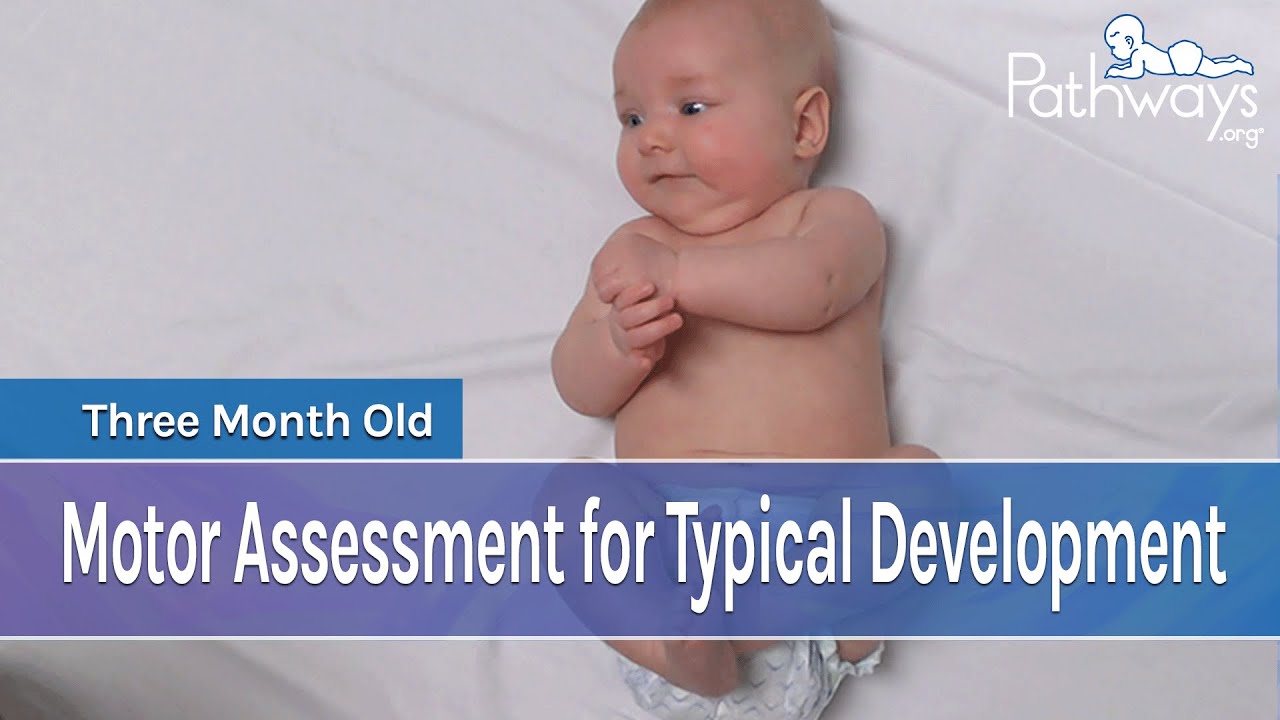
two-month-old typical atypical motor development side-by-side in this video you will see a typically developing baby and an a typically developing baby in eight different physicians use this to help recognize early motor delays please remember to adjust for prematurity position one supine head the typically-developing baby on the left maintains his head in midline for brief periods while the a typically developing baby on the right has a more predominance of head turning to one side and strong 8tn are asymmetrical tonic neck reflex visual tracking notice the typically developing baby locates and visually tracks objects horizontally the a
typically developing baby can locate the object but has difficulty visually tracking and only tracks objects to midline extremities see how the infant on the Left begins to show extremity anti-gravity movements and reciprocal kicking while the a typically developing baby on the right has long periods of inactivity few anti-gravity movements and less reciprocal kicking positioned to sideline transition the baby on the Left shows lateral head writing and follow-through into rolling with head lifted into prone baby on the right can remain in sideline without rolling by flexing his hips and knees increasing his base of support trunk
control the baby on the left is able to switch from using abdominals during the roll to neck and back extensors as he completes the roll the baby on the right is in a position that doesn't require him to work as hard against gravity so in this position he looks more symmetrical movement in this position the typically-developing baby demonstrates an integration of major muscle groups the a typically developing baby on the right looks more confident in this position therefore it is important to observe in more than one position position three crohn head lifting the typically-developing baby
is able to lift 45 degrees while extending through the upper thoracic spine baby on the right still has a newborn posture he shifts his weight forward towards his head making it harder to lift head and upper trunk baby on the left's upper body is free to lift his head and upper trunk of the surface note that the changes in leg position on the a typically developing baby allow him to begin developing head and trunk control hip position watch baby on the left moving on to flexed into flexed and abducted position while baby on the right
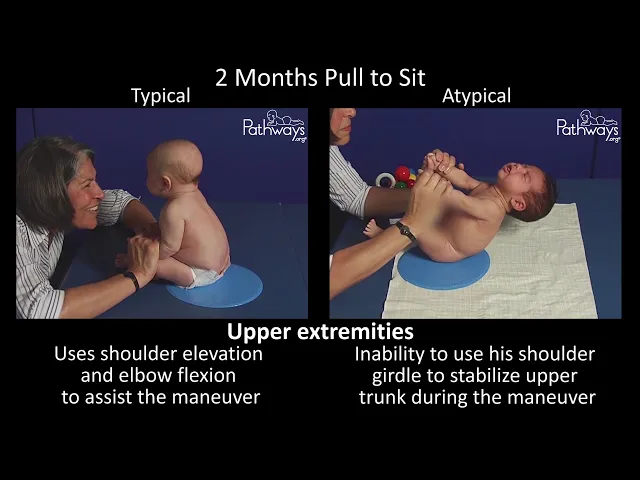
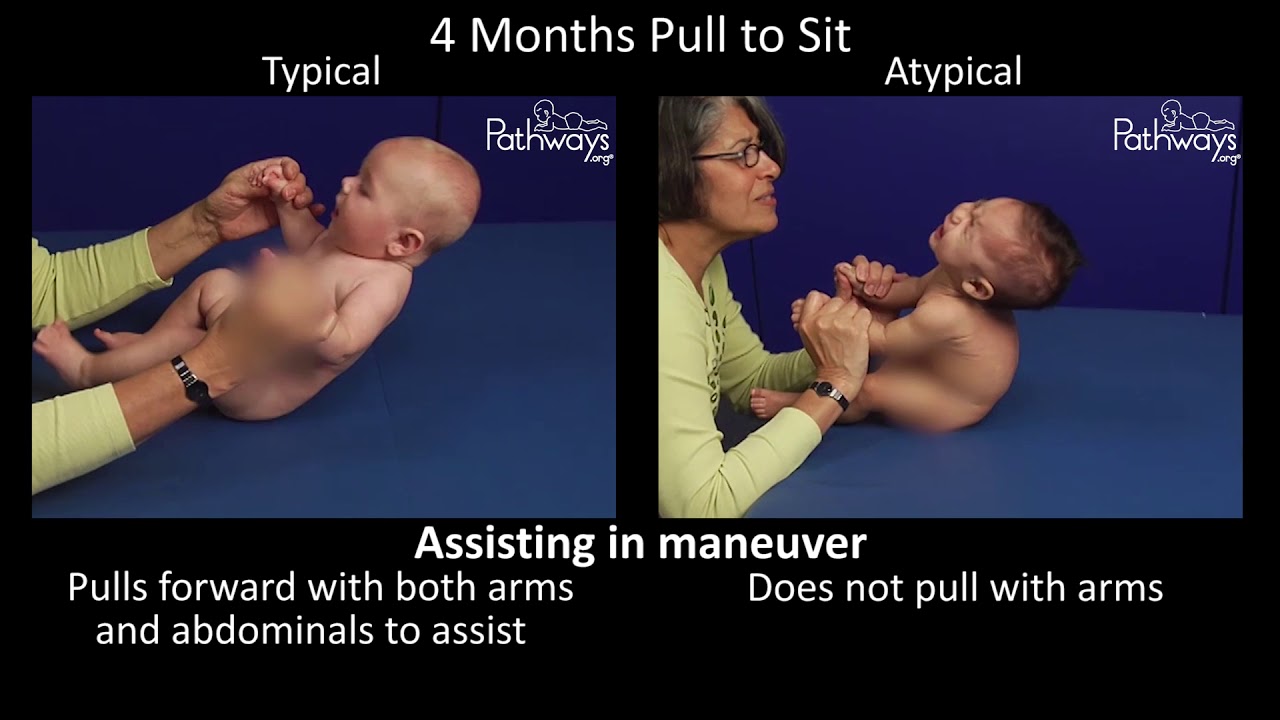
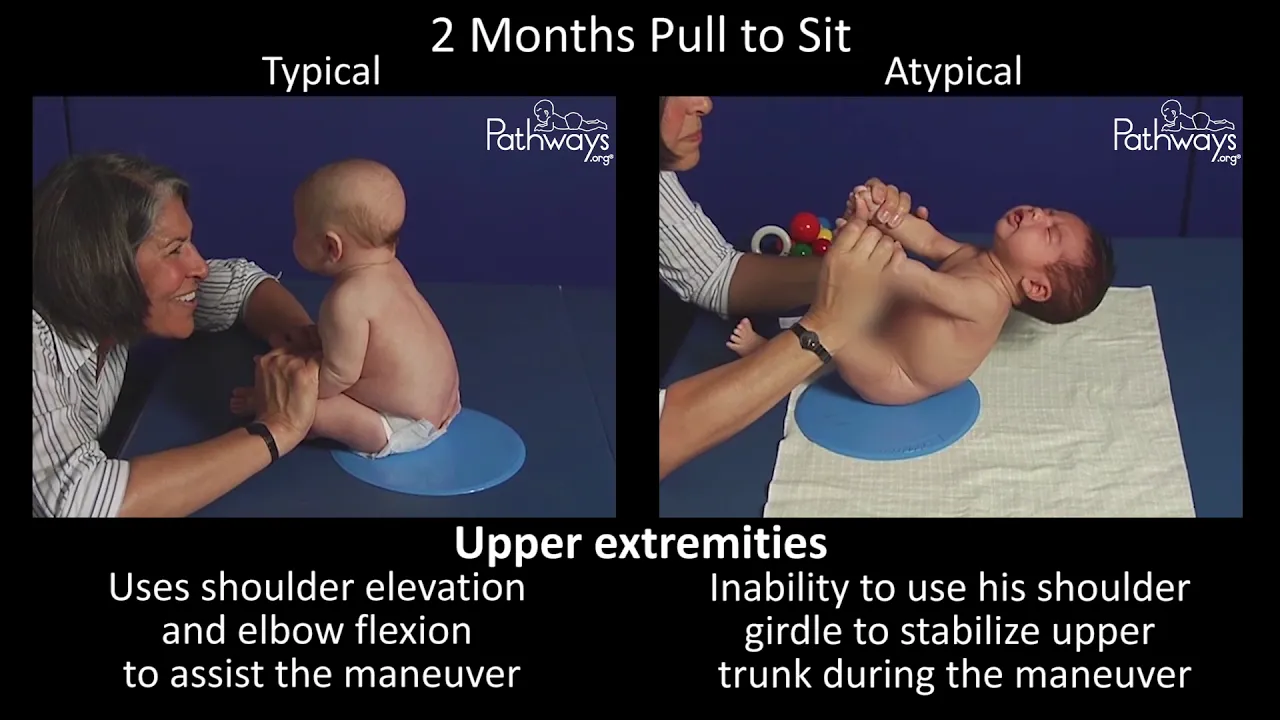
remains and flexed in AB ducted posture movement notice the baby on the left is doing little weight shifts and is able to counteract with his abdominals to balance while increasing shoulder girdle strength baby on the right strategy is to extend and push up on his legs it doesn't a system in lifting his head and pushing up on his arms position for pull to sit head the typically-developing baby demonstrates head leg expected at this age he sustains midline head control when upright the I typically developing baby demonstrates head leg throughout the maneuver and poor head control
went upright upright baby on the left is upright he has good extension through the cervical and upper thoracic spine baby on the right has little activity in the cervical spine and rounding of thoracic and lumbar spine upper extremities the typically-developing baby uses shoulder elevation an elbow flexion to assist in the maneuver the atypical developing baby is not able to use his shoulder girdle to stabilize upper trunk during the maneuver position 5 sitting head baby on the left head is aligned with his ear directly over his shoulder baby on the right is unable to achieve and
sustained head lifting in an upright position posture the typically-developing baby has good activity of the neck extensors he is able to hold and sustain posture with assistance the a typically-developing baby needs more support to sustain a sitting posture movement we don't see a lot of head turning in this position for the baby on the left but this is typical of this aged baby on the rights arms are inactive because he lacks shoulder girdle strength position 6 horizontal suspension anti gravity extension in this position the typically developing baby's muscles of the neck and trunk can sustain
this posture against gravity we can see in this position the a typically-developing baby is unable to lift his head or activate his neck and upper thoracic extensors extremities the typically-developing baby recruits muscles in the shoulder girdle to augment the thoracic extension the a typically-developing baby moves his arms and legs to stabilize his trunk which is a non-productive strategy position 7 protective extension tilting forward when we tilt the typically-developing baby forward towards the surface he sustains and increases the head and neck extension as the a typically-developing baby on the right tips forward towards the surface he
is unable to lift his head and extend his trunk progression the typically-developing baby on the left is on track to demonstrating fundamental control in this position by six months note that if the a typically-developing baby does not get early therapy to develop head and trunk strength it is unlikely he will do this position by six months position 8 standing posture when placed in supported standing we see the typically developing baby has good vertical alignment from head through trunk and feet notice the a typically developing baby on the right sustains pseudo extension when provided maximum port
upper-body note that the typically-developing baby uses shoulder elevation and his upper extremities are held close to his body to assist and sustain this posture while the a typically-developing baby has little or no intermittent muscle activity to maintain standing weight-bearing the typically-developing baby sustains weight on lower extremities with trunk support while the a typically-developing baby collapses and deflection when the examiner tries to let him take weight on his feet you