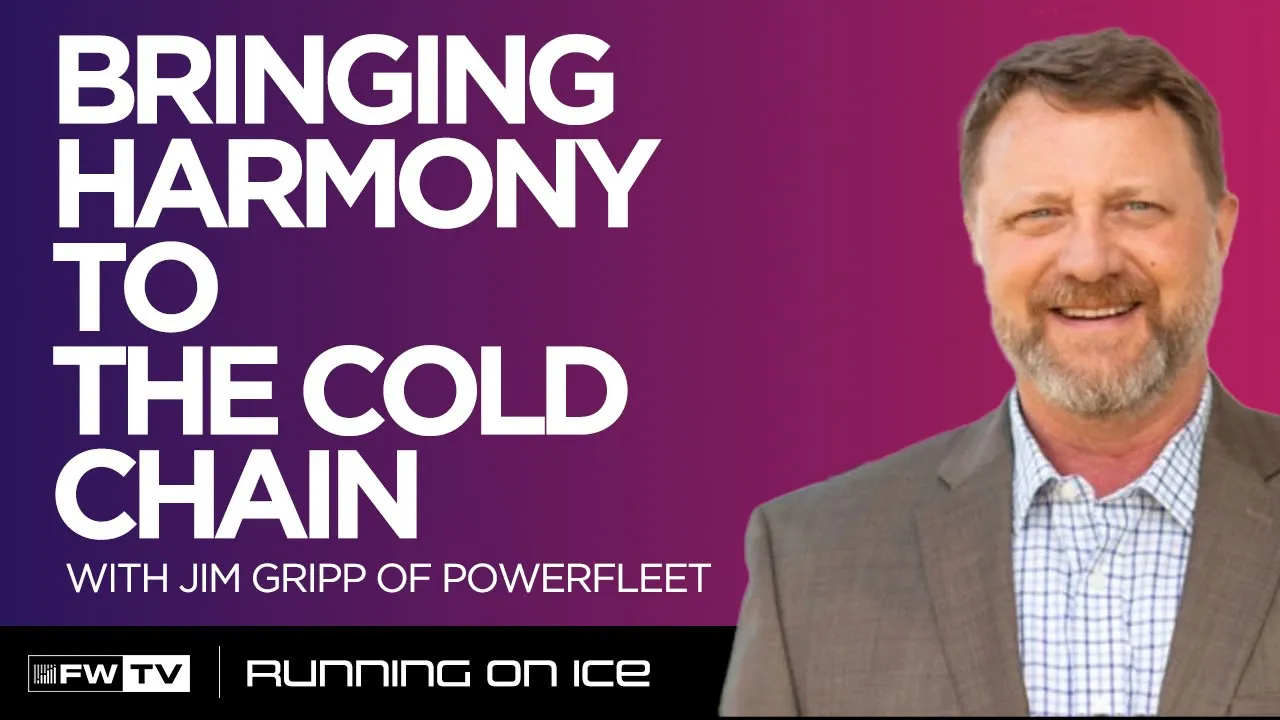
[Music] welcome to running on Ice the coolest community in Freight I'm your host mariio Connell bringing you the latest tech updates Warehouse news and everything happening in the cold chain world not only is there the coolest show in Freight but there's also running on ice and newsletter that could not be colder you can subscribe to that on freight waves.com running on Ice today we welcome Jim grip senior director of product management at powerfully welcome to the show Jim hello Mary it's great it's great to be with you today uh look forward to talking with you
about power fleet's Unity solution um and how our customers and use the unity solution and specifically cold chain application to unify their Fleet and improve their operations I'm excited to get into that today as well this is something that I don't think we've really talked about in a long time kind of this app like an application to really enhance your Fleet and all those different applications um so I'm kind of excited to dig into it today but before we get too far into that let's get some background on you and how you got started at
Power Fleet so I'm I'm kind of a consider a legacy here I joined the originally the original General Electric asset intelligence business in 2006 and that was way back when you know telematics was really uh in its infancy you know there were satellite based telematics units that we had you know right before I joined the company we did a large a huge deployment with w wmart uh you know 50,000 plus trailers with satellite based tracking so that's been you know we've seen a lot of evolution uh you know over the years but you know I
started you know eight years in the military I was in the Army for eight years and then spent eight years at Nokia as a Solutions product manager and with Nokia who's a global telecommunications solution company and then kind of naturally evolved into the uh telematics you know I'm a a school trained engineer with an MBA but my real passion is bringing customer you know value to customers in the form of innovation and iot solution ranging from you know rental cars and rental car tracking and access control all the way to unified cold chain monitoring and
and control solutions that customers use on a daily basis to standardize their business processes and drive analytics for continuous Improvement it's I'm amazed in a daily basis uh how far telematics have come and how far that they've evolved in the main business operations you know for transportation and all forms of transportation and all forms of business operations I I mean i' i' have not been in I'm gonna be straight with you I've not been in the telematic space as long as you have um I have to say by that standard I'm very new to it
um but even in the last two or three years I feel like in um telematics has really made this huge leap and bound and it's kind of getting the glow up and the recognition and it's really kind of getting getting its time in the sun you know it's really kind of coming in saying hey we got some solutions that are really easy to solve you just got to get some telematics behind it um and I absolutely love that um how was like I don't even know that I would I don't even know how to Fathom
what like the OG telematic Solutions are other than I'm sure it's nothing compared to what we have now you know OG was dots out of map you know I needed I need to know where this trailer is at this time you know I need know you you know last week did it go from here to here was it you know was it close to here was it close to there where is it you know the the driver picked up the wrong trailer and they've taken it to the wrong location where is it so we can
you know get it back and get the commodity back to where it needs to be now it's real time driver coaching you know literally you're a driver and a tractor and you've got someone that can come online and talk to you in your phone and say Hey you look like you're getting sleepy or you know you're driving too close to these people or you know too fast for the traffic conditions whatever it may be it's it's evolved so much and it's you know kind of the video game and the you know the the internet and
all the evolution of you know real time you know uh uh tell or uh what am I think you know clips and and all kinds of Instagram and uh you know uh X I guess now but it's real time everything's real time and the the network of telecommunications and the analytics network has pushed out so far to the edge and there's so much Edge processing that customers are really are need the data and need the telx to be able to make kind of nuanced improvements now they're looking for that next five or 10% where they
were making the looking for 50% opportunities to make improvements now they're down to the five and 10% to really and they need the data to be able to drive AI models uh train them and and reverifying to be able to get those insights that is one of the really cool things I found across telematics is that because there there's it exists for so many different things right you have like you know your dash cam footage you have harsh breaking you have everything that you know your insurance company looks for to make sure that you're you
know driving safely and not you know opening yourself up to risk but then you also have like vehicle performance so for example like with a reer unit you can see that maybe the last two times this unit's gone out it's maybe underperformed been outside of a standard range or you know okay well this one's you know turning through something faster so we're going to need to get it into service it earlier and that is reducing you know breakdowns and possible waste and claims as a result of it too and so to see it applied in
so many different aspects is so cool especially because like you said it started out as just I just need to know where this trailer is you know I think you've got some back background as a dispatcher and in different to you different transportation management and stuff and it makes such a huge difference it's all about risk mitigation in a you know in a coold chain operations specifically you've got about four hours from the time that that trailer refrigeration unit stops working to the time that that load is going to get too warm or too hot
or whatever it may be and you're going to lose the load you've got a 4-Hour window to get it fixed either deliver the load to the nearest Warehouse or the nearest store or wherever or cross talking facility or fix the refrigeration unit or you know you know do change your delivery um you know order to try to deliver some with you know the high value you know Commodities first but you've got to put the game plan together as a dispatcher and a fleet manager and start the stopwatch and start counting that down and that's where
those the the telematics and the analytics really have such a big play you know we've power Fleet even is part of the unity the overall Unity uh cold chain solution worked with customers and we got a la history of working with customers to provide and drive value we worked with them to set up an automatic escalation module where you know there's an alarm on the refrigeration unit critical alarm on the refrigeration unit and the dispatcher puts together a plan they submit that plan into the unity ecosystem the manager then can see that and if the
the issue doesn't get resolved at a preconfigured period of time typically an hour then it gets escalated and there's histories there the issues there so every ch CH of management then ultimately can get involved if they can't be solved in you in the right amount of time so that that's where bringing you taking it from a simple dots on the map to a fully integrated cold chain management and control solution provides that added value to customers because they they just wouldn't be able to to do that you know you can't keep up with a 5,000
trailer you know coal chain Fleet which is not on you know a typical some of our grocery customers have uh you know 5,000 plus refrigerated trailers that they run on daily routes you can't no dispatcher can keep up with you know they have about maybe six or eight regions no dispatcher can keep up with you know 500 to a thousand trailers and identify the issues in the system they've got to have systems that present the issues to them and control and monitor and manage the resolution to make sure things get fixed and that you know
specific solution that I was talking about even has an you know a documentation and a feedback loop so then managers can go in do corrective action like root cause and corrective action analysis and say oh we've got to start you know doing whatever more preventative maintenance in this region or it's now it's getting warmer in northern Arizona we have to start doing this or that differently you know to to handle that maybe top off the you know the the fuel tanks every day versus every three days to to handle those added risks and manage that
risk uh to make sure it doesn't become a big issue a th% and I want to get into that solution but first um you guys recently were named like this is this is like a a humble Flex I'm going to I'm going to have for you guys um you were recently named Global leader in cold chain um and it's not like you guys just said we're a global leader because we're cool um it was literally by a third party um so ABI research has recently named you guys a global cold chain leader so first of
all how does that feel like does that be like H we're Justified we're doing the right thing we're making the right steps um and then also what were those aspects that ABI research was looking for that ultimately LED you guys to get chosen so it's always appreciated to be recognized by an industry analyst in you know as the number one Global leader in the cold chain Monitoring Solutions and especially because we were compared as part of the submission and the the interview process powerfleet was compared to other Global and leading you know cold chain solution
providers right there was it wasn't just a a stamp it was a very subjetive analysis there was a we were evaluated you know on our orinal submission and then interview follow-ups on things like Innovation and development in operations and Technical criteria um so they really you know uh did a good job uh ABI did a good job of kind of really evaluating the total solution and how it would be put into you know to business operation and what the value is going to bring so we you know it was I was part of that team
that developed the response and then uh responded to to the interviews and be able to provide additional information back so that's that's pretty special you know that's it takes a a a a committed effort to a solution a telematic solution in this case cold chain to have the the Technical Resources but also have the customer service and have the you know the the deployment and installation and the troubleshooting and the operations resources and documentation and process to to be able to make very very large cold chain customers successful um deploying those products so it was
it was a very nice you know industry recognition I feel like in the middle because these interviews in this whole process sounds very intense so I feel like in the middle at some point in time I would be like man do we really want to keep doing this because this is exhausting but obviously the recognition at the end is worth it but in the middle of it sometimes you got to be like man okay but it really you know as a product manager I appreciated it because it really helps you sit down and go oh
this is this is the toll you know valuation this are the the things that are critical to end customers and end users of the system right you you've got you know kind with any solution you've got a a buyer you've got a a maintainer and you've got a user and I think we do a great job of addressing all the concerns and all the your requirements across all of those kind of three different classes of of customers um you know we're going to work with the CTO we're going to work with the CEO and the
COO to make sure that the solution works well it's you know priced well it it deploy well and it operates really well but we're also going to you know to focus on the dispatcher to make sure that the system's easy to use it can be integrated uh you know it can be maintained and it's you know it it provides the the solution across the full Continuum um so that that process of kind of someone you know it's what's inspected not what's expected you know is kind of in a you know management and when somebody really
starts to look at exactly how you're doing things and ask you these critical questions um and you and you're able to answer them and really uh competitive fashion and ultimately get recognized um it kind of closes the loop on that whole product you know Innovation and development and deployment process that's got to be really nice too to just be like we are doing the right thing we are servicing people um so speaking of this product this this magical product that you guys have you've alluded to it a little bit but let's dive into it you
guys have Unity do you mind breaking it down for us kind of saying what the solution is I know you kind of brought it up a little bit already but what what are we looking at when we have Unity here so so we start with the challenges right customer challenges and I work with customers almost on a daily basis to help them you know uh overcome you know the the Conant challenges of challenges of trying to improve safety efficiency sustainability and compliance those are the things they want to make sure people don't get hurt they
want to make sure that they're not wasting money on their operations they want to make sure that they're friendly to the environment and they're you know they're not doing anything uh you know out of uh the ordinary for sustainability and then want to make sure they're compliant right they the transportation industry is heavy heavily regulated and specifically for cult chain you know there's a lot of Regulation and compliance for food safety and best practices there so those are the big challenges they need you know customers need data across their assets their people and their processes
to make sure that they can pull all that together and identify the opportunities and identify the weaknesses and you know make those incremental improvements um you know suffer right now and any company I would think any company um is always challenged with data silos right so you've got your HR System you've got your your Erp system you've got a purchasing system you've got a maintenance management system and for the most part they're probably operating independently you need a tool to be able to pull all of those things together and manage across all those efficiencies and
collect the data I talk to a lot of large Enterprise companies uh you know from you know car manufacturers and Warehouse uh people to large coal chain fleets and it's not overly complex and and it's not super challenging it's just hard to get people thinking in that process Excellence uh you know mindset where they have cross functional teams you know businesses are starting to put together cross functional teams and drive process Excellence to make sure look we're not duplicating data we're not you know uh you know H having too much manual effort and error to
synchronize all these systems so so those are the big challenges you know Unity solves those challenges through you know integrating the data ingesting data from different data sources we get you know we have multiple customers that say look you know during covid I um there were you know electronic shortages and I couldn't purchase all of my telematics gateway devices from One customer or from one vendor I had to go to three or four different vendors now to get you my total Fleet uh you know with telematics deployed and I didn't want to put a piece
of Rolling Stock in the you know in the fleet without having telematics on it but now postco I've got four different telematics providers you got to help me pull that together and that's where we're really really you know power fle is really good at doing that you know we're data agnostic we'll take data from a device we'll take data from a back office we'll take data from a business system we'll take it from third-party data sources like weather and traffic and different sensors even Integrations with you know uh fuel card providers and you know maintenance
management software system uh providers to be able to help customers pull together you know they're ultimately they're Fleet uh and transportation based companies they don't want to be it companies they don't want to be you know software developers and that kind of thing they were looking for vendors that can pull it all together so that's where we you know Unity does a great job of pulling the data together harmonizing it and harmonizing is a big word you you alluded a little bit earlier saying let's keep the the the jargon down but harmonizing is simply just
making all the data look the same so when it comes out on the other end you can compare you know a beginning of Drive message in from one telematics provider with a beginning of Drive message from another telematics provider to make sure you've got it you got a single point uh pane of glass and a single set of Fleet Management rules across all of those different vendors and it all looks the same and the data is all uh you know this normalized and it's the same so then you can use that data to train your
AI models and develop your Advanced analytics and identify those efficiencies across the entire fleet that's that's the hard part right now is making it all look the same and act the same so then it you know it provides the same uh you know Predictive Analytics and and uh you know analytics and data to be able to drive the insides I think that's something that's really important because you know as someone who is on the operation like if you have someone that's on the operation side they aren't good they have four different providers for an iot
device or whatever they don't want to log into four separate platforms just to find out where their problem children are they because for the most part if I'm in operations I don't care The Sounds bad but I promise it's not bad I don't for the most part I don't care about those that are pick up deliver no problem I really don't care about those because I don't need to see those I want to know who's falling outside of temperature who's late for a pickup who's late for a delivery I want to know those exceptions so
that way I can work the exceptions because as you mentioned you know there's an AI component and you're teaching AI I want AI to handle the pro the the non-pro children I want them to go through and you know just say all right this stuff is good let's move on so that way I can have the C the human capital to say okay here's some weird problems we need to start making phone calls and figuring this out because as much as I love AI I don't feel like it's ready to handle so I loaded order
one on trailer C and I loaded order two on trailer a and they were actually supposed to both be loaded on trailer b um and so you know I don't feel like AI is quite ready for that yet you're exactly right you know when you and I'm I'm not comparing uh you know Transportation industry to the air traffic control but you know that's the key about Air Traffic Control you look at the screen and you got all the airplanes at your airport in one picture so you can see where all the IND the issues are
it's exactly the same thing you've got to be able to see you know have the same set of rules to see the exceptions and Float those exceptions to the attention of the people that are going to manage them and resolve them and all the noise you know has to be filtered out and that's where that harmonization and the unification really comes together um the other the other key aspect about Unity is Unified operations so imagine customers have are leveraging the the analytics and the data coming together now they want to kind of take it to
the next level and they want to inte you know integrate and optimize their business operations so they want to bring the people the processes and the assets together all the way from HR and you know training learning management system and the maintenance management system and all those Erp systems to bring it all together to make it that much better you know here here's a simple example you name an asset you know a trailer a refrigerated trailer or a tractor whatever it may be you name it one thing in one system now on the other system
it might have a slightly different name and in the third system it might have a slightly different name so part of that AI is you know fi finding those similarities across all those different systems and saying oh this is this trailer right here we're going to call it one thing let's work together to call it one thing or at least uh translate it so we understand everybody understands exactly what it's being called so you don't have to have a you hire and and pay a person to sit there and figure all those disconnects out between
the systems that that's where you want you to bring the unified operations together and and solve those small problems like you said with by using Ai and using other business integration and make the hard problem save the hard problem from people that you that where AI can't do those things and like you said it can't find a mixed load on one trailer and a mixed load on the other that really should be on the same trailer that's you that's a little more advanced right now than I think AI can can help with but solve the
other stuff so that the people that are available can focus on the big problems and that is my I know we got off on AI tangent but that is my biggest thing about AI everybody's like oh I AI is coming for supply chain it's going to take over and I'm like no it's just going to babysit all the stuff that you don't want to do so that way you can work on the actual problem children because the last thing you need is to come in and say okay what fire I mean this happens every day
what fire am I putting out today and you want to know you want to find the biggest Blaze to start the day you don't want to worry about these little not even Embers down here that are just going like you don't want to worry about that and you know when you had the example of a trailer that's named three different things in every system um I want to say that I've never heard of that before but as someone whose job it was was to look up trailer name name names and give them the name for
each one um thank you for coming up with a solution for that because that is a painful job it it happens it's it's again the problems aren't super tough they're just the scale is so big that you can't get your hands around them and they you know they're relatively simple if you put and these are problems that you solve once as part of the integration and then the ongoing checking you know monitoring is a big piece of unity in our unified operations too we got to make sure that data's correct and make sure that the
systems are exchanging the data and it's operating as it's supposed to so we do a good job of of putting in monitors to make sure that the the business processes and the integration process are working optimally you know what one example we work with a with a uh in warehouse forklift access control on our side and we're pulling in human you know human Capital Management you know um HR System data for operators and we've got a listener on this data feed that just basically says hey when I see a new operator suck all that operator's
data in when I see that an operator isn't in the daily data feed you know suspend their account and turn off their permissions because we know that they're either you know got you know they're they are term believe or they left the company you know short term well they're never coming back but they shouldn't have access to the you the equipment if they're not in the data feed so making taking simple processes and really driving all the value out of them is part of the unified operations that Unity provides and you know it sounds simple
and it is relatively simple but you've got to make sure you got processes that handle all those things and handle them at scale to like you said solve the small problems for the you know so the big problems you really emerge that is some Next Level thing ahead and I absolutely love it um but Jim we are coming to the end of our time together today but don't worry because we're gonna hit you with the hardest question of the day okay um and it's question that everybody comes in the show has to answer so Jim
is serial considered a soup cereal is not considered a soup yes that is the right answer not that there's a wrong answer but there is and that would that's it because um it's you know it's it's on its own aisle and you it's just it's just not it you know you're in a whole different mood for one versus the other right soup is in the end of the day cereal is in the beginning of the day and you can eat cereal at midnight or lunch but you're just you know it does they have different meanings
to me exactly like you can use cereal as breakfast or as like a snack if you want like the amount of times I've eaten frosted flakes as a snack is far too many to count but I've never just been like oh let me get a snack of soup literally never once exactly exactly all right Jim so if someone uh wants to question your cereal as a soup solution or if they want to pick your brain about maybe setting up some processes or anything you guys have going on over there where can they find you outside
the show they can find me at my at powerfleet um they can either go to the power Fleet website and open a a case there a support case there or they can email me directly at JG rip PP powerf fleet.com awesome thank you so much for joining us today thank you it was much appreciated you can catch other episodes of running on ice right here on YouTube or anywhere else you get your podcast like apple podcast and Spotify need more running on Ice news no sweat subscribe to newsletter on freight waves.com running on Ice see
you on the internet [Music]