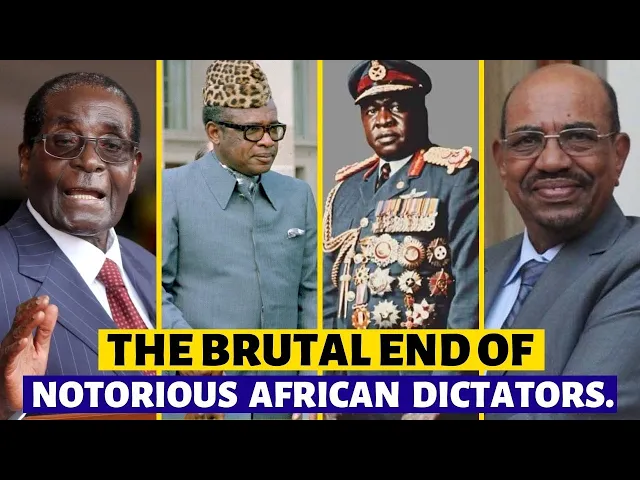
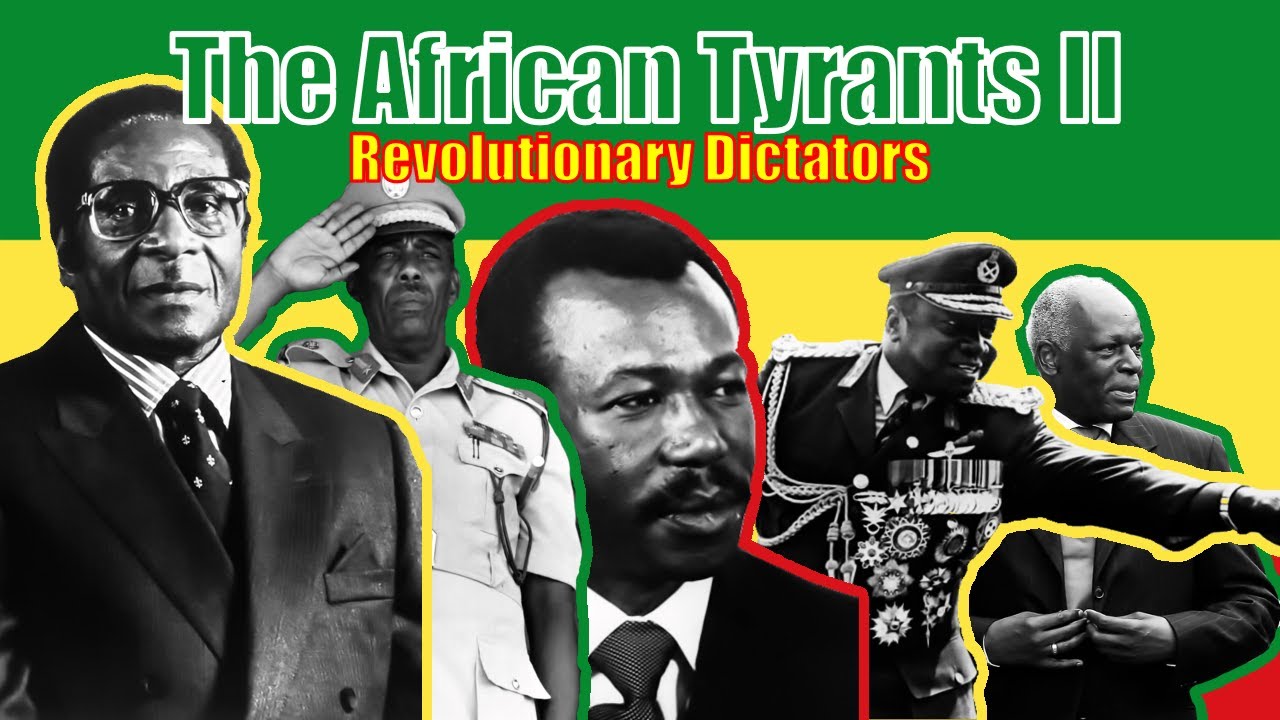
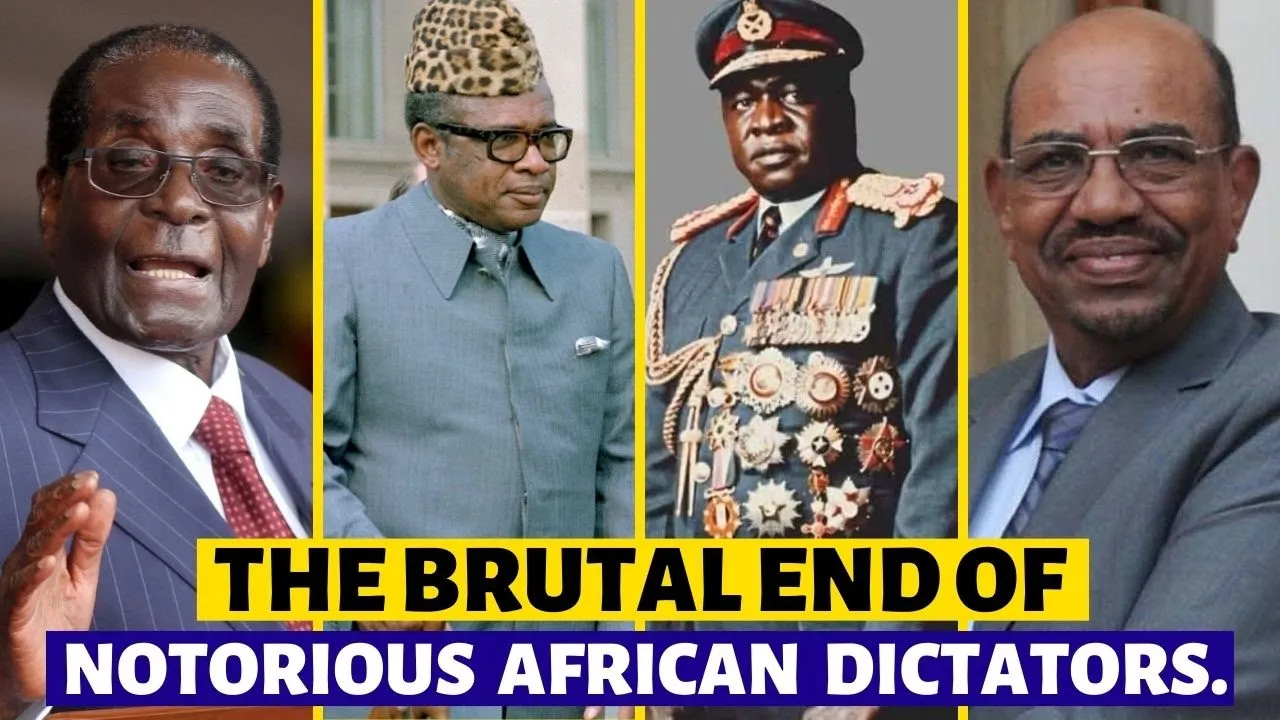
throughout the 20th century many African countries were ruled by authoritarian leaders who came to power through cubes or other means of political violence these leaders often referred to as dictators wielded enormous power and influence over their countries and their regimes were characterized by human rights abuses political repression and economic mismanagement while some African dictators initially enjoyed popularity for their Promises of Social and economic reform their regime soon became known for their brutality and Corruption in many cases these dictators were eventually overthrown by popular uprisings or military coups which paved the way for new forms of government and political reform this video will explore the rise and fall of 10 African dictators examining the circumstances that led to their rise to power and the factors that contributed to their eventual downfall but first take a few seconds and subscribe to the channel so you don't miss any of our videos 1. Edie Amin Dada former president of Uganda Eid Amin Dada was a military officer who came to power in Uganda in 1971 following a coupe against President Milton obate Amin initially enjoyed some popularity for this populist rhetoric and Promises of economic and social reform but his regime soon became known for its brutality and repression a mean used violence and intimidation to maintain his grip on power with his regime characterized by human rights abuses political repression and economic mismanagement a means must rule led to the deaths of up to 500 000 people and many more were forced to flee the country a means downfall began in 1978 when he invaded Tanzania in an attempt to Annex the kajira region the invasion was repulsed by Tanzanian troops who then launched a counter-offensive against a means regime in 1979 a coalition of Ugandan Exiles and Tanzanian troops invaded Uganda adamin was forced to flee the country Amin spent the remainder of his life in Exile first in Libya and then in Saudi Arabia where he died in 2003. Amin's regime remains one of the most brutal and oppressive in African history and his legacy continues to be felt in Uganda and The Wider region while amine was initially welcomed by many ugandans as a change from the corrupt and authoritarian government of Milton obatei his regime quickly descended into violence and chaos and his rule is remembered as a dark chapter in uganda's history 2.
Mobutu say Seiko former president of DRC Mobutu say Seiko came to power in the Democratic Republic of Congo then known as zai in 1965 following a military coup against President Joseph kosovubu Mobutu initially enjoyed the support of many Congolese who were disillusioned with the corruption and political instability of the post-independence period however Mobutu soon became known for his corruption and authoritarianism with his regime characterized by human rights abuses political repression and economic mismanagement mobutu's regime was marked by his authenticity policy which sought to promote Congolese culture and traditions but also led to the suppression of political opposition and dissent Mobutu used violence and intimidation to maintain his grip on power with his regime becoming increasingly corrupt and inefficient over time Israel was also marked by the exploitation of the country's natural resources which led to the impoverishment of the Congolese people in 1997 Lauren kabila led a rebellion against Mobutu with the support of several neighboring countries Mobutu was forced to flee the country and carbilla established a new government Mobutu spent the remainder of his life in Exile and died in Morocco in 1997. movotu's regime remains one of the most corrupt and oppressive in African history and his legacy continues to be felt in the Democratic Republic of Congo and The Wider region while Mobutu initially enjoyed some popularity for his efforts to promote Congolese culture and traditions his regime soon became known for its brutality and repression and his rule is remembered as a dark chapter in the country's history 3. Robert Mugabe former president of Zimbabwe Robert mugabear came to power in Zimbabwe in 1980 following the country's transition to majority rule after a long period of white minority rule Mugabe initially enjoyed widespread support for his efforts to promote racial reconciliation and social and economic reform he implemented policies such as Land Reform which aimed to redistribute land from White Farmers to Black zimbabweens and education reform which sought to improve access to education for all zimbabweans however muthabi's regime became increasing Neil authoritarian over time with Mutha Bay using violence and intimidation to maintain his grip on power mugabe's policies also led to economic Decline and widespread poverty with the country experiencing hyperinflation and food shortages in 2000 mugabe's government began seizing land from White Farmers without compensation leading to International condemnation and sanctions Mugabe also faced criticism for his repression of political opposition and his efforts to manipulate elections in 2017 Mugabe was ousted in a military coup and Emerson mangagwa became the new president Mugabe spent the remainder of his life in Exile and died in Singapore in 2019 mugabe's Legacy remains contentious in Zimbabwe and The Wider region while he is remembered for his role in ending white minority Rule and promoting social and economic reform his regime's human rights abusers repression of political opposition and economic mismanagement contributed to widespread suffering and poverty and ultimately led to his downfall 4.
Muammar Gaddafi former president of Libya nuama Gaddafi seized power in Libya in 1969 following a military coup against King Idris gandafi initially enjoyed some popularity for this socialist and pan-arabist policies and for his efforts to redistribute wealth and resources in Libya however his regime soon became known for its brutality and repression with Gaddafi using torture and extrajudicial killings to maintain his grip on power Gaddafi's rule was also characterized by his flamboyant personality eccentric behavior and anti-western rhetoric in 2011 a popular Uprising against Gaddafi broke out inspired in part by the Arab Spring movement the uprising quickly turned violent with Gaddafi's forces using brutal tactics to try to crush the Rebellion in response a coalition of Western countries including the United States France and the United Kingdom launched airstrikes against Gaddafi's forces in support of the rebels in October 2011 after months of fighting Gaddafi was captured and killed by Rebel forces in his hometown of surt his death marked the end of his regime and the beginning of a new era for Libya although the country has since been played by political instability and violence Gaddafi's Legacy remains controversial in Libya and The Wider region while he is remembered by some as a charismatic leader who sought to promote social and economic equality his regime's human rights abusers political repression and support for terrorism contributed to widespread suffering and instability and his downfall was ultimately welcomed by many libyans and members of the International Community 5. Omar al-Bashir former president of Sudan Omar al-Bashir came to power in Sudan in 1989 following a military coup against the democratically elected government of prime minister Sadiq almadi bashia's regime was characterized by human rights abusers political repression and economic mismanagement he used violence and intimidation to maintain his grip on power with his regime becoming increasingly corrupt and inefficient over time regime was marked by the conflict in Darfur a region in Western Sudan where his government was accused of committing genocide against the local population also faced criticism for his repression of political opposition and his efforts to manipulate elections in 2019 after months of protests against his rule Basha was ousted in a military coup a transitional government was established and a power sharing agreement was reached between the military and civilian leaders Bashir was subsequently arrested and charged with corruption money laundering and other crimes and he remains in prison awaiting trial bashi's Legacy remains controversial in Sudan and The Wider region while he is remembered by some as a leader who sought to promote Sudanese nationalism and unity his regime's human rights abusers political repression and economic mismanagement contributed to widespread suffering and poverty and his downfall was ultimately welcomed by many Sudanese and members of the International Community 6. Samuel Doe Samuel Doe came to power in Liberia in 1980 following a military coup against President William Tolbert doe was the first indigenous Liberian to hold the presidency and he initially enjoyed some popularity for his efforts to promote social and economic reform however his regime soon became known for its brutality and repression with doe using violence and intimidation to maintain his grip on power Doe's rule was marked by human rights abusers political repression and economic mismanagement with the country experiencing widespread poverty and instability in 1989 a rebellion led by Charles Taylor broke out against Doe's regime sparking a period of violence and Civil War those forces committed numerous atrocities against civilians and the conflict ultimately led to the deaths of up to 200 and 50 000 people in 1990 doe was captured by Rebel forces and tortured to death Doe's Legacy remains controversial in Liberia and The Wider region while he is remembered by some as a leader who sought to promote social and economic reform is regime's human rights abusers political repression and economic mismanagement contributed to widespread suffering and poverty and his downfall was ultimately welcomed by many liberians and members of the International Community the country has since struggled to recover from the effects of the Civil War and to build a stable and democratic government 7.
Jean bedel bocassa former president of Central African Republic came to power in the Central African Republic in 1966 following a military coup against President David doco bakasa initially enjoyed some popularity for his efforts to promote economic and social development but his regime soon became known for its brutality and repression bakasa used violence and intimidation to maintain his grip on power with his regime characterized by human rights abuses political repression and economic mismanagement in 1976 bukasa declared himself emperor of the Central African Empire and his regime became increasingly extravagant and corrupt but Casa's rule was marked by his lavish spending on palaces luxury cars and other extravagances while the majority of the population lived in poverty in 1979 a popular Uprising against bokasa broke out a and French troops intervened to restore order Picasso was forced to flee the country and David dako was reinstated as president bakassa was subsequently arrested and charged with various crimes including murder cannibalism and embezzlement he was later convicted of murder and sentenced to death although the sentence was later commuted to life imprisonment bakasa's Legacy remains controversial in the Central African Republic and the wider region while he is remembered by some as a leader who sought to promote economic and social development his regime's human rights abusers political repression and economic mismanagement contributed to widespread suffering and poverty and his downfall was ultimately welcomed by many Central Africans and members of the International Community 8. former president of Somalia said bahraine came to power in Somalia in 1969 following a military coup against President abdirashid Ali shermak Bahrain initially enjoyed some popularity for his efforts to promote economic and social development but his regime soon became known for its brutality and repression Barre used violence and intimidation to maintain his grip on power with his regime characterized by human rights abuses political repression and economic mismanagement in 1991 a coalition of Rebel forces known as the United Somali Congress USC launched a rebellion against beret's regime the Rebellion quickly turned violent with Berets forces using brutal tactics to try to crush the uprising in January 1991 Barry was forced to free the capital Mogadishu and his regime collapsed Somalia subsequently descended into a period of Civil War and Anarchy with various Warlords and factions vying for power beret's Legacy remains controversial in Somalia and The Wider region while he is remembered by some as a leader who sought to promote economic and social development his regime's human rights abusers political repression and economic mismanagement contributed to widespread suffering and poverty and his downfall was ultimately welcomed by many somalies and members of the International Community the country has since struggled to rebuild and establish a stable and democratic government 9. hissing habel former president of Chad isn't Heber came to power in Chad in 1982 following a military coup against President pukaniod hadwa's regime was characterized by human rights abusers political repression and economic mismanagement habel used violence and intimidation to maintain his grip on power with his regime becoming increasingly corrupt and inefficient over time hedwig's regime was also marked by his government's support for Rebel groups in neighboring countries including Sudan and Libya which contributed to instability and conflict in the region in 1990 a rebellion led by Idris Debbie broke out against hadwa's regime sparking a period of violence and Civil War Hebrews forces committed numerous atrocities against civilians and the conflict ultimately led to the deaths of tens of thousands of people in 1991 Haber was forced to flee the country and Debi established a new government in 2013 Hebrew was arrested in Senegal and charged with crimes against humanity war crimes and torture committed during his time in power in 2016 he was convicted and sentenced to life in prison hebrew's Legacy remains controversial in Chad and The Wider region while he is remembered by some as a leader who sought to promote chadian nationalism and unity his regime's human rights abuses political repression and support for Rebel groups contributed to widespread suffering and instability and his downfall was ultimately welcomed by many chadians and members of the International Community 10.