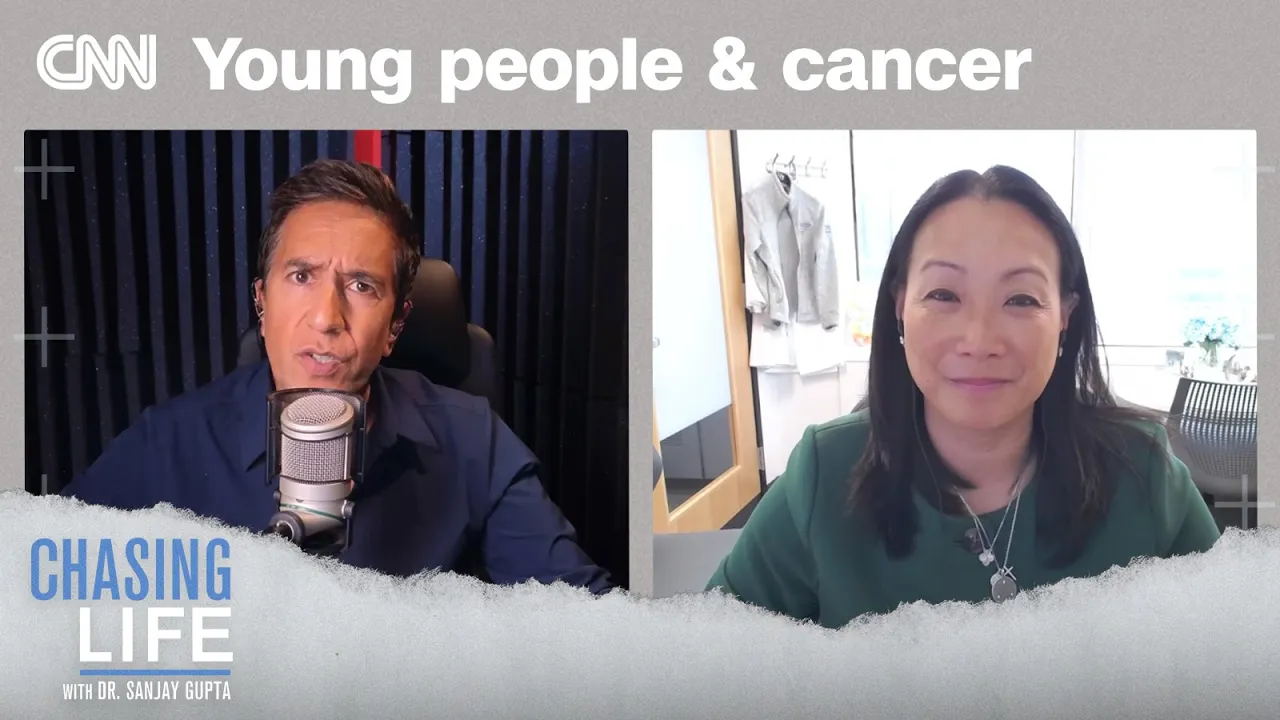
Good morning, doctor. How are you this morning? Good morning.
I'm good. Thank you for having me. Where where are you this morning?
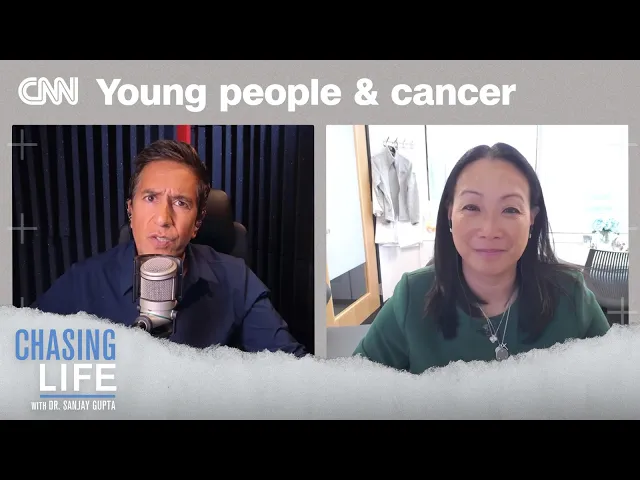
I am in my office at Dana-Farber Cancer Institute in Boston. Do you remember when you first started seeing younger patients in your practice? So, I have been caring for patients with gastrointestinal malignancies at Dana-Farber for the past 20 years.
And I would say in each consecutive year, my colleagues and I were seeing more and more young people coming in, no risk factors, no genetic syndrome with stage 4 colctal cancer. Wow. What What was that like for you?
I mean, when you first saw these patients, I mean, it was shocking to see that a young person, perfectly fit and healthy, no risk factors, no family history, could be diagnosed with stage 4 disease. And then it just became more and more common, which is also distressing. You know, it's difficult to receive a cancer diagnosis no matter what age you are, but younger people face really different challenges.
80% have children under the age of 18. They're also caring for elderly parents. They're in the midst of their careers.
Some people are still getting education. Some people are still planning to expand their families. And so that was part of the impetus for us starting this young onset colurectal cancer center to really better take care of patients and their families as they go through this experience but also to launch that multiddisciplinary research effort to really try and understand what is underlying the increase.
Is there a particular definition of early onset or young onset cancer? So historically and in the published literature the accepted definition is a cancer that develops under the age of 50. And I think where that 50 number comes from is for example for colorectal cancer the average age of diagnosis used to be in the 70s and screening used to start at age 50.
So any cancer that was developing before age 50 was considered early onset. So that's a movable target it sounds like in terms of how we define this. Are we seeing younger and younger people with with these types of cancers?
Unfortunately, yes. And the most common cancer that has been talked about because it's one of the most rapidly rising in people under the age of 50 is colurectal cancer. Now the silver lining is that if you look at patients of all ages, the incidence of colorectal cancer and mortality from colorectal cancer have actually been declining for decades.
And that's due to successes in public health efforts to improve adherence to screening recommendations. And it's due to improvements in treatments. But that benefit has not been seen in people under the age of 50, where ever since the mid 1990s, the incidence of both colon and rectal cancer has been increasing by about 2 to 3% per year in these young people.
And this is happening in both men and women. It's happening all across the United States and it's actually a global phenomenon as well. Is it all countries?
Is it developed countries? What do you notice there? It is happening most rapidly in westernized higher socioeconomic status countries.
So for example, Australia and New Zealand have very high rates. Norway, uh the UK and certain countries in Western Europe have extremely high rates of young onset colarctal cancer. Has the pace of that increase been changing?
Has that been growing as well? I would say it's a fairly steady pace. So currently young onset colorectal cancer is already the leading cause of cancer related death in men under the age of 50 and this steady increase will mean that by the year 2030 it will also become the leading cause in women.
Right now it is the second leading cause of cancer death in young women trailing behind breast cancer. But again if these increases and this rate continues it will surpass breast cancer to become the leading cause in women as well. I guess the obvious question is why?
So that is the big question of the decade. I think it is what so many of us researchers are trying to understand. So we do have some clues.
If you look at the epidemiologic trends, you'll notice they follow what we call a birth cohort effect where the increasing incidence follows generations and varies by generations. And to illustrate that point further, if you take a person born in 1990, they now have quadruple the risk of developing rectal cancer and over double the risk of developing colon cancer compared to a similarly aged person who was born in 1950. Now, that's quite dramatic.
And when we see these birth cohort effects, what it usually suggests is that there's some recent environmental exposure or exposures that have happened recently that are contributing to that rise. And we do know that things like colctal cancer and other gastrointestinal cancers are increasing the most rapidly in young people. So the big question now is what are these things that are actually leading to this increasing incidence in young people?
If you think just sort of broadly this idea that there's there must be something in the environment then obviously our genetics did not change that much in 30 years to suddenly make us more likely to develop these cancers. So can you sort of connect the dots then if it's diet if it's some sort of toxic exposure how does that lead to increased cancer rates? So I want to just highlight something important that you said which is that we don't think this is any shift or change in human genetics.
right? These increases have happened too rapidly for that to be the case. However, the younger you are when you're diagnosed with cancer, the higher the chance of finding a genetic syndrome or predisposition.
So, it is a key takeaway that every young person diagnosed with cancer should have germline or hereditary genetic testing to make sure that one of these genetic syndromes is not in place. So, how has that changed your practice then? You're seeing more and more patients coming into your office with early onset cancer.
Are you genetically testing the majority of them? Now we are and that was one of the goals when we started our young onset colctal cancer center and so we have made that reflexive. So automatically when somebody has a new patient appointment here in a scene, they are referred and booked automatically for a genetics appointment to meet with a genetic counselor and then to learn about genetic testing and then sign informed consent for that to happen.
So we've now automated it to be sure that we are reaching almost every single young onset colurectal cancer patient and making sure they're getting that testing or at least learning about it. But to your point, we do have some clues through prospective cohort studies that we've been involved in about what some of these dietary and lifestyle factors may be that increase the risk of developing young onset colarctal cancer. Now, the leading hypothesis has been obesity.
As we all know, obesity rates have been skyrocketing in recent decades. that seems to have paralleled the rise in these young onset cancers and colorectal cancer and gastrointestinal cancers which are rising most rapidly are known to be strongly linked to obesity no matter what age you are when you're diagnosed. Talk me through it.
So someone who h who carries too much weight they're obese how is that linked or associated with with colorectile cancer in a state of obesity there is increased inflammation in the body and we do know that inflammation is a precursor and can lead to the development of so many different types of cancers and we now are learning more and more about the microbiome every day and understanding the role that it plays both in immune surveillance of cancers and potentially keeping cancers away, but also how they may directly contribute to cancers like colorectal cancer. So, it's it may not necessarily be the body weight itself as as much as it is all the things that come with that, the increased inflammation, the changes in microbiome and and things like that. That's right.
And I think that the same can be said for a variety of other diet and lifestyle factors. These include things like sedentary behavior, intake of sugar sweetened beverages, higher intake of what we call a western pattern diet, which is basically diets high in red meats and processed foods and sugars and less in fruits and vegetables. All of these dietary and lifestyle factors have been linked to an increased risk of young onset colctal cancer.
However, I have to really emphasize that my colleagues and I when we're seeing young patients coming into our doors with this diagnosis, most of them are not obese. You know, many are marathon runners, they're triathletes, they're eating really healthy, they eat organic, and yet they're still being diagnosed with young onset colarctal cancer. Yeah, it is interesting because twice you've now mentioned the idea that these young people come in and often times are super fit.
It's not genetics. It doesn't appear to be the obvious environmental influences like obesity and and sedentary lifestyle. So what is what is going on?
It is really a mystery. And I think part of the issue may be that it could be early life factors that are actually at play. And if you think about it, somebody coming into your clinic with this diagnosis, if you ask them, what were you eating at age six?
How much physical activity were you getting when you were seven years old? It's really hard to remember. And so, you know, in an ideal world, we would study people from in uterro to infancy through childhood through adolescence through young adulthood.
every few years collect all kinds of samples like stool samples, benign biopsies, blood samples, collect their diet history, collect their physical activity history, their environmental exposures, home environment, and then follow them until they receive a diagnosis of cancer. And then you would really be able to understand what factor it was and at what period of your life mattered to lead to that diagnosis. But a study like that is really not feasible.
it would take too long. It would be too expensive. So, we need to come up with other ways to try to answer this question.
So, it sounds like you're saying even if you were very fit at the time of diagnosis, how you lived your life, even as a very young person before you're 10 years old might play a role here in a in a future diagnosis. Yes. And it could be things that have affected, for example, your microbiome in the first decade of life.
There was just a paper published in Nature that showed three times more prevalence of a mutational signature which is a a classic pattern of changes in your DNA caused by a genotoxin called kolibactton. And this kolibactin is produced by a microorganism called PKS positive E. coli.
So if this bug is in your microbiome in the first decade of life, producing this genotoxin that can damage your DNA or change your DNA in a characteristic way that may lead to increased susceptibility for cancer at a younger age. You know that is what we have to figure out. What is happening early in life?
What are the dietary environmental exposures that led to that that is actually causing this rise in young onset cancer? If you think about you know again carrying too much body weight having obesity inflammation microbiome that seems like a a bodywide sort of phenomenon. Are are other cancers then increasing as well?
Why why so much uh focus on colorectal cancer? In fact yes this group of digestive system organ cancers. So things like pancreatic cancer, um things like endometrial cancer, which have known and strong links to obesity, are both increasing as well in young people under the age of 50.
I hear that you're saying obesity, you know, in the microbiome and inflammation probably high on the list. But how confident are we that that's really what's driving this? I I don't think we are confident yet.
You know, these are individual studies. They're observational in nature. They show associations but not necessarily causation, right?
They're not showing cause and effect yet. And that's where I do think there will be more laboratory studies for example. And we are still in our infancy in understanding whether those are true risk factors, whether there is a link and actually how do they actually lead to cancer um in terms of these biological mechanisms.
Is that important for you to know as an oncologist the why behind the what? Like why is this happening or is it just important to sort of focus on what you do about it? I think they're both important.
I think it's really important to know why because that is how we are going to develop prevention and early detection strategies. I do think that's where we need to head because I think it's highly unlikely for example that the screening age for colorectal cancer is going to be lowered any further than age 45 at least for a while. And so that's where knowing the why and the reasons underlying the rise is so important.
But it's also very important to know how to treat this. And right now, because we haven't necessarily pinpointed consistent biological differences between the cancers that happen in younger people compared to the cancers that happen in older people, a 30-year-old right now is treated exactly the same according to medical guidelines as somebody who is in their 70s. And you know what?
You would expect that a young person with fewer coorbidities, better performance status when they're entering diagnosis, starting treatment, would have a longer survival. But that's not necessarily true actually. And a lot of studies have showed that the youngest patients actually seem to have shorter survival compared to an older patient.
Why not start screening younger? So I think we need to keep in mind that although there are rapidly increasing rates of these cancers in young people, the absolute number is still quite small and it is still relatively rare to develop any of these cancers at a really young age. And so so many different factors have to go in to what you know allows a successful screening program to be implemented and the cost effectiveness.
There are risks to screening as well. And so when you consider all of these factors in modeling studies, you know, they the US preventive services task force found that it made sense to decrease the age from 50 to 45. So it did make sense to do that.
But lowering it any further where the absolute numbers do get relatively small probably doesn't make sense right now. And so I think the field needs to head in the direction of figuring out why this is happening. What are the risk factors?
Who is at risk? And can we tailor that high-risisk 30-year-old for earlier screening? Just just make the case for for a second, if you will, for earlier screening.
Then I think this is one of the most challenging things. This idea that I feel fine. There's nothing wrong with me.
I'm going to do something preventative for my health, but I'm not even sure what the benefit is ultimately from from doing that. Eat right and exercise and nothing will happen to you. It's not the most inspiring message, right?
How do you make the case then for people to to to get screened and in and in your patient population perhaps even get screened earlier? Actually the data show just getting one colonoscopy can significantly decrease your lifetime risk of developing colctal cancer afterwards. It is much better to undergo the prep and get that procedure than to receive a diagnosis of colorectal cancer and then need surgery and chemotherapy and radiation.
Right? So if you think of it like that, screening is nothing compared to actually having to undergo treatment for a cancer. Do you have any idea what the percentage of people who should be screened at age 45 are actually getting screened?
So the latest data show that still only about 25% of people between the ages of 45 to 49 are being screened. And in the older population, you know, it's been long that screening was the was the recommendation to start at age 50. Only 66% of people over the age of 50 are getting screened.
You know, there was this effort to get 80% of the population screened in the United States, but we haven't yet reached that goal. And so, it is really important that we continue public health efforts to really advocate that screening can be lifesaving and it really needs to be done. you know, my my mom had breast cancer, and this was over 30 years ago.
This was in the early 90s. And I remember the first time I sort of brought it up at a at a gathering with people, I I didn't, you know, I I I'm a doctor. I I I you know, this is something that I obviously we went through as a family, but she did not want to talk about it.
I I feel like the stigma around breast cancer was pretty significant, and I think it has declined now. Women are much more likely to be open about it, talk about their experience, their treatment, their survival. Are we where we were with breast cancer 30 years ago with colon cancer now?
I do think we are. There are so many different reasons why people feel uncomfortable talking about anything related to their bowels or their stool. And there are cultural differences in this stigma as well.
And there are gender differences where women may feel more uncomfortable talking about that part of their body than men, for example. And so some of the things we've been trying to do are to work with advocacy organizations to get out into the communities, go to church communities, you know, really try to advocate and talk about colctal cancer, the symptoms, make people aware of what they are and the importance of screening. You know there are significant disparities by race and ethnicity in the rates of colurectal cancer as well as death from colorectile cancer where minority populations such as non-Hispanic blacks have 20% higher incidence of developing colurectal cancer and when they get it it's at a younger age and a 40% higher mortality from colarctal cancer compared to the non-hispanic white population and part of that is due to disparities in uptake of screening.
So, it's really important to get out into every community and advocate for the life-saving potential of screening. Is there anything that you recommend different then for someone who may be listening who, you know, is in their 30s or 40s um who who's worried about this? They hear colorctal cancer rates are going up.
We're not entirely sure why, but that's happening. You know, eating right, exercising, doing all the things that you should do regardless, that's already on their radar. Is there anything else they should be doing?
Yes, I think knowing the symptoms, the red flag symptoms that may be associated with colorectal cancer is really important. And for young people, most of these cancers arise in the left side of the colon or the rectum. And so the most predominant presenting symptom is seeing blood in the stool.
Other common presenting symptoms include a change in your bowel habits. So, new diarrhea, new constipation that's different from your baseline, a thinner caliber of your stools, abdominal pain, there could be fatigue or shortness of breath with exertion that could indicate anemia or low red blood counts, and then unintentional weight loss is another red flag symptom that may indicate a diagnosis of colorectile cancer. I think part of the problem that's stifling conversation about this disease is that nobody is comfortable talking about their stool or seeing blood in their stool such that they don't maybe even mention this to their primary care doctors or their family members.
But it's so important that we try to normalize these conversations and ask physicians to routinely and systematically ask are you having blood in the stool? Are you having a change in your bowel habits so that these symptoms can come to light? By the way, it it's very interesting because I was turning 46 and I thought I had four more years before I needed to get a colonoscopy and then the guidelines changed on me.
So, I was I was good about it and went ahead and got that and luckily everything looked good according to my gastronurologist. But can you just tell us what is the current gold standard recommendations for screening then? If if somebody's listening and thinking, hey, look, I should pay attention to this, what would you tell them?
Yes. And what I always say is the best screening test is the one that actually gets done. So everybody at average risk for colorectal cancer should start their colorectal cancer screening at age 45.
And this screening can include things like colonoscopy, but it can also be things like stool-based tests that you can actually do at home. You get a kit in the mail. You collect your stool at home and you send it back through the mail.
And those are also acceptable screening tests that are great for early detection of colarctal cancer compared to a colonoscopy. They're almost just as good for early detection. I think the differences are the stool-based tests are maybe not as good for prevention, right?
They're not as good at picking things up at the polip stage. Whereas, if you're getting a colonoscopy, you're in there. If you see a polip, you can take it out.
you can remove it and prevent that cancer completely from occurring. By the way, CT colonography or virtual colonoscopy is potentially another way of doing colurectal cancer screening, but through doing a CT scan of your colon. So many different methods of screening.
Average risk individuals should start at age 45 with any one of these methods. And it's also really important to talk to your family about a family history of colorctal cancer or a family history of an advanced polip even because if that family history exists, a patient may actually qualify for screening at an earlier age than 45 and that could potentially be life-saving as well. And then how often after 45?
So it depends on what the findings are. So if your colonoscopy is completely clean, you're good for 10 years. you don't need another exam for 10 years.
For stool-based tests, they have to be done a little bit more frequently. So for things like a fit test, uh that has to be done yearly. Things like colagard which incorporates some molecular changes into the detection and stool can be done every 3 years for example.
Young person has a concerning symptom such as blood in the stool. How do you approach that? So I think a lot of it depends on, you know, there are certain types of bleeding that may be more worrisome for a cancer diagnosis as opposed to just hemorrhoidal bleeding.
For example, if you see blood that's actually mixed into the stool rather than sitting on top of it or in the toilet bowl or just on the toilet paper. If it's mixed in the stool, that's perhaps a little bit more concerning, a little bit more characteristic of a malignant cause. And then it's the duration of symptoms.
If it's been happening for a really long time and it's persistent and it's not getting better, if it's getting worse certainly, then that needs to be taken seriously and worked up. But there are much longer delays in diagnosis for young people. And that may be why most young people are diagnosed with late stages of colarctal cancer, mainly stage three and stage four, which we all know are significantly less curable than if you were diagnosed at stage one or two.
I'm curious, do you have children? I do. I have two girls, ages 17 and 13.
I have three girls, uh, 2018 and 16, so similar phases of life. Do you recommend anything different for your kids to try and, you know, maybe try and prevent these types of cancers? Yes.
I mean, even though a lot of patients who come in our doors do live healthy lifestyles and are not obese, these factors still do matter and especially early on in life. And so it really is important to focus on promoting a healthy lifestyle, an active lifestyle, eating a healthy diet, not smoking, not drinking early in life. And you know, I really emphasize to my own children and my family to be open and honest about what might be happening and what symptoms they might be experiencing.
And they are. And I think that's so important, that awareness and that lack of hesitation to talk about symptoms that may be uncomfortable to talk about. may feel awkward, but we do need to normalize those conversations.
So, I appreciate you helping us do that. Thank you so much for your time. Thank you so much for having me.