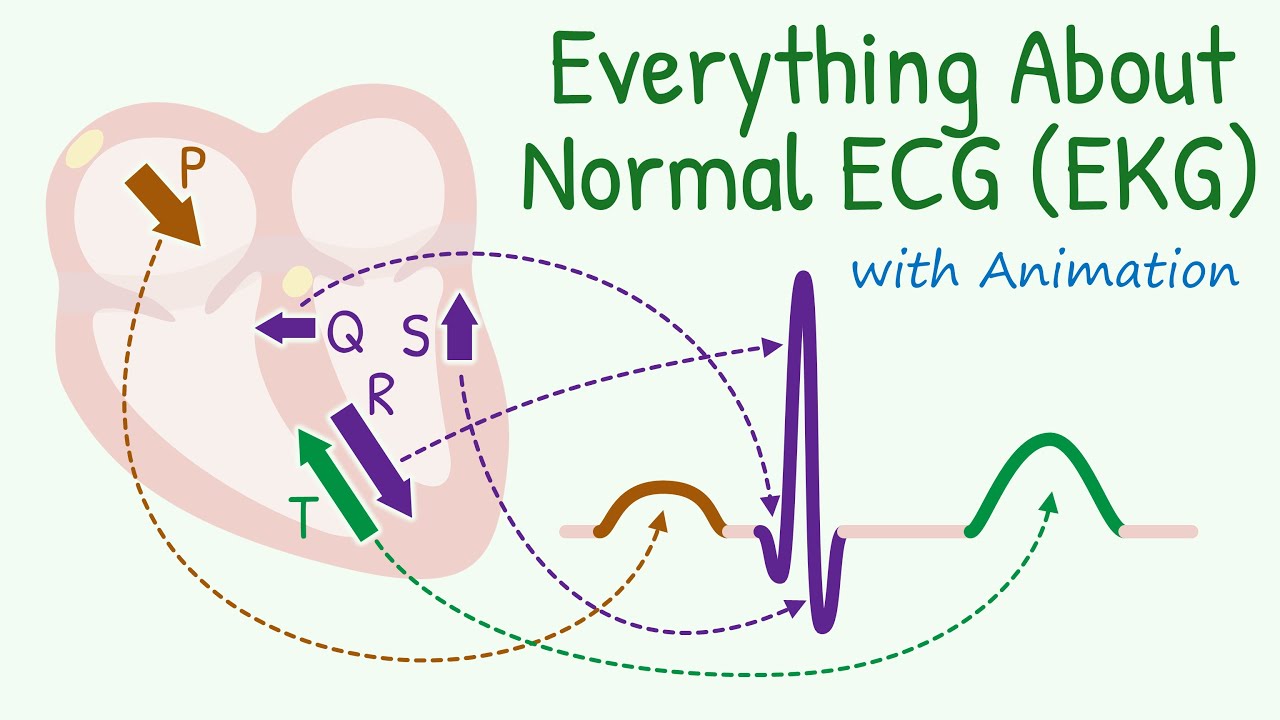
Right today we are going to talk about ECG leads right and about before I go into detail of bipolar limb leads or unipolarly blades or the chest leads right I want to tell you what exactly the word ECG lead means what is the meaning of physically what is the real concept of ECG lead when we talk about ECG lead we have to learn it at Free level ECG lead as a circuit ECG lead and its axis ECG lead and pattern did I derived from it right so let's start with it as we know that ECG
lead is basically a set of electrode with the wires connected on one side with the ECG recording machine and other side electrons are applied on the body surface and the purpose of those electrons is to record the electrical activity of the heart as we know that when there is heart is undergoing electrical activity Like atrial depolarization and then ventricular depolarization and repolarization electrical vectors are produced is that right electrical electromotive forces are produced when heart is undergoing electrical events those electrical events of the heart those electrical events of the heart can be recorded by the
ECG leads so let me tell you what is the meaning of lead right then we'll go into detail let's suppose here you are Okay you are very happy because you are about to learn the real concept about the ECG here you are I'm not going to draw other organs now let's suppose here is your heart right I will just focus on major ventricular depolarization that when major part of The ventricle is undergoing depolarization the electrical current is moving downward and leftward If we talk about the frontal plane right why let me draw it here suppose
this is left ventricle this is right ventricle this is interventricular septum right when dipole or ventricular septum when ventricle is undergoing depolarization right in previous lectures I have explained into detail that first there is septal depolarization then there is Major ventricular depolarization and after that there is basal part of The Ventricle undergoing depolarization right now I will just focus that let's suppose ventricle major ventricular depolarization is going on when there is Major ventricular depolarization going on ventricular cells undergradipolarization from endocardium to yes epicardium that wave of depolarization is spreading from inside to the outside of
the ventricle and this movement of depolarization Produces millions of vectors millions of electromotive forces right and these electrical vectors or electrical electromotive forces which are generated when the major ventricular depolarization is going on these forces can be represented by this Vector which is showing the depolarization of right ventricle and can be presented by this Vector which is showing the depolarization of the yes left ventricle And because right ventricle and left ventricle are undergoing depolarization simultaneously they are not domain depolarization simultaneously so these two vectors can be added to each other and if we add these
two vectors together the net Vector will be as you know that Vector of left ventricular depolarization is more forceful as left ventricle is thicker and because it is Thick right larger number of cells are undergoing depolarization so there is stronger Vector produced by the left ventricular depolarization and relatively weaker Vector is produced by right ventricular depolarization so when you add these two vectors together then we say there is mean Vector right which is in frontal plane which is directed downward and left world right what is this this is the mean This is the mean you
can say QRS vector or we can say this is the mean electromotive Force along with its magnitude which is represented by the length of the vector and its direction which is presented by direction of the arrow right this is mean electromotive Force representing vector when major parts of the ventricle are undergoing Depolarization or we can call it mean QRS vectors even though in previous lectures I told that initially there is subtlety polarization which is rightward is that right and then major ventricular deposition which is leftward and downward and then there is bezel deposition which is
upward right but if we talk about only this Vector this is mean Vector mean Vector mean average of all those vectors and at any moment Mean does not mean cheap vector mean Vector mean that there are millions of the vectors when they are added together right we end up with the mean QRS Vector is it clear now let's suppose this is your heart and this is your mean Vector which is representing yes major ventricular depolarization or now onward I will call this vector QRS Vector right now if you want to make A lead now we
come back if we want to look at the electrical activity of this heart right and how to record these electrical activity how to record these electrical activity before that a little concept as you know body is a volume conductor what is a volume conductor it has lot of electrolytes and fluid so it can conduct the conduct the currents if you don't believe it put your finger in any plug and check it for yourself Electric plug don't do that anyway so what I'm saying our body as it has lot of fluid and electrolyte so very good
conductor of the current so when this Vector is moving when this electrical Vector is generated by the depolarization of the major part of ventricles what happens that this electrical current spreads all over the body it separates all over the body around all fluids around the heart and then it separates into trunk and From the trunk this electrical current will spread into arms and legs is that right and this electrical current right which is generated by the electrical activity of the heart can be picked up from the surface of the body can be picked up from
the surface of the body and recorded by ECG machine right now how to record it record it one way is that here is your ECG machine Let's suppose this is your ECG machine it's a very simple galvanometer I'm going to make it a very simple galvanometer right and let's suppose that this is your needle right here is a drop of ink here is ECG paper moving is that right this paper is moving in this direction now let's suppose here is the positive electrode what is this positive Electro a positive terminal and This is the negative
terminal and if we apply positive terminal here and negative terminal on this end what will be we doing we will be doing we will we will be recording the electrical potential difference between the positive terminal and the negative terminal and this potential difference in these two points is being produced by the current depolarization plants or repolarization Currents which are being generated by the cardiac electrical activity I will repeat it it's worth repeating that when heart is undergoing electrical events electrical vectors are being produced these electrical vectors or events are being conducted throughout the body you
can put electronic any two points in the body any two points in the body and when this Current is Flowing it will be conducted in this area also and these electrode will measure the difference of potential between these two electrodes if there is no electrical activity in the heart let's suppose if there is no electrical activity in the heart then nothing will be sensed by these two electrode and if there is electrical activity in the heart that is conducted in the body then These two points will sense the potential at negative terminal suppose point a
right and point B if there is electrical activity in the heart right that will be conducted in this area actually everywhere including this area here we have put negative electron there we have put positive electrode and these two electrode will record the potential difference right Between the electrical potential at Point a and the point B that potential difference will basically lead to fluctuation of this needle is that right is it clear now actually what we have done by this Circuit by putting a positive electron right which is also called exploring electron and other side we
have put negative electron in some other ECG leads arrangement we put a reference Electron right which has zero potential but here we have put one positive electrode other negative electrode these two electrons along with their wires along with their wires on one side one side attached with the electrocardiograph machine and other side electrons are applied on the body surface and completing a circuit this circuit is called Circuit of the lead right this circuit is called Circuit of the lead so Now another thing whatever electrical potential is present at this shoulder the same will be conducted
in the arm is that right in the same way whatever electrical potential is present at this left shoulder same will be conducted in the left are so for convenience actually rather than applying these leads negative terminal on the shoulder just for convenience it's easier to apply on the wrist It is easier to apply on the rest and in the same way positive terminal rather than putting there we can apply our rest on the left side now we can say right arm has what negative terminal left left side left arm wrist has positive terminal these two
terminals along with their wires with the electrographic machine whole this system is called Circuit of the lead right now this lead Circuit actually how this lead is how this lead is recording the electrical activity or sensing the electrical activity this is the circuit right this is the circuit now I will give you an idea that let's suppose I put this lead system here right I put this lead system here this is your machine is that right Here I put yes positive electrode is that right and there I put negative electrode and because these electrodes are
making one positive pole other negative pole this lead should be having two poles so we will call it bipolar lead we call it bipolar lead and because this is applied on the limbs this must be called bipolar limb leads this should be called bipolar limits now before I go into detail I want to give You some simple example to understand actually you can imagine that this Vector okay I will make it red color this Vector red color or let's suppose before I go into that now this is an imaginary line which we are drawing between
the electrons I mean we can draw here this is an imaginary line which we have drawn Between the negative terminal and the positive terminal or negative electron or the positive electron now this line represents the yes it is not the Circuit of the lead this line is Axis of the lead electrical axis of the lead right so you know what is the circuit of lead and what is the electrical axis of the lead right Actually let's suppose if I put this positive electron remove from here if I remove positive electron from here and put the
positive electrode here then electrical axis will become different direction so electrical axis of the lead is determined by the placement of the electrons on the body electrical axis of the lead are determined by the placement of the electrode in the body Again I will repeat if I put a negative electrode here positive electrode here this is the axis of the lead and this these two electrodes with wire connected with the machine this is the Circuit of the lead so there is Circuit of the lead there is Axis of the lid now if you put negative
electrode here and put positive electrode here or on the foot now imaginary line which draws the negative pole and the positive pole they Are directed downward and leftward is that right so axis of the lead have changed so what is Axis of the lead axis of our lead is an imaginary line drawn from the negative electrode or from the reference electrode towards the positive electrode which is also called exploring the electron is that right so this is Axis of the lead now Next concept which I want that you must be clear what is the pattern
of the lead let me explain this first we take a simple example I've removed this circuit from there to here is that right let's suppose in your heart an electrical Vector is directed like that here positive charges wave of depolarization is moving towards positive electron or we can say positive a wave of depolarization is moving Towards exploring electrons now this exploring electrode is like exploring eye of a boy young boy you know young boys a very exploring eyes you know what they are exploring all the times is that right nature always just imagine this is
an eye of a young boy oh my God positive electron or exploring electrode is the why you are having a little smiles and This electrical vectors like a hot girl she's moving around and there's exploring eye right now imagine if this girl is moving towards the positive electron no sorry if this vector is moving towards the positive electrode or approaching the positive electrode is that right what will happen needle will of course positive electrode will be Taking the potential from here to the electrocardiographic machine is that right the rule is that when positive charges move
to the positive electrode deflection is positive deflection in the needle is upward if there is no electrical activity here then there will be straight line then there will be straight line but as soon as okay I will remove this show a simple diagram this is the electrical vector Like a beautiful girl right it is approaching towards the positive electron the exploring eyes of the Y when this Vector is approaching that it's very natural to infer the deflection in the boy should be positive is that right the needle will go upward is that right so deflection
is positive and of course now we imagine other thing Imagine that if this electrode if this electrical activity in the heart is moving away from the positive electrode then what will happen everyone knows needle should go down when positive charges are moving towards the positive electron deflection is upward or when a hot girl is moving towards the exploring eye of a young boy loaded with Testosterone I think whatever happened needle should go up and when that girl start moving away from the positive electrode away from the girl the boy will get disappointed and whatever happened
to deflection downward is it clear I hope there's no much problem to remember this right so you always remember Vector in the heart depolarization Vector in the heart Is like a sexy girl and the exploring electrode is like a naughty boy very alert and naughty boy he is looking at the movement right if Vector is approaching deflection upward I mean deflection of the needle of the galvanometer and if Vector is going away deflection is downward now there is a question the real master question as I was telling Girl moving towards Positive deflection Girl moving away
negative deflection but it is possible also Girl moving this direction perpendicular to the axis of the wheel of the Void perpendicular to the axis of the VN of the boy it means now electrical Vector is moving perpendicular to the axis of the lid now this notify is going to tell me deflection should be positive or negative yes please no deflection your hopeless case Yes OK let me tell you a to be very honest he's right there will be no net deflection but what really happens this is your axis of lead I will draw it with
black lines this is the axis of the lead right negative electrode and positive electrode this is the Circuit of the lead this is the axis of the lid is that right now if Vector is perpendicular then what Happens right let me put a vector which is perpendicular to the moving perpendicular to the visual axis of the boy what will happen listen we can put this Vector as two component one component coming to the axis of the lead other component going away from the axis of the lead first the boy will get hopeful and then get
as she passes by he gets Disappointed you know that is that right so when he will become hopeful a little positive deflection when she passes bye it will become little negative reflection so this will be positive and negative both Reflections but what equal in magnitude equal in magnitude so what will be the pattern here now I will show if this is a lead exploring electron from the void his eyes now you will tell me Girl is moving towards deflection should be positive positive girl is moving away deflection should be negative full disappointment right and if
it is moving perpendicular then first it is moving towards the electrical axis of the lead and then moving away so this deflection will be little positive and then little negative both or in a net net deflection The voltage which is positive and voltage which is negative both are equal so net deflection is zero net deflection is zero so what it will learn that it's very important to know the axis of a lead and it is also very important to know the direction of what electrical Vector of the heart and since of the lead is a
different thing electrical Vector in the heart is a Different thing now here I want to make another few more terms clear that this is Axis of the lead and if this is the vector if this is a vector this point 1 to 0.2 .12.2 this is Axis of the vector this is Axis of the vector so there is the axis of lead which is different thing axis of vector which is different thing do you understand You don't understand it okay let me tell you uh where you didn't understand what points you did not understand how
they are different very good question you say axis of the vector and axis of the lead how they are different are the same thing or different very important question I will make it here okay I will make three leads okay I'm going to make bipolarly blade this if you apply negative on the right Electron on the right wrist which is equal to putting on the right folder and if you put positive here positive electrode here and or here both of them are making bipolar limb blade and this bipolarly blade where electrons are placed in such
fashion they are called bipolar lead number one bipolar lead number one now I will go back to explain this concept listen I'm going to explain the axis how the axis of leads are Different from the axis of electrical activity of the heart is that right let's focus only on that axis of the lead is basically the Y Line of the vienne of the boy's eye and axis of the electrical activity of the heart has the line of movement of the girl right now we put three points there if three boys are at three different positions
will the see the same if they're looking at the same girl but They will see the girl from different anger for example a boy who is looking from the front is that right if girl is moving like this a boy is there he will see front of the girl but a boy is there he will see the back of the girl on right side he will see the lateral aspect of the girl but the true picture of the girl will be when many employers from different Angles looking at the girl and make a add their
information then you will know exactly what she is are you understanding yes is its layer even though boys are not usually so cooperative anyway now come back I'm showing only one vector now that Vector is when major ventricular depolarization is going on when major ventricular depolarization is going on Let's suppose this is the left ventricle and here is the right ventricle and this is the vector of major ventricular depolarization this is the movement of the girl is that right this is now I am giving a two example what is happening in the heart then ventricle
or QRS activity mean QRS Vector is directly downward and leftward one way to look at it is that you put negative electron here and positive electron here so Y is Here and his line of realness towards negative and axis of the this lead is horizontal is that right at zero Angle now this is called we have made the limb lead number one this is lead number one now we will do another thing let's suppose we put negative electrode here right and we put Positive electrode here you put the positive electrode here now axis of the
lead will be the same as the previous lead or different here what we will do again I will draw the machine the circuit of this lead is different than the previous lead number one here Circuit of the lead is positive terminal negative terminal output the positive terminal here right and I have put the negative Terminal here now this is the circuit of bipolar limb lead 2 what is this limb lead 2 what is bipolar limit to bipolar limb lead to is circuit is made by two electrodes one with the Positive terminal of the machine other
electron with the negative terminal of the machine positive electrode is applied on the ankle on Left leg and negative electrode is applied on the right right wrist so this is another exploring electron it is another exploring y now there is one boy standing here another boy standing here now its line of v n is this so axis of lead number two is directed downward and leftward axis of lead number one is from right to the left we can make another boy there Who really want to see this cardiac vector and its electrical activity from different
angles are you understanding so we can really know it more because if there's only one boy looking at the girl from one angle he cannot know each and everything you have to look from front and back right and left and right so to record the electrical activity of the heart From another angle is you put the negative electron here and you put the positive electrode here and here is your right oh my God this is the negative electrode and here it is positive electrode here the axis of machine is axis of this lead is directly
downward and leftward rightward sorry downward and rightward This is called limp lead number three now what we have done we have put three exploring eyes we have put three exploring eyes to monitor the movement of this ladylike vector is that right we have made this circuit is the circuit of lead number one and this is the axis of lead number one this is the circuit of lead number do and this is the axis of Fleet number Two is that right this is the circuit of read number three limb lead number three and this is the
axis of the lead number three is it clear so it means when we change the position of the electrode we actually change the axis of the lead if we change the position of the boy we change the line of the VM visual axis you are understanding clear now this movement of the vector It has its own axis Vector has its own axis acids mean that this vector is Major ventricular depolarization right if I draw it more elaborately I will draw like this and this here in the tip of the arrow this is positive charges and
here it is negative charges one major part of The ventricle is undergoing depolarization electromotive force is generated in the Hard where wave of depolarization is moving downward and leftward in the frontal plane because if you look at horizontal plane it is downward leftward and backward but I'm not talking about horizontal plane now vertical plane is as you are recording the things as a in the frontal plane frontal plane mean okay let me draw exactly what I mean by the frontal plane here you are now If we are recording any activity along the right this is
frontal plane but if you are looking in frontal plane you are looking at the activity up to down down to up vertical plane and right and left axis vertical axis and horizontal axis but if you are looking anthroposteriorly if you are looking anthroposteriorly then it is horizontal Plane let me explain let's suppose this is my heart heart is three-dimensional the hardest three-dimensional you can look at the front of the plane if you look from the front it is frontal plane frontal plane is exactly in what is this axis x-axis x axis and y-axis but you
can look at enter posteriorly although right if you're looking from front and Then on the side and then on the back this is horizontal plane if you look at the heart on the front then on this side then on that side then you go on and look at the back then it is you are looking at horizontal plane I think you are naughty boys let me explain if there's a girl here looking from the front then you see from the sides and then you go and look from the back even though she will really mind
it But if you look like that you are looking at her horizontal plane but if you are looking you are standing in front usually this is what you do you look from the top to I shouldn't say bottom top to down and down to up right to left left to right this is frontal plane you're scanning the girl in frontal plane or you can scan the girl in horizontal plane in the same way about the electrical activity of the heart you Can scan up and down right and left this is which plane frontal plane but
if you are looking enter posteriorly how it looks electrical active of the heart this is horizontal plane now when ventricle undergoes depolarization as you know left ventricle is little bit rotated backward as compared to the right ventricle so when major ventricular depolarization is going on major ventricular depolarization is Normally going on downward and leftward and slightly backward but if you look at what is this frontal plane you will just see Vector is going down and left if you like it look at horizontal plane you will see it is left and back if you look at
that horizontal plane right now we are talking about frontal plane because limb leads are applied they scan the like limb leads scan the Electrical activity of the heart in the frontal plane and chest leads scan the electrical activity of ATV electrical activity of the heart in horizontal plane so limb leader in which plane frontal plane and chest leads are in which plane horizontal plane when you are able to look at frontal plane as well as horizontal plane you are looking from multiple angles on the same electrical activity of the Heart is it clear now come
back to this example how many leads we have bipolarly beliefs we have lead number one two and three clear these are the exploring points here is the lead number two exploring point is the lead number three is that right Naughty Boy rides now this Vector is moving in the frontal plane it is moving downward and leftward this Vector is moving downward and Leftward this direction downward and leftward this is the axis of the lead what is this no it is the axis of the electrical Vector of the heart this is Axis of the electrical activity
of the heart this is Axis of the cardiac Vector to be very specific because this is Major ventricular depolarization right or ventricular depolarization Vector mean rather mean QRS Vector so here I am showing this mean q r s Vector Which represents ventricular depolarization its Vector moves down and left in frontal plane so this it this Vector has its own axis the electrical axis of this ventricular depolarization is down and left now listen this is Axis of the lead number one which are horizontal plane is that right at zero angle with the horizontal Number two which
are directed downward and leftward this is the axis of the lead number three which is directed downward line rightward and this is the electrical axis of the vector right all these three leads are looking at the same electrical activity of the heart all these three leads are looking at the same electrical activity of the heart but from different angles So will they record the same information a slightly different slightly different as I told you if girl is moving like that if boys angles are different they will look at different stuff is it clear and okay
forget about girl talk about me now let's suppose if someone is looking me from the front the picture is different someone look from here You will see this aspect of my face but is there some problem here can we record no and someone very naughty looking from the top is that right his view will be totally different is that right but if I have a problem some pathology at the top of my head do you think from sides or from the front you can see that clearly letters look from the top so in the same
way when there are cardiac pathologies now Listen clear clearly when there are cardiac pathologies which result in Alteration in electrical activity of the heart such cardiac pathologies which alter the electrical activity of the heart to look where is the pathology and where is the change in electrical activity of the heart you need to look at the cardiac electrical vectors from different angles as if you have to see to make a real Concept how is Dr najib not only you need to look from the front you have to see from the sides you have to see
from the top you have to see from the back then you have a three-dimensional concept exactly what is the head and neck of Dr najib in the same way to know exactly the electrical activity going in the heart you need to look from multiple angles or we can say we need to look from multiple leads we need to look from Multiple leads now you understand why we need multiple leads so that we look at the electrical activity of the heart from multiple angles right so if there is a pathology right that may be recorded better
by one lead and poorly by the other lead is that right come back this is a axis of the vector these are The axis of the lead now you are clear the difference in them so in the books when you read the CG box somewhere they mention electrical axis of the lead then they are talking about this stuff if they talk about electrical axis of the cardiac Vector then they are talking about this is it clear now you see these three now we come back These three leads are looking at the same electrical activity but
they will get different snapshots they will get different electrical pictures because recording of the angle is different Club let's come to this let's suppose we first look at the lead number two first we are looking at the lead number two if you are looking at the lead number two This is the line of v n of what is this electrical axis of the lead and this is the electrical axis of the cardiac Vector QRS Vector now how much this will be there will be positive deflection or negative deflection it depends on that how much part
of this Vector is along the electrical axis of the lead again if we have to decide how much this is able to scan this lead Number two how much it can scan the electrical activity of the QRS Vector it depends on how much component of the cardiac Vector is parallel with the axis of the lead is that right now if you see electrical axis of the QRS Vector in this diagram an electrical axis of the lead number two are almost parallel almost parallel to see exact components we can draw perpendicular from here And perpendicular from
here now this is yes this length of the vector is along the axis of the lead is that right this length of the vector is along the axis of the lid but if you try to record from here same electrical activity it will be the same or different it will be different here you put perpendicular from here and perpendicular form Here this is this component of the vector along this lead now you see along the lead double two QR as a vector is project the projection of QRS Vector is greater along the lead number two
but projection of QRS Vector along the axis of the Heat number one is less is it clear now you see the same Vector how it will be perceived by perceived by the what is this Thirdly let's put the perpendiculars here one perpendicular goes like that and other perpendicular goes like that now this is the vector now you see it is the same vector same electrical activity of the heart but different leads are different leads are having different electrical voltage projected from the QRS Vector to the electrical needs of the electrical axis of the lead here
it is maximum why Because Vector is almost parallel with the axis here whole Vector cannot be recorded by this because this is Axis of the lead this is Axis of the vector so only a component of vector can influence the lead here also axis of the lead and axis of the QRS Vector are not parallel so only a component of it can is along with this axis of the lead Is that right any question after this now yes please so why do we always put the name leaves on the lip on the limbs to to
record the different to record the activity of the heart from different angles okay he's asking how how we determine the place of the how we determine which electron should be put at which place that is what you are asking I will explain in few moments when I go to enthoven's Triangle for a while you just Trust me that in read number one right arm is right and left arm is first step in lead number two right arm is negative and left leg is positive and Lead number three left arm is negative and left leg is
positive his question is why electrodes are arranged like this why not we put this negative and that positive this is your question okay let me answer first but you have Detract me no problem the problem is that originally whole this three lead system was made by uh Mr enthus a scientist with the name of eintho ones now normally in most of the normal persons electrical axis of the QRS Vector is directed downward and leftward in the frontal plane actually if you put negative here And positive there what was this deflection will be positive if you
put a negative here and positive there deflection will be still positive if you put a negative there and positive here still deflection will be somewhat positive I think he wanted Siva some positive minded person he arrayed the line of electron that will most of the people major QRS complex should be positive maybe one day I just Imagine he put positive here and negative there and QR has become mostly negative and it bothered him so again reverse the electron so originally Mr enthus decided to finalize the position of the electrode in such a way that when
major ventricular depolarization is going on QRS complex should be mainly positive and as now listen carefully as major ventricular depolarization Vector has its axis downward and left word To get positive deflection in all the leads he had to put the positive electrode either leftward or downward you got answer so in lead number one where should be the positive electron left side it will lead number two it should be up or down down and Lead number three positive electron should be up or down down so you got your answer it is a convention this conventional that
is why we call it There are 12 conventional ECG leads out of those 12 conventional ECG leads today we are talking about three conventional bipolar limits so this Arrangement was actually originally introduced by Mr enthobans is that right is it clear actually now come back first before I go now look this is the now this is electrical QRS Vector now I just call it QRS Vector now this QRS Vector maximum it is deflected Along projected along which lead number two right when it is projected a vector is moving yes the girl is moving towards the
positive electrode so what happened deflection should be positive or negative waves positive deflection right now imagine here it is still vector a component of this QRS Vector is moving along the axis of the lead number one and Positive end is directed towards the positive electrode so girl is still moving towards now that boy a component of a girl don't ask which component right now this will give a positive deflection of negative positive it will give mainly positive diffraction but positive diffraction here here this Vector is smaller this projected Vector is longer here magnitude is higher
so deflection and Lead double 2 will be more and diffraction in mean number of lead number one will be less is that right lead number three here in this example even it is less than lead number one so it will deflect is it clear now these things these things these are the electrical picture of the few major ventricular depolarization recorded by lead number two By the recorded by the Circuit of the lead number two along the axis of the lead number two and this is the electrical picture you know this electrical picture which is recorded
this is called a lead pattern what is it called pattern this pattern is drawn by which lead lead number two is that right now come back here this is pattern which is recorded by lead number one one and this is a pattern which is recorded by the lead number Three is that right yes now these three patterns are there these are recorded by bipolarly blades is it clear why now you must know the difference when we are talking about a specific ECG lead you should know what is the Circuit of the lead what is the
axis of the lead what is the pattern of the lead let's go back This was the circuit of bipolar limb lead number one which consists of positive and negative positive and negative electrode along with their wire on one side connected on the electrocardiographic machine other side applied on the body surface in such a way the negative electron is on the right are and positive electron is on the left arm what was this Circuit of the bipolar limited number one and one this was the Circuit of the bipolar lead Number one then imaginary line drawn from
the right shoulder because arm is just right arm is just electrical extension for our ECG purpose right arm is just electrical extension of right upper corner or shoulder right shoulder right so we can say what is this this what is the lead of and axis of the lead number one they are imaginary line drawn from what is this what is this right arm or right shoulder to the Left shoulder this is the axis of the lead and this graphic presentation of electrical activity of the heart which is recorded by the read number one this is
called pattern of the lead lead one so next time when you are studying the lead system most of the students where we get confused that somewhere books are talking about the Circuit of the lead and other points they are talking about The axis of the lead and still other points they are talking about pattern of the lead actually all of them are neat so next time when you think of a sng lead you think of its circuit you think of its axis and you think of it pattern is that right and you must know that
axis of the leads keep on changing when you with a different leads With different exploring electrode at different position axis of leads are at different angles axis of the leads are at different angles but from different leads from different angles are looking at the same electrical axis of the heart a stream electrical activity of the heart is the right and you must know that lead axis is a different thing and Electric electrical axis of a cardiac Vector the Different thing right and whatever cardiac whatever electrical axis of a cardiac Vector is for example this is
the electrical axis of QRS vector right only a component of it is projected towards the axis of the lead and that component is that component is responsible to draw the pattern of the lead am I clear any question here there is no question okay let's have a Break now then we'll go into detail further we have just con made the concept clear Circuit of the lead axis of the lead pattern and this is basically arrangement of the making of the bipolar Lil blades is that right after the break we'll come back and talk about in
Provence triangle in Truman's law and try axial reference system right right so in the previous lecture what we were talking about generally talking About the ECG leads and we only discussed that the word easy lead Should Be Imagined in three contest at sea level Circuit of a league electrical axis of the lead and pattern drawn by that specific lead is that right and also I explained why we need multiple leads because multiple leads are looking at the electrical activity of the heart from different angles right so the same Electrical activity of the heart when it
is it is looked from different angles then you are able to detect different alteration in the electrical activity of heart and Associated pathologies right and then I explained that some of the ECG leads are in frontal plane and other ECG leads are placed in horizontal plane the frontal plane ECG leads are the limb leads the limb leads are recording the electrical activity of The heart in the frontal plane and chest leads are recording the electrical activity of the heart from the horizontal plane is that right and then I must mention the leads which are the
frontal plane as I told you these are the limb blades lymph layers name leads are actually there are three bipolarly blades bipolar limb leads and there are three unipolar yes Right today we are mainly discussing bipolar lamp blades right limited number one two and three in next lecture we'll talk about these three unipolar lamp blade and after that we'll have a lecture in which electrical activities of the heart is recorded in horizontal plane that is chest leads right and conventionally we apply six chest plate so conventionally we apply six justly three bipolar limits three unipolarism
Lead added together how many are conventional ECG leads how many conventional leads are there if you need 12 blade so let's focus now onward lecture on bipolar limits right in detail especially in relation to the enthus triangle and instruments law okay let's go back and talk about this man here is your man and this is his what is it His prank or torso here is right arm yes left arm right leg and left leg is it clear and here is your heart and and in the heart let's suppose this is Major ventricular depolarization this is
a vector which is representing major ventricular depolarization it is In frontal plane it is downward and leftward oriented as we discussed previously as I told you that you are putting negative electron on the lead number one you put the negative when you are making the Circuit of the lead number one you put negative electron on the right arm which is equivalent to putting negative electrode at this level and positive electrode you put it on the left wrist it is equivalent to Equivalent to putting it here I will repeat it it's worth repeating the whatever electrical
activity when heart is generating electrical activity through the body fluids and electrolyte it separates all over the body whatever electrical activity is present at this angle shoulder the same electrical activity can be recorded and actually that is conducted and can be recorded from the right arm Is that right so you have a choice either you put the electrode here or anywhere along this but you prefer to put electrode on the wrist because it does not it's easier on the Bony points secondly muscular electrical activity is not there is that right in the same way rather
than putting on the shoulder conventionally uh this positive electron of the lead number one bipolarly one is put on the left wrist rather than putting on the shoulder because both of These points are more convenient than putting the point on the shoulder in the same way when we are making lead number two so this is the axis of lead number yes now you will tell me this is Axis of the lead number one very good this is Axis of the lead number one right and here is what yes and this is the Circuit of the
lead number one is that right Now if I make lead number two as you know that this is here and here we put positive electrode and yes it is equivalent to putting negative here is that right and positive here putting the positive electrode here and this is the axis of lead member to this is the axis of lead number two and here it is going to be what is it this is positive electron Positive terminal right the positive electron and negative terminal retired with the negative blood this is the Circuit of the lead number two
this is the axis of the lead number two clear in the same way here you put the negative electrode and here you put the positive electrode and this is the axis of read number okay rather than draining drying there drawing there it is practically actually it is putting our negative here and Positive right and what is this yes this is negative electrode and here it is positive terminal attached with the Positive electrode and this is the circuit of read number phase now if you look at the axis of these three leads lead number one lead
number two and Lead number three You should look at the axis of these three leads it makes almost a triangle almost an equilateral triangle is that right this equilateral triangle is called anthoven's triangle to make a perfect triangle maybe this positive electrons need to be put on the genetically or something which is not a very I mean you know that so so rather than putting on genetically or on the pubes we find it more convenient To put it on the left ankle remember on right ankle we put the Earth electron right so I will not
talk about the right angle in detail further right but it makes almost an equilateral triangle so we can say read number one axis of lead number two and axis of lead number three make an imaginary triangle around the heart here is your heart what is and now I'm going to Define what Is enthoven's triangle right you already know lead number one two and three now I'm going to tell you what is enthoven's triangle and Thomas triangle is and almost equilateral triangle it is an equilateral triangle drawn around the heart or equilateral triangle having the heart
at its Center this triangle three sides are made by bipolar limb lead number one two and three and this Triangle is placed in the frontal plane on the body surface on the body surface in the frontal plane lead number one two and three bipolar limb leads 1 2 and 3 make a triangle along the heart and this is called Anthony triangle so you know what is einth's triangle why it is called anthon's triangle because this triangle is Made of these bipolar limb leaves which were originally made by the Mr and Throwbacks clear now what is
the importance of enthoven's triangle right and what are the practical application of anthogen's law right now I'm going into detail triangles you already know this is another thing which is called enthus Law before I go into detail I will tell you I will put down the enthoman's law here this is in thugan's law what is in thugan's law and then I will explain according to enthobin's law the potential of read number two is equal to okay I will repeat it in a different way according to enthus law whatever electrical potential or voltage whatever electrical potential
voltage is recorded by lead number one and read number three if you put them together That should become equal to lead number two it means influence law is lead number one plus lead number three potential of lead number one plus potential of rate number three is equal to the potential of lead number two it's a very funny thing you know how come one plus three is two usually one plus three is four I think this is the law made by the anthogen's wife is angry wife logic one Plus three is equal to two right but
I will tell you as as far as ECG is concerned and ECG leads are concerned potential of lead number one and Lead number three really becomes equal to the lead number two how it becomes let's go to some practical talk if you as I told you first I will talk about the lead number what is this one what what lead number one is doing read number one is recording the Potential difference between the negative electrode and the positive electrode or we can say read number one is recording graphically recording it's making QRS complex graphically recording
potential difference between the right wrist right arm wrist and left arm rest when mean QRS Vector is working when QRS when major ventricular depolarization is going on When major ventricular deep polarization is going on electrical current is separating in the body and Lead number one is recording that potential difference between two to know the difference at these two points we must know what is the exact potential here and what is the exact potential there then you know the difference in those potentials right let's suppose for a moment hypothetically we imagine that Here at this point
potential as 0.2 minus 0.2 millivolt in yes in reference to the average body potential why because Vector is moving downward and leftward so down and left side should become positive potential up and right should become Negative potential I will repeat it that when major ventricular depolarization is going on electrical Vector of ventricular depolarization is moving down and left in the frontal plane so positive charges are moving down and left so down downside and left side it becomes positive potential and of course right and Up should become negative as compared to the average body potential so
as compared to the average body potential at this point potential is one two millivolt it's a very little potential that is why you cannot give electric shock to each other now here it is plus 0.3 millivolt and if you record absolute potential Here it is okay I'll put it here one point zero millivolt here now add the apices off at the corner of this triangle I'll put you what are the potentials there as compared to the average potential in the body is that right now if the needle is moving here now Imagine when QRS complexes
one major ventricular depolarization is going on potential here is minus 0.2 millivolt and there it is plus c 0.3 what is the difference in them1 you don't know mathematics minus 0.2 and plus 0.3 .5 oh my God look I will put it here so that you can see it this is for 0 line Zero potential okay minus 1 minus 2 here plus 1 2 3 4 5 6 7 8 9 10 11 12. 1.2 it is point one million minus point one millivolt this point is minus 0.2 millivolts so this is the potential here minus
point two and here it is what plus 0.3 so Plus One Plus two n Plus 3 MLA so this is the potential in the left arm and here's the potential in the right arm when these potentials are created when ventricular depolarization is going on you understand why and how now what is the difference and then look at it what is the difference in them Point differences Point five millivolt and what is this lead this is lead number this is read number one between this point and that point you are recording lead number one is that
right and here is lower end left and lower okay now what will be the deflection in this needle there will be positive deflection of 0.5 millivolt you understand it will be positive deflection of 0.5 millivolt now on ECG paper as you know that there is a big square is that right now the grid of the ECG paper now I'm making here is in x axis horizontal this is the time one small square is equal to point zero four Second I have explained it in the previous lecture that any this small square represent point zero four
second or big Square represents point zero four second into five point two second button vertically if you look at vertical level one small square one small square vertically if there's a wave if any electrical activity is drawn Like this it is point one millivolt point one malleabled if any electrical activity needle draws over one small square it is how much is it flip standard calibration of ECT which of the countries is that right now come back lead number one will draw the difference of potential between negative electrode and positive Electrode is how much difference is
0.5 millimole minus point two plus point three so how many small squares QRS should go up it should go file squares up let me make the squares let's suppose this is the Baseline this one one two three four five is that right so what will happen of Course uh if you want I can draw vertical two but in every diagram I will not draw the vertical okay now what really we see this QRS complex is drawn over by by the lead number one in this specific example by the axis of the lead number one when
major ventricular depolarization is going on the QRS electrical Vector is graphically recorded Along the axis of need number one with the height of net height of yeah is that clear yes no problem now we come over lead number three now you will tell me in lead number three here the negative electrode is at which position plus three and positive electron is at one point okay again this is the lead number three right when this vector Is generated in the heart negative pole is recording negative electrode is recording Plus 0.3 millivolt and positive pole is recording
plus one point zero millivolt now what is the difference in GS2 because it has to record the difference this Circuit of lead number three has to record the potential difference between the what is this left wrist and the left Ankle and potential here is plus point three here it is plus Point L plus 1.0 so what is the difference 0.7 millivolt very good so here the lead number which one here was the lead number one here I put the lead number three so it will go from point three from point three up to point one
Z One Zero from point three to point three four five six seven eight nine ten No one two three four five six seven and eight now here is what was there your zero point zero point I will put it in different color this was your zero point is that right how much is the total position one two three four five six seven eight nine ten is that right right how much it should swing upward point seven one two three four five six seven Up to this point so this should be the voltage how many millivolt
point seven is it clear from where this point seven came the voltage of lead number free from where it came the difference of voltage potential recorded between the negative electrode and positive electrode of lead number three So what was the deflection here positive how much 0.7 millivolt here it was positive how much 0.5 millivolt now if it is 0.7 millivolt now let's suppose we make our thank you let's suppose this is the thick line you understand when this needle will deflect positively from the zero long line how much it will Deflect if it is a
zero line if one small square is 1.1 millivolt so how many small square seven so one two three four five six and seven so this will be the height of QRS n slit three you understand from where this came this is normal so in normal if this is a normal heart right producing the normal QRS vector then a pattern drawn by the lead one Will be five millivolt high and pattern drawn by the lead number three will be seven millivolt high or seven small square now we come to this here it's very simple now if
we come to the lead number two what is the potential here point two minus point zero point two and what is here one how what is the difference then positive unit 2 minus unit total difference in these two electrodes 12 so this will extend lead number two will extend from minus 2 to Plus minus 0.2 millivolt up to plus 10 millivolt and how much it is yes read number two is equal to how many millivolt 1.2 millivolt how many small squares 12 small squares because one small square is equal to 0.1 millivolt now So if
we draw it here let me make the grid again one two and three and here are your vertical lines one two three four and five and I will make it horizontal to one two three four five this is your thick Line here is also thick line then one two three four and five right now the same Vector when it is same electrical activity when it is going on we are simultaneously recording the electrical activity by lead number one and three and two while lead number one was producing the deflection of five small squares and Lead
number three was producing the deflection of Seven small square at that very time lead number two will record how much 12. is it clear from where all these things came so in throbin's lawyers that voltage or potential in lead number one plus potential in lead number three some of these two potential must make equal to the potential of lead number two it's very easy to infer that potential of lead number two should be maximum Because electrical axis of QRS vectors are very parallel with the axis of the lead number two so lead number two should
have projection of the full vector and Lead number one and three will have only a projection of component of the vector but these two components together will make this one is it clear this also shows another aspect that if voltage of any two leads are Known if any two leads voltage is Norm you can determine the voltage of the third lead is it left any question after this this is in Truman's law what is the importance of when throwing's law it has many importance is one of the simplest thing is that if whenever you hold
that 12 lead ECG paper just put a put an eye on the voltage of heat number QRS in lead number one two and three and determine the sum of the one and three if the making two it simply means that electrodes applied on the limbs are right rightly applied because if you wrongly apply the electrode then one plus three will not become equal to true 1 plus 3 will not become equal to the 2 is that clear any question after this yes if one plus v is not equal to does that indicate any sort of
pathology We will talk about that later yes but generally when you hold the ECG a 1 plus 3 should be equal to the two and right now I'm going to explain that if cardiac vector changes its positions in different disease conditions QRS Vector May changes direction if changes its Direction Still pattern in lead number one two or three will change pattern lead number one two And three will change but raw will be the same one plus three is equal to two I will explain now how it happens just to make this work layer bipolar limb
leads and throwing triangles and enthorne's law I'm going to make different situations I'm going to change the direction of I am going to analyze the QRS Vector pointing in different directions and seeing what is the result Resultant pattern in the lead number one two and three and does the foreign now you understand that these triangles are made by lead number one two and three of course this is the lead number one two three another patient in number one two and three another patient one two and three Remember in thoband's triangle is a hypothetical triangle made
by the three bipolarly blades around the heart in the frontal plane on the body surface and in the frontal plane this these three leads which are making a triangle are looking at the electrical of activity of the heart and recording it graphically done come back we do one by one Let's suppose there's a person where truly this is the previous example Vector is directly downward and leftward this is what we discussed previously we take another patient here the vector is parallel to the lead number two okay now we take another patient in which Vector is
parallel to the lead number one still take another patient where Vector becomes parallel to the lead Number hey what happens to the pattern of pattern drawn by lead one two and three in this condition this we have already discussed right here was negative positive yes here you speak negative positive negative positive right factorial analysis first of all this because it is parallel with the lead number two so full Vector is projected along the axis of read Number two axis of the vector are parallel with the axis of the lead so this will be your projected
vector vector and this will be your what is this QRS in read number two this pattern should be positive because projecting the projected Vector still positive charges are moving towards the positive electron right But if we have done it like that what part of the vector remember here the girl is moving down and left here the girl is moving leftward which lead will be most happy lead number one here if girl is moving down and rightward which boy will be the most happy little number three you understand it now and you can guess which is
about to get the maximum deflection right so this is the vector here And if you draw here along with the lead number three now you see this was the normal deflection this was the lead number two this is the deflection of lead number two do you think lead number one will be equal to 2 or less than 2. less than 2 and read number three will be less than 2 but they will be with such potential when you add these two They should become equal to this is the right Lead 1 and plus lead three
is equal to lead number two clear now we change it see what happens here again we need to protect yes negative positive negative positive terminal electrode negative and positive if Vector is let's suppose rather than electrical vectors directly downward and leftward hypothetically we Are talking about due to some disease condition right it is moving from right to the left then it becomes very very parallel to the lead number one now maximum projected vectors and magnitude will be along the lead number one right but projected Vector along the lead number two now we have to see
along the lead number Two what happens we have to take a perpendicular here and take it to the tip of the vector and tail of the vector is it right no problem and now you see here is the real drama along the lead number three now perpendicular should come like this this and right now this is the positive to direct projected Vector is directed upward and Indian number three upward and leftward so it is moving towards the negative not positive so what does it mean here read number two yes in this triangle although I should
draw it here okay lead number two it should be equal to sum of lead number one plus three now lead number two this is this phase and Lead number first one one is the maximum what deflection One is the maximum deflection plus lead number three yes it what is it is it positive or negative negative and read number two will be very small deflection of big deflection biggest will be here small now you see what is happening actually let's suppose this lead number one is 10 what is this 10 millivolt and Lead number three is
how much negative seven seven and what is the net Point three do you get it or not right or I should draw it other ways that here it is lead number one one most happy boy is moving towards the positive electron very parallel is that right it's 10 this is going to be negative this is going to be negative because positive charges are moving towards the negative electron or Positive charges are moving away from the so if girl is moving like that this y will perceive is coming to him and this will perceive it's going
away now it is down and left so some component he will be still happy at least she's moving somewhere leftward so lead number two is this so what will be the result lead number one very positive and Lead number two when you add them positive suppose 10 squares and this is Deflected downward 7 squares so net is 3 and this will be equal to three small square or we can say if it is 1.0 millivolt upward and this is 0.7 millivolt downward then it will be 0.3 millivolt upward so it will hold true how it
will hold true 2 is equal to 1 plus 3 what was 1 here positive millivolt plus negative 0.7 millivolt and both of them added together it will become 0.3 millivolt you see Vector has changed its position but enthorne's law is holding true is that right we take another example if Vector is moving downward and rightward I mean normally Vector is directly downward and leftward it was in this example in second example I swing it like that it was moving purely along the axis of lead number one and that became the strongest now I am saying
Vector is moving in this direction parallel with lead number three if it's moving parallel then strongest deflection should be in lead number three and weaker deflection will be in lead number one But here positive pole is here so it is directed like that so it should be positive deflection negative negative and along this positive now in this case you look at it [Music] now you see let's suppose maximum deflection was this it was point one suppose 1.0 millivolt player it's a full length here it is partial and here also it is Partial I think I
should make the same color so that you don't get confused which I was following right now you understand this factorial analysis this is a real vector now it was most parallel with this so it was the highest deflection it is having some Negative deflection the rule should be 2 is equal to 1 plus 3 let's suppose 1 3 is 10 small squares and one is two minus 2 minus small square right minus 0.2 millivolt you can understand how much this should be Plus eight millivolt or if you draw the pattern You can see very clearly
that highest pattern should be here is that right it is little negative when you add 1 and 3 then net effect will be positive to correct it will be less than release number three so it's holding two or not yet so what we are learning up to now that as you are changing the position of the Electrical axis of the vector electrical axis of the vector change electrical axis of the lead do not change because if electrical axis of the lead change then lead number changes your understanding we are only discussing bipolar limb leads right
one two and three and then throw one's triangle now another example okay I really want to print in your mind How the graphic presentation comes now these are three again now you imagine Vector is directed directly purely downward in this corner lower effects of the triangle second example I will take the vector is directed to the left corner of the triangle another example if Vector is somehow directed to this corner And we will see what is the vectorial analysis how the voltage which are perceived by the leads how they draw graphically and eventually still anthon's
law hold true holds true imagine now it's very easy if it's directed downward again you know positive positive yes negative negative here it is positive and here it is negative if Vector is directed like that draw the perpendicular here and here Now Vector is this and death and what will be drawn here along lead one zero because this Vector is in our QRS Vector is now perpendicular to the lead number one if it is perpendicular to the lead number one if there is any deflection here if there is any deflection here that will be by
physic whatever it is positive same degree it is negative so net is Zero you remember that as I told you that this lead Vector is going like that whatever it is coming the same is going away you remember that so now you imagine the vector projected Vector along the lead number two and along the lead number three is equal projected Vector along the lead number two and three is equal and both are positive and this is either 0 or same degree positive negative so we can Consider it zero now if you see for example it
is 7 millivolt High it is also seven millivolt high and it is net effect zero so hold that lead number two plus one plus three now what is the three this is 7 and what is 1 0 0 and what is 2 equal to that is it clear let's go to how if Vector is directed leftward and upward in the corner of the This effects of the infamous triangle again how you would hold it perpendicular drawn from here and perpendicular drawn from here the vector is going in this direction and projected Vector is going into
that direction and of course this will be considered zero so we will not talk about it because Vector is perpendicular to this lead is it clear now imagine both of These vectors have the same magnitude this vector and this Vector are same magnitude it means the mean QRS vector we just projected along the lead number one and read number three they have the same magnitude so they will have the same degree of deflection but here Vector is moving towards the positive electrode and here Vector is moving away from the positive electron so here will be
positive deflection and here will be negative Deflection of equal degree right let's suppose if here it is positive 0.1 then it will be negative sorry if it is positive suppose 0.8 8 small square this will be negative 0.8 small square I should make it later right and this is zero so what will the how will be the enthuselah 2 is equal to 1 plus 3 2 should be 0 is equal to 1 is Positive and same degree 3 is negative and equal to zero clear and the last example I hope by this time things should
be crystal clear projected Vector along the lead number one yes it will be positive deflection negative negative because it's moving away from the positive and what is this lead number Two and here also deflection will be negative negative and here it will be zero because it's going perpendicular to that right now you put it here uh here it is a negative deflection here it is also negative deflection but both Vector length is equal to both are same degree negative now it is lead number two it is lead number one and here is lead number three
so what we really learned here that lead Number two plus is equal to 1 plus 3 right if it is 1 plus 3 then naturally what is 2 2 is negative is equal to 1 is negative same degree negative same degree negative both of them are same degree negative and plus zero so 2 is equal to sum of 1 and 3 so this is what I am trying to tell that In thon's law states that electrical activity of let's suppose QRS complex or electrical activity of ventricular depolarization which result into mean QRS Vector that will
produce deflections in such a manner in lead number one two and three that when you measure their voltages the potential of lead number two should be equal to the sum of the one and three if all three Leads are recorded simultaneously follow these three bipolar limb leads are recording simultaneously right so this was factorial analysis and any question you have any confusion about are you clear how lead number one two and three bipolar limb leads are made and you know why a positive electrode is always put either to the left side or to the down
right You know what is the throwance triangle you know what is in thoven's law Now by these diagrams you know that electrical Vector of the heart can be analyzed along the axis of lead number one two and three what we learn from this whatever is the electrical activity in the of the heart whatever electrical Vector is produced by the electrical activity of the heart that vectorial Electromotive Force can be analyzed along the axis of lead number 2 1 and 3. right but what is the relationship of these leads with each other what are the relationships
of these leads with each other or more specifically now we are going to another concept how these three leads access how these three leads X's are oriented in relation to each other how these three leads lead number one Two and three bipolar name leaves their electrical axes are oriented in comparison to each other so let's do that comparison it's not that difficult foreign because if we know those angles then just looking at the patterns in ECG we can determine the axis of the QRS complex mean QRS complex axis Now I will just explain what is
the relationship of bipolar limited number one two and three and their orientation in reference to each other foreign because he has learned a lot here is your uh suppose we are putting the heart in the center of the chest hypothetically right and what you know you know about the enthoven's triangle I will make the Enthus triangle right minus positive what is this read number one minus and positive it's lead number to minus negative and positive lead number three and what is this influence triangle now we have to see how the leads are in reference to
each other look at it slide lead number one if this is the Lead number one slide it towards the heart to the center of the triangle slide we will put these leads on each other we'll put the axis of these three leads on each other and see how they cross each other to determine the angles in between them right let's put we slide this lead here if axis of this lead we slide to this point of the heart It's a Straight Lead what is this lead representing this line lead number one one is the right
the negative on this hand and positive on this end okay I will make it really blue so that you don't get confused due to color change foreign slide it down just to see what is the relationship in angulation with each other what is this Lead number one now we slide this to the center right before I do that I just put a circle here now if this is a circle this is 90 degree and this is 0 and 180 degree right let's divide the circle into components if this is 0 degree and here it is
180 degree Plus negative now conventionally when we are talking about orientation of the axis of the lead when we are talking about orientation of the axis of the leads in frontal plane uh this is zero degree horizontal As you move downward you put it plus sign because normally it is directly downward n leftward if you're moving from here upward we put it a seventh in a negative Sign so now you imagine if it is 0 then it should be plus 90 and this should be negative 90 and this should be from here plus 180 or
from here negative 180 is it clear now another thing let's draw it further 30 degree if it is 0 30 degree and 30 degree so it is plus how much 30 it is plus 60 and this is Plus 90 30 and 30. what is plus 120 plus 150 and plus 180. if you move here from here to here is 90 degree divide into two part this is minus right 30 this is minus 60 here it is minus 120 here it is minus 150. is it clear now you imagine you took this lead and put it
here so what is the angle of orientation of lead number one zero we are referring to the positive Electrode exploring electron Where The Boys naughty boy's eye is there so it is this axis of electrical axis of the lead in the frontal plane in the frontal plane it is oriented at zero degree angle clear now you take this this and take it same parallel fashion and put it here if you put it here This is lead number two positive is here so what is the angle of orientation of lead number two plus 60 degree is
it clear now we take what is this lead number three and we take it and bring it parallel here at this point and what it will be [Music] positive 120 now these three leads when they put it together they make a Try their three leads so we call it Tri axial reference system where we can see the orientation of the axis of the lead what are these These are the axis of the leads these are the axis of the lead in frontal plane we are looking how they are angulated in reference to each other so
I can bring it out just to make it clutter free Rapidly I will make it this is 0 to 180 and tell me rapidly what is this minus 90 in ECG reference and Plus 90 now if this is lead number one orientation is 0 because positive is here it is lead number what is it positive 60 degree And it is the lead number three and what is it positive 120 right if negative end will be minus 60 but we'll not talk about that because we are more concerned with the so what does it mean that
if your heart is here if your heart is here whatever electrical activity in the heart is going on now look at the same thing with a Different perspective if this is your heart let's suppose and these leads are crossing in the midpoint of the heart then lead number and Lead number one is looking from the left side from the left side right at zero degree angle to the heart bipolar limited one bipolar limit 2 is looking from down to Upward and from down to Upward and rightward to the Heart from 60 degree angle and Lead
number three is looking to the heart from down from down to the up and right word from down it is looking up and rightward sorry from down to the heart leftward at what angle 120 degree so these three leads are making this try axial reference system but actually in the frontal plane when we truly record the electrical activity of the Heart we want to record not only from free angle because these three angles these three angles made by bipolar limit one two three they were made by whom and humans the strength hormones made it after
that another doctor came he said no I want to put more angles I want to put more boys there to look at that sexy hot girl how she is moving Is that right so the other doctor which I will tell you in next lecture he devised unipolarly blades which I will discuss in next lecture and those were their access were put somewhere in between you understand it so in this way every 30 degree different leads were there with their positive or negative electron Right but again I will repeat we today will learn only about try
axial reference system made by the lead number bipolar limited number one two and three in next lecture to this frontal plane we'll add three more leaves which are called unipolar limit actually we call them unipolar augmented leads or augmented unipolarly blades why they are called uniform leads why they are called Augmented unipolar leads and why their angle of orientations are different than the bipolar limb leaves and what kind of pattern they make we'll talk next lecture so what is our next lecture about that is about the electrical circuit of unipolar augmented limb leads about the
axis of the unipolar limits and about the pattern drawn from the unipolar in Blade clusters