The refinement of atomic weights is an extremely complex topic. It spans multiple centuries and includes work from many brilliant scientists. From Dalton to Brazilius to Avagadro to Canitzaro to Stas and others, the weights of atoms relative to one another went from a hydrogen-based system that didn't take into account diatomic gas molecules to a carbon 12-based system that covers 118 elements.
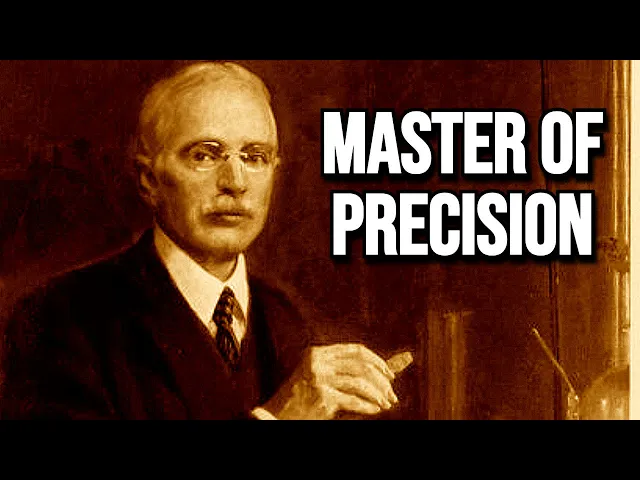
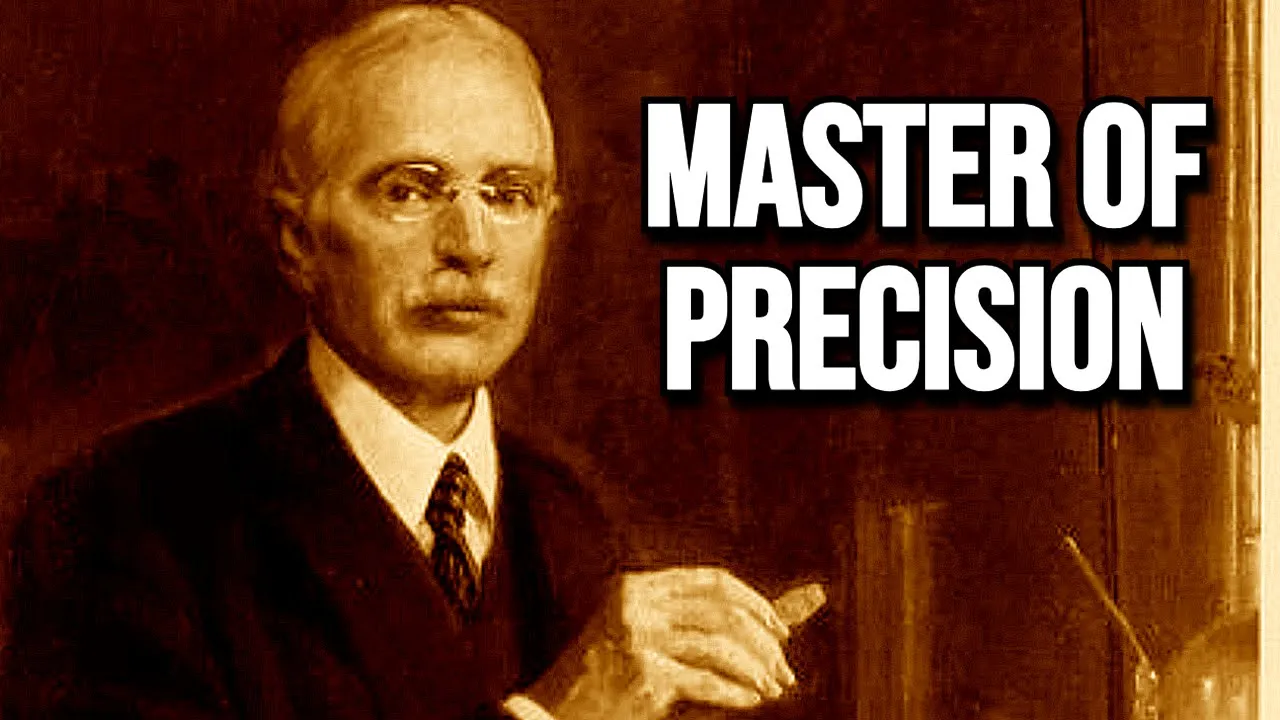
To accurately measure the weights of these elements requires extremely careful precision and patience, for it is quite easy to contaminate samples or to even lose part of a sample of a target element via a chemical reaction. Despite these challenges, a team of one scientist and his graduate assistants were able to accurately measure the weights of 25 elements and further refine 30 more through their meticulous work. Theodore William Richards started his work in atomic weights in 1886 as a graduate student at Harvard University.
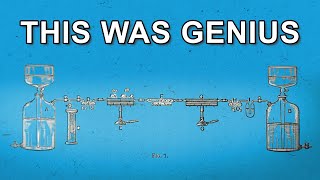
Assisting Professor Josiah Parsons Cook, the two of them undertook the task of precisely comparing the weights of hydrogen and oxygen. Cook and Richards were the first to bring considerable evidence that the ratio of weight between the two is less than 16 to1. The key aspect of their experiment was the several methods in which they purified their hydrogen gas before they burned it into water via copper oxide.
After several attempts and several methods, they reached a conclusion that the ratio of weights between oxygen and hydrogen is actually 16 to 1. 08. This experiment sparked a fire in Richards for most of the elements on the periodic table are weighed through their comparison to oxygen.
Therefore, a lot of the weights Richards realized were most likely inaccurate. Richards graduated from Harvard with a dissertation on this research and spent the next year as an assistant to Victor Meyer at the University of Godan. The next element he studied, this time independently, was copper.
Richards gathered samples of copper from two different parts of the globe, one from America and one from Germany. Through several methods of careful purification, he ultimately found that both samples of copper weighed the same relative to one another. The big surprise though was that he found the weight of copper to be about half a percent too low compared to the then accepted value.
This discovery incentivized Richards to study and weigh as many elements as he could throughout the rest of his career. The next of which was berium because during his copper research he gathered precipitation of berium sulfate from copper sulfate and decided to take advantage of that and weigh berium as well and also found barerium to have been weighed inaccurately in years prior. He returned to Harvard in 1889 and remained there for the rest of his career.
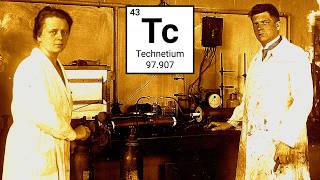
It was here with his graduate students that Richards undertook the bulk of his work. He and his students also developed a few devices to aid their research. One is called an adiabatic calerimeter, a device capable of sealing off materials known to easily absorb moisture and heat from the air.
Another is called a nephilometer, a device that measures the concentration of suspended particles in a liquid or gas via a light beam and a light detector. Together, they went through the rest of the alkaline earth metals and also studied the curious case of cobalt and nickel, which many up to this time believed the two elements to have the same atomic weight. Richards and his students were the ones to discover that cobalt, despite having a lower atomic number, has a greater atomic weight than that of nickel.
After this discovery, Richards became convinced that, quote, clearly the nature of the elements is not always capable of being depicted by any such simple sequence of atomic weights and properties as may be ordered by placing the elements in definite pigeon holes. They continued their research throughout the years refining the weight of uranium in 1900 from 240 to 238. 5.
Sodium, chlorine, and silver were weighed in 1903, improving upon the work done by Belgian chemist Jean Stace. Richards found the error in St's work in sodium to be due to how sensitive the material he used, sodium bromide, was to impurity. This led to inaccurate measurements of chlorine through sodium chloride because measuring the weight of chlorine depended on the weight of sodium which was also inaccurate.
Richards found the error in St's work with silver to be from him using too large a sample leading to inevitable impurities. The next vital discovery made by Richards and his team was through the analysis of lithium perchlorate and the precipitation of chlorine and lithium chloride by silver. This method gave them a new and viable way to compare the weights between oxygen and silver.
This is important because a lot of the elements weighed by Richards were weighed through their comparison with silver. But all elements before Richards were weighed in comparison to oxygen. So linking the weights of the two elements together formed a sturdy bridge for determining the majority of weights of the elements.
Now Richards and his students made many more measurements I surely cannot cover in this video. These are the largest of his achievements, though, and for his unrelenting, tedious, and meticulous work to get elements in a perfectly pure state, and then to accurately weigh them, he won the Nobel Prize in Chemistry in 1914. Thanks to Richards and his students, almost the entire periodic table at the time was revamped and refined, leading to a more accurate and fuller understanding of the elements that make up our universe.
If you enjoyed this video, please consider liking and subscribing. Click here if you want to see more scientific progress made during this time period. Thank you for watching and I will see you in the next video.