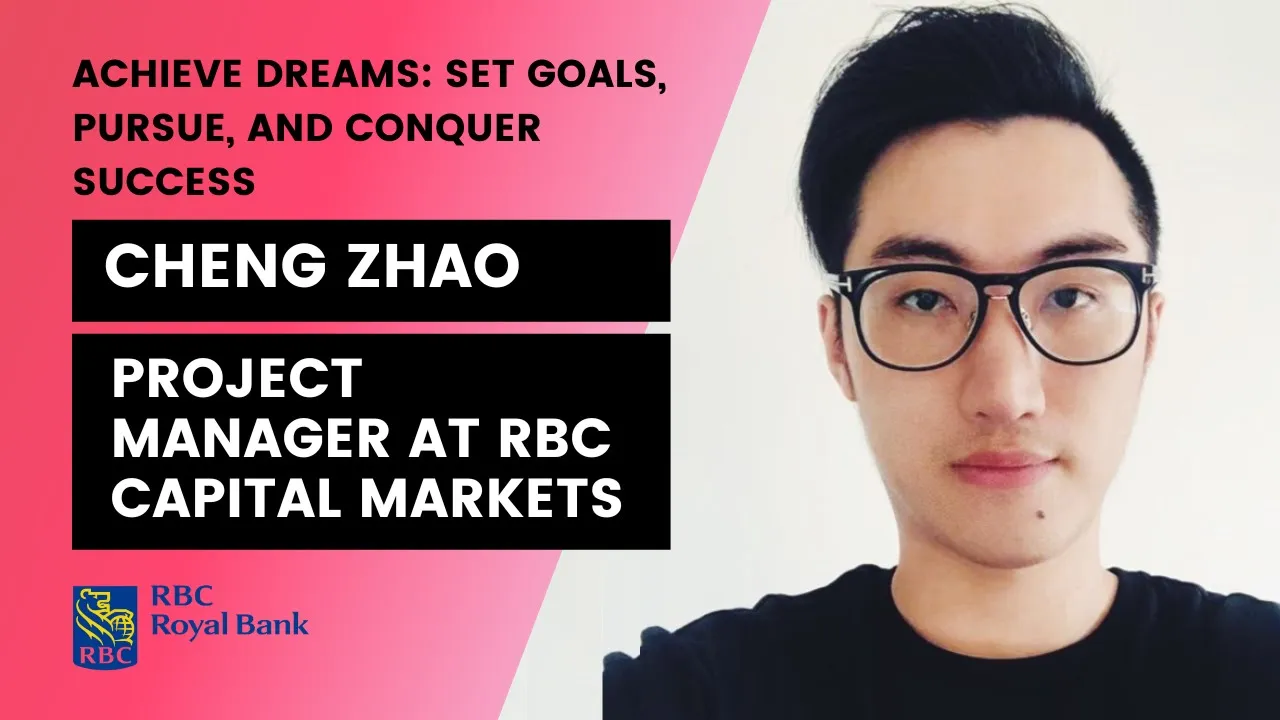
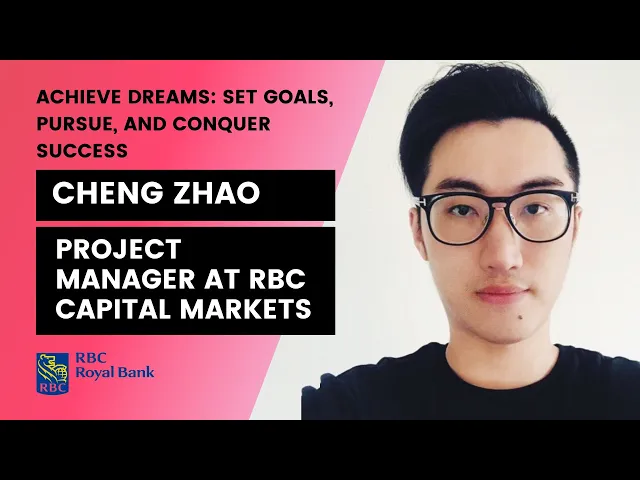
so thank you Chang for joining us today on today's podcast interview we're so excited to have you join us today and talk more about your experience at RBC um today we'd love to get to learn more about you Chang and your experience with RBC can you take a moment to briefly introduce yourself and provide a brief overview of your background and how you got into the field of capital markets project management yeah sure I am currently working at RBC Capital Market as a project manager um I actually graduated from University of watero uh in 2017
and I started my career at a at very small company it's like correction Agency company I I was like doing a ba job there the business analyst job and then I entered into the bank I've I've been working for like multiple banks in past few years I've for TD Scotia and now it's RBC it's like a step by step thing how I get into this role first of all I was doing the back office operation role at TD and then I jumped to beo doing the capit market operation job and then I go to Scotia
doing the VA working on different projects as individual contributor and after I got like a lot of experience on the uh project I I I decided myself to to go to the board management role to kind of manage project instead of working on them yes that's kind of my career background oh I just forgot to say I started mathematic in Wu so that's my education background yeah awesome so that's really cool to see how that mathematical background LED you into your field here so we'd love to learn more about how that work actually translate into
the day-to-day can you kind of give us an overview of what a tickle day or week looks like for a capital markets project manager at RBC I don't mean to like this point you guys but my day sounds really boring like my day is basically fully loaded by different meetings like their at house meetings or like their like recurrent meetings right I don't have anything I have to do on my daily basis uh it really depends on the project I'm always on projects right it depends on where am I at in project so I have
specific thing to do because you know the project has its own life cycle so for example in the initiation stage uh my job is to have like high level compositions with company to decide uh whether or not we have to do this project what is business benefit and what is visibility of doing this right and once the project is kicked off my job is to do the planning so I have to plan the budget the resources the timeline for the team and then once the planning is down all the documentation is proved we identify stakeholders
we move to the implementation stage so at there I have to monit the project progress have to you know raise any risks raise the change request and then to coordinate with the team to have the work down so once the implementation is down you know it's more like we have to have meetings with a user supporting to hand over the work to them so yeah so I would say like basically my day over my week it's just on different meetings to do the coordination work talk to different stakeholders keep them posted yeah so that's basically
what I do yeah that sounds like a fantastic scope of everything you've done from start to end of how the project works and making sure that all the stakeholders involved with the project is um communicated and understanding of what's going on so I want to I'm curious to hear then as aside from your day-to-day are there any other primary responsibilities and key tasks that come with being a project manager in the capital markets division that you haven't already spoken about I think I've already mentioned like in general what what a task that I have to
do so as a PM like in general speed the key responsibility is just to drive the project to a success from beginning to the end and you have to make sure like the project is completed waste the plan resource timeline and money right that's very important yeah and also you have to be responsible to report any issues and then to coordinate with the team about how to fix it because you know you cannot let your team to to coordinate with the stakeholders because they don't have the time and they don't even know who to talk
so that's a PM role in the middle to be a bridge like connect the team and and different stakeholders yeah yeah that's definitely fantastic it's great to hear more about this kind of experience from hearing this through this interview and letting our like students know about that so I can't imagine it's always new sailing with the role that you do and your daily responsibilities can you let us know about some of the challenges you face in your role and on the contrary what are the most rewarding aspects of actually being a capital markets project manager
I think the Challenger is in every aspect I would say like for me personally there are two I think there are two or three biggest challenges that I'm facing right now one is the in communication because I guess I'm not a native speaker right so there's like usual barrier there between me and and local people uh it's about like the the vocabulary the way of like how to think the way of how to speak is just slightly different uh so sometimes it causes like the miscommunications yeah but I guess I'm trying to practice a little
bit more to improve my English but that's one of the thing the Second Challenge would be like as a PM you don't usually dive into like the details of the work you just have to have high level view on the works right so that means you you won't be able to understand the domain knowledge or the techn is there 100% in that case it's hard for me to like challenge the team sometimes if they say something wrong it's hard for me to find it so so I would say that that's the two biggest challenges that
I can see as a PM in the capital market right now awesome we appreciate that transparency hearing more about that can you speak some more about despite these challenges that you face what are the most rewarding um aspects that you see in this role that you have and that you really appreciate about going into this position yeah that's actually also the reason why I choose this position like for my career path as PM like you know I I always get a chance to work on different projects right and especially in the Capital Market those projects
I would say it's more like significant than others because Capital Market is in charge of making money for the banks and you also get the exposure to high level peop right and each of the project that I down I can write it on my personal profile on my Ras made to become like my own Milestones that's prob attractive for myself because I do enjoy like the fact that you know I can tell people I've working on the big projects and they just great for me and I was got a chance to connect with high level
people so that's something I feel is very like you the most rewarding part yeah fantastic it's great to hear that no matter where you are in the stage of life rather if you're just a student or you're already working full-time that journey to self-discovery and personal growth is always so prevailing no matter what we do it's also really reassuring to hear that and then you kind of talked a a lot about um working with different teams working with different projects and also communicating with other people how does collaboration work within your team and across different
departments can you share an example of a particularly successful collaboration that you've experienced thus far in your position yeah so the collaboration was in the team I would say it's more easier because you know we do use some standard process to manage project called AIO or waterfall like that's two most popular way of how to manage a project so there is a standard uh process I need to follow that so withing the team you know I I basically just help the team to manage all the work they need do to help them to do the
paration work but the collaboration with other teams or other department is more difficult think about that right each team has their own concerns about the resources or sometimes the work they you want them to do would even cause the conflict of interest right just give you one of the example that I can think of in my last job is with cap code so so in Capco I was assigned to bimo to work on the project to help the bank to rebuild the online banking website we try to automate a lot of functions online instead of
you know calling people and letting people do manually but in order to achieve that we do need the banks operation team to kind of do knowledge transfer to show us the logic behind so that we can code it and then build it into website right you know imagine like once we done that it could means like some people could lost their job because that not need it anymore because we already automated things so they cannot refuse to do that but they are not cooperate with you like positively so what I did last time was I
just involved a h of people expressed the benefit of doing this and then getting them to be involved in the meetings and I think after that those operation folks became more cooperative and you know so we made that happen yeah in mind yeah you kind of spoke a bit about how there's always conflict and then differences between the individual level then the team level and then the organizational level so I can't even quite imagine how you can coordinate within all these different stakeholders and ensure that there's that alignment that strategic yeah it's and it's all
about the accommodation right you got to ask people to to do what do you want and you know people are just not always having to to G what you up so it's yeah yeah most definitely so we really appreciate hearing that experience and um seeing some more about that transparency and learning about how that translates into the dayto day and you kind of talked a bit about how your previous experience at Capco which perfectly Segways us into our next questions can you walk us through your career path and how you progress to your current role
at RBC were there any pivotal moments or decisions that helped shape your career holistically and got you to where you are today yeah to be honest like I didn't have any Co-op or intern experience before I graduate so I was like far behind others comparing people who had working right after they graduate right so I started with my career at a every small company as I said is a collection agency I was doing EBA there the reason why is just because I didn't know what I want to do or I don't know what I could
do right after I just graduate so my strategy is to start somewhere and then to find out what I really want right so after I started working I realized okay this is not what I want and after I talking to different people you know who work in the financial industry realized okay financial industry you get higher paid usually and I feel like okay PM might be the job I want to do because you know you got a lot of exposures you got a chance to work with different people with the latest technologes right that's that's
pretty good that sounds cool to me that time so in order to get that position I figured out there are three things that I need so think about that right working in the bank Capital Market as a PM you have to have those three things so that people can hire you so so then I break down the goal into small pieces so firstly I told myself I have to enter into bank first so I applied for all entry level Bank position at the beginning I don't mind which position it is I don't mind which department
it is as long as it it offers me I I take it so I entered into TD back office doing operation job it's very boring job and the pay is not that high but I took it then once I started I started right away to look for another job because since I got the operation experience then the next one is the capital market experience right so I I start looking for the operation role in the Capital Market so luckily I got be more Capital Market operation role so I want to beo so so then I
got up Bank and Capital market experience the the last one left is the project experience because if I want to become PM I have to know how project works it better to have some experience working on different projects so then I targeted for BA Ro because as a ba you can work on different projects right then I went to Scotia I I get that ba role because with my Capital market experience so after you know two three years there after I worked on different projects and I I also started for the certifications it's called capm
and also the PMP that that's the specific certification for project manager after I got everything ready then I get into the role in RBC right now so that's fantastic to hear so so many different parts of experiences and the reality of you thinking about where you need to go today and hitting those Milestones to get to your PM role now as RBC is really great to hear and I think with beauty of these podcast interviews and having people like you come on is you hear the wealth of experiences and the breath of how people can
get to where they are whether it's like a traditional or untraditional route it's always fantastic for the interviewer like me and also our audience to hear about the wealth of opportunities out there and it's not always so linear so that's amazing and then um you kind of touch upon the experiences that people might need in order to get to a role like yours can you share a bit about maybe some skills or qualities that you actually believe are crucial for someone aspiring to be successful in a role like yours whether it's like soft or hard
skills you talked about certifications um we'd love to hear more about that yeah so the the certification is definitely the the tech the the hard skills that you have to have and also I think the the the working experience is also so important because as a h manager now like we don't usually hire people who doesn't have the the related working experience right so you have to have to get yourself into somewhere to get that experience and for the soft skill side I think the most important is the communication skill you just can't be shy
you have to be able to express your feelings your thought clearly you have to know what you're talking about and I think you have to be open not afraid of learning new things because as like you always have to learn the latest technolog things right sometimes it's it's not your expertise but you just have to learn from people yeah 100% on that topic of being able to show a willingness to learn even when you got the position to where you are now in such a rapidly involving financial industry how do you actually stay updated on
the latest Technologies and tools to make sure that you're staying relevant to the capital markets project management goope so there's always like obviously internal course that you can learn and also I I basically just learn from the working once the new project comes there will be some time in in the earlier phase that you can learn what is this project trying to do what is technolog it's using and yeah I think that's two ways and also you can try to talk to people who work in different department who did that similar project before so just
take it as Benchmark and that's how you're there yeah that's actually a great resource being able to talk to people around you and hearing from their first experience I think that's really different than actually Theory right like you can hear the practice you can hear the actual like verbalizations of what people are through yeah that's usually better than you watch the online courses so yeah I imagine it's like a lot better and a lot more relevant in that kind of sense and then on that topic of being able to talk to other people and working
on these different projects what's the most memorable project that you worked on for instance a particular challenges and successes and what lessons did you personally learn from that experience the most memorable project I can think about that LE project is just so different and it has a lot of memorable moment but I would just say there's one project that I'm currently working on it's almost being closed so I think I can mention that right now so I don't know if you guys have heard that you know OBC acquired hsvc recently because I think that's one
of the most biggest agation happened in Canada last year right that's one of my project to be honest it's Bank wise project but my team is part of it the reason why it like the project is so different is because this project is being rolled up to the CEO directly and what happened to this project is like obviously was waiting for the regulatory approval last year and so that's why the project is passed for a period of time you know at the beginning of each year like my team will have the clear road map what
are we going to do for this year right so if this project um got paed I have to shift all the resources to work on different things but then a couple months ago the regulatory approval is finally you know approved and then that shi so back to work on this project and because the time is get wasted so there's so many things we have to rush for and I think that was the first time I work on you 2 a.m. like in my whole career I've never done this before so that that's very memorable because
because this project is the highest priority in our BC and so me and my whole team has to rush so even we had meetings like at 12 uh am in the night so it's very different yeah that must have been a roller coaster yeah I mean the lessons I learned from here I don't know but I feel like it's hard to say what I learned but I I feel like I I I accom accommodated a lot of time things to this project yeah definitely I sacrifice my time together with my family because I work over
night right yeah yeah I mean it's obviously a testament of being able to push through and come out of it having completed that project and working on it so that's amazing to hear and then you've been in this position for some time now gaining your experiences and also Imagine You shaped some insights and also received some secondary insights from the people that you worked with do you have any idea of how you see the role of a capital markets um PM evolving in the coming years considering the trends and advancements in the financial industry thus
far it's hard for me to predict like how the industry is going in the future but I hope it will be fine because we definitely see some recessions in Canada now but I I would still say PM is a good role it has a great career because there a lot of skills or knowledge is transferable even if I don't work in the financial industry I can still find other industry to work on as PM the only thing I need to learn is just the specific doain knowledge yeah so I would say is good role in
Capital Market is definitely something if you want to get paid higher you want to get more exposures work on more significant projects yeah that's definitely a reassuring to hear for our audience and also for our Network being able to understand how this role might evolve and I'm hearing from your first experience how you think this would be they can adequately prepare for that so on that note knowing what you know now being in this position is there a piece of advice you would you would give for individuals or perhaps yourself um when you were still
a student um who are aspiring to pursue a career in capital markets PM especially within a major institution like RBC what's one piece of advice you might want to give to someone who wants to follow and end up in this position like you are yeah my my advice for people who's you a student is I I would recommend you to guess some working experience before graduating no matter what it is and just have something there on your resume when you jobs and if you want to get into the financial industry like Capital Market sbm well
you have to first understand what do you need as I just mentioned I've already gave my own experience as an example right try to break down the goal into small pieces and then to achieve a step by step this is not something that you can get it like with in one step you have to slowly be there yeah and then to to just be open don't be afraid to ask for a coffee chat talk to people who is already in this industry to understand how they get there and and what what they do uh in
their daily Liv right so so that that will give you some ideas about how you can make it yeah but it's not as hard as you imagine like I think if people like me can do it you can definitely do that great advice appreciate that coming from you and being a musician helping us break down what that kind of career progression might look like for someone who's aspiring to come into this role I'm understanding that one networking is important to having that concrete experience that those transferable skills are definitely something that they can do and
gather no matter what the experience is like you said and then um we're just wondering balancing work and personal life must be tough especially as a PM and you mentioned being having to have sacrificed sleep and also time with families in the past in order to successfully push through with the project how do you manage to maintain a healthy work life balance in such a demanding role like yourself yeah very hard to be honest because working on different projects sometimes you have to work with the user who is in like Asia or Europe they all
have 10 differences right so you have to have like meeting sometimes in the night estd or you have to woke up like early in the morning talk to people who's in Europe so I'm still figuring out how to balance my work in life but one thing I can think of is just like you know work hard during the daytime and just don't look at work after after after the working hours right because I refuse to get my work for I I don't want to be bother LA to work if you really have any urgency just
call my personal that yeah I mean if you choose this way it it will be hard for you to balance to be honest no that's very genuine and transparent especially seeing the importance of having to really put in those boundaries letting people know what you kind of want to Valu in your line of work and separating that with your personal life I think it's really important I feel like a lot of people kind of realize that maybe work is really hard but then it's important to always just put in time for yourself yeah but one
good thing you know being a PM is like you don't have any ring work or daily work you have to do is based on Project right if this project is is going well you don't have any issues you may have quite time to relax in the daytime as well you don't have to you know work on anything else if the project goes well right that's great to hear that extension from like the day to day and how maybe that might um be different for a PM R because you mentioned it's project so then that timeline
is different and you can probably plan your uh personal life around that in a more easy fashion I imagine no one's like really monitoring you once you sit there you you're more flexible comparing to other roles and you have just kind of manage yourself propably to make the work done and then to use the spare time to do your personal stuff which is fine I think yeah absolutely that's great to hear about that distinction and then um in terms of whether it'd be for maybe social support or for helping you with your professional experiences have
you had any mentors throughout your career that you think is not worthy to mention so for instance how important do you think mentorship is and what advice do you have for people want to seek mentors in the financial industry personally I don't have a specific Mentor for myself but what I did is I I do talk to different people so I usually Reach Out people through linking you know just talk to them to see what what they're doing good and then to see what I can learn from them right I I take everyone as my
mentor to to learn things what but for students I think it's very important like because you may not have an idea about how to work or uh how to get a job like someone who had that EXP experience could help you a lot can help you to skip all of mistake you may make save you some time as well yeah so I recommend you to to be open don't be afraid of to reach on people who set up the connections you know just just talk to them to ask questions people like me I'm I'm happy
to share so I don't mind people asking me questions so absolutely and then that's a testament of what you say from coming on to here and sharing your ins as well so getting a very recurring sense of now n working is important being able to have a willingness to learn no matter where you are fantastic and then one other piece that we want love to hear more about from your perspective is being a PM we love to learn more about how diversity and inclusion is promoted within RBC and specifically perhaps within the capital markets division
um how does this all contribute to the work environment that maybe you help Foster that you witness within the organization that you work for I has pretty good uh working culture like within our team we we don't have people from different countries like speaking different languages it it doesn't really matter I feel like and then when we hire people we don't have Target like to hire like white people or like people should is it's not like something we have to concern about I think yeah awesome so great to hear about that representation within the Capital
Mark Division and then the final question on my end is there anything you else you would like to share with our audience about your experiences or role as a capital markets um project manager that you think is really important and that you'll like them to take away from this session something that maybe we haven't mentioned before or maybe something you just want to reiterate from the session and discussion that we've had so far I think for student it's very important like you have to know what you want right like so let's say if you want
to be a PM based on this session you decided to become a PM because this my sound interest to you then just start you know preparing as early as you can to understand what courses you can take the certifications that I've mentioned right the CP and PMP those are two important significance they can learn and then if you get that if you don't have working experience you know the companies will still take you because they can see that you have been preparing for this right yeah I mean just study hard the major that you choose
I don't think it really matters in Canada I think the companies like take more on the working experience right we don't usually look at what you started but we look at what you have been worked on and if you are qualified with the position based on your experience and if you have those skills that we want so just highlight them in your resume rate the job description and and then to update your resume accordingly that's that's my to student to new graduate awesome so amazing advice and great takeaways for all of our audiences to learn
about and understand how they can successfully get to where they might want to be at in a such a role like yourself and hearing from you that I imagine that's very ruring advice so those are all the questions on my end today thank you so much Chang for offering your time with us



![Comparison of a Successful vs. Failed Digital Transformation [Two Digital Strategy Case Studies]](https://img.youtube.com/vi/As_EZt3ht98/maxresdefault.jpg)
![DAX Filter Context Basics [Full Course]](https://img.youtube.com/vi/Rpa8mDH7mes/maxresdefault.jpg)