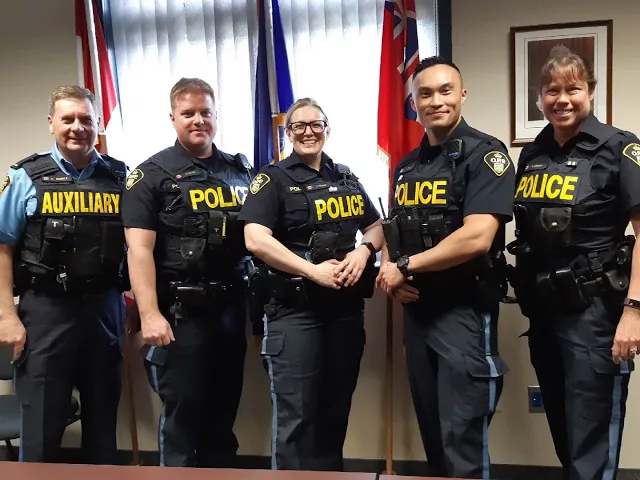
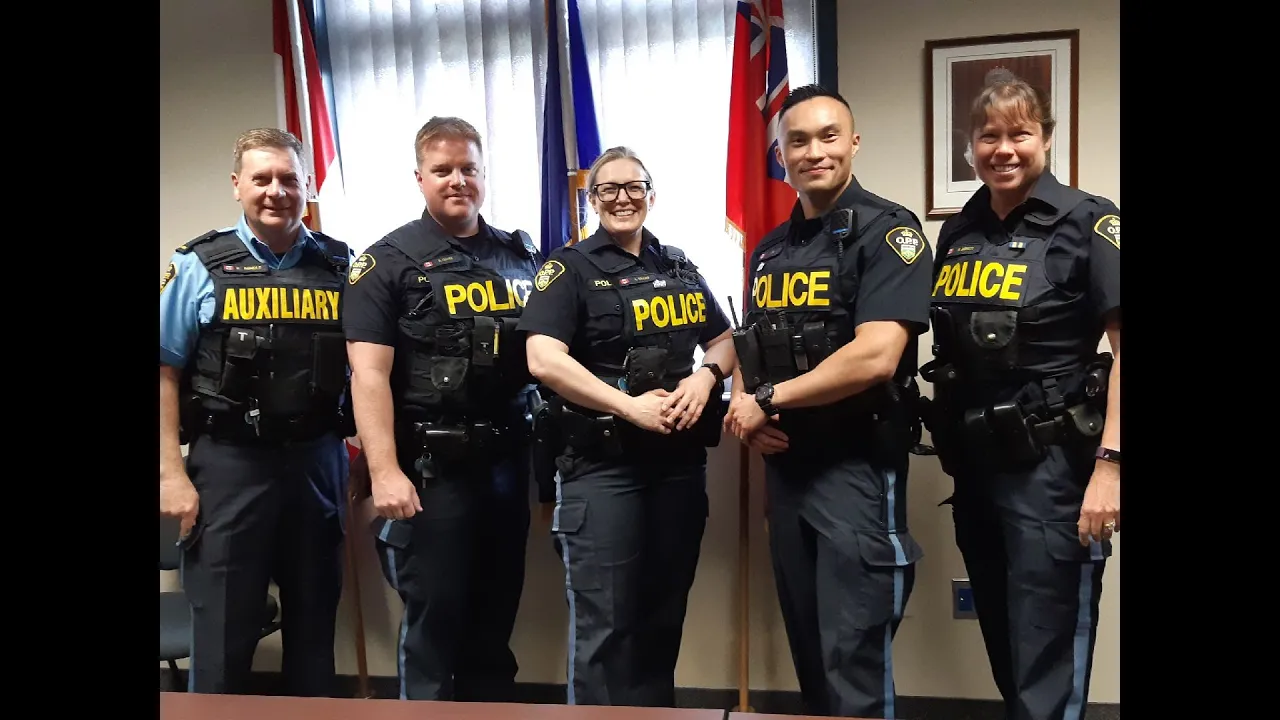
Alrighty well hi matt and uh thanks for joining us uh today we have uh one of my old friends and uh sort of classmates from when we were doing our masters together at university of guelph matt has a master's degree in criminology and criminal justice policy uh from university of guelph and he currently works with opp stationed uh an undisclosed location Somewhere in northern ontario uh well thanks a lot matt for joining us i really appreciate it because anytime i'm happy to it's fantastic like someone like you i think i feel like students in my
class uh a lot of them are looking for the experiences that you're having right now you know get my degree have an idea of what's going on and then sort of go become a police officer so the first question that i have for you really Is uh when you went and you started kind of thinking about policing and you and i kind of had similar education in which it was a very kind of critical education right how do you how did you find kind of matching your education background with your policing how did you use
it in the interview process how did you use it kind of as a police officer how was it useful in the kind of training process any of those Things yeah i mean i think i mean higher higher education however you want to define that how that's valued and how that's perceived in the hiring process from the beginning in terms of police services has sort of shifted in the last little while i think education in general is there's sort of a there's sort of a normalization and You know a a bachelor's degree now is is different
from what a bachelor's degree meant to a decade and 20 years ago right um there's a certain leveling process that uh that is taking place and um i think going back to my my education i i i was not i was not always um i guess you could say the the person that was It was born to be a police officer i have no policing background whatsoever in terms of my family i have no relatives in policing um so there's no connection there i know it's traditionally sometimes a profession that um is is passed along
um and that i guess goes along with with with the culture and that's not unique to to policing there's other professions where there's sort of a familial Um um sort of stepping stone between generations but so i i it started in high school in terms of an interest in law and originally i wanted to to go into teaching i enjoyed the the teaching side of things and that progressed from i guess teaching high school to maybe teaching in post-secondary in some capacity and it got to a point that my interest in policing um and studying
policing Led me to a point where it's you know what if this is a career that i'm gonna study what better way to to study it um what better way of of sort of uh experiential learning than to actually go out there and and give it a shot and um so moving towards my decision to apply and to begin the hiring process i think the skills or i guess you can call them skills that i I learned from from my post-secondary and leading into policing is just having some perspective um you said to yourself that
sometimes the ed or oftentimes the the education that you receive is is critical um but sometimes when you say critical there's a negative connotation that you're you're you're a critic of something and it's it's not always Meant to be that it's it critical is just meaning asking questions and justifying what you're doing and how you're doing it and i think it just provided me with a sense of of the other side which is um sometimes the the field of policing um in the field of academia in and of itself can be very insulated right there's
there are two groups that um sometimes They don't um communicate as often as they should um right or communicate as efficiently as they should so i think if you're if you're um in that mindset that well you know policing is what i've always wanted to do it's what i'm what i'm all about so i'll go in and i'll learn how to be a police officer and then i'll become a police officer not that that's bad but sometimes it just you lack a bit of perspective To what policing is not not how to be a police
officer and i think sometimes those are two different things right what do you mean by that i mean that it's if you know your exposure in terms of of sociology or exposure and asking questions what is policing you know um what making what makes policing legitimate right what makes it Illegitimate um how do you establish trust with the community between um people that um are encouraged and then required to to follow certain laws and um how do you bridge that with the person all of a sudden has to encounter those people and and enforce um
their their behavior and that's those are all words that Sometimes become normalized in the field of policing but when you have an ex when you have a background in in sociology and a background in criminology you start to ask those questions that you know well what what gives the authority to a police officer right what what should that authority look like rather than just a a red book called the the criminal code and say well this is this is what you can do this is what you Can't do i mean that's one thing the laws
are are are separate from the people that that enforce them to a certain extent right those are two very different issues there's there's laws and then there's law enforcement and i think sometimes when you when you fixate on well you know i want to get into law enforcement and that that term um as Opposed to um other duties that a police officer has which is um crime prevention right it's not just about enforcing laws it's about preventing people from engaging in behavior it's about assisting victims of crime it's about preserving peace it's not just about
um again taking that that red book and saying okay well this is what the book says You're not doing what the book says so now this is what has to happen it's about just understanding and having a deeper appreciation for what the role is and i think the the post-secondary education um you know policing and criminology are aren't one and the same obviously uh you know studying policing is part of criminology obviously um but it's i think having that Post-secondary education and that exposure and being critical and asking questions not just about what does the
book say right versus what it doesn't say but asking questions of you know um what who creates the book right um what does enforcing that book what does that look like you know how should you behave when you enforce that i think a lot of those critical questions are Are things that um i've been asking for a long time that that may be people that don't have that background maybe they don't ask those types of questions they don't even think about asking those types of questions so i think it provides perspective and and in the
hiring process it um i think it was valued i think there's sometimes an attitude that you know People that are hiring ie police services don't want their officers to to ask questions right that's not the experience that i had i think when i started to ask those questions of the employer of police services i think that was respected they want people that have some some critical thinking and and if something isn't quite right they can they can ask a question about it and That sort of brings us uh you've said a lot of things in
that i really want to unpack uh but uh so let me start kind of in a chronological order that goes in my head at least uh the first question i guess i had was uh it brings us this discussion of uh police's uh awesome power that's their discretion that you know we talk about you know all These kind of diverging methods that we have in the court system and in the prosecution system and you know bail system and all these things what we forget is that at the very top of all of that is police
discretion that someone can be diverted from the court system yeah through these very expensive diversion programs or by simply police discretion by simply you as a police officer Not sending them into the court system right right so i kind of wanted to talk about police discretion for a little while uh because i think that sort of gets to that heart to what it is that you're talking about right like okay fine the book says one thing but then again the book gives you discretion it's not something that you just Sort of take it out of
your head how have you seen kind of the importance of police discretion do you because ardours would say like listen let's get rid of police discretion if the book says do it this way do it this way as a police officer you should you're just a machine to enforce the law rising door doors like myself who says well you know what like if you're a cop and there's a kid Who's maybe you know has some shrooms on and you catch him and you go you know what's the point of doing this whole thing well maybe
that's the type of kid that we want to diverge maybe that's the type of kit that we want to send somewhere else what do you think about that oh you cut out their mirror so i got mostly most of that can you still see and hear me oh there We can i can there we go i'm back sorry i'm we're having internet issues oh that's okay hey we were having dishwasher issues and now we're having it all right well i like i said it's you go back to the book and and i think the most
the most powerful and impactful not just from from a police officer perspective but the most powerful tool is that is that element of discretion And i think it's as you said it's um and going back to the experience and having perspective and all those types of things when you have exposure to you know criminological theories about about uh you know trajectories and life course and all that kind of thing sometimes it's you know we get used to studying people that are in the system you know we're studying criminals we're Studying criminology but oftentimes you go
back to the front lines which is someone the first person that's going to bring someone into the criminal justice system traditionally is a police officer and i the way i approach it is yes there is a red book that says this is what you know thou shalt not do this but in reality in practice um police officers have the ability to Um look at a situation and and it's not in any respect is it turning a blind eye that's that's the opposite but it's it's it's it's having um a focus in a trained eye which
is okay what is this going to look like how is the decision that i'm going to make for this scenario how is that not just going to affect today but affect the day after and the weeks after and the months after and the years after for This person um the the classic example is is is a youth and and the system is as it should be is a little bit different for people that are age 12 to 17 right there's a separate piece of legislation that says police officers are required to consider other diversion elements
which as you said youth justice court and mental health court and family court those are All can be expensive and um um and lengthy processes and if i can if i can if i'm encountered with something and i look at the totality of the circumstances that um yeah technically is this person in in violation of of one or more you know pieces of the red book and the answer is yes but that doesn't mean That i'm required to proceed in a certain way and i think you have to have some understanding that i mean to
use your example if i were to encounter a youth that um by all uh by all accounts is is being cooperative with me is um you know i can i have access to you know to a certain extent their involvement with police before Um it's you have to use your best judgment and understand that yes technically that something is going on but what i'm what am i what am i actually doing um right and it's you have to i mean it happens countless times and it's not just it's not just me and it's um the
the use of discretion is um as i said is is one of the if not the most Powerful tool um but you have to you have to be able to justify it as well right because the reason why it's so powerful is because there are circumstances where you're gonna have to explain to someone whether it's it's your employer or whether it's another justice official as to why in that circumstance you chose to use discretion And why in another circumstance you didn't right and that's that goes back to two issues and of of profiling and and
the legitimacy of police ring um and that's that's sort of what i want to come back to i really want to sort of bring the discussion because you have used the word legitimacy a couple of times yeah and uh you know i know we talked about kind of we want to talk about that And that's sort of what i'm trying to get at but before that uh sort of uh i know i love the stories so is there a story of it about use of discretion that you are kind of proud of yourself that you
kind of look back and you go i'm very proud that i did it in this particular way i understand there's confidentiality issues that you have to be concerned About but is there a story that you could share with us that or you know maybe a funny one even like one that you would say example of how discretion works well i think it's it starts with policing um in a rural community um i know amir that you know that i police in a real community and Um i mean let's face it the the the the demographics
and the types of calls and and the landscape is very different than policing in a in a municipal large urban center there's no doubt um the difference is in a rural community there's there's really no no place to to be anonymous right um so the people that i encounter uh on a on a daily basis are the same people that i've encountered on a daily Basis before so you need to and again that goes back to that that l word that we're talking about which is legitimacy um but i mean there's there's been countless stories
i i can one one person for example um it's i would say that the it's difficult to describe because i'm trying to obviously i'm trying to be um i'm trying to be uh confidential and how i Relay those details but um i mean what happened the other day for example i was out um doing some some traffic enforcement just some general patrol and um the weather is starting to cooperate now and with um with the uh with the covid situation um for a long time we've had a bit of our shoreline closed and now that
the beaches are starting to reopen and there's sort of more of an Influx of travelers whether that's a good thing or not based on the current climate that's up for debate but um safe to say it's just getting a lot busier and we i encountered um a group gathering no more than five of uh of young people um essentially driving out of a beach area and um in a pickup truck and two of them happened to be sitting in the bed of the Pickup truck which in rural ontario isn't necessarily an irregular thing right right
if you grew up in the city you think that's wholly unsafe which it is um basically i i stopped the vehicle um there's a lot going on obviously it's it's wholly unsafe people in the back of a truck generally don't mix um you can be the best driver in the world but if someone hits you and and you're unrestrained in the bed of a Pickup truck that's not gonna go well um obviously i stopped the vehicle and and i go and i have a chat with um the driver and i get there and the driver
has his driver's license in his hand he's got and he's and his hand is is shaking right he knows right so i go up and i say what's going on man right and he goes and he kind of puts his head down he goes and he and he's speechless he doesn't Know what to say right and he's also super i'm like he's also super nervous and i talk to him and i say listen there's there's a lot going on here obviously and you know that um what i want you to do park this car okay
you guys where do you live he says he lives nearby okay well in absence of that he said can you can your parents come pick you up because there's a lot that that can happen in terms of Enforcement there um and he said yeah my parents can come pick me up okay i say well you guys are gonna sit here until your parents get here i'll wait with you okay make sure they bring someone that can can that can drive this home because i don't want to see you drive and i want to talk to
your folks about this right he's a sick he's a 16 year old kid right Right got his daughter's got his driver's license he has a supervising driver but obviously he wasn't doing much in terms of supervising so that person had a conversation with me um and you know what there's a lot i could have really thrown a a penal book at that person's driving record right and it would have been justified but i looked at it i Looked at the person who um as a young driver made a really stupid mistake um and chances are
i'm probably going to encounter that person next week or two months from now and it might be in a completely different capacity and now all of a sudden that person looks at me and says look that police officer was justified in stopping me Justified in in in laying out a lecture in terms of road safety he was justified in doing what he was supposed to do which is enforcing laws but he he was a reasonable person right um he looked at how can i address this issue he addressed it um but and and all of
a sudden that that adds to the legitimacy right it adds to It and there's and there's countless other stories i mean that's just a minor kind of silly one but all those little um interactions those little um it can be a five minute thing it doesn't have to be a a proto prototypical um you know when i'm making an arrest or i'm doing this right it's just being out there and interacting with community members As a police officer and um i think it's just being fair and looking at the entire picture and it goes back
to the the use of discretion i i could explain that to someone as to why i did that and why i made the decision or made the decision not to do something versus made the decision to and i need to make sure that that's applied the same way Because otherwise if you don't apply that if you aren't able to justify that based on on legitimate means that's when discretion becomes an issue and i think that's when it has become an issue in in the past right you need to be comfortable with with what you're doing
and you need to justify it at all times and you know when you were describing this i was thinking that a different Person different scenario this could have gone completely different right i can imagine myself having a conversation police officer who says i pulled over a pickup truck there were two passengers in the back young kids i got to them he was really nervous he was shaking so i figured you definitely have done something wrong so i took the car apart right but and that i think those are Some of the things that just comes
with experience so it comes with kind of i guess that sociology what we call like defining the situation right like you define the situation as hey he's probably just nervous because probably this is the first time he's been pulled over by a police officer 100 and he said that you know advising someone else which brings us to sort of i want to kind of uh spend devoted quite a bit of time Talk about this legitimacy that is quite important right for now one of the things that we talk about in class is that really the
only thing that differentiates between police and any at our extra legal enforcement like you know imagine a very organized mafia you know environment in which it's organized and controlled the only real difference between police and That well-organized militia is that police is legitimate that as a police officer walking around with a weapon i don't look at you as i'm gonna listen to what you have to say because you have a gun i say i'm going to listen to you because you're a police officer and you seem legitimate to me i kind of want to know
kind of in your day-to-day life you have used the word what do you mean by legitimacy When you as a police officer you so what legitimacy what do you mean by legitimacy i think it's i mean you're right it's i think it's a word that is probably flippantly tossed around and everyone kind of assumes what it is without really as you say unpacking what it actually means and what it actually looks like on a day-to-day basis um i think i think you nailed it in your Description which is um there is obviously our authorization um
to to enforce laws right there's a there's a there's a certain category of person that is authorized to do um and there's there's the rest and that's sometimes that there's anothering process there that becomes a little dangerous and everyone realizes i think everyone would concede that There's a need for for law enforcement there i think there has to be um but not everyone agrees as to what exactly that looks like um at all times and on a day-to-day basis i think legitimacy is um i really think it's you have to earn it i don't think
it is i know on the books it's something that is bestowed upon certain individuals um and there's an inherent yeah if if From a very minor thing like a a fender bender a collision or up to a more serious investigation there's there's an automatic sense of legitimacy when i when someone shows up in a police car as a police officer that this is the person that is going to be in charge is to dictating what what happens but you really have to um you really have to earn the legitimacy i i Really believe that and
when when you don't when you show up everyone know as i said everyone knows it's blazing to cross your chest that you're a police officer we know that you're a police officer right but in order to maintain that i think you have to it's not in it's not in what you say it's it's how you say it and it's not in what you do it's how you do it and i think i've always Sort of subscribed to that as corny as it sounds um i think that's important um because i don't need to tell people
that i'm a police officer when i show up it's it's that's clear um i think the more that you can um exercise fairness the more that you can exercise empathy the more that you can exercise um simply talking to someone and and realizing that there's You know whenever police are called there's some sort of issue that needs to be um that needs to be dealt with and you need to be able to work with people in a fair and empathetic way and and i could go through as i said there's on a daily basis there's
a broad range of things that police officers encounter from very very minor neighbor dispute someone just looking For some advice up until very very um heated calls that are sort of in progress and you need to be able to um show up and and let people know that although i'm a police officer i'm i'm just someone that's trying to assist in sorting out this issue right on the books i have the ability to do things and and someone has told me that i have the Ability to do them and everyone knows that everyone has an
understanding of what that is but um when you show up and you and you feel that that's um something that has been bestowed upon you and that's something that either can't be taken away or can't be questioned or or can't be reined in i think that's when people get into a mindset that um there's there's an entitlement right Right and i think that that can be dangerous and uh i i really like sort of how you're thinking about uh legitimacy right and police power that police power is not there as something that you have as
a police officer rather as a tool that has been almost entrusted into you to use when absolutely necessary yeah and we usually when we think about Police uh we think about kind of you know here's this massive guy with a gun and a baton and a handcuff and you know tasers and all these things but you see 90 99 of times when we run into police that's not actually the tools that police uses to deal with us right like in our street there was a celebration a couple of weeks ago that turned a little bit
uh violent and uh what i noticed was Older police officers were walking around kind of with their hat in their hand and talking to people whereas the younger police officers were kind of hanging around together with their hands on their guns and sort of giving everyone the look as if the president's gonna go buy any minute right yeah and that spoke a lot to me like when for example there was a fight and there was This older police officer came and spoke to a couple of the kids who were hanging around just to kind of
be like don't worry about it it was something we dealt with it that to me stuck in contrast to literally like a couple of blocks away from us that one of our friend was telling us that police kind of came in and was like there's an incident everyone needs to move inside at the moment It kind of was completely two different scenarios so i really get uh what you're saying i kind of want you to explain a little bit because i'm gonna have a students uh in class that innovatively are either gonna be a police
officer i'm gonna be in positions in which they have to make these very tough decisions and one of the examples that a police officer used when i was talking to him Was he said the very first call that he got was he got called into us home in toronto that's some robbery in progress so he goes you know i show up in there and this is like my first day as a real police on the street i show up with my supervisor or my partner or whoever and we walk in here's this guy with the
tv trying to leave the houses old ladies hanging on to the tv going He goes i just jumped on the guy the first thing i did was jump down the guy handcuffs out he says before i knew this old lady was on my back and screaming let go of my son like god my son that's just supervised like the training officer the first thing he said to him was listen anytime you show up to a place you first got to ask what's going on that should be your First question before you jump into this it
turned out that you know he had some drug issues he was stealing the tv to go sell the tv yeah the mom wanted him to not sell the tv but they didn't want him to get arrested either yeah i didn't want to cop on this yeah so i want to know like how do you deal with these i can't imagine like i talk about these Things in class but i can't imagine for a life for me having to actually make these decisions on the fly like in real life how do you like what are some
of the guiding principles that you have because the type of things that you talk about like i kept wanting to go this to me is definition of community policing but at the same time everybody's telling us that community policing failed in 1995 you know like stop talking about community policing right but then again like it sounds like it can work rather well so i want to know what are some of the guiding principles that you adopt and what are some of the kind of hurdles you see to kind of achieving the type of community policing
that we really have in our head when we say community police I think one of the the biggest guy guiding principles that i've sort of maintained i don't know whether it was learned in the early portion of my career or whether it's something that i've just had in general but um i think going back to you know the first question should be you know what's going on i think when you one of the guiding principles is is to Slow it slow things down a bit um because as you said it sometimes sometimes not all the
time i would say most of the time it's not but sometimes you have to make serious you know decisions split seconds at a moment's notice without a heck of a lot of information right um going back to education we you have all the time in the world to do research and to formulate an argument and to sometimes you ha you don't have a Lot of that background knowledge and you don't have a lot of information you don't have a lot of time um so you have to realize that in those scenarios it's even more important
to to do your your your damnedest to sell things down and to ask questions and to try to take everything in right um because that that's that's an unfortunate call to go on your first day when you're probably Um your adrenaline's going and and there's a lot of emotions running through your your body and you show up and you do what you've sort of been trained to do for the last several months and um that's that's justifiable that's understandable right the outcome is is fair um but it's very important to slow things down and to
try to take things in and start To ask questions not only to the people that you're encountering but questions to yourself the next piece i think that has helped um because community policing and and to me rapport building kind of go hand in hand at least that's my my interpretation and i think the way that you build rapport and you earn your legitimacy um and you earn the trust of your community is by being candid and Being honest and being professional and i know those are all words that are kind of buzz words um but
i'll sort of i guess unpack that a bit which is you know early on in my career there was there's a lot of knowledge that you're required to have um and some of that knowledge is um textbook knowledge some of that knowledge is legislative knowledge but Then some of that knowledge is is experience based that you just don't have in the early the early portions of your career i mean that story that you told that person has you know zero days experience as a police officer but there's a lot of legislative knowledge in that person
right it calls to a break and enter i see someone taking a valuable out of out of this House i'm gonna make the reasonable assumption that that's the person that broke and entered and is now committing a theft so i'm gonna do what i have to do which is enforce the law and that's that is what it is but that person doesn't have the experiential knowledge to go in there and say well maybe this isn't what's going on maybe i should just go ask the guy with the giant tv What's what's what's going on with
that tv right and then if and then base and then go from there right um so slow it down ask questions but the rapport in the community policing element a huge principle for me is i'm never i'm never afraid to say i don't know right um and oftentimes that's not sometimes a response that you want as as A community member that's that's for the most part have when you phone the police you've exhausted some other options usually right that that is traditionally a last resort for a lot of people so when someone has an issue
they're going to look to you they're going to give you a call you're going to show up and that person or those persons are going to look to to the police officer to sort this issue Out somehow and i think if you show up and you realize oh man i i don't either have the experience or i don't have the knowledge you know i haven't encountered this before this one particular scenario and oftentimes no two scenarios are the same when you go there yeah people are going to be upset if you go there and you
tell them I don't know in my experience which is relative i'm not going to pretend that i'm some 30-year better a grizzled veteran but my experience the people um can forgive that any reasonable person can forgive that within reason but if i go up if i respond to that call and not only do i have a lack of knowledge but i lack a bit of empathy i lack some people skills to talk to someone i lack Um active listening the ability to to hear someone understand their perspective um that's stuff that people don't forgive and
and they don't forget those encounters um if i show up and say listen man i i hear what you're saying i understand the issue that you're having i'll be straight up with you i don't 100 know the answer um but i i promise you that i will find It out give me your number give me your email give me something i will i will find out the right answer and i will and i will i deliver back to you as soon as i can i just haven't encountered this scenario and i think people people understand
that right and that and that's not just a policing and someone calling the police um dynamic i mean that's just a dynamic a social dynamic right if you can't you Can't expect someone to to have every single answer for every single scenario right they're gonna they're gonna expect obviously you're a police officer you've been trained you have some you i hope that you have some knowledge about what's going on but there's been scenarios in the as i said the first few months where it's like you know what i i don't i don't know right And
i think that shows um some honesty and people people respond well to that right if you show up there and because you're a police officer everyone thinks you have all the experience in the world sometimes um if you show up and and you you try to fake it or you try to put on a facade or you try to say because i'm the police this is the way that this needs to go I think that that goes counter to to what we were talking about which is you have to earn that you have to earn
that legitimacy it's not something that just bestows upon you right um and it's sort of what they say like you don't uh it's not what you say it's hob it's how you make people feel that people remember right yeah uh now when you talk about Policing i have to say that you know uh as an outsider one would say wait a second like everything you say sounds an awful lot like you're a social worker not a police officer yeah right how do you feel about because you you know there is a very big uh sort
of push to move away from talking about police as a force and talk about police as a service that Is just another service provided to the community just like social work is just like education is that it requires empathy or requires kind of ethical behavior requires you to be like everything that you say pretty much can be summarized and be a decent human being right yeah uh but then again in a lot of Our head the image of police is someone who if if someone said define for a police the word force will definitely show
up some use of force legitimate use of force sort of monopoly over you so for something along those lines will creep into the definition of right at the very outset of it yeah how do you feel about use of force as a police officer is it To you a sort of primary tool is it the last resort the way that we think about it how does legitimacy and use of force connect because those are some of the things that we are very concerned about as a community right yeah i think it's i would phrase it
and i would hazard a guess pretty much all my other colleagues would would phrase it as a last resort Um it's this the social worker element and i want to go back to what you said about the changing climate of the of of the image of a police officer if i were to stand up which i'm not going to do you'd realize that i'm i'm a five five five six is being generous you know 155 pound guy so i i certainly would not fare well in a tussle with most other people um but I think
i think yeah the use of force is is a last resort um and that's not just um that's not just uh you know a phrasing that is used to gain favor or or to earn a fake or fake legitimacy with with the public it's it's it says you know in the criminal code and it's not just use of force for for for police officers but um even Private persons in in in their daily lives have the authorization to use force right right the key element of using force is it some it's always has to be
reasonable and it's as much as necessary right if it's not necessary i am not under any circumstances authorized to use it nor is any police officer um the only way it's authorized is if that police officer feels it's necessary Throughout the course of their duties whatever that may be so i think the you're 100 right that when you when when um as an as an outsider you know their image of what police um are is is law enforcement and part of enforcement is is using force right i mean it's right there in that way so
i think that's i think that's normal Because you know you show up and as i said off duty i'm a pretty relatively unopposing guy i'm a pretty schlubby guy that's just walking around but all of a sudden when when you put on that uniform and you can see the the use of force options in the tools um and the weapons right make no mistake they're weapons um you show up to a call and you see the You see the bars on the back of the window so you have all those intrinsic ideas as to what
um what that profession is about because it's the first thing you you see right you actually before you even talk to someone that's what you see right especially in canada the only people you'll ever see carrying a weapon on them are police officers Right like exactly um so so that's uh that's the first ever interaction when you show up is you see all that you take that in with your eyes and that has an effect right um relay that with with the media and traditionally um the the incidents involving police that um are prominent in
the media traditionally revolve around use of force um 90 you know i can as i said i i'm not a Certainly a person with a lot of background or experience in policing at this time but um i can i i only need one hand the amount of times that i i say that i've had to use force um and that's essentially because um either the threat of force was used against me um initially um or i was dealing with someone that is it is was completely um non-compliant right And it's you mentioned the word compliance
and it's all based on that right that police authorization to use force again is in the criminal code um it's not it's not unique to a to a particular police service or a particular municipality it's it's all across canada it's a piece of federal legislation that says i and as i said a private citizen um has Is justified in using force um you know section 34 is the self-defense aspect of the criminal code and um 25 and 26 deal with um the use of force um and the the authorization to use it but also the
the realization and the mandate that you can be held criminally liable for excessively using it when it's not when it's not necessary or it's unreasonable and i i think that's because i have to admit You're one of the nicest people i know so when i heard you became a police officer i was like right on like that's the time person we needed yeah right yeah then again i have friends from high school who were like the bully in the high school and they became a police officer that when i heard they became police have seven
oh god yeah please so I guess my question to you is how do you go about using because you see when we talk about these are words that make sense in an academic way like you know are you authorized is it necessary is it proportional all these things uh but again like uh i was on a ride along with a police officer and i remember we walked into a bar in oshawa and there was this guy who On this computer all right matt uh so we had a little bit of a technical difficulty while we're
back i'm going to spice this back together in a way that will be completely seamless oh i was gonna say as long as the transition looks flashy it'll it'll be one of those transitions that i don't know if you remember like our parents had when they were doing those camcorders that like Zooms in and out and they're like stars yeah that's what we're gonna do uh if if i'm not able to do that i would like all the people in my class imagine that we start in and out of just picture yeah yeah just picture
that in here so i guess says before that what we were talking about kind of was use of force that how do you use this police legitimacy To reduce the amount of time that you need to use you force how do you use police legitimacy in a way that ah makes you almost not have to use force because as i was saying like i i was in this oh that's the service and i was on this uh sort of call i would walk into this bar and this guy's just drunk and his you know it's
not Being violent but definitely needs to be removed from this bar so the bar had called the police to come remove this guy uh so this police officer said to me she said listen i have no backup here so you just stay as far back as you can don't get involved something happens push this button that's all i want you to do yeah and i saw her she went up to this guy and said listen you have to come With me and he said i only have this much left at the bottom of my beer
and she said tell you what finish that then we'll and he finished it then we got up and walked out and i said to her well what made you not want to just say no like i told you move you move the moment i tell you to do drag him out and she said well it took an extra minute it saved me Hours of paperwork and i didn't have to beat his head on a bar stool somewhere so worked out for everybody type of deal and the guy sort of got up and kind of dragged
his way into the cop and car and you know got driven home or driven to jail so i want to know kind of what do you think about that use because i can imagine if I was with a different police officer who was and she was like a small person i okay imagine if i was with a different police officer he could have gone differently yeah you know and they would have been justified right i told him to do something he didn't comply so they would have been totally justified right so i guess what i'm
asking is how do you make a distinction between Okay i'm justified to use force but i'm still not going to use it what is going through your head when you make those decisions i think that's that's perfect because i think there's a distinction because necessary whether force is necessary is always contextual right sometimes as a as a police officer um you can put yourself in a position where it becomes necessary Um as opposed to just taking a situation and and for what it is realizing okay what's the problem and what is the outcome what's the
desired outcome for for most albeit save that one person probably that just wants to stay in the bar but realize that that's no longer a legitimate outcome um sometimes your approach and your perspective yeah with that use of force In that example would that have been justified and the answer is yes like on the books i don't think anyone would dispute that but was there another way that that person could have gone that officer could have gone about the scenario where all of a sudden it's not necessary and um i i think that's a great
it's it's a debate it's it's a conversation and but i think that's bang on for for the way that i Would approach that situation which is what's the problem what are the outcomes uh that exact scenario is is i would imagine has played out in in several other officers um experiences right um the the calls that you know 2 30 a.m on a friday and saturday night are the bulk of which are those types of calls right um and for the most part you go there um and yes everyone knows that you have the Ability
to use force as i said it's written all over um the car it's written all over your body in your uniform when you show up um and going back to um the the physical makeup of police and going back to um policing in a rural community this is the same person that i encountered you know on friday night shift last week right and it's as i said the officer the officer nailed It it takes an extra 30 seconds right it's the same scenario if if i have to i don't know how many times i've i've
gone to um i've gone to make an arrest of someone that that i've arrested before um not that that always plays a role but i mean you show up and and it's listen man this is what's going on um i know what i have to do and and Sometimes more importantly you know what i have to do right um the use of force um how how you maintain legitimacy in the use of force um is by openly communicating with with the people that you may perspectively have to use it against which is listen i've got
a job to do right you know that i've got a job to do this is what this is what's going to go on right And if if you talk to people and you're reasonable with them um they can they can understand that they speak that language and the universe you know being reasonable and being empathetic and being candid and being honest all that transcends a lot of different cultural boundaries regardless of where you're policing and who you're policing where you start to get into trouble and where People question your legitimacy is if that person looks
back in that conversation that look that cop essentially showed up didn't ask many questions grabbed me tried to put the handcuffs on and and the first instinct of people especially if you're dealing with someone that's maybe had a few things to drink the first instinct is going to be that they're gonna they're gonna kind of pull away Right right and then all of a sudden that officer now reads that as someone who's actively resisting an arrest and now all of a sudden the use of force then becomes legitimate and i don't think anyone would question
on the books the legitimacy of that use of force based on the situation that's going on but if you were to show up and were to have a few words with that person You can potentially avoid that situation all together right um and i think it's and don't get me wrong sometimes you show up and if you read a situation there's not a lot of time to to have a discussion if there's an imminent threat to someone whether it be that person or to others or to myself yeah there's no there's no time to have
a lot of of discussion and I would hazard a guess sometimes those are the those of the the times when the the film or the the cell phone cameras are leaked um and anytime a use of force is on camera it never looks it doesn't look good right the optics are never so i mean every time that i i see um an incident that's in the news where there's a use of force obviously i i default to um you know Having the training and actually being having the ability to use force i default okay well
what could that officer have been thinking what what was the situation what's going on um and yeah you absolutely have a unique perspective as as someone that does the job and has been through the training versus someone that um sees a cell phone camera from from Their living room and wasn't there and right i think there's an awareness of that but um i think by and large um how you maintain the legitimacy because we all know that the legitimacy is is granted to you in a certain extent or i'll rephrase that the ability to use
force is granted to you um but legitimacy is you have to earn that and it's one of the first things That we talked about today which is you have to maintain it and you need in order to maintain it you have to use it properly you have to you have to communicate with people first and foremost if you have the ability to do that right um it is use it properly in a sense that like me as an outsider me as a member of the public is standing there in a bar I should even look
at it because there has been times that i've seen police use force yeah as sort of like an outside observer but i went fair enough like the guy was being a jackass yeah you know you have to drag him out right it's fair like it's never pleasant well but sometimes you go it's fair yeah but there has been times that i've looked at i mean i mean Yeah the guy was being a jackass but you didn't have to like smash him into the ground or something yeah you could he was just you know it was
just words it wasn't anything physical about it right and that that matters in legitimacy right especially like if we're talking about kind of a smaller community because i imagine you're going to run into the maybe next time you run into this guy he's actually going to be the One who complained to boston or maybe he's going to be a witness to something that you really need him to help you out now yeah and like i uh was doing a research project i was interviewing someone she's a police officer in uh uh labrador and she was
saying that she works for like the newfoundland constabulary and she was saying she's like you know Sometimes i'm a small person when i walk into a bar and i want to arrest someone sometimes i need the bar patrons to be on my side and help me get this guy to the ground right so if i arrest all of them or give them a traffic ticket for every little thing they do next time i'm in a bar and i'm you know rolling or underground with some guy who's four times my size and all of them are
gonna come help me Right so you know to her it's it was more than just it helps me police her was a safety issue too yeah to be a legitimate police she's like you know there are times that i walk into a bar and i say to someone you come with me and everyone in the bar goes listen man she's a nice person just listen to her don't give her a hard time like just go with her yeah even the guys buddies are going just Yeah listen to her what she has to tell you yeah
which makes a big difference so that's the second last thing i want to ask you is uh right now in the news uh kind of uh we have the george floyd incidents and sort of but this is nothing new to us right like every few months unfortunately we have something like that happening as a police officer watching the news How do you feel it's i mean i think if you were to ask different police officers they have different um habits as to how much they expose themselves to media and um and i think i mean
yeah and for good reason the one at the foreign forefront right now is is is george floyd and going back to what i said a little bit ago which is whenever you See videos of of any use of force um regardless of the outcome yeah as a police officer your default is to is to um interpret what you're seeing through through that lens right and everyone has a different lens everyone has a different experience and i mean you look at the that particular incident and always you you kind of find yourself Okay well maybe this
is why they did something maybe this is why they they did that or this and i look at that i look at that scenario and it's just it's just so heart-wrenching because that is exactly why people question the legitimacy of use of force that and that's why you have to earn it i look at that scenario and nothing i i can't find a single element in that particular scenario where i feel That what i saw in terms of use of force was justified right um and this is not just me right i mean you'll find
police chiefs in the u.s uh across the country speaking out right um and saying that nothing about that is is legitimate nothing about that is trained um and just to break down the dynamics it's i mean the person every use of force is used to gain compliance or gain control of someone right right If i go in in the process to my duties i have to make an arrest if i if i say hey listen amir i know you're not going to like to hear this but i have grounds to arrest you for for cutting
out our zoom meeting right there's a breach of trust there and and and you say and you ask me why you start to ask questions i'm more than happy to spend a minute or so with you this is what's going on right um but if you say okay It is what it is and i go you're right it is what it is this is what's gonna happen okay um i do have to put some handcuffs on you i know that's not exactly what you wanted today but that's the way we got to go about it
right and you have a conversation about that granted that's a fully compliant person and we deal with people on a daily basis that aren't as compliant right um But i wouldn't say that it's certainly not the majority um and again this is coming from a policing a rural community so as i said in the beginning as a disclaimer i'm not going to um i'm not going to pretend that it's the exact same thing as as as a municipal service where they encounter different calls for service and there's a different context but um i look at
that at the george floyd Incident and as i said there's nothing about that i mean you're looking at a person that um is is under control right the person's on the ground right putting someone on the ground is it is it is a tactic to gain control of someone right if someone's is is um is restrained in some way which all police whether it be can in the us have the ability to To place handcuffs on someone right but that's for control it's all about gaining control of someone right if you have control of someone
there's no there's no justifiable reason for continued force that it has it has to stop right and i look at that scenario and there's i mean the person is is handcuffed to to their back they're they're on the ground against a police car there's there's multiple officers that are on scene None of that screams that okay i need to i need to gain control of the situation uh control it doesn't matter what happens before right if someone's resisting arrest then yeah there you have the ability right to to use tactics and use force in order
to gain control or compliance no one's going to dispute that right and you don't have to be a police officer to dispute that right but i look at a scenario like that And and all of all of those boxes are checked in terms of a person that's in control there's multiple people on scene and the person isn't even being i mean we deal with people that are verbally um abusive to please all the client they don't like what's going on and you don't necessarily blame them um but it's just i look at that scenario and
it makes it really makes me sick to my stomach Because to a certain extent police officers are there to to earn the trust of of the community that they as you said we're entrusted right it's not you do have to earn it you do have to earn that trust because um when you see scenarios like that it just sets you back how many steps that you've tried to walk towards that trust Um and that's not that's not from a perspective of of a woe is me as a police officer i now have to work harder
for that um but but that's the reality right i mean a video like that is gonna is gonna instill um some doubts right because right all of a sudden we're entrusting we're we're essentially um employing these individuals Um not only to use force but in coupled with employing that them to use force is we're trusting them that they're going to use it in the right way um and and nothing about that video was was forced used in a right way i mean it's it really does make me as i said it makes me sick to
my stomach to watch a video like that um and i i can i can promise you i'm not Unique as a police officer in that regard as i said there's um there's countless other there's countless countless others you know chiefs of police and and high-ranking you know brass officials that are saying that this this is nothing about what we are about and it shouldn't be um and that's what's so Damaging about it right because not only it makes you as a police officer go next time when someone looks at me do they see that in
me yeah but it also breaks down communities because i i don't know if you have any experience with it but there are various communities who are not very trusting of police and that has a double-edged sword that not only it makes The relationship between the community and the police very contentious and it becomes us versus them policing mentality but it also re-victimizes people in that community because now not only they're victims of crime but they can't even call the police to come and help them out do you as a police officer how do you go
about as a police officer Kind of in are there times in your life that you have looked at someone and said i can see why systematically you don't it has nothing to do with being you don't trust matt right but it's a systematic issue and how do you deal with that in your own head i know it's very difficult to deal with it on the spot but how do you deal with kind of systematic issues that you know exists with Policing in your own head and how do you try to kind of overcome them because
i imagine that would be one of the biggest challenges if i was to become a police officer kind of next time i approach a person who's let's use a canadian example is aboriginal for example right i cannot help but to wonder are they going to look at me as you know just another extension of this state are they gonna look at me in A different way right i think how how i deal with it um is just an awareness that i i think you have to be okay that people are going to judge you before
you show up i think i think you have to acknowledge that that's that's going to take place people have preconceived notions based on on whether their their experience in terms of systemic racism or Systemic structural issues whether it's because um they're they're more exposed to to certain media outlets they choose to expose themselves to certain media outlets whether um just in their day-to-day experience they've had past dealings with police right i mean in my experience before i became a police officer i i didn't Phone i didn't phone i haven't phoned the police before right i've
never i've never phoned the police before and that's that's for and there's a wide range of reasons why right um there's there's dustings of privilege there's dustings of just of just blind luck there's dustings of all those things right everyone has a different experience you know i hadn't phoned in In 26 years whereas i know of people that that phone sometimes multiple times every day right right um i think the way that you or the way that i um to certain extent i guess overcome the realization that people are going to have preconceived notions is
just to acknowledge that it's going to happen so when i show up one of the things i i frequently find myself saying off the bat when i Engage someone in a conversation whether they're looking for for assistance whether they're a victim of crime whether they're they're an accused is say listen um i don't care what's what's on paper i don't care about um um sort of what your um your previous experiences have been with police in the sense that i can't i can't control that i apologize if you've had Bad experiences before i can understand
that you have so when i say i don't care about that it's not that i don't i don't recognize it i don't see it i absolutely can see it but at the same time it's my first time meeting you right i i don't know uh i may know a bit about your background i may know um a bit about um your criminal history or your your history of of course for service or Your history of contacting us for for help or support um um and i'm sorry if that's if that's the image you have and
i don't blame you for having that image but show up and say listen this is my first time meeting you uh i can understand how you're gonna think of me differently when i show up but um i'm gonna do my best to to just treat you like i would treat anyone else Um and sometimes that that gets dismissed and that's fine right all i can do is show up and and do the best i can with the information i have being conscious of it is useful right like as a person of color i can say
that sometimes there's someone being conscious of you know cultural differences that i remember i was much younger we had an incident in our neighborhood that police Had to come into our house yeah and the police was very respectful of their sort of cultural dynamics that were also involved in the matter you know uh when they walked in they were quite respectful about the fact that they were asking questions i mean my mom said well you know we really would like it if you took your shoes off in our house uh they were very respectful in
explaining why they can't But they were very open to fine we'll put some like plastic bags on our shoes when they're coming yeah and that kind of was a bit and this is sort of you know we came from a household that we i grew up in a country where interaction with police was always very negative right for my parents that interaction was an important interaction it kind of changed their mind about What police is in a western environment a more democratic environment they kind of looked at it as okay well this police is different
than the police we're used to yeah you know the very act of kind of just the police going listen i get it you have really nice rugs you guys are iranian and you're saying guys you know these are handmade it's just i can't because if an emergency happens i Can't spend time putting my shoes on which a reasonable person goes okay i can see sort of where you're coming from right so the last thing i wanted to ask you is uh i have three sets of students if i was to divide them up one group
one overcome and you have met them met that before because i know you have t8 classes together so there is one group who wants to become a police officer Yeah there is one group who doesn't understand why they should care about police at all they're just been told they have to take this class so here yeah and then there is a group who wants to become either a criminal defense attorney or something that they kind of see police as an adversary and you know all of them are criminology students at the same time yeah So
i wanted to know as someone who you have been at least adopted the personality of two or three of these groups over your lifetime yeah what kind of advice suggestion kind of things for them to look out for do you have that would help them in their kind of process and how they kind of think about police or just if they want to be a private Citizen as a police officer what is it they do you want uh private citizens to really understand now that you've been doing it for a few years what is it
if you could grab everyone by their you know caller and say get this what would be something that you would tell them i think it's uh i think it's people skills are are everything um And i as i said i don't think that's particularly unique to policing but um i think policing in in 2020 it's it's certainly heightened and it's and it's getting more and more uh crucial as um as the profession and the the career trajectory sort of evolves um and it's it's an interesting question because i never want to to give the impression
that um well i wish the public sort of understood or I wish this person understood what we what we go through or because i think sometimes when you get into that conversation you sort of further divide the um that othering process right that well you know you've you've never been a cop so you don't understand right i think that's i think there's a certain element of that that is that is understandable because Um as you said i got two of those three i certainly don't maybe the third one's coming in in a few months but
i don't know um but you know when i was studying policing having never performed any duties whatsoever as a police officer you sort of go about your business and you read journal articles and and you try to expose yourself to certain pieces of research and All of that is well and good and it's all 100 legitimate um but there's always there's always that sort of voice in the back of your head when when you sort of talk about policing research with police officers i mean the most common criticism i mean i received it when i
was back back in guelph studying policing and speaking with police officers that um i would i would get a range of of Responses when i would um discuss the research that is maybe a little critical of current practices and the most common criticism is well you know you've you've never really you've been a cops you don't really know what's going on and that was always frustrating at the time um to a certain extent i guess yeah frustrating is probably the right word um but after having Been a police officer for for a little bit now
it's um i understand certain elements of that and there's no doubt that my my whole perspective has has changed in a lot of ways but a lot of ways it hasn't um i think i think now it's it's um reinforced i guess certain things about um what i what i studied back then um and in certain ways it's changed The lens always change i always say that the substance and the material is always there but sometimes how you look at it changes right right um and and i think that's a powerful component of being critical
of being a critical thinker is is that um you can have the same book right have four different people read it with four different sets of glasses and the book is the same it's it's you can see it you can you can You can see the pages you can feel them but how you look at it is is different um and i i i know we both had uh sort of the same uh advisor at least yeah similar advisory board i remember kind of one of our advisors that we share khan patrick always used to
say to me so what any time i gave him a fact he used to say so what how are you going to interpret this that's what i want to know Right right yeah what fact you have yeah so that's it i'm glad to see that that works outside of academia absolutely it does and that's and that's about you know you go and you and you you think about okay well going back to what we started you know this is what the criminal code says this is the book you're doing what says what the book says
you're not supposed to do so this is what's going to go on You have to just just think outside the box a little bit more and say okay what what's really going on um if this is what i have to do that's fine but what are the consequences down the road right right realize that and i think that that goes back to discretion right it's it's important that um you realize that because it would be very easy just to see you know x y and z And saying this is a violation of something and this
is what's going to go on and this is what i have to do and we're done with it but you really need to slow it down and realize that this is to this person that is entrusting you to um enforce laws and is entrusting you with this with this with this role in the community um It's going to have an impact on them far beyond today for the most part right to me to yeah to a police officer this is just another call this is just another arrest this is just another but the more that
you can slow down and realize okay what's what's the issue here what do i have to do today that's going to give the best outcome for the most amount of people And then how is that going to impact someone down the road you need to think you need to do your best to slow down and think about that because if you get caught up in just in just narrowing your scope and not being as critical and just thinking and performing a tunnel as to what you have to do as a law enforcement officer i think
you lose you lose sight as to what a lot of People are hoping and looking for to police which is not just to enforce laws on the book but to be problem solvers and to be open-minded and to be critical and to be critical thinkers and i think that's a that's a very good point to end this on because yesterday i was doing a you know i'm usually the uh first person that police calls whenever someone needs a job with police it seems like i'm the Number one person they put as their reference letter right
like here's amir who teaches police yeah is that a shot at me because i didn't ask you i know that that is a shot at you man a lot of people put me at the number one i get that taken right yeah uh but this that's a recruiter or like i guess that officer in charge called me and that was one of the things that we were talking about that he was saying you Know like he wasn't even using his uh kind of the questionnaire that they have yeah i find that that's pointless i don't
really get what it means what i'm really trying to ask is is this a problem is this person a critical person are they which is completely different than what we used to think of police right you used to think of police as here are these rigid characters who follow the Rule but he kept like a few times during the sort of reference interview that he he asked me and said you know we're really looking for problems we're looking for someone who can solve a problem before it becomes a problem and that to him was the
key yeah uh well matt thanks a lot for uh joining us uh give me one second let me stop our Interview and all that then i'll say bye to you probably