For most of the history of the automobile … Drving — inevitably — made noise. In the internal combustion engine… air intake, fume exhaust, vibration, the combustion of fuel itself — all make noise. Carmakers spent decades trying to reduce that noise.
But could never really eliminate it. And then one day … Drving didn’t need to make much sound at all. Electric vehicles are quiet .
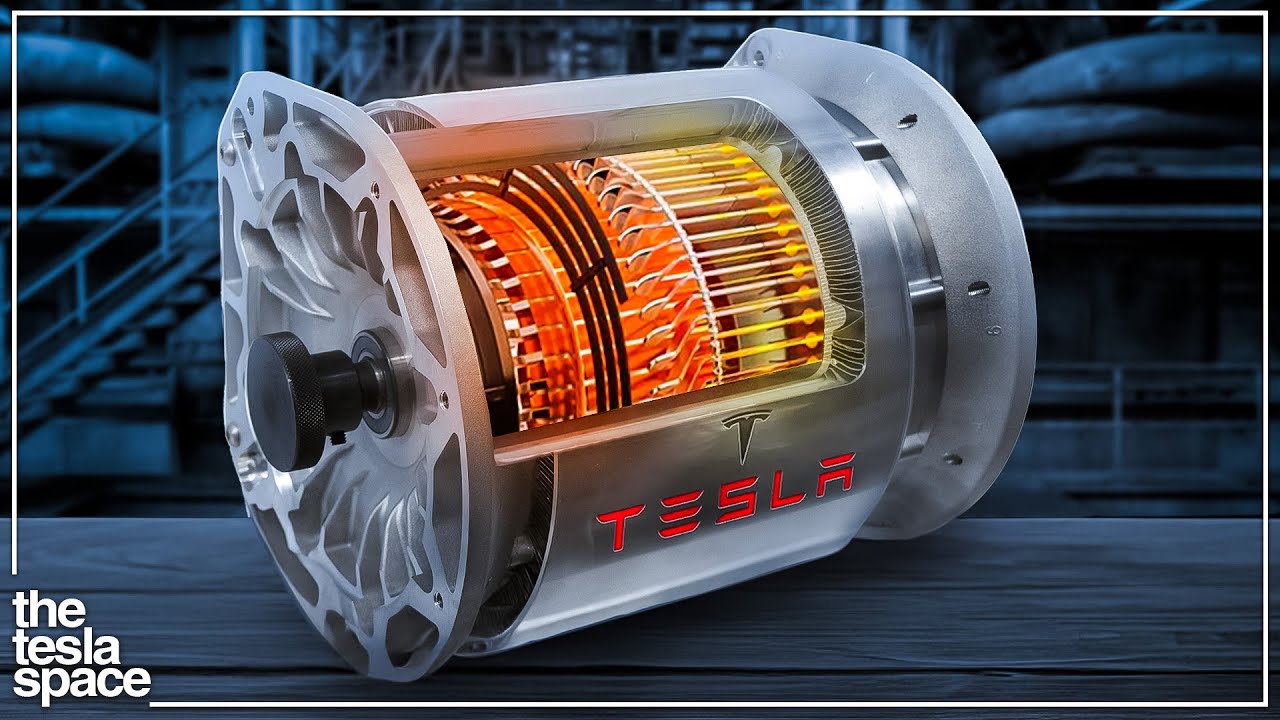
. . What does an electric motor sound like?
The problem is, the world we built around the automobile relies on sound. For drivers expecting audible feedback… Culturally we know that a car produces sound. And for pedestrians and cyclists listening for cars.
That absence of sound could make it dangerous as well. We need our cars to make noise. Or at least, we expect them to.
But that noise could be…. Anything. So what should it be?
Starting in 2019, regulators in the European Union and the US started requiring EVs and hybrids to play sound while they’re in use … From hidden speakers called an Acoustic Vehicle Alerting System — or AVAS. There are different standards around the world setting the rules for those sounds. And while they don’t dictate exactly what the sounds should be, they each basically work by a common set of rules that sound designers have to follow.
You can get creative, but not that creative, I guess. The first parameter is sound pressure, or volume. The AVAS volume has to reach minimum decibel levels.
This makes sure people can hear the vehicle, without it being too disruptive. That volume has to increase as the vehicle goes faster. Until — at speeds over 30 kilometers per hour — the noise of tires on pavement and wind against the car body become louder than the AVAS.
And the AVAS can slowly fade out. As vehicle speed changes, there are also regulations for the AVAS to shift in pitch. Higher pitch as the vehicle speeds up, and lower pitch as it slows down.
This makes sure that passersby have an idea of a vehicle’s speed, just by hearing it. Finally there are regulations on the sound’s frequencies. The AVAS typically has to hit minimum volume levels at both high and low frequencies.
High frequencies so that the AVAS can cut through low frequency background noise … and low frequencies so it can cut through high frequency background noise. This one is really the killer one for us as sound designers. But it also becomes very hard then to come up with a design that is actually pleasant.
That actually sounds nice. And that's the challenge: To make something within those parameters that isn't too quiet. .
. but isn't too annoying. It's very easy to be alarming, but having a good sound quality and not annoying at the same time — that's very difficult.
So what AVAS sound designers typically design is a short, perfectly looping sample … That can play faster or slower depending on vehicle speed. But a simple linear relationship doesn’t match the dynamic sounds we’re used to hearing in combustion vehicles. A simple pitching loop, it's very predictable.
It sounds very linear, it sounds very uninteresting, it sounds very artificial. It's like when you have an LP player for example, and you spin it faster. When you pitch it too fast, it sounds weird, it sounds artificial.
To keep the AVAS from sounding linear, designers will layer on additional samples, filters, and modulations triggered by certain driving conditions — like full-throttle acceleration. And those samples can be made of anything … From instruments … Didgeridoo. For Cadillac, we have been able to use this ancient Australian instrument.
To entire orchestras … So this is, quite literally, the score of a driving sound. And they can even be inspired by combustion engines. There’s a name for that last one — skeuomorphism — where a design resembles its real-world counterpart.
Like early electric lights that mimicked the candles that came before them… Or early mobile apps that mimicked the look of the objects they replaced. As a way to transition into a new era of technology. There's this patent from the very early 1900s: Let's put half a horse on the front of the vehicle.
Basically, make the car look like a horse, because that's what the people are used to. Electric vehicles don’t need to make noise. But they do need to bridge the gap from cars that do … … to a future that sounds different.
And that’s what these designers are working out. What should that transition sound like?