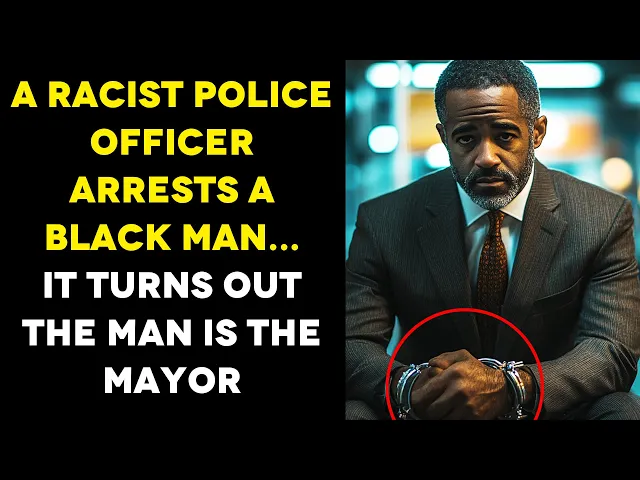
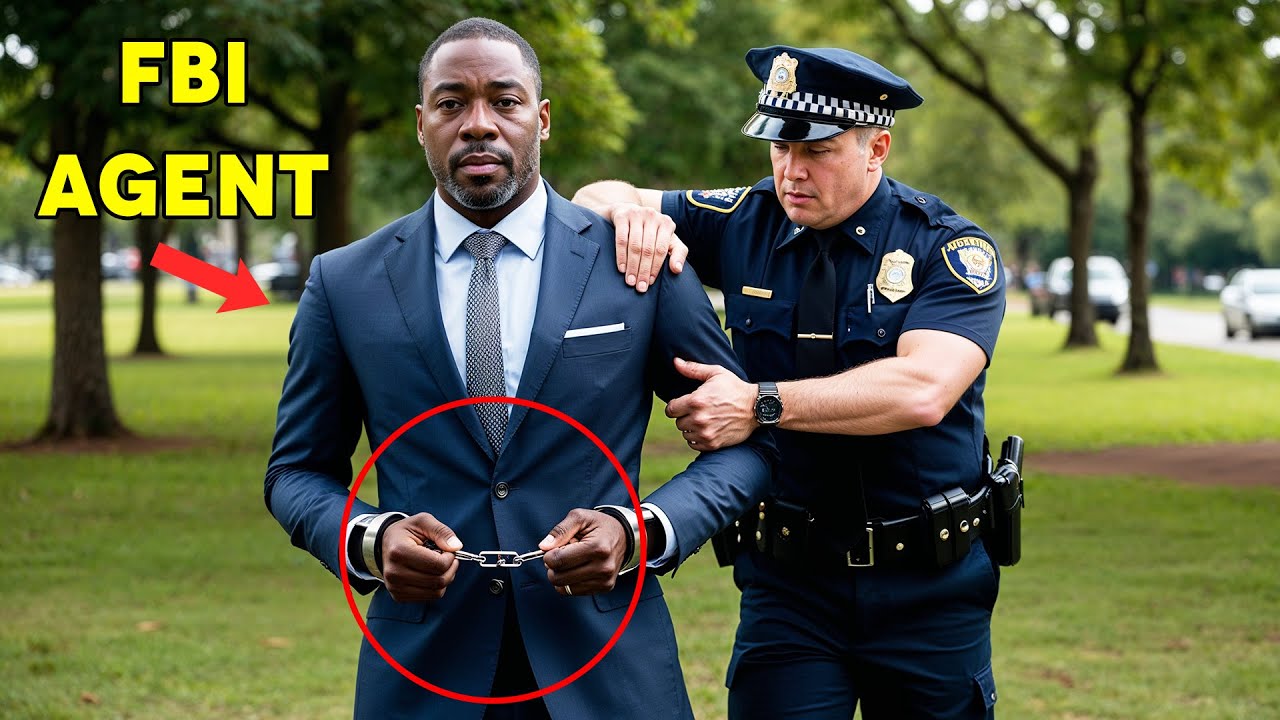
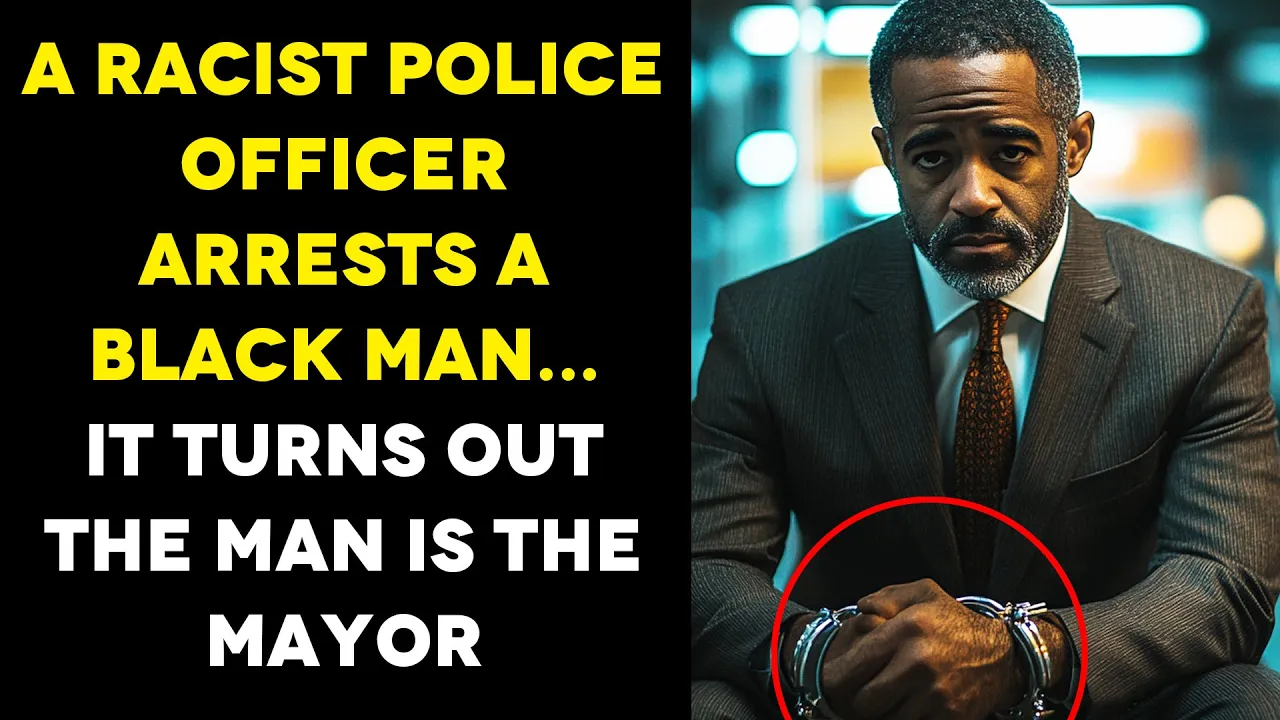
A racist police officer pulls over a Black man for no reason. After he arrests the man, he realizes that he has just arrested the mayor of the city. Marcus Jones tapped his fingers rhythmically on the steering wheel; it had been a long day at City Hall, filled with back-to-back meetings and pressing decisions.
He was looking forward to a peaceful evening at home. As he approached the intersection of Maple and Oak, the blaring flash of blue and red lights pierced the twilight. Marcus's heart sank; he hadn't been speeding or breaking any laws.
His first instinct was to pull over safely and check his rearview mirror, where he saw the police cruiser parked behind him. He eased his car to the side of the road, the gravel crunching softly beneath his tires. The cruiser’s engine hummed as the officer inside prepared to exit.
Marcus took a deep breath, his fingers gripping the steering wheel a little tighter. The officer, a burly man in his mid-30s, stepped out of the car and approached with a determined stride. His uniform was impeccably pressed, and his badge glinted in the fading light.
Marcus rolled down his window as the officer reached his vehicle. "Good evening, officer," Marcus said, his voice steady. "Evening," the officer replied curtly, leaning slightly into the window.
"Do you know why I pulled you over? " Marcus frowned; his brow furrowed. "I haven't done anything wrong.
" The officer's eyes narrowed as he peered into the car, his tone sharp and dismissive. "Well, I'm going to need to see your license and registration. " Marcus handed over the documents, trying to keep his composure.
"Is there a specific reason you stopped me? " The officer took the documents, scrutinizing them with an air of suspicion. "I noticed you were driving a bit too close to the center line.
I'm just making sure that everything's in order. " Marcus glanced at the empty streets around them, feeling a rising sense of unease. "I don't recall crossing the center line.
I've been driving this route for years without incident. " The officer didn't respond immediately; instead, he tapped the documents against his palm and studied Marcus with a steely gaze. "Where are you headed?
" "Home," Marcus replied. "It's been a long day; I just want to get back. " The officer's demeanor hardened.
"You seem a bit too relaxed for someone who’s been driving a bit too close to the center line. " Marcus raised an eyebrow, confusion etched on his face. "I'm just trying to comply with your request.
I'm not sure why this is becoming such an issue. " Without warning, the officer's tone grew more accusatory. "Well, let's see if there's anything else we should be concerned about.
Step out of the vehicle. " Marcus's heart raced. "Is that really necessary?
I haven't broken any laws. " The officer's expression remained stern. "It's standard procedure; just step out.
" Reluctantly, Marcus unbuckled his seatbelt and stepped out of the car. The officer began to search the vehicle, his movements methodical but laden with a palpable sense of hostility. Marcus watched from the curb, feeling a mix of frustration and apprehension.
"I assure you there's nothing illegal in the car. " The officer continued his search, muttering under his breath, "We'll see about that. " Minutes ticked by as the officer rummaged through the car.
Marcus noticed a couple of passing pedestrians casting curious glances their way, their expressions shifting from curiosity to concern. Eventually, the officer straightened up and faced Marcus, a smirk playing on his lips. "Well, everything seems to be in order, but I still don't like the way you're handling this.
" Marcus tried to keep his voice calm. "I don't understand what's happening here. Can I please go now?
" The officer ignored the question. "You're not going anywhere until I’m satisfied. I'm going to need to run a check on your records.
" Marcus felt a knot of anxiety tighten in his stomach. "I'm not sure why this is happening. I haven't done anything wrong.
" The officer's gaze was unwavering. "Just sit tight; I'll be back with your results. " As the officer returned to his cruiser, Marcus stood by the roadside, his mind racing.
He glanced at his watch, noting the time; he was already running late. What should have been a routine drive home had turned into an unsettling encounter, leaving him with a growing sense of unease. As the officer made his way back, Marcus took a deep breath and tried to calm his racing thoughts.
The night was settling in around them, and the quiet of Cedarville seemed to contrast sharply with the tension that had suddenly erupted. Marcus stood on the side of the road, the chill of the evening air seeping through his coat. The officer’s cruiser was parked with its light still flashing, casting a pulsing blue glow over the quiet street.
Marcus shifted his weight from one foot to the other, trying to keep his anxiety in check. Officer Reynolds was seated in his car, his face illuminated by the dashboard lights as he spoke into the radio. The minutes ticked by slowly, and Marcus's frustration grew.
He glanced around, noting the few passersby who would stop to watch the scene unfold; their expressions were a mix of curiosity and concern, but none ventured close. After what felt like an eternity, Reynolds emerged from his cruiser and walked back towards Marcus, holding a clipboard. His face was set in a tight frown, and his eyes bore into Marcus with an unsettling intensity.
"All right," Reynolds said, flipping through the papers on the clipboard. "I'm going to need to check your trunk. " Marcus's patience was wearing thin.
"I've already told you there's nothing illegal in the car. This feels excessive. " Reynolds's eyes narrowed.
"It's standard procedure. Now open the trunk. " Reluctantly, Marcus unlocked the trunk and lifted it open.
Inside were a few bags of groceries and a gym bag—nothing out of the ordinary. Reynolds peered. Inside his scrutiny, giving way to a palpable sense of suspicion, "Anything else in here I should know about?
" Reynolds asked, his tone dripping with condescension. Marcus sighed. "No, just groceries and personal items.
Can I please go home now? " Instead of responding, Reynolds continued to inspect the trunk with an air of superiority. He seemed to take his time, as if searching for something to justify the stop.
Marcus watched, growing increasingly frustrated as Reynolds's behavior became more intrusive. "Look, this has gone on long enough," Marcus said, his voice rising. "I don't see why I'm being treated like this.
I've been cooperative and polite. " Reynolds shut the trunk with a slam, turning to face Marcus with a smug expression. "Well, now that we're done with the car, I need to verify your information.
" Marcus's eyes widened. "Verify my information? What exactly are you looking for?
" Reynolds didn't answer directly. Instead, he pulled out his phone and began typing furiously. The air between them crackled with tension, and Marcus felt a knot of dread settle in his stomach.
A few minutes later, Reynolds looked up from his phone, his expression unreadable. "I'm going to issue you a citation. " "A citation for what?
" Marcus asked, incredulity evident in his voice. "I haven't broken any laws. " "Your record check came back with some discrepancies," Reynolds said, his voice devoid of sympathy.
"Just a precaution. " Marcus tried to remain calm, but his frustration was palpable. "Discrepancies?
I've given you all the correct information! I don't understand why this is happening. " Reynolds ignored Marcus's protest and began filling out a citation.
The process seemed to drag on, each minute stretching longer than the last. Marcus felt a mix of anger and helplessness as he watched Reynolds work with a deliberate slowness. Finally, Reynolds handed Marcus the citation, his demeanor still stern.
"You need to sign this. " Marcus glanced at the paper, his eyes scanning the legal jargon. "I don't agree with this, but fine, I'll sign it.
" As Marcus signed the citation, Reynolds's expression remained unyielding. "You'll receive a court date in the mail. Until then, you're free to go.
" Marcus took a deep breath and tried to calm himself. "Thank you. I hope this issue can be resolved quickly.
" Reynolds didn't respond, turning on his heel and heading back to his cruiser. Marcus watched him go, feeling a heavy weight of injustice settle over him. He climbed back into his car, the evening's chill sinking into his bones as he drove away.
Marcus glanced at the citation in his hands, a mixture of anger and resignation bubbling within him. The peaceful evening he had anticipated was replaced by an unsettling encounter that left him questioning the fairness of the system he had always trusted. The drive to the Cedarville police precinct felt interminable.
Marcus's mind raced with a jumble of thoughts, his frustration mounting with each passing minute. The streetlights flickered overhead, casting fleeting shadows that danced across his windshield. When he finally arrived at the precinct, he was met with the harsh glow of fluorescent lights and the bustling activity of police officers inside.
Marcus, still handcuffed, was led through the entrance by Officer Reynolds, whose stern expression hadn't softened since the traffic stop. Inside the precinct, the atmosphere was a stark contrast to the quiet street. The clamor of phones ringing, the murmur of conversations, and the clatter of keyboards filled the space.
Marcus's heart pounded as he was escorted past the reception desk and into the booking area. "Why am I being treated like this? " Marcus asked, his voice strained.
Reynolds didn't respond, instead directing Marcus to a metal bench near the booking counter. Marcus sat down, his hands still restrained behind his back. He glanced around at the busy officers and clerks, trying to ignore the stares of curiosity and occasional frowns from the staff.
A female officer approached, her face a mask of professionalism. "What's the charge? " Reynolds glanced at Marcus.
"Suspicion of illegal activity. We're just processing him for now. " The officer's eyebrows furrowed.
"Oh, illegal activity? For what? " "Discrepancies on his record," Reynolds said, his tone dismissive.
The booking officer looked at Marcus, her eyes softening with a hint of sympathy. "Name? " "Marcus Jones," he replied.
"I'm the mayor of Cedarville. " The booking officer paused, her expression shifting from professional to surprised. "You're the mayor?
" Marcus nodded, his frustration evident. "Yes. I don't see how that changes anything, but I need to know why I'm being detained.
" The booking officer turned to Reynolds, confusion and concern evident in her gaze. "Why wasn't this information verified before bringing him in? " Reynolds's face hardened.
"It was just a routine stop; we had to follow procedure. " The booking officer sighed, clearly uncomfortable with the situation. "I'll need to confirm his identity and get this sorted out.
" As she worked, Reynolds stepped away to make a call. Marcus could hear the murmur of conversation and the occasional clatter of paperwork. The tension in the room was palpable, and Marcus's frustration mounted as he waited.
After several minutes, the booking officer returned with a small stack of papers. "I've confirmed your identity, Mr Jones. I'm afraid Officer Reynolds's actions were not appropriate.
" Marcus's eyes narrowed. "So what happens now? " The booking officer sighed.
"We'll need to release you, and I'll make sure that situation is reported. " As the officer removed the handcuffs, Marcus rubbed his wrists, feeling the sting of the metal. He stood up, his body tense with lingering anger and disbelief.
Reynolds returned, his face a mix of defiance and irritation. "You're free to go. You'll receive a citation in the mail.
" Marcus took a deep breath, trying to calm himself. "I want to understand why this happened. This was an abuse of power.
" Reynolds's gaze remained cold. "You'll have to take that up with the department. " Marcus turned on his heel and walked toward the exit, his frustration simmering.
evident in every step. As he left the precinct, he could hear the faint murmur of conversations behind him, the buzz of activity continuing unabated. The night air was cool and crisp, a stark contrast to the heated emotions Marcus felt.
He got into his car, his mind racing with the implications of what had just happened. The peaceful evening he had hoped for had been shattered by an unjust encounter, leaving him with a deep sense of betrayal and a growing determination to address the wrongs he had faced. As he drove home, the lights of Cedarville blurred past him.
Marcus knew this incident was more than a simple traffic stop gone awry; it was a reflection of deeper issues that needed to be addressed. The road ahead was uncertain, but one thing was clear: this was far from over. The Cedarville police precinct loomed large and imposing in the dim light of early evening.
The Cedarville police precinct was still abuzz with activity as Marcus Jones sat in the small, windowless room designated for interviews and briefings. The fluorescent lights overhead cast a harsh, sterile glow over the room's plain walls and wooden table. The door to the room creaked open, and Detective Mitchell entered.
He was a tall man in his early 50s, with graying hair and a serious demeanor. He nodded at Marcus before taking a seat across from him, his expression a mix of concern and curiosity. "Mr Jones," Mitchell began, his voice steady but laced with an undertone of empathy.
"I understand there's been a bit of a mix-up. I'm here to get to the bottom of this. " Marcus looked up, his frustration evident.
"It wasn't just a mix-up. I was stopped, searched, and detained without cause. Officer Reynolds didn't give me a straight answer about anything.
" Mitchell nodded, acknowledging the gravity of the situation. "We've been reviewing the reports and talking to witnesses. This is more than a simple procedural error; there are serious issues here.
" As Mitchell spoke, the door opened again, and Officer Reynolds walked in, his face a mask of stubborn defiance. He glanced at Marcus before taking a seat beside Mitchell. The atmosphere in the room grew tense as Reynolds settled into his chair, avoiding eye contact with Marcus.
Mitchell looked at Reynolds, his expression shifting from professional to stern. "Officer Reynolds, could you explain your actions? " Reynolds shifted uncomfortably.
"I pulled Mr Jones over because he was driving too close to the center line. I followed standard procedure in conducting a search and checking his records. " Marcus interjected, his voice rising.
"Standard procedure? I was compliant and polite; there was no reason to escalate the situation like that. " Mitchell's eyes flicked between Marcus and Reynolds.
"You understand, Officer Reynolds, that this isn't just about the traffic stop. There are allegations of racial bias and misconduct. We need to understand why you acted the way you did.
" Reynolds's face hardened. "I did what I thought was necessary to ensure there was no illegal activity. If there's an issue with my methods, then that's something the department will have to handle.
" Mitchell's gaze was steady. "We're handling it now. Mr Jones's identity was verified, and it's clear that his treatment was unwarranted.
I need you to explain why you proceeded with an arrest when there was no legal justification. " Reynolds' expression remained resolute. "I was doing my job.
If Mr Jones had nothing to hide, then he wouldn't have been upset. " Marcus's frustration boiled over. "I was upset because I was being treated unfairly!
This isn't just about me; it's about how you treat everyone. " Mitchell raised a hand, signaling for calm. "Officer Reynolds, you're suspended pending further investigation.
We will review your actions and decide on appropriate disciplinary measures. " Reynolds stood up, his face a mixture of anger and defiance. "This is ridiculous!
I was just following the rules. " Mitchell's voice was firm. "The rules are there to protect everyone, not to be used as a tool for bias and misconduct.
We'll be conducting a full review of your actions tonight. " As Reynolds left the room, Marcus looked at Mitchell, his frustration tempered by a glimmer of hope. "What happens now?
" Mitchell's expression softened slightly. "We'll conduct a thorough investigation. Your experience will be used to address the shortcomings in our procedures and ensure that this doesn't happen to anyone else.
" Marcus nodded, feeling a mix of relief and weariness. "I appreciate that. I just hope this leads to real change.
" Mitchell stood up, extending a hand. "We'll do everything we can to make sure it does. Thank you for your patience and cooperation.
" Marcus shook Mitchell's hand, feeling the weight of the evening's events slowly lifting. As he left the precinct, the night air felt cooler, a stark contrast to the tense atmosphere inside. The experience had been unsettling, but it had also brought clarity to the issues that needed addressing.
Drving home, Marcus's thoughts were a whirlwind of emotions. The night's events had exposed deep flaws in the system, but they had also provided a path forward. The road to reform would be challenging, but Marcus was determined to see it through.
The lights of Cedarville passed by in a blur, a reminder of the work that lay ahead and the hope for a better, more just future. The next morning, the sun rose over Cedarville with an unexpected warmth, a stark contrast to the turmoil Marcus Jones had faced the previous night. The town hall was a stately building, its red brick façade and large windows reflecting the early light.
Inside, the atmosphere was a blend of the usual administrative bustle and a heightened sense of urgency. Marcus arrived at the Town Hall, his face a mask of determination. The weight of his recent experience was heavy, but his resolve to address the injustices and work towards meaningful change kept him moving forward.
He was greeted by his assistant, Carla, a diligent. . .
A woman in her late 30s with a knack for organization and a warm demeanor said, "Good morning, Mr Jones," handing him a stack of papers. "We've got a full agenda today. How are you holding up?
" Marcus took the papers, glancing at them briefly before looking up. "Morning, Carla. I'm managing.
Let's get started; I want to address last night's events head-on. " Carla nodded, her concern evident. "I've arranged a meeting with the police chief and the city council members.
They're expecting you. " Marcus walked into his office, a spacious room filled with light and neatly organized furniture. The room was a refuge from the chaos of the outside world, but today it felt like a battleground where crucial decisions would be made.
A few minutes later, Marcus walked into the conference room, where Chief Anderson and several city council members were already gathered. The room was arranged with a large table in the center, and everyone was seated, ready for the discussion. Chief Anderson, a seasoned officer with a calm but authoritative presence, looked up as Marcus entered.
"Good morning, Chief," Marcus said, shaking hands with Anderson. "Thank you for meeting with me on short notice. " Chief Anderson nodded.
"Good morning, Mayor. We're here to discuss last night's events and how to move forward. " Marcus took a seat at the head of the table, his posture straight and his expression resolute.
"Last night's incident was deeply troubling. Officer Reynolds's actions were not only unwarranted, but also indicative of a larger problem within our police force. " Council member Davis, a middle-aged man known for his straightforward approach, spoke up.
"We've all seen the reports. This isn't just about one officer's misconduct; it's about systemic issues that need to be addressed. " Marcus nodded in agreement.
"Exactly. It's essential that we take a comprehensive approach to address these issues. We need to review our procedures, ensure proper training, and, most importantly, rebuild the trust between the police and the community.
" Chief Anderson leaned forward, his expression serious. "We're committed to addressing these problems. We've already started an internal review, but we need your support to implement lasting changes.
" Marcus glanced around the room, meeting the eyes of each council member. "What kind of changes are we looking at? " Chief Anderson took a deep breath.
"First, we need to ensure that our officers are held accountable for their actions. This means revising our disciplinary procedures and ensuring transparency in how we handle complaints. We also need to invest in training programs that address issues of bias and improve community relations.
" Council member Garcia, a young woman with a reputation for championing social justice, added, "We should also consider creating a civilian oversight board. This board would provide an additional layer of accountability and ensure that community concerns are heard and addressed. " Marcus nodded thoughtfully.
"A civilian oversight board could be a significant step forward. It would give the community a voice in overseeing the police department's actions and help restore trust. " Chief Anderson agreed.
"A board like that would need to be carefully structured to ensure effectiveness and fairness. We'd need to define its powers and responsibilities clearly. " Council member Davis looked at Marcus.
"How do you propose we move forward with these changes? " Marcus took a moment to gather his thoughts. "We'll need to draft a proposal outlining these reforms.
We should also hold public forums to gather input from the community. It's crucial that the people of Cedarville are involved in this process. " Chief Anderson nodded.
"That's a good approach. Engaging the community will be vital in ensuring these changes are effective and have broad support. " The discussion continued with details about the proposed reforms being hashed out.
There were debates about the specifics of the oversight board, the scope of the training programs, and the mechanisms for ensuring accountability. Despite the challenges, there was a clear sense of purpose among those present. As the meeting drew to a close, Marcus felt a renewed sense of hope.
The road ahead would be challenging, but the commitment from the police chief and the city council members to address the issues was a crucial first step. The support of the community and the dedication to meaningful reform would drive the change needed to rebuild trust and ensure justice. Marcus left the conference room, the weight of the previous night's events tempered by the sense of progress.
The path to reform was just beginning, but for the first time, there was a tangible sense of direction and a collaborative effort to tackle the issues head-on. As he walked through the hallways of the town hall, he felt the early morning light on his face, a reminder of the new beginnings and the potential for positive change. The journey ahead would be demanding, but Marcus was determined to see it through for the sake of Cedarville and its community.
The Cedarville Town Hall's main auditorium was packed by the time Marcus Jones arrived for the public forum. The room buzzed with the energy of concerned citizens, local activists, and community leaders, all gathered to discuss the recent events and the proposed reforms to the police department. Marcus could feel the collective tension and anticipation as he walked through the crowd, heading toward the stage at the front of the room.
The auditorium was a large space with high ceilings and rows of chairs that extended from the front to the back, all facing a large makeshift stage. The stage was equipped with a podium and a few chairs for the panelists, which included Chief Anderson, a representative from the civilian oversight board, and several city council members. Marcus took a deep breath, preparing himself for the evening.
He stepped up to the podium, looking out at the sea of faces. The room quieted as he began to speak, his voice carrying a blend of authority and empathy. "Good evening, everyone.
Thank you for coming out tonight. " I know that many of you are deeply concerned about the recent incident involving the police and the subsequent issues of trust and accountability. I want to assure you that we are taking these concerns seriously and are committed to addressing them.
A murmur of approval swept through the crowd. Marcus continued, "Tonight, we're here to discuss the proposed reforms and hear your thoughts and suggestions. We want this process to be transparent and inclusive, and your input is crucial.
" Chief Anderson stepped up to the microphone, his presence commanding attention. "We've outlined several key areas for reform, including changes to our disciplinary procedures, enhancements to officer training, and the creation of a civilian oversight board. Our goal is to ensure that such incidents are addressed appropriately and that we rebuild the trust between the police and the community.
" The crowd was a mix of curious, hopeful, and skeptical faces. After Chief Anderson finished, the floor was open for public comment. One by one, citizens stood up to voice their opinions and experiences.
The diverse range of voices reflected the community's deep investment in the issue. A young woman named Lisa, known for her activism, took the microphone first. "I've seen how biased practices have impacted our community.
It's crucial that the civilian oversight board has real power and isn't just a symbolic gesture. We need to ensure that the board can effectively hold officers accountable. " Marcus nodded, acknowledging her concerns.
"Thank you, Lisa. We're aware of the importance of making sure that the oversight board has meaningful authority. We're working on defining its powers to ensure it can make a real impact.
" A middle-aged man named Tom, who had been a resident of Cedarville for decades, spoke next. "I've lived in this town my whole life, and this is the first time I've seen the police and the community come together like this. It's a step in the right direction, but we need to make sure that the reforms are implemented effectively and that they address the root causes of these issues.
" Marcus addressed Tom's comment. "I appreciate your perspective. Implementation is key, and we're committed to following through on these reforms with accountability and diligence.
" Throughout the evening, various members of the community expressed their views, ranging from support to criticism. The dialogue was candid and passionate, reflecting the deep-seated issues and the hope for genuine change. As the forum progressed, Marcus was struck by the recurring themes in the comments: the need for transparency, accountability, and meaningful community engagement.
The public's engagement was a powerful reminder of the collective desire for reform and justice. Toward the end of the forum, a local pastor, Reverend Johnson, spoke with a calm and measured tone. "We all want a safer and more just Cedarville.
It's important that we approach these reforms with unity and an understanding that true change takes time. Let's support each other and work together to make this town a better place for everyone. " Marcus felt a surge of hope as he listened to Reverend Johnson's words.
The evening had been intense and emotional, but it was clear that the community's commitment to change was strong. The dialogue had provided valuable insights and reaffirmed the collective will to address the issue at hand. As the forum concluded, Marcus stepped down from the stage, feeling a mix of relief and determination.
The evening had been a testament to the community's resilience and dedication to justice. The work ahead would be challenging, but the engagement and support of the citizens of Cedarville were crucial for the success of the reforms. Walking out of the auditorium, Marcus glanced back at the room, now filled with the quiet hum of post-forum conversations.
The discussions had laid the groundwork for the changes needed to rebuild trust and ensure accountability. The road to reform was still long, but Marcus was resolute in his commitment to seeing it through. As he stepped into the cool night air, he felt a renewed sense of purpose and a deeper connection to the community he served.
The sun had barely risen over Cedarville as Marcus Jones walked through the town hall. The familiar morning routine was tinged with a renewed sense of urgency. The public forum from the previous evening had set a clear path forward, and today marked the beginning of putting those plans into action.
The office buzzed with activity, and Carla was already at her desk, sorting through a stack of documents. "Good morning, Mr Jones! " Carla greeted him as he entered, her tone bright despite the early hour.
"I've got the latest updates on the reform initiatives and a few reports from the police department. " Marcus nodded, taking a seat at his desk. "Morning, Carla.
Let's go over everything. I want to make sure we're ready to hit the ground running. " Carla handed him a folder containing the latest drafts of the reform proposals along with a list of key action items.
"Here's the draft of the civilian oversight board proposal, along with the proposed schedule for the training programs. The police department has also sent over their initial feedback. " Marcus flipped through the documents, noting the detailed plans for the oversight board and the training programs.
The proposals were comprehensive, addressing many of the community's concerns from the forum. Still, he knew that implementation would require careful oversight and commitment from all involved. "Let's start by reviewing the feedback from the police department," Marcus said, scanning the pages.
"I want to understand their perspective before we move forward. " Carla nodded, tapping a few keys on her computer to bring up the relevant reports. "Here's the feedback from Chief Anderson and his team.
They've raised a few concerns about the proposed timeline and the logistics of the training programs. " Marcus reviewed the feedback carefully. The concerns were mostly logistical, such as the feasibility of the proposed training schedules and the need for additional resources.
While these were valid. . .
Points. Marcus was determined to keep the momentum going. “I see their concerns,” Marcus said, setting the documents aside.
“We'll need to address these issues, but not at the expense of our timeline. Let's schedule a meeting with Chief Anderson and the training coordinators to work out the details. ” Carla, taking notes, replied, “I'll arrange that meeting for later this morning.
I'll also draft a response to the police department addressing their concerns with a plan in place. ” Marcus prepared for his meeting with Chief Anderson. He reviewed the key points of the reform proposal and formulated his responses to the concerns raised by the police department.
As he walked through the town hall corridors, he felt a mixture of anticipation and resolve. The meeting room was set up with a large table and several chairs, and Marcus arrived to find Chief Anderson already seated, reviewing some documents. The chief looked up as Marcus entered, offering a nod of acknowledgement.
“Good morning, Chief,” Marcus said, taking a seat across from him. “Thank you for meeting with me. I want to address the feedback you provided and discuss how we can move forward with the implementation of the reforms.
” Chief Anderson nodded. “Good morning, Mayor. I appreciate your willingness to work through these issues.
We're committed to making these reforms effective, but there are rather practical considerations we need to address. ” Marcus nodded. “I understand.
Let's start with the concerns about the training programs. What specific issues are you facing with the proposed timeline? ” Chief Anderson reviewed his notes.
“The primary issue is the availability of resources and trainers. The proposed schedule is quite ambitious, and we're concerned about our capacity to meet these deadlines without compromising the quality of the training. ” Marcus leaned forward, considering the chief's words.
“We need to balance the urgency of these reforms with practical constraints. Perhaps we can adjust the timeline slightly and prioritize key areas of training. We can also explore options for additional resources, including external trainers, if necessary.
” Chief Anderson's expression softened slightly. “That could work. We also need to ensure that the training is comprehensive and addresses all aspects of the proposed reforms.
” Marcus nodded. “Let's work on a revised schedule that incorporates your feedback and ensures that the training remains thorough and effective. ” As the discussion continued, Marcus and Chief Anderson worked through the details of the revised training schedule and the logistics of implementing the civilian oversight board.
The dialogue was constructive, with both parties focused on finding practical, tactical solutions to the challenges at hand. By the end of the meeting, they had agreed on a revised timeline and a plan to address the resource concerns. Chief Anderson seemed more receptive, and Marcus felt a sense of progress.
“Thank you for your cooperation, Chief,” Marcus said as the meeting concluded. “I believe we're on the right track. Let's keep the lines of communication open as we move forward.
” Chief Anderson shook Marcus's hand. “I appreciate your understanding. We're committed to making these reforms work and will do everything we can to support the process.
” As Marcus left the meeting, he felt a renewed sense of determination. The road ahead was still challenging, but the collaborative effort to address the issues and implement the reforms was a positive step forward. Walking back to his office, Marcus passed by the bustling activity of the Town Hall, a reminder of the community's engagement and support.
The work of reform was just beginning, but the progress made in the meeting and the commitment from both the police department and the community were promising signs. Marcus sat down at his desk, the updated documents and action items spread out before him. The journey of reform was far from over, but with each step, Cedarville was moving closer to a future marked by greater accountability and trust.
The challenges were significant, but the path forward was clear, and Marcus was determined to see it through for the benefit of the entire community. The Cedarville Police Department's training facility was buzzing with activity as officers gathered for the day's session. It was an unusually crisp August morning, and the early sunlight streamed through the windows, casting a bright glow over the room.
The training facility was equipped with a mix of classrooms and practical exercise areas, all designed to handle various aspects of law enforcement training. Marcus Jones arrived at the facility accompanied by Carla and a few of his staff members. Today was a significant day: the beginning of a new comprehensive training program designed to address the issues highlighted by the recent reforms.
Marcus was eager to see the changes in action and to ensure that the training met the community's expectations. Inside the main training room, Chief Anderson was already at the front, preparing for the session. The room was arranged with rows of chairs facing a large presentation screen.
Officers were seated, chatting quietly as they waited for the session to begin. The air was filled with a mixture of anticipation and curiosity. Marcus walked to the front of the room, where Chief Anderson greeted him with a nod.
“Good morning, Mayor. We're ready to get started. Thank you for joining us today.
” Marcus smiled, feeling a mix of excitement and nervousness. “Good morning, Chief. I appreciate the opportunity to observe the training.
I'm looking forward to seeing how these new programs are implemented. ” As the session began, Chief Anderson introduced the day's agenda. “Today's training will focus on bias awareness, community engagement, and revised disciplinary procedures.
We have several guest instructors joining us to cover these topics comprehensively. ” The first session was led by Dr Elena Martinez, a renowned expert in bias training. She began with an engaging presentation on the impact of unconscious bias and its effects on policing.
The room was attentive, and the officers listened carefully as Dr Martinez outlined practical strategies for recognizing and addressing biases in their daily interactions. Marcus observed. the officer's reactions closely; some seemed engaged and thoughtful, while others appeared skeptical.
The content was challenging, but Marcus hoped it would provoke meaningful reflection and change. After Dr Martinez's session, there was a break for refreshments. Marcus took the opportunity to speak with a few officers, trying to gauge their impressions of the training so far.
Officer Collins, a middle-aged veteran with a gruff exterior, spoke candidly. "It's good to see some new perspectives being brought in. We've been doing things a certain way for a long time, so it's definitely an adjustment.
" Marcus nodded, understanding the challenges of change. "I appreciate your openness. These reforms are meant to improve our practices and rebuild trust.
Your feedback is valuable in making sure we're heading in the right direction. " The next session focused on community engagement led by a local activist, Maya Johnson. She shared her experiences and insights on effective communication between law enforcement and the community.
The session included role-playing exercises, where officers practiced handling various scenarios, emphasizing empathy and active listening. The officers seemed more engaged during Maya's session, participating actively in the role plays and asking questions. Marcus noticed a shift in the room's energy—a positive sign that the training was resonating with the participants.
As the day progressed, the final session addressed the revised disciplinary procedures. A legal expert, Thomas Reed, explained the new procedures for handling complaints and ensuring accountability. The session included detailed examples of how the new procedures would be applied and what officers could expect in terms of oversight and consequences.
By the end of the day, Marcus felt a sense of cautious optimism. The training had been intense and thought-provoking, but it had also sparked meaningful discussions and reflections among the officers. As the session wrapped up, Marcus approached Chief Anderson.
"Chief, how do you feel the training went? " Marcus asked. Chief Anderson looked thoughtful.
"Overall, I think it was productive. There's a lot of new information for the officers to digest, but the sessions were well received. We'll need to follow up with additional training and support to ensure these concepts are fully integrated into our daily practices.
" Marcus nodded in agreement. "I'm glad to hear that. It's important that we keep the momentum going and continue to provide support as the officers adjust to these changes.
" As the officers filed out of the training room, Marcus took a moment to reflect. The training day had been a significant step forward, but it was just the beginning of a larger process. The commitment to reform would need to be sustained through ongoing training, community involvement, and consistent oversight.
Marcus walked out of the facility, the crisp air feeling refreshing against his skin. The day's events had shown that while change was challenging, it was also possible and necessary. As he drove away from the training facility, he felt a renewed sense of determination.
The road to reform was long and fraught with obstacles, but the progress made that day was a crucial part of building a better future for Cedarville. Marcus was committed to seeing the process through, ensuring that the training and reforms would lead to a more accountable and community-focused police department. As the sun began to set over Cedarville, Marcus reflected on the day's achievements and the work still ahead.
The journey of reform was ongoing, but with each step, the town was moving closer to a more just and equitable future. The days following the implementation of the new police training program were filled with anticipation and cautious optimism. The Cedarville community, having actively participated in the discussions and reforms, was eagerly watching to see the tangible outcomes of the changes.
Marcus Jones felt the weight of responsibility as he prepared for the evening's town hall meeting, where he would provide an update on the progress and address any concerns from the public. The town hall was once again filled with residents, their faces reflecting a mix of hope and skepticism. The large room was arranged with rows of chairs facing a stage where a panel of officials, including Marcus, Chief Anderson, and several city council members, was ready to address the community.
The atmosphere was charged with a sense of urgency as the citizens awaited concrete evidence of the reforms taking effect. Marcus took his place at the podium, glancing around the room. He saw familiar faces from previous meetings and new ones— their expressions a blend of anticipation and weariness.
As he began to speak, his voice carried the weight of the community's expectations. "Good evening, Cedarville. Thank you for joining us tonight.
We're here to provide an update on the recent reforms and to hear your thoughts on the changes that have been made. Your involvement has been crucial in this process, and we want to ensure that we're moving in the right direction. " Chief Anderson stood up next to Marcus, ready to share updates on the police department's progress.
"Over the past few weeks, we've implemented new training programs focused on bias awareness, community engagement, and updated disciplinary procedures. We're committed to ensuring these reforms lead to meaningful change. " The room was quiet as Chief Anderson spoke, the audience attentive and serious.
After his brief update, the floor was open for public comments. The first speaker, Lisa, who had been vocal at the previous forum, took the microphone. "I appreciate the efforts being made," Lisa began, her tone measured but firm.
"However, we need to see consistent results. Are there specific metrics or benchmarks that we can look at to evaluate the effectiveness of these reforms? " Marcus nodded, acknowledging the importance of transparency.
"Yes, Lisa, we're working on establishing clear metrics to evaluate the success of the training programs and the overall impact of the reforms. We plan to release regular reports to keep the community informed about our progress. " As Lisa returned to her seat, Tom, the longtime resident who had previously expressed cautious optimism, stood.
"I'm glad to see the changes happening, but what about ongoing communication with the community? How will we ensure that feedback continues to shape the reform process? " Marcus responded, "We're committed to maintaining open lines of communication.
We'll continue to hold regular Town Hall meetings and provide updates through various channels. Community feedback will remain a key part of the reform process. " The next speaker, a young man named Jordan, raised a concern about recent interactions with police officers.
"I've noticed some positive changes, but there are still moments when I feel like the officers don't fully understand or respect the community they serve. What steps are being taken to address this? " Chief Anderson addressed Jordan's concern.
"We're aware that building trust takes time. Our training programs are designed to address these issues, and we're continually evaluating and refining our approaches. We encourage ongoing dialogue and feedback to help us improve.
" The comments continued, a mix of praise, concern, and suggestions. The discussions were candid and reflective of the community's diverse experiences and perspectives. As the meeting progressed, it became clear that while progress had been made, there was still work to be done.
Reverend Johnson, who had spoken positively at the previous forum, offered a perspective of hope. "We've seen positive steps forward, but let's continue to work together to address the remaining issues. Change is a process, and it's important that we remain united and focused on our shared goals.
" Marcus appreciated Reverend Johnson's words of encouragement. "Thank you, Reverend Johnson. It's essential that we stay committed to this process and support each other as we move forward.
" As the meeting drew to a close, Marcus and Chief Anderson took a moment to reflect on the evening's discussions. The community's engagement was a testament to their investment in the reform process. The feedback provided was valuable and highlighted both the progress made and the areas needing further attention.
Walking out of the Town Hall, Marcus felt a mix of satisfaction and resolve. The community's response had been thoughtful and constructive, reinforcing the importance of continued transparency and engagement. The path to reform was ongoing, but the collective effort of the town was a powerful force for positive change.
The night air was cool as Marcus left the Town Hall, the quiet streets of Cedarville reflecting the calm after a busy and meaningful evening. The work ahead would be challenging, but with the support and involvement of the community, Marcus was confident that Cedarville could continue to build towards a more just and equitable future. As he drove through the town, Marcus felt a renewed sense of purpose.
The journey of reform was far from over, but each step taken was a step towards a better Cedarville, guided by the shared commitment to justice and community.