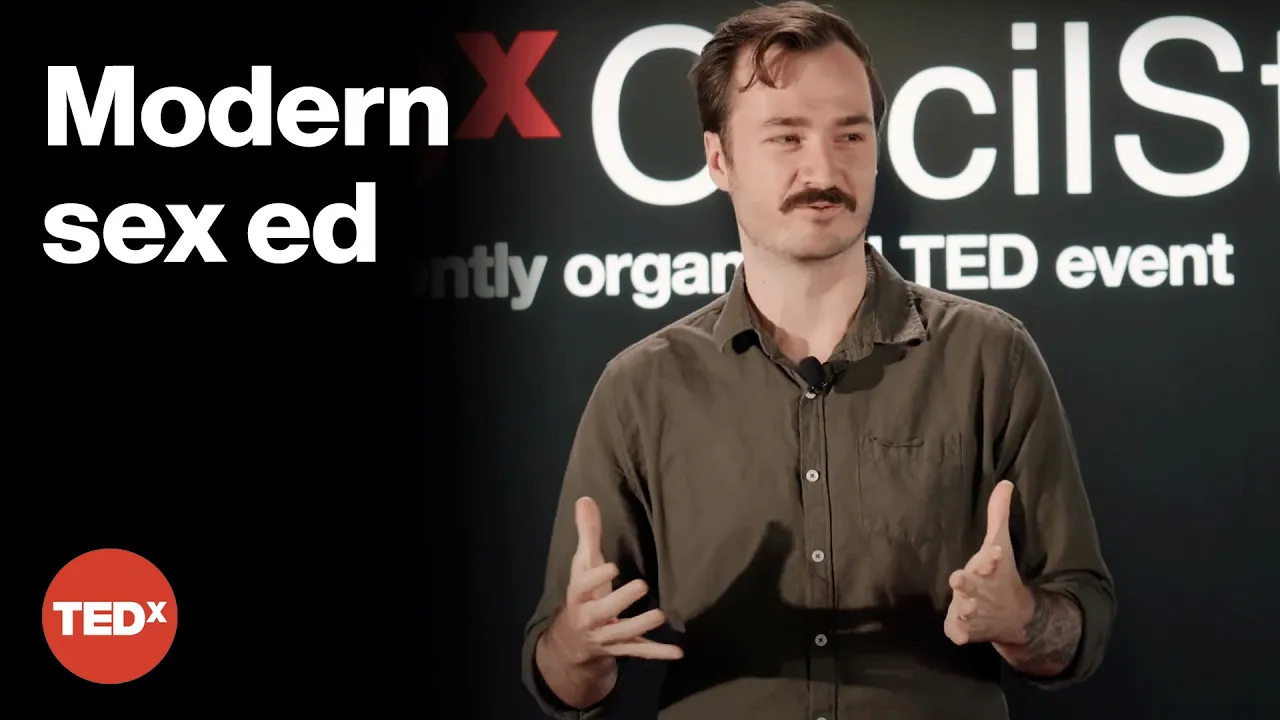
Growing Up Loving science and wanting to be a veterinarian or a conservationist or some sort of hybrid between the two menstruation never really crossed my mind in fact like most s men I chose to ignore rather than to acknowledge menstration and the only education I ever received as a teenager was a frankly Antiquated sexed class taught by a highly inexperienced teacher who began by separating the boys and the girls so we could talk about our issues privately of course this fueled the incorrect reality of binary sex in gender but that also menstration wasn't a man's
problem this is far from a unique experience and by the time I got to University I was a young and impressionable scientist but frankly clueless but wanted to make my mark in biology and animal science in some way but definitely not in menstration I quickly ate my words and the final year of my undergraduate degree where I finally received a modern and inclusive education on female reproductive health and it opened my eyes to how complex and fascinating and misunderstood menstration is and it set me down the path to become the fully-fledged reproductive biologist that I
am today in 2021 I received my PhD after researching the menstrual cycle and stages of early pregnancy in the world's only known and definitely the cutest menstruating rodent called the Egyptian spiny Mouse a few years on menstruation became the most Googled term on my laptop and I am confident that I am as comfortable talking about uh period diarrhea as I am talking about the 2011 All Blacks Rugby World Cup 10 menstruation has to be the most normal and important but stigmatized process that we go through as people and I want everybody to see that how
roughly half of every single person on this planet have a menstrual cycle but we can't look at it we can't talk about it and we can't study it from the feminine hygiene aisle in the supermarkets to the blue liquid and Pad commercials we're very clearly dancing around menstruation rather than addressing it not only is it hard to find high quality advice about menstruation it's equally hard to conduct and find high quality Research into menstration as an example last year was the first year ever where blood was used in place of saline when measuring the absorbency
of menstrual products which is astounding so why does society care so little and know so little about menstration and personally I think it comes down to two things and the first one is a big one it's the p word patriarchy for most of documented history people who menstrate have been excluded from research education and and Healthcare sectors among many others and a study in 2022 looking at more than 120,000 research papers from more than 50 academic journals showed that 80% of authors identified as men and the remaining 20% as women and non-binary people clearly we
have a very significant underrepresentation of women and non-binary people in labs around the world when they are present however there are several crippling caveats to their inclusion and to paraphrase one of my favorite movies of the past few years Barbie women have to be thin but not too thin be a boss but not mean be a careers woman but look out for others always be exceptional but remember you're always doing it wrong women are constantly walking on the knife's edge of doing too much and too little and then blamed for their own underrepresentation by not
being ambitious enough or gaslit into thinking that women's day lunches and a few cupcak once a year is proof of systemic change as Society we should all care about menstration but few do as a society we should also all understand menstration but even fewer truly understand what a menstral cycle is how it evolved and why the hell we're still taking the contracep pill 60 years after it was introduced to the market the patriarchy clearly runs very deep and the second reason comes down to the uniqueness of menstruation in the natural world and I invited everybody
here to take a few seconds to think of every species on the planet how many do you think have a menstrual cycle fish do fish have a menstrual cycle what about dogs well menstruation is isolated to the mammals only and of the roughly 6,000 species less than 2% or about 80 species have a menstrual cycle and that includes us and our primate relatives like baboons and gorillas four species of bat the elephant shrew and the newcomer Egyptian spiny Mouse and no your dog does not have a menstrual cycle even though they do bleed through their
vaginas that is a story for another day so the menstrual cycle can be broken down into three distinct phases so we have the proliferative secretory and menstrual phases in the proliferative phase hormones from the brain trigger the ovary to produce an egg and that egg then releases estrogen which tells the cells of the uterus to prepare itself for pregnancy to proliferate to grow in number once estrogen levels Peak it triggers ovulation in the next stage of the cycle now in the secretory phase the ovary is producing progesterone and its role is to support pregnancy and
it does that by triggering those same cells to release new proteins hormones and enzymes to prepare for embryo implantation when an embryo is present it opens a dialogue with the uterus because it takes two to tango of pregnancy when an embryo is not present or it does not implant the progesterone levels will fall the uterine lining will then be shed and there's bleeding from the blood vessels this is now what we refer to as menstration a period or a visit from an flow for species that don't have a menstrual cycle they have something called estrus
instead and it's similar but there are a couple of differences that I'd like to point out as well first difference is that menstrual species are also considered spontaneous ovulators we ovulate regardless of what's happening out in the environment around us because we are internally regulated whereas an Easter species is far more influenced by factors in the environment like sunlight access to food and water and even noise they are far more externally regulated and this is why most animals that you think of actually come into heat or have a breeding season the second difference is quite
fascinating I think and it comes down to the final trigger that tells that uterus to prepare itself for pregnancy in an ER species that signal comes from the embryo whereas in a menstrual species that signal comes from the ovary so in a way the menstrual reproductive tract is actually hardwired internally regulated for choice we choose when to get pregnant ourselves unfortunately because menstration and taking part in clinical trials is so heavily stigmatized most of the research into human menstruation is conducted in non-animal uh non-human mammals and as a reminder of those roughly 80 we have
uh primate relatives baboons and gorillas four species of bat the elephant shrew and the Egyptian spiny Mouse now primates would be the most acceptable models being so similar to us however there are some significant ethical and financial limitations to their use in research I'm sure everybody here can also understand and appreciate the logistical difficulties of studying the menstrual cycle of a captive bat and the elephant shrew is unfortunately quite different in its reproduction even though it does have a menstrual cycle so what you can see is we've actually ruled out a lot of these animals
that have a menstrual cycle as acceptable models and this leaves us with the spiny Mouse the spiny Mouse menstrual cycle was discovered in University lab roughly 8 years ago completely by accident and I know I'm really biased but I think it's up there with Penicillin and microwaves as one of the most important and significant accidental discoveries in research in the past Century or so but they can't win us over just yet not just because they have a menstrual cycle and the softest bellies I've ever felt no they need to possess and experience every single one
of those characteristics that I mentioned earlier in addition to being ethically financially logistically viable which is a pretty tall order for an animal that fits in the palm of your hand I'm happy to say that in roughly eight years since its Discovery we have confirmed every single one of those characteristics and more spiny mice even experienced premenstrual syndrome like symptoms and a menopause like transition my own research looked at the early stages of pregnancy and we were able to show that the uterus prepares itself at a similar way and time as it does in humans
and the blood vessels also are modified in a similar way and time as in humans prior to a placenta forming as well so spiny mice are now considered the cheapest easiest most accessible animal model of human menstration and they forced us to throw away the rule book on what rodent rodent reproduction is but also what a menstrual species is in my eyes they're a true reproductive Renegade so I've painted a very Rosy picture so far everything bodess very well but can they tell us anything about Evolution why we evolve to have a menstrual cycle I'm
sure everybody can imagine the frankly horrific stories over the past many centuries as an example in the 1920s and 30s doctors and researchers believed that if you menstruated you would release a menot toxin in your sweat capable of wilting flowers spoiling milk and poisoning the eyes of children some priests even believe that if you were born from a menstruating woman you would become epileptic all of this undoubtedly designed to isolate and minimize those that have a menstrual cycle and this is the problem with the lack of diversity because there's nowhere nobody in these labs and
churches to call out these men and say what a load of belittling crap thankfully our most recent theories has nothing to do with spoiling milk or blinding children it has something to do with an evolutionary arms race between the embryo and the uterus Evolution wants to maximize the chance of pregnancy but also reduce the risk of maternal mortality and over time what we've seen is the embryo begins to invade or implant deeper and deeper into the uterus but the uterus getting thicker and thicker to accommodate and regulate how far that embryo implants and there's a
very delicate balance here and what we've seen over time is that the embryo implanted itself so deeply and the uterus prepared itself so early and began to develop so thickly that we actually couldn't resorb we couldn't recycle that tissue we had no choice but to get rid of it and start again and hey Presto menstruation was born and this is actually how we believe menstruation evolved not just in humans but also in spiny mice so spinies continue to surprise us and not by how many back flips that they can do after a delicious serving of
carrots and celery um but more by how impactful and how similar they are to us and how impactful that they can be now I know that there are differences between us and spinies and I know that the patriarchy feels like this immovable constant in our lives we get so caught up with designing the perfect experiment or the perfect way to tackle inequality but we get so caught up with perfection and it so often gets way in the way of progress no matter how slow or as small as that may feel I think in order to
make longlasting meaningful change we should take a lesson from the embryo in the uterus I think we should open a dialogue and this is where your work begins talk or continue to talk about ministration and practice it until you're as comfortable talking about Sam's latest goal or where the best rooftop happy hour is in Melbourne take these conversations to your friends your family your GP your children and when somebody comes to you with their experience and story of menstration sincerely listen because listening and talking about menstration normalizes a very normal but highly highly stigmatized process
whether we bleed or not menstration affects us all and we need to be able to have open Frank discussions about menstration without shying away or hiding our voice substantial systemic change takes time but that doesn't mean we're powerless I encourage everybody here today to take meaningful steps towards understanding menstration but also empathizing with those who do menstrate including yourselves instead of living in a world Rife with dismissal minimization and silence we have the power and ability to move away from this into a world free from period stigma and period shame but we've got to be
in it together and it all comes down to empathy and education