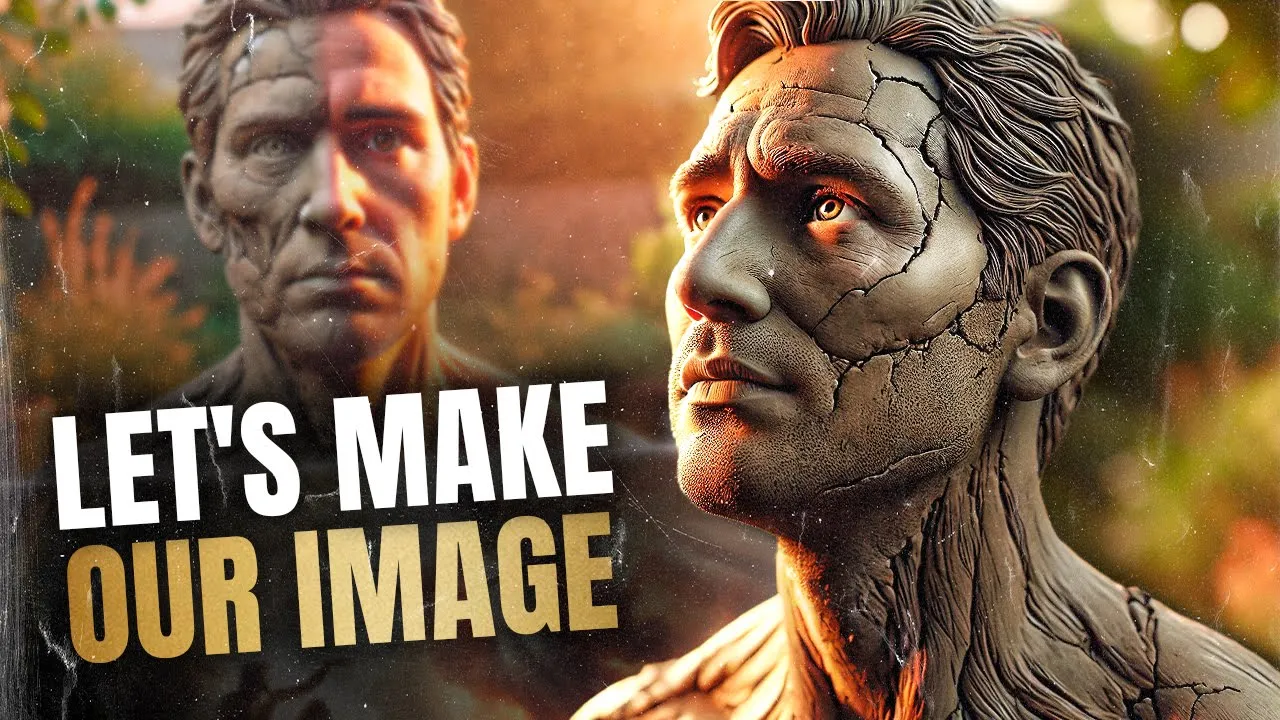
the phrase let us make man in our image appears in the first chapter of Genesis one of the oldest and most significant texts in the Bible this verse located in Genesis 1:26 is preceded by the account of the creation of the world in six days where God molds the universe separating light from Darkness forming the heavens and the Earth and filling them with life upon reaching the creation of man God employs unique language using the verb let us make instead of the singular I make or let me make this use of the plural suggests complexity
within the divine nature itself opening doors to profound discussions about the plurality in God which will be developed in other subtitles the term let us make can also be interpreted as Divine Council a reflection of communion within God various Scholars argue that at this moment God is in an internal dialogue or within the Trinity deliberating about the creation of the human being who will occupy a special place in creation this choice of words highlights the unique importance of humanity distinguishing man from the rest of creation moreover the idea of plurality can be understood as a
reflection of the complexity and depth of divine nature itself revealing a God who is not monolithic but composed of M multiple facets the plural language also raises questions about the collective nature of humanity if man is created in the image of a God who deliberated with himself this suggests that communion collectivity and relationship are intrinsically linked to the very essence of human existence the use of let us make can be seen as an indication of man's social nature who is called to live in community reflecting Divine communion this communal aspect of man's creation Echoes throughout
various parts of scripture where human interdependence is constantly reaffirmed other interpretations suggest that let us make may include a reference to Divine Council where God consults the Angels or other Celestial entities although this view is less common in traditional Christianity it is present in some Jewish Traditions which see angels as participants in the Act of Creation albe it in a subordinate manner even if this view is not widely accepted it enriches the theological debate about the plurality expressed in this verse finally the use of the plural in let us make is an invitation for Humanity
to explore the complexity of the relationship between God and man it opens doors for reflection on the Divine and human nature that transcends mere physical creation pointing to the profound spiritual and ontological connection between the Creator and his creation this expression reveals a God who is intrinsically linked to his creative act a being who does not act in isolation but involves multiple dimensions of his Divine existence in bringing Humanity into existence the expression let us make in Genesis 1 126 has been widely interpreted within Christianity as a reference to the Trinity the doctrine that affirms
that God is one in essence but composed of three distinct persons the Father the Son and the Holy Spirit this Doctrine which fully developed over the first centuries of Christianity sees in the creation of man in God's image a participation in intr trinitarian relationships man therefore is not just a Divine creation but also a reflection of this trinitarian communion the Trinity is often described as a mystery something that transcends full human comprehension but is essential to Christian faith the Father the Son and the Holy Spirit coexist in Perfect Harmony and unity and this internal relationship
of love and communication is considered the model for all human relationships thus being created in God's image also means being called to participate in this communion not only with God but also also with one's neighbor this view challenges the idea of individualism promoting a vision of humanity based on interdependence and mutual love within the Christian tradition the son identified as Jesus Christ is seen as the perfect image of God Colossians 1:15 declares that Christ is the image of the invisible God the firstborn over all creation this implies that in the creation of man God already
had in mind the incarnation of Christ who would become the Supreme model of humanity thus the creation of man in God's image is also an anticipation of Christ's coming who would restore that image after the fall the Holy Spirit the third person of the Trinity also plays a crucial role in the creation and restoration of God's image in man in Genesis 1:2 the spirit of God is described as hovering over The Waters at the moment of creation indicating his active presence in the creative process later in the New Testament the spirit is the one who
regenerates and sanctifies working to restore God's image in Believers therefore the creation of man is a trinitarian act involving the will of the Father the image of the Son and the power of the spirit the Trinity as plurality and unity offers a powerful interpretative key to understanding ing what it means to be created in the image of God it is not just about sharing some Divine qualities but reflecting a dynamic and living relationship that is essentially relational this trinitarian understanding underscores the importance of Human Relationships which should mirror the unity and love present in God's
nature itself the creation of man therefore is an expression of trinitarian love and an invitation for Humanity to participate in this Divine Life the phrase in our image according to our likeness in Genesis 126 has been the subject of extensive theological analysis over the centuries the terms image from the Hebrew selim and likeness from the Hebrew demut are often used interchangeably but it is important to understand the nuances between them to grasp the full depth of the Divine intention in creating man in the Biblical context these terms point to the unique Dignity of humanity and
the call to reflect God's character on Earth image celm generally refers to a representation or replica of something in the ancient world it was common for kings and rulers to establish statues or images of themselves in distant territories to represent their Authority and presence similarly man is created in God's image to represent and manifest Divine Authority on Earth this implies that every human being regardless of condition or origin carries intrinsic dignity and a Divine Purpose as God's representative in the world the word likeness demut on the other hand May indicate a qualitative similarity something that
is similar in character or nature while image emphasizes representation likeness suggests a deeper Affinity between God and man man is not just an external reflection of God but also shares in some way Divine qualities such as rationality morality and the capacity to love the likeness to God is therefore both a blessing and a responsibility as it implies that humans must live according to this divine nature reflecting God's character in their actions throughout history Christian theologians and philosophers have debated whether image and likeness represent different aspects of humanity or are synonymous terms reinforcing the same idea
St Augustine for example argued that image refers to the essential structure of the human being while likeness pertains to the moral perfection that can be developed over a lifetime others like Thomas aquinus saw the terms as synonyms describing the same concept emphasizing that the creation of man in God's image is a profound mystery that cannot be fully comprehended the distinction between image and likeness also has ethical and practical implications if human beings are created in the image and likeness of God it means that all possess inestimable value and should be treated with respect and dignity
this forms the basis for Christian ethics which insists on the sacredness of human life and the necessity of justice and love in all human interactions therefore The Creation in the image and likeness of God is not just a theological affirmation but a call to live in a way that honors this Divine identity one of the central aspects of man's Creation in God's image is his spiritual nature unlike all other creatures man was endowed with an immortal Soul which is a direct reflection of God's spiritual nature this Soul which includes the capacity to reason choose and
love is what differentiates the human being from animals and uniquely connects him to the Creator human spirituality is therefore an essential aspect of God's image in man reflecting the Divine capacity for knowledge love and relationship the human soul according to Christian tradition is created directly by God and Infused into the body at the moment of conception it is the seat of Personality Consciousness and morality characteristics that reflect God's nature nature the human capacity to recognize good and evil to make moral choices and to seek the Transcendent are all expressions of this spiritual nature moreover human
spirituality implies a call to relationship with God for the soul is by nature oriented toward its creator Desiring and seeking communion with him the fact that man was created in God's image implies that he is capable of knowing god and relating to him in an intimate and personal way prayer worship and meditation are expressions of this spiritual relationship where the human being seeks and responds to God's love this aspect of God's image in man also suggests that the ultimate purpose of human life is Union with God a state of perfect communion that according to Christian
theology will be fully realized in eternal life human spirituality therefore is a direct reflection of the relationship that exists within the Trinity and is one of the most distinctive marks of God's image in man man's spiritual nature is also linked to his ability to transcend the material world and seek truth beauty and goodness while other creatures are confined to Instinct and environment man has the ability to reflect on himself the world around him and God himself this search for the Transcendent is is evidence of God's image in man who like his creator is not limited
to the material but is always in search of the Eternal and the Divine human spirituality is therefore a window to Eternity an indelible Mark of divine creation finally human spirituality is a responsibility as it implies that man must live according to his dignity as God's image this includes not only cultivating spiritual life through pray and worship but also ethical living in accordance with God's Commandments spirituality is not just a passive characteristic but an active call to live in Conformity with Divine will thus being created in God's image is both a blessing and a challenge as
it requires man to live up to his Divine vocation another fundamental aspect of man's Creation in the image of God is the endowment of Free Will and rationality these faculties which enable humans to make decisions make moral choices and reason about the world around them are direct reflections of divine nature God is described in the scriptures as a rational and moral being and by creating Man In His Image he shares these capacities with Humanity will and rationality are therefore Central elements of God's image in man enabling him to act in a way that reflects his
Creator's character human rationality is one of the most distinctive aspects of God's image it allows man to understand the laws of the universe reflect on the purpose of life and seek the truth this capacity for logical and analytical thought is an expression of the Divine mind which created the cosmos in an orderly and comprehensible manner additionally human rationality enables communication the development of Science and philosophy and the search for answers to the deepest questions of existence thus rationality is not just a practical tool but a manifestation of God's image in man human will in turn
is the capacity to make free and responsible choices this freedom is a reflection of divine sovereignty where man like God is capable of determining his actions and destinies however this Freedom comes with great responsibility just as God acts according to His holy and just nature man is also called to exercise his will in a way that reflects God's goodness and Justice human freedom is therefore an invitation to Holiness a call to live according to God's will the capacity for moral decision making is another facet of God's image in man God as a moral being endowed
man with the ability to discern between good and evil and to choose what is right this intrinsic morality is a direct reflection of God's character described in the scriptures as just loving and true human morality therefore is not just a social construct but an expression of the Divine image calling man to live according to the principles established by God finally the combination of rationality and Free Will makes man a creative and Innovative being capable of shaping the world around him in ways that reflect divine creativ ity God as the Creator gave man the ability to
create innovate and transform the world exercising dominion over creation responsibly and justly this co-creator role is an essential part of God's image in man who is called to actively participate in the work of creation using his faculties in ways that honor God and benefit Humanity human morality and conscience are Central elements in the discussion of what it means to be created in God's image unlike animals which act by Instinct humans have the innate ability to discern between good and evil right and wrong this moral capacity is often seen as a direct expression of the Divine
image in man reflecting the character of a God who is by nature just and holy human morality therefore is not just a product of culture or Evolution but a fundamental characteristic that connects us directly to the Creator conscience which can be described as the internal voice that guides human actions is another crucial aspect of God's image in man it functions as an internal indicator of the moral law often bringing a sense of guilt or peace depending on our actions in Christian thought conscience is seen as a reflection of God's law written on the human heart
as mentioned in Romans 2:15 this suggests that all human beings regardless of their culture or religion possess an innate sense of morality that points to the existence of an absolute moral standard originating in God this moral aspect of God's image also implies responsibility by creating us with the capacity to discern good from evil God also calls us to live according to this discernment the Bible is replete with exhortations for humans to practice Justice love Mercy and walk humbly with God Micah 6:8 therefore morality is not just a passive aspect of God's image but an active
call to reflect the Divine character through our daily actions and choices however the biblical account of the fall in Genesis 3 demonstrates how this moral image was corrupted by sin Adam and Eve's Disobedience resulted in the Distortion of human conscience and an inclination towards evil even so the moral capacity was not completely destroyed it remains as a vestage of the Divine image still operating in man but now mixed with the inclination towards sin the Redemption offered through Christ is seen as a means to restore this moral image allowing humans to live once again in accordance
with God's will therefore human morality and conscience are more than just mechanisms of social control they are expressions of God's image in man they reflect Divine Holiness and Justice and constantly remind us of our responsibility to live according to these standards the pursuit of morality and the heeding of conscience are therefore ways of honoring God and manifesting His Image in our daily lives although the expression image of God often evokes thoughts about the spiritual and moral aspect of the human being it is important not to neglect the physical body as part of this image the
creation of man as described in Genesis involves both the formation of the body from the dust of the earth and the infusion of the Divine Soul this suggests that the body like the soul participates in this Divine image reflecting God's creativity and power the human body is a masterpiece of design full of complexity and Beauty each system from the circulatory to the neural logical functions in a coordinated manner allowing humans to live move and think this internal Harmony is a reflection of God's order and wisdom Additionally the human ability to use the body to express
emotions perform creative work and worship God demonstrates that the body is an integral part of the Divine image however Christian theology has always been careful to emphasize that the image of God does not refer to a physical resemblance to the Creator but rather to the human capacity to reflect God's character through actions thoughts and relationships the human body though mortal and subject to Decay is seen as a temple of the Holy Spirit First Corinthians 6: 19 and 20 this elevates the Dignity of the physical body suggesting that it is a sacred part of creation destined
to glorify God the body also plays a crucial role in manifesting God's image through human relationships gestures of affection looks of compassion and even physical labor are ways in which the body expresses the Divine image the Incarnation of Christ where God took on a human body further emphasizes the body's importance in Christian theology in Christ the human body was exalted showing that God values the body as an integral part of the human person finally the body also has aness es chological Dimension the promise of the resurrection of the Dead where Believers bodies will be transformed
and glorified points to the complete Redemption of the human being both in Soul and body this future hope reaffirms that the body is not something to be despised or neglected but an essential part of our identity as bearers of God's image both in the present and in eternity one of the most powerful implications of being created in the image of God is the role of the Divine representative that man exercises over Creation in Genesis 1:28 God blesses man and woman and gives them the responsibility to dominate over the fish of the sea the birds of
the sky and all living beings that move on the earth this Dominion however should not be understood as tyranny but as responsible stewardship reflecting God's just and loving character in the administration of creation the concept of man as God's representative is deeply rooted in the idea of the image just as an image or statue of a king represents his authority in a distant territory man was placed on Earth to be the visible representative of divine Authority this Mandate of dominion implies responsibility wisdom and compassion qualities that should reflect God's character man therefore is not just
a servant of God but a co-ruler called to govern Creation in partnership with the Creator this representative role also implies the human capacity to transform and improve the world around him through work creativity and cultivation of the earth man exercises the Dominion entrusted to him however this Dominion must always be exercised with the awareness that the Earth belongs to God Psalm 24 verse one and that man is only a temporary Steward this requires an attitude of humility and reverence recognizing that the power to govern comes with the responsibility to care for and preserve creation unfortunately
human history is marked by abuses of this mandate the rampant exploitation of Natural Resources pollution and environmental destruction are examples of how human Dominion can stray from Divine intention the image of God in man was corrupted by sin and with it the ability to exercise dominion justly and compassionately however the call to be God's representative remains and it is through Restoration in Christ that man can recover his true vocation therefore being created in God's image is not just a matter of dignity but also of Duty man is called to be a faithful Steward caring for
creation in ways that reflect God's goodness just Justice and love this role as a Divine representative is an essential part of our identity and purpose as human beings a calling that transcends time and directly connects us to the Creator The Narrative of the fall in Genesis 3 is a crucial point for understanding The Human Condition and the nature of God's image after sin Adam and Eve by disobeying God and eating from the Tree of the knowledge of Good and Evil introduced sin into the world this act of rebellion had devastating consequences not only for them
but for all Humanity the image of God in man which was created in perfect harmony with the Creator was corrupted and distorted by sin the image of God though not destroyed by the Fall was profoundly affected sin brought with it the separation between God and man a rupture in the relationship that was Central to human identity rationality will morality and even the capacity to dominate creation were distorted man who was supposed to reflect God's holiness and Justice became inclined to evil as described in Genesis 65 where the wickedness of man was great in the Earth
this Corruption of the Divine image has been a central theme in Christian theology particularly in the doctrine of original sin St Augustine for example taught that all human being beings are born with a sinful nature inherited from Adam meaning that the image of God in each person is stained from birth this sinful condition affects all areas of human life from thought to behavior and is the root of all evil and suffering in the world however Christian doctrine also emphasizes that the image of God though corrupted was not entirely lost humans still retain a vestage of
their original dignity and the capacity to seek good this vestage of the Divine image is what makes Redemption possible the coming of Christ is seen as the Supreme Act of restoration where the image of God in man can be renewed and restored to its original Glory through faith and sanctification the fall therefore is not the end of the story but the beginning of God's Redemptive plan for Humanity sin corrupted the image of God but it did not completely destroy it through Christ the this image can be restored allowing man to live in communion with God
and reflect his glory in A Renewed way this process of restoration is ongoing culminating in the promise of a new creation where the image of God will be fully restored and reflected in all its Perfection the coming of Jesus Christ is the central point of the Redemptive story and his Incarnation life death and Resurrection are seen as the means by which the image of God in man is restored Christ is described in the New Testament as the image of the invisible God Colossians 1:15 and the radiance of God's glory and the exact representation of his
being Hebrews 1:3 by assuming human nature Christ not only reveals who God is but also who Man was created to be Redemption through Christ is often understood as the restoration of the image of God in man through faith in Christ and the work of the Holy Spirit Believers are transformed into the image of Christ Romans 8:29 this process known as sanctification is the continuous renewal of the believer where the image corrupted by sin is gradually restored to its original Glory the transformation is not only moral but also ontological affecting the entire nature of the human
being Christ as the perfect image of God is the model for all believers following Christ is therefore the path to the restoration of God's image this involves imitating his character actions and sacrificial love the Christian life is a journey of Conformity to Christ where Believers are called to put on the new self created to be like God in true righteousness and Holiness Ephesians 4:24 the image of God is thus restored through Union with Christ who empowers Believers to live according to God's original purpose for Humanity moreover Redemption is not only individual but also Collective the
church as the body of Christ is called to reflect God's image in the world this means living in communion practicing Justice and proclaiming the gospel manifesting the kingdom of God on Earth the restoration of God's image therefore is not just a personal matter but involves the renewal of all creation where Christ is the first born of a new Humanity ultimately Christian hope lies in the full restoration of God's image at the end of time when Christ returns to judge the world and inaugurate new heavens and a new Earth at that moment God's image will be
completely restored and Believers will reflect God's glory in its fullness free from sin and death redemption in Christ therefore is the Fulfillment of God's original purpose for Humanity where the image of God is fully realized in eternity the immortality of the soul is a fundamental aspect of the belief that man was created in the image of God from the early days of Christian theology the human soul has been understood as Eternal a reflection of God's Own eternity unlike the physical body which is mortal and subject to Decay man's soul is Immortal destined for an existence
Beyond Earthly life life this understanding reinforces the unique Dignity of the human being and points to the Eternal Destiny God has planned for Humanity the immortality of the soul is often associated with the human capacity to know and love God these capacities are seen as indicators that man was created for an eternal relationship with the Creator the soul being Immortal continues to exist after physical death awaiting the final resurrection and Jud judement where God's image will be fully restored or tragically lost forever depending on the individual's response to God's call in life belief in the
immortality of the Soul has significant implications for ethics and morality if the soul is eternal then the choices made in this life have eternal consequences the image of God in man includes the responsibility to live in a way that honors this eternity Seeking Justice Holiness and love that reflect God's character Earthly life therefore is not just a temporary existence but a preparation for eternal life where God's image will be completely realized this view of immortality also fuels the Christian hope in the resurrection of the Dead the New Testament especially in passages like 1 Corinthians 15
describes the resurrection as the culmination of Redemption where body and soul will be reunited and glorified free from sin and death in this glorified State God's image in man will be fully restored and manifested in all its fullness in an eternal relationship with God the immortality of the Soul therefore is more than just a theological concept it is a central part of what it means to be created in the image of God it points to Humanity's Eternal Destiny and the call to live in communion with God both in this life and in eternity through immortality
God's image in man transcends time and space reflecting the Creator's own Eternal nature the concept of IMO Dei image of God has been interpreted in various ways throughout the history of Christian theology reflecting the depth and complexity of this theme from the early church fathers to contemporary theologians the image of God in man has been a subject of intense debate and reflection leading to a rich diversity of understandings and interpretations early Christian theologians like St Augustine and Thomas aquinus focused on rationality and will as Central aspects of Imago di for Augustine the image of God
was primarily in the human mind in the capacity to know the truth and love God Thomas aquinus on the other hand emphasized rationality and freedom as reflections of the divine nature seeing man as a being created to seek truth and good in accordance with Divine Law during the Reformation Martin Luther and John Calvin introduced New Perspectives on imod di especially in the context of the doctrine of original sin Luther saw the image of God as completely distorted by sin requiring complete restoration through the grace of Christ Calvin in turn emphasized ized God's sovereignty and the
need to live a life of obedience to his will reflecting the Divine image through Holiness and Morality In the modern period the Theology of imaro Dei has come to incorporate social and ethical issues especially concerning human rights and human dignity theologians like Dietrich Bon Hofer and Carl B related Imago Dei to the responsibility to act justly and compassionately in the world seeing each human being as a bearer of this image and therefore worthy of respect and protection this view has been fundamental in the struggle for civil rights and the defense of social justice besides traditional
interpretations Imago DA has also been reinterpreted in light of contemporary issues such as bioethics technology and ecology the image of God in man has been seen as a responsibility to care for creation protect life in all its forms and use science and technology in ways that honor human dignity and God's creation thus imodi continues to be a vital concept adapting and responding to the challenges of each era while maintaining its essential core the inalienable dignity and value of the human being as a reflection of the Creator the creation of man in the image of God
emphasizes not only individual ity but also community and relationships reflecting God's very nature as a trinity God exists eternally in three persons Father Son and Holy Spirit in perfect communion and love this Divine communion serves as a model for Human Relationships suggesting that the image of God in man is more fully realized in community from the beginning the Bible emphasizes that it is not good for man to be alone Genesis 2:18 and thus God created Woman as a companion for Adam this act not only institutes marriage but also underscores the importance of Human Relationships as
reflections of God's image love companionship and unity that characterize human relationships are therefore expressions of trinitarian life where people are called to live in communion reflecting God's love and unity the Christian Community or the church is seen in the New Testament as the body of Christ where each member has a role to play contributing to the common good this idea of unity and diversity is another reflection of the Trinity where the diversity of persons does not diminish Unity but enriches it life in community is therefore an essential part of being created in God's image where
relationships are not optional but fundamental to the full expression of this image moreover relationships within the community are where God's image is most visibly reflected sacrificial love forgiveness compassion and Justice are practical manifestations of God's image in the world through relationships God's image is lived and experienced tangibly showing that Christian life is not just an individual pursuit of Holiness but a collective effort to manifest God's Kingdom on Earth therefore God's image in man cannot be fully understood or realized outside the context of relationships through communion with others we reflect trinitarian communion and fulfill God's call
to be a community that mirrors his character in the world living in love and unity is not just an ethical command but an expression of the very essence of being created in God's image the concept of imod Di has profound implications for contemporary ethical issues especially regarding human dignity human rights and social justice if each person is created in the image of God then every human life has intrinsic and inalienable value regardless of social status race gender or any other characteristic this truth forms the basis for defending human rights and fighting against Injustice and oppression
in all its forms one of the most critical areas where marod Dei is applied is in bioethics issues such as abortion euthanasia and genetic engineering raise profound questions about the value of human life and the limits of human intervention if life is a reflection of God's image then it must be protected and respected from conception to Natural death any attempt to instrumentalize or devalue human life whether through genetic manipulation or premature termin ation is seen as a violation of the dignity inherent in all human beings as bearers of God's image the issue of social justice
is also Central to the Contemporary application of imaro Dei poverty discrimination exploitation and violence against specific individuals or groups are seen as a fronts to God's image in every person Christian theology based on Imago di calls believers to defend the oppressed work for justice and promote peace this includes fighting against racism sexism and all forms of discrimination that deny the full Dignity of others as bearers of the Divine image furthermore imod Dee has ecological implications if humans are created in God's image and are made to exercise dominion over Creation in a way that reflects God's
character then the responsibility to care for the environment is a fundamental part of this image environmental destruction resource waste and rampant exploitation of the Earth are seen as failures to reflect God's image properly caring for creation therefore is an expression of the stewardship that God entrusted to humanity finally imod Dei challenges contemporary issues of identity and Technology such as artificial intelligence and biotechnology as science advances new questions arise about what it means to be human and how these new technologies should be used the image of God in man provides a solid foundation for navigating these
issues affirming that regardless of technological advances the dignity and value of human beings are non-negotiable and must be protected above all the Christian doctrine of imod di points not only to the past but also to the Future the Bible speaks speaks of a time when God's image in man will be completely restored and perfected a time when Believers will be transformed to fully reflect God's glory this glorious future is the final hope of the Christian faith where the entire creation will be redeemed and renewed and Humanity will finally achieve the purpose for which it was
created Revelation 21 and 22 describe the New Jerusalem where God will dwell with his people and they will see his face and his name will be on their foreheads Revelation 22:4 this Vision points to a state of perfect communion with God where God's image will be fully realized in every person in this state there will be no more sin death or suffering and Humanity will live in perfect harmony with God themselves and all creation this is the ultimate Destiny of imaro diai a redeemed and glorified Humanity reflecting God's image in its fullness the Theology of
Resurrection is Central to this future hope the New Testament teaches that Believers bodies will be resurrected and transformed to be like Christ's glorified body Philippians 3:21 in this glorified State God's image will be restored not only in the soul but also in the body allowing a full and complete existence in every aspect the resurrection is therefore the culmination of the sanctification process where God's image is perfected and eternalized this vision of the future also has implications for the present if Humanity's ultimate Destiny is to reflect God's image in all its Perfection then the Christian Life
today must be lived in preparation for that reality sanctification the process by which Believers are conformed to the image of Christ is an anticipation of future Glory Every Act of Love Justice and faith is an anticipatory participation in the final restoration of God's image finally the hope of imod Dei in eternity is a source of comfort and motivation for believers it offers a vision of the future where all things will be renewed where Injustice will be corrected and where God's glory will be fully reflected in all creation this hope not only motivates a life of
Holiness and service but also provides an eternal perspective that gives meaning and purpose to human existence even amid the present life's difficulties and challenges the concept of being created in God's image is one of the most profound and significant ideas in Christian theology with implications that permeate all areas of human life from creation through the fall Redemption and finally to the consumation Imago di offers a comprehensive view of human identity life's purpose and Humanity's ultimate Destiny understanding what it means to be created in God's image is not just a theological matter but a reflection on
what it means to be truly human imod Dei reminds us first and foremost of the intrinsic Dignity of every human being regardless of social economic or personal circumstances each person carries within them a Divine Mark a reflection of the creator this dignity is inalienable and demands respect care and protection not just for ethical reasons but because it reflects God's very nature in a world marked by divisions and inequalities this truth serves as an urgent call to Justice equality and Reconciliation moreover being created in God's image means that each human being has a higher purpose we
were not created to live just for ourselves but to reflect God's character in their everything we do this involves our morality relationships work and interaction with the world around us imod calls us to live lives that mirror God's goodness Justice and love thus fulfilling the purpose for which we were created the fall and sin brought Distortion to God's image in man but the story of redemption is the story of the restoration of that image in Christ we have the hope of being being renewed and restored to the fullness of what God originally planned for Humanity
sanctification the ongoing work of the Holy Spirit In Our Lives transforms us more and more into the image of Christ preparing us for the day when this image will be fully restored in eternal glory finally imodi points to the eschatological hope the day when God's image will be fully realized in Us in the new creation this glor ious future is not just a distant dream but a reality that shapes our present life giving us a purpose and hope that transcends temporal circumstances living in light of this hope is a way of witnessing the truth of
the gospel and anticipating God's kingdom here on Earth in conclusion being created in God's image is a call to live in communion with the Creator and with others reflecting God's glory in everything we do it is an invitation to participate in God's Redemptive plan which aims to restore all creation and bring us back to our true purpose Imago Dei is not just a theological Doctrine but a transformative truth that defines who we are how we live and where we are going