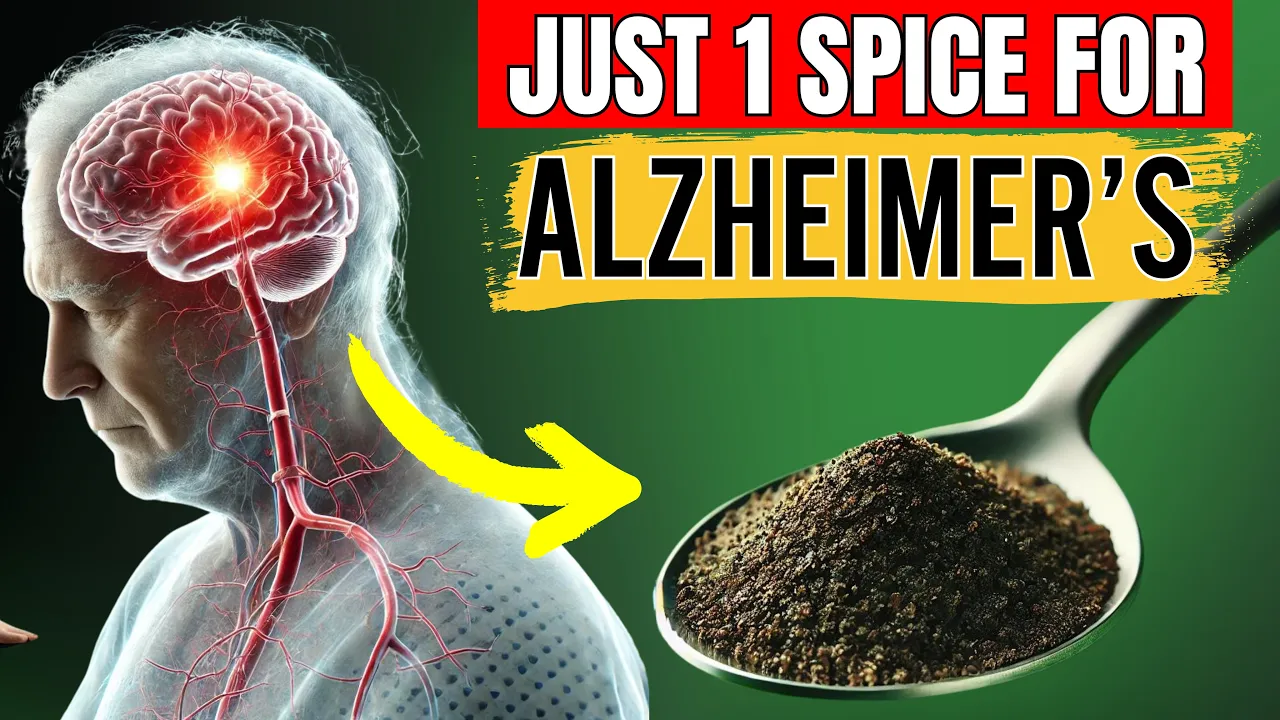
did you know that over 55 million people worldwide are living with Alzheimer's or dementia and here's the scary part that number is growing every year but what if I told you there's a powerful spice that could help protect your brain and reduce your risk of developing these devastating diseases after age 50 what is this spice how does it work and more importantly how can you start using it today to Shield your brain from cognitive decline stay with me because in this video we're not only revealing this incredible spice backed by science but we'll also show
you exactly how to incorporate it into your daily routine and how long it takes to see real benefits could this be the simple change that saves your brain in the years to come let's find out make sure to watch until the end to get all the details and don't forget to hit that subscribe button so you never miss life-changing health tips like this just a quick reminder the information provided in this video is for educational purposes only and is not intended as a substitute for professional medical advice all right let's dive into the list of
spices that can help prevent Alzheimer's and Dementia after 50 starting with number one cloves research has shown that the bioactive compounds found in cloves particularly eugenol beta copyin and gallic acid is exhibit potent neuroprotective effects that may help prevent Alzheimer's and Dementia these phytochemicals work by reducing oxidative stress and neuroinflammation two major contributors to neurodegenerative diseases eugenol the primary compound acts as a powerful antioxidant and anti-inflammatory agent protecting brain cells from damage caused by free radicals a 2023 study published in the Journal of enzyme inhibition and Med medal chemistry found that eugenol can inhibit the
formation of amalo beta plaques which are toxic protein clumps that disrupt brain function and are a Hallmark of Alzheimer's disease additionally beta caropine activates the brain's CB2 receptors which play a role in reducing neuroinflammation and supporting overall brain health to benefit from cloves neuroprotective properties incorporating small amounts 1 to 2 g into your diet daily is recommended cloves can be added to teas soups or meals for optimal results consistent use over several months or years may help lower the risk of cognitive decline clove essential oil can also be used in aroma therapy but dietary intake
provides the most direct benefits for brain health next number two black pepper the active compound piperine in black pepper plays a critical role in neuroprotection helping reduce the the risk of Alzheimer's and Dementia piperine has powerful antioxidant and anti-inflammatory properties which help lower oxidative stress and inflammation both key factors in the development of neurodegenerative diseases piperine also enhances the bioavailability of other beneficial compounds improving their effectiveness in the brain a 2020 study published in the medicine in drug Discovery found that piperine inhibits acetyl cholinesterase an enzyme that breaks down acetal choline a neurotransmitter crucial for
memory and cognitive function by preventing its breakdown piperine supports better communication between brain cells which is essential for preventing cognitive decline additionally black pepper contains other phytochemicals such as beta caropine and limonene which also contribute to reducing neuroinflammation and improving neuronal health for optimal benefits consuming black pepper daily in small amounts 1/4 to 1/2 teaspoon can be integrated into your meals its effects are cumulative so consistent use over time particularly after age 50 can provide long-term protection for brain health pairing black pepper with other brain boosting foods can further enhance its cognitive benefits next number
three Ginger after the age of 50 incorporating certain dietary components can play a role in protecting the brain from neurodegenerative diseases like Alzheimer and dementia phytochemicals found in ginger such as gingerol shogul and zingerone exhibit potent anti-inflammatory and antioxidant properties both of which are critical for brain health these compounds help reduce neuroinflammation which is linked to the progression of Alzheimer's a 2021 study published in biomedicine and pharmacotherapy demonstrated that Ginger extract could inhibit the accumulation of beta amalo plaques which are a Hallmark of Alzheimer's disease additionally Ginger's antioxidants combat oxidative stress a key factor in
neuronal damage while enhancing acetylcholine levels a neurotransmitter vital for memory and cognitive function to benefit from Ginger's protective effects it can be consumed in various forms fresh ginger or ginger powder can be added to tea meals or smoothies taking around 1 to 2 G daily is considered safe and effective for long-term use while results May Vary regular intake over months or years May contribute to better cognitive health and reduce the risk of Alzheimer's and Dementia in later life next number four Rosemary carnosic acid a potent antioxidant found in Rosemary has been shown to protect the
brain from neurodegenerative conditions like Alzheimer's and Dementia this compound combats oxidative stress and inflammation which contribute to brain cell damage and the accumulation of harmful plaques additionally rosmarinic acid another phytochemical present in Rosemary enhances brain health by inhibiting the formation of beta ameloid plaques a Hallmark of Alzheimer's disease a 2022 study published in the Brazilian Journal of medical and biological research demonstrated that Rosemary extract not only improves cognitive function but also significantly reduces neuroinflammation the study highlighted that Rosemary's ability to modulate Pathways associated with oxidative damage makes it a promising candidate for neuroprotection especially in
individuals over 50 who are at increased risk for cognitive decline to potentially reduce the risk of Alzheimer's consuming Rosemary regularly through food or supplements can be beneficial the recommended intake is about 1 to 2 gram of dried rosemary daily either added to meals or brewed as tea if using Rosemary essential oil for aroma therapy 5 to 10 drops in a diffuser can also support cognitive function over time consistency over months to years is essential to reap the benefits of this herbal approach next number five sage phytochemicals in Sage particularly rosmarinic acid ludin and a pyonin
play a key role in supporting cognitive Health by reducing neuroinflammation and oxidative stress both of which contribute to the progression of Alzheimer's and Dementia these compounds help prevent the breakdown of acetyl Chine a neurotransmitter critical for memory and learning which is often deficient in Alzheimer's patients by maintaining higher levels of acetylcholine Sage May enhance cognitive function and slow memory decline a 2018 study published in the phytomedicine examined the effects of sage X ract on memory in individuals with mild cognitive impairment researchers found that daily consumption improved memory scores and reduced biomarkers linked to alzheimer's further
highlighting its potential protective role to incorporate Sage for brain health you can use it in cooking as a tea or in supplement form around 300 to 600 mg of dried sage leaf extract per day is commonly recommended in supplements but consult with a healthcare provider for personalized advice if using fresh or dried sage in meals or teas aim for 1 to two teaspoons daily for longterm benefits consistent intake over several months is likely necessary to see cognitive improvements next number six cinnamon Studies have shown that certain compounds found in cinnamon may play a protective role
in brain health particularly in preventing Alzheimer's and Dementia cinam Malahide and Epic Tekken two key phytochemicals help reduce the buildup of tow proteins which are closely associated with neurodegenerative diseases tow proteins form tangles in the brain that impair communication between neurons a major factor in Alzheimer's pathology in a 2022 study published in scientific reports researchers demonstrated that cinnamon extract can not only inhibit toao aggregation but also improve synaptic function which is critical for memory retention and cognitive function Additionally the antioxidant properties of cinam Malahide help reduce oxidative stress in the brain which is another contributor
to cognitive decline the anti-inflammatory effects of cinnamon also support brain health by reducing chronic inflammation a condition that has been linked to neurodegeneration in aging adults consuming about half a teaspoon approximately 2 to 3 G of cinnamon powder daily or using it in teas or meals is a simple way to potentially boost cognitive Health while effects may take time regular use over months or years can contribute to long-term protection against age- related cognitive decline next number seven turmeric curcumin the primary bioactive compound in turmeric has demonstrated significant potential in preventing Alzheimer's and Dementia it works
by reducing inflammation oxidative stress stress and the buildup of beta ameloid plaques in the brain which are Hallmark features of Alzheimer's phytochemicals such as kumin deoxy circumin and bisdom myoxy circumin in turmeric have neuroprotective properties that help combat the progression of neurodegenerative diseases a 2018 study published in Journal of Alzheimer's disease explored circumin role in reducing amalo plaque accumulation and found that regular consumption improved memory and cognitive function in individuals with mild cognitive impairment the study suggested that curcumin's ability to modulate brain inflammation and prevent oxidative damage could slow down the onset of Alzheimer's especially
in individuals over 50 to incorporate turmeric effectively around 500 to 1,000 mg of curcumin daily is recommended typically through supplements as the curcumin content in raw turmeric is relatively low pairing turmeric with black pepper which contains piperine enhances its absorption it's best to use it consistently for several months to observe cognitive benefits but Consulting with a healthc care provider before starting high doses is advisable particularly for those with medical conditions and that's it for today's video now it's your turn are you already taking any of these amazing spices if yes have you noticed any difference
in your brain health or do you know of any other superfoods that help fight Alzheimer's and Dementia share your experience in the comments below I'd love to hear from you if this video was helpful then kindly type yes in the comment box your feedback really motivates us to keep producing more content just like this to help you live healthier and longer thank you so much for watching don't forget to hit that like button subscribe and turn on the notification Bell so you never miss our latest tips and tricks for brain health and Beyond