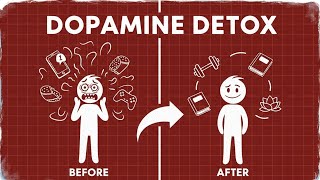
Attention fragmentation is the worst it's ever been. We're distracted, scattered, pulled in a thousand directions. If we don't fix it, we're toast as workers, as learners, as humans.
Here's my challenge to you. Watch this video on full screen 1x speed with no distractions. Because I'm going to share five sciencebacked steps to rebuild your attention span before it's too late.
They're pretty simple, but if you follow these steps, [music] your attention span will improve. I would not have been able to write seven books if I was scrolling on my phone every 15 minutes. But these steps help me take back my time.
The first step is setting a baseline. So grab a book and time [music] yourself. How long can you read without getting up or checking your phone?
Really try to push yourself, but don't judge yourself if it's only a few minutes. Write down your time. That's your baseline.
The rest of these steps will expand it. You need to train your attention like a muscle. Build it by starting small and [music] gradually stretching it.
Step two, eliminate the attention leeches. Your environment is rigged against you. Billiondoll companies are trying to hijack your attention.
So, design your environment for focus. Here are some simple but very practical tips. One, create a no phone zone.
When you have important work to do, put your phone in another room. Two, in all cases, turn off notifications. Three, close those 27 tabs you got open and check them only in scheduled blocks.
Your attention problem isn't only your fault, it's an environmental problem. So, fix the environment first. Step three, practice deep work rituals.
Take a page from Cal Newport, the Georgetown professor and author of the book Deep Work. Focus is easier when you build cues that tell your brain, "Now it's time to work. " Some writers light a candle at the start of a writing session.
Some coders put on the same playlist. Some entrepreneurs sit in the same chair with the same cup of tea. The ritual itself doesn't matter.
What does matter is the consistency. It's like hitting play on a soundtrack your brain already knows. Rituals tell your mind stop wandering.
Start [music] focusing. So right now, today, create your own starting ritual that tells your brain it's work time. Step four, leverage breaks and movement.
Your brain isn't designed to focus for 12 straight hours. 90 minutes is about the max before performance beep falls off a cliff. So instead of pushing through until you're fried, build in recovery, take short breaks, walk around, stretch.
Think of your brain like a toddler. It melts down if you don't give it snacks and naps. And ignoring that fact won't make you heroic.
It'll just make you cranky and unproductive. High performers know what other folks don't get. Breaks aren't deviations from your performance.
They're part of your performance. So right now, today, schedule a 15-minute walk break outside, no phone every day for the next week. Step five, reconnect attention to meaning.
Meaning sounds like a soft-hearted notion, but it can be a hard-headed strategy. So use it to reclaim your attention. Before you start anything, ask, "Why does this matter?
Who benefits? " Then write it down and keep it in view. Because purpose fuels persistence.
When you connect attention to meaning, it stops being a chore and starts being a choice. I learned this myself on my last book. I was struggling.
I was distracted. I was on my phone and watching sports highlights rather than doing my work. And I realized the problem was that I didn't know why I was writing this [music] book.
I didn't have a purpose. And once I thought that through, and it took a couple of weeks, I actually wrote down my purp typed out my purpose, figured out what it was, and then posted [music] it on the wall and used that as a way to maintain my attention, maximize my focus, and then the work started flowing. You know, [music] it's really easy to make things complicated.
It's harder to make them simple. And the way that we can get our attention back is relatively simple and straightforward, but you have to do it. You have to follow the steps.
So, here's how to do that. How to fix your attention span [music] before it's too late. Number one, establish a baseline, then train it like a muscle.
Two, eliminate those attention leeches. Three, build your own focus rituals. Four, take breaks before your brain crashes.
And five, connect your focus to a larger purpose. Life is not meant to be lived in 15-second increments. So try these steps today because the sooner you reclaim your attention, the sooner you can reclaim your life.
If you found this video at all valuable, check out the link in the description to my newsletter. It's called The Pink Report.