Speak speak no it's not very loud this is what I'll be testing testing I'm not giving the lecture I know yes I'm introducing it now we have done this once before is there an echo no you should everybody here yeah not loud enough it's I think it's on the maximum it won't go you're just too large large an audience you're absorbing the Sun Good afternoon ladies and gentlemen I think this lecture by Jean Moorcroft Wilson has been very eagerly anticipated and we'd like to welcome her again and she has been coming to summer school now
for more than 10 years having first come when she was doing research on Isaac Rosenberg the first world war poet and as you may know Jean is and has done a number of biographies of first world war poets in fact her biography Volume one of Robert Graves has been published To great acclaim and everybody's awaiting volume two now exciting for us that she has come here to talk about the Bloomsbury group because who better in fact you are really getting it from the horse's mouth because as you may know her husband Cecil is a nephew
of Leonard wolf the publisher and his connections to the Bloomsbury group are very well known and you will be hearing more about them and she has a number of sort of inside pieces of information anecdotes And so forth which will make it particularly interesting to you she already has had a portrait of Virginia Woolf and for those of you who are interested we are sharing a film about the Bloomsbury group and Virginia Woolf biography in particular on Monday morning at 9:15 to pick up these lectures by G but it wasn't give me a special pleasure
because as an alumna of University College London I lived booms free as a student and we often went we had a key to Gordon Square and so for me this is ground and it is particularly nice for me to welcome gene and say how happy we are to have a thank you I just put it on here in France yes thank you very much what a wonderful audience I wasn't quite sure whether you would have been bored because I know many years ago about Eight years nine years ago I I did give a full course
on the Bloomsbury group I'd love to repeat it only the only problem is you all many of you were at it so I won't but this is an attempt a very feeble attempt as it must be to summarize what happened and who they were when they lived what they stood for and when this all took place I want to give you I think some hope some kind of introduction that will encourage you to go and find out more about this rather Intriguing group I asked a friend just before the end of summer school this year
I said what does one have to do to get a loan large audience I said look the Bloomsbury group gets a large audience she said sex and if it's sex well welcome to Bloomsbury although I shall try not to be quite so frivolous all the way through the lectures why is it that Bloomsbury attracts so much interest Even here thousands of miles from its origins apart from the sex I mean one fairly obvious reason must be the result of what in England we call the nostalgia industry I'm sure you have it here after more than
a century Bloomsbury has a ready appeal for those who find the past more interesting or more acceptable than the present seemed somehow softened doesn't it and even for those who don't there is still a certain fascination in the past the most Ordinary objects and customs often become hallowed by time hence the popularity of TV adaptations or films or things and looks like Brideshead Revisited the Forsyte Saga or more recently and I'm very proud to say I actually have seen it couldn't stop once I'd started Downton Abbey how's that for nostalgia industry in all of these
we watch intrigue as the characters personal lives unfold and the same it would seem has become truth of Bloomsbury and thanks to the spate of memoirs biographies letters diaries films and other ephemera we can now follow the fates of Bloomsbury x' major and as we go on all the minor ones - of Bloomsbury it has in effect become a kind of intellectual soap Virginia Woolf for example the High Priestess of Bloomsbury who once ironically said that she needed to be quote private secret as anonymous as possible in order to write she has herself become in
the words of One commentator the Marilyn Monroe of American academia both the commercial as well as a cultural icon and against an increasingly insecure and grim background of world recession and not to mention the British recession there is I think a significant element of wish fulfillment attached to this interest in Bloomsbury after all even allowing for the passage of time and an increasingly mechanized and commercialized world Blues Brews members were privileged I always make an exception here and you'll probably think it's family interest but I do make an exception for Leonard whose father was a
brilliant QC barrister but whose father died very young of TB at the age of 46 and to left the family what I would consider relatively poor but certainly not up to the standard of the other members but for the most part there were people of leisure with time and money enough to develop their art Stick and conversational skills to live in their own very attractive houses and to indulge in the fascinating business of personal relationships their lifestyle seems to us now rich and exotic unfettered by regular jobs and the need to make money together with
severe recessions our contemporary world has seen a frightening disintegration in the structure of society and an added appeal of Bloomsbury may be that it seems a very solidly structured group a Very solidly structured society in which they move one unquestionable reason for Bloomsbury is popularity however and one which I have of course anticipated is changing lies in changing attitudes towards sexuality Bloomsbury is relative sexual freedom and tolerance of most shades of sexual choice I say most I won't go into detail here you'll have to come to next year's course to find out government has always
fascinated certain sections of the Public but it's real popularity started in the sixties an era of increasing sexual freedom there may also be an element of province of course in those often three-sided relationships carried out in Bloomsbury mainly garden squares they lived in squares painted in circles and loved in triangles I tried to find out who that was for years its Dorothy Parker as one might have imagined she was just jealous wasn't she Vanessa bells relationship first with Clive Bell then Roger Fry and finally Duncan Grant who himself was courted by Lytton Strachey one briefly
by Maynard Keynes and lured into fatherhood by Vanessa Bell cannot help but in Freeman Virginia wolves own sexual ambivalence for there's no doubt that she was passionately in love with Vita sackville-west for a time although I personally think that's been made rather too much of but also she loved her Husband Leonard wolf deeply and that three sided relationship hers vitas Vanessa's interest most of us even as only a study in psychology I suspect its proteins but it could be an interest in psychology the examples are endless and endlessly fascinating to some related to our change
in attitude towards sexuality is the rise of feminism over the past five or six decades or so Quentin Bell Virginia Wolf's nephew probably the most authoritative writer on the subject Maintained that Bloomsbury was feminist and in a broad sense it was of course a sort of pale shade of feminism by today's standards there was no me to movement then though none of its main female characters was a sub-project they assumed equality with men and on the whole they were treated as such Virginia herself of course has been taken up by feminists have been grateful for
her witchy and perceptive comments inside Works as a room of one's own as 1929 and string guineas 1938 in which she firmly blames the advent of war and war for war mongering on men I myself continue to believe that Leonard wolf was far more of a feminist than Virginia but again you think this is family prejudice and since Virginia is linked so firmly to feminism this must also help account for the extraordinary popularity of Bloomsbury after all there were some equally gifted Equally triangular if you like groups such as the pre-raphaelite Brotherhood quite so much
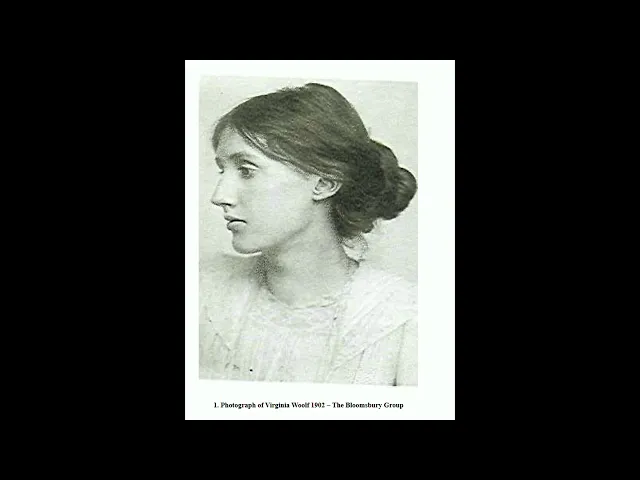
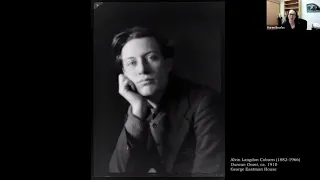
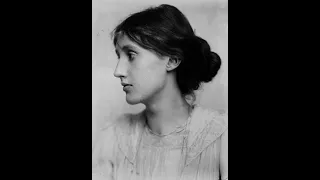
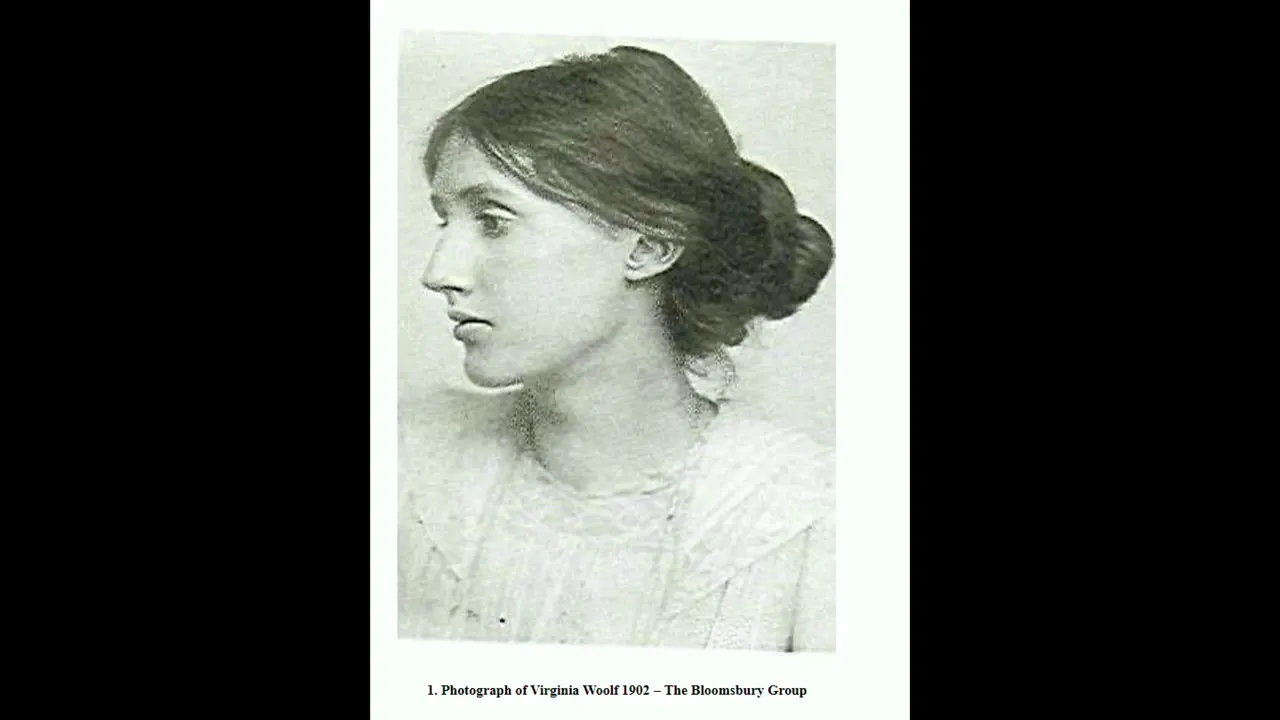
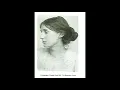
love intrigue to keep people occupied but no comparable presence in the popular imagination at least not in England and America so a terrible moment when the lecturer turns to pages over it will therefore come as no surprise to you that in turning to my next question who then so not just why but who then were the members of this group I place Virginia Woolf at the center of it and this is a photograph of Virginia Woolf in 1902 two years before her father died the Bloomsbury group's icon I believe this is a picture by her
sister who was a very gifted painter and who had a child by Duncan grant which is another intriguing story that I won't tell you and this is painted by Vanessa in 1912 in her impressionist this is painted by Vanessa in her Post-impressionist phase which quickly followed linked as I'll try to show later to the post-impressionists exhibitions that Duncan grant put on in 1912 and shook the art establishment to its core you can see there how even the face of course representation has gone by the board a long time ago but now there isn't even a
face there is form their shape it's it's it's it's progressing on from Impressionism also at the center them is her husband Leonard Woolf this is Leonard in 1914 14 the year before the junior died who can in many ways be seen as the pivot of Bloomsbury he was a founding member of the group at Cambridge as as we'll see it was also a founding member of two other Bloomsbury group meetings centres rather the 1917 club which unsurprisingly was founded in 1917 I think in celebration of the Russian Revolution and the memoir Club in 1920 which
produced many wonderful memoirs on What it was to be a member of Bloomsbury and by marrying Virginia Leonard made another vital contribution to the group by creating one more Center for its activities and even more importantly I believe keeping her alive during those many breakdowns that she had following the terrible effort of creation that went into her novels as well as giving her the confidence to continue her highly experimental writing which and I know I've said this to you before which Since she was married to her publisher as I am although he no longer publishes
me I'm much too big thing now I think he's lovely he forgives me but he published her when everybody else would probably have looked rather askance after experiments and in any case she would never have dared to experiment so freely had she not known that she could burn his dinner if he didn't publish the book oh I've done that not deliberately them and he so he Then published at the books at the Hogarth press but motley the Hogarth press was to help her through her breakdowns by giving her some kind of manual occupation she was
a lousy typesetter I have read documents that have been typeset by Virginia and the use and the ends are usually upside down which makes a rather curious reading this is one of the early collections of her short stories Monday or Tuesday with woodcuts As you can see by her sister Vanessa Bell and this is stories of the east I thought of giving a course next year on stories of the east not this book but just you know wonderful texts that show how the English felt to begin with and then how people in the East felt
about the English he also published work by members other members of Bloomsbury thus giving them a platform from which their voices might be heard TS Eliot not a bad name to start your publishing house with But as we'll see TS Eliot was not famous when he published him Katherine Mansfield again not about second is it type L his brother-in-law may not Cannes the great economist I talk a little bit more about each of these Roger Fry am Forster Vanessa Bell and Duncan grant and his list was not limited to Bloomsbury it included he was a
very good publisher because well before anybody else had recognized the worth of these writers he published Freud Chekhov Told Tolstoy Rilke Christopher Isherwood he adds gravitas to the group he's a serious thinker he's a political activist and he is a man who is solidly behind Virginia throughout her life he was also a writer but who would compete with Virginia he gave up early early on he gave up writing his own novels as you see his short stories but those were very early on so far then we have one writer one politician come publisher and next
I Suggest two painters Virginia's sister Verna Sibel who couldn't look more unlike her if she tried the the rather sort of relaxed mother earth looked that Virginia so much appreciated and envied Vanessa who was for Virginia always her quote lovely dolphin with the spangled tail the sea blue eyes and the heart of a fish cold she found her go Virginia who believed that she was quote more nearly attached to Vanessa than sisters should be her mother had died When she was 13 and Vanessa had come to stand in partly as a support but partly as
someone she could turn all her love to this is a painting by Vanessa who was a very good painter in her own right and which shows again the post-impressionists influenced painting by Vanessa Bell of sterlin Beach you must forgive me for not talking too much about the painting so give somebody in the audience a chance to give a course next year on the painters of Bloomsbury Please with Vanessa comes her partner at least painting partner for most of their long life together Duncan grant Virginia who detected beneath what she called his voluptuous creamy grace a
quote deadly tenacity of purpose christened him and I think this is so witchy old convolvulus bed he was always twining his way around people's affections and I don't know whether you know this story but on one occasion Vanessa and Virginia lent him their fathers who was dead their Father's best pair of trousers because he'd run out of trousers and he then saw a child in difficulties in a pond nearby and dived in in her father's best trousers and they all forgave him such was his charm and his grace but Duncan was more than Chomp Duncan
was influenced largely by by Matisse whom he includes in his post-impressionists exhibition that wonderful sense of movement to the dancers who know it I know and this is Tennis players by Duncan grant 1913 so it's interesting isn't it to see that see that same effort to catch the movement and I like this one this is the Matisse poster those new cutouts with a Bloomsbury bottle of wine and of glass in front of it which Duncan made his own attached to Vanessa and Duncan at various times for Bloomsbury relationships are shifting and complicating came Vanessa's husband
the art critic Clive Bell whose main Achievement I think was to popularize the ideas the the ideas of the groups other art critic Roger Fry on significant form Virginia who became very fond of Clive despite finding him rather vain referred to him rather shallow referred to him privately as did his wife Vanessa as the parakeet she said he always remained made her think of quote a mixture of those two great gossipy guitarists peeps and Boswell with Duncan and this is by Roger Fry so The painting of Clive Bell is by the man he popularized Roger
Roger Fry with Duncan in the early stages of Bloomsbury then came the Economist Maynard Keynes which is painted by another fringe member of the group Wren Rivera who was yes he was a cave she was a case I think linked to the games who by who later and he started out by being by deciding that he was homosexual and being very much attracted to Duncan grant and then to Virginia's Younger brother Adrian's beaten he then decided that he wasn't and the tip was rather in love with a little Russian ballet dancer called Lydia la Popova
who is exquisite and two aunts another dimension to Bloomsbury she introduced a lot of very beautiful dancing they particularly liked the naked dancing on the lawn at the country house I told you the me lots of sex in this liquor both men are canes and Duncan grant were relatively late arrivals in the group But the latest of all the central characters to join was by in my opinion one of the most interesting the art critic and painter himself Roger why rectify self portrait painted just before he died one wonderful man he never ever he knew
so much about painting he advised Piers Morgan appear Pont Morgan in in America on buying modern art in you all about the post-impressionists and yet he never achieved great Fame himself as a painter Here's one of his oil paintings of the South of France near cassis and he also started the Bloomsbury workshop in 1913 because he'd found so many artists impoverished unable to earn a living unable to do their work why don't I combine the two he said so you do work for me I'll pay you and you'll be doing your own art at the
same time and this was the Omega workshop sign painted by Duncan grant and it sold what they Called household goods and everyday objects they didn't look very everyday they were clothes to the screens that were lampshades there were all sorts here's a woman from Charleston where a lot of the group finally settled a room with Omega lampshades Omega chairs irma tables they didn't make the tables and the chairs but they ordered them according to their design very interesting I don't know whether you know Charleston down in Sussex but it's Very near to Virginia Wolf's country
house monk's house and well worth the visit everything that is there is painted if it moves paint it if it doesn't move if it's a panel on a door painted we have a rather ugly table and I said to my husband rather fancies himself as a forger I said why didn't you paint it and why don't you paint a Bloomsbury design on there so if you come to my house and I show you a Bloomsbury table you know it isn't Really quite the thing although we do have one painted by Duncan grant some other important
writers among the group are the biographer Lytton Strachey painted here by the woman who loved him passionately all his life that his interests were more in younger men Dora Carrington wonderful picture and Dora Carrington herself not dismissible painter and committed suicide after Linton's early death in 1932 and then of course other writers en Forster Passage to India Howards End all those lovely novels whom Virginia likened to a blue butterfly flitting in and out of Bloomsbury TS Eliot there he is with Virginia Woolf to whom I'll return and Katherine Mansfield a New Zealand writer who is
highly innovative in her field and published first a story Prelude at the hogatha press so she's very definitely involved I think Virginia felt well the Competitive but also learnt quite a lot from Katherine another person who died very young indeed of TB and last but not least sorry that I go last but not least as you can see she was six foot without her hat on was the flamboyant figure of Lady of Tulane model though neither writer painter economist politician or dancer she became hostess to many of blooms brisk gatherings both in Bloomsbury itself in
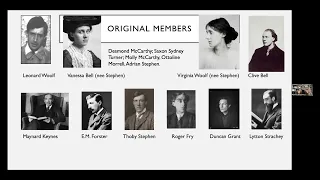
Bedford Square or at her country home gossington near Oxford where she sheltered many of blooms was mainly pacifist members during First World War finally three other founding members scarcely remembered today of Virginia's older brother Toby Stephen who died young Desmond McCarthy a literary critic will never quite fulfill the promise his friends predicted for him you're going to be a great writer you are a great writer they said but the great writing never came Somebody once hid behind the screen at the dinner table to take down or he said but somehow when they looked at it
afterwards it wasn't quite the great pricing that they had expected yes they said the same to Lytton Strachey whatever you get looking for your degree will never be good enough so he promptly got a third and then Saxon Sydney Turner the only real musician of the group a weird silent creature magelia likened to the aloe plant that flowers well so she Says but you know what an imaginative person she is for the flowers every hundred years I'd like somebody to tell me whether that is true or not and when did all this take place as
I see it the group started to form in 1899 when most of its male members met at Cambridge University though ardent feminists would place its origins only later in 1904 when female members joined it the majority of the men attended Trinity College Cambridge at the turn of the Century where they met at such elite clubs as the apostles of the midnight society these included Leonard Woolf Lytton Strachey Clive Bell Tobey Stephen of course Virginia's brother she was born Virginia Stephen and Saxon Sidney Turner other members Desmond McCarthy Maynard Keynes Roger Fry and hear Forrester were
also Cambridge graduates but joined the group later you can probably see where the Charge of alias of comes from only Duncan grant wasn't at Cambridge among the British male members he was at an art one of the most important influences on these impressionable young men were the cambridge philosophers je McTaggart a.m. whitehead Bertrand Russell as I said to you most of Bloomsbury were pacifist and Russell led the way mg in war the philosopher the Oxford English Dictionary actually defines Bloomsbury As an association quote based on friendship and interest in the arts which derived its philosophy
from the central passage this is the Oxford Dictionary of GE Murs Principia ethica the principles of ethics by far the most valuable things Moore wrote are the pleasures of human intercourse and the enjoyment of beautiful objects it is they that formed the rational ultimate end of social progress Moore and his fellow philosophers most of whom were Fellows of Trinity encourage their students to believe in the power of reason and love which could be found in the study of beauty and truth now this may not sound very revolutionary to us today but in its own day
it was regarded as very dangerous dangerous rejection of established morals conventions and established wisdom what had Beauty got to do with it what had friendship got to do with it this rigorous questioning of established truth is amusingly summed up In the opening passage of a novel by Iain Forster you may have read it himself at Cambridge as you remember the novel is called the longest journey and the first section is called Cambridge I won't read all of it but you've got the extract two on your handout and their disk see objectivity and subjectivity the cow
is there said Ansel lighting a match and holding it out over the carpet no one spoke he waited till the end of the Match fell off then he said again she is there the cow there now you have not proved it said a voice I have proved it to myself I have proved to myself that she isn't said the voice the cow is not there Ansel browned and left another match she's there for me he declared I don't care whether she's there for you or not whether I'm in Cambridge or Iceland or dead the cow
will be there it was philosophy they were discussing the existence of objects do they exist only When there is someone to look at them or have they a real existence of their own it is all very interesting but at the same time difficult hence the cow she seemed to make things easier she was so familiar so solid but surely the truths that she Ellis traited would in time become familiar and solid also is the cow there or not this was better than deciding between objectivity and subjectivity so at Oxford just at the same time one
was asking what do our Rooms look like in the back and it's in him I think it's an amusing illustration of the kind of interest they had in in these philosophical points that that may be I am sure that Virginia and Vanessa would have been just as interested the next phase then was when they joined the two young women who rather shocked as you'll see 1900 and for Toby Stephen and 1903 and 1904 Toby Stephen the brother of Virginia and his friends left Cambridge And were reunited mainly in London where the female element entered the
group and with it as one might expect a slight change in attitude and theory women have always had a good influence you know when Toby's father the well-known man of lecture Celeste Lee Stephen died in 1904 his children Toby Vanessa Virginia and Adrian in age of birth moved from their highly respectable family home at 22 Hyde Park Gate Kensington to an almost disreputable flat or house rather at 46 Gordon Square which henceforth became as Terrell mentioned the center of Bloomsbury that's where Virginia lived and she loved it she saw the move from stuffy old respectable
South Kensington to rather disreputable Bloomsbury as a transition quote from tyranny to freedom Bloomsbury was a place were students from London University and the Slade School of Art took lodgings not to mention artists models and other dubious types the convenience of the Slate may have influenced of course Vanessa's decision as well as the even more practical aspect of very low rents but junior described her new home in glowing detail this is extract three and I went again I won't read all of it to begin with she writes and and this is something to do with
the essence of blooms with this feeling of moving from tyranny the tyranny of the Victorian age perhaps because she died in 1901 Queen Victoria - the freedom of other Sir approach to life to begin with Virginia writes it was astonishing to stand at the drawing-room window and look into all those please Street she'd been in a very narrow called this act was she could actually see her neighbor's house window and more as you'll see instead of looking at old mrs. Redgrave washing her neck across the way so here she says she's looking out onto the
trees of Wharton square the light and air after the rich red gloom Of Hyde Park gate were a revelation things one had never seen in the darkness there what's pictures Dutch cabinets blue china sean out for the first time in the drawing-room at Gordon Square after the muffled silence of Hyde Park gate the roar of traffic was positively alarming odd characters sinister and strange prowled and slunk past our window but what was even more exhilarating was the extraordinary increase of space and so She goes on and she ends that passage and I'm sure we can
identify that feeling we had when a students we moved out into our own space we were full of experiments and reforms we were going to do without table napkins we were going to paint to write to have coffee after dinner instead of tea at 9:00 everything was going to be new everything was going to be different everything was on trial I think that's a very good expression of what Bloomsbury Felt it stood for when it started Toby's friends who had already started visiting him in London naturally continued to do so in his new and freer
home generally the cocoa and buns although my husband assures me that there was the occasional bottle of whisky floating round which means that there was probably always whisky floating around it was here that they got to know Toby's two sisters Vanessa and Virginia And as Duncan grant wrote these apostolic young men found to their amazement that they could be shocked by the boldness and skepticism of two young women for as Vanessa admitted we did not hesitate to talk of anything this was literally true you could say anything that you liked about art or sex or
religion you could also talk freely and very likely Jolie about the ordinary doings of everyday life there was very little self-consciousness I think in These early gatherings but life was exciting terrible and amusing and one had to explore it thankful that one could do so freely just that word freedom again conditions in Bruges were changed again in 1906 when Toby Stephen died suddenly of typhoid and his sister Vanessa who had written so who had initially rejected Clive Bell accepted him probably as a kind of security a comfort against that terrible loss he was one of
Her brother's friends and Virginia and Adrian moved out to 29 Fitzroy square thus creating two centers for Bloomsbury and tiin evenings at home Virginia and Adrian had to compete and they had a Friday night but by this time Bloomsbury was I mean at this time Bloomsbury was not a well-known group its members had done little to make themselves known to the outside world by 1910 neither of the writers Virginia or Lytton Strachey had produced very much By that point but in 1910 came the first of these rather impressive demonstrations that Bloomsbury was out to shock
a party a bourgeoisie but in and that was Roger prize first post-impressionist exhibition so wonder I'm sorry I can't spend time telling you about the reactions of the audience one very large very overweight very red gentleman losing the last undercut of well done or underdone beef yes as Leonard put it was absolutely almost had An apoplexy on the spot and fries second post-impressionist exhibition in 1912 added to the outcry and the outrage as did Lytton Strachey she's equally iconoclastic eminent Victorians in 1918 and this book which made little famous and again redounded on Bloomsbury in
a way was a deliberate departure from the heavy victorian life and letters hagiography in this collection of sketches straight she sets out to do the opposite that is to demystify famous Victorian figures who had become legends saintly legends in their lifetime Florence Nightingale they're all still alive I think no perhaps not Garden Gordon of Khartoum well certainly Florence Nightingale was too like to Gordon of Khartoum Arnie the grumpy or she got the cardinal Arnold rugby and Cardinal Manning Cardinal Newman apparently escapes relatively unscathed who knew for example this is part of the demystifying process who
Knew for example that Florence Nightingale had a rather bad temper that would never have come in to the Victorian biography if stretches intention was to shock the British public into an awareness of the real truth behind the myths he certainly succeeded Vanessa Bell believed that the honesty of mind and hatred of sham displayed in eminent Victorians was of great benefit to Bloomsbury at this relatively early Stage in its development equally shocking in its own way was the publication of TS Eliot's the wasteland only five years later in 1923 early 1923 Eliot was by this time
himself associated with Bloomsbury and the group benefited from this further publicity of course TS Eliot is deservedly one of the best-known if not the best known poet of the twentieth century and were very lucky to be able to include him in this in this eminent group and we can do so By virtue of the fact not just that he knew people there but the fact that two of his earliest most significant works were published by Leonard's press the Hogarth press and TS Eliot himself became and was a fringe member of the group despite being born
to a Unitarian family Mississippi in 1888 and educated at Harvard and the Sorbonne TS Eliot chose to settle in England in 1914 it would become a member of the Church of England As you may know in 1927 and a naturalized British subject to Savior so he makes his choice of Britain quite clear when Leonard first met Elliott in 1917 it was not yet an established poet having had only prufrock and other poems published in the egg west press that savior Eliot was still working at Lloyds Bank though he also helped run the egg lowest magazine
in his spare time and there was something of the bank clerk about him Leonard felt with his precise rather formal cautious even inhibited manner Virginia who met him a year later when he first visited Hogarth house were they were living in Richmond found him quote a polished cultivated elaborate young American talking so slow that each word seemed to have special finish allotted to it she also called him will described him as tight and shiny as a wood louse beneath she could never resist beneath the surface however she saw that he was Quote very intellectual intolerant
with strong views of his own and a poetic Creed unquote she never changed her mind about the force of Elliot's intellect though she did begin to find him far less formal and pedantic as she got to know him the ice was broken during a weekend he spent at their country house which they all three thoroughly enjoyed Tom as they called him was grateful to them for publishing seven of his poems in 1919 when he was virtually unknown They're just called poems 1919 they also went on to publish the first edition in English of his most
famous work the wasteland in 1923 I mean that really is quite remarkable prescient on the part of Leonard energy but when Leonard and Virginia first met Eliot in 1917 well Virginia in 1918 actually they had already they had already recognized in him a fellow by Konnor class someone ready to break all the sports I was going to Say break all the sacred cows but I'm getting a bit mixed up there break all the sacred objects get rid of them clear the way but they did recognize someone who was questioning in poetry many of its accepted
conventions and define them as Virginia was starting to do in the novel Eliot himself reminds us that the situation of poetry when he started writing himself in the early 20th century was quote stagnant to a degree difficult for any young poet Later in the century to understand and he tried to bring it back to life in various ways many of them he learned from his fellow American poet Ezra Pound he became aware for instance of the importance of adapting meter to mood which involved and this is where the real real importance comes of course involved
a willingness to depart from the traditional verse forms of the 19th century the free verse their leap of the late 19th and early 20th French Symbolist poets such as Berlin laughs for Milan made particularly attracted him like them he aimed to make his verse more definite and concrete that's his words by always having a definite emotion behind it so instead of just talking flower alee about the landscape he would try to describe something very precisely perhaps in the way that those men at Cambridge were trying to define their feelings also through philosophy in this he
was also influenced by a Group of poets who had gathered ground pound in London in 1920 1912 the so called images which included Richard Odenton and Hilda Doolittle according to the images everything was to be expressed through the image and cadence that is by peeling to the physical ear and the mind's eye and through them to the auditory and visual imagination there was to be no dilution of these appeals by resorting to the language of discourse so there's no explanation You're just presented with an emotion which is conjured up by either a sound or a
visual image I thought I just read you hear a little bit of Prufrock I grow old I mean it's a section haven't got it down so don't don't worry about it it's a section in which he's trying to put into into words his own feelings about growing old and feeling rather washed-up and he expresses it not by saying it but by giving us some examples I grow old I Grow old I saw where the bottoms of my trousers rolled shall I park my hair behind do I dare to eat a peach I shall wear white
flannel trousers and walk upon the beach I have heard the mermaid singing each to each I do not think that they will sing to me and although that last reference is puzzling it's an allusion to a way of life in which there is lyricism and joy the fact that he's old and I do not think that they will sing to me of course being particularly Significant and from his time at Harvard and I think that's partly the influence of the the images on his verse and from this time his time at Harvard University 1906 to
1909 where he studied philosophy Eliot also learned to fear romantic softness though his own poetry I find wonderfully lyrical I think that's quite a lyrical passage about the old man walking on the beach I mean think of the phrases from some of his most famous poems like The Waste Land the hyacinth Girl the violet hour isn't that a wonderful description of Twilight the violet hour the Rose Garden and all that that implies that's in burnt Norton most challenging of TS Eliot's beliefs however and the one which distinguishes him most sharply from his nineteenth-century predecessors and
puts him most firmly for me in the Bloomsbury group for people desiring to shock is the needful and sickness illusion to a wide variety of Other literature's and cultures often the metaphysical poets of the 17th century and he explains this in a way which made me see why it is that he does such a difficult thing I mean that passage I just read I have heard the mermaid singing is from a poem by John Donne well if you don't know it does the poem mean anything to you Eliot writes our civilization comprehends great variety and
complexity and this variety and complexity playing Upon a refined sensibility must produce various and complex results the poet must become more and more comprehensive more elusive more indirect to force to dislocate if necessary language into his meaning that doesn't sound too terrifying it's clear from the start that Eliot intends to put into practice what he had learned for himself and later from pounding the images and there is abundant evidence of this in her foot his first and early volume proof rock And other observations of his respect for the clear precise image think of the opening
of that poem I mean I can't talk much about Eliot so don't worry I would go on about Elliot forever but I think it's a lovely poem and a very evocative one and think of the opening of that of that passage of the poem let us go then you and I when the evening is spread out against the sky like a patient etherized upon a table let us go through certain Half-deserted streets the muttering retreats of restless nights in one night cheap hotels and sawdust restaurants with oyster shells streets that follow like a tedious argument
of insidious intent to lead you to an overwhelming question who do not ask what is it let us go and make our visit in the world the women come and go talking of Michelangelo the yellow fog that rubs its back upon the windowpane the yellow smoke that rubs its muzzle on the window Panes licked its tongue into the cornice of the evening lingered upon the pools that stand in rains that fall upon its back the suit that falls from chimneys slipped by the terrace made a sudden leap seeing that it was a soft October night
cold once about the house and fell asleep I mean you know how would you describe the sky like a patient etherized upon a table story poetry you will notice here the colloquial tone almost as if the narrator is having a Conversation with you let us go then you and I but also a sense of terror oh do not ask what is it apprehension which Elliot had found both in the French symbolist poets and the English metaphysical a combination which runs right through Prufrock and right through his poems in prufrock he creates a persona in this
case a timid apprehensive socially ghosts ghosts little man and balding too who fears he does not know quite what So he's fearful of what and this is last bits that I will read from Elliot and then I'm going to give you a break and indeed prufrock says and indeed there will be time to wonder do I dare and do I dare time to turn back and descend the stair with a bald spot in the middle of my hair they will say how his hair is growing thin my morning coat my collar mounting firmly to the
chin my necktie rich and modest but asserted by A simple pen they will say but how his arms and legs are thin do I dare disturb the universe in a minute there is time for decisions and revisions which a minute will reverse this fear will permeate Elliot's more famous work the lake the wasteland just as proof rocks content will that is it will also give an even fuller but equally disquieting picture of contemporary society from the top those society ladies talking of Michelangelo to the bottom the man Standing in shirtsleeves smoking at the window but
it's Elliott this deliberate elimination of or merely connective and transitional passages which paused and still causes readers difficulties it's a it's a fascinating poem and and I may be wrong to suggest it's about a little man who's frightened to propose to the lady he thinks he ought to marry now and then to stop there for a break I think what they don't call a laboratory break but it is and then and then I'm going to go Back to the Bloomsbury group and talk what it was about what what they what values they stood [Music] yes
yes that was quite that was my comment but they did publish the wasteland protect you and you know I don't [Music] [Music] [Music] [Music] great so I thought we would come back to that last question what did they stand for what is it exactly that distinguishes Bloomsbury from other artistic multicultural groups to their critics and there were quite a few Bloomsbury represented all that was most elitist in art and life DA moody for instance define them almost solely in terms of elitism they had the requisite residue of Hebraic on truths expressed Mostly in white school
for the barbarian Philistine and populist to which all Outsiders were consigned he said well he obviously feels like one of the outsiders doesn't change and the establishment art critic John rotten Stein's Sir John rotten Stein saw them not so much as an artistic as a criminal association but as Quentin Bell argues no one who knew Bloomsbury at all well whether they liked or disliked it will accept this picture of an intellectual Mafia I suppose the painters help deflect criticism of being wholly intellectual Sir John Bell rights rights about Bloomsbury as though it were the Communist
Party the Society of Jesus or the Carbonari quote a closely knit association with canons a party line and a leader in fact it was less organized less ideologically homogeneous than the pre-raphaelite Brotherhood the souls or even the Impressionists it had no form of membership no rules no leaders it can Hardly be said to have had any common ideas about art literature or politics I do think he's going a little bit too far there and although it it had I believe a common attitude to life and was united by friendships it was as amorphous a body
as a group of friends can be Quentin's mother clyde bell an actual member of the group as you know is even more skeptical about the possibility of defining its characteristics in his autobiography old friends he expresses Uncertainty as to quote whether what the chatterers were chattering about ie Bloomsbury was a point of view a period a gang of conspirators or an infectious disease the problem with all these definitions is as Quentin bell points out but they could equally well apply to other groups like the pre-raphaelites for example all the souls is there then anything that
could be seen as more exclusive things Bree I mean do we mean anything or we just referring to group Of friends who give us some good stories to gossip about if forced to summarize blooms BRIC characteristics myself I would say but this mixed group of writers painters critics politicians shared among other things a belief in reason not always carried out a certain sensitiveness towards life a love of beauty certainly whatever form that took a faith in friendship and a commitment to complete frankness again not always carried out you know the story of Vanessa's daughter Angelica
who went through most of her adult life leaving or her early adult life believing that she was the son of peuta sorry the daughter of the daughter of her putative mother Clive Bell she was in fact Duncan Grant's daughter Vanessa thought that if she had a daughter by a painter she'd have a painter daughter she did quite theoretical about it and and the other quality of course that I have tried to Bring out already that they shared was a desire to shock and be different probably their most distinctive feature Lytton Strachey for example on one
memorable occasion which is related with great relish by Quentin when Queen Victoria and her rather prudish Victorian age still dominated British life despite her death in 1901 mitten Strachey a young undergraduate who didn't know these two young ladies at Gordon Square very well Lytton Strachey Seeing a stain on Vanessa Bell's white dress asked dramatically Seaman it was not at the time the kind of remark you were supposed to address to a young woman not a respectable young woman it is this aspect of Bloomsbury that plagued Clive Bell emphasizes writing of his contemporaries that they shared
a contempt for conventional ways of thinking and feeling contempt for conventional morals his son Quentin adds but it was the degree to which Bloomsbury despised the conventions which distinguished it from other groups one significant example of blooms were his rejection of established conventions is in its enthusiastic support of those two post-impressionists exhibitions indeed two of its members Duncan grant and Vanessa Bell appeared in the second of these shows which shocked both public and establishment after establishment alike when I wrote about Isaac Rosenberg for example he was At the Slade School of Art and he remembered
how the tutors there will try to persuade their students not to go to these post-impressionist exhibitions the Slade prided itself on being ahead of the time and of course had only got as far as Impressionism and they were very cross indeed when Roger Fry arrived with post-impressionism to shake them all up again and as if these post-impressionists exhibitions were not in themselves were shocking enough Challenged to the assumptions of the day when the second of these closed with a ball to celebrate the event the female members of Bloomsbury chose to shock even further in an
age when even the ankle was only just becoming visible the ladies of Bloomsbury and their younger friends from the Slade decided to honor the occasion by disguising themselves as Tahitians Tahitian women Dogen had been one of the revelations of the exhibition if you look at go gowns Paintings you wonder which part of the costume they decided to copy whether they really were some of the older ladies at the ball actually walked out in disgust and unfortunately there are no photographs I'm terribly disappointed even the rather enlightened Roger Fry uttered a little a mild protest for
Virginia Woolf in particular rooms where it was indeed an escape from a stuffy and suffocating world both Clive and Quentin Bell make much of Bloomsbury Rejection of sexual taboos but even more importantly in my opinion was its reject rejection of established conventions in the arts which had a profound effect on both the writers and of The Blueprint if you remember listen if you think of any of these played these writers or painters they all were modernists to a large extent Virginia Woolf herself and I talk about her a little in a moment Lytton Strachey TS
Eliot Katherine Mansfield ianforster Vanessa Bell Duncan grant world you fry none of them could be called traditional or conventional well not at the time it might be fair to describe Virginia among others as questioning rather than despising conventions but she certainly questioned them on a more obvious level Bloomsbury also influenced Virginia and its other members by providing those members with an enormous ly secure social environment within which to operate I mean if you're going to Experiment it's always rather comforting to know that you're surrounded by people who will at least try to understand what you're
experimenting about for all the members of this group had either class or money as I've mentioned and in some cases both and if they didn't have actual class by the time they left Cambridge they were part of an intellectual elite in addition a number of blooms risk happened to be book or art critics and Reviewers so that members could count on each other to give them the benefit of the doubt and to try to understand their experiments I wish I had lots of friends who were reviewers my husband comforts me he says but at least
you know they're not doing it just to be nice to you when they write us I I said I'd rather they were just nice acronym in Virginia Wolf's case he also had a publisher husband which increased Her sense of freedom there's no doubt in my mind that the blooms burglar had an important influence on her development as a writer by encouraging that desire to experiment to try out new ideas to get rid of what had been such a suffocating form for her when she started and that basically feminist attitude which I described to you all
part of their rejection of nineteenth-century assumptions I've already mentioned which encouraged her Again to pursue her own ideas and wolfs confidence was of course increased by the enormous ly secure social environment as were all the other members but possibly the most important factor in bloomer is makeup as far as her work was concerned seems to me the presence of artists and art critics in the group as well as writers and this cross-fertilization that was going on most of them even more adventurous and as the art world generally was in the Early 20th century by comparison
with the literary establishment there was still a lot of very traditional writers but the artists had zoomed ahead of them on the whole from as early from an early age Virginia had been exposed through Vanessa Bell her sister to the highly innovative theories which were working the art world to its foundations there is enthusiastically embraced by Virginia's brother-in-law v Bell and the other art critic Duncan grant Sorry the and the painter Duncan grant as well as what to bribe Virginia and I thought this was very interesting indeed comment that made by her nephew Virginia's nephew
Quentin Bell Virginia's active Vanessa a number of times as as you saw and more than that actually and was intrigued by her willingness to work with what she called gaps elisions and silences so not always filling in with a nice regular Chronological story but it was rod to fry one of the last members to join in 1910 who exerted the greatest and most revolutionary influence both on the painters and on Woolf herself she even remembered fries saying at the time he shocked the public with that post-impressionists exhibition that literature was suffering this is what I
said literature was suffering from a plethora of old clothes says says am and Picasso had shown the way writers should Fling representation to the winds and follow suit and later on not too much later I'll read you a passage from mrs. Dalloway which I think shows her doing exactly that it's almost as though she's painting an impressionist picture the journey had announced as early as 1900 H that's 2 years before the first post-impressionists exhibition so I mustn't attribute it all to Roger Fry she had announced in 1908 I shall reform the novel but I think
it Was her exposure to Fry's theories which helped her to make that a reality his charm and his intelligence in expounding them of course helped her to accept what he was saying Fry's contribution to Bloomsbury attitude to both the visual arts and the arts in general cannot be exaggerated Tolstoy's idea of the value of art as a vehicle for transmitting emotion is something he uses in his arguments the value of art as a vehicle for transmitting emotion And they're known to prune Tolstoy series of their moral implications because as you know Tolstoy became more and
more moral and religious as and gave up writing novels that were without some kind of moral towards the end and which Tolstoy valued according to the reaction they produced in actual life did they improve people did they give a moral picture of life so those emotions fright values in and for themselves he sees art as a means to a new reality and not a Reflection of ordinary reality as such it's freed from those moral encumbrances and the necessity of representing representational accuracy even the most superficial reading of the wharfs work shows how closely she followed
this line but of course if I said to you what is talking about his art for art's sake that is to oversimplify but that basically is what he's saying we must not expect a message of a very obvious kind or a very moral kind art For art's sake it is a Creed which places more value on form than content and which leads right to his theory of significant form although the actual phrase was coined by Clive Bell take for example Virginia's portrayal of a typical summer's day in London in the early 1920s in mrs. Dalloway
her descriptions are highly eclectic and chosen I suggest with an I it isn't in your sheets and frayed I've written it but my hand and I could Could not bear to write it out together it's it's highly eclectic and chosen with an eye to overall form of the book I believe rather than for purposes of representational accuracy this is the passage some of you will know it Bond Street fascinated her Bond Street early in the morning in the season its flags flying it shops no splash no glitter one roll of tweed in the shop where
her father had bought his suits for 50 years A few pearls is it in there or not no it is in there oh good number seven okay number seven I'll start again one Street fascinated her Bond Street early in the morning in the season it's flags flying it shops no splash no glitter one roll of tweed and the shop where her father had bought his suits for 50 years a few pearls salmon on an ice block that is all she said looking at the fish mongers that is all she repeated pausing For a moment at
the window of a glove shop where before the war you could buy almost perfect gloves and her old uncle William used to say a lady is known by her shoes and her gloves he had turned on his bed one morning in the middle of the war he had said I have had enough gloves and shoes she had a passion for gloves but her own daughter her Elizabeth cared not a straw for either of them not a store she thought going on at Bond Street to a shop where they kept Flowers for her when she gave
a party well if you want to know what London really looked like in the early 1920s don't read Virginia Woolf but if you want to know how it felt and I mean the privilege the the exquisite taste of blonde Street I think is present in that passage if you want to know how it felt then she's your writer the point of the description of Bond Street is not of course representational Clarissa must be seen in her appropriate setting partly So that the reader can make the contrast with Septimus a war-damaged veteran when he appears on
the scene fresh from a bar less privileged lodging of the Tottenham Court Road but more than that this so-called description of Bond Street is a means of furthering the books formed with the apparently casual introduction of Elizabeth her daughter at the end of the passage another dimension is still fully added to the picture and with the reference to her party were kept in mind Of one of the main shaping devices of the book which is of course that everything and all the characters will lead up even the dead Septimus dead by that time of suicide
because he's been damaged in the war and can't bear to go on living even the dead Septimus will be present in the mouth of that appalling psychiatrist Sir William Bradshaw by the time Virginia wrote mrs. Dalloway in the 1920s therefore she might well have Echoed Fry's statement to his friend Lowe's Dickinson in 1913 I have been attacking poetry to understand painting so the shape of the poetry the attention to theme in poetry and I'm developing a theory that content is merely directive of form with no separate value at all and that all the essential quality
has to do with pure form so when you look at the book often something that you don't find terribly relevant at that moment will come and Will help to flesh out the book and its form but by quilting mrs. Galloway I'm jumping ahead of myself Virginia's discovery of new literary techniques to match those that had excited the artists and art critics of Bloomsbury was not immediate as the work preceding mrs. Dalloway would show those who would eventually reject accepted conventions concerning plot and character in particular and replaced them with a roving consciousness capable Of dealing
with the myriad impressions you saw all the impressions that Clarissa has she I mean where does her uncle come into it he's popped into her head because she's looking in a glove shop and she remembers what he says it's just the way our mind works isn't it what has become known in that William James phrase as her stream-of-consciousness technique but her first two novels were fairly traditional in both form and technique Though both also show signs of slight rebellion the first one which is the description of a boy it's called the voyage out 1915 has
a well-defined plot along 19th century lines mr. and mrs. Ben race are sailing out on a cruise to South America in Captain then races mr. mrs. Ambrose are sailing out in Captain Vin races ship on which we also meet within race win races daughter Rachel and there is at the end there there's some love interest but the novel Doesn't end naturally Virginia can't quite bring herself to give you that happy 19th century Jane Austen ending with people happily marrying and Rachel dies of a mysterious disease they were have spoilt it for you by her second
novel night and day which I think is a very clear description of Virginia's meeting with her future husband Leonard Woolf and this is night and day in 1919 it's even clearer that Wolff is groping for some better way of expressing her ideas and vision of life though the book itself is not startlingly experimental there are some very good sort of pre stream-of-consciousness novels precursors to those and in her third novel we begin to see more clearly what she's up to Jacobs room 1922 Woolf breaks violently away from the novel's traditions she had been experimenting in
a series of short Stories do you remember we'll get there Monday or Tuesday and stories like the mark on the wall Kew Gardens and Monday or Tuesday there is in Jacobs room in 1922 three years before mrs. Dalloway hardly any action story or character as such the main emphasis is on style and form as it is in most poetry and like the poet Virginia relies heavily on imagery to link different parts together and shape her material she uses Jacobs room itself To discuss one of her main sources of discontent with the novel she's been reading
people like Dickens which those of you who attended my course possibly read to and although it's comforting to be given a very precise representational image of the character their clothes the hair their eyes perhaps their voice she's not happy with this she thinks it's not how we see pink things the impossibility of finding satisfaction in characterization of the traditional kind Emerges very clearly then in this third novel in one scene for example where her eponymous figure Jacob is travelling up to Cambridge by train she describes the reaction of a middle-aged lady in the same railway
carriage who is going to visit her son there but Virginia ends the scene as you'll see an extract 8 she ends the scene by expressing dissatisfaction with the woman's report now you must know this scene haven't you sat in a tube or a train or a bus Looking at the person opposite you and you know that person you know what they're like coming look at the way their lip curls or look at the clothes they're wearing of course we don't of course we don't because as Virginia writes in that passage nobody sees anyone as he
is let alone an elderly lady sitting opposite a strange young man in a railway carriage they see a hole they see all sorts of things they see themselves and then finally one must Do the best one can with her report well this is a long way from the novelist telling you what his character is like what his character has you know almost for breakfast how his character how his character dresses or we know about Jacob is that his his socks I think a rather baggy and one must do the best one can she says with
her report and this is Virginia talking about her old lady anyhow this was Jacob Flanders aged 19 it is no use trying to some people up One must follow hints not exactly what is said nor entirely what is done and of course for some people that's very aggravating and very irresponsible of course you're supposed to tell me what this person is like what what are you doing you know what what do you why are you writing a novel so instead of trying to some people up Jacob in particular Virginia follows him in a series of
scenes from his childhood to his death in the first world war This is written in 1922 Virginia herself had had a breakdown which lasted from 1912 right through to 1917 so for most of the war she has been in the charge of psychiatric nurses and has be really participating in all that war involved and all her books after that for at least the next three in some way involved with that war he ends by being killed in the First World War and the only way we get to know him is by the comments of his
family his mother and His friends including the prostitute he once slept with I must keep up the sex content in this lecture the form of the novel is then loosely chronological as we follow Jacob from birth to death there with other related scenes interspersed but the real shape of the book is the empty space at the center of it where we the reader create Jacob for ourselves we take away from each of these mini scenes of his life as he's growing up some impression which we Ourselves turn into a character surely after finishing Jacobs room
Virginia tries to explain more clearly her misgivings about not just traditional novel it novelists in the 19th century such as Dickens and Thackeray but also about her more immediate predecessors such as Arnold Bennett who might personally find a wonderful novelist have you read the old wives tale marvelous marvelous book Arnold Bennett HG Wells John Galsworthy and in her Essay mr. Bennett mrs. Brown published in 1923 she says what she finds dissatisfying about them whilst attacking the so-called realism of Bennett and his peers whom she dubs Edwardian she advocates a more fluid internal approach to the
problem of characterization and other aspects of the novel which she and her fellow modernizers James Joyce th dubbed who whom she dubs Georgians are Turning to but her position is best expressed for me and I won't redo the whole passage by any means but it's beautifully put in an essay she called modern fiction both what she objects to in the traditional novel and what she wants to achieve in her own novels and I'll read you just the first part of it admitting the vagueness extract 9 admitting the vagueness which afflicts all criticism of the novel's
let of novels let us hazard the opinion that For us at this moment the form of fiction most in vogue of misses and secures the thing we seek whether we call it and this is a wonderful comment on what she's trying to achieve in her novels what is she looking for what is she trying to convey to you certainly not representational whether we call it life or spirit truth or reality this the essential thing has moved off or on and refuses to be contained any longer in such ill-fitting vestments as we Provide nevertheless we go
on perseveringly conscientiously constructing our 2 and 30 chapters after design which more and more ceases to resemble the vision in our mind so she is after the expression of a vision a vision of some aspect of life which she wants to convey to us so much of the enormous labor of providing the solidity the likeness to life of the story is not merely labour thrown away but labour misplaced to the extent of obscuring and Blotting out the light of conception the writer seems constrained not only by his free wit his own free will but by
some powerful and scrupulous tyrant who has him in thrall to provide a plot to provide comedy tragedy love interest and an air of probability embalming the whole so impeccably that if all his figures were to come to life they would find themselves dressed down to the last button of their coats in the fashion of The hour the tyrant is obeyed the novel is done to a turn sounds like a cake in an oven doesn't it but sometimes more and more often as time goes by we suspect a moment to read out a spasm of rebellion
she's talking about herself of course as the pages fill themselves in the customary way is life like this must novels be like this look within she says and life it seems is very far from being like this exam for a moment an ordinary mind on an Ordinary day I will examine your own not that I'm calling you ordinary of course well my mind is and I know what she means the mind receives a myriad impressions trivial fantastic evanescent or engraved with the sharpness of steel and and so so it goes on and it's a wonderful
passage and you know you can read that all of it for yourselves afterwards but this is what she wants to achieve and in mrs. Dalloway I think for the first time she feels and mostly the Critics feel that she has achieved it an ordinary mind on an ordinary day is perhaps what Virginia had in mind when she created Clarissa though to most of us she's a rather privileged lady and not at all ordinary but don't forget this is the 1920s Virginia knew such people and they were a fairly familiar of her life but this novel
in its attempts to recreate in Virginia's own words that have just read life or spirit truth or Reality will surely be about more than Clarissa's party so to balance this view of things Virginia adds another darker but oddly exciting to her at times side in the person of the young and is part of our own existence of course madness but she adds it in the person of the young less socially privileged Septimus Smith who has returned shell-shocked from the first world war and whose mind as room Has remained unhinged by hit by the experience as
she writes in her diary on October the 14th 1922 mrs. Dalloway has branched into a book that is from a short story she started called the Prime Minister and I Adam break here a study and this is what the book she wants the book to be about a study of insanity and suicide the world seen by the sane and the insane side my side and don't forget she has just emerged from a prolonged period of insanity herself something Like that she says Septimus Smith is that a good name and to be more close to the
fact than Jacob but I think Jacob was a necessary step for me in like working free the plot of mrs. Dalloway and I can't talk about it in any detail is very slight Eden slighter than Jacob's room Clarissa spends her day preparing for her party and Septimus spends his day visiting the psychiatrist Sir William Bradshaw being visited by his local Doctor dr. Holmes who says he must go into a home because he's clearly mentally disturbed and throwing himself on to the spiked railings of his lodging house in preference to being incarcerated in a home and
of course certainly Virginia's own privilege and money prevented her suffering the same fate because you know if Leonard hadn't had money to have nurses at home to look after her she would certainly once you threatened Suicide you were deemed to be unsafe and had to go into a home the two strands of the plot Clarissa and then the young man are linked together loosely through various incidents and people as we will see as we see and the action is limited to one day she had read Ulysses and she wondered if she could do the same
herself whether she could actually use that as a way of shaping the material more firmly but this rather basic plot is filled out both backwards by what Wolf calls her tunneling process you'll notice in the extract I'm about to read and it will be the last one extract 10 on your handout which opens mrs. Dalloway that though we start in the present on the day of Karissa's party and also of Septimus suicide we quickly move backwards and forwards in time in that passage about Maude Bond Street you notice didn't you that she's already thinking back
to her uncle who turned in his bed and said he'd had enough she's Also thinking forward to her party in the evening and in this opening passage she's sinking backwards to her childhood at Burton forwards a little to her feelings for Peter Walsh that boy Burton then to the present and further forward to Peter's anticipated visit which will of course take place all this I suggest is an attempt to be nearer to what she thinks of as reality reality as virginia woolf influence no doubt by Bergson's theories of times and Philosophers like Freud and Jung
are beginning to think is the true state of the inner workings of the mind in the process Virginia dismisses the possibility also of being able to give character in the old-fashioned way and refuses to detail klarissa's appearance although she does tell you that her neighbor sees her as looking rather bird-like and at the same time and with the apparent truth to life that Virginia seeks another of the Novel's important characters Peter is slipped into the narrative I just would like to read you some of this opening passage and then to conclude mrs. Dalloway this is
the book the opening of the book who is mrs. Dalloway is the first question do we know in real life from somebody is when they were introduced no mrs. Dalloway said she would buy the flowers herself for Lucy had her work cut out for her the doors would be taken off their hinges Rumple Mars men were coming and then thought Clarissa Dalloway what a morning fresh as if issued to children on a beach what a knock what a plunge pointed so it had always seemed to her when with a little squeak of the hinges which
she could hear now she had burst out into the open air so he plunged at Burton into the open air and and so she thinks back to her childhood which helps you to fill out the action backwards it's it's a very good opening passage because it Creates questions and you spend quite a lot of the time looking reading more carefully and following up what she's doing and Peter is introduced into her mind because he had been madly in love with her at the although she chose to marry the more dependable Richard the extract ends with
one of a number of devices introduced by by wolf to help shape what might otherwise be rather chaotic a chaotic flood of thoughts impressions and Sensations through the striking of Big Ben and that goes throughout the book so you always you don't have to think help where am I because you know it's 11 o'clock or you know it's 12 o'clock and you are helped to some extent to feel less lost in the book the book moves and this is very important I think to what she wants to achieve chief the book moves on to plains
prose