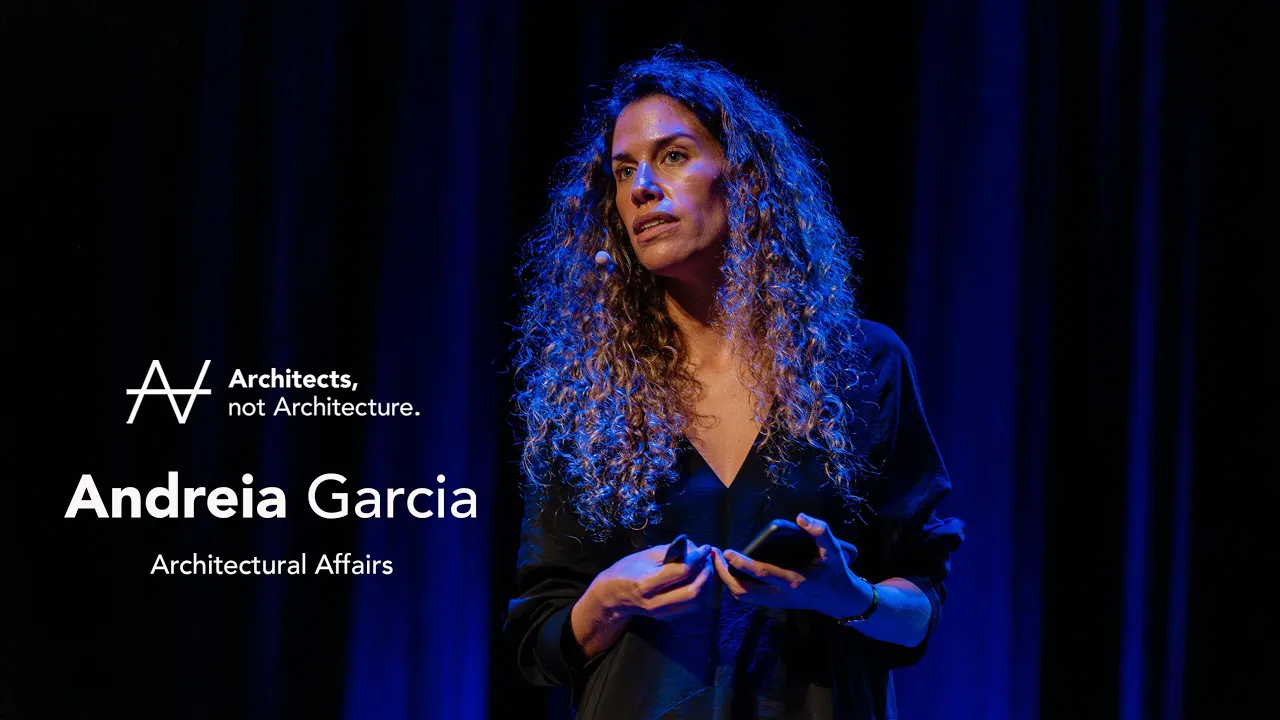
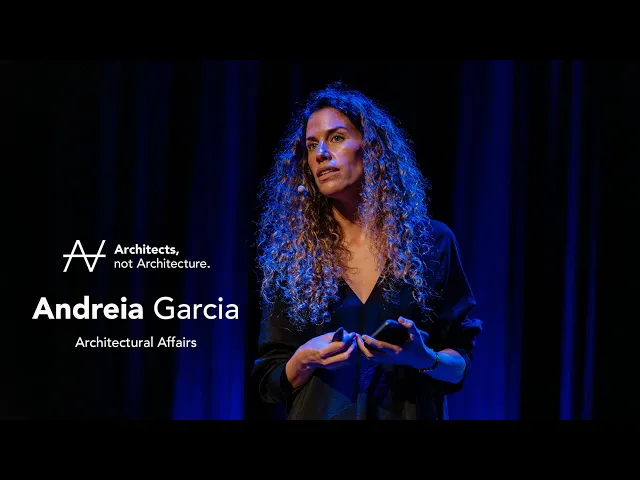
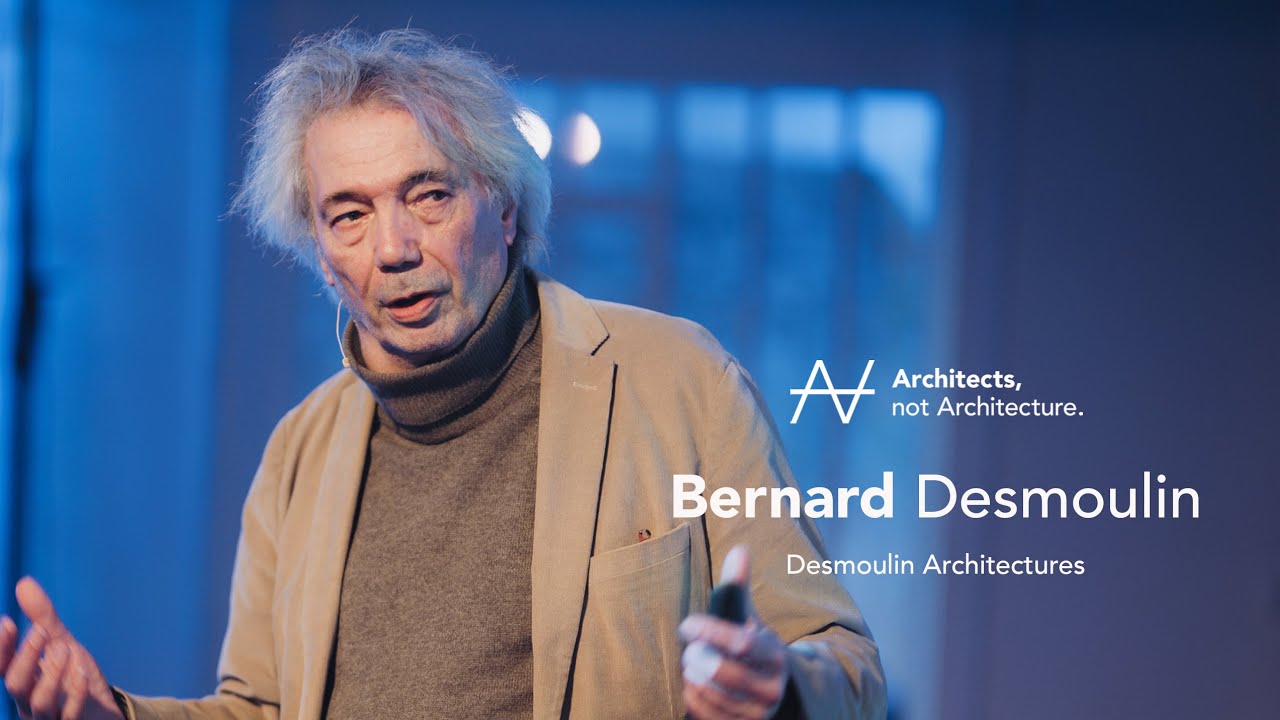
hey thank you fmin and Ana uh Team for having me here um so in fact and indeed is very um strange for us to be here we are Architects and we are supposed to talk about architecture through ourselves and somehow create a a timeline to express and explain why we do what we do in the way we do and how we see architecture in the way we do so um I divide my presentation I uh yeah I divide my presentation in three parts for today the first one it's about um the the sense of belonging
and uh fiction the second one it will be about more than architecture and the third one it will be it will be about um saving the future so um I'm Andrea Garcia and I'm the daughter of a father that actually never felt sense of belonging to some place some specific place and why because since he was born he was forced to escape uh from the country he was actually born so um after that when he become a little bit older he was forced again to escape again because he should um somehow um triy to solve
a political um force that was against and creating a movement of a war on the place that he was under the country that he was um living and on the opposite side I have I am the daughter of a mother uh that has a very strong sense of belonging she's uh she was born and raised in gimes Ming region and uh in fact those two let's say contexts and two different ideas of belonging somehow Define me and make me think about what actually really means and what and how that affects me also is important to
talk about my background so my ancestors from my father's side are coming from very different also contexts so my grand grandmother was British and there are people that were raised and born uh in Spain in Spain sorry in Brazil and then also in mosambik and then um they somehow in this timeline more recently they are based or they were based uh in the interior region of Portugal uh of doru known by Agricultural and uh also wine production from the other side from my mother's side people never left there so all my sisters are were and
still area based in gimes so I'm also born and raised in gimmer and gimmer was in fact and uh I must say I'm very pleased that I had uh the experience to learn from the city and through the city this medevial city from the plan of uh Tav and I'm very pleased that I was um let's say privileged enough to actually learn using the squares those streets uh this Urban set design and at the same time very privileged because I was um growing up there and I still can't feel home there so I'm very um
influenced by three kind of women women that are uh the ones from beta region because I'm very common and regular and uh in my daily base week still going there and working also there also from M region my mother side and also from door region and why because somehow and now uh I'm using the images from uh Maria Lage because somehow it represents what I intend to say that is the connection and the relationship that those women have even in the uh their struggling or misery uh condition somehow I always find beauty in the way
they resist the perseverance they have the way they struggle against all the uh situations that somehow uh appear also because they are very well connected with the Earth so everything they do somehow is very well connected with my own ancestors so of course I identify myself with that actually I didn't want to be an architect I wanted to be a filmmaker so for this first part of the sense of belonging I will try to explain how I become uh from filmmaker to an architect using some let's say collections of videos I prepare for today and
those videos uh you will excluse excuse me but some of them are very old so the quality is not very good and uh they represent somehow my sense of belonging so my places the ones that are based and myself raised in gimes puu uh lisan and KU we need to question ourselves about emergeny in various geographies of multiplicity of decent spaces and practices that in their diversity share the experimentation of collaborative ways of doing and thinking as well as ways of inhabiting a concrete space together as a young woman I wanted to be a filmmaker
precisely to create a rupture in the common Circuit of Transformations I wanted to temporarily transform squares and other public spaces into arenas for experimenting with common life reconfiguring the political landscape of cities whether they were GTO lisan Oro or in Jan M or a small town in England I believe in experience however small and imperfect as long as it was based on comparation in space and through space I ended up becoming an architect even though I never stopped capturing moving images like these my doubts problematize not only the actual use of cities not just the
potential of the physical configurations of existing spaces but also the way in which space is created through practices of memory imagination and worldviews as a formative element of social practices a medium that shapes everyday life not only influencing the existing social world but also potentially possible social worlds it was based on the abstract idea of the city and outlanding city that I began to reflect on the subjects that give or will give shape to the community we desire our common condition is linked to the threats that connect us to the Fabrics of our dueling to
the relationships between each user and the relationship they in turn establish with the place itself my main references at this time were enry Le an arand stav tritz nil Brer Christian schmith and franois CH even if I didn't become a filmmaker My Greatest Inspiration remains contributing to imagining worldviews worlds that can express common dreams and opportunities even across different cultural movements and surfaces so just continuing um to the second part so ever since I um when I was student and every since I was asked to draw a building I questioned myself um why is there
just one way to think about architecture because the professors always ask us to draw the first thing to do in in design class to draw and I remember once that that actually I felt that I wanted to write to do some kind of a Manifesto so that maybe brought me to uh to do or to create architectural Affairs so it's about creating relationships in different fields of knowledge and somehow contaminate them and uh collect memories on those different fields and those different uh c s of knowledge and somehow build something that could be uh for
myself creating a production of knowledge knowledge that will be distinguished from what I normally intend to do if I immediately just draw so I connect somehow building with publishing and also creatorship and yeah so as we shouldn't present buildings but we should explain how we see architecture I will show you again a brief video that will be also about the references contemporary references that somehow contaminate the way I do and the way I think and the way we do the things we do in studio but also it's very important because somehow it's my turning point
in the research that I do and the most strong contamination in the architecture I do [Music] [Music] Tech [Music] for for [Music] [Music] so I'm here like doing a workshop with a Artisan that works with keramics so we are trying to make like prototypes that are for irrigation systems to to make objects that could go in the in the landscape and assist the life of insects and the vegetal world we are going to try to install um some sort of sculpture that is a Potter that takes water inside with the sugar and that is trying
to attract the insects like especially ants and maybe some butterflies or or insects that are flying we are not dealing with um severe problems not like with the we are going to face like I think it's going to be worse and worst and we need to find Solutions and I think it's a very good moment when art like the art of the museums meets The Artisans and they try to build uh Solutions uh for the problems that we are going to face and I think in this example quite good like to uh connect the Contemporary
uh thinking and maybe things that are being lost with time this is the first time I'm um working with this material wicker and what I wanted to do is to see to do a a Ser of experience to see how I could use the Wicker in a more architectonical um Dimension you know but also I'm working uh I'm doing specific pieces to be shown in this beautiful building in the gonsalo village it's abandoned building all in Granite so the scale of the pieces and the shape of the pieces I'm producing with s Alberto The Artisan
relates a lot with the space where the pieces are going to be shown so it creates a tension between the pieces and and the space so the first um days I it was is really getting in touch with the material going to the fields and see the plant and the second part was to start one piece like a flat big piece that could be used as um a curtain and then the third part of the work is to create pieces for this specific architectonical space one big lesson in life that is uh things need to
last in time and my main worry now is how can I contribute bring people to know about this process uh about this uh techniques about this material and maybe you know like Architects and other artists can use this knowledge use this material as part of the architecture to build walls to build ceilings to build floors to build uh but it needs a lot of attention it needs uh public politics to protect this um this work so um yeah uh after this project uh I strongly um convinced myself that I needed to create bridges in between
the ancestral knowledge that I was very already sensitive about but also um somehow the relationship strongly uh managed by by The Architects with some other uh subjects like ecology some uh subjects like um the energetic transitions so somehow I thought that I needed to bring that not just to the studio but also to uh the University where I teach uh and actually I will skip the script for this image because today when I woke up I just remember about a sentence that was very important for me during the period of fertile future uh presentation that
was the 18th uh exhibition International exhibition of architecture from uh Venice and um this sentence is from Frederick Johnson how you say so it's easier to imagine the end of the world than the end of capitalism so that is why today it's so important this and somehow this is very important for the way I will end it [Music] [Music] up fore is soci [Music] so so if we had to take seriously the fact that architecture could be a part of this solution then the next question or the next theme that we have to address or
how for what means what kind of materials do we use what kind of architecture what are non-extractive architectures what are architecture that can call for reparations what is this so the starting point is okay I can could be a part of that but also kind of acknowledging our disciplinary boundary within that because these these systems of extraction are part of you know a larger larger structure it's a political economy it's space uh the architecture in itself it's multiple ideas sort of kind of intertwining to become the shape that we know the physical shape that we
know migor for [Music] spe comp [Music] so just to close and I will read because I don't want to skip now um this is also a Manifesto uh especially today so for me and this is about to saving the future the last part of the presentation all architecture whether is intentionally political or intentionally political is creating something is creating something in someone's image so for the future I hope hope to be more capable of questioning myself more about in whose image in the world being made a further future a fairer future does not exclude its
debate in the present rather being a platform for its freedom opening my mind to other special practices that were once dismiss dismissed is essential so I will keep questioning myself am I honoring voices that needed to be honored am I Iden ified with what I'm seeing around me and if I am not how do I strive to imagine the world differently how does my voice contribute to the long Legacy of my ancestors how can I listen more different places different communities how can I think differently how can I practice differently how can I gather differently
to counter the fism the fism lack of vision preconceived notions over overly pragmatic thinking paralyzed discourses and the inability to dialogue with those who have visions different to my own I'd rather stimulate my imagination not to indulge in pipe dreams that will never happened the way I imag imagined them but rather to make room for actual Transformations that have at the same time been foreseen and forethought this is also architecture responsibility this is about saving the future thank you thank you um actually the the video is kind of the projects as well with the right
with exhibitions sorry um you mentioned you say that it is easier to end the worldall than and the capitalism it is easier to imagine the end of the world than the end of capitalism now no how how com how comfortable do you feel yourself with uh capitalism comfortable I mean it's today you asked me that today yes I as you today well I think yeah I think it's our main um question when we Architects uh talk about uh humanity and social issues so of course capitalism is so uh structuring our structured now on the way
social uh Society is organized so I think yeah it's a a huge question um and it's also and of course based in all the system that somehow rule us uh so we all depend on us on that but at the same time we are maybe over dependent on them and also there is a lot of contamination on about this topic and the way the the policies and the politics on are being um uh done so yeah uh even today uh there is a lot of sentences saying and comment commenters um political uh comments saying that
um what happened in the United States was that democracy uh lost and capitalism won so that's why I think it's very important that we actually talk about the impact of that because of course there is impact in all the ecology topics that we bring uh here to the stage and the way we actually do architecture even if I want to be positive as n said before uh but yeah I I I need to be realistic at the same time so I think to talk about those topics without boundaries and having or being able to to
sit in a table with someone that think differently uh will probably create some new dialogues that we and the planet need very much in yeah and what do you feel the kind of architecture that will help for a better world needs to needs to have as part of the what do what what do we need to see in the architecture that could maybe make some steps in a good direction well I think there are um I'm not saying what is good and what is not because I also think that that always that's always uh depending
on the the culture uh to whom we are talking about the quality of architecture so I rather prefer to talk about the main topics that I think somehow are being um called to structure our um emergencies so I think the social topic is very important I think uh sustainability and ecological impact is also uh very important I don't I'm not saying what which one is the first one or the second one of course so climate changes we will face and we are already facing a lot of increasing of climate migrants so of course we should
be aware of a different distribution in all the planet so yeah I think Architects are being called to take part on the decisions and take part on the policies that are being made instead to just think from the economical perspective so yeah yeah it's very deep are very deep questions uh and how do you see do you see are you optimistic regarding what will happen today again today no tomorrow maybe today I'm still not I'm still not but tomorrow uh maybe I will be more uh positive thinking about the future because I think it's also
important because when we are mainly talking Architects for Architects um I think we we know that what we are doing today as a future impact is not it's not for uh yesterday it's not for the present is actually for a near future and a long future uh even if it's more ephemeral or less but the thing is I do I do believe um that no matter no matter what are the adversities we are somehow uh raised uh during all our life to have this ancestor resistance uh ancestor um resilience to and I know that there
are some people that don't like that much uh this word but actually I think it's it's the one that is precisely representing this idea that we need to believe otherwise we should choose another another profession so yeah and even when we are talking for new generations as uh we all here are professors I think we need to um somehow pass the message that there is still hope on this near future even if uh it's um somehow um depending on some um obstacles that are appearing in the in the journey but yeah of course otherwise yeah
no we won't be here there are obstacles and you had also some um you going to feel so uh comfortable asking about that but you have some uh healthy um issues um and I and I wonder how did you I mean it is sounds of like very naive to ask if you take something positive out of it because it's not nothing it's not not something nice but anyway maybe helps to reflect a little bit about our purpose and how we we use our time I don't know how did you experience that and if you took
any positive uh learnings or takeaways from that um thank you fman maybe some people don't know yeah I will I will maybe I will um give a little bit of context and fman ask me if I was comfortable to talk about that I didn't know you for sure you will bring this topic quick to the table but um Forman is talking about my uh previous years and mainly the last year and a half where I was which I was um diagn diagnostic di diagn I don't even know well well I received a diagnosis um of
two very um heart um and uh yeah heart disease uh to at the same time uh actually in the same week that I was appointed the curator of Venice um banal Portuguese Pavilion at Venice banali so yeah of course it's not the best moment to receive uh a news like that and mainly in my situation because I'm a woman and uh you know I was the first woman winning the compet the Portuguese representation competition um and the thing is um there was there were a lot of comment that is totally I'm totally fine with that
so I I I don't take them too much serious but the thing is when we are woman in in architecture field and even in citoral architecture or art field sometimes there are this um uh idea that you are there just somehow um occupying a void of Representative uh issue so of course that that could that happened to me uh that I was picked because of that reason uh and I needed to prove uh through my work that uh there was I was capable and the team was capable and I was representing almost 300 people that
we uh joined to the project so the project talk about fertile Futures so to think a future that could be more fertile no matter what and of course Very inspired in the woman the s woman that inspire me uh to do the things the way I do and I I still believe that I'm very privileged uh still even with all the surgeries I was doing during this period even if I needed to to live that in silence just a a a very um let's say tribal uh part of my people knew about that because it
was about showing the work uh more than talking about myself and then after the project I decided to raise somehow uh voice and to talk about um the both uh disease without any kind of taboo without complexities and just to normalize myself because this idea that we somehow someone uh give us in the University that we are super men or woman it's totally wrong we are just woman trying to to help other humans so yeah in the end I felt that I needed to talk uh just to ended up this uh chapter and to actually
also explain why I need to focus uh uh into myself in some in some during some months um that I I I was forced to to lie in in in a bad because of that so yeah every time and ever since um what I do even before because there were other complexities before um so complications I mean before so every since I think I'm more uh sensitive and empathic to everyone and even if I was raised to give value to all the people all the species everything all the spaces also no matter what um and
seeing the strength that was in needed to to develop that to build that to do that to be that um so during this process of being raised in this respect based uh now I think is more even more strong because yeah because when you think that you are this is very deep but when you think that you are dying you really you you you are more relative on about you consider that has value in your life yeah and in what you do and the way you perceive and you achieve your goals so we start to
celebrate more instead to do do do do so yeah how do you define then that's the last question we need to continue yeah how do you define then success what this been successful for you I think it's being uh humble to the values um that I I was raised for yeah so I think if I'm honest with myself I think that always reflect in the result of what I do yeah do you think it has was I you think it has some positive uh outcome for for your practice or some the way you even work
I don't know you mention more empathy more empathy more time more time also time for you I or because life balance is the topic as well time do the things with with the time with a little time yeah because we talk a lot about ecology and also about ecology of time um and we are being forced to always being in a run or in a rush to something to some delivered to you know architecture is like that publishing is like that uh and uh creatorship is like that all our lives the city the way we
live the city everything we don't stand so I think I'm um um yeah I was in the first periods of the disease I was not like that in in the first moments I was thinking but then I was always coming going back that yeah always going back but now yeah now I think since one year and half I think um yeah I'm more I'm more I transform the way I understand Ecology of time it's not about being in a rush it's about to be very conscious um about how long that it will it it will
take to be or to achieve that quality and it's not just the quality of the deliver is the quality of yourself mirrored in the result and I think that is a full package it's a balance here for the balance right it's it's equilibrium yeah Andrea we happy you doing better I'm totally fine I'm here even if my memory no a lot of pills no but uh I think I I did I did it okay that's important for us and you should remain strong and healthy no I am no I am our support thank you for
the nice talk and we'll have later a conversation with thank you thank you appreciate it
![Upbeat Lofi - Deep Focus & Energy for Work [R&B, Neo Soul, Lofi Hiphop]](https://img.youtube.com/vi/THh4fT0O7IY/maxresdefault.jpg)




![Upbeat Lofi - Smooth Beats That Hit Different [rnb, lofi hiphop, neo soul]](https://img.youtube.com/vi/r5z41QhyK7k/maxresdefault.jpg)