In this video we'll be covering what generative AI is. What machine learning is and the different types of machine learning, what LLMs are what's deep learning and all the other jargon you hear when you think about generative AI. This is Suraj and he's a non coder.
This is Siddhant and he's a pro coder. Siddhant, every reel, blog post and tweet is about generative AI today. Even Ola's founder launched the AI platform.
EY says generative AI is going to add 1. 5 trillion to the Indian economy. Sam Altman says that this is a bigger revolution than the internet itself.
So what is generative AI? Let's break it down. The term is made up of two things, Generative and AI.
So Generative refers to creating new content such as text, images, videos. AI stands for artificial intelligence, which is a branch of computer science. That deals with making computers and machines smart enough so that they can behave like humans.
For example, understanding language, recognizing objects and patterns. And when this AI starts Generating new content, that is called Generative AI. Okay but why is everybody talking about it now?
What happened? What changed? It's a combination of these three things, hardware, software, and data.
Since late two thousands, GPUs have increasingly replaced CPUs in all the AI tasks but what exactly is A GPU? The GPU stands for Graphics Processing Unit. Think of GPU as a team of workers in a factory and A CPU.
As A CEO. The CPU like the CEO by nature is a generalist. Which is really good at performing complex tasks and decision making.
It can handle a variety of different jobs, but it works on them one at a time. On the other hand, GPUs as factory workers aren't as versatile as the CEO, but they are great at doing simpler, repetitive tasks. And importantly, there are a lot of them so they can work on many tasks at the same time.
This is similar to how a GPU works. It has hundreds or even thousands of smaller, less complex processing cores that can handle many operations simultaneously. This makes the GPU an obvious choice for handling graphics and video games.
So whenever you play a video game or watch a 4k movie. Your GPU quickly renders images and videos by processing lots of calculations in parallel. It's like having an army of workers painting a huge wall at the same time, while the CPU would be like one person carefully painting detailed features on a small canvas.
Watch this demo of GPU vs CPU by NVIDIA. So basically GPUs are like graphic cards we use for gaming, right? But how is it being used in AI?
So GPUs aren't only just for graphics. Their ability to handle multiple operations at once makes them ideal for tasks such as artificial intelligence and machine learning. In fact, NVIDIA reports that since the introduction of GPUs, The performance in AI has seen an extraordinary increase improving by as much as 1000 times over the span of a decade.
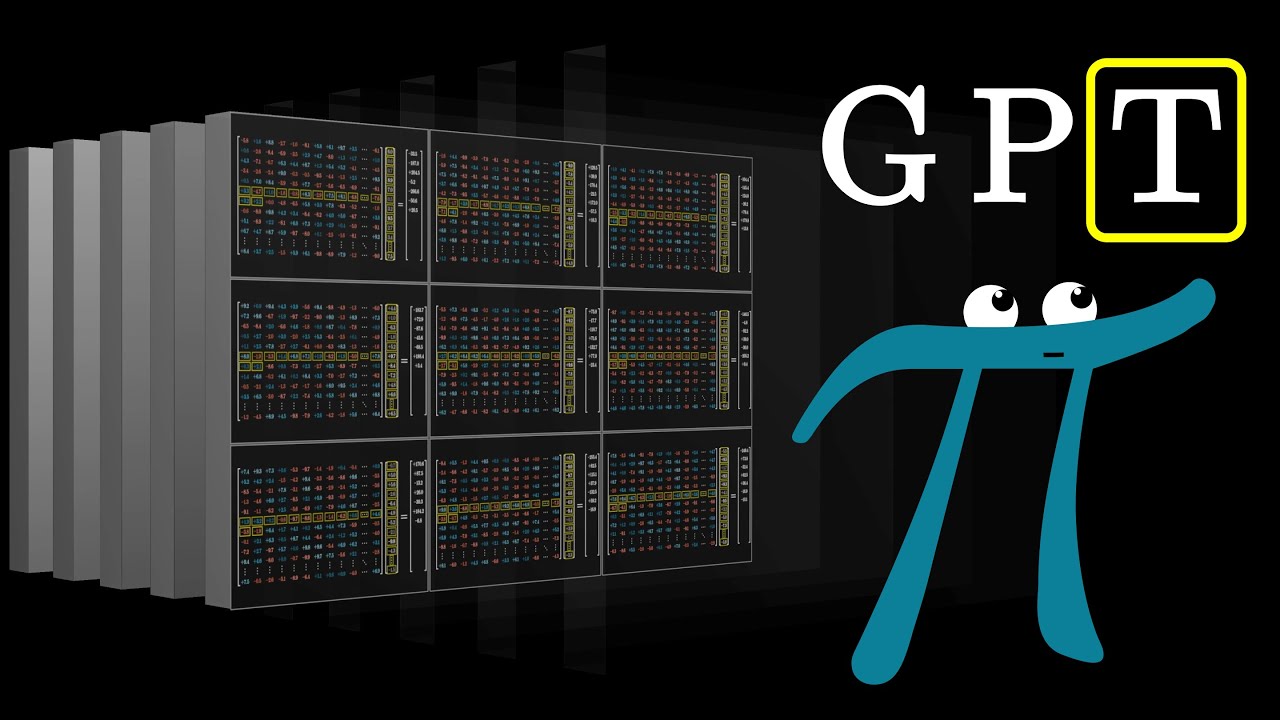
Now, along with hardware improvements, there have been notable development in AI research. In 2016, a significant breakthrough happened with the introduction of transformers in a research paper titled attention is all you need. This is the foundation of GPT-Generative Pre-Trained Transformer which became the fastest growing consumer app.
of all time Getting over 100 million monthly users in just two months of launch. GPD-4 even passed all the tough tests like bar exams and your SATs. But how did GPD pass the SATs and bar exam?
Even a normal person can't do that. It's really difficult, right? So this is because GPD was trained on a large corpus of Text data from the internet, including including thousands of books millions of articles and the entirety of Wikipedia.
So you'll know everything about each topic. Exactly. Okay.
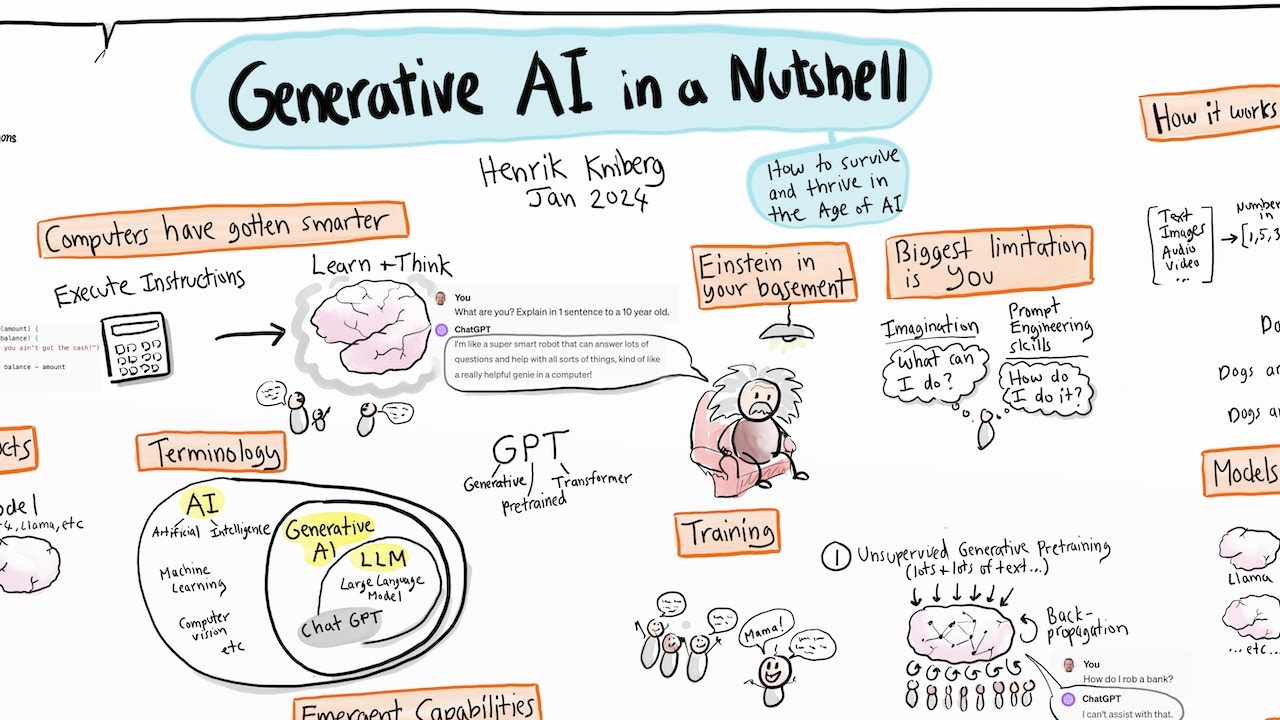
I'm starting to understand what Gen AI is all about, right? But what is machine learning AI got to do with this? So let's understand this one by one.
AI is a broad discipline. AI to computer science is similar to what physics is to your science. Machine learning is a subset, or you can say a type of AI that focus on building systems that learns from data and behave like humans.
It is a program or system that trains a model from input data that trained model can make useful predictions from new or never before seen data drawn from the same one used to train the model. Machine learning gives the computer the ability to learn without explicit programming, just like how human learns. And two of the most common types of machine learning models are unsupervised and supervised models.
The key difference between the two is that with supervised models. We have labels. Label data is the data that comes with a tag, like a name, a type, or a number.
Unlabeled data is the data that comes with no tags. so what I'm understanding is So what I'm understanding is that that supervised machine learning is when the data comes with tags and labels and the machine knows what it's learning, like it's a cat and dog and everything, it knows the correct answers. The unsupervised machine learning is when the data is unlabeled, so it's learning those structures and the patterns behind the data That's exactly correct.
You perfectly nailed it Suraj I knew it. But now I'm a little confused. What is machine learning and what are models?
So machine learning is a field of study and you can think of it as a process. And machine learning model is a specific output of this process. it is what machine learning system creates after being trained on the data, this model contains the knowledge and the patterns learned from its training.
Got it! That's machine learning. But what about deep learning?
So deep learning is a subset of machine learning. You can think of it as one more type of machine learning that uses artificial neural networks, What are Artificial Neural Networks? So Artificial Neural Networks are inspired by the human brains.
They are made up of interconnected nodes called neurons that can learn to perform tasks by processing data and making predictions. Deep Learning models typically have many layers of neurons, which allows them to learn more complex patterns than traditional Machine Learning models. And neural networks can be both labeled and unlabeled data.
In semi supervised learning, a neural network is trained on a small amount of labeled data and a large amount of unlabeled data. But labeled data helps the neural network to learn the basic concepts of the task. While the unlabeled data helps the neural networks to generalize the new examples.
Okay. Is this similar to generative AI? Yes, that's correct.
I know that's a very good observation. so generative. A.
I. is a type of deep learning which uses these artificial neural networks and can also process labeled and unlabeled data to generate new content. I guess this is all pretty much.
Humans also learn. You go to school where you learn the label data and then you go to the real world and you learn the unlabeled data. And at the end of the day, you come here and generate content, right?
so where do alums and all come into this? so large language model are also type of deep learning models. these models are large both in terms of their physical size and also the amount of data they have been trained on.
now, to understand how everything is connected. Let's move one step above deep learning and LLMs based on the type of output they generate. Machine learning models can be divided into two types Generative and Discriminative A discriminative model is used to classify or predict labels for data point.
For example, a discriminative model could be used to predict whether or not an email is a spam. Here, spam is the label and email is the data point. Discriminative models are typically trained on a dataset of these labeled data points, which means while training we will show model all the Emails which look like spams so that it learns the relationship between the label and data point.
Once a discriminative model is trained, it can be used to predict the label for new data points. In health care, a discriminative model could be used to predict whether a patient has a specific disease or not based on their symptoms and test results. for example, it might analyze blood test data to predict the likelihood of diabetes.
on the other hand, a generative model is designed to understand and reproduce the characteristics of data rather than just distinguishing between different categories or labels. Suppose we are training a generative model with pictures of cats. the models task is not just to identify whether an image is a cat or not.
Instead, it learns the features that make up cat images, shapes, colors, textures and patterns. Common to cats. It understands these features so well that it can generate new images of cats that look realistic but do not replicate any specific cat from the training data.
Large language models are a specific type of generative models focusing on the language, and GPT is one of the example of generative large language model. Okay, now I have a good idea of what gender is all about. Now I want to start using this.
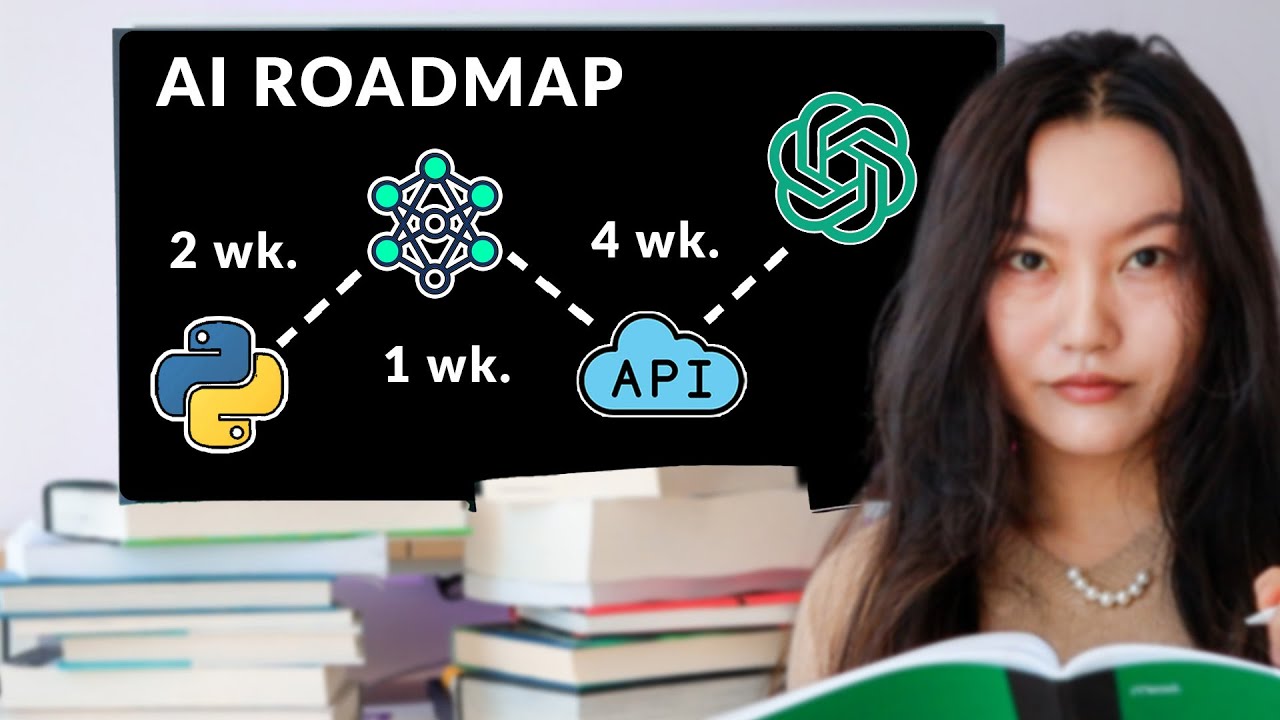
I want to start building models. So where do I start for that? Well, lucky for you, I'll be giving you the roadmap to become a GenAI engineer in this video.