yes get excited because today I'm going to show you how we set wait for it expense ratios I know that isn't very sexy but if you like the idea of never running out of cash then you are going to love this video now if you don't know who I am my name is Ryan dice my partners and I manage 17 companies across our $200 million Holding Group so we know a thing or two about systemizing businesses for scale and exit we know a thing or two about optimizing margins and what I'm going to show you
now is how we help our portfolio company CEOs set budgets even when they can barely spell p&l I'll even drop a link to my expense ratio analyzer tool in the description so be sure to check that out too as I go through these steps though I would encourage you scroll down to the description uh access download the expense ratio analyzer tool because when I go through these five steps I'd encourage you to work along in the tool the same way that we do step number one is to actually Define your profit margin now I want
you to write this down because this is really really important an optimistic entrepreneurs ability to spend will always outpace their ability to earn which is why profit must be determined ahead of time and I see this happen all the time it's happened in my own businesses right we get a little bit of success we get a little bit of growth we get a little bit of profit margin and now all of a sudden we go o we can finally you know invest in that enterprise software ooh ooh we can finally make that that critical hire
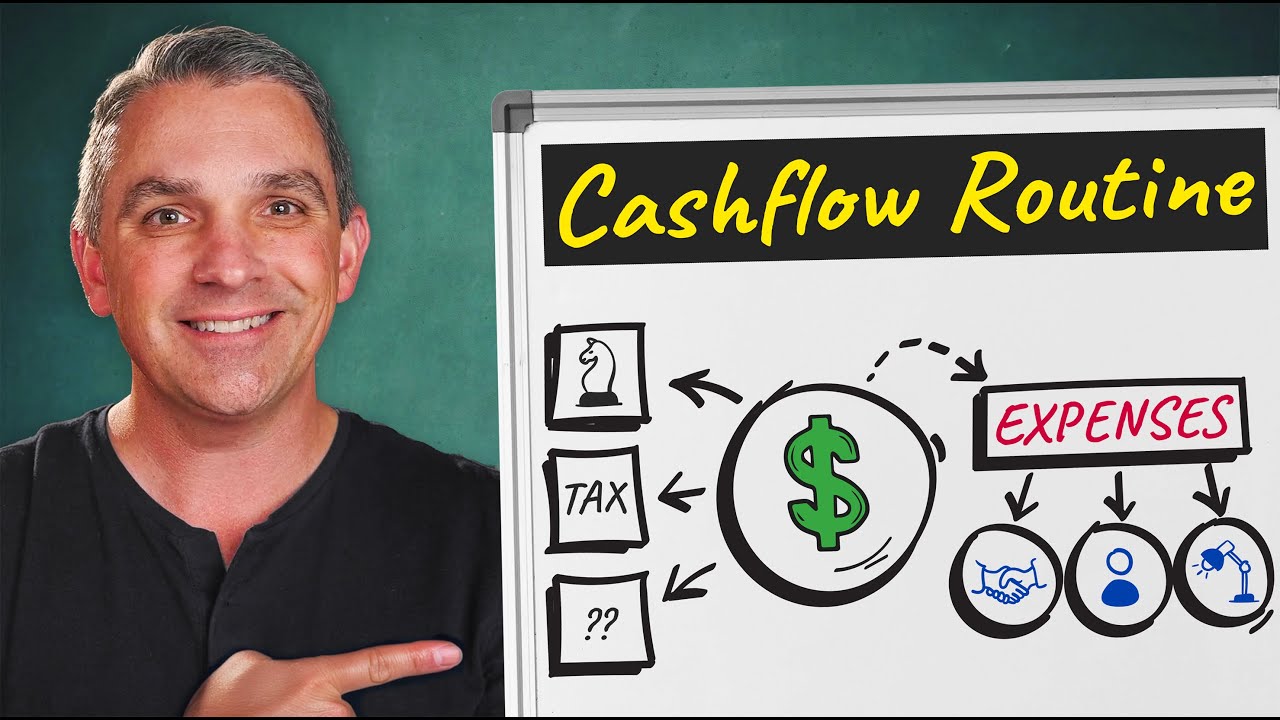
that we've always wanted however much we make we always find a way to spend it which is why it is critical that profit be baked into your projections ahead of time you've got to budget for profit ahead of time and I got to give credit where credit is due my good friend my buddy Mike mallwitz wrote a book called profits first I absolutely recommend it it is a fantastic um book he gave us a new formula for how to calculate profit so the old formula is revenue minus expenses equals profit and that makes sense right
if we take how much we earn if we take how much we spent what's left over is our profit it sounds logical but but the truth is it is wrong this is what we refer to as a logical lie so what is the new profit formula that Mike gave us it's very simple and it is this Revenue minus profit equals expenses in other words we want to bake profit in and work backwards to determine exactly how much expenses we're going to have so decide ahead of time what is your profit margin going to be and
work backwards from that number so that's the question right the question is what is your your target profit margin profit margin in the restaurant industry is very different than a profit margin in Professional Services or home services so I think it's just good to know what are kind of those General benchmarks for profit margin in your industry what's considered good what's considered okay what's considered bad if you know that range that's where I would start and I would try to come up with you know what you think is going to work for you the other
thing that you could apply is what's known as the rule of 40 and it simply states that your profit margin and your growth rate should be 40 or higher okay so that's the rule of 40 so if you got a 20% profit margin and you're growing at 20% that adds up to 40 more general rule of thumb for calculating what is you know appropriate look at your growth rate subtract it from 40 that's probably around where your profit margin should be if you can't guess at the end of the day I found that 20% is
a good Benchmark in most of the businesses that we work in a 20% profit margin is what many of them are targeting if it's a good place to start and I would say at a minimum 10% now we can move on to step two which is to brainstorm your expense categor so what are these different buckets of expenses cost of good sold um people so that's your salaries variable compensation benefits all those things what are you spending on sales and marketing tools and Technology Merchant fees is a biggie um that that a lot of people
will forget uh facilities so rent utilities General administrative you know R&D pause go back take a look at at your general categories of expenses and when you've done that I want you to come over here on the expense ratio analyzer and I want you to add them to this expense categor you can see here we pre-filled it with people for most businesses that is their largest expense uh cost a good sold certainly a big deal if you have a physical products business manufacturing uh marketing and advertising that that's another big one the cost of customer
acquisition Merchant fees GNA facilities tools and Technology maybe these apply maybe they don't feel free to edit it if we look at this example here you know they people cost a good sold you saw some other ones this this company does events they added a miscellaneous category here so just again take a minute brainstorm what are your major expense categories drop those categories in and then we'll move on to the next step for step three we want to set your target ratios so we're not going to look at how much are we currently spending in
these expense categories we want to have a general sense of what should we be spending in each one of these categories now there's a chance that you don't quite know you don't know what it should be if you Google financial ratios for restaurants the Google machine will just tell you on average here's about how much restaurants spend on staff here's how much they spend on facilities the important thing I want to keep in mind at this point is is we're not really shooting for Perfection okay this is not about you know having the ideal perfect
expense ratio I want you to a certain extent at this point to lean into gut what feels right to you and so when we go back to our expense ratio analyzer you can see here there is a spot where you can fill in what is the target ratio so maybe you feel like people really it should be you know shouldn't exceed 25% and cost a good sold 15% um but that Target profit margin we're going to fill in here we're also going to put in our average monthly revenue and once we have our average monthly
Revenue our Target profit margin this is going to give us our Target profit also whatever we put here it's going to autofill down here this is what I mean by baking in profit ahead of time this tool will not allow you to set your target ratios above 100% in other words it won't allow you to spend by for planning purposes to have expenses that exceed what your target profit margin is this is what I mean way back in step one which is want to decide ahead of time what is that Target profit margin we want
to bake it in we bake it in by filling in this box which is going to fill in this one now as you go through and set your target ratios it's going to say you down here and if and if you were to say oh you know what in reality maybe you said at the ahead of time this should be 35% well if you do that you can see it's going to go red CU you're at 110% similarly maybe you say 50 % well we do want to make sure that we are accounting uh for
everything appropriately so it's yellow cuz cuz you're under step number four is to compare your target to your uh actuals and this one again is maybe going to take a little bit of time and research on your part but once you've identified your target so if you say it's 25% based on this average monthly Revenue here so let's say 25% that means that they should be spending about 28,000 on people so this is going to give you and and if it's gray background it's being pre-populated you're not filling these in so this tells you based
on the percentages Target ratios you set here what your actual spend should be then what I want you to do is to go back and actually look at your p&l talk to your accounting your Finance team and get really really clear on what are the actuals now again we're looking at a snapshot for a month this is not intended to be a formal financial planning document so we're kind of saying on an average month a general month not necessarily last month if it was you know if everything was crazy but what are our actual spend
for these different categories and as you plot in your actuals it's going to tell you the difference and you can see this particular company right here well they're in the red in a lot of places there's only one area where you know they're currently under spending now if you look here they're negative $135,000 per month on a Target profit of this if their target profit margin is 20% Which would equal 166,000 in bottom line profit based on that 20% well they're over spending 135,000 and this is why for this particular company some some months they
make a little some months they break even some months they lose and you got a $10 million business that's dropping nothing to the bottom line because they're not planning for profit ahead of time what they would need to do at this point and this is step five is to begin to reallocate spend based on those Target ratios so we need to go back here and we need to say okay yeah we got about a $7,000 difference here you know do we need to go through and and and do some layoffs move some things around reduce
some salaries maybe we do maybe we don't we're going to start though with the ones that are the most overblown let's look at this one right here they're overspending on technology and tools by $43,000 they're they're almost like double over what they feel like it should be so this might be an area to look in and to Make Some Cuts similarly why are we spending so much on events what's this $7,000 miscellaneous you know 15,000 is being spent on the production side of things can we save some money there if you go category by category
and and you look to like I said reallocate to make sure that the actuals match the targets what you're going to find and it's not always you know fun sometimes there's difficult conversations sometimes Cuts need to be made but if you do this you'll find magically uh at the end of the month there is more money left over than there was month which means you get a distribution which means there is more money to put back into the company uh if you want to it means the profit actually happened because the profit was planned ahead
of time like I said there is money that is hidden in your business where is it hidden it's hidden in these categories right here where you're spending a bit more than you should and if you want help with this this is what we do with our clients all the time at the scalable company we'd love to work with you drop a link in the description for how we can do that as well either way hey if you want wind up going out there and finding a bunch of free money drop it in the comments let
me know I'd love to hear about it that said thanks for watching I'll see you in the next one









![Businesses that Always Fail? 7 Businesses with Shockingly High Failure Rates [Backed by Data]](https://img.youtube.com/vi/WTDYuRVZDbo/maxresdefault.jpg)