and its website by the hosts guests and calling listeners or Chatters are solely the opinions of the original Source Who expressed them they do not necessarily represent the opinions of Revolution Radio and freedomslips.com it's staff or Affiliates if you're listening to Revolution Radio freedomslips.com 100 listener supported radio and now we return you to be your host [Applause] [Music] thank you ladies and gentlemen welcome back to another episode Edition uh of cosmic catastrophe on Revolution Radio where information never sleeps I am Diamond your host from the Oppenheimer Ranch project and magnetic reversal news and this is
my lovely partner and co-host Leah shaper hello and you are unmuted we always have this chaotic moment just minutes before the show starts where Leah can't connect to the RB Delta uh the radio channel well I can but I can't hear it it's it's like a dumb Windows problem of course but we always manage to work it out in the last 60 seconds here now today's episode is going to be fascinating and it's certainly going to cover multivariate topics that are of interest to many people the title is ancient DNA and what do we know
so today we're going to be talking about some of the oldest DNA ever discovered how they they discovered it uh and the implications for these discoveries now until very recently um the oldest DNA we knew on Earth was just pushing one million years old about 1.1 million years old and then this breakthrough came about in the last decade using a technique called e-dna which is environmental DNA now this is DNA that you're shedding off of your skin right now it's laying on the floor uh if you go outside and just pick up some soil like
every animal that's been in that region they'll be Magpie DNA and pig DNA and chicken DNA if you have a farm but until recently we didn't have the techniques really to sequence these uh small fragments of DNA and to understand what they meant but now we do and this is leading to whole Fields uh new breakthroughs in paleontology like I didn't have this in Academia we had nothing like this where you could just take a sample and run it through a machine and find out all of the phylogeny that means all the animals living on
that plane I mean that is absolutely fascinating yeah I mean you definitely would need to be work working with like a geneticist right somebody who's because the the technical realm of sequencing all of these dnas is quite Technical and you would definitely need to work with somebody who knows what they're doing but yes amazing paleontology labs are now genetics Labs you know genetic paleontologists into the fold yeah it's absolutely fascinating but you failed to mention that this oldest DNA this this environmental DNA that we're talking about now is we're now finding it at the 2
million years old yeah or older and I think that we may find DNA 2.6 up to 3 million years old in the near future and we're I'll show you why and I believe I will prove my case now how do we get preservation of DNA and how can it be preserved this long that's the question well if it's just laying out in a field where it rains all the time like in the low latitude the DNA is going to break down quite rapidly because it's biological material and and it's just going to break down in
the soil and become dirt but if you freeze it it remains pristine and the reason why is because we're going to talk about permafrost in a minute the first half of the shell is going to be permafrost second half of the show will be covering the paper about this ancient DNA now the DNA is being found in permafrost which is permanently frozen ground once the ground is Frozen for two years it's considered permafrost but we have permafrost that literally have been frozen since the beginning of the Ice Age that's arguable between 3 and 2.6 million
years ago is when the permafrost the oldest permafrosts that are still frozen became Frozen that is mind-boggling but but what's even more fascinating is that this paper that we're going to talk about we're looking at DNA from a much warmer era where there would not have been permafrost and the reason the DNA is preserved is because it is sticking to certain clay minerals quite well and quartz yeah so when that's preventing its breakdown Frost soils first of all let's just give you a basic definition permafrost is permanently Frozen layer uh on Earth's surface it consists
of soil gravel and sand and it's usually bound together by Ice in order to be permafrost it has to remain at or below zero C or 32 Fahrenheit for two years like I said and some of it's been frozen continuously for millions of years now permafrost can be found on land and even below the ocean so some of the Arctic ocean floor is still permafrost because it was above sea level back in the Ice Age when sea levels were 400 feet lower it's now been inundated by ocean water but the Arctic Ocean at the at
depth is like 27 degrees it's below freezing so the permafrost below the ocean is still frozen that's pretty fascinating that's very interesting yeah and the most of the permafrost is found in the Arctic region I'm going to pull up a map here in just a second so we find it in Greenland in the northern U.S uh in Alaska Russia China and Eastern Europe and I will share my screen and let me know when you see the map you see it I see it yes okay so here is the permafrost map and we are going to
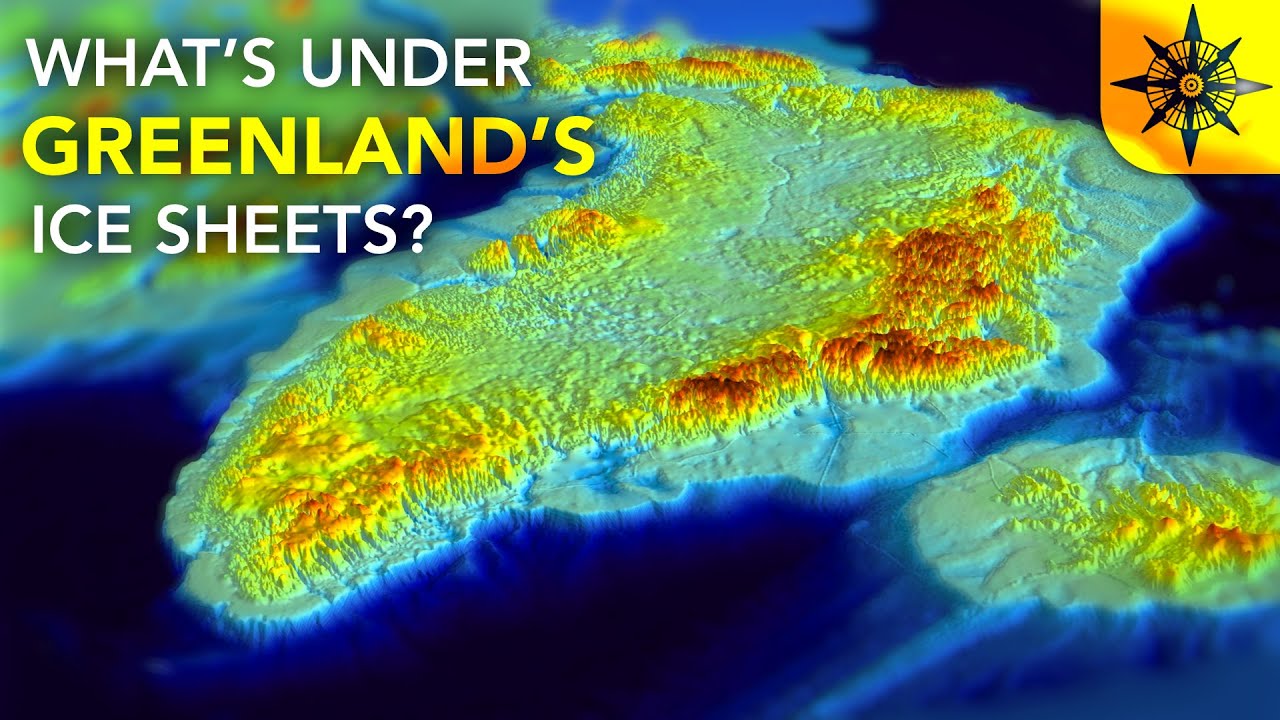
be uh focusing on the dark purple regions now the paper covers uh Northern Greenland up here where the purple is exposed uh and it also goes so far back in time at the beginning of the Ice Age when it was warmer than it is today we're even going to talk about some fascinating breakthroughs in this first half that show that the Greenland ice sheet was once three degrees Centigrade warmer 126 000 years ago and it didn't melt because they have a continuous core through there and they have very high resolution temperature data it's mind-boggling so
uh any any thing to add on this map no no just just that the like the particular area that we're talking about where they pulled these samples is like if yeah right about there yeah and it's in the Arctic Circle so yes so we're looking at a map looking straight down on the rotational pole of Earth that shows all the Northern Hemisphere and the locations of the permafrost and the dark purple regions have continuous permafrost over 90 coverage this means that these are the regions where the ground could potentially have been frozen since the beginning
of time now some of these permafrosts they vary in thickness they can be as thin as a meter and they can be as thick as right here uh I found the thickest permafrost in Russia is 4898 feet wow now the interesting thing about that is this is the geothermal limit for permafrost can you can you think about what that means meaning that the deeper you go the the warmer the temperatures are going to be simply because you're reaching towards the mantle is that sort of what you're suggesting yeah and just like you dig underground here
it's 54 degrees that's warm right right so up in the Arctic regions or in Siberia here at 5 000 feet it's warm and you can't make permafrost so any deeper is warmer and that is pretty that's pretty fascinating never knew that until I did this research yeah so some permafrost is a few meters obviously scientists are going to be looking for thick permafrosts if they want to go look for DNA you want it you know to be preserved or something and so here's how the preservation of permafrost began permafrost is a recent thing on earth
it's only been around for about three million years and prior to that there was no permafrost until the last ice age which is hundreds of millions of years prior so that's a interesting and fascinating fact that permafrost is a recent addition to Earth's biosphere I don't quite understand how we know that the so this is how we know see this dashed line here in the last five million years yep uh when we descended more than 50 below that that's when ice and the Ice Age began and prior to that temperatures were much warmer on Earth
okay so there was no area on Earth that was permanently Frozen like today yeah the last three million years is the coldest the Earth has ever been and nobody understands that foreign that's hilarious isn't it yeah I have to interject here something that I found very uh hilarious the first sentence of this paper that we're going to review says uh global warming yeah an early pleistocene epoch's 3.6 to 8 million years ago had climates resembling those forecasted under future warming but what I found very funny is that the article that previews this paper does not
mention that at all right it's very inconvenient to say that it was warmer at some point than it is now well we're going to talk about this fight do you see this one Spike right here on the graph yeah this is called the emien the eemian epoch it is three degrees warmer than it is today three degrees C which is a lot at Fahrenheits yeah and we're worried about like a 1.5 degrees C is the end of the world it's so ridiculous and not only that the Greenland ice core shows that Greenland didn't melt there
was still an ice cap and there were still ice building during the emien yes in fact there's a continuous Greenland ice core for a a very long period of time I think over a million years right now in high resolution and and this this time period that this paper talks about also mentions that the annual temperature in this area of Greenland would have been 11 to 19. oh no maybe that's the whole glow but 11 to 19 C above our current values yes yes but yet permafrost laughs now the oldest permafrost yet discovered in Siberia
are only about 800 000 years old so that means any work in Siberia um looking for DNA is only going to go back 800 000 years because that's how that's the oldest permafrost that they've discovered so far and out of those permafrost we've had breakthrough scientific studies where they're finding uh in this case a 24 000 year old uh animal that's still alive take a look at that what is it it's a microorganism yeah I see that but it's a better Lloyd rotifer which is like a microorganism that lives in a puddle you know when
you're a kid yeah and you get your first microscope and you look at the puddle water [Laughter] but they they drive to 20. a 24 000 year old microorganism look at that and then you've heard of like the zombie viruses they're finding like 40 000 year old viruses yeah yeah now the reason is is because we're in an ice age we have permafrost and the areas that we have permafrost are freezing here's Antarctica it's in Antarctica in case you didn't know it's never above zero and people say it's going to melt isn't that ridiculous the
average temperature in Antarctica is minus 20 C it almost never anywhere gets above zero and they're telling us Antarctica is melting laughs you know I I would can I interject with a funny here I was watching uh briefly an interview that sir Savannah Hernandez was doing with college students and she finds this young woman who truly believes that the world is going to end in six years because of global warming but she's in college it's like why are you going to college then well she'll have a two years after she graduates to make some money
do what before the end of the world now let's go up into the Arctic and and this is interesting because the Arctic gets above freezing unlike the Antarctic and in a lot of the places it gets above freezing for months and that's how the alarmists show like uh up in svalbard here this is the svalbard temperature graph in the summer when it gets 7c that's warm ice melts they show the melting snow running into the seed Vault and they're they claim it's the end of the world right yeah this happens every summer there yeah flow
and behold yeah they regret to inform the public that every summer this happens because it gets above freezing for three months oh my God the ice is caving off now what doesn't happen is the ground the permafrost doesn't thaw because on top of the permafrost in areas like svalbard you've got frozen soil which stays Frozen for the winter and to the spring and keeps the permafrost Frozen underneath kind of like a blanket yeah so at a certain depth it's continuously Frozen in areas like svalbard now just a side note what would happen if the Earth
catastrophically tilted 90 degrees would this permafrost melt not immediately it would take quite some time yeah so let's say it stayed there for a day or so no more than a day right because anytime you have you know a mass of ice or snow it takes time to melt you know I mean we see this on a regular basis Every Spring right we have a pile up of snow on the north side of the building and it takes months to fully melt even though the temperatures are above freezing yeah all right so we're gonna go
over to Greenland here what were we I just I thought I had another graph of the Arctic I thought I had one at Greenland to show the temperature but I do not so this is Val Bard will have to do it just proves my point that land masses in the Arctic get above freezing every summer it's not because of global warming it's what happens there mm-hmm and so that brings us to Greenland and a couple of things I just put a video up on our Rumble Channel called Viking ice which has to do with this
part of the northern Greenland ice program um and the scientist on there is talking about how warm it was on Greenland just a thousand years ago and an even warmer 4 000 years ago and six thousand years ago it was three degrees two and a half degrees C warmer than today and he concludes that it's going to be very hard to convince anyone that any of the warming we've seen since 1880 is man-made right right because it's the natural it's the same it oh and the natural cycle I would argue even outshines well the kind
of warming human beings would ever be able to produce if we're producing it at all which is highly doubtful yeah so if we look at the hundred thousand year scale and some of the Antarctic data here from vostok we're going to talk about this emien period right there that is the last interglacial prior to the one we're living in which they call the Holocene so here's the Holocene the last 9 000 years and then for about a hundred thousand years it was a frozen tundra the Earth it was the ice age and then there was
another interglacial where it was warm it was in fact three degrees C warmer than today and the Greenland ice core goes past it for tens of thousands of more years they literally have this spot this time this year this exact year it was this High 126 000 years ago it was snowing on Greenland and there was Ice building yeah so all the fear mongers that everything's gonna melt there's no evidence for that in the scientific data um and that's when this uh paper was published Greenland defied ancient warming allowed it to be printed 2013. right
it cost 40 bucks to read it isn't that crazy that's always that way so what does that mean what if Greenland was still building ice at the warmest time in the last 200 000 years uh I don't think we have a lot to worry about with CO2 how about you no no nor nor uh sea level rise yeah that's not also part of the normal natural cycle of Earth well we can just go back 400 000 here and see that there's a regularly occurring about a hundred thousand year cycle but it's not exact like you
know Ben Davidson's 26 000 year cycle these are definitely different sizes and scales yes this is the shortest cycle this is a little bigger this is even larger and the last one was even longer mm-hmm so if there is a clock like catastrophe cycle it's right now on about a hundred thousand year scale would you agree with that yeah but that's a new development in the in the catastrophe cycle let's look at the last five million years the hundred thousand year catastrophe cycle has only been going on for the last million years prior to that
it was a 41 000 year cycle which matches perfectly with the milankovic orbital perturbations of uh obliquity um it's 41 000 is the obliquity of Earth and then the hundred thousand year cycle matches with malankovich's eccentricity cycle right so the real mystery here is why does the cyclicity change what triggers that and that's what we don't know and if it is uh orbital perturbations or Dynamics what changed it what changed it from being the obliquity of Earth causing ice ages to being the eccentricity of the orbit they're not related and it's it's weird that it's
switched click yes well I mean it certainly suggests very strongly that something significant happened in our solar system right yeah or or something changed in in the mechanism that's the driver of the cycle like if it's external if it's galactic yeah something shifted in the input yes so the good news is that we don't have another major catastrophe that like the younger driest coming at us anytime soon because after an interglacial this is the big catastrophe the last one was a hundred and thirty thousand years ago it lasted five thousand years where the younger dryas
had two parts and lasted a lot longer um uh there's the bowling allerod warming right there that was the beginning of the catastrophe when is that fourteen nine yeah some thereabouts and it lasted for about four no four or five thousand years so it's the same length this one is the same length of time as the younger driest catastrophe which again yeah so after that what happens is a quiet descent into glacial nightmare which takes tens of thousands of years and then you stay frozen trying to recover in this case there were two glacial maximums
both of these were probably terrible on earth right here sixty thousand and eighteen thousand five hundred years ago so we don't have another big catastrophe coming for over a hundred thousand years well that's not a not an Ice Age catastrophe anyhow meaning a rapid warming and the sea levels Rising inundating everything right but there are catastrophes in the reverse Direction sometimes they're called Heinrich events where huge amounts of ice wash into the ocean shut down the circulation because they freshen it and then it just screws up all the weather and that's what deepens us into
the Ice Age yeah kind of like the release of the Beaufort gyre would do to the amok all right if you have any questions please leave them below but we're on a radio channel so this is this is going to segue us into the paper a two million year old ecosystem in Greenland uncovered by environmental DNA in the second half we're going to cover all the implications of what this paper says uh but before we go to break I'll just read to you a little bit about environmental DNA and I think I covered it earlier
it probably says the same thing environmental DNA is organismal DNA that can be found in the environment yeah and this material is usually shed by organisms including their skin or their poop or you know if you bite your fingernail and spit it out or if you even spit you've got some cells in your spit why do they call it organismal DNA what other kind of DNA is there I'm not a geneticist so maybe it's just like in science you know how you in geology we use big words and we could just use small words [Laughter]
foreign in this case you could probably just eliminate the word altogether but anyway it's important for the detection of invasive species because you don't even need to find them you just sample the soil run the test and say oh my God there's zebra mussels near here so I guess that's what they're using it for but it's also going to be a game changer for paleontology in the recent past meaning the last few million years oh and you uh do you have any uh talking points about the paper before we head into break uh not particularly
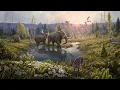
I'm sure in general these are real scientists they're they're sitting on this bank here of permafrost in Northern Greenland taking samples you can see that they've raked or removed the surface um that's going to be affected by weather and they're trying to get down to pristine material in here and then they take a core of perpendicular directly into this soil and that's how they take the samples they're also trying not to contaminate it with their own DNA you can see they got Tyvek suits on yes we don't want to be inadvertently showing the existence of
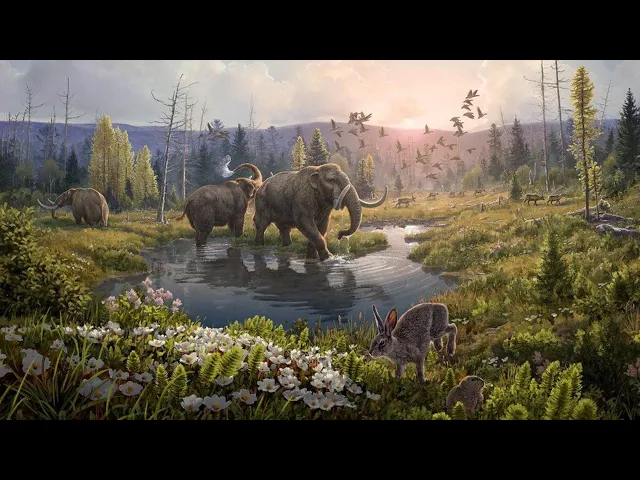
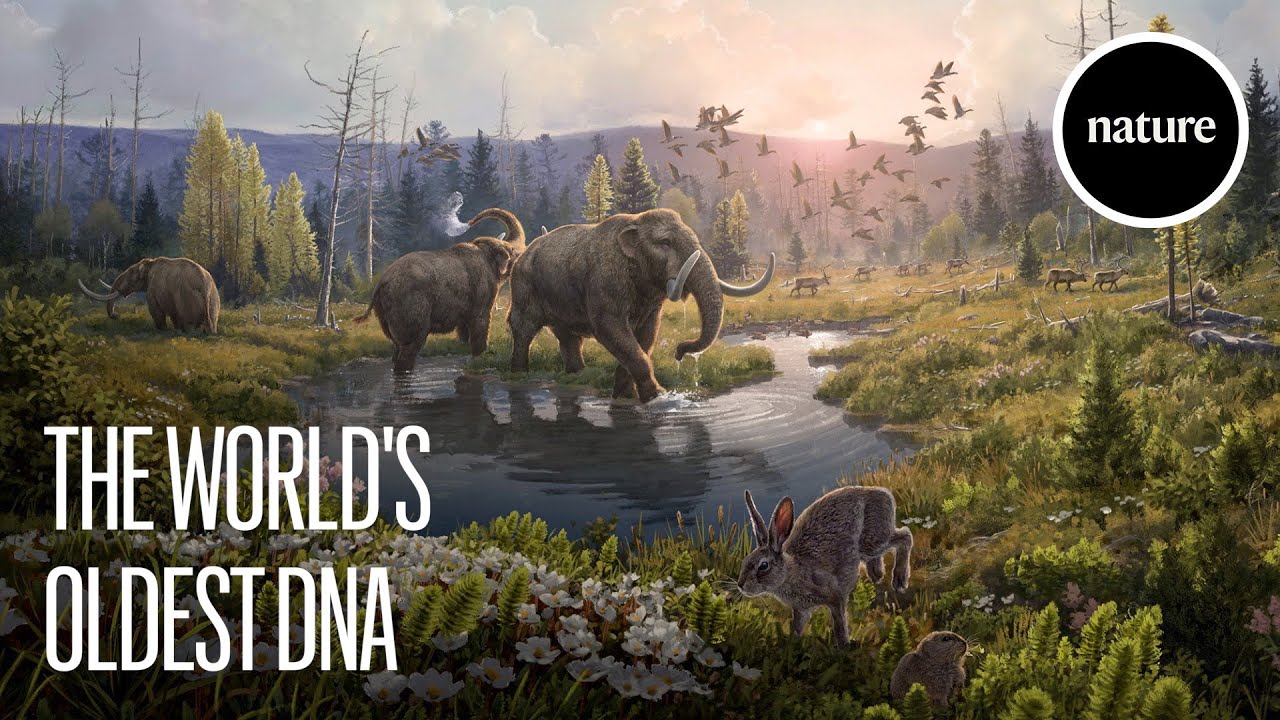
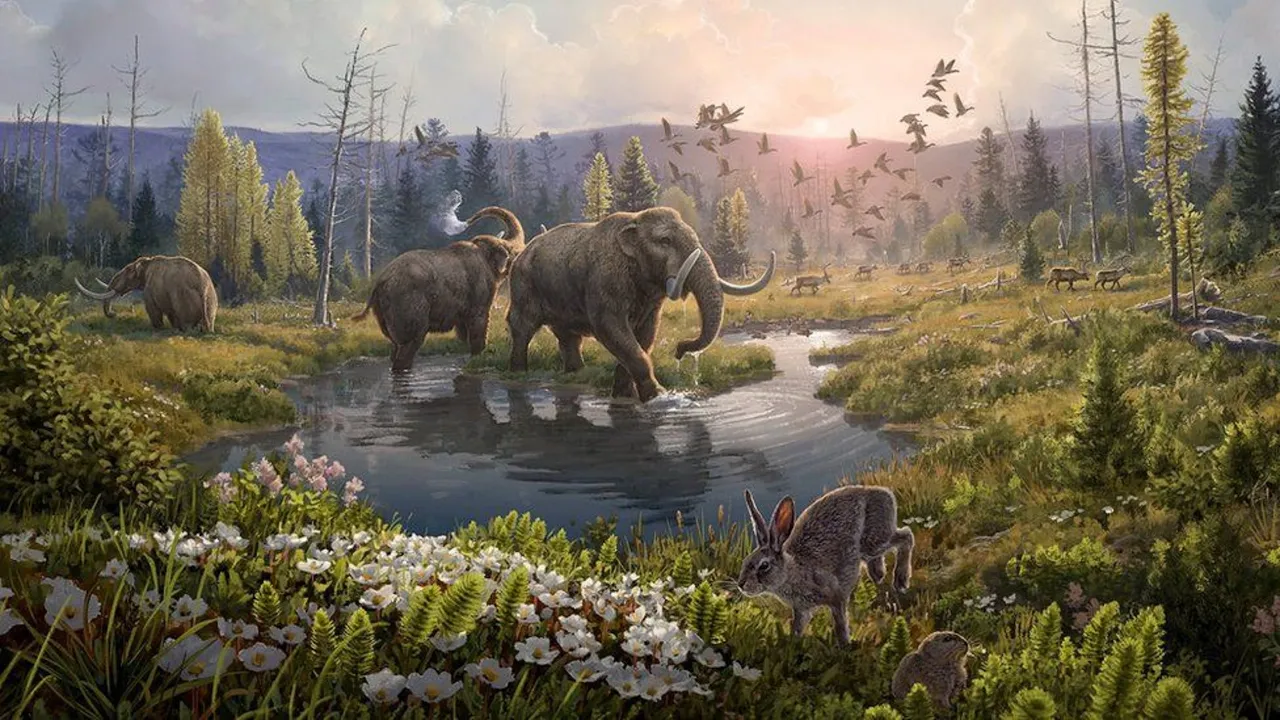
humans when they might not have actually been there yeah and there weren't any 2.6 million years as far as We Know but this is the picture and what we'll be talking about that they came up with now this is so groundbreaking because first of all woolly mammoths not a single fossil has ever been found on Greenland and then they run this test and it's filled with woolly mammoth I thought it was Mastodon Mastodon yeah related what it's a giant elephant it's a giant elephant yes they also found hairs as you can see there and numerous
other animals including geese and they did not find any carnivores only herbivores that sounds like paradise it does I mean it really does the picture that is painted I think that this is actually very fair and accurate the way that this is rendered because it suggests like a very Lush vegetative environment with lots of things for herbivores to eat [Music] listen to Revolution Radio freedomflips.com and we'll be right back after this message [Music] who owns you if you're not in control then someone else is join me Ivy West for voices on the win Saturday I
discuss government Health metaphysics suppressed science Universal Mysteries little-known incredible facts alternative energies and even more than you can imagine [Music] won't you join us on Revolution Radio Saturdays for voices on the Wind with me Ivy West [Music] [Music] [Applause] [Music] because if your head's in the sand your tail is a target thank you for listening to Revolution Radio freedomslips.com the number one listener supported radio station on the internet please help support this station so this battle can continue forward Revolution Radio [Music] there have been imaginative science fiction writers for Generations be evasive but that doesn't
mean what they're telling the truth as opposed to fiction I know I'm aware of some archaeologists that have uncovered Menards that bones indicating Giants in Virginia and Genesis chapter 6 verse 4 and there were giants in the earth in those days and also after that when the sons of God came and over to the daughters of men indicating that there were giants before admitting and sons of God plural they weren't talking about Jesus coming down that's right yeah I'm Steve Steve Crawford join me every Thursday night in Studio A at 6 PM Eastern for Factor
Theory live find us on www.revolution.radio [Music] great guests and great stories what do you believe join me in the Brian Rue show on Revolution Radio Eastern Standard Time every Tuesday night from six to eight we talk about the foremost vital things in my view affecting all of humanity number one is UFOs and aliens and their agenda for the advancement of humanity number two is the Jewish establishment's control over all aspects of human civilization number three the truth about Adolf Hitler how he was the opposite of what we've been told number four is Advanced ancient Global
civilization destroy me on the Brian Rue show Tuesday nights from 6 8 on Studio B on Revolution Radio foreign [Music] flips.com any commercial advertising you may hear in this program is there'll be sole discretion and benefit of the host of this program you are listening to Revolution Radio does not endorse any commercial products nor does it accept monetary compensation for on-air advertising of commercial products nor will it ever we are and shall remain 100 listeners supported any product advertising on this program are considered used at higher risk and Revolution Radio shall not be held liable
for any claims or damages received from any product advertised within this program Revolution Radio where information never sleeps [Music] foreign [Music] s expressed on this radio station its programs and its website by the hosts guests and calling listeners or Chatters are solely the opinions of the original Source Who expressed them they do not necessarily represent the opinions of Revolution Radio and freedomslips.com it's staff or affiliate you're listening to Revolution Radio freedomflips.com 100 listener supported radio and now we return you to your host foreign [Applause] [Music] so we're talking about this paper here uh and we
had a wonderful segue Leah nailed it a two million year old ecosystem in Greenland uncovered by environmental DNA now the paleoclimatic records show strong polar amplification with mean annual temperatures in this region 11 to 19 degrees C above contemporary values that's a lot that's quite a lot now for those that don't know polar amplification is what the alarmists are using right now to scare you to death where it's the Arctic is warming four to five times faster because it's actually a phenomenon that happens when the earth warms slightly as a whole like we've been doing
since 1880 which is the coldest time in Earth's history 1880 and that's when we started keeping records of global warming that's absolutely first of all disingenuous what are your thoughts on that like it's the coldest ever is 1880 that's where we start records I mean the Earth is four and a half billion years old right and so what a ridiculous supposition and we start the warming record at the coldest point 1880 and say we're all burning up so polar amplification happens uh when the net change in radiation balance for the Earth produces large changes of
temperature near the poles than the planetary average so if it's just warming a half a degree at the equator you can get 10 degrees up at the polls sure foreign that's just that's what polar amplification is all right let's so let's get to the screen share the screen and let's get to the paper so this is the beautiful uh this is the beautiful setting that they found using this in Edna and in the paper they say here we report an ancient environmental DNA record describing the rich plant and animal assemblages of the cap coven Haven
formation now the cap copenhaven formation is uh just a named unit by a geologist when you when you're the first one to describe a unit you usually name it on the region that you're near or a city or after yourself if you're an egomaniac what I also want to point out is they used a series of different types of dating here a lot of people are upset when we say things like carbon dating yeah but in this case they use a whole sequence of dating techniques yeah I mean um so they're using the stratigraphy they're
using a fouraminifera assemblages which are small shelled creatures from the ocean they are using aluminum beryllium dating they're using molecular age they're using magnetic polarity so they've got lots of markers that is bringing them pretty precise to the time frame that they're at yeah and they're using the different techniques to kind of so to speak sort of fact check the conclusions that they come to right it allows them to really narrow down the time period that we're talking about here and they do this with carbon dating and I don't I don't think people uh understand
that and I just want to bring that up really quick they do something called radiocarbon calibration first of all because radiocarbon measurements are not true calendar ages they're all starting from a supposition of 1950 that's the radiocarbon date beginning point so you have to calibrate for that but then they use dendrochronology which goes back to 14 000 years to find the ratio in a tree ring that matches their carbon date and it's so it's pretty good yeah so the carbon dating isn't just the car they don't send it to a lab and get a number
they then fact check the fact Checkers yes so to speak yeah which is what they're doing here oh where am I where'd the paper go oh there it is all right so uh yeah we're right in this range here in the middle which is pushing two million years for this and it's like a 20 000 year window yeah and the location we can see it right here uh if you're watching the video which will be up tonight on magnetic reversal news on YouTube at around 8pm here is the cap kobenhaven right at that star there
in the Arctic Circle very close to the rotational Pole and it doesn't work good also worth noting that um they make a point of mentioning that what they're what they're pulling at this time period is probably also from essentially from different regions that would have flowed down into this area over time like fluvial deposits so what they're finding here is not necessarily a representation of the Flora and Fauna you would find at this exact spot but that spot plus everything above it yeah so we're talking where the where there's miles of ice right now on
the Greenland ice sheet yeah which means uh where's the picture if it looked like that there probably wasn't miles of ice yes and that brings me finally to the graph again so it seems right here see this is a temperature graph they have this is two million years ago it seems that this temperature is the same temperature as it is today yet we have ice a sheet of ice on Greenland and the reason is because that ice built for millions of years when it was very cold and it is melting because we're now as warm
as it was back then and there's still ice there so it takes a very long time to melt an ice sheet unless there's a catastrophe um because prior to any ice building even though it's the same temperature as today it was a completely different environment and that brings me back to the picture again so they find all these uh they there's no fossil record of all these creatures and then this brings up tons of assumptions how did mastodons get there right um and if there are no Predators my goodness this would have been a Garden
of Eden yeah and so many people suggest that maybe mastodons were swimming from Arctic Island to Arctic Island I mean they could have also walked on ice sheets they could have also been there at a time well maybe I don't know I haven't really looked at the dates but at a time prior to Greenland breaking off of another piece of the continent yeah and how why didn't things like uh giant Cave Bear or even something like uh a saber-toothed cat make its way over here right if they were walking across ice all of the fauna
could make it yeah but if they had to swim that might ex that's definitely going to exclude large cats yeah yes yeah that's a good point right because it is it is a question about like why are there no carnivores here why did they not find any evidence of carnivores because clearly if there's lots of river bores there's plenty to eat yeah for carnivores as well and that that bag brings up the question here the 41 000 year cycle is going on back then which means every 41 000 years at the beginning of the Ice
Age which is about the time we're at here there is going to be ice building for a period of time and then it's going to rapidly warm in the catastrophe and then it'll build again and then it'll rapidly warm then the ice will build again so there's multiple opportunities for animals to walk across the ice yet no carnivore made it there so maybe there wasn't an ice bridge to Greenland right right I mean these are things you have to think about yeah and then the other question is if we have all this continuously Frozen material
up in the Arctic region and it warms so many times I mean how many warmings is in this graph in the last two million years yeah it's literally hundreds of catastrophic warmings how would you preserve the permafrost well and this brings up the other part of this that I really wanted to talk about I mean as we discussed obviously the permafrost has some uh what's the right word it has some durability in terms of dealing with warming periods right because it's going to take some time for it to really melt but they bring up this
this really important point in this paper that I mentioned earlier um like okay DNA breaks down in three different ways you've got mechanical shearing which is just a fancy way of saying that it breaks you've got microbial enzymes that'll break it down and then you also have chemical reactions like oxidation and uh hydrolysis right um but the DNA also has an electrical charge so it has an ability to stick to certain substances that also have an electric charge it's called adsorption not absorption but adsorption meaning it's sticking to the surface so the electrical charge is
allowing it to stick and it tends to want to stick as they're finding here to Clay minerals and then when it does when it does that it sticks to the clean minerals it actually changes the DNA's shape to some degree which makes it hard for microbial enzymes to recognize it so that is allowing so that the the the the the chemical reactions would also be um uh hindered by the the electrical charge the electrical attraction between let's say a clay mineral and DNA itself because oxidation is also dependent on electrical charge so the electrical charge
is sort of that space has sort of already been taken up so that's not going to happen as easily and then you've got the microbial enzymes are going to have a hard time recognizing the microbes I mean yeah it is going to break down still there'll still be mechanical shearing and some of these things will still happen but there's clearly this ability for it to stick around because of these mechanisms despite the shifts in temperature despite the fact that maybe the permafrosts well the permafrost by definition is always Frozen right but yeah um but granted
there's going to be some places in here where things are not completely Frozen and probably all these mechanisms will allow it to to sustain through temperature shifts and specifically the areas that they're finding the best DNA in in layman's terms all it is is that these low S's and these uh sedimentary deposits that they're sampling each of the particles in there is charged in one way uh and a magnetic effect where literally a DNA fragment with an opposite charge is sucked in and sticks to the class and they're in kind of giving it protection because
it's attached to something but yeah I mean that's permanently Frozen good what did you say that's particularly going to give it protection from oxidation yeah yeah because the charge is protected right but then if it's frozen obviously they're going to be able to go back to the earliest Frozen sedimentary deposits and find DNA on Clays yeah and and I mean that also suggests that for like future research like this that you really would want to try to look in areas that um that have like high levels of clay minerals but even quartz right because they
even talk too about how it was they got much less DNA from clay minerals than they did from quartz because while the DNA um also tends to want to add Zorb to the courts they're able to get a lot more of it from the courts meaning it's probably not sticking as well but it's sticking enough to create some preservation so they're not as easily able to pull the DNA off of the clay minerals as they are quartz let's say um but both of those substances would that would suggest that's where you should look where those
substances are I mean I don't I don't know I mean maybe there's other substances that DNA sticks to well but yeah well that leads me back to this Frozen uh permafrost map it's kind of interesting I was staring at it if you notice a line I'll draw like right here um there's little permafrost in this region and this is for a good reason specifically here in Scandinavia where really if we're just following a line on the map see how it disappears here at this latitude yeah it's because of the Atlantic uh overturning circulation driving warm
air up here which is what keeps Europe warm sure so that's been going on for millions of years permafrost this map this this map can I mean you could spend hours talking about the implications of this yeah that's really interesting to think about that that those kinds of like um title patterns haven't really changed them or ocean patterns haven't really changed much despite everything newer they're newer and more recent and cause the permafrost to melt well that could be as well yes absolutely but it's it's pretty certain that this area here by the rotational North
Pole has been in the North Pole for millions of years yeah there hasn't been much change in the land position unless watch what I do here see how I'm at the rotational Pole now if I slowly move the rotational pole here it makes the permafrost map look more logical the way it's distributed and maybe we like with the work of Mario build reps showing that the pole positions here slowly moving there may be a crustal slip component minor albeit to explain this where the rotational pull which is stationary the crust has to be moving albeit
expanding Earth or some other slippage mechanism and Lee and I tend to agree with the expanding Earth idea uh that the rotational pull has moved in three million years about that much that's very interesting which would then Center the Frozen permafrost uh on the original poll where it was building yeah yeah and now because the crust is sliding into the warmer Zone here it's melting at the South you know uh a little bit off topic but it kind of makes me wonder if that's what is effectively a small shift in rotational pull position if that
has something to do with the change in like a 41 000 year uh cyclicity to a hundred thousand year yes so one of those slips might have been right here right something like that right in the middle of the Ice Age we could have had an expanding Earth period that lasted for a thousand or ten thousand I don't know how long they last and you can see here that the it gets a little Jiggy in there see how they start to stack up here yeah so something definitely happened to shift this from a 41 to
a hundred thousand year cycle and in the interim there was some noise where the two crossed before it became very periodic boom boom boom boom yeah yeah and it's interesting because when we were looking at this graph earlier that's exactly what I was thinking talking that maybe we had a period of expansion right about when that shift happened and I and I don't have a specific reason for thinking that it's just an intuitive hit but then why does the clock cycle change and what's the mechanism yeah that's that part is that requires a bunch of
other work that neither of us have done so yeah so is it's possible if the Earth if the Earth every hundred thousand years if this clock cycle is a super Flare from the Sun or a um a small Nova a mini Nova but it would be a super flare you could preserve the ice because it would be a short duration thing if the Chan Thomas story is correct and the Earth tilts 90 degrees for a few days and then tilts back you could preserve the ice um but albeit you would kill everything on Earth yeah
and we don't see that right so that probably doesn't happen probably not no even the mass extinction the biggest mass extinction in the last hundred thousand years is the younger driest event in North America that only killed 60 percent of the megafauna 65 is a high number right so what did the other uh 35 hold on to a tree well also they would have been they would have been liquefied yeah I mean that kind of Extinction would be like like I don't mean like geologically instantaneous which is actually a you know larger period relative to
the time in which we live that would be like you know within two days yeah like truly instantaneous and that's not what you see happening and we would see huge deposits of mucks all over the world oh yeah and but they only talk about the mucks up in Alaska right which can be explained by impacts due to the Platinum we've covered that so extensively and yet people still say oh no no no I'm not gonna now [Laughter] it's really weird and and the and you've got all the permafrost up there to provide you with you
know the material to smash into it to melt from an impact and to create a slurry to fill the valleys with Mastodon bones you know we should maybe look at the locations of permafrost in the Antarctic right because if the idea in expanding Earth is correct that this is sort of like an orange peel effect where we're kind of expanding from the bottom from the South Pole then we would maybe see some evidence of that in permafrost if the if the yeah because the Antarctic continent based on plate tectonics 30 million years ago was slid
way further north into the mid-latitudes so one half of Antarctica might not have as much permafrost as the other half right or you might see like chunks of permafrost appearing in sort of seemingly random places yeah yeah so all of Antarctica has to be permafrost right now um that's interesting and uh yeah I didn't even run it would have to be dated data on that so we'll have to look into that yeah all right what else can we glean from this paper well I'm still really um mystified by the lack of carnivores that found in
this environmental DNA that is just kind of bizarre I mean it's even bizarre from the perspective of like environmental balance right like carnivores exist for a reason we have you know mountain lions out here in Colorado because otherwise the deer and Elk populations would completely overrun everything yeah well the Ice Age cycles are 41 000 years apart I think that would be keeping the biome in check I was thinking about that too yeah I mean just generally the general climate is going to limit the the numbers of herbivores and what's real interesting here is that
these samples are being taken well above sea level probably 100 feet above sea level or more um and they all represent if you look at the stratigraphy here on the picture uh they all represent Marine faces which means that sea level was a hundred feet higher mm-hmm so and in fact prior to the last ice age there was uh no ice in the Arctic which would raise sea levels quite considerably and also raise the temperature in the Antarctic probably causing a lot more melt there and even higher sea levels but the weird thing is that
even if you melt all the ice on Earth right now and do the calculations sea level only comes up 120 feet right so there must be some kind of isostasy going on on Greenland sure uplift yes yeah and the ice was thicker which we know probably during the late last glacial maximum the the island got pushed down right maybe hundreds of feet down and now it's rising back up as the ice sheet is thinner than it was before yeah I think that's a very good explanation and uh the same thing is happening still in the
Northeast and up in Canada the ground is still coming up it's recovering from the last ice age all right we can wrap it up on this crazy graph if I can find it oh look at there's that bugger here all right so this is almost like a what can we glean from this is that do you see a 12 000 year clock cycle on here yeah kinda sorta I mean maybe yeah right yeah yeah but overall even in between if we if we just continue to try to piece it together there are more events happening
more often than less often and certainly not a 12 000 year major cycle the major cycle is the hundred thousand plus year cycle the the huge catastrophe that rises temperature 20 plus degrees has already happened and it won't happen again until we go into an ice age for another 100 000 years like every time before yeah and the general public has been duped that somehow CO2 is going to negate this cycle that has been going on and on for millions of years well I mean the most absurd thing about it is that those massive spikes
in temperature the hundred thousand year spikes we still don't know what causes those I mean we we not have talked about this a lot specifically in regard to the younger driest period and the Allen bowling allarad period yeah so we don't know what causes that but somehow and that's such a huge effect but somehow human beings are the cause of the earth just dying and burning up I mean that sounds so ridiculous in context yeah I mean you can understand that how that happens but we think that we can do it as human Homo sapiens
uh took over the Earth right around 50 000 years ago and we lived through the coldest thirty thousand years on Earth's history ever and then we survived the temperature rising 25 degrees C giant comets hitting the ice sheet creating the Carolina Bays and we made it um no need to tilt the Earth no but I mean also the the this whole concept of anthropogenic global warming it is so incredibly egocentric like to think that we have that ability that we can like outpower the sun and the other cycles of our solar system and the Galaxy
it's I mean well and if you tax the public enough the temperature will come down yeah that's what that's so ridiculous that's the premise we're working with still for decades no one just pay more taxes and the temperature will come down thanks for listening it's been a blast eight taxes [Music] listen to Revolution Radio freedomslips.com and we'll be right back after this message [Music] thank you