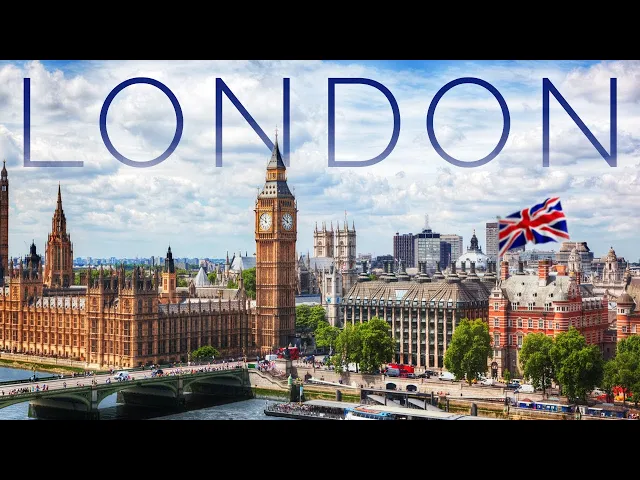
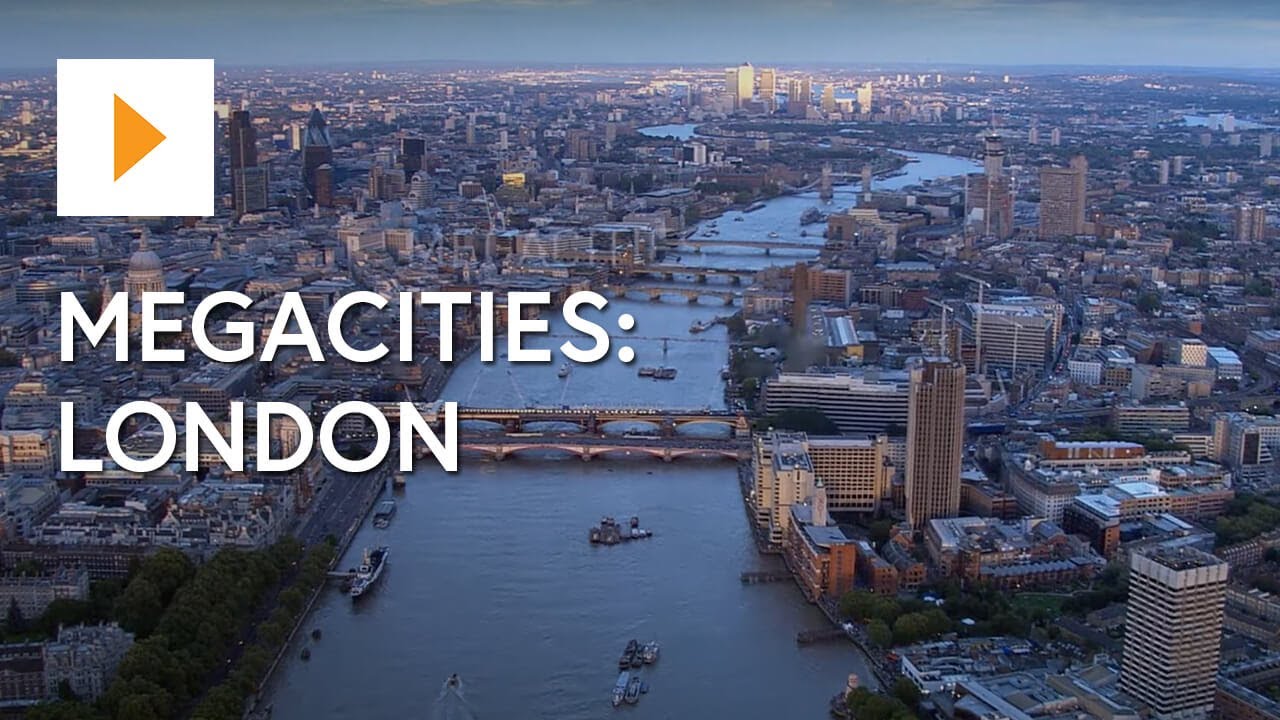
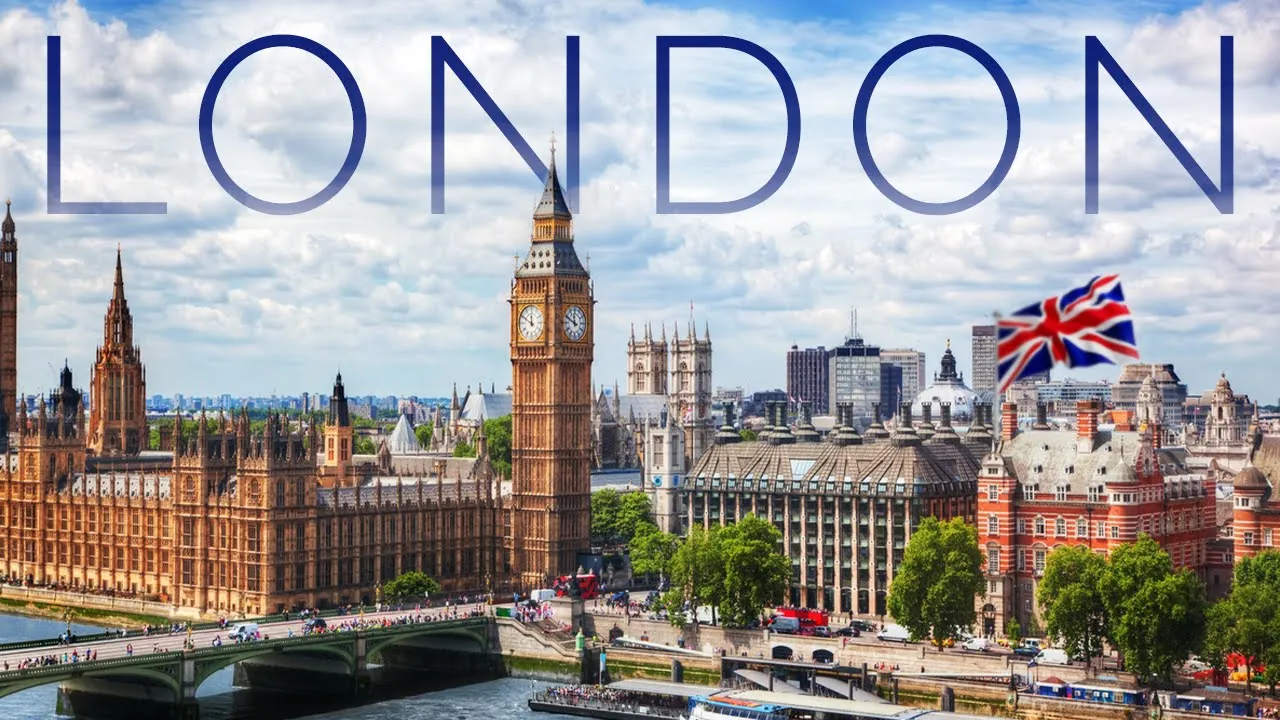
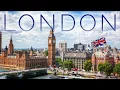
The world’s largest city until 1925 is now a mature, well-planned metropolis with a population of 13. 7 million. It’s a highly admired place and is consistently ranked as a top three most-visited destination on the planet, making its airspace the busiest on Earth.
As the largest urban economy in Europe, with the greatest concentration of top-class universities, it has hosted the Summer Olympics a record three times. It has something for everyone, whether you're after luxury (the world’s most 5-star hotels), nature (the world’s largest urban forest in a city with more than 40% greenspace), sports (the world’s highest total stadium capacity), or entertainment (the world’s biggest theater audience). But while the high life continues for many, this city has seen its share of tough times.
This is London, the Empire city. Londinium was founded in 43 A. D.
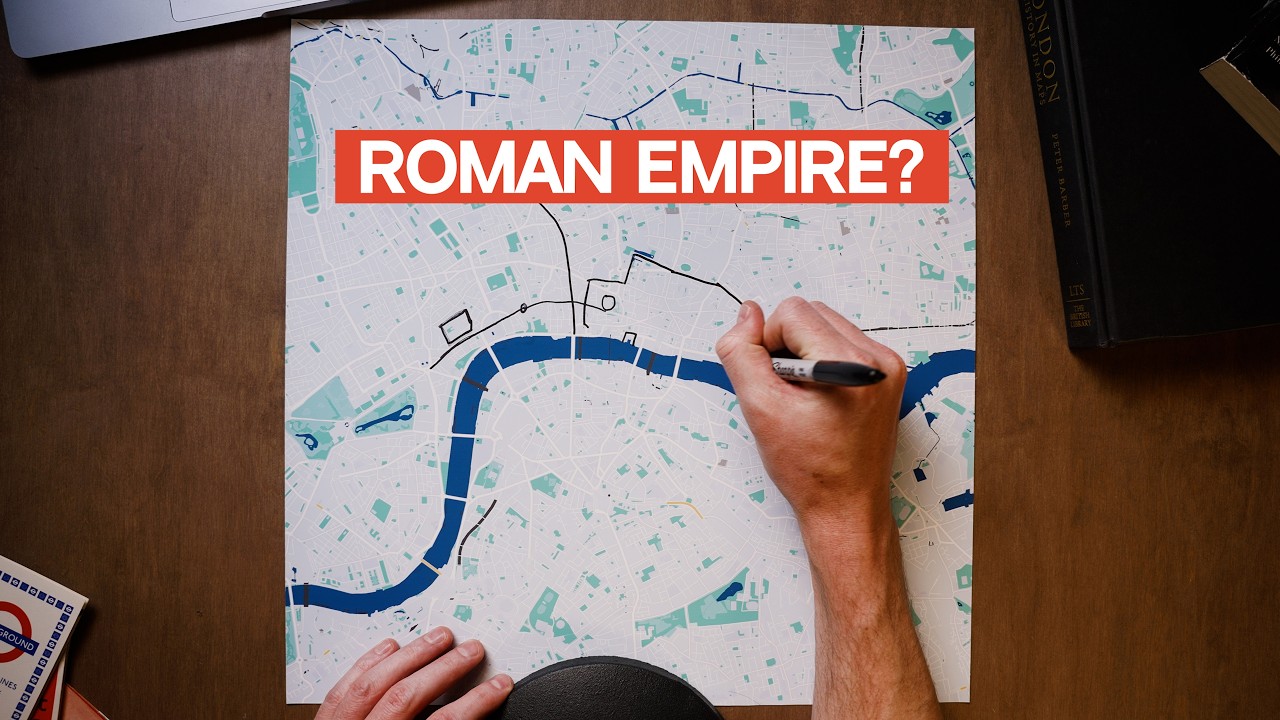
along the river Thames as a gateway for goods and people entering Britannia from every corner of the Roman Empire. A walled city covering roughly 1. 5 square km, Romon London reached a population of 60,000 in the second century, but the empire soon came under severe crisis and by the fourth century, Londonium was completely abandoned.
After 700 years, London had recovered to become the largest town in England. The construction of Westminster Abbey in the 11th century ensured its place as the heart of the country. Since then, the Abbey has hosted all coronations of English and British monarchs.
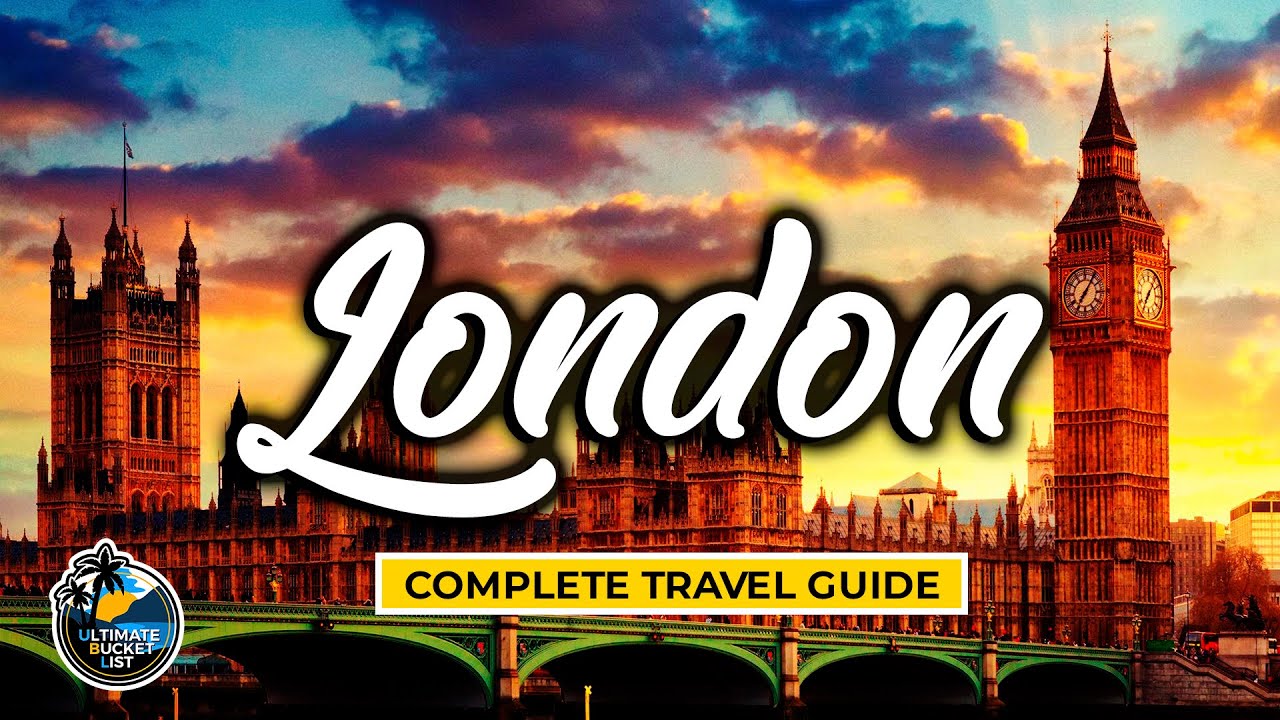
Its most recent royal wedding was Prince William to Catherine Middleton, and last month the state funeral of Elizabeth II took place there. Sitting alongside is the Palace of Westminster, home of the government of the United Kingdom with its two houses of parliament. Westminster lies just southwest of the city of London, a ceremonial district that covers a bit more than a square mile.
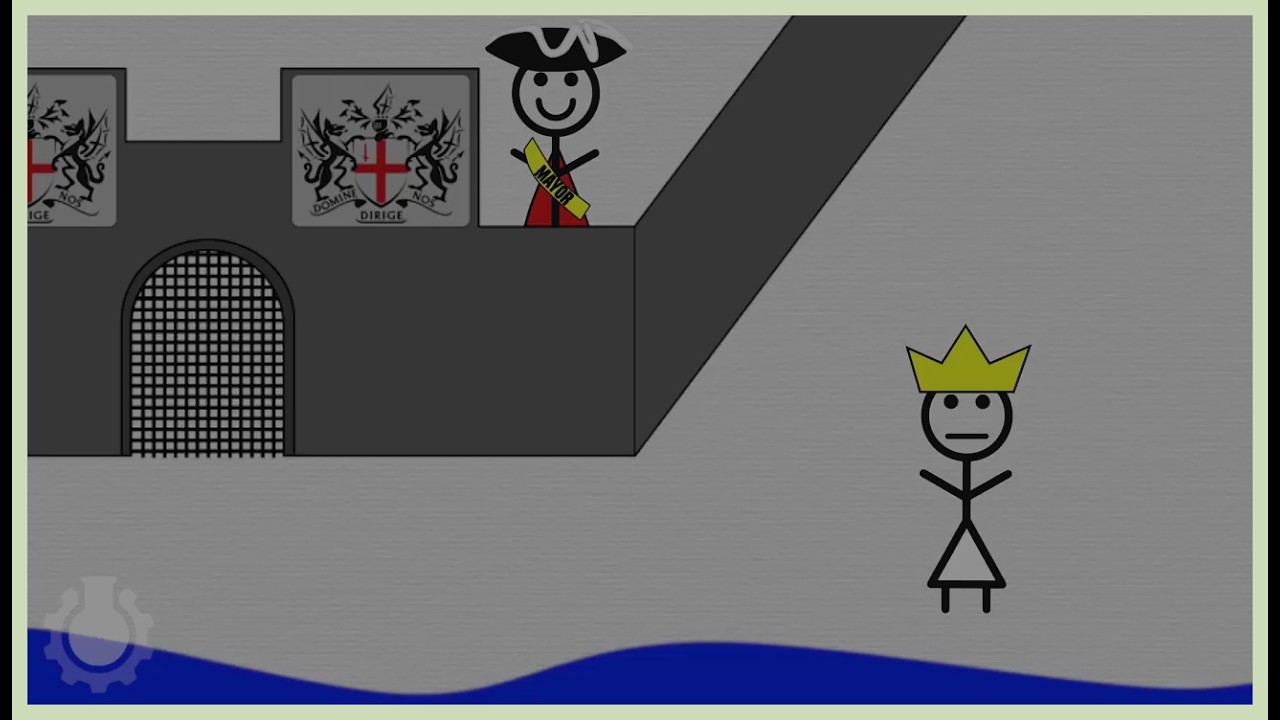
It constituted most of settled London through to the Middle Ages and is today one of the world’s most important financial centers. The Royal Exchange was the center of London commerce, seen here with work being done to its facade. Originally opened by Queen Elizabeth I, royal heralds still shout the news of historic events from its steps, like the dissolution of parliament and the start of a new monarch’s reign.
Just outside The City’s borders is the Tower of London. Originally a castle built by King William the Conqueror, it has served as a grand royal palace, a prison, a treasury, a menagerie, the Royal Mint, a public record office, and the home of the Crown Jewels of England. In the 1660s it was an armory during the most destructive event in London’s history.
Still reeling from the Great Plague that year that had killed 100,000 people - nearly a quarter of its population - Londoners awoke on the morning of September 2, 1666 to high winds and smoke. Over four days, most of the medieval city was destroyed by a raging fire. The Tower of London garrison used gunpowder to create effective firebreaks that stopped the fire’s spread to the east.
Still, several thousand were likely killed and thousands of buildings were reduced to ash–including over 13,000 homes, 90 churches, and St Paul’s Cathedral. In the aftermath, many architects submitted plans reimagining grand boulevards along a grid system that would become popular in urban America. But the businessmen of the City were eager to rebuild and mostly stuck to the old street plan, although they widened some streets and built with brick and stone rather than flammable wood.
Even without an extensive redesign, the rebuild forced the City of London Corporation into default and forced thousands of its newly homeless residents to resettle in the countryside–with a little push from King Charles II who feared they might revolt. So how did London survive a devastating plague and fire in the same year? The simplest explanation is that the culture of the city at this time was historically dynamic, cultivating ingenuity in every aspect of society.
London’s population had recently exploded by 900% in the century leading up to the Great Plague and Fire, growing from 50,000 to 500,000. As the main port in the North Sea, its ships were taking full advantage of new trading opportunities in the Americas and Asia. And one new commodity they brought back gave Londoners a huge jolt–coffee.
The foreign brew was served in houses that became meeting places to catch up on and debate the news of the day. Soon houses catered to particular trades like craftsmen, writers, and explorers, and the exchange of ideas they encouraged gave rise to the UK’s national academy of sciences, whose members included the coffee house-addicted Robert Hooke, the great Isaac Newton, chemist Robert Boyle, philosopher John Locke, and prolific architect Christopher Wren. Coffee house culture also fueled the world’s first great capitalist economy.
Edward Lloyd’s house specialized in obtaining the most reliable shipping news and a waiter would read out the latest bulletins, then pin them to a wall. This attracted long-distance traders eager to make deals on site. Today, Lloyds has evolved into the world’s main insurance market, an unseen but vital engine in the globalized economy, where brokers and underwriters can meet face-to-face to form the trust necessary to close deals that are too risky or unique for any other market.
This culture also established - in 1694 - the Bank of England, creating a publicly financed national debt–an innovation that positioned Britain as a global superpower, and its capital as the world’s most important city of the 1700s. London’s wealth allowed it to finance the most powerful navy the world had ever seen. The memorial column at Trafalgar square commemorates the victory that cemented Britain's superiority on the high seas.
The battle saw an outnumbered Admiral Horatio Nelson bravely sacrifice his life while leading his warships into the heart of the combined Spanish and French fleets, decimating them without losing a single British vessel. The victory ended any hope European conquerors like Napoleon had for invading Britain by sea, and set the stage for a peacetime boom. Propelled by inventions like the electric motor by London’s Michael Faraday, the industrial revolution brought rapid urbanization and growth, and by 1831 London was the largest city in the world.
It was also filthy. The Thames was an open sewer capturing the waste of three million people. The stink and cholera it produced was unbearable.
Chief civil engineer Joseph Bazalgette was put in charge of creating a modern sewer system–an innovative megaproject involving hundreds of miles of brick and cement tunnels combined with several pumping stations to move the sewage a few miles to release it downriver, safely away from London. Another engineering marvel was the Underground. Through trial and error over 20 grueling years, project mastermind John Fowler’s team perfected the technique of “cut and cover”, completing the Metropolitan line in 1863.
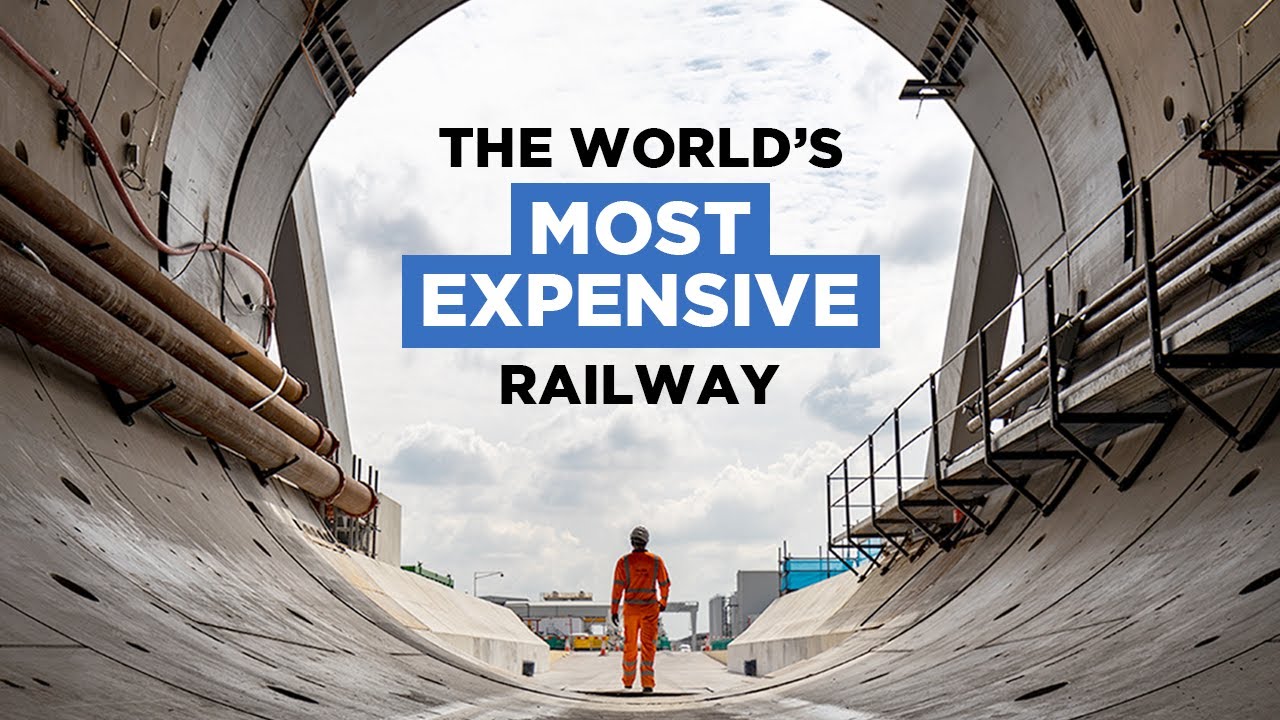
It was both the world’s first subterranean and rapid railway system in the world. Today it is the third longest metro system on Earth, and is still growing. The £19b Elizabeth Line was inaugurated this May, completing a phase that was the biggest construction project in all of Europe.
The quality of transportation available to Londoners - including their roads and stagecoach service - allowed them to settle and commute farther from the city center. With the population passing 6 million in the 1800s, middle-class workers were looking for homes with a modest garden, so developers built sprawling tracts in the outskirts, including the Becontree Estate in Dagenham. With more than 25,000 semi-detached dwellings it was the largest housing development in the world.
It seems suburbia began in Britain, foreshadowing the sprawl that was to come to places like Los Angeles. As London swallowed up more and more of the surrounding countryside, authorities contained it by reserving wide swaths of land for a green belt 7 to 10 miles deep around its built up area. This so-called girdle could only be left wild, turned into parks, or used for agriculture–an idea sold to Londoners as guaranteeing their access to recreation.
The citizens of Britain’s other industrial cities wanted access to clean air and nature too, and soon adopted green belts of their own. In 1941, after Hitler’s airforce bombed London for 8 months - killing more than 30,000 - many buildings were destroyed. However, with the green belt restricting development, the cost of the land available to build on rose–a trend that continues to today, when 70% of the cost of a new building is the purchase of the land (compared to just 25% in the 1950s).
This has contributed to a severe shortage of affordable housing, and sparked a much-needed conversation about how to more wisely use London’s precious public lands in ways that actually benefit the general public. Another post-war development was an increase in immigration to London from the British Commonwealth countries of India, Jamaica, and Pakistan. Today, more than 4 million Londoners are foreign-born, the fourth largest immigrant community in the world after New York, Los Angeles, and Paris.
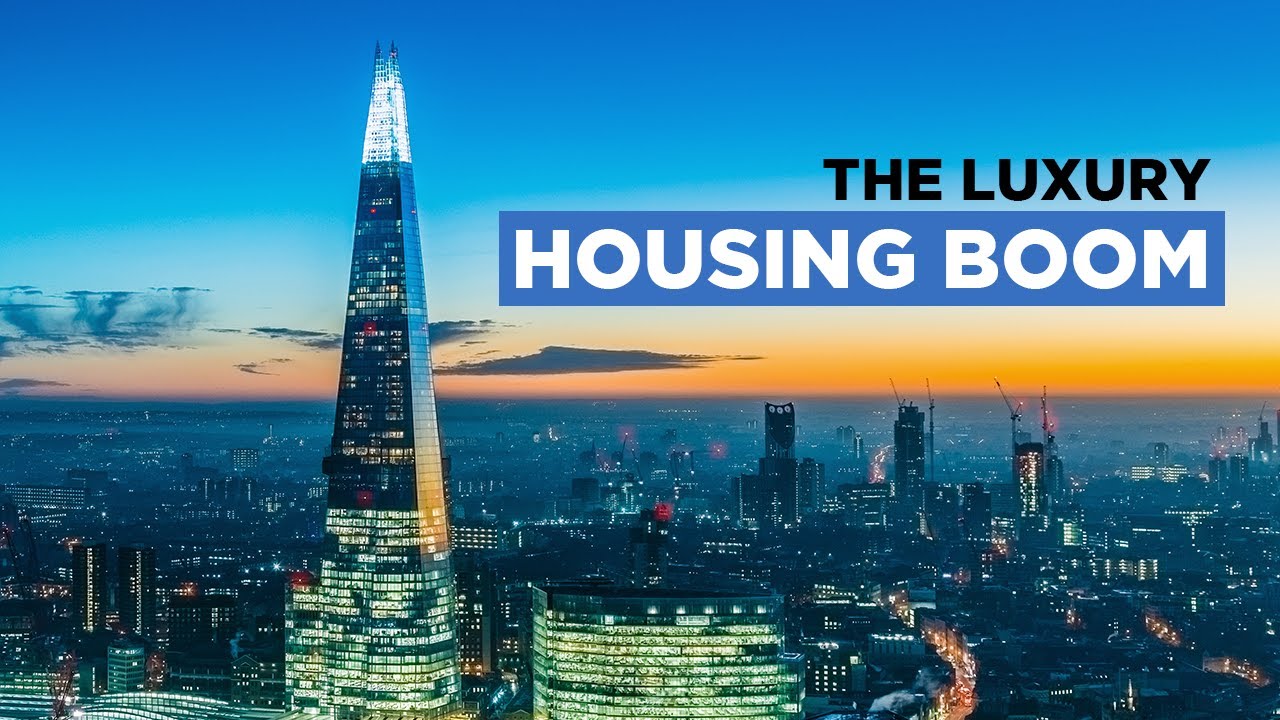
But drawing so many new arrivals has contributed to London’s housing crunch, and the megacity now has the highest real estate prices in Europe. So developers try to stack more square footage on each plot of land, making buildings taller and changing London’s notoriously low-slung skyline. The financial districts are home to most of the 103 buildings taller than 100 meters, the second-most skyscrapers in Europe, behind Moscow.
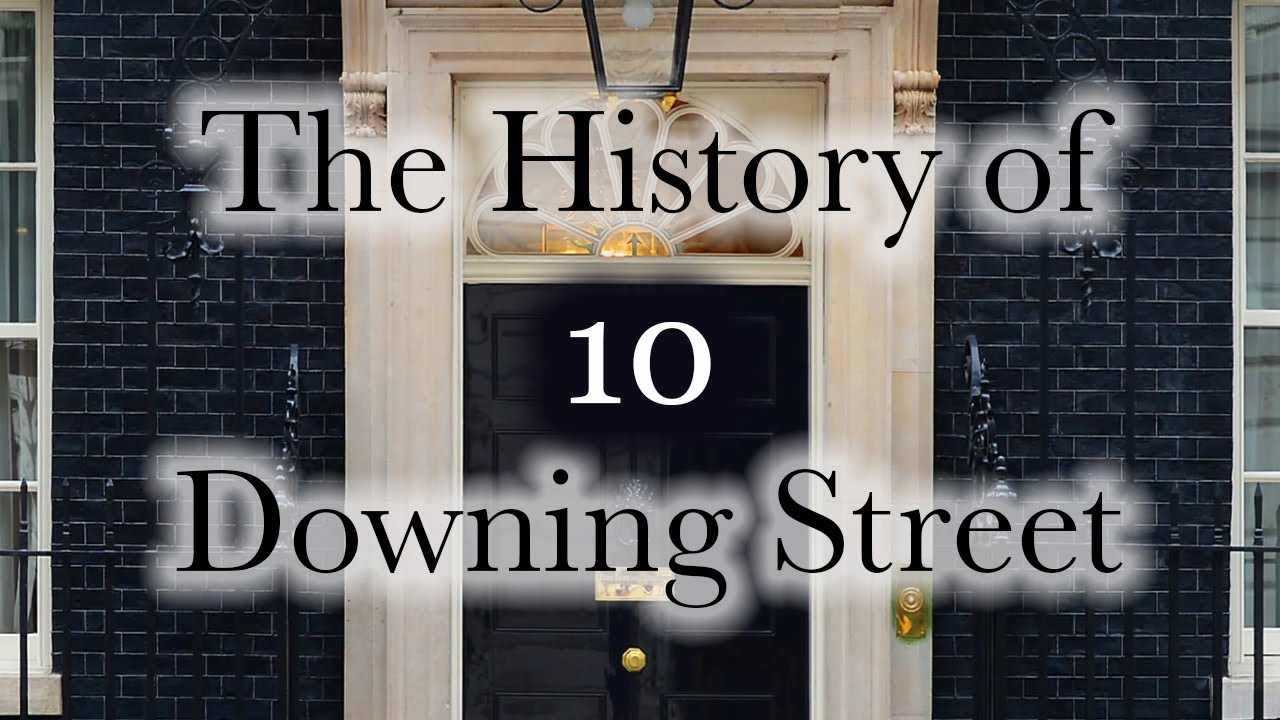
As a picturesque, riverine city with layers of historic architecture, gorgeous greenscapes, an economy that hums along as the capital of one of the world’s most stable democracies, it's no wonder why people and their money are drawn to London. However, things can feel a bit different in people’s day-to-day lives, especially for those living outside the capital. The twin challenges of assimilating millions of foreigners and adapting to the rising cost-of-living helped sway a majority of British voters to leave the European Union in the summer of 2016–a decision that continues to challenge the churn of occupants at 10 Downing Street, the Prime Minister’s residence.
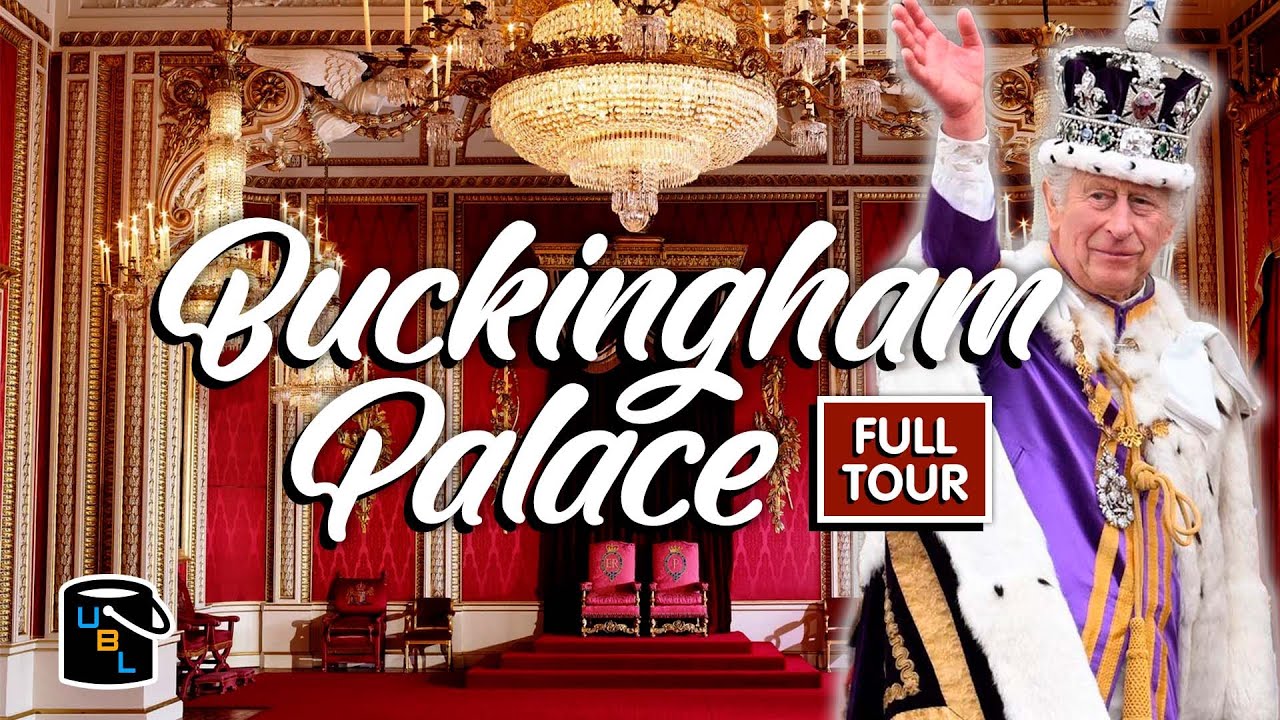
Just across from St. James Park is Buckingham Palace, official residence of the head of state of the United Kingdom, the newly crowned King Charles III. While both Brexit and the role of a monarch in a modern society pose internal political challenges for the entire country, London is also grappling with the wicked problem facing the entire world: climate change.
During the record heatwave this July that saw temperatures reach 40. 2 celsius, or 104. 4 fahrenheit at Heathrow airport, parts of London were again ablaze.
The steadily rising sea presents an enormous flood risk to an estimated £200bn worth of property along the Thames, a tidal river. To protect the city, an impressive 520-meter retractable barrier was built in 1984, a structure the Environmental Agency believes should last - with slight modifications - until 2070–a testament to the foresight of its design and engineering team. Water also presents another challenge.
While London is sometimes perceived as consistently socked in by fog and gray skies, it actually receives half the rainfall of New York City despite a significantly more northern latitude. It even gets less rain than the fairly dry cities of Rome, Lisbon, and Sydney. The problem is that the western half of southern England catches most of the rain systems from the Atlantic, receiving about four times the precipitation as the eastern half.
As things get dryer and more unpredictable, hydrologists warn that London - on the eastern, dry side - may begin having water supply problems by 2050. A debate is ongoing about submerging a swath of Oxfordshire on the Thames to create a reservoir to store water for the megacity. But though London faces a few challenges from forces beyond its control, solving them seems relatively straight-forward.
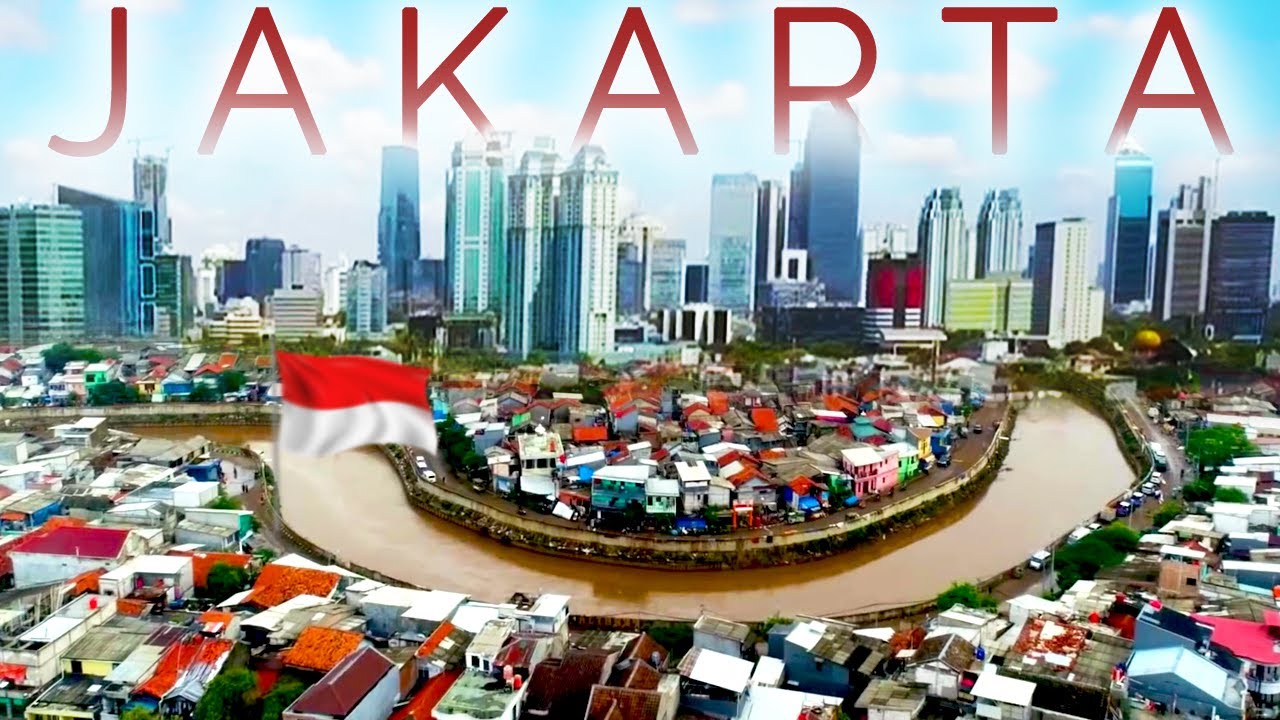
Looking ahead, London’s position well away from the coast on a temperate island with no active volcanoes is one of the most advantageous locations for any major city in history, which should allow it to continue as a top global city well into the 2100s. If you enjoyed this episode, check out my look at Jakarta, Indonesia’s megacity, whose citizens face a far less certain future. And next up is Tehran, the capital of Iran.
just outside the city's borders is the Tower of London originally a castle built by King William the Conqueror it has served as a Grand Royal Palace a prison a treasury a menagerie the Royal Mint a public record office and the home of the crown jewels of England in the 1660s it was an Armory during the most destructive event in London's history still reeling from the Great Plague that year that it killed 100 000 people nearly a quarter of its population londoners awoke on the morning of September 2nd 1666 to high winds and smoke over four days most of the medieval City was destroyed by a raging fire the Tower of London Garrison used gunpowder to create effective fire breaks that stopped the fire spread to the east although there's never been an official death toll several thousand were likely killed and thousands of buildings were reduced to Ash including over 13 000 homes 90 churches and Saint Paul's Cathedral in the aftermath many Architects submitted plans reimagining Grand boulevards along a grid system that would become popular in urban America but the businessmen of the city were eager to rebuild and mostly stuck to the old Street plan although they widened some streets and built with brick and stone rather than flammable wood even without an extensive redesign the cost of the rebuild forced the city of London Corporation into default and forced thousands of its newly homeless residents to resettle on the countryside with a little push from King Charles II who feared they might revolt so how did London survive a devastating plague and fire in the same year the simplest explanation is that the culture of the city at this time was historically Dynamic cultivating Ingenuity in every aspect of society London's population had recently exploded leading up to the Great Plague in fire growing from fifty thousand to five hundred thousand as the main port in the North Sea its ships were taking full advantage of new trading opportunities in the Americas and Asia and one new commodity they brought back gave londoners a huge jolt coffee the foreign Brews served in houses that became meeting places to catch up on and debate the news of the day soon houses catered to particular trades like Craftsmen Riders and explorers the free exchange of ideas they encouraged gave rise to the UK's National Academy of Sciences whose members included The Coffee House addicted Robert Hook the great Isaac Newton chemist Robert Boyle philosopher John Locke and prolific architect Christopher Wren Coffee House culture also fueled the world's first great capitalist economy Edward Lloyd's house specialized in obtaining the most reliable Shipping News a waiter there would read out the latest bulletins then pin them to a wall attracting long-distance Traders eager to make deals on site today Lloyds has evolved into the world's main Insurance Market an unseen but vital engine in the globalized economy where Brokers and Underwriters can still meet face to face to form the trust necessary to close deals that are too risky or unique for any other Market this culture also established in 1694 the bank of England creating a publicly financed national debt an innovation that positioned Britain as a global superpower and its capital as the world's most important city of the 1700s London's wealth allowed it to finance the most powerful navy the world had ever seen the memorial column at Trafalgar Square commemorates the victory that cemented Britain's superiority on the high seas the battle saw an outnumbered Admiral Horatio Nelson bravely sacrificed his life while leading his warships Into the Heart of the combined Spanish and French fleets decimating them without losing a single British vessel the victory ended any hope European conquerors like Napoleon had for invading Britain by sea and set the stage for a peacetime boom propelled by inventions like the electric motor by London's Michael Faraday the Industrial Revolution brought rapid urbanization and growth and by 1831 London was the largest city in the world it was also filthy the Thames was an open sewer capturing the waste of 3 million people the stink in cholera It produced was unbearable Chief civil engineer Joseph basilkit was put in charge of creating a modern sewer system an Innovative Mega project involving hundreds of miles of brick and cement tunnels combined with several pumping stations to move the sewage a few miles down river and release it safely away from London another engineering Marvel at this time was the Underground through trial and error over 20 grueling years project Mastermind John Fowler's team perfected the technique of cut and cover completing the Metropolitan line in 1863. it was both the world's first Subterranean and Rapid Railway system today it is the third longest Metro System on Earth and is still growing the 19 billion pound Elizabeth line was inaugurated this may completing a phase that was the biggest construction project in all of Europe the quality of Transportation available to londoners including their roads and Stagecoach service allowed them to settle and commute farther from the city center with the population passing 6 million in the 1800s middle class workers were looking for homes with a modest Garden so developers built sprawling tracts in the outskirts including the Beacon Tree estate in dagenham with more than 25 000 semi-detached dwellings it was the largest housing development in the world it seems Suburbia began in Britain foreshadowing the sprawl that was to come to places like Los Angeles as London swallowed up more and more of the surrounding Countryside authorities contained it by reserving wide swaths of land for a green belt 7 to 10 miles deep around its built up area this so-called girdle could only be left wild turned into Parks or used for agriculture an idea sold to londoners as guaranteeing their access to Recreation the citizens of Britain's other cities wanted access to clean air and nature too and soon were adopting green belts of Their Own in 1941 after Hitler's Air Force bombed London for eight months killing more than 30 thousand many buildings were destroyed however with the green belt restricting development the cost of the land available to build on Rose a trend that has continued until today when 70 of the cost of a new building is now the purchase of the land compared to just 25 percent in the 1950s this is contributed to a severe shortage of affordable housing and sparked a much needed conversation about how to more wisely use London's precious public lands in ways that actually benefit the General Public another post-war development was an increase in Immigration to London from the British Commonwealth countries of India Jamaica and Pakistan today more than 4 million londoners are foreign born the fourth largest immigrant community in the world after New York LA and Paris but drawing so many new arrivals has contributed to London's housing Crunch and the mega City now has the highest real estate prices in Europe so developers try to stack more square footage on each plot of land making buildings taller and changing London's notoriously low slung Skyline the financial districts are home to most of the 103 buildings taller than 100 meters the second most skyscrapers in Europe behind Moscow as a picturesque riverine City with layers of historic architecture gorgeous Greenscapes an economy that hums along is the capital of one of the world's most stable democracies it's no wonder why people and their money are drawn to London however the twin challenges of assimilating millions of foreigners and adapting to the rising cost of living especially for those outside the capital helped sway a majority of British voters to leave the European Union in the summer of 2016. a decision that continues to challenge the churn of occupants at 10 Downing Street the prime minister's residence just across from St James Park is Buckingham Palace official residents of the head of state of the United Kingdom the newly crowned King Charles III while both brexit and the role of a monarch in a modern society pose internal political challenges for the entire country London is also grappling with the wicked problem facing the entire world climate change during the record Heat Wave this July that saw temperatures reach 40.
2 Celsius or 104. 4 Fahrenheit at Heathrow Airport numerous parts of London were again Ablaze to the east the steadily rising sea presents an enormous flood risk to an estimated 200 billion pounds worth of property along the Thames a tidal River to protect the city an impressive 520 meter retractable barrier was built in 1984. a structure of the environmental agency believes should last with slight modifications until 2070 a testament to the foresight of its design and engineering team water also presents another challenge while London is sometimes perceived as consistently socked in by fog and gray skies it actually receives just half the rainfall of New York City despite a significantly more Northern latitude it even gets less rain than the Fairly dry cities of Rome Lisbon and Sydney the problem is that the Western half of Southern England catches most of the rain systems from the Atlantic receiving about four times the precipitation as the eastern half as things continue to get drier and more unpredictable hydrologists warned that London on the Eastern dry side May begin having water supply Problems by 2050.
so a debate is ongoing about whether to submerge a swath of Oxfordshire on the Thames to create a reservoir to store water for the Mega City but although London faces a few challenges from forces Beyond its control solving them seems relatively straightforward and looking ahead London's position well away from the coast on a temperate island with no active volcanoes is one of the most advantageous locations for any major city in history which should allow it to continue as a top Global City well into the 2100s if you enjoyed this episode check out my look at Jakarta Indonesia's Megacity whose citizens face a far less certain future and next up is Tehran, the capital of Iran.