So welcome to psychology 230 personality and its Transformations so I guess the first thing I'll do is offer you a bit of a description of what personality is it's a very extensive phenomena personality your personality determines the way you perceive so what that means at least in part is that your Personality actually determines how you're going to extract facts from the world you know people think that you see the world and then you think about it and then maybe you react emotionally and then you act but that's really not accurate um it's too slow first
of all and there's lots of times when you have to be fast and if you had to go through all that processing before you acted you'd be Dead so personality is deeper than what you do with facts it's deep enough so that it determines how you bias your perceptions so that the world appears to you in a particular manner we don't really understand how personality does that yet um it determines your emotional response to things people differ in their positive emotions their Baseline level of Positive emotion and their variability and they differ in their negative
emotions as well so some people are set to be anxious and some people are set to be fearless and the environment can move that around to some degree but a fair bit of its at least its origin Point seems to be pretty tightly determined by genetic factors people differ in the degree to which they're creative they differ in the degree to which they're orderly There's all sorts of different phenomena that are tightly attached to what makes you different from other people because that's another way of thinking about personality personality colors your actions because you act
in accordance with your personality it's it determines your values and so that also determines how you act because of course you act in accordance with what you value because you're moving from where you are which isn't as as good as it could be to Somewhere better and you have to decide for yourself or maybe that's decided for you by your temperament just where better is and so it's very interesting and exciting for me to teach personality because it's it's the most personal of all phenomena and it's its understanding is extraordinarily relevant I think to everyone
understanding your personality can help you figure out who you are For Better or For Worse because with every Set of personal personality attributes there tend to come on an Associated set of vices so for example if you're an orderly person which in many cases is a good thing then you're also prone to harsh judgments you tend to be xenophobic and sexual behaviors that aren't strictly normative are likely to disgust you and you might think of that as something that you conclude as a consequence of Your experience but it looks in many ways like it's determined
before you act in some ways personality theory can also help you understand other people because it's easy to think that other people are like you and they are like you they're like you enough so that more or less you can communicate with them but they're also very different from you and so often when you're communicating with people they're actually starting With a different set of aprior presumptions than you are and we like to think that things can be worked out as a consequence of logical negotiation and that's true to some degree but these a priority
factors that underly your being itself interfere with the ability to use logic because logic is usually predicated on values and values in turn are predicated on your temperament so having an appreciation For differences and personality can help you understand your own personality and maybe improve it and also understand and and and give some Credence to the viewpoints of other people one of the things we've been studying in my lab for example is the relationship between personality and political belief you know and it's been thought for a long time it's it's kind of an enlightenment idea
that you come to your political beliefs as a consequence again of Rational deliberation you take a look at the facts you analyze them and you extract out what you think are the appropriate what is the appropriate information from that analysis but we've found for example that people who are high in creativity openness which is the technical term really for the trait that's associated with creativity people who are high in openness and low in conscientiousness conscientiousness is basically industriousness and ESS high In openess slow and conscientiousness they tend to be liberal or left leaning whereas people
who are more conscientious and less creative tend to be conservative and that seems to be true more or less cross-culturally at least in those cultures where the Left Right spectrum is similar in nature To the Left Right Spectrum in North American culture so and we also found although this we're still kind of wrestling with this finding that the Effects of your personality on your political preference and your voting Behavior actually increase as you get older they don't decrease so in some sense the degree to which your a biased a priority by your temperamental perspective dominates
your thoughts and your behavior even more as you age so I don't really know what to make of that you know it's it's not the sort of thing that that people normally bring into a political discussion but The next time that you're most of you are probably leftwing because most of you are open and intelligent and low in conscientiousness relatively speaking and uh cuz you're you're likely to be lower in orderliness than the typical population given that you're interested in this course the next time that you're having a discussion with someone who's conservative you might
give some Credence to the idea that you're actually talking to someone who's quite Different than you it isn't just that they believe a bunch of stupid things that you can't you know understand why anyone would possibly believe it's that the facts themselves array themselves before those people differently than they do in front of you and if you listen as they should listen to you then you know you might learn something that you wouldn't know given your temperamental stance so practical matters you need that you Need to know this URL okay so you have to write
it down because that's where the syllabus is and uh I'll post a copy of it on blackboard as well but for now it's there and the syllabus lists everything that you need to know about the course and I'm going to go through it today but it tells you what the lecture topics are of course the readings are posted there except for the text there's two books for the class there's a textbook and a book called The Black Swan um and all the assignments and so forth and their requirements are listed on the syllabus as well
so it should serve as a place where you can get all the information you need for the course but we'll walk through it today and I'll give you an overview of what the course is going to be like so now it isn't just personality that this course is About people tend to think of Personality as something that's relatively fixed and stable because if it was fluctuating completely all over the potential range of Personality wouldn't be a lot of utility in discussing it but it is stable so that you are who you are but it's also
amenable to change now it's difficult to change your personality it's as if in some sense that the dice was rolled or five sets of dice as it turns out were Rolled at the point where you were born and you were granted a particular kind of personality configuration on the off chance that that configuration could find its proper niche in the environment it it sort of like people have more or less settled on a five-dimensional personality model which we'll talk about a lot in the last half of the course but the the idea seems to be
that perhaps is that the environment that you inhabit which is largely social right it's not Just physical it's mostly Social cuz you're like hypers social primates some of you are probably checking your email right now um it's as if there are niches within that space that may or may not be there may or may not predominate in the dice roles when you're conceived and you're given a set of attributes and with any luck you can find a niche in the broader social and physical environment where your particular set of attributes is going to Be functional
for you and so a lot of and this this is something to think about too we'll try to get into this in some depth in the class A lot of what you need to do to make your life at least tolerable is to figure out what your personality attributes are and then to find a niche where they're valued so for example for those of you that are creative you you probably know who you are it's actually a rare trait by the way um I wouldn't recommend banking or Law because law and banking just to take
two examples are very conservative Enterprises we tested the hundred most creative lawyers in Canada at one point with they were nominated by their firms and uh the most out outstanding personality attribute of the hundred most creative lawyers was not openness it wasn't creativity it was conscientiousness even though they were the hund most creative lawyers and of course law depends on precedent mean how Creative do you want your lawyer to be you know if your lawyer's creative enough then you'll be in jail so that's probably not you know it's not the greatest idea so it's very
useful to get a handle on what your personality is because then you can take a look at the potential environments that lie in front of you and hopefully match yourself to one of them now that's a tricky business you know because it isn't necessarily the case that the niche that you're most Suitable to inhabit is one that's stable or or economically viable you know and so for example I think in some ways well it's become more difficult for example to monetize a variety of different creative Productions so it's harder to monetize music for example because
of course it can be shared for nothing so you know it's luck of the draw to some degree so now the other part of the course is the transformation element now you Know personality is stable so if you test person at one time and you test a person later then there's High correlations between the two sets of tests but there's also variability and the variability is the part that contains the potential so to speak for transformation so you're a you're an entity with quasif fixed attributes but that doesn't mean that you can't transform and learn
you know you're sort Of this weird balance between stability and plasticity which actually happen to be two meta traits of personality and I I also want to take you through the process of understanding what what personality transformation is and and how to conceptualize it because personality transformation comes at a cost and the cost seems to be with each incremental change there is an equal increment of unab of instability you know so that's often because you learn Things painfully right I mean if you learn something if it's something you expect and something you want there's no
learning there generally speaking because you expect it so it means you already know about it and you want it so it's good the the most potent learning experiences tend to occur when something occurs in within the realm of your experience that you don't expect and often that you don't want and those are the sorts of Things that destabilize your personality now they can also be the sort of things that eventually expand it because if you encounter something that you don't understand that means that there's information in the event that you haven't Incorporated within your own
being and if you can do that then at least in principle then your Dominion of competence can expand now one of the things you see the course has sort of broken up roughly Speaking it's broken up into two sections there are more sections which I'll get into but the the biggest split is actually between the clinical theorists so those would be people who are some of them are psychiatrists most of them were practitioners so their theories were derived from observations mostly of Personality pathology and transformation the first half of the course is really about that
that and that's partly because I think the the Most um intellectually compelling and and and and perhaps even practically useful theories of personality have in fact been derived by clinical practitioners like Freud and like Yung and like Rogers and of the various people that we're going to talk about and um one of the things that's really interesting about the clinical practitioners because they have to deal with issues of Health roughly speaking good mental health Versus poor mental health say is that they all their fields of endeavor also deal with values because it's almost impossible to
Grapple with the problem of the good or well-being or mental health or Psychopathology or suffering or anxiety or pain or any of those phenomena without also necessarily evaluating the domain of values it's like okay well you're a certain way do you want to be better if you were better would that mean that you Were more mentally healthy what exactly does better mean and is it useful to use that sort of descriptive terminology when you're talking about personality I mean I assume that most of you want to be better people now your definition of what might
constitute better is going to differ again according to your temperament but generally speaking it seems that people are they're like Copus they're uphill climbers you know you don't want to go From bad to worse you want to go from where you are to better and that means that you have to conceptualize what constitutes better and that makes personality theory at least in in regard to its its clinical domain a very strange hybrid of Science and Engineering because you know generally science doesn't deal with values but if you're dealing with human personality I It seems impossible
to avoid the The topic especially if you're concerned with something like mental health so you know you can assume that mental health means normal but most of you don't assume that right because you know if you're if you're actually if you want your reach to exceed your grasp a lot of you are going to be aiming for something that's better than normal or better than average let's say we don't consider average optimal and that's a strange thing so the first half of the Course that deals with the clinicians is going to take us into the
realm of Personality transformation and also necessarily lead us through a discussion of value because I can't see that there's any avoiding it also I think it would be ridiculous to avoid it because why you should do things is you know how you conceptualize why you should do things is an extraordinarily integral part of your personality I mean one of the things that we found Recently um it's a variant of an exercise that I'm going to have you do in this class um is that if you get people to spend a couple of hours writing down
their vision of the future you know so the the question basically is all right so imagine yourself now now imagine yourself 3 to 5 years in the future okay now and here's the rules imagine that you're trying to take care of yourself like you would take care of someone that you cared about it's a Strange it's a strange framing but you know people often don't take care of themselves as well as they take care of other people you know they're hard on themselves and they denigrate themselves because you know you might be painfully aware of
all your multiple inadequacies and of course inadequacies are part of the human condition so it's easy if you've become cognizant of your inadequacies to also denigrate the value of your being and not take care of Yourself and that's not a good thing I mean flawed as you are you're probably no worse than anyone else and if things shouldn't be good for you then The Logical conclusion is that things shouldn't be good for anyone else either so you know you start with yourself and assume that you deserve some at least the basic elements of the attitude
that you would give to someone that you care for okay so you put yourself in that mind frame now you think three to five Years down the road what do you want for friendship what do you want for career what do you want for family how do you want your Intimate Relationships to be constituted what are you going to do when you're not working what sort of productive and useful activities and interesting activities are you going to engage in if you could optimize your life 3 to 5 years down the road what exactly would that
look like like all Right so there's that question then we also get people to do answer the reverse question which is all right now imagine that you allow your inadequacies and your pathologies such as they are to gain the upper hand which I'm sure they do in your own lives on a week toe basis imagine you really let them get out of hand so you know you're you're drinking 26 ounces of vodka every second day in five years or you know you're lying uncontrollably or no one can stand you Because you're too disagreeable and erotic
or whatever you you know you know whatever your weaknesses happen to be maybe you procrastinate all the time and you end up unemployed imagine 3 to five years down the road that things turn out as badly for you as they can because you've allowed things to go from bad to worse and conceptualize that well and then we have people write a plan based on the positive Vision the Negative Vision I think is really useful because if you're running towards something it's also extremely useful from a motivational perspective to be running away from something at the
same time you know then you can harness your positive emotions which are associated with approaching a valued goal and you can have your negative emotions like fear chasing you instead of standing in front of you interfering with your progress anyways when we have people do This exercise their grade point average for example we've done this with 3,000 people so far grade point average goes up about 25% dropout rate goes down about 30% so you know it seems like the act of positing value so like a valued future or or terribly you know negatively valued future
is a prerequisite to appropriate functional being and so what that means in part is that human beings are value producing Creatures and there's just no way of it's it's ridiculous to avoid dealing with that in a class on personality despite the fact that it's an uneasy balance between science and engineering so to speak so that's the first part of the of course um all right so let's let's get into details here I'm going to tell you a little bit about this picture that's Jonah I don't know how Many of you know the story of Jonah
but the story basically goes like this it's an Old Testament story um God tells Jonah to go off and do something and um he doesn't want to do it so because you know at least as far as the Old Testament is concerned God's always telling people to do horrible and miserable things that are difficult and so avoiding it is the logical thing to do so Jonah goes out on a boat trying to get away from this demand and there's a Huge storm and you know the boat is in danger of being swamped and um the
sailors are all wondering why this storm is happening and Jonah finally admits that he's you know got this command from God and he's running away from it so they throw him overboard and then the se's calm and anyways Joon ends up inside this whale and then later 3 days later as it happens it spits them up back on Shore now you might think why the hell are you Telling us this story but I I can give you a hint about why I'm telling you this story uh remember the last time that you broke through the
thin ice that you're skating on all the time you know everybody knows what that means right is that you're cruising along in your life perfectly content or at least reasonably content and then something strikes you out of the blue maybe it's the death of someone that you love or It's the breakup of a relationship or something that you fail dismally at or some manner in which you betrayed a friend or they betrayed you and all of a sudden everything that you stand on disappears and you get swallowed up now it turns out that the motif
of being swallowed by something that lurks underneath like the like the shark in Jaws it's a very very old story in fact it's the oldest story that human beings tell it's the same story for example That you see if you watch The Hobbit how many of you have seen the Hobbit recently or the Lord of the Rings yeah yeah well you know in The Hobbit the little hobbit encounters a dragon right and everyone seems to understand what that means even though it's completely absurd proposition and then that's allied with this sort of this sort of
pattern of story and the idea is something like this is that your your your current Pattern of being is fragile and the reason for that is that there's not very much of you and there's an awful lot of the world and what that means is that at any moment some element of the world that you have not mastered and do not understand can emerge and destroy you potentially your psychological Health your physical health and your dreams and that puts you somewhere and the ancients believed that that put you somewhere that was akin to being devoured
by a Great beast and if you're lucky then you know it spits you up later if you're unlucky then you stay inside it and you know those are the sorts of people that you see in Mental Hospitals are wandering around on the streets you know hearing voices and talking to themselves they never get out the standard transformative narrative is descent and Ascent you learn something by deteriorating first and then by re Ascending as you incorporate it and I love the story because well the first of all to know that story which is the fundamental story
of mankind to know that story means first of all that you understand that there's no Learning Without Pain and the pain is a necessary prerequisite to transformation now the pain doesn't necessarily have to be of the sort that completely destroys you but generally a valuable lesson is one that's difficult to learn and but that Also means something very interesting about the human psyche because and this is something to really think about too you know cuz you might say are you who you are or are you who you could be or are you the thing that
changes from who you are to what you could be and which of those things you identify with makes a huge difference to your life so for example if you are who you are then you can't talk to someone Who doesn't agree with you you can't listen to them because they may tell you something that you don't already know and that'll change you and if you are who you are and that's the right way to be then you don't want to be changed and if you are who you're going to be in the future then if
any circumstance comes along to destabilize the environment so that that future becomes unlikely then you're in the same boat things are going to fall apart around you but if you're The thing that can change when change is necessary well then you don't have to be who you are or who you could be you can be the thing that changes and then when new things come along regardless of how they're presented to you well then you can welcome them even though they're going to destabilize you in the hope that what comes out the next what comes
out the other side will be an improved version of you one of the things that I'll talk to You about especially in the first couple of lectures is the notion that the idea that you should identify with the part of your psyche that can transform is actually one of the world's most fundamental religious ideas and the reason I'm discussing religious ideas with you in part is well it's partly because when we deal with some of the more profound thinkers in the early part of the course and the part that deals with psychoanalysis like Yung for
Example I mean yung's depth psychology goes down deep enough into the psyche so that the appropriate language to describe the phenomena that he is dealing with is always religious language zung sort of conceptualized religious language religious symbols as the grammatical as part of the grammatical structure of the psyche so that's an archetype by the way that's what an archetype is an archetype is is part of the structure of the psyche it's It's something you can't escape from so I I could give you I'll give you a quick example of that so um men are much
more visually oriented towards sexual stimuli than women it appears that way women seem to be more oriented towards auditory sexual stimuli so for example there was a book published a little while ago called dataclysm it's it's the first third of it's quite interesting it it's written by one of the Google analytics guys and they it's called Sorry sorry I'm wrong it's called a billion Wicked thoughts I read two that we're dealing with internet phenomena it's called a billion Wicked thoughts and uh the authors were analyzing uh pornography usage on the web and you know of
course for the longest time about 35% of web traffic was pornography and it actually really got the web going weirdly enough men yeah it's strange you know so that sexual motivation was what drove technological innovation um it's Interesting even now you know one of the things that's driving computer chip technology is the necessity for making more and more accurate um CGI movies so it's very strange things often that motivate human progress right on the one hand it's the desire for entertainment more more realistic artificial entertainment on the other hand it's sex which is exactly what
Freud would presume anyways men look at visual stimuli women read Pornography so now with regards to men there are some things you can say about what men find attractive sexually if they're if they're heterosexual so for example they prefer a w waist to hip ratio of about 68 and that's standard across body types so a thin woman who has a hip waisted hip ratio of6 is attractive and a you know a mesomorphic woman woman of medium build with a waist a hip ratio of 68 is also attractive and that's in some sense that's the function
Of an archetype and that archetype would be the archetype of Aeros or Venus or or beauty and the problem with those archetypes in some sense and this is what makes them archetypus you can't argue yourself out of them they're inbuilt they're like they're part of your operating system to use a terrible analogy so anyways yung's claim was that the archetypal images are religious fundamentally that They hit you with the force of religious um what's the word revelation so so that's all in that picture they say you know picture is worth a thousand words and that
one's worth a lot more than a thousand you know you also might ask yourself you know why don't people do what's right it's a good question because hypothetically they could and the answer seems to be something like well transforming yourself into Something that's continually better means continually being swallowed up by something like this and so it's hard and frightening so that's why people aren't enlightened and there's got to be some reason given that it's hypothetically possible you know when you hear people like Joseph Campbell say things like follow your bliss you know and so that
sounds pretty easy you want to develop your personality just do what you love you know it's a Corruption of Carl Jung's thinking because Yung would say well follow what you're interested it'll take you somewhere you really don't want to go and then maybe you learn something so and that's a whole different that's a whole different proposition so okay I already asked you to write down the website so it's easy to find you just have to type my name into the web and my website will come up and then you can find the course but I
would still write it down I I'll show it To you again at the end of class for those who didn't who didn't get it all right so here's the basic here's what we're going to try to do during this semester in some sense this is I've tried to structure this class in some sense both sort of historically and developmentally so the first thing that I want to describe to you is an elaborated version of what I just did when I was telling you about the Jonah Image I want to talk to you about an array
of what you might describe as Eternal images or they're like Eternal characters in a story that are archetypal and I want to show you how those have been represented by cultures that we would regard as say pre-scientific I think that's a good way to think about them so those are cultures that haven't precisely divided the world up into objective reality and and subjective experience and there's a There's seems to be something like a set of constant reference that human beings have used all over the world to orient themselves in their existence and so I want
to talk to you about those because I I think one of the things that does is it it provides you with an underlying Theory meta Theory it's a better way of of of thinking about it a meta Theory into which you can plug all the particular theories that we're going to talk about you know because one of the Strange things about personality theory is that it's not exactly integrated there's and I suppose that's also partly because it's still a pre- science in some ways so there are a variety of different theories and all of the
theories have somewhat different claims and all of the claims seem logically coherent appropriate and applicable but they don't necessarily seem mutually inclusive so thinker a might claim one thing and thinker B Another and the two things aren't they can't logically coexist and so that makes learning about personality Theory difficult because things that aren't coherent across any distance of any length of time are difficult to remember so anyways I'm going to provide you with an underlying meta Theory and then we're going to try to plug all the different theorists into that meta Theory and then Hopefully
that'll give you a nice coherent and memorable account of personality and its Transformations so that's mythological representations I'm going to show you how the personality has been represented since history be literally since history began because the oldest written documents that we have are about personality and its Transformations so and interestingly enough those documents tell a story that you're all entirely familiar with and That you've seen hundreds of times as you've grown up they're constantly represented in in movies and in TV shows and everything that you would regard as an enthralling narrative because one of the
things you might ask yourself is why the hell are you interested in stories you know why are you interested in watching TV why are you interested in going to movies you know you'll line up and pay for them it's very strange behavior and you often see in movies Things that are completely impossible and yet you swallow them without a second's thought you know as long as they're done in a reasonable manner that allow you in some sense to suspend disbelief you get completely engaged a lot of the early theorists the ones that we're going to
talk about especially with regards to depth psychology posited that the human personality was in fact a narrative or even even more deeply that human Experience which you could think of as existence itself has a narrative structure now that's a pretty broad claim but you know there's been some pretty there's been some heavyweight philosophers who've wandered down that road so haiger for example is one of them so and that's very that's a very interesting thing to consider because it's certainly the case that human beings if you talk about a human being you tend to use something
that's like a Story and when you recount your own being you tend to use something like a story and that sort of begs the question you know does that mean in fact that your experience is either a story or something like a story one of the things Jung said I really like this is you should figure out which story you're living because you're living a story and it might be a tragedy and so you know you want to find out because if it's a tragedy you don't Come to a very good end another thing Yung
said was this is also worth thinking about people don't have ideas ideas have people and so what Yung would say is that if you're living out a tragedy the tragedy has you you don't have it and if you can figure out what the tragedy is that has you in its grip then you have a Fighting Chance of escaping from it into a more pleasing plot but it's no easy thing you know so if you're one of those People to whom the same terrible thing keeps happening over and over after the third time approximately you might
ask yourself you know is this the world or is this me all right so we we move from mythological representations into a discussion of both heroic and shamanic initiations and the reason we're going to talk about shamanic initi ations is first of all they are a Logical they're a logical next step in moving from the fundamental mythology into depth psychology but also because initiation processes are processes that archaic people have used learn to use to catalyze personality transformation so for example a typical initiation tends to be young men who are initiated more often than young
women and the hypothesis there is that mother nature initiates young women all on her own whereas with young men something has to Be imposed from a cultural perspective in order to catalyze their transition from childhood dependency and make them independent adults and that usually involves some relatively terrible experience that I think does two things one is it it helps the person Define what actually constitutes terrible because you might ask yourself you know how worried should you be about something you know let's say you wake up in the morning and you know you you've Got I
don't know you've got an ache in your side it's like okay it wasn't there the night before so what does that mean well you pulled a muscle or you're going to die of cancer in 3 months it's like you don't know so how upset should you be well the answer is you don't know and I think one of the things that initiation processes do to people is um calibrate their anxiety systems so you know unless you've been being required at some point in your existence to face Something that is truly awful without destroying you maybe
you don't know how to calibrate what you should be worried about and what you shouldn't and it seems to be the implicit Theory upon which initiation rituals are predicated you know and they tend to reemerge spontaneously you know you see them reemerge for example in situations like fraternity hazing you know or medical residency for that matter because if you're going to be a medical resident You can be completely assured that you're going to be tortured to death for 2 years so and when you come out of that you won't be the same person that you
were when you went in and it isn't necessarily the case that that will be you know that you'll be better but that's a different issue so I want to talk about the structure of shamanic and heroic initiations partly to further our understanding of Personality transformation but also Partly to give you an idea of the body of the relationship between the symbolic realm and the and the day-to-day realm prior to the emergence of psychoanalysis because when psychoanalysis emerged in the first part of the 20th century the psychoanalysts mostly Freud and Yung discovered what you might regard
as a symbolic realm they they associated with with Within so the symbolic realm in in terms of your experience might be what you dream at Night you know how bizarre dreams are you know and there's debate about whether they're interpretable say some people's dreams are interpretable and some people's aren't in my experience but it's a the dream realm for example is very peculiar because obviously you experience it it's quasi coherent in that when you wake up and you remember it you can you can remember it first of all it's not random it's not like white
noise on a Blank screen you know it's it has characters they're doing things um although there are you know there are Dynamic jumps usually in the narrative structure that make it difficult to understand there are chunks of it that are clearly comprehensible you know and that seem to have the same quality roughly speaking as something cinematic um things transform in Peculiar ways in dreams the normal laws of physics are often suspended in one way or another so People frequently dream of flying for example um and most peculiarly dreams seem to happen to you you know
because you say well I dreamed last night but that doesn't generally mean that you know you decided which movie to play in your head so to speak it seems when you're dreaming that things happen to you your in your dream that are like the things that happen to you in regular life in that they happen You don't make them happen so in a dream you're the subject of uncontrollable forces in some sense just as you are in Waking Life it's like okay well who in the world is dreaming you know it's not the egoo obviously
because you can't control it unless you happen to be a lucid dreamer you know some people can become conscious during their dreams and exercise a certain degree of control over the contents although it's a Relatively it's a relatively undeveloped skill it's not particularly rare how many of you have had lucid dreams yeah it's very much much more common among women generally for reasons we don't really understand so but most of the time a dream is something in which you're embedded it's like what's dreaming exactly you know Yung would say well the world is dreaming inside
of you it's nature dreaming inside of you it's a natural phenomena and it has the same Kind of meaning that any other natural phenomena has which is what meaning you can discover that turns out to be useful so there's a relationship between that internal set of processes you know that deeply simp symbolic set of processes and the kind of rituals and symbols that are used in archaic ceremonies like heroic and shamanic initiations and so that's partly why I want to tell you about them it also helps you understand I think a little more Deeply the
price that you have to pay in order for Trans in order to transform because the rule in most archaic cultures is that to transform a male adolescent into a man requires dismantling the child Hood personality often rather brutally and replacing it with something that's new and so you know you might think well perhaps the brutality isn't necessary but um it's hard to say what's necessary you know there's a rule in in Psychological therapy and the rule is if you want to improve you have to identify what it is that you're afraid of that's stopping you
and then you have to confront it and you have to do that voluntarily it's the primary rule you might say it's the primary rule of psychotherapy you're going somewhere there are impediments the impediments make you afraid because you're afraid you stop progressing so What do you have to do you have to face the things that are stopping you voluntarily you know and that's part of the heroic that's actually part of standard hero narratives which is face the thing that you're afraid of that's why for example in The Hobbit froto froto it's froto isn't it Bilbo's
the second one yeah froto has to face the dragon and the dragon Hoards gold Bilbo sorry well thank you yes that is what I was asking Bilbo has to face the dragon And the dragon Hoards gold it's like what the hell does a giant reptile need with gold well the answer to that in part is that the the giant reptile represents that which you are afraid of and the treasure that it sits on represents what you gain if you conquer what you're afraid of and it's an archetypal story in some sense because you can't invent
a more frightening story than that a more frightening and richer story there's Nothing more frightening than a dragon roughly speaking and there's nothing more valuable than a horde of gold and that's partly what makes the story archetypal right it's taken the phenomena and extended them to the point of of Maximum return in some sense so constructivism that's PJ mostly and uh PJ called himself a genetic epistemologist which is hardly the same Thing as a psychologist but P was actually interested this and this is something you won't hear in most classes about P when P was
a adolescent he was very obsessed by the growing split between religion and Science in fact he wrote a novel about that and uh he took it upon himself his life's goal was to reconcile the between religion and science so there's something you don't know about did anybody know that about PJ how many People know you knew that how did you learn that ah well that's that's a good way of learning things so how many of you knew who know who PJ is oh that's good how many don't you it's it's okay if you don't you're
probably Engineers or some damn thing so yeah anyways PJ became interested in how knowledge developed and he started with the infant and he's very interested in how the infant who's an embodied Creature you know who who has a body which turns out to be very important if you want to have a psyche how the infant comes to construct his world and I I really like the pedian approach because it melds nicely with our discussion of both personality the stable elements of personality and the transformative elements of personality so you know because P has a stage
theory of development and um he doesn't concentrate a tremendous am amount on The intervening period of chaos between the stages of development but um but but the idea is still there so as it is say in uh Thomas Coon's work on the history of science which PJ was aware of from so I I want to lay out the pedian theory because one of the things that PHA was really good at was understanding that the psyche is not like a floating soul and you know people we believe perhaps that we've dispensed with most of the Religious
presuppositions that interfere with our scientific Clarity which we certainly haven't but one idea that's that lurks deeply it's very difficult to abandon for a variety of reasons is the idea that you know you have a Consciousness that's sort of like a soul that's sort of stuck in your body you know and that's sort of you might think about that as your ego or you might think about it as the eye that you experience when you talk about yourself It's like a floating Consciousness you know and that that's that's LED people like artificial intelligence researchers for
the longest time to imagine that they could embody a mind inside complicated machines in in that would function perhaps in the same way that your mind functions and P is a really good antidote to that because what P points out very clearly is that you cannot have a mind like we have without having the body to begin with and so one Of the ways that you can conceptualize that because it's very important is that your personality is actually oriented towards action rather than perception of the objective world it's like what the hell do you care
about the objective world we didn't even Discover it until 500 years ago you know in in a sense what you're concerned about is how to act in the world and your conceptions although you may think about them as conceptions of the objective world that Isn't what they are what they are instead is abstractions of how to act in the world and P explains this in a beautiful way because he starts with the infant and he talks about how the infant's body develops in sync with its psyche and how the two things are like absolutely integrally
interlocked and it's a lovely idea and I I I I think not only do I think it's right I think that all the evidence in the last 30 years points towards it being right you know We haven't been able to make artificial intelligence without embodying the intelligence in something that acts so for example the Google cars are they're getting pretty damn smart but they have a body fundamentally they're things that can act in the world you know and it turns out to be more difficult to walk than it does to calculate you know extremely complex
ma mathematical formula which a computer can do in you know a billionth of a second even though We haven't got computers that can walk around in the real world that turns out to be difficult so PJ tells you how to build a psyche from the bottom up and it's it's a it's it's a prerequisite I think for accurate understanding of the sorts of things that we're going to discuss as we progress then we turn to the depth psychologist and people usually start talking about depth psychology psychoanalysis with Freud and then move to Jung say and
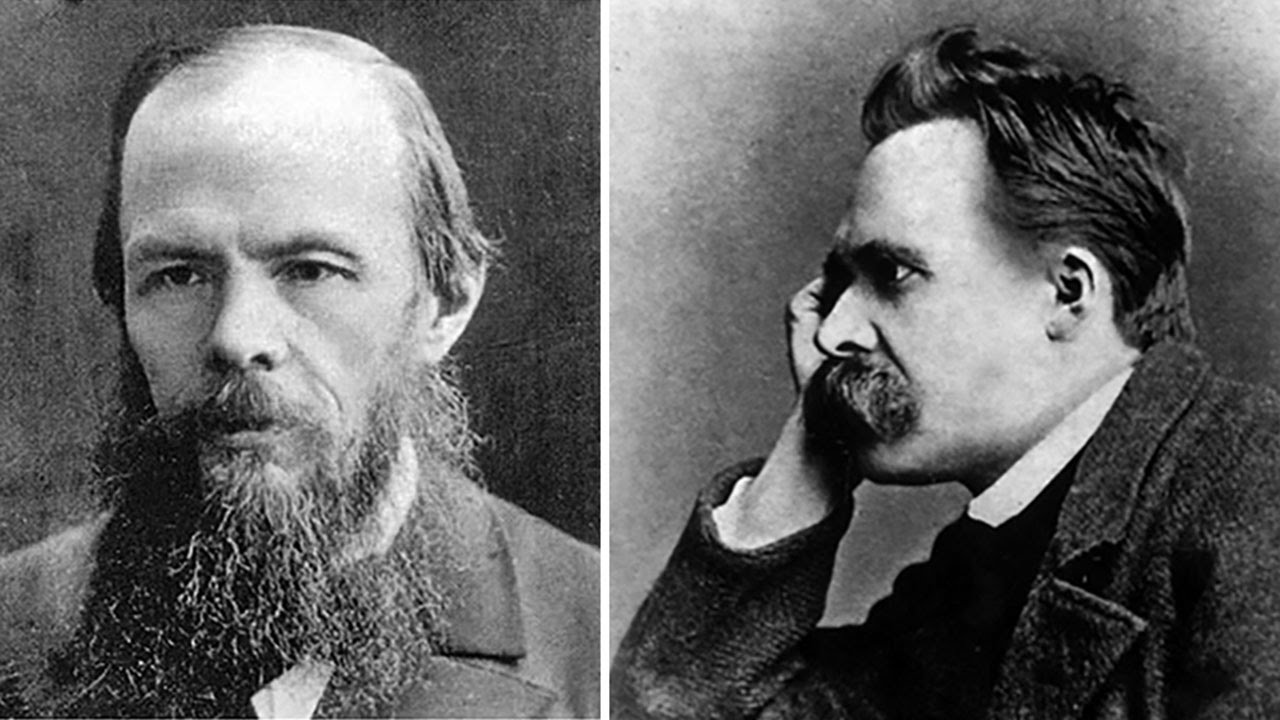
Perhaps Adler as accomplices or no that's not the great word um apprentices of Freud and I think that's probably because the freudians got a hold of the had the best biographies written first but Yung was influenced by Freud but he was equally influenced by n and in fact Jung's primary concerns were associated With n's primary concern and n's primary concern was that God had died in the late 1900s so n the philosopher announced that it's a famous announcement God is dead God is dead sometimes you see that written on bathroom walls God is dead n
nii is dead god um what nii was was was observing was that and this is something you all know implicitly is that the body of knowledge that human beings had evolved over Centuries that was encapsulated within religious thinking had emerged in conflict with the body of knowledge that was produced primarily in Europe over about a 400-year period ending say it in the beginning of the 20th century and the two forms of knowledge seemed incommensurate the claims of religion and the claims of science did not seem to be mutually harmonious and the consequence of that as
far as n was concerned was that the religious Substructure upon which at that point Western C ization was built was rendered invalid and the problem with that from a nitian perspective was well there were two problems one was okay then what the hell are we doing and why and the second was so that's a nihilistic problem right if there's no ultimate meaning then why do anything which is a perfectly reasonable question and then the second problem was well in the absence of Comprehensive systems of meaning if you don't want to be nihilistic what do you
do and n's answer was well you develop totalitarian systems to replace religion which is exactly what happened in the 20th century and that didn't seem to be a very good solution and we're certainly not done with that problem yet so that's the central problem that n POS was like we had these evolved systems of meaning and science undercut them or apparently undercut Them and that left people technologically enlightened but spiritually deprived and that state of spiritual deprivation given that your primary orientation in the world is towards action is equivalent to a mass mental disease and
it manifests itself in nihilism or in the pension for adopting totalitarian belief systems it's a big problem it killed millions of people in the 20th century you know it's not usually regarded as a form of Personality pathology but that's just because people don't think about it properly I think now Yung was very interested in that problem and so as a student of Nicha and which he was he wrote for example there's a series of lectures that were published uh as as adjuncts to Jung's collected work works that I believe are 2600 pages long and they're
written in very little type and all they are are commentaries on the first third of a book called thus Spake zarathustra which is a very short book of very bizarre quasi poetry and it happens to be the book in which nii had his character announced the death of God so Yung was a real nitian scholar so what Yung was doing see he thought that basically that as we Dean animated the cosmos so to speak you know as as the projections of deities that human beings had created had been pulled in from the objective World they
didn't disappear they weren't destroyed as as as n might Have presumed they sort of went into hiding inside the psyche which is where they or where they originated from to begin with they originated in the imagination now a standard objective scientist would say well if they originated in the imagination they aren't real whereas Jung would say don't kid yourself the imagination is real it's just a different category of real and that you better learn how to deal with it because Whether you know it or not you are Pawns of your imagination in the same way
that the Greeks considered them Pawns of the themselves Pawns of the Greek gods and so that's a hell of a thing to realize you know and it's one of the remarkable things about depth psychology because the depth psychologists tell you flat out you are a house of many spirits and one of them is you and if you think that you are the most powerful Spirit In Your House of Spirits all that means is that you're hyper protected and deluded because you're not there are things that are deep inside you and you can think of them
as biological systems if you want which also manifest themselves in in psychological phenomena that have more power than you do it's like try not to make a fool of yourself when you're you know hopelessly in love with someone you don't even know it's like good luck to that because you won't manage it and That's because the Instinct that grips you when you're overwhelmingly attracted to someone is more powerful than you are and you do what it wants even though you might want to fight back you do what it wants and there are reasons for that
you know some of them you can think of them as instinctual reasons so if you know if you're not overwhelmingly attracted to someone at least throughout most of the history of mankind the probability was pretty low that you were going to Initiate any sort of sexual contact with them so and see since that's necessary for the human race to propagate it serves biological purposes to have you play the role of actor of the demands of the Instinct of reproduction which is of of course also Freud's main claim right because Freud who I place after Yung
his fundamental claim was that the god that ruls humanity is is AOS is SE sexuality you know and I'm always he also he introduced an idea called the death Instinct later and Freud was also concerned about aggression but you know in some sense you could say that Freud believed that we were ruled by two Gods the god of the goddess of sex we'll say and the god of war and you know as as far as deductive theories go yeah beats most of the claims of postmodern Scholars so all right so that's all pretty fun you
know Freud Freud's really uh in some sense he's a 19th century atheistic thinker He's kind of like Dawkins and the other you know modern atheists in that ways um in some sense a strict darwinist and a biological reductionist and but Freud had some very interesting things to say and one of them I really like I mean I think Freud had it absolutely dead on here here like one of the things I've noticed in my clinical practice cuz I'm a I'm a clinical psychologist is that I never have clients whose parents made them too Independent I
always have the reverse not not that all my clients have this particular problem but the fundamental problem is they cannot get away from their family they've been infantilized or more accurately their families have conspired to have them remain in an infantilized State and so world is the family they can't get out of the world of the family and so in some sense that's still childhood or Adolesence because they're not dealing with the you know the the concern of the broader world and so that's the analysis of that was done by Freud most particularly in his
conceptualization of the edle complex now Freud concretized that in a variety of ways that I don't think were particularly helpful but he had his finger on the right button you know human beings are unbelievably dependent when they're born so a mammal of our size should have a Gestation period of 2 years you know if if we were comparable to other mammals of approximately our SI being pregnant for two years that does not sound like fun but you know if you if you look at animals say like like uh like uh deer or moose or animals
like that pretty much as soon as they're born they can get up and walk whereas a human being it's like 15 months right it's crawling around like you know little I helpless little Thing I can't even stand up for 15 months well that's because it's born in some sense in fetal form and so that makes it incredibly it's kind of like a baby kangaroo except it's more developed than that um it makes it incredibly dependent in a way that no other animal is and then of course it takes you well let's see about 40% 50%
of people your age live in their parents houses you know so you're 20 or 21 or 19 or whatever you are it's like you know You're still dependent fundamentally and so it's not that easy to break a dependence habit of 19 years and you know your parents May Foster your Independence and chase you the hell out of the house if they can and try to make you into a functional try to help you become a functional and independent adult but maybe not too and it's the maybe not that's the big problem because it's actually rather
frightening to develop Independence even Though you get to be independent which is supposed to be the payoff and it's easy for that process to be interfered with and one of the things that can really interfere with it is maternal anxiety now paternal anxiety can interfere with it too but fathers tend to be substantially less anxious than mothers and so the classic edle mother is anxious and so every time the child tries to do something that's independent her anxiety gets in the way oh you Better be careful if you're going to do that it's like you
hear that 5,000 times man you're not going to be able to take a step without you know without manifesting the anxiety that you've been taught by a powerful external force and that's the edle complex in in a nutshell fundamentally so that's a great thing to to figure out and we'll look I think we're going to look at a movie called crumb which was U it's about This underground cartoonist named arram and uh it has some very interesting things to say about the edle complex so all right so humanism existentialism and phenomenology they're all kind of
clumped together brilliant theorists I think a lot of this came out in the 1950s you might as well you could think about it in some sense as the precursor To positive psychology except that except that positive psychology has no grounding either in Psychology or philosophy whereas existentialism has good grounding in both and it's not naive you know the existentialists believed that well the I I'll Clump them together for the purpose of this brief Exposition the first thing that this group of thinkers asks you to consider this is a hard thing to do but if you
can do it it's really worthwhile forget About your normal conceptions your formal conceptions of what constitutes reality and play this game instead it's like it's it's an axiom shift instead of thinking that reality is the objective world and you're the a like a Superfluous subjective Observer a transient subjective Observer imagine that what reality is is what you experience that's it so everything you experience is equally real although there are different categories of real Right I mean a dream is not in the same category as the chair that you're sitting on but from the phenomenological point
of view a dream and an emotion is just as real a phenomena as the chair is real okay so that's the first AUM it's it's it's the game is sort of well what if we what if we make that assumption so you make that assumption the next issue is what are the essential qualities of what you experience and that can be addressed in A variety of ways one of the most important things that the existentialists are concerned about is fundamental anxiety so the this group of ERS would say well you're you have you you exist
within this domain of experience and one of the phenomena that's most manifest within that domain is the feeling of anxiety or dread that's a kir guardian idea it's that as a in an experience constituted like yours which is somewhat fragile which Knows its limits it's localized in time and space the the fundamental the fundamental negative meaning in some sense is anxiety and Dread and then the question is given that that's the fundamental reality what do you do about it and so the existentialist idea in sense is observe Your Existence find those elements of being that
support you and pursue them and that will counterbalance the primary feeling of dread and Alienation and anxiety and allow you to exist in a a manner that makes existence at least bearable so if you look at the freudians for example the freudians sort of think that if there's something wrong with you there's a reason so if if you were just a normal person you'd be okay and since you're not a normal person something went wrong whereas the existentialists they take the opposite idea they say look you're screwed from from day one That's just how it
is because I look at you you're you're flawed you're finite and there's a thousand things a million things that you don't know and and all sorts of things that are conspiring to do you in it's like with a problem like that you don't need more problems to be unstable you're just unstable to begin with so they they conceive of negative emotion related pathology as an integral part of being and then the question is okay given that it's like the Buddhist Idea that life is suffering it's the same idea it's like don't be wondering why you're
pathological it's obvious why you're pathological how could you help but be pathological the question is given that what should you do about it or even is there anything you can do about it and that's the the question that we'll try to unfold in this section of the course now the other thing that's really interesting about this group of thinkers I think is that especially the late ones like well I include soulj niten as a personality theorist for for reasons that I won't talk to you about now soljan niton was a Russian author and he wrote
a book called the gulag archipelago which was published in the 1970s and it was one of the things that knocked over the Soviet Union because it revealed for the first time just how corrupt and murderous the Soviet system was now the thing that's interesting About solj niten and also about Frankle Victor Frankle who was a psychiatrist who'd been put in the Nazi death camps is that they were very integrally concerned with the idea of the intrinsic meaningfulness and meaninglessness of human life one thing so that's the personal element but the second thing they were concerned
about and this sort of made them logical followers of n was what effect does your decision about the meaning of Your life have on the broader social community so let's say that you're nihilistic or you're totalitarian so what does that mean like you're not an isolated unit you're intera in with people all the time you have a tremendous network of connections you know you can think of it this way you know a thousand people each of those thousand people knows a thousand people that means you're one person from a million and two from a billion
so Instead of being some little localized dot in an random array of dots seven billion of them you're the center of a connected Network and so if there's something that's gone astray with your psychic functioning your psychological functioning what exactly does that do to the broader social community and Soulja nen's idea and frankl's as well it's quite straightforward is the two the the reason that societies become pathological deeply murderously Pathological is because individuals within the society have become deeply and murderously pathological so instead of society in which is something that the marxists would think for
example you know that you're the pawn of social forces the existentialists would say uh-uh don't be so sure about that it's the quality of the individual decisions that you make on a person level dayto day that's spread out into the broader community and either improve it or Pathologize it and so I'm going to have you read both Frankle and Solan niten because I think they make viciously powerful arguments that that is in fact the case and it's actually quite a useful it's a funny thing e because often this is sort of associated with the idea
of facing dragons often you learn the things that are most vital to your being by considering the worst possible phenomena so I might say well just think about this it's like the the Idea that Frankle and soul niton and others by the way have been propagating is that whatever decisions you make that are moral on a day-to-day basis aren't isolated to you they spread out into the community very rapidly and so the fate of the community is dependent in some sense on your personal morality so then well that's a terrible thing I mean it's a
terrible weight but it certainly provides an answer to well why should I do what I do it's like do good things Great they propagate do bad things fine they propagate too and one of the really interesting things about the existentialists is they took a look at what happened in the 20th century with its ungodly murderous political systems and said all right just exactly what responsibility does the individual bear for bringing those conditions about it's like it's a question well worth thinking about and it certainly hasn't lost its relevance in fact I think it's well it's
As relevant as ever so that's great that's that's really an interesting thing to do then we move into the fields that are more strictly scientific but a lot of what we've covered in the beginning of the class provides the platform for that I'm going to tell you about the structure and function of the basic biological systems that underly your motivations and your emotions and roughly speaking we're going to say that a motivational system sets a goal for You so if you're hungry your goal is is to eat obviously if you're thirsty your goal is to
consume some liquid goal setting systems and there's a system for each of those we'll call them drives even though that's we'll call them motivational systems because they're not really drives whereas emotions are things that are more are likely to manifest themselves as markers for your position on the way to the goal so for example if You have a goal in mind and you're progressing towards it without any obstacles you're going to feel positive emotion and if you have a goal in mind and you're progressing towards it and you encounter obstacles then you're going to experience
negative emotions and what I want to do is outline what I think is the best relatively current Neuroscience on the structure and function of those systems and what we'll see is that there's a nice analog Between the pedian story about how the psyche develops and the way the brain is organized and there's a nice analog between the theories of Psych ological symbolism that were pursued by the depth psychologists and the relationship between the brain areas that subsume your sense of individuality and the underlying motivational and emotional systems that guide and drive and constrain and allow
your behavior So so that'll put some biology underneath the theorizing and I think that's a really that's also a very fun thing to have happen then after that we're going to talk about five Factor trait Theory and five the five Factor trait theory is the most modern formulation of psychometric theory and psychometric theory is the statistical reduction of Des data sets that describe human personality it's it's the so if I if I Took an infinite Bank of questions that I could ask you about your personality and then I subject them to the proper kind of
statistical analysis I could group those questions into coherent groups and what I would discover is that your personality has something resembling a five Factor structure five Dimensions it's a lot of Dimensions the world has four dimensions right your personality has five so that's plenty complicated and we're going to walk Through what those dimensions are what the variability represents how they might be related to the motivational systems and the thought patterns that we discovered earlier and then all the Practical consequences of knowing about those systems and we actually the model I'm going to present you with
is tiered so the top level is stability and plasticity the next tier is the standard five Factor model extroversion and openness that makes up plasticity Agreeableness conscientiousness andness and what's the other one there what's that no no yes neuroticism I'm sorry emotional stability reversed yeah so and then underneath that each of those breaks into two and so I want to describe to you the most current research on what each of those hierarchical tiers mean and why you want to know that and at the same time I'm going to have you do a personality Analysis online
so what it will do is help you identify your personality virtues using a big five model and your personality false also using a big five model so that'll give you some insight into who you are and what the hell is wrong with you and also what's good about you at the same time that we're trying to elaborate these dimensions on a at a conceptual level so that's in a nutshell the course I want the readings and the order In which you have to do them are listed on the website so I'm not going to go
through them it should be relatively self-explanatory I want you to read chapter 15 of the Black Swan and the reason I want you to read that is because it questions the valid of the standard normal distribution model that psychometrics is predicated on and we'll talk a lot more about that later but I think you need to know it because you're going to learn in Psychology that most things are normally distributed and all of the statistics that you'll use in Psychology are predicated on the idea that the normal distribution holds but there's lots of situations in
which it doesn't hold and they're important so for example money is not normally distributed right 1% of the population has 50% % of the money and then if you take that 1% and you take the top 1% of that then they have 50% of all the money that the top 1% has And lots of phenomena are like that artistic productivity is like that anything that people create productively is like that so okay exams you can look this up on the website here's what you have to do there are three exams they're not cumulative there's 11
15% essay of 750 words and the online exercise and it's past fail because you know I don't know how I'm going to grade you for your virtues or your faults you know that's Your problem but you you know so all all we'll do is check to see that you've actually gone through the exercise in a half intelligible manner so all right now I I want to stop with wh that so you can write it down if you didn't but here's a couple of things I want to tell you um I I have some insight into
my own personality I'm very industrious I'm not very orderly and I'm very high in Openness and so I'm telling you that because there are some things you should consider if you want to take this course and you should really consider them because not every course is for everyone um if you're unbelievably organized person this is not the course for you okay because there's a contradiction between openness and orderliness and the thing about orderliness is that orderliness puts everything into boxes and the boxes are tight and the Dichotomies are black and white and I'm not criticizing
that there is great utility in orderliness but orderliness fights with openness and I like to break boxes apart and so if you're the sort of person who is orderly like really orderly you'll know this how clean is your room like is do you have you alphabetized your Soup cans if you have then this is not the course for you you to to take this course there's two things that that have to Characterize you one is you have to be willing to read okay the reading load is quite I don't think it's overwhelmingly heavy but the
material is quite difficult and there is a there is plenty of it so if you if that doesn't interest you like don't take the course and the second thing is you know if you're the sort of person who spontaneously talks about ideas with your friends you know and you find conversations about things that aren't related to ideas is somewhat Tedious then this is the course for you because it's it's really because I'm an open person I can't help but make my course I can't help but create it in that image I'm really interested in ideas
like I try to tell you why it's necessary to know them because an idea isn't interesting to me unless it has utility for you but we're going to go all over and if if if you want a road that's defined and like a single track to towards a goal that isn't this road This road is going like this like you just heard you know you just had a lecture so you know what they're going to be like so you're welcome to be here I'm thrilled to be able to teach you this material but don't say
I didn't warn you all right well that's that so we'll see you Thursday bye [Applause]