a revolution is underway a transformation in our understanding of life on Earth using new technologies reaching for new insights scientists are writing a new history of the animal kingdom by studying nature's unsung heroes creatures almost beyond our imagination they're uncovering the deepest roots of our own origins whole field is open again we're back to investigating where we came from it is the story of animal life and how it came to be an epic tale that can finally be told like all good stories it begins with a quest for basic answers about life itself where did
we come from was there a first animal one that gave rise to us all I'm obsessed with learning where we came from where did the organisms come from the caber eyes to complex animals incredibly a first animal group has now been identified a mysterious creature whose descendants are still alive today they're just so alien so old so ancient and so different to anything else you find they're just magnificent join us now on the search for the first true animal the primal ancestor that pioneered the shape of life biologist Rudy Raph doesn't appear to be much
of a revolutionary but he is a key scientist who is helping to forge a new understanding of how animals arose on earth he's helping to reconstruct a radically new history of animal life 50 years ago people would have thought we knew all of there was about animal evolution about the relations of animals to each other Oldfield is open again genes and paleontology have opened these problems back up and we're we're back to investigating where we came from Raph and his colleagues are wrestling with mysteries that have perplexed scientists for centuries the questions are as daunting
as they are profound [Music] how did life on earth become so diverse encompassing millions of species [Applause] how did animals come to be designed the way they are and what are their shapes tell us of their history [Music] how has the struggle to survive molded the shape of life and what can we learn from the survivors and how did we humans arise from the complex tapestry of life on earth this is really a very exciting time to be looking at evolutionary biology there are three strands to the story that are beginning to grow and weave
into each other to produce a really strong story the first is paleontology which is beginning to make new discoveries and has filled in a lot of gaps in our knowledge of extinct animals scientists are also deciphering the genetic secrets of how animals living today have acquired their shapes [Music] and finally we can combine DNA sequences and Anatomy to construct the animal family tree in powerful new ways over the past roughly two decades the tools are there coming from genetics and molecular biology recombinant DNA work and classical embryology and paleontology all these different fields are all
coming together and all of a sudden people are talking to each other who never had any opportunity or reason to before [Music] in their quest to peel back the past Eon by eon layer-by-layer researchers are traveling the world finding clues in lands strange and familiar the case that they're building the story they're writing is filled with unpredictable twists and turns it is a voyage through time an adventure in Natural History a story full of unknown characters and unsung heroes this is not some agents no stupid creature this is a survivor it's a survivor for good
reason you don't last 500 million years if you're poorly adapted to understand what is being discovered is to see life exposed as it never was before in all its horror and its beauty from the most delicate creations to the most complex we will meet fantastic animals that seemed at times to border on the surreal we will encounter the monsters the mysterious [Music] and the truly marvelous but our story begins with a simple question was there an animal Eve that gave rise to all of this diversity it's an ancient puzzle that scientists have finally begun to
solve the search begins in Indonesia a nation of 17,000 verdant islands strung like jewels between the Pacific and Indian Oceans it is home to more than 200 million people of diverse ethnic backgrounds it also nurtures an enormous diversity of other living things more different kinds of creatures live here than just about anywhere else on earth tropical forests cling to the steep slopes of volcanoes which rose from the bottom of the sea the result is a land that spawned new species with abandon from some of the world's smallest primates - one of the greatest of great
apes [Music] this kaleidoscope of life is a lure for scientists especially those trying to sort out the evolution of animal life [Music] among them is Spanish born biologist Christina Diaz she hasn't come to the island of Sulawesi for its lush forests but for the diverse community that thrives in its undersea domain for me a biologist to be here in Sulawesi it's an event beyond my dreams as it is one of the richest places on earth in terms of biodiversity and this makes me feel like I'm one of the luckiest people in the world just below
the calm and tranquil waters of Sulawesi lies a bustling world it is a place we can visit only briefly but it's home to a spectacular variety of animal life [Music] down here you are in another world I feel so comfortable and so part of something very large it's a world of colors and sounds that is very hard to describe it's almost like a silence but it's silent that is full of crackling and full of life in this thriving seascape live familiar animals as well as others both perplexing and alien [Music] where others might see a
collage of colors and shapes in these waters Diaz sees pattern and order I am a taxonomist and as a taxonomist what we do is that we attempt to organize the incredible diversity of life that surrounds us Diaz is part of a long line of scientists and philosophers determined to organize life and so make sense of it this desire to categorize living things is almost as ancient as science itself Aristotle was perhaps the first to codify a system for classifying animals by their internal and external similarities during the mid 1700s the Swedish botanist carolus linnaeus developed
a standard method for naming organisms he introduced the idea of genus and species to him animal organisms were perfect and unchangeable creations [Music] a hundred years later Charles Darwin shook the world his theory said that species could actually change over time what's more it also implied that all animals may have descended from a single common ancestor Darwyn suspected if only we could travel millions and millions of years back in time that we could witness the birth of the Earth's first animal in the beginning the earth was devoid of living things then about three and a
half billion years ago something completely new appeared life for two and a half billion years single-celled organisms dominated the earth they were minuscule creatures completely enclosed in a fragile membrane these were living pulsing beings but they weren't animals somehow cells developed a language that allowed them to work together when they did it was a turning point for life on Earth the very first animal had begun to take shape but what was this first creature the first animal would really have been something very simple you would not have had a head a brain a mouth or
any internal organs not even bones it would have been something made up of a bunch of cells a bunch of animal cells those cells would have to cooperate to work together for the common good of the animal [Music] incredibly such an animal still exists and it thrives in these waters and that is why Diaz has come to Indonesia local legend hands bar tuna is a retired medical doctor affectionately known as the grandfather of diving in northern Sulawesi but tuna knows exactly where Diaz confined what she's come to study and points the area out of her
on there and there's a fairly deep trough here and here the marioneta he tells her that she must go to the foot of a volcano called Manado tua she must look for a reef that ends in an underwater wall plunging hundreds of feet into the depths there she will find what she seeks [Music] ever since Darwin put forth his theory of evolution scientists like Diaz have puzzled over animal origins at long last she and others think they have found a creature that links us to a moment in deep time - the first animals of Earth
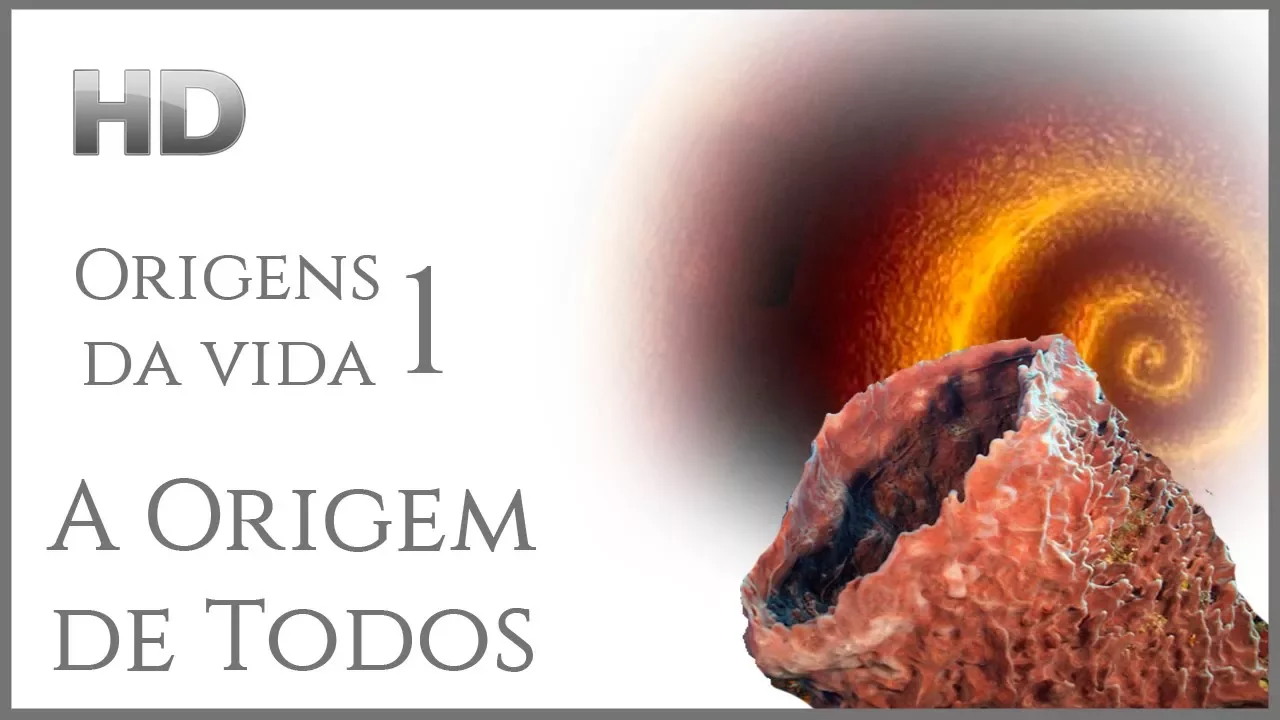
[Music] it is a creature that is somewhat alien in its appearance a being without a nervous system muscles limbs or a brain its body is defined by a loose assemblage of cells it is the ancient sponge when I encounter a sponge it just takes my breath away I just want to stop and look you know they're just so alien so old I mean so ancient and so different to anything else you find in the bottom of the sea just they're so alien forms of life you know and at the same time they're so present that
is just it just leaves me in awe I think they're beautiful that original they are mysterious they have lots of secrets that we have to unveil you see and that for me it's an attractive things they keep a lot of Secrets that I think are very important [Music] sponges don't give up their secrets easily their apparent simplicity is both provocative and perplexing at a distance they seem solid but a closer look reveals a labyrinth of tiny holes tunnels and chambers unlike our bodies sponges have no definitive shape they are as varied as their many habitats
scientists have described more than nine thousand different species of sponge they thrive in salt and freshwater environments around the world turning up in the most bizarre and unexpected places from the frigid waters of the poles to the warm seas of the tropics Christina Diaz recognizes the sponge as a vibrant animal but for centuries scientists have debated whether in fact this was true [Music] even today it stretches the imagination to think of this odd organism as an animal to the untrained eye it barely seems alive at all when we think of animals we come to up
something entirely different animals move they feed themselves they reproduce uncaf they're young they engage in fierce territorial battles in comparison a sponge seems lifeless if it is an animal it certainly conceals its true nature [Music] to help her unravel the mysteries of the sponge Diaz has teamed up with biologist and conservationist Marc Wortman hi [Music] hi Christina welcome to Wanaka Herman has spent years as a marine researcher in Indonesia he knows these waters and the reefs they Harbor today Diaz has her sights on a reef wall that drops hundreds of feet into the deep together
she and Edmund will descend the cliffs searching for sponges that live the samples they collect will provide a window into a fascinating world the microscopic realm where sponges are most active and dynamic sponge cells are unique in the animal kingdom but in order to study their miraculous abilities Diaz and Edmund will have to gather living samples and transport them to the lab William sponges to study in the lab and so we have to collect specimens but we need to just cut a small section to be examined and because it doesn't have a nervous system we
are not really hurting it in time the cut area will grow again as if nothing had happened to it all animals rely on cell to cell communication but Diaz and others have been able to show that sponge cells have a unique way of working together to witness their abilities is to be amazed unlike most of our cells those of sponges retain a special freedom over several hours they begin to come together building many new sponges [Music] while the sponge appears strikingly different from other animals it does share some basic hallmarks its cells are held together
in part by a protein called collagen which is possessed by all animals on earth collagen which is the most abundant protein in the animal world forms the supportive system for the sponge body so even in the form of small fibers that all sponges have that give support to the cells or in the form of strong and stout fibers that give rigidity and support that the sponge is to achieve larger sizes most people when they think of a sponge they think on their bath sponge and when you have a bath bone in your hand you're holding
is a soft skeleton that is made of collagen but unlike the bath variety many sponges aren't soft at all in addition to the soft collagen of the bath sponge many have millions of brittle crystalline spicules embedded in their bodies spicules are microscopic structures that help give a sponge its rigidity and for [Music] speakers are an incredible tool for us today to identify most of the sponges that are living in the oceans you can identify a species or a group of sponges not only by the type and the size of the speaker's they have but the
way that they are arranged in this sponge body for most sponges the glassy spicules act as a kind of fingerprint magnified their dazzling array of shapes and sizes are as beautiful as they are unearthly [Music] [Music] if the sponge is indeed an animal it must eat to survive how does it feed itself when it has no obvious mouth a sponge is actually a fantastic pump which requires an incredible coordination of cells to function it's a living filtering machine it lives by sucking in water and filtering out food particles these seemingly motionless creatures are actually working
extremely hard in order to feed imagine that to get an ounce of food a sponge have to pump over that ton of water through itself now can you imagine doing that yourself drinking a ton of water to get an ounce of food to your body Diaz has studied sponges for decades yet she's never seen them feed in the wild until now few people have [Music] to make the invisible visible Diaz injects a harmless colored dye into the water near the body of a sponge one of the ways we can test for the rate of water
flow that move through the sponge body is to inject a colored dye and measure the speed at which it is pumped through the sponge actually for me this is the first time I've done this and I've been really looking forward to the opportunity for years I'm so excited to try this experiment [Music] when I start seeing the color dye coming out for the sponge in less than two seconds from when it was applied I could not believe my eyes this steady and strong continuous flow of water continuously coming out of the sponge was an incredible
realization of the dynamic existence of this organism it's an incredible sight to witness [Music] these ghostly exhalations are proof that the sponge is actively pumping with no mouth it sucks water directly through its sponge like body walls which are shot through with millions of narrow canals and tiny chambers how does it do it what secrets hide within the belly of this beast the best way to find out is to enter one of the many portals into the sponges secret in a world drifting along with countless single-celled organisms we feel the tug of a current in
the wonderland within this spongy cells all work for the common good for they do it in wildly different way as the current drawers as on we pass sponge cells that are making new spicules the walls themselves are treacherous they can simply engulf their unfortunate prey [Music] as we are drawn through ever narrower passages the current slows until we burst into one of the sponges millions of tiny beating hearts these are Kohima sites cells whose whip-like flagyl i the flow quickens again as it wisps it away through the labyrinth of canals that lead out into the
sponges central cavity what once seemed barely alive is actually a living animal more complex than we could ever have imagined the sponges pumping does more than satisfy its hunger for food in fact it's sex life depends on pumping as well half a billion years ago these were the very first animals to reproduce sexually the first to combine sperm and egg to create offspring set adrift some sperm will be lucky enough to enter another sponge of the same species if the sperm are truly fortunate they will fertilize the eggs within [Music] our intimate tour of the
sponge reveals a creature full of surprises from feeding to reproduction it engages in elaborate behavior more than a mere aggregation of cells the sponge is in fact a living thriving animal though of ancient design sponges continue to thrive in today's diverse and crowded world in fact they play a vital role in the lives of many other animals since they first appeared sponges have formed a multitude of strange symbiotic relationships these sea cucumbers just a few inches long take advantage of the sponges pumping action as food particles that are too large for the sponge to absorb
flow by the sea cucumbers use their tentacles to snag them it's a free lunch all thanks to a sponge on Indonesia's crowded reefs sponges provide sanctuary to a whole host of different creatures small species of fish hide within their walls or perch cryptically upon their turrets [Music] in return for a safe haven some animals are willing to give up their freedom permanently this little sponge is called Venus's flower basket as it grows it weaves its glassy spicules together sometimes forming a living refuge for a pair of shrimp here they mate and grow and if they
become too large to escape they are confined forever within this prism of spun glass sponges unwittingly protect their animal partners in other unusual ways the sponge crab Clips off a piece of sponge and then proceeds to wear it like a hat since most sponges are inedible the crab benefits from the camouflage but not all sponges are so easygoing as bestop lumen is a sponge that appeals its hair-thin spicules are covered with tiny hooks perfect for snagging a helpless crab larvae specialized cells use out of the sponges body migrate around its prey and digest it alive
[Music] with cells wandering in and out of its body this sponge seems like a character from science fiction not a likely candidate for the title of the first animal on earth yet sponges are ancient so remarkably old that scientists have often wondered if they were our forebears could it be that these primitive creatures so different from other life-forms gave rise to all the other animals including us [Music] questions about the origin of animal life have long plagued thoughtful minds [Music] one man who's devoted himself to unraveling the mystery his Michels Soviet I'm obsessed with learning
where we came from and what I mean by that not who your mother and father is or your grandparents but rather where did the organisms come from that gave rise to complex animals like man other species [Music] as an evolutionary biologist so again pursues these questions at America's oldest Marine station the Marine Biological Laboratory at Woods Hole on Cape Cod in the northeastern United States [Music] working here so Guillen was quick to take advantage of promising advances in genetics and computer science diatoms from Nebraska their Alcala flask of it do you have a look so
these were isolated from lakes we can get some DNA from these guys by this week who could probably set up some pcr experiments around Thursday or Friday we should be able to get a sequence from these things as new technology became available so Guillen decided to search the genes of different animals to see if he could demonstrate which one gave rise to all the others in looking for origins of animals particularly from the perspective of a molecular evolutionist you could take a top-down approach in which you say I recognize that the first animals certainly were
not cows or pigs or or humans it must have been something much more simple in the 1980s so again set himself a challenging task to discover what creature may at the base of the animal kingdom both of these sponges look pretty good for this time of year at the time some scientists suspected the sponge to solve the mystery Segen decided to look where few had looked before inside the sponges genetic code first he would have to get a clear view of the DNA inside their cells it was laborious work a painstaking process known as gene
sequencing so what we want to do is get because the tips genetic sequences are very much like blueprints for constructing an organism it defines everything that there is to know in order to generate a body plan or to carry out metabolisms or physiology you have a set of genetic blueprints that defines who you are I have a slightly different set of genetic blueprints that defines me it's very much like the blueprints for building buildings or cars or whatever it is you have to have a plan for making we can compare the genetic blueprints of different
things so for example I can compare the genetic blueprint of of an automobile I can compare that to a covered wagon and there are minimal number of elements in that blueprint that are common between those very disparate kinds of vehicles I can do the same thing in terms of organisms so again compared the genetic blueprints of sponges to those of other organisms just this physical education would be enough to disrupt to disintegrate the cells we won't be able to get the DNA out of there pretty easily murdered he focused on a gene they had in
common but genes are not identical and they're subtle differences would be telling if the genes of two animals revealed little variation the animals were closely related by grouping animals in this way so Guillen could trace a family tree the animal at the base of the tree would be ancestral or basal for a long time biologists argued that sponges were basal to all their animals in an evolutionary tree but there really wasn't that any objective certain way to make that claim until the advent of molecular sequencing capabilities in order to compare gene sequences scientists must first
extract the DNA from the nucleus of cells the living code can then be reduced to data that the scientists can analyze [Music] there is one magical moment when DNA can actually be seen with the naked eye these delicate threads carry the instructions for making an animal and a fascinating record of the way that animal evolved all animals depend on these same molecules to give their bodies shape and form this is the very stuff of life today powerful machines have taken over the arduous task of analyzing genetic sequences dozens of different organisms can be compared at
once what used to take months of exacting lab work can now be done in a single day Michell surgeon could quickly sort through reams of genetic information [Music] [Music] we pick up jeans that we think are appropriate candidates to study and we precisely determine the sequence of that king from a sponge and compare it to the same gene that you find in a jellyfish compare that to the same chain that you find in a fly fish for all the human etc the genes code is written in a series of four letters thousands of characters long
so again focused on one particular gene to see how it chain which done varied in the DNA of different animals honing in on a specific region of the gene he began a search that could lead to insights about the evolution of animal life as he churned through sequence after sequence animal after animal the family tree was slowly revealed at the end of the long and arduous process so Guillen looked at the bottom of the tree and found his master at the base of the entire Animal Kingdom lay the sponge sponges lie at a critical juncture
in the evolution of more complex life-forms on this planet they're clearly basically the other animals they come from a unicellular world and that's a major achievement because now you can imagine development of greater organismal complexity in this particular state now sponges had already laid the seeds for the evolution of animals that you find distributed throughout the animal world and the very fact that sponges of why at the base of the animals means that all other animals in some way shape or form would have come out of this simple architecture of an organism so ghen discovered
that sponges had transformed the nature of life we're mainly single-celled creatures had thrived before the sponge was the first multicellular animal humans rabbits is really a very recent event and [Music] if we were to run the clock of life and backwards condensing hundreds of millions of evolutionary steps into a minute or so we would come face to face with a simple organism that started [Music] [Applause] [Music] [Applause] [Music] [Applause] [Music] [Applause] [Music] it has been a long journey from the simple body plan of the sponge [Music] - one as complex and sophisticated as powers [Music]
scientists are now beginning to unfurl the map of life's long journey to understand how creatures evolved to move swim run hunt kill soar through the sky and even develop the intelligence to try to make sense of the world around them it has been an unimaginably complex Odyssey starting with a simple creature routed to the ocean floor it is a saga that continues even now as we explore and unfold the extraordinary events that gave rise to the shape of life [Music]