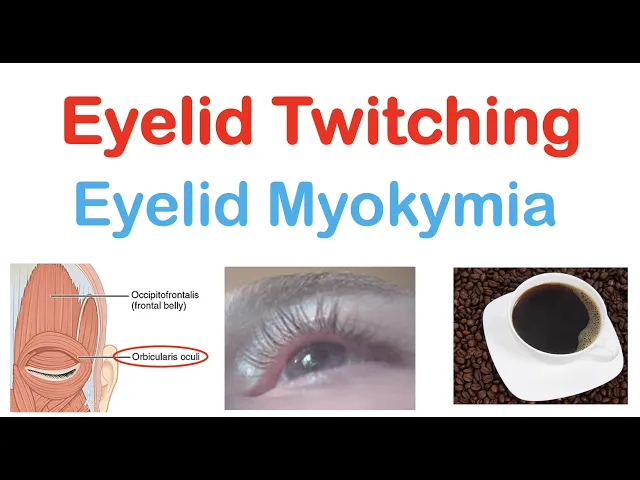
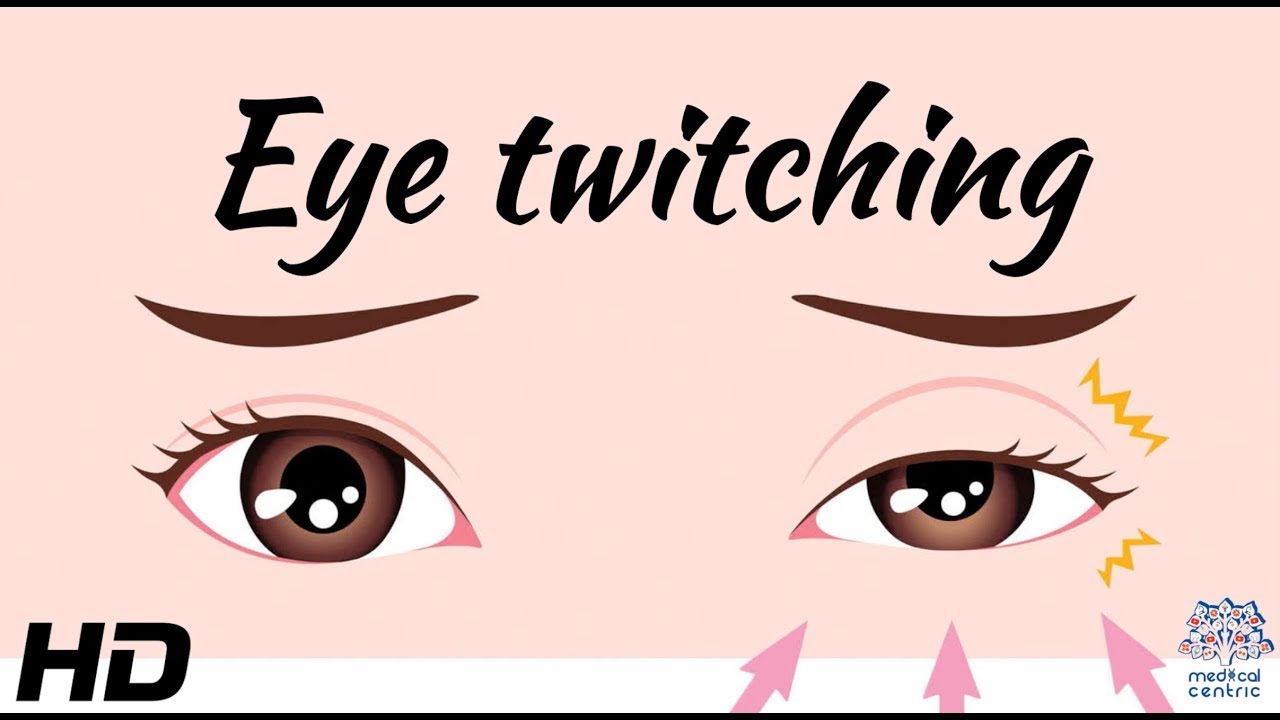
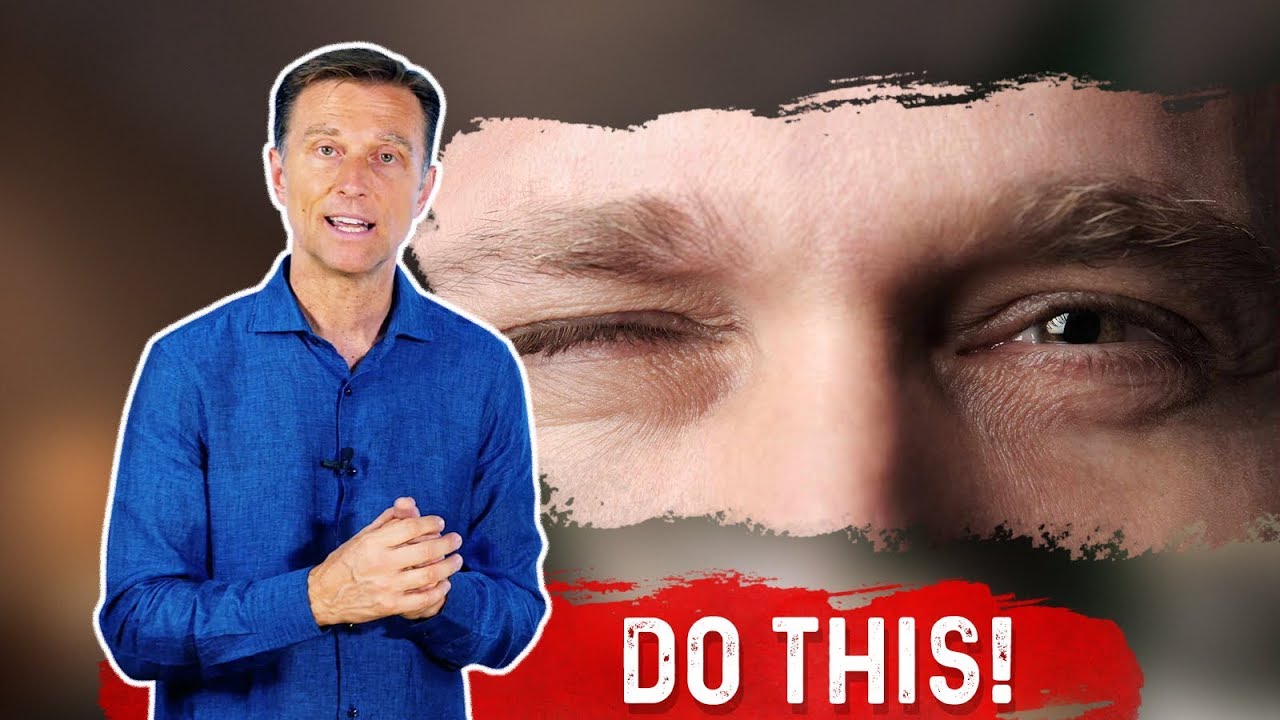
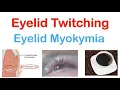
hi everyone this lesson is on eyelid twitching which is also known as eyelid myokymia so eyelid myokyme is a condition involving muscle spasms of the eyelid so it can look like this so these muscle spasms are going to be contractions or twitching of the eyelid now this is a benign in self-limiting condition and it's often not associated with other conditions and I say often not because it may be in early finding in some conditions so it may be an early finding of certain autoimmune diseases multiple sclerosis hemifacial spasm and some other conditions as well now
eyelid myokami is actually the most common facial myokini disorder now the incidence and prevalence is unknown in the general population but what is known is that this condition has a higher likelihood in medical students and it is one of what we call the medical students disease which is just a broad term for any condition that may more likely occur or seem to more likely occur in medical students as they learn about diseases and some of the reasons why this condition May more likely occur in medical students is due to fatigue and stress which are some
of the triggers of myelin myokamia which we're going to talk about in more detail later on in this lesson so the pathophysiology of this condition is not well understood but what is known is that the orbicularis oculi which is the muscle that surrounds the eye is affected in this condition now the orbicularis oculi is the muscle responsible for eyelid closure and what seems to occur in island myokinia is that the nerve fibers leading to the orbicularis oculi muscle are likely affected so what this does is it leads to soft and gentle contractions of the muscle
the contractions of this muscle can be described as a ripple like they're often going to be continuous and constant as well and when doing specific measurements of the contractions of the orbicularis oculine muscle there is a three to eight Hertz discharge rate and the discharge interval is 100 to 200 milliseconds now let's talk to the clinical features of this condition so this condition involves Island twitching as we mentioned before so eyelid twitching again is going to look something like this it's going to occur unilateral which means it's going to occur on one side bilateral cases
can occur although they're going to be rare So bilateral meaning that both sides so the left side and the right side or the left eye and the right eye are going to be affected in some cases and the lower eyelid is going to be most commonly affected more than the upper eyelid but either one can be affected and it's often going to occur continuously and occur periodically now the duration of these eyelid twitching episodes can last between seconds to hours and the episodes can occur intermittently so there can be an episode where there's eyelid twitching
for seconds and then it can stop and then it can come back later and twitch for minutes and so on now in some cases the episodes of eyelid twitching can last for a very long time and in fact it can last for upwards of weeks now this would be considered chronic eyelid myokimia and it's more likely to occur in female patients and in cold weather so those are the clinical features of eyelid myokymia and it's also important to note that there is no muscle atrophy in no muscle weakness so patients can open and close their
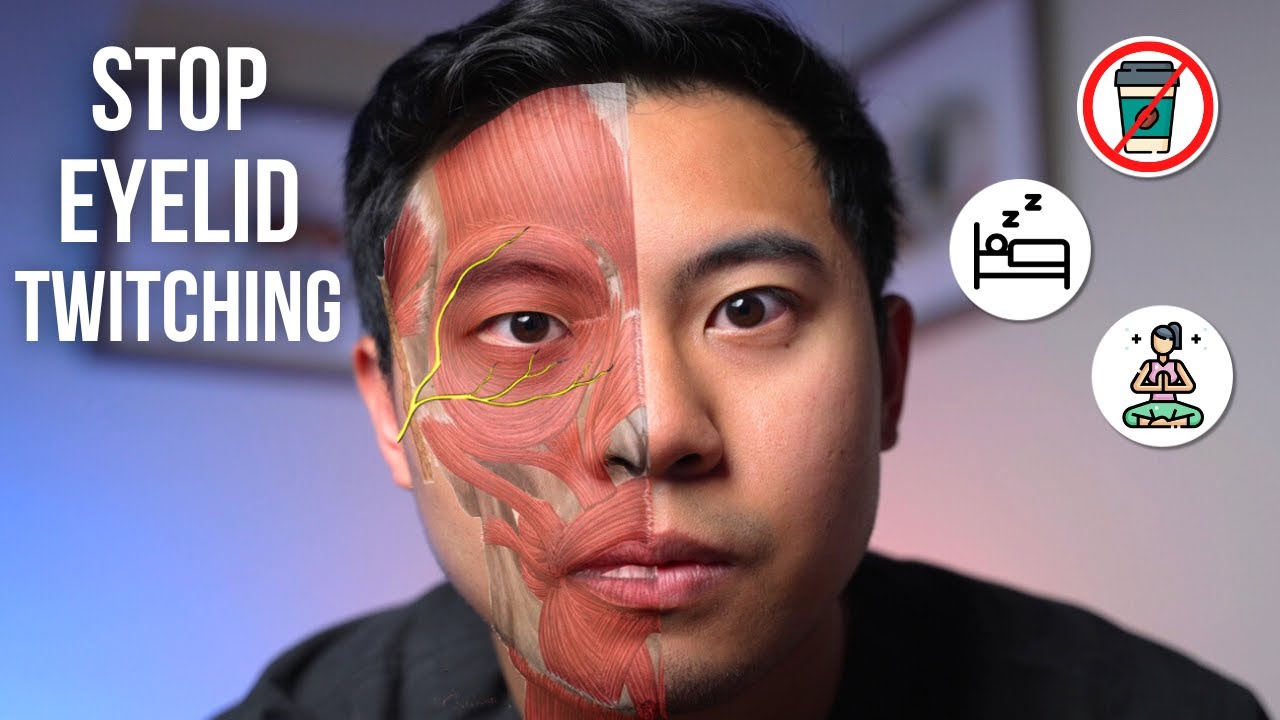
eyes with no issue let's talk about the etiologies or the causes in some of the potential triggers for this condition now it's important to note that the etiology is not entirely known but there are several factors that are associated with the onset of eyelid twitching one of them is going to be stress so being stressed is more likely to lead to Island myokymia you can also see fatigue so fatigue is associated with Island myokinia as well exercise can also increase the likelihood of having eyelid twitching we can also see caffeine especially excessive caffeine use and
then alcohol consumption can also lead to eyelid mild coming as well and in some cases smoking so I add smoking here but alcohol consumption is going to be the main one and then certain medications can also lead to island myokymia or are associated with eyelid myokymia and these can include to pyramid phenerazine and clozapine so if any of these medications caused eyelid twitching we would call this medication-induced eyelid myokinium now let's talk about how clinicians diagnose and treat eye Island myokinium so this is going to be clinical diagnosis so we see a twitching eyelid and
we see some of the triggers and there are no other issues or no other signs or symptoms that is enough to make the diagnosis it is possible to assess for other conditions if they are suspected as mentioned before this can be a condition that can be an early sign of other conditions like multiple sclerosis or other autoimmune conditions so how do clinicians treat this condition this is a self-limiting condition as mentioned before it's benign it's self-limiting so often no treatment or intervention is necessary so supportive treatments like simply rest and waiting is enough as again
this is a self-limiting condition and as mentioned before it only often lasts for seconds but it may last up to hours in some cases in other cases though it can be important to identify those triggers or Associated factors that we talked about before so reducing or eliminating caffeine intake can help smoking and alcohol sensation can also help as well and if any of those medications that we talked about before if they are leading to excessive Troublesome eyelid myocomia there may be a case where one of those medications may be altered again in the case of
medication induced eyelid myokymia and then in some cases a botulinum toxin injection may be utilized and this will often lead to about 12 to 18 weeks of relief this can be used in very refractory cases that simply do not resolve on their own or are very Troublesome to the patient or in patients who have chronic eyelid myokymia so if you want to learn more about other Ophthalmology conditions please check out my Ophthalmology playlist and if you haven't already please like And subscribe for more lessons like this one thanks much for watching and hope to see
you next time