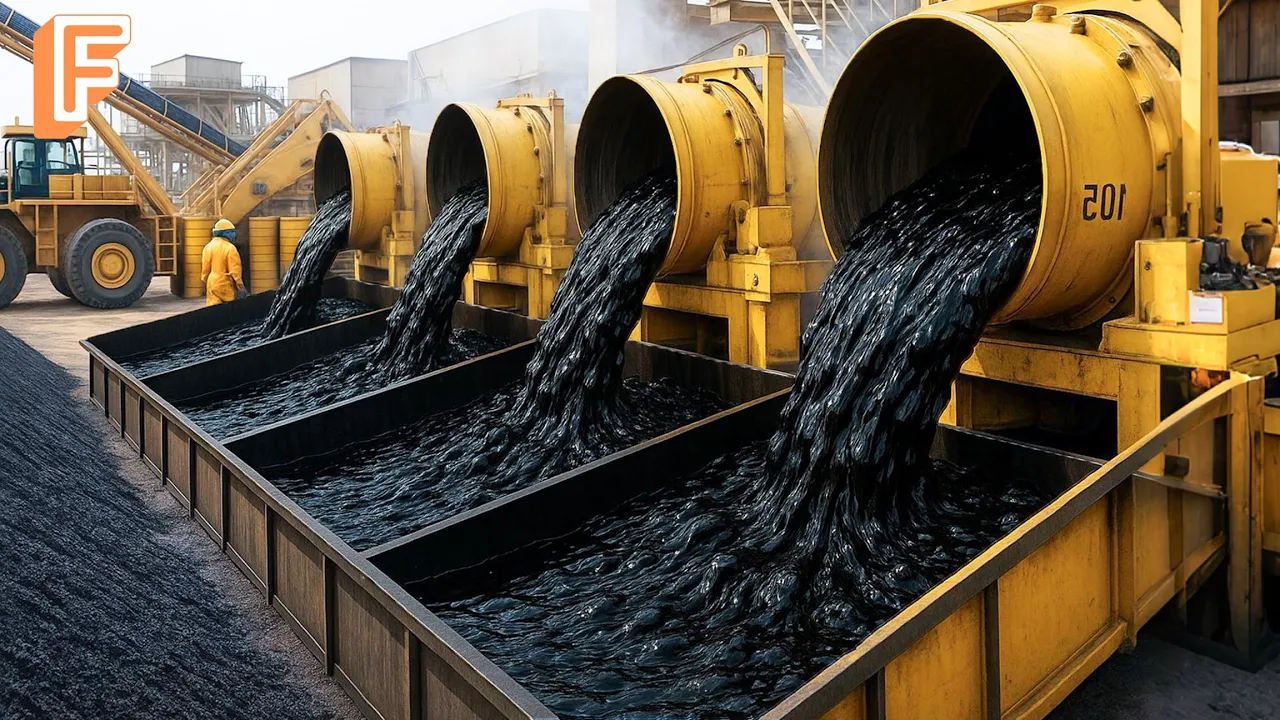
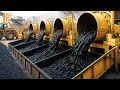
[Music] In the grand canvas of human progress, oil is the shade that has shaped the modern era. More than just fuel, it has become the lifeblood of trade, industry, and global connectivity. Every single day, over 100 million barrels are extracted and transported across the planet.
A reminder that behind the speed and prosperity of today's world lies a dense black invention. Silent yet foundational. To obtain that thick black liquid, oil must undergo a meticulous journey from sediments accumulated over millions of years.
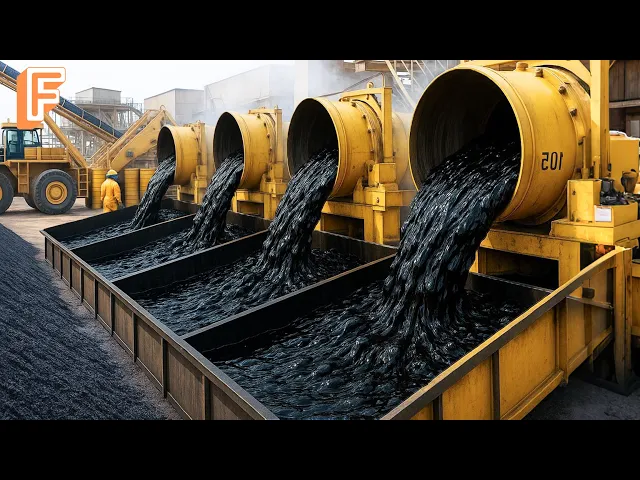
It is extracted from deep underground and sent into massive distillation towers where it is separated into gasoline, diesel, natural gas, and materials that form the backbone of infrastructure. After refining, every drop is transformed into energy for engines, light for cities, and the foundation of countless industries. So, what lies behind this substance that seems ordinary yet powers, illuminates, and unites our entire civilization?
Stay with us until the end of this video to uncover the full picture of a humble yet irreplaceable resource. >> It's called Drll Baby Drll. Drll, baby drill.
The familiar slogan whenever America's need to pump more oil to keep its economy stable comes up. Indeed, for decades, oil has been regarded as the lifeblood of the modern world. It doesn't just power cars, airplanes, and ships.
It seeps into electricity production, plastics, chemicals, and thousands of other industries. A minor fluctuation in oil prices can unleash a chain reaction. Transportation costs surge, goods become more expensive, inflation rises, and the daily lives of millions of families are directly affected.
And to sustain this colossal resource, workers must spend long shifts on offshore rigs or deep underground. The oil industry is known for salaries that can surpass $100,000 a year. But in exchange, workers endure 12 to 13-hour shifts in noisy environments, weeks away from their families, and the everpresent risk of explosions or fatal accidents.
It is a profession both enticing and unforgiving, where sweat, strength, and even safety are traded so that the flow of energy never stops, keeping the world in motion. Beneath the Earth's crust, ancient sedimentary layers millions of years old have trapped vast reserves of oil and gas, the energy source that has shaped modern civilization. Yet, most of these deposits do not lie directly beneath our feet.
They are hidden thousands of meters below the ocean floor. To reach them, humanity had to construct colossal machines, offshore drilling rigs. Building an oil city in the middle of the ocean begins on land.
Giant steel frames weighing tens of thousands of tons are fabricated in shipyards and hauled out to sea by specialized transport vessels. Once at the designated site, fixed platforms are lowered, their steel legs driven deep into the seabed and secured with concrete, sturdy enough to stand in waters 200 to 400 ft deep. But farther offshore, where the ocean blankets trenches thousands of meters deep, engineers rely on semi-ubmersible rigs.
These maintain balance through massive submerged pontoons and anchor chains stretching thousands of feet, allowing stable operations at depths up to 12,000 ft, 12 times the height of the Eiffel Tower. Just above the seabed, a special system called the SubCA wellhead is installed. Acting like a giant valve, it sits only a few feet above the ocean floor, withstanding pressures hundreds of times greater than on land.
Precision installation accurate to within inches, is carried out using ROVs, remotely operated vehicles. In the absolute darkness of the deep, robotic arms connect multi-tonon steel components. welding them shut and securing the pipelines.
From the well head, oil and gas flow into a vast network of subc pipelines stretching for dozens of kilome. These pipelines are coated with anti-corrosion layers welded in multiple sections and continuously monitored to prevent leaks since even the smallest crack could cause an environmental disaster. On the surface, towering above the waves are the floating fortresses known as FPSOs, floating production, storage, and off-loading units.
Unlike fixed platforms, they don't anchor to the seabed, but instead are held in place by enormous steel chains, allowing them to sway gently with the ocean while staying firmly linked to the subsea network below. An FPSO can store up to 2 million barrels of oil, serving as both a preliminary processing unit and a floating reservoir before transferring its cargo to intercontinental tankers. Together, the fixed rigs, semi-ubmersibles, subsea wellheads, deep pipelines, and massive FPSOs form a chain that stretches from the Earth's depths to the ocean's surface.
It is the journey that transforms energy locked away for millions of years into the lifeblood of the modern world. The journey of oil and gas extraction begins with offshore exploration. On the deck of survey vessels, engineers lower massive acoustic transmitters into the sea.
The sound waves travel down to the seabed, bounce back, and are captured by a network of sensors on the surface. From this data, a three-dimensional seismic map is constructed, revealing the sedimentary layers that may have trapped oil and gas for millions of years. But maps alone are not enough.
To confirm, a drilling rig is deployed at the potential site. Hundreds of steel pipes, each 9 m long, are connected end to end, forming a colossal drill string that pierces through the water column and deep into the rock layers. At the tip is a drill bit with ultra hard alloy teeth, grinding the formation with relentless rotation.
Once the bit has advanced a certain distance, engineers lower an electronic eye into the well, a logging tool equipped with multiple sensors. In the darkness beneath the seabed, the logging device emits electrical pulses, sound waves, and gamma rays that penetrate the rock walls. The signals are sent back up to the deck.
appearing as strips of data that reveal porocity, permeability, and reservoir pressure. These numbers ultimately determine whether a well costing $50 to $100 million will become a commercial oil field or remain a dry hole abandoned forever. But with it comes an everpresent risk.
If drilling is mishandled, reservoir pressure can surge upward, triggering a blowout. Crude oil spilling from the ocean floor not only devastates marine ecosystems but also unleashes environmental disasters costing billions of dollars to clean up. That is why every step must be tightly controlled because even the smallest mistake could turn an ambitious project into a global catastrophe.
Once the drill reaches the reservoir, the well boore is lined with steel casing and sealed with cement to stabilize the formation. At the wellhead, engineers lower a blowout pretor BOP, a steel block weighing tens of tons that sits on the seabed. Inside are multiple pressure control valves capable of clamping tightly around the drill pipe or shutting the well completely in an instant.
designed to contain pressures that can exceed 10,000 PSI and prevent catastrophic blowouts. With the well secured, extraction can begin. Initially, natural underground pressure forces oil and gas up through the production tubing.
Over time, however, reservoir pressure declines, requiring artificial lift systems such as electric submersible pumps, ESPs, capable of drawing up to 20,000 barrels per day, or gas lift injection to maintain a steady flow. What rises to the surface is not pure oil, but a mixture of crude, gas, water, and fine sand. Right at the production site, this flow is routed through multi-stage separators.
Gas is compressed for export or reinjected into the reservoir to sustain pressure. Water is treated to remove oil and solids before being discharged back into the sea under strict regulations. Crude oil underos further processing to remove salts and impurities before being sent into temporary storage tanks.
Throughout the process, thousands of sensors constantly monitor pressure, temperature, and flow rates at every stage. Some modern offshore platforms even transmit real-time data via satellite to onshore control centers, allowing remote intervention. If any anomaly is detected, such as a sudden pressure drop or abnormal flow rates, the system can automatically trigger alarms and even shut down the well to prevent accidents.
Offshore oil production is therefore a tightly integrated chain from flow handling and phase separation to treatment, temporary storage and preparation for transport. It is a stage that demands extreme precision as even the smallest error can cost millions of dollars and leave severe scars on the marine environment. After crude oil is preliminarily treated and stored, the next step is transportation to shore.
At fields close to land, subsea pipelines stretching for dozens of kilometers deliver oil directly to refineries. In deep water fields farther offshore, crude is pumped onto specialized tankers or floating storage units, each capable of carrying millions of barrels. From there, this energy source formed over millions of years begins its journey to refineries and eventually into human daily life.
Offshore, wells typically drill straight down into sedimentary layers beneath the seabed. On land, where the United States leads the world in production, the process is far more complex and costly. The first step is still geological surveying and exploration.
Engineers use seismic waves, exploratory drilling, and rock sample analysis to identify shell formations with sufficient porocity and permeability to hold oil and gas. Once a promising site is confirmed, the drill bit doesn't just go straight. It is steered horizontally deep underground.
These horizontal wells can stretch for thousands of meters, greatly increasing contact with the reservoir. But to truly unlock the hydrocarbons trapped inside the rock, hydraulic fracturing or fracking is employed. Millions of lers of water mixed with sand and chemicals are pumped down at pressures that can exceed 10,000 PSI.
This immense force creates countless micro fractures with sand grains propping them open to allow oil and gas to flow out. As the hydrocarbons begin to move, they are channeled up through production tubing. Yet what surfaces is not pure oil but a mixture of crude, natural gas, water, and sediments.
At the well site, the stream passes through multi-stage separators. Oil is collected into temporary tanks. Gas is compressed and sent into pipelines while water is chemically treated before being reused or discharged.
This process has yielded enormous output, helping the US become the world's largest oil producer. But the costs are equally staggering. Each well consumes tens of millions of dollars, vast amounts of water, and any mistake in drilling or cementing can lead to chemical leaks, groundwater contamination, or even land subsidance.
Once crude oil arrives at the refinery, it begins its transformation into gasoline through the most crucial step, fractional distillation. This is the process of separating crude oil into different fuels based on their boiling points. First, crude oil is heated in a furnace to around 650 to 670° F.
Under this intense heat, the mixture vaporizes and is directed into a massive fractionating column, a tower rising several stories high. Inside are dozens of trays placed at different heights, each maintained at a specific temperature. As the vapor ascends, hydrocarbons with lower boiling points travel higher, while heavier fractions condense on the lower trays.
Near the base, where it remains hottest, settle lubricating oils and heavy residues. Above them, diesel fuel collects, followed by kerosene. In the middle of the tower, vapors condense into gasoline, typically within the boiling range of 90 to 220° F.
At the very top are light gases such as methane, propane, and butane. But the gasoline separated here is not yet ready for engines. It must undergo further refining steps such as catalytic cracking, breaking heavy molecules into lighter ones, reforming, restructuring molecules to raise the octane number, and blending, mixing with additives to meet modern standards for clean combustion, anti-nock performance, and lower emissions.
Finally, the finished gasoline is stored in massive tanks before being distributed via pipelines, rail cars, or tank trucks to fueling stations. From those dark, thick drops of crude oil through a series of precise engineering steps, humanity produces a clear, volatile fuel ready to power billions of vehicles across the globe. From the moment the first acoustic waves are sent down to the ocean floor to the point where hundreds of steel pipes drill through layer after layer of rock and finally to the instant when the first drops of crude oil surge from the earth.
The journey of oil extraction stands as a testament to human ingenuity and strength. On the surface, colossal rigs remain steadfast against wind and waves. Deep below, equipment built to withstand tens of thousands of psi works in silence.
And on shore, towering distillation columns separate crude into gasoline, diesel, and gas to fuel the entire modern civilization. And the greatest question still lies ahead. How much longer will oil hold this role as the lifeblood of civilization before renewable energy takes the stage?
Will humanity continue to depend on black gold, or will we step into a new, more sustainable era? If you found this video insightful, don't forget to like, subscribe, and turn on notifications to join us on future journeys. And share your thoughts in the comments.
In your view, what is the future of oil? continued dominance or giving way to clean energy.