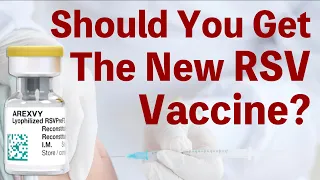
the first vaccine for RSV was approved just a few months ago for anyone 60 and over and it has just entered pharmacies in time for this year's RSV season at the same time we now also have a second vaccine that can be used to protect newborn babies unfortunately most people haven't heard about either of these vaccines and a lot of people don't realize just how serious RSV can be and that's a lost opportunity to get that extra protection so let's get into it RSV stands for respiratory cidial virus and although that's a common and dangerous
virus that's been around for a long time it's a virus that most people hadn't heard of until the coid pandemic and the reason people are more aware of it now is that coid restrictions disrupted RSV transmission just like it did with the flu and when things opened up again RSV came back with a vengeance but what's changed this year is that for the first time we actually have a vaccine for it so what do you need to know about RSV it's a seasonal virus just like like the flu which means that in the northern hemisphere
it'll typically Peak between October and May and mostly in January and February and as the name implies it affects the respiratory tract it transmits through direct contact or through droplets and it's very contagious even more than the flu and it can affect just about anyone of any age it's so ubiquitous that by the age of two pretty much every single child has had at least one RSV infection in fact RSV is the most common lower respiratory tract infection in children under one and in that age group there's no existing immunity so it can be very
serious including causing complications like what's called bronchiolitis or inflammation of the small Airways in the lungs or pneumonia some kids develop wheezing and sometimes they develop what's called apnea which basically means that they stop breathing many of these babies unfortunately end up in hospital and this is actually the second most common cause of infant death worldwide after malaria and the thing about RSV is that it will typically infect us multiple times over our lifetime partly because there are different subtypes of RSV floating around out there but once we get through that first childhood infection we
have some natural immunity so for healthy adults it basically feels like a common cold but with time that immunity starts to fade by the time people are 50 and over and particularly for people with underlying health conditions it can cause pneumonia and again becomes an important cause of hospitalization and death it can also flare up underlying conditions like for example chronic obstructive pulmonary disease or COPD so if they do get infected people over 65 have a mortality that's six times higher than children under one and thousands of adults die of RSV every year in the
US yet until recently we haven't had good options either for prevention or for treatment typically all we could really do is to support patients by trying to keep them alive as their immune system would fight off the infection previously treatments like antivirals and immunoglobulins just haven't been particularly effective but as of this year there is a new monoclonal anti anbody called Nur s m that's been approved for RSV and can provide protection particularly for those younger children but yes we also have a vaccine and we'll get to that in a minute but you're probably wondering
if this is such a serious virus and kills so many people why has it taken us this long to get a vaccine for it and that in itself is an interesting story so the hunt for an RSV vaccine started in the 1960s initially they took the virus and they inactivated it with chemicals to build what's called a live attenuated vaccine just like the polio vaccine unfortunately when the vaccinated kids eventually got RSV they actually had more severe reactions to it and got more sick than the unvaccinated kids so it completely failed and there was a
chill on RSV vaccine development for many years after that eventually people started focusing on a protein on the surface of the virus and that's the so-called F glycoprotein that the virus uses to penetrate into our cells by fusing the envelope of the virus with the surface of our cells and the initial vaccines targeted that fused protein but as it turns out the antibodies we make against the fused form of the protein aren't actually effective at neutralizing the virus so those attempts failed the Breakthrough came in 2013 when scientists were able to map out the shape
of the protein and to figure out what that F protein actually looks like before fusion and as it turns out the shape it takes before Fusion is quite different than the shape after fusion and what's needed to neutralize the virus is an antibodies to that prefusion shape once they figured that out they were able to build a vaccine so this isn't a live virus vaccine like polio it's not an mRNA vaccine like the covid vaccine it's what's called a recombinant protein vaccine which basically means that the stabilized prefusion form of that F protein is what
gets injected and triggers that immune response for us to form antibodies That vaccine was first tested in mice then in monkeys and finally in people in Phase 1 and phase two trials to make sure it was safe and that it was triggered triing the appropriate neutralizing antibodies and finally that led to a successful phase 3 trial and approval of the first RSV vaccine which is called ere Rexy so the randomized control trial had 25,000 people aged 60 or over half of them got the vaccine and the other half got a placebo and over an average
followup of about 7 months the vaccine reduced chances of lower respiratory tract infection with RSV by 82.6% protection against severe RSV was even higher at 94% in terms of side effects people had typical things like pain at the injection site and some fatigue lasting one or two days sometimes muscle aches or joint aches or even sometimes fever all of which are quite typical after any vaccine because the body is producing antibodies more importantly there were no serious Adverse Events related to the vaccine now it is possible that very rare side effects won't be seen until
a million or more doses are administered so as usual there is ongoing monitoring of the vaccine after release one of the challenges with this vaccine in Canada is that unlike most vaccines provinces in this country have decided not to provide the RSV vaccine for free there are exceptions but for most people you will need to pay between $2 and $300 for a dose unless you have private insurance and people are used to the government paying for their vaccines in this country so not only will some people think that it's not important because the government isn't
covering it but many people will not be able to afford it and that's a problem the good news is that the study is through its second year and although the protection isn't quite as strong in the second RSV season the vaccine does offer protection for at least 2 years and the study will test it in a third RSV season as well so we've talked a lot about older adults but remember that the age group most affected by RSV is young children and especially babies in the first few months of life so how do we protect
them we already know that pregnant women can have RSV antibodies from prior infection and those can cross the placenta and protect the baby after birth for those first few months so the idea is to take advantage of what's already happening naturally by actually vaccinating pregnant women to boost their RSV antibodies so that those antibodies then cross over into the fetus and protect the baby and that's what's led to the second RSV vaccine which is called a briso and this is a vaccine that's taken by a mother with the intention of protecting their future baby so
if the baby's going to be born in the RSV season the vaccine is given anytime between weeks 32 and 36 of pregnancy and those babies are born with the RSV antibodies already on board and will be protected for those first six very vulnerable months of their lives in the phase 3 clinical trial with over 7,000 pregnant women the vaccine was 82% protective against severe RSV at 3 months after birth and 69% protective at 6 months this same vaccine is also approved to protect older adults in us and in Europe but its unique use is in
pregnant women to protect the baby now it's important to note that a competing vaccine from another company did not get approved because it seemed to increase the risk of premature births although there wasn't a significant increase in premature births with this vaccine out of an abundance of caution the approval was only given at Weeks 32 to 36 of pregnancy where pre-term birth isn't a significant concern so the bottom line is that we not only have the option of a monoclonal antibody that can be given to that newborn but we also have the option of a
maternal vaccine to protect that newborn so RSV is one of the big three viruses out there after Co and the flu and we haven't talked about it much because until this year there hasn't actually been much that we could do about it but all of a sudden we now have a new monoclonal antibody and most importantly two new vaccines and in fact more are coming so we can now protect both older adults and newborns from this terrible infection so if you are 60 or over or if you're pregnant talk to your doctor about the RSV
vaccine for more on health and science subscribe to the feed