Have you ever had the impression that black clothes heat up more than white clothes? Hi, I am Julia! And today we will discover how colors react when they receive light!
But first like our videos, subscribe to our channel and turn on notifications so you don't miss anything! But if you want more you can join our Creative Scientist Club and receive at home experiences on robotics, biotechnology and much more! Just point your cell phone to the QR code that is appearing on the screen now!
If you use this voucher that is appearing now on the screen you'll get 10% discount on your first month of subscription. TEC at Home Powered by Eleva Answer quickly! If a put ice under a black paper and ice under a white paper, wich one will melt faster?
Time to think! ! !
Believe it or not But the ice under tha black paper will melt first! Don't believe it? So come with me to do this experience because I can prove it!
For this experience it will be very simple: you'll only need two pieces of paper, a black one and a white one. If can paint it if you don't have one. I painted mine because I didn't have black paper here.
Two ice cubes. And a container for you to be able to set up your experience. Then you'll put two ice cubes over the board.
And you'll put the papers over them. And then you'll take to somewhere in your home where the sun shines. It can be in the window or outside, if you live in a house.
I'll take mine outside I'll set up and we'll see the result os this experience. Put a piece of paper over each ice cube. Melts faster!
But how did it happen? This happened because of light! Do you know why?
I'll tell you a secret: a red ball has all the colors except red. What? But it is red, I'm seeing red!
How it doesn't have red? Is it magic? It's science!
In the cell phone hologram video Vitor talked about reflection. Have you seen this video? If you haven't seen it, just click the card up here for you to follow this experience.
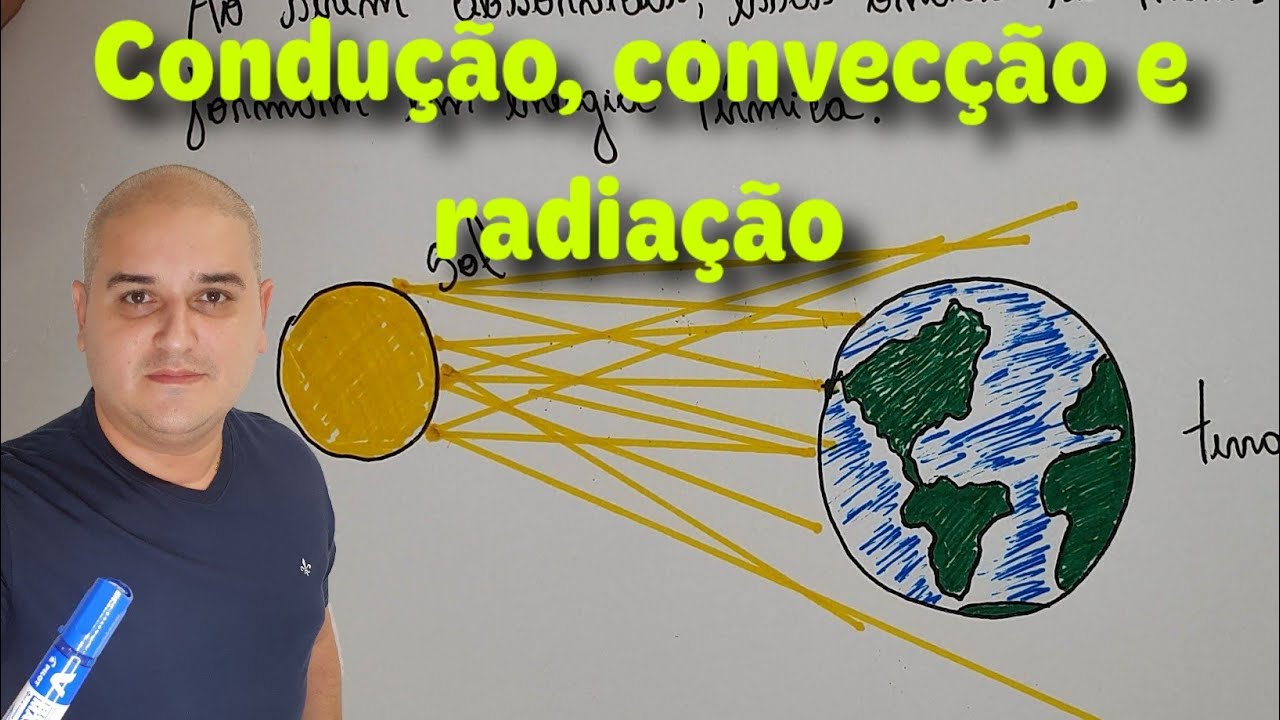
So, the red ball reflects only the red light. And swallow all the others. And those lights that it swallows turn into heat.
And we call it thermal radiation. Do you know when we run a lot and get all sweaty? So, this is what happens with the molecules of the paper in our experience.
When the paper absorbs light the molecules are all agitated. Don't know what a molecule is? No problem!
Click the card here so you watch our video and understand what a molecule is. And how they work. In our experiment, the paper painted black swallows a lot the light.
And reflects almost nothing. The molecules get super agitated and it heats more. This makes the ice melts faster.
White is the combination of all colors. And if we see it that's because the paper is reflecting almost all colors and absorbing very little. So its molecules didn't agitate much and didn't produce much heat.
That's why the ice took longer to melt. And because darker colors swallow more light that most winter clothes are dark! Have you noticed?
It's like the colors help us to get warmer. See how easy it is to learn about science and technology at home? I wait for you in the next episode of TEC at Home!
Bye! Do you want to change the. .
. voucher? And if you.
. . if you use.
. . hah is it "use"?
And if you use the. . .


![[2025] MEJOR PELICULAS DE ACCION | Jackie Chan | Peliculas Completas en Español Latino HD](https://img.youtube.com/vi/gCF2iOoSXqs/maxresdefault.jpg)