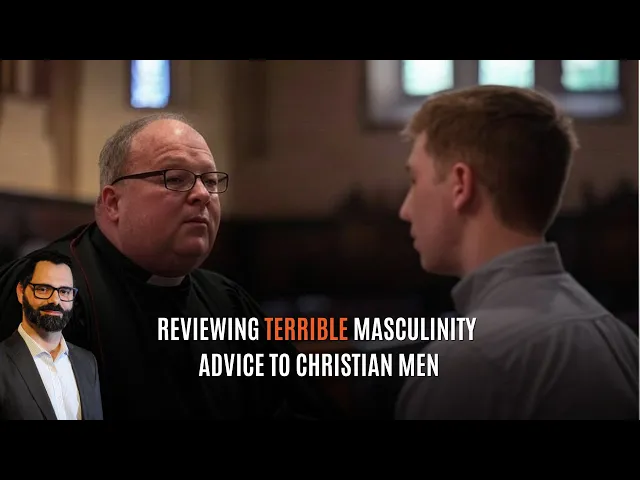
So, let me show you. I'm going to give three different examples of responses; these are all from Christians, and at least one of them is a Christian pastor. Here's the first tweet; we'll pull it up on the screen.
I'll read it for your listening enjoyment. He says this: "This is a Christian leader. Want to be a real man?
Here is what to watch for and the true key to manhood. " He then begins to quote scripture: "But evil men and imposters will grow worse and worse, deceiving and being deceived. But you must continue in the things which you have learned and been assured of, knowing from whom you have learned them, and that from childhood you have known the holy scriptures, which are able to make you wise for salvation through faith which is in Christ Jesus.
" Then, back to his commentary, the tweet states: "All scripture is given by inspiration of God and is profitable—actually, this is more scripture. I apologize. All scripture is given by inspiration of God and is profitable for doctrine, for reproof, for correction, and for instruction in righteousness, that the man of God may be complete, thoroughly equipped for every good work.
" Then, another Christian responded. This is a Christian leader who said this, and he responded, "The guy, you know, the initial post is quoting 2 Timothy 3:13-17, so this is the Apostle Paul, under the inspiration of the Holy Spirit, writing to one of his dear sons in the faith, a young pastor by the name of Timothy, and giving him counsel. It's good counsel; it's biblical counsel; it's inscripturated.
We agree with it 100%. But in the comment section underneath this tweet, another Christian responded by saying, ‘What should my sons take away from this that’s any different than what my daughters should take away? Or is the true key to womanhood exactly the same as the true key to manhood?
’ A fantastic question! A fantastic question! Essentially, this is the play that I have witnessed again and again and again for years now within the evangelical church here in America and in the West in a general sense.
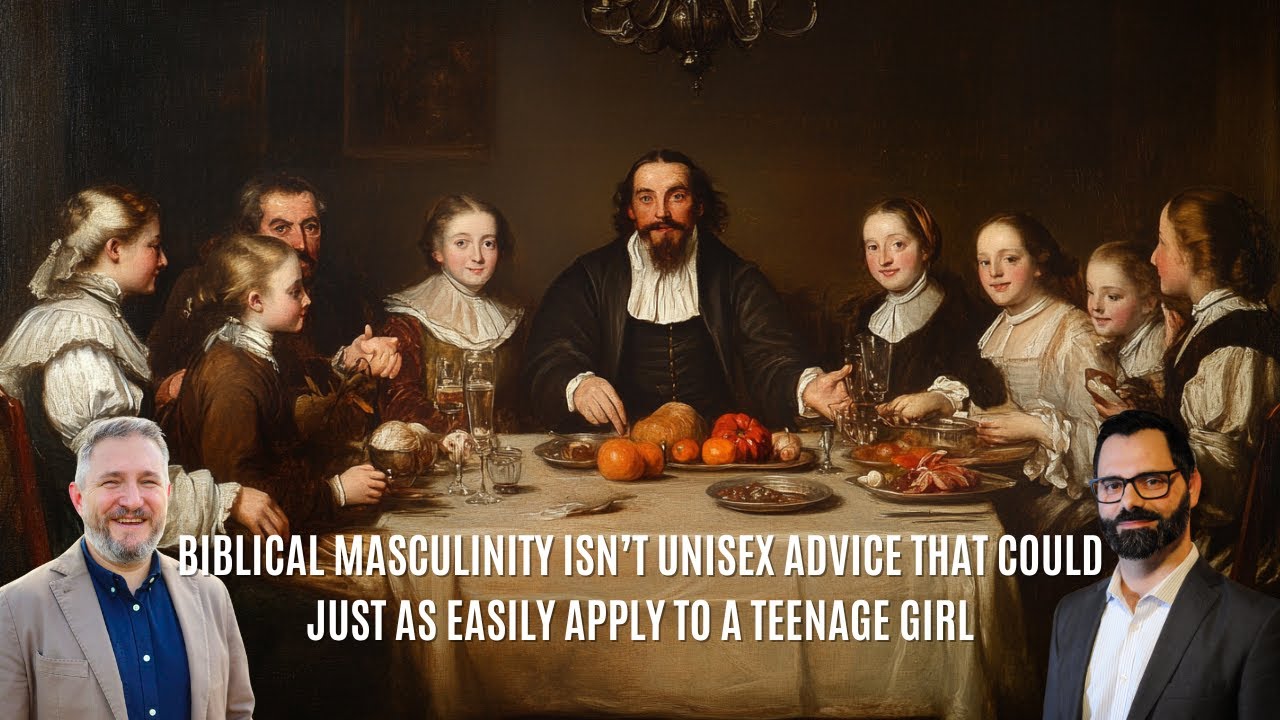
The play is this: every single time the topic of biblical manhood comes up, the counsel and advice that’s immediately given by Christians and even Christian leaders and Christian pastors is something that you could apply to your sons just as easily and just as much relevant of an application to your daughters. There's nothing distinctly masculine about it, and that leads us really to the next couple of tweets. So, let's go ahead and pull up the second tweet now.
We have this; it's from one of my friends, Eric KH, who is a pastor. He's a Christian, and he speaks about manhood. He’s one of the few Christian pastors who speaks about manhood in a way that is both biblical and actually masculine.
He talks about manhood in a manly way. He says the following about the pietist play to watch out for: "Here it is: real masculinity is… (list spiritual qualities that a woman or child could do). " Then the next thing he says: "It's not about genuine masculine competencies, virtues, and skills that, throughout history, have been markers of authentic masculinity.
" Essentially, what Eric is saying is this: the pietist play within the evangelical western church that you need to watch out for is this: guys will essentially say, 'Real masculinity is XYZ,' and XYZ, be assured, will represent some kind of spiritual characteristic that is good, that is biblical, but it is not distinctly or uniquely for men. It’s something for all Christians, whether you’re a man, whether you’re a woman, whether you’re a child, whether you’re a grandma or a grandpa, or an aunt or an uncle, or anybody. So, people say true biblical manhood, and then they'll quote Galatians chapter 5 as the fruit of the Spirit: love, joy, peace.
Well, the fruit of the Spirit is not distinctly or exclusively masculine; the fruit of the Spirit is for all believers because it's the Spirit, and the Spirit does present Himself as the third member of the Trinity in masculine ways and using masculine pronouns. We have God the Father, God the Son, and He, not it, and certainly not she, but He, the Holy Spirit. The Holy Spirit is a person; He presents Himself as a masculine person using the masculine pronouns.
But the fruit of the Spirit is not exclusive for men; the fruit of the Spirit is for every single believer, whether they be a man, woman, or child that is filled with the Holy Spirit. If you are a believer, your body is now a temple of the Holy Spirit. The Spirit of God, the third member of the Trinity, dwells within you.
The indwelling ministry of the Spirit and the fruit that is the visible characteristics and manifestations of the Spirit are now going to be manifest in your life, whether you're a male Christian or a female Christian. Love, joy, peace, patience, kindness, goodness, gentleness, faithfulness, and self-control are both for women and for men. But that's the play; that’s what you’ll hear from evangelical pastors.
They'll say, ‘Well, true biblical masculinity is blank,’ and the blank that they'll offer is something that is biblical. It is from scripture, but it's some particular scripture or biblical principle that applies. It's not gender-specific; it applies to both men and women equally alike.
And then what they'll say, if that was not enough, they'll then say in the reverse, in the counter: ‘So, true biblical masculinity is this general biblical principle that’s for men and women alike,’ and what's not true biblical masculinity, then they’ll get specific. " With things that are actually masculine traits, they'll say ambition, discipline, aggression, strength, right? These kinds of things.
That's not what Biblical masculinity is about. I mean, how many books have you read that say Biblical masculinity? It's not about being able to change the oil on your car; it's not about being fit and strong when you go into the gym; it's not about, you know, taking the next hill and having ambition and having drive.
It's not about any of those things. What is it actually about? It's about gentleness.
You know, because Jesus was gentle. You bet He was gentle 100% of the time, and He exercised the fruit of the Spirit that is gentleness. Full of the Holy Spirit—says John, Chapter 2—in exercising spiritual gentleness perfectly as He fashioned a whip out of cords, began to throw over tables of the money changers in the temple, and began to whip people and scream and yell in their faces and drive them out of the temple because zeal—not just Mr Rogers’ level-headedness and even keel—but zeal, zealous masculine zeal for His Father’s house consumed Him.
That is gentleness as gentleness is exercised through a Christian man. Men are different than women. First Peter, Chapter 3, in describing women, says, “What's the chief characteristic of women and godly women?
” Even, or especially, I might say, a godly woman. She is chiefly depicted as one who contains beauty, not strength. The Proverbs say again and again: what is the power of a young man?
What's the defining characteristic of young men? Young men are strong. Strength for men; beauty for women.
It's not the same descriptive noun; it's distinct. For women, it's beauty; for men, it's strength. And then, even furthermore, in 1 Peter, Chapter 3, well, what kind of beauty?
Well, not merely outward beauty—beauty of the hair or makeup or these kinds of things—but first and foremost, in the sight of God, the feminine beauty that makes a woman of God, a godly woman beautiful in the sight of God is not an outward beauty, but beauty of the heart, an inward beauty. And what is inward beauty of the heart for women, a feminine inward beauty? Well, it’s a quiet and gentle spirit.
The Bible does not say that the strength of a man—what makes a man a godly, masculine man—is having inwardly a quiet and gentle spirit. No, that is actually one of the places in Scripture that's speaking that it’s not genderless, something that applies to both men and women equally, but that one is gender-specific. It's distinct; it's actually referring to women.
What makes a woman godly? Beauty. What kind of beauty?
Inward. What's inward beauty? What does that look like?
Quietness and gentleness. The same person who, you know, the same Holy Spirit, divine person who inspires this text in 1 Peter, Chapter 3, also inspires the Apostle Paul in 1 Corinthians 14 when he says, “It is shameful for a woman to speak in church, but she must remain silent. ” Silent in keeping in step with what?
With beauty. Not mere subjugation; there is a spirit of submission, but it's also beauty. Now let’s go ahead and pull up the last tweet here, the last tweet, because this is the play.
Erikson is absolutely right; it's the PST play. And if you’re not familiar with that word, if you’re tuning in maybe for the first time, piety and Christian tradition is a positive thing. What is piety?
Well, it's personal holiness. It’s somebody who’s practicing personal spiritual disciplines in their life, like scripture reading and study, prayer, fasting, and generosity—alms giving to the poor and those who are in need. That’s piety.
It just means holiness. So, piety is a good and positive thing that all Christians should pursue. Pietism, like most words, when you add the “ism” at the end, becomes something negative.
Piety driven towards personal holiness—yes and amen, that’s wonderful. Pietism is pie in the sky; it's head in the clouds. It’s the old expression, the old adage, if you’ve ever heard it—being so heavenly-minded that you’re no earthly good.
It’s the tendency, the incessant insufferable tendency to over-spiritualize everything. That, well, the answer to everything is just preach the gospel, right? If you have an intruder in your home, well, I mean, just preach the gospel even harder.
Well, you can preach the gospel when you’re standing over that intruder after shooting them twice in the chest. Then preach the gospel if he’s still alive; maybe he comes to saving faith and that’s great and he can go and be in heaven. But the first thing you do is you protect your wife and kids with your God-given duties as a man by not sitting there and trying to persuade him for 30 minutes with a gospel presentation, but by simply putting two in his chest.
That is a good masculine Christian response, and that's not in conflict with preaching the gospel; that's not in conflict with Biblical masculinity whatsoever. It's good and right. Pietism over-spiritualizes everything.
It’s, in some ways, distinct but similar and linked to Gnosticism. Gnosticism, again, is an over-spiritualization where the physical doesn’t matter at all. You're 300 lbs and you preach on the Lord’s Day—well, as long as your exegesis.
. . Is correct as long as it's a good sermon.
Your physical life is of no account; it doesn't really matter at all. The physical doesn't matter at all where, biblically speaking, that's just wrong. Every single day of creation, when God makes something, at the end of it He says, "It is good.
It is good. It is good. " God has compassion on all He has made within the physical cosmos.
God loves the physical world; even our own bodies—we're called to exercise stewardship over our physical bodies. Paul, when he's writing again to another young man, he says this: he says that spiritual training, that's ultimate; that has the most value. But then he says physical training is still of some value.
So he's able to triage, prioritize, and say, "Yeah, the spiritual and eternal matters more," but the spiritual mattering more does not mean the physical doesn't matter at all. We don't get that these days. We've over-spiritualized everything.
You know, maybe it's just because of the soy levels in our food; we're trying to make excuses for the fact that we're all out of shape. But that's what Christians in the West have done—we over-spiritualize everything to where it's perfectly fine that the physical world around us, politics, culture, being in shape, health, all these things—it's just, you know, we're ultimately just justifying the physical world going to hell in a handbasket because we console ourselves by saying that the spiritual is all that matters. Okay, I'm ready for the third Tweet now.
Let's bring it up. Here it is—this last one is from a Christian pastor. The previous one was Eric K.
H. ; he's a Christian pastor, he's a friend, I agree with him. This is a Christian pastor that I had never heard of before yesterday, and this is a Christian pastor who I'm sure is great in many regards, but in this particular regard, I do not agree with him.
I could not possibly disagree any more than I do. I radically and vehemently disagree. So he says Esau was a paragon of modern masculinity.
He was hairy, the Bible says; he probably had a great beard—a hunter, very manly—not a mama's boy. He's thinking of Jacob. Jacob was not a mama's boy.
I don't have time to get into that, but not a mama's boy; he was a man's man if there ever was one. And then he quotes Scripture: "This is Hebrews: see to it that there be no immoral or godless person like Esau. " Close quotations.
And then his final statement: "Maybe those things aren't biblical manliness after all. " Yeah, and then of course, cooked with that too, huh? He was thinking, yeah, he thought he was cooking.
Ali Besty, of course, loved it; she came out, you know, radical feminist—she loved it. She was a good point. No, that's not a good point.
See to it that no one is immoral or ungodly like Esau. The two key words there are "immoral" and "ungodly. " Notice what's not said.
The author to the Hebrews, under the inspiration of the Holy Spirit, does not say, "See to it that no one is masculine like Esau, or no one is hairy like Esau, or nobody has a beard like Esau, or nobody hunts game like Esau. " No, the thing to avoid, says the author to the Hebrews in God's holy writ, is "Don't be immoral like Esau; don't be ungodly like Esau. " And then that text goes on: What was it that was immoral about Esau?
Well, you know, he was a hunter, and God hates hunting. No, what was immoral about Esau is that he despised his birthright; that he counted his own heritage as though it was nothing; that he had the birthright and he was the heir to his father in a covenantal sense, that he was going to be the heir to his father and receive the blessing from his patriarch, from the fathers; and he despised it. He didn't care about family; he didn't care about heritage; he didn't care about blessing; he didn't care about future; he didn't care about calling or responsibility or any of these things.
But at the end of the day, he cared more about a bowl of soup. He was a man who was not in control; he had not mastered his own passions. He was hungry, and in a moment of temptation and physical weakness, hunger—he was not able to master his own physical appetite in a moment in order to prioritize his indefinite future.
That moment of satiating his physical hunger was more substantial, more important to him, and prioritized over a lifetime of blessing and royalty and kingly nobility of receiving the blessing and the birthright, which he despised. That's what made him immoral. And I can make argument after argument that those things are not—that those things too masculine, and it's being too masculine that equates to immorality and ungodliness.
But those things are actually effeminate. It is the sheer absence of masculinity; it is him not being a man because a man is able to discipline his body. Paul the Apostle, elsewhere in Scripture, says, "I beat my flesh and make it my slave.
" In a masculine way, he's able to master his own fleshly passions, which Esau did not. So it's the effeminacy and the absence of biblical masculinity in Esau that actually causes him to be known now as the immoral and ungodly man. So this is a terrible, terrible take.
All right, the clock is running out. You need to go and register now for our "Christ is King: How to Defeat Trash World Conference. " It's happening in the Year of Our Lord 2025, April 3rd, 4th, and 5th—that's a Thursday, Friday, and Saturday.
By God's grace, we're able to provide for you an all-star lineup! We've got Steve Dace, Calvin Robinson, Orin MacIntyre, Dr Steven Wolf, Eric Con, David Reese, Andrew Iser, John Harry, Ad Robles, Dan Burkholder, Dusty Durs, Ben Garrett, CJ Angle, and yours truly, Pastor Joel Webin. Come on out and join us April 3rd, 4th, and 5th, 2025—Thursday through Saturday.
Go to RightResponseConference. com to register today! Again, that's RightResponseConference.
com.