now let us just say a few words before the break on just so we can say we got started on our main subject for tonight in next week Socrates and Plato the two philosophers who set out to answer the Sophists to ground objective knowledge and objective morality between them they founded the first complete philosophy the first complete system including an integrated presentation and metaphysics epistemology ethics politics aesthetics so we finally passed the era of fragments and I've simply background and reached the beginning of the new constructive era and first a few words about Socrates his
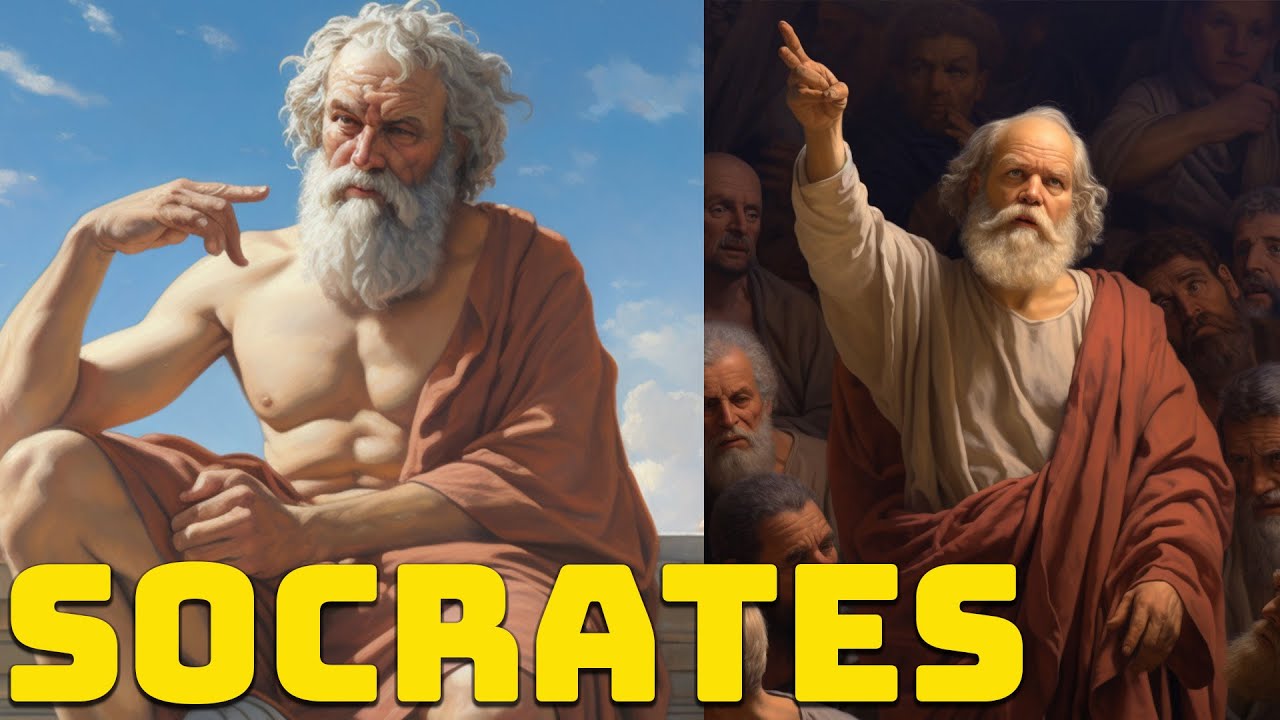
dates are 470 to 400 BC it is very difficult to separate him from Plato because Socrates left no writings he has known primarily through Plato's dialogues and how much of those dialogues is historically accurate and how much are words that Plato put into Socrates mouth after Socrates died it's impossible to say exactly you can find commentators and interpreters who range from one extreme to the other who say on the one that some of them say there was no such person as Socrates he was emitted waited by Plato and Xenophon other people say there was no
such thinker as Plato he was just a secretary who took down what Socrates had to say body is think in this particular case moderation is the best policy and I agree with the standard view point which is that the early dialogues of Plato written when he was young I represent the historical Socrates on the whole and the so-called middle and later dialogues of Plato represent Plato but it doesn't really make any difference because you if you want to get around this problem call it the Socratic - platonic philosophy and don't bother to a portion credit
or blame now but if we interpret Socrates in this way his interest was basically in ethics rather than in metaphysics he was the first major moralist of the Western world Socrates a champion of absolute objective ethics an arch opponent of the Sophists now he did not have a complete system of ethics himself but he had a number of characteristic ethical ideas and approaches which were picked up and developed subsequently by Plato and by Aristotle in different and next week we'll look at some of these typical Socratic ethical tenants in connection with our discussion of Plato's
ethics but tonight I want to say a few words about Socrates method of philosophizing in order to acquaint you with a discovery of his a very fundamental one of an epistemological kind which is indispensable background for Plato now Socrates employed obviously the Socratic method in other words the conversational method the question-and-answer method in essence he would call her some unsuspecting Athenian usually have a pompous an ignorant kind but who he thought he knew a lot he'd call her about his home or in the marketplace he would engage the man in a philosophic conversation he would
ask what seemed to be perfectly innocuous questions and he would get unthought out her apparently obvious answers and then he would begin to reason and say well now if you said this wouldn't this follow the man would say yes and then wouldn't this follow yes and what about this and the man begins to feel quite uneasy because he doesn't want to say that but he doesn't see how he could get out of it given what he said and in not too long a time the man was stopped completely the tradition to us he was rendered
entirely speechless and couldn't utter a word now Socrates motive apparently was that he had a divine mission his mission was to be a gadfly a philosophical gadfly to rouse people from their unthinking complacent slumbers he was not a skeptic he was not a skeptic but he was concerned to make people really think and question their hasty assumptions of their unthought out ideas in their conventional bromides and they're sloppy formulations his famous line in this connection is the unexamined life is not worth living the results unfortunately of his method of procedure was that he was highly
unpopular in Athens he made many powerful enemies particularly because a band of young men followed him around eating up the spectacle of him demolishing the prominent citizens one member of that band was Plato now you probably know you must know the consequences of it all he was arrested charged with corrupting the youth and worshipping false gods was brought to trial famous trial he was asked to defend himself and he refused to concede that he had done anything wrong at all the custom of the time was that the prosecutor and the defendant were each to propose
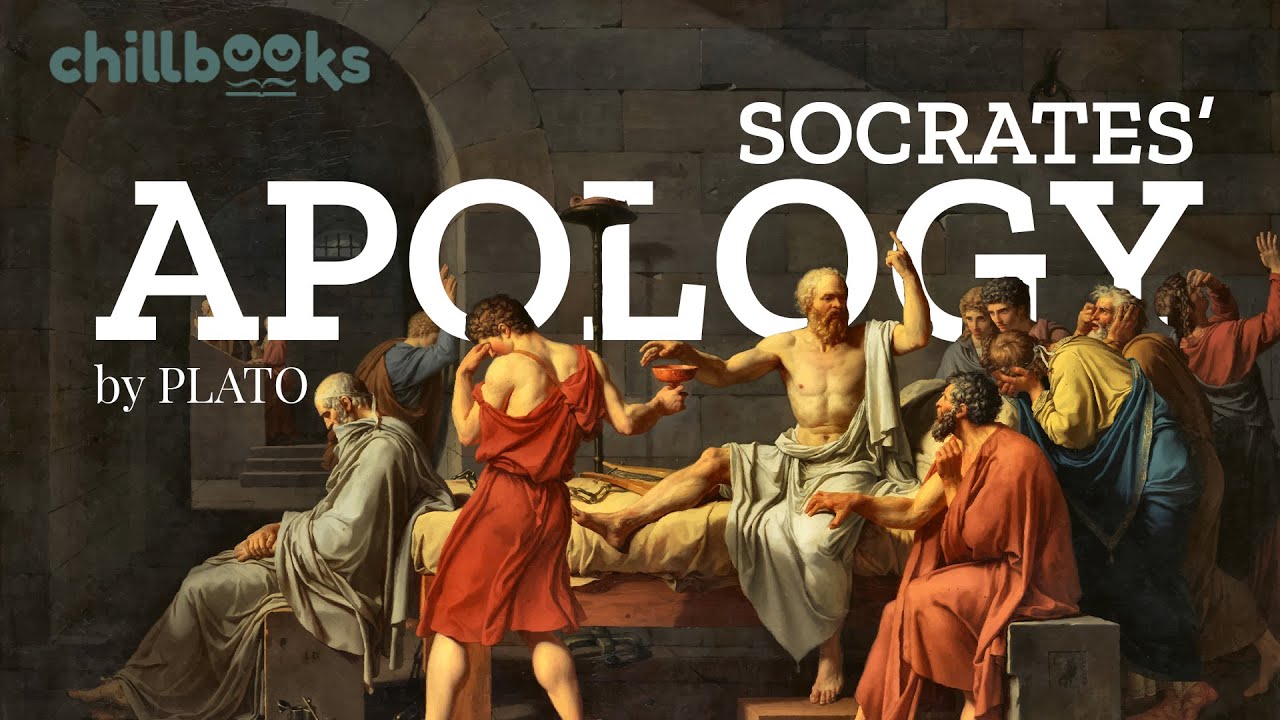
a penalty and then the court voted on which penalty should be given the prosecutor demanded death Socrates was asked what penalty do you propose and he said he thinks that the only appropriate result of his action was that he should be kept a luxury to the end of his days by the state for the service he has rendered them needless to say that court voted for death by hemlock and that was subsequently administered so he is the first philosophic martyr if you want to read his story it's contained in three dialogues of Plato the apology
which is his trial Socrates trial the cradle which is the episode in which a friend of Socrates comes and tries to get him to escape from the jail which would have been possible after the sentence had been proposed but before it was carried out and Socrates refuses on moral grounds that this was the will of the people and although he disagrees with them he believes that he was morally obligated to obey the law of the people and then the third dialogue the Phaedo in which the last hours of Socrates are recounted and it ends with
him drinking the hemlock and becoming paralyzed now the question is why did he find in his philosophic method that was so crucial now what did Socrates find out well he found in the course of his discussions with people that the reason that people were so confused so unclear so chronically and disagreement and collapsing into subjectivism and skepticism was that their concepts were unclear their concepts were undefined they would argue for instance is a certain man just or not and they are you back and forth vigorously on this question without any definition of justice and he
asked how could you possibly resolve this dispute objectively without a definition this office would say well it's a matter of opinion for me he's just for you he isn't Socrates would say you can't ask the question until you have a definition of justice you have to know what is common to just men just actions just governments that makes them just once you have this definition then there is no difficulty in applying it in a particular case once we know the definition of our concepts we can resolve all disputes in particular cases and this of course
is true not only of justice but of all such cases is it given come to your democracy well that's not your argument until you know what is a democracy and once you know it's very easy to answer are you in love no way to answer unless you know what is love what is common to all instances of love once you know easy enough to answer and same for what is religion what is courage etc in discovering the importance of the need for definitions to that extent Socrates as the father of definition he did not use
the term he didn't give the rules he simply discovered the urgent need of them now let us pursue this what do you want when you ask for a definition well you want a statement of the characteristics that are common to some class you want those characteristics possessed by every member of the in a virtue of which they're members of that class and not some other when you define you don't concentrate on one particular example you don't try simply to describe it what you do is concentrate on what's common to a whole group of particulars so
for instance if you're trying to define triangularity you don't make an exhaustive study of one triangle on the blackboard and say well it's white and it's 3 inches hypotenuse and it has a right angle and so on you survey all triangles in your mind and you think now what is it that's common to them all on the basis of which we classify them as triangles now to introduce terminology that didn't come into existence until later but it's appropriate here you concentrate when you want a definition not on particular x' but on universals now by Universal
we mean here something very specific we mean that set of properties which is common to every member of a class and which is the basis of a classification we do not mean universal truth like the law of gravity we mean universals in the sense of universal properties running through a class let me give you some examples I point to one book in another book in another book those are three particulars what is the universal well that set of properties common to all books on the basis of which we call them books and if you want
a single word for the universal in English you have to usually put a suffix on it you have to say like book miss or book hood which is pretty bad if you want to use the way the Greeks talked about it you would talk about the idea of book or the essence of book or the universal book and the same of course applies to people but and it applies to every time you have a classification for instance I move my hand that is one particular in the realm of motion and you moved your head and
that's in particular and the earth moves around the Sun and that's another particular what is the common what is the universal motion or I point to this shade of green that's a particular in that shade of green is a particularly in that shade of green is a particular particular quality and what's common to them all greenness that would be the universal and it applies to relationships this cup is on top of the desk my body is on top of the stage this floor is on top of the preceding one now what is the universal well
if you wanted a coin and grotesque word you'd say it's on the top of hood the relation of one thing being above another you see now what Socrates established was that the crucial problem of human knowledge was the knowledge of universals wherever we have a word we have a universal except for proper nouns John Smith is not a universal that's a particular unless you're using Smith to mean someone engaged in a certain occupation with a small s and then of course it's University now Socrates believed and Plato believed and Aristotle believed that the thing that
made man distinct from the animals everything that was distinctive about him derived from his ability to grasp universals they said that's what it means to say man is a rational being he can abstract he can grasp common denominators he can conceptualize he can classify and therefore he can generalize he can grasp laws he can apply to all the other particulars he's never encountered the information he gets from merely some particulars he can predict the future he can satisfy his desires and control his environment but if you take away that one crucial capacity the ability to
grasp universals you're left with animals who merely are able to perceive particulars and react to them but can't abstract universals and therefore can't draw conclusions can't formulate principles and are comparatively helpless a dog for instance likes a bone he likes a number of both now the question is why doesn't it occur to him to start a bone store or to start a science of bones bone ology and find out where the bones come from and how do you get them and the trouble is the poor dog can't get the idea of boneless you see he
gives this bone and then the next one we forgot the first one and then the next one and so on and so his problem is he's enmeshed in the particulars and he can't rise to universalism so Socrates putting it in more modern terminology was the one who really discovered for the first time in the West the importance of conceptual as distinct from perceptual knowledge and conceptual knowledge was knowledge of common denominators knowledge of universal if we can validate knowledge of universals said Socrates then the Sophists would be answered no difficulty answering this office does the
Sophos goron argue what should this man do what should he not do they never solved the problem they say it's all subjective what's wrong they don't ask what is man man as such now what kind of a being is he what characteristics are common to all men and peculiar to them on in virtue of which they are men this office say well man very circumstances vary and it's true men vary but man remains the same and if we didn't restrict ourselves to simply perception of particulars if we focused on the universal or the essence which
is essentially a synonym for the universal here then we would have means to answer questions about individual men in other words human beings have to rise to the conceptual stage once we grasp universals and sexually and see particulars as simply instances or examples of them we will have universal standards universal definitions and we'll end all our disagreements and our subjectivism so to talk about validating human knowledge is to talk about acquiring knowledge of universal that is essentially the legacy left by Socrates in epistemology although he did not use any of that terminology Universal particular definition
etc all later terms