7 SUPERFOODS for ENLARGED PROSTATE and the 4 WORST ones that EVERY MAN NEEDS TO AVOID! Hello! Did you know that small changes to your diet and lifestyle could improve your prostate health?
Yes, there are foods and plants, home remedies that can help your prostate – prevent it from growing, avoid surgery, and can even alleviate some symptoms if you suffer from a swollen prostate, benign prostatic hyperplasia, which is a very common pathology. , especially for older men. By the age of 50, half of men have some degree of benign prostatic hyperplasia (BPH).
And by the age of 80, more than 90% of men will have this problem. So, if you are a man, you have to know more about the prostate, what you should eat, what you should drink, and what you should avoid, to avoid benign prostatic hyperplasia, which is a boring business, which gets worse the quality of life of those who have it, but also, and mainly, to prevent prostate cancer, which is the second most common type of cancer in men, and one of the ones that kills the most. In this video I will talk about the 7 foods that you should introduce into your diet to help your prostate and 4 that you should avoid.
And I'm also going to talk about the habits you should have to keep your prostate as healthy as possible. Are you ready? Stay until the end!
But first, enjoy the video, subscribe to the channel so you don't miss our health tips, and activate the bell so you don't forget to watch our next videos. And it is also very important for you to share this knowledge with your friends and family. Because when it comes to your health, our health is worth sharing!
So share it there! And tell me: Do you have prostate problems or know someone who does? Have you ever had a prostate operation?
What part of Brazil or the world are you from? Write below! Let's go!
What is the prostate? The prostate is a small organ, measuring 3 or 4 cm, shaped like a walnut and located just below the bladder and in front of the rectum. And the urethra, which transports urine from the bladder, passes exactly in the middle of the prostate.
The prostate is important for men as it plays a fundamental role in semen production, contributing to male fertility. But the prostate can cause some problems! What problems are related to the prostate?
The main one, triggered, is benign prostatic hyperplasia, which is a non-cancerous enlargement of the prostate. A larger prostate, in and of itself, is not something you need to worry about – unless the enlargement compromises the normal functioning of your urine. As I said, the urethra passes through the middle of the prostate.
And this increase can cause symptoms. What are the warning symptoms of an enlarged prostate? Weak jet.
Before you could urinate far away, nowadays you urinate close by, without force. Or it starts well and stops in the middle and then starts again. There are men who have to struggle a lot to start urinating.
That's why they need to exert a lot of force, often needing to squeeze their belly. Others feel that emptying is incomplete - there is no feeling that there is urine left in the bladder. Another symptom is frequent urination.
Urinates more than before, especially at night. Get up two, three, four times to urinate. What we call nocturia.
Which greatly worsens the quality of sleep. There are men who feel urinary urgency - that sudden urge to urinate. Others have urinary incontinence - the inability to control urine, leading to urinary leakage.
And there are others who have urinary retention - it becomes difficult or impossible to urinate. Some men can only urinate sitting down or not at all. In more serious situations, the bladder is almost unable to empty, and urine begins to accumulate not only in the bladder, but also in the channels that carry urine from the rhin to the bladder, the ureters.
This causes these canals to become swollen and can lead to a serious problem called hydronephrosis, which can hurt the kidneys, cause infections, and even cause the kidneys to stop working. One solution is to use a catheter to help the person pee and not harm the kidneys. Another problem related to the prostate is prostatitis, which causes inflammation or infection of the prostate - which can cause pain or discomfort in the perineum region, urinary problems like those I just mentioned in prostatitis, flu-like symptoms such as fever and chills, and even ureteral secretion or changes in ejaculation.
And the most feared problem of all, related to the prostate, is prostate cancer, which is a disease of old age, as more than 70% of cases occur after the age of 65. But you have to be careful, since after the age of 50, 40% of cancer in men is prostate cancer. As I said, it is the 2nd most common cancer, representing almost 30% of cancer diagnoses in men.
And a caveat here, it has been growing among younger people. In the population between 20-49 years old there was a significant increase in new cases, so pay attention. Symptoms of early prostate cancer are sometimes absent - most are asymptomatic.
But in more advanced cases, men may experience reduced urinary stream strength, difficulty urinating, blood in semen and urine, bone pain, erectile dysfunction and weight loss . What are the risk factors for prostate cancer? The risk factors for prostate cancer, in addition to age, are family history, especially first-degree relatives—if your father, your brother, your son had prostate cancer, you have a higher risk—obesity (and in obese people cancer can be more aggressive) and related to race - black people have a higher risk—around 60% occurs in black people and most cases are diagnosed late, which reduces the chance of cure and makes treatment difficult.
Asians have a lower risk of prostate cancer. If you experience any of the symptoms you should seek medical attention as soon as possible to make a correct diagnosis and receive appropriate treatment. But even if you don't have symptoms, pay attention to your body, and if you're over 40, get your annual prostate exams and follow a diet and lifestyle that can help protect you against prostate enlargement and cancer.
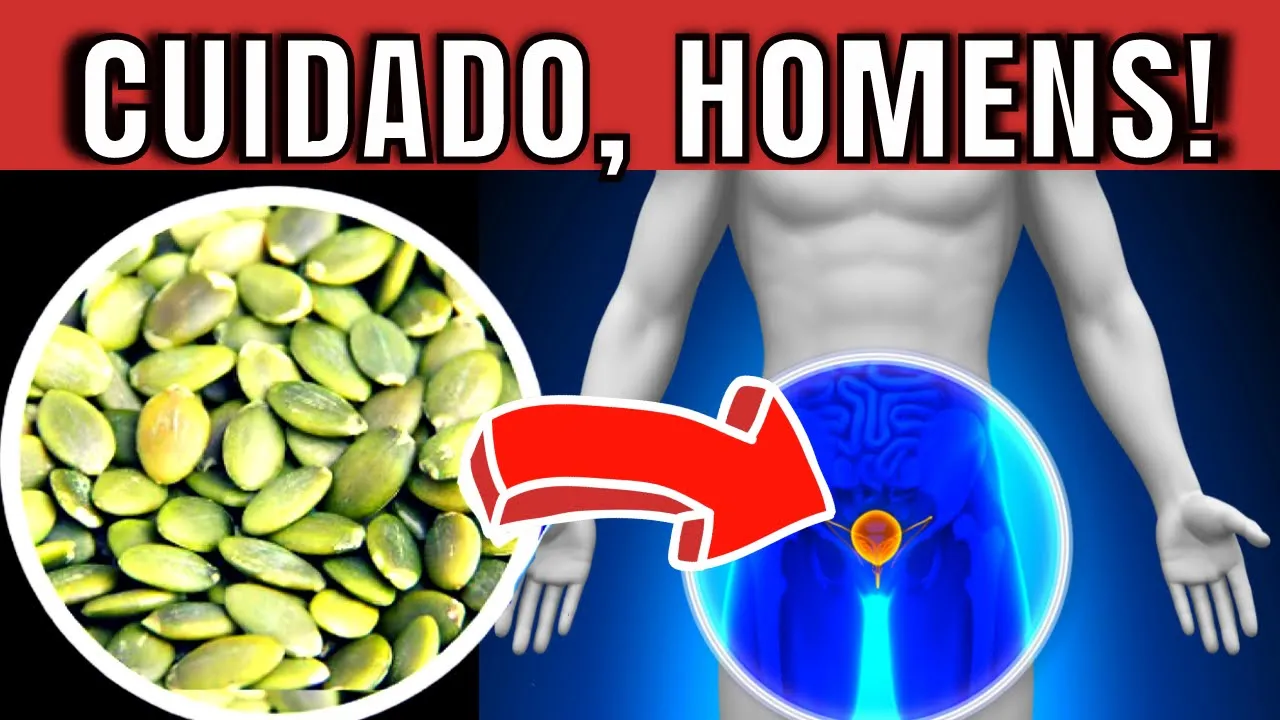
prostate. And what are the 7 foods that can protect your prostate, and in some cases even reduce the size of the prostate? 1st food that can protect your prostate - pumpkin seed A simple, affordable thing that is often wasted.
The person eats the pumpkin and throws away the seeds. Pumpkin seeds have been known in folk medicine as a remedy for kidney, bladder and prostate diseases for centuries. They are rich in zinc.
And normal prostate function depends on optimal zinc levels. In addition, they contain phytosterols, which can help reduce the size of the prostate, and also antioxidants such as vitamin E and carotenoids, which protect the prostate against free radicals. Not to mention that it has diuretic properties, which could help improve urinary flow.
And pumpkin seed oil, in animal studies, may help prevent the multiplication of prostate cells - both in benign prostatic hyperplasia and prostate cancer. Of course, human studies need to be carried out to see if it has real effects, but eating a handful of pumpkin seeds 2-3x a week could help your prostate. 2nd food - tomato Tomato is a fruit rich in lycopene.
Lycopene is a carotenoid, that is, a powerful antioxidant, very important for your prostate. Lycopene is capable of reducing inflammation in this organ. The redder the tomato, the richer it is in lycopene because it accumulates during ripening.
Interestingly, when you cook tomatoes, the bioavailability of lycopene increases, that is, the lycopene from a tomato that is cooked is better absorbed than when the tomato is raw. And also another very important thing is that lycopene is soluble in fats. Therefore, the presence of fat also increases absorption.
That's why a tomato sauce in olive oil that goes well with pasta, or also dried tomatoes, typical of Italian and Mediterranean cuisine, help your prostate. There are studies showing that eating cooked tomatoes can reduce the chances of prostate enlargement by up to 35%. If you don't like tomatoes, other sources of lycopene are watermelon, red guava, papaya and grapefruit, which looks like an orange but is red inside.
Repeating, It is interesting to eat it together with a source of fat, such as olive oil or avocado to improve the absorption of lycopene. A 2020 meta-analysis showed that lycopene can effectively reduce the progression and growth of prostate cancer cells. So, tomato her!
3rd food – cruciferous foods in general – so broccoli, cabbage, cauliflower, Brussels sprouts . They are all rich in sulforaphane. Now, the one that contains the most sulforaphane of all is broccoli sprouts.
Broccoli sprouts can contain more than 200x the sulforaphane as broccoli. But you probably have to plant it at home. It's quick and easy.
I plant here. Sulforaphane is the compound that gives crucifers their superfood properties. It protects your body against various types of cancer -- it increases apoptosis and is antiangiogenic .
. . in addition to being anti-inflammatory, it can improve intestinal health and reduce the chance of Alzheimer's.
It also helps cleanse the body, eliminating toxins from the body. Studies show that eating broccoli regularly can prevent prostate cancer by up to 45%. And unlike tomatoes, the healthiest way is to eat broccoli raw or steamed for a maximum of 5 minutes, not allowing the sulforaphane to be destroyed 4th food- red fruits 0:08:59.
200,1193:02:47. 295 Strawberries, Blackberries, blueberries, raspberries are excellent sources of antioxidants including anthocyanins, quercetin and ellagic acid. In isolation, they all have anti-cancer effects.
Several in vitro and animal studies suggest that compounds in berries may inhibit the growth and proliferation of prostate cancer cells. Berries also have anti-inflammatory properties, and inflammation has been proposed as a possible risk factor for benign prostatic hyperplasia. 5th food - walnuts Walnuts are rich in zinc and selenium, minerals that are extremely important for the functioning of the prostate, while also helping to promote male hormonal balance.
Not to mention that they are sources of omega 3, especially alpha-linolenic acid, which has anti-inflammatory properties, which can be beneficial for prostate health. An animal study found that those fed nuts had much slower prostate cancer tumor growth rates than the control group. 6th mushrooms 0:09:59.
120,1193:02:47. 295 Several types of mushrooms offer protection against prostate enlargement. In particular, shiitake mushrooms are rich in lentinan, which is a beta-glucan, a substance that strengthens immunity.
Other mushrooms that have immunostimulating effects are the sun mushroom, reishi and cooking mushrooms in olive oil will help increase their nutritional value. And look how interesting. A study published in 2019 showed a correlation between regular use of mushrooms and a lower risk of prostate cancer.
Eating 1-3 servings per week reduced the risk by 8% and starting more than 3x per week reduced the risk by 17%. And there is also ongoing research at the National Cancer Institute with mushrooms in patients who have relapsed prostate cancer with a supposed protective effect, due to the activation of the immune system. Of course, the results of the study have to come out and other studies have to replicate the results, but eating mushrooms won't hurt!
7th Saw palmetto Saw palmetto is a palm tree native to the United States. Its fruit was used in indigenous medicine due to its medicinal properties. Saw palmetto is believed to inhibit dihydrotestosterone (DHT) which causes enlargement - similar to the drug finasteride (which treats prostate and hair).
It also has anti-inflammatory effects for the prostate and helps to dilate the urethra and facilitate urination. Its purified extract is consumed, which acts as a true natural medicine. The dose is 160 milligrams twice a day.
Although many studies suggest benefits of saw palmetto for prostate health, others have found no significant effect, being similar to placebo. There is a 2020 study that showed that saw palmetto together with BetaSitosterol (which is present in avocado) has a better effect on prostate health. Of course, none of this works if we don't follow other healthy habits.
What 5 foods should you avoid if you have prostate problems? Best to avoid: First - Ultra-processed foods that are rich in preservatives, colorings, flavorings, bad fats and sugars and low in fiber - those foods that you buy ready-made, just put in the microwave, or packaged snacks, cookies, soft drinks. All of them, in addition to worsening your prostate, harm your body.
Second- Foods rich in sugar and refined carbohydrates. This type of food causes a spike in blood sugar. Your body has to produce more insulin, and over time the body starts to become resistant, less sensitive to insulin.
Excess insulin stimulates the production of sex hormones. These have been found to contribute to the development of prostate cancer. Third- Fried foods and foods rich in saturated fat If you like pastries, ice cream, lots of cheese, full-fat dairy products and red meat, now be careful!
Both trans fat and excess saturated fat lead to inflammation, weight gain, disrupt your sex hormones, and observational studies have found an association between saturated fat consumption and an increased risk of prostate cancer. Therefore, reduce fried foods, red meats, especially those with a lot of fat, and full-fat dairy products. Fourth - alcohol If you consume a lot of alcohol, be aware that it can increase your risk of developing prostate cancer.
A study of more than 10,000 men found that those who drank alcohol excessively had 2x the risk of being diagnosed with advanced prostate cancer than moderate drinkers. Excess alcohol is more than three drinks per day or more than 20 drinks per week. Important for prostate health (and your health in general): You have to do physical exercise - No standing still for a long time.
Try to do at least 150 minutes of physical activity per week, interspersing aerobic exercise and weight training, which will help your testosterone and increase your libido. As I said, you have to eat fruits and vegetables every day. Try to avoid unhealthy fats, but eat fats that are beneficial like avocado, omega 3 that are in fatty fish like sardines, tuna, salmon.
Reduce sugar and alcohol and avoid processed foods. And maintain an ideal weight - as I said, obesity increases the risk of advanced prostate cancer . Did you like the video?
Remember to share so that more people have this knowledge. And what will be the next video you will watch ? I will leave 3 recommendations here: How to increase your body's testosterone naturally How to gain muscle mass after 50 AND 12 SECRETS TO HAVE A YOUNGER AND SHARPER BRAIN My name is André Wambier, cardiologist and this is Cardiodf.
com. br Remember to sign up.