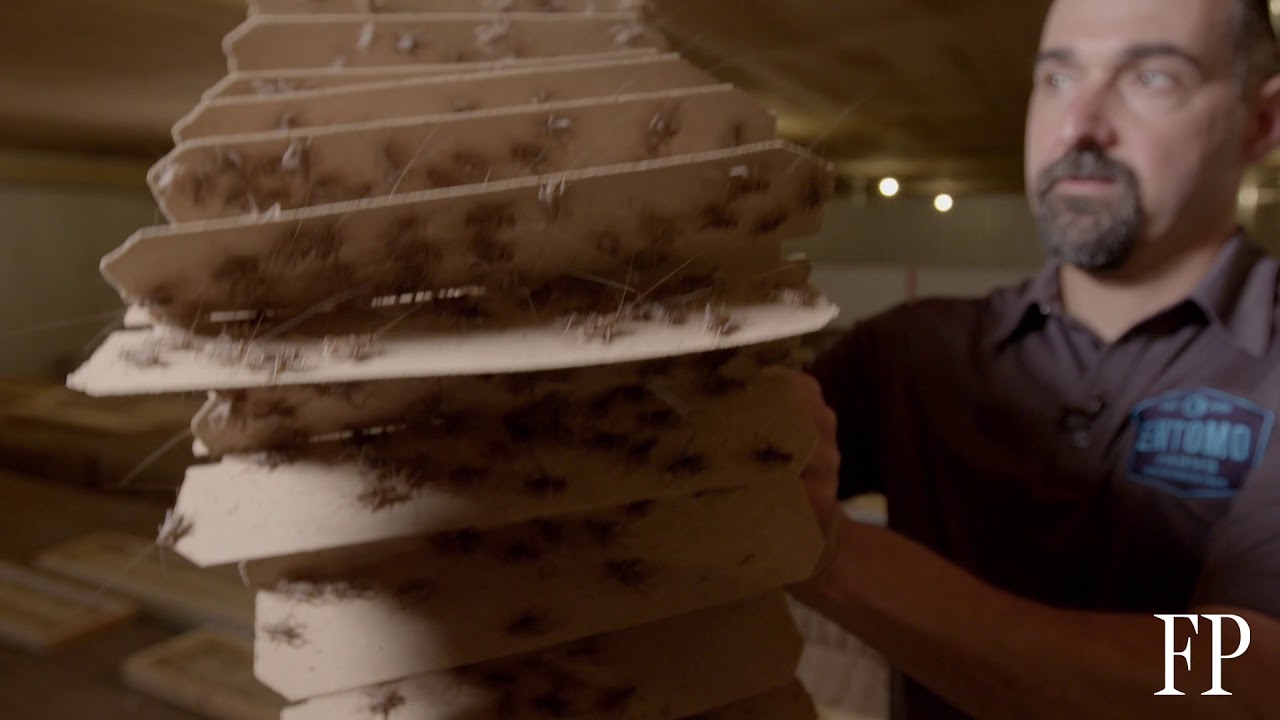
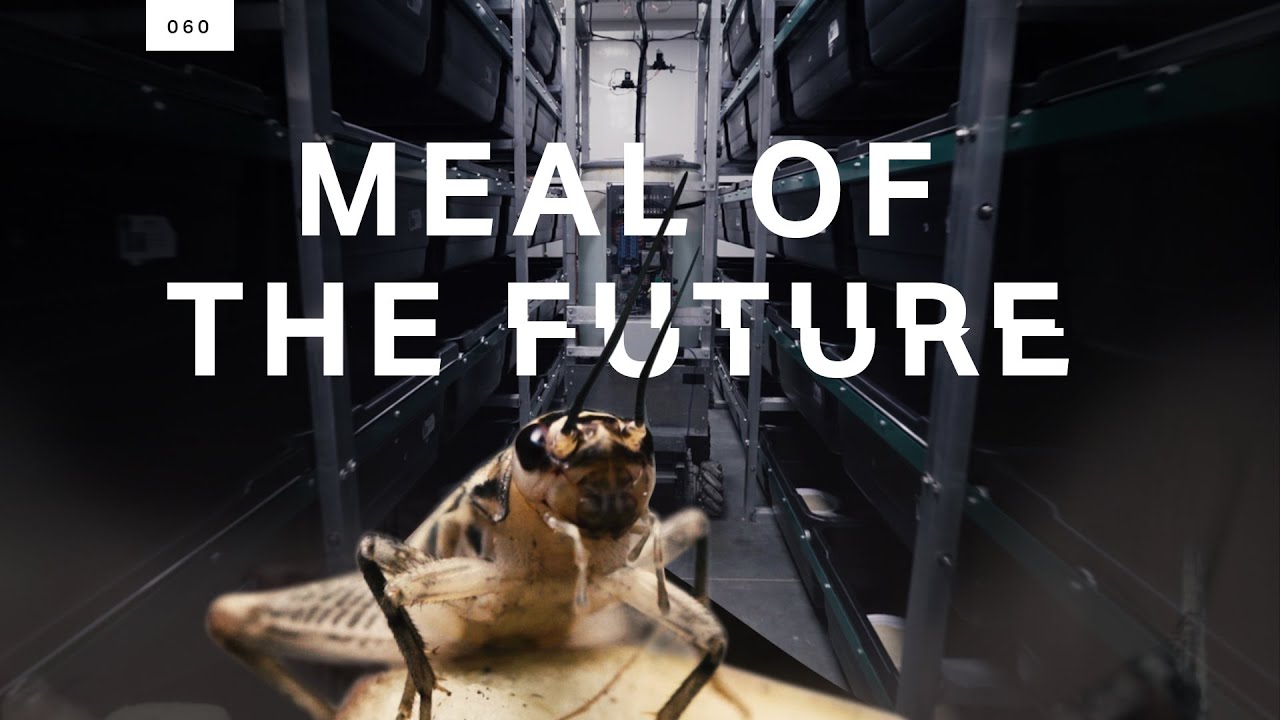
[Music] there are about 15 million crickets in this room here they'll live out their lives freely until they're transformed into food the purpose of the condos is to give the crickets somewhere to live and so generally they are resting inside the condos they'll come up have a drink of water have some food and then go back down to rest again it's difficult to perceive how many crickets are actually in a room like this because of course they were all living inside their happy little condos we just take the condo give it a bang and all
the crickets come out most of these crickets will be milled into a powder that can be used like flour it's good you can't even taste it or you can snack on them whole like chips this one is barbecue flavored though you may be thinking this is a strange choice for food crickets actually contain more protein than beef without any of the environmental damage a lot of manufacturers and entrepreneurs were looking for safer more sustainable protein sources to add to their product and for us it's been quite a boon to our business as a result we
went inside canada's entomo farms to see how they turn crickets from bugs to brunch for most of us crickets are just the soundtrack of our summer nights but darren golden and his brothers thought they could be used to create a new source of sustainable and nutritious food just reimagining how we can feed a population of 9 or 10 billion people on an overcrowded planet now they harvest about 50 million crickets a week and they're aiming to triple production within the year the trickiest thing is that there's no real manual in terms of this kind of
scale and density there's no manual let's figure it out as you go nobody's ever done free-range qriket farming on this kind of a scale before it all starts here where the crew covers boards with a mixture of damp soil and peat moss making mud pies and the pregnant females flock to lay their eggs it may look like just dirt and some grains of rice but actually there's probably thousands and thousands of cricket eggs in there and in this room about 15 million eggs of the 900 different species darren could choose from he chose the tropical
house cricket because of its simple feed requirements it's a cricket that does well in high densities grows really fast and is a super delicious cricket every single part of this cricket is edible plus they have nutrients like fiber iron and calcium after roughly nine days the eggs hatch and they'll hang in the nursery for about two weeks crickets definitely require a nice warm environment being cold-blooded animals their metabolisms controlled by temperatures so if you keep them on the warmer end of their preferred temperature they grow faster and then once they're big enough and ready to
handle life in the big grow room then we transfer them from the nursery into the grow room it only takes a crew of five to maintain this colony of millions the crickets here eat a mixture of corn soy and some flax on average the crickets dine on almost a thousand pounds of feed a day that's often staggering for people because you think of qrikets as such tiny little animals but of course when you got 10 or 15 million of them they consume a fair amount of feed to put it in human terms 15 million crickets
is nearly twice the population of new york city but growing all these crickets is still more sustainable than farming pigs poultry or cattle to produce just one kilogram of kami takes a staggering 22 000 liters of water and to produce that same amount of protein from a cricket only a few hundred liters grown crickets also has other advantages so one of the interesting things about insects is that there's very very few diseases that are transferable from insects to humans which is very different from farming mammals or chickens and crickets do not have any known viruses
or the species that we produce has no known viruses that can affect them and of course certainly no zoonotic viruses or viruses that can cross species the three entomo barns can produce 9 000 pounds of protein a week enough to fill the daily protein requirements of about 80 000 people by and large most of our customers are either integrating it into a finished good like a dog kibble a dog treat or selling it as cricket powder under a different brand or putting it in something like a superfood smoothie mix baking it into other baked goods
and other snacks even their poop is a usable product and as you can see the floor is covered with cricket manure it's called frass and it's a great fertilizer the farm can produce about six thousand pounds of manure per harvest these crickets will live out their full lifespan before they're turned into food so from the time egg hatches to harvest is about six weeks the big difference is that at six weeks a cricket is fully mature it's lived out its life its bred and laid eggs for us and essentially it would be dying within a
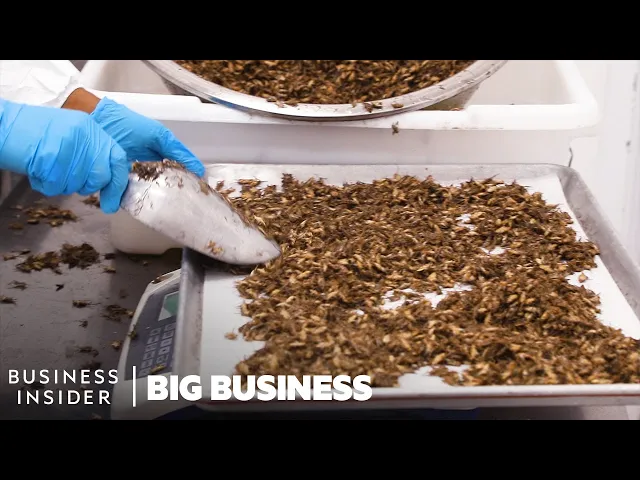
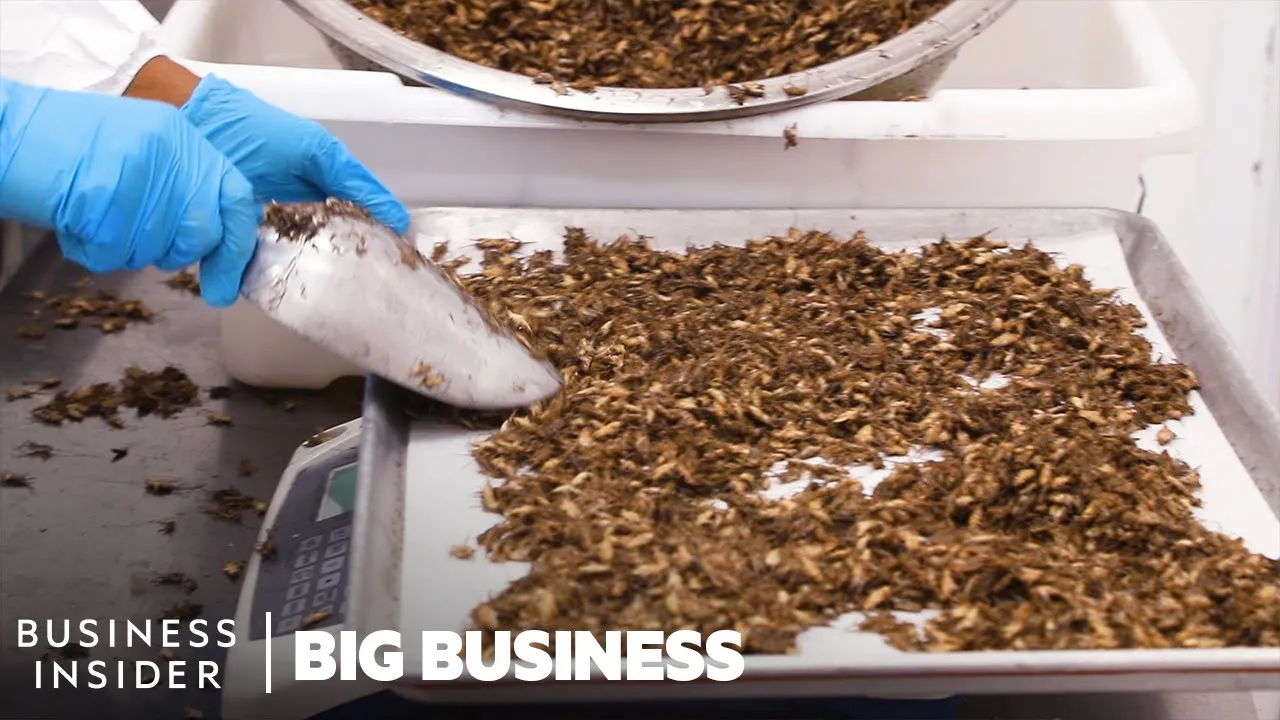
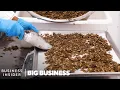
few days anyway and now it's time to see them turned into food so this is our raw receiving room all of the crickets come in from the farm the insects are rinsed and sorted to make sure there's no debris from the farm in the mix next they're evenly spread onto trays and slipped into ovens to roast so in order to make the powder the moisture has to be below a certain percentage we find that if it's above that percentage it's really difficult to grind it while some are left whole and sent for seasoning and packaging
the majority will go into this industrial grinder until they look like coffee it's then manually packed into boxes of 25 pounds each every day they turn 15 000 crickets into 500 pounds of powder the secret sauce is really in the metrics it's in in exactly how your setup is done your ratio of eggs surface area of feed and it's it's kind of like a big giant recipe and everything does have to be perfect for it to function the way that we function but there's still room for improvement right now the process at entimo is mostly
manual and that needs to change if they want to ramp up production and so we're looking at more automated solutions which will allow us to actually produce three to four times what we are capable of doing now entomo farms hopes this will also help bring costs down and make their products more affordable qriket flower sells for roughly twelve dollars for every four ounces which is 45 times the price of all-purpose flour but it's not really the price that's holding back some customers perception in north america around insect as food is certainly a challenge and it's
one that we are striving to rise up against in asia cricket's already a popular food and daryn is confident the appetite for crickets is only going to grow super exciting thing about insect farming is scale up is super fast each cricket lays 600 eggs or so and so in a crisis event if we needed to scale up our production we can do it really really fast