The period immediately following WWII was a period of rebuilding and rebirth, and the injection of investments into the economy was a great boon for the Pharma industry. After Germany’s second defeat in less than 50 years, the leadership of the field, like with most other industrial fields, was taken up by the rising giant of the world economy, the United States. However, important developments also took place in European countries, like the UK and France.
Although some of the programs that bore fruit in the 50s originated from wartime initiatives, many of them were aided by increased post-war investments, major advances in chemistry and biology, and the creation or expansion of national healthcare systems, which made healthcare benefits available to a larger part of the population. Our first story from this era starts in the US and Switzerland. Philip Hench was a US physician working at the Mayo Clinic in Rochester, Minnesota.
Before WWII, he had become intrigued by the fact that patients afflicted by rheumatoid arthritis entered remission upon an attack of jaundice, a condition characterized by a yellowing of the skin and eyes. Jaundice could be induced by administration of small amounts of a hepatotoxin, and the effect was reproducible. Hench became convinced that the body produced a “substance X” under jaundice conditions and that the substance, probably a hormone, was a cure for RA.
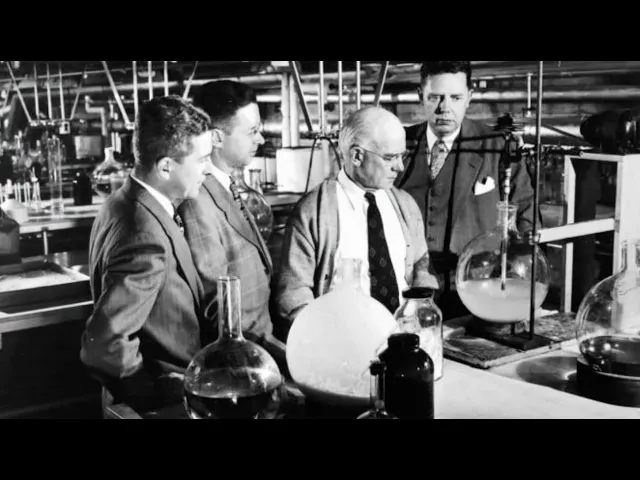
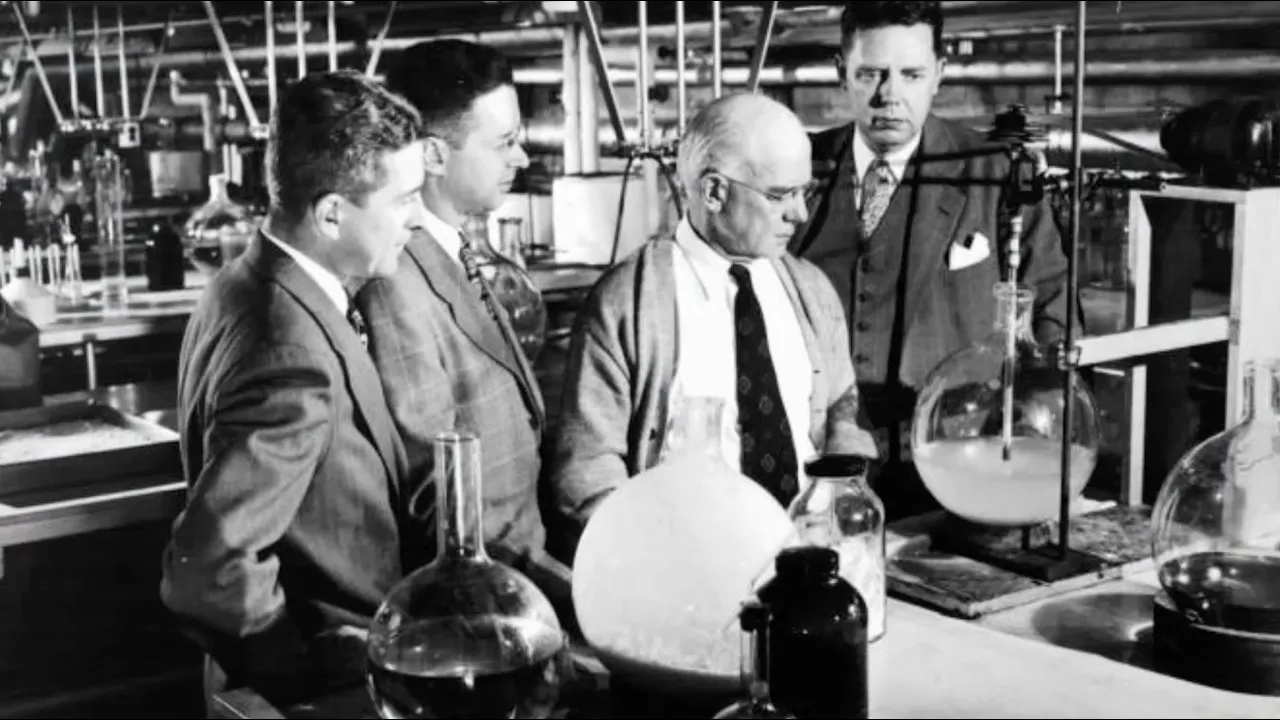
Later he started collaborating with an American chemist at Mayo, Edward Kendall, who had a lot of experience in the isolation of steroid hormones from adrenal glands. These hormones were extracted from bovine adrenal glands, and it took thousands of pounds of organ tissue to isolate a gram or so of the new hormones. It was an excruciatingly long and awful process, but Kendall pressed on.
In the meantime, in Switzerland, Tadeusz Reichstein, a Polish-Swiss chemist, already famous for inventing the first synthesis of Vitamin C, was chasing the same group of substances. The three decided to cooperate and shared details of their isolation methods. During the War, the US government, through the National Research Council, gave top priority to the hormone program, believing that these substances could help alleviate stress in air force pilots flying long routes at high altitudes.
Many Pharma companies received generous federal funds to research these substances, although in the end it turned out that none of the hormones isolated by Kendall had any defense-related applications. After much experimentation, a good candidate for the alleged anti-RA drug emerged. It was nicknamed compound E, but it was available only in minute amounts.
Lewis Sarett, a chemist at Merck, developed a procedure to synthesize the compound, using another steroid that was a main component of bile acids, deoxycholic acid. The synthesis consisted of 37 steps, which is not surprising when you look at the structural differences between cortisone, which was the eventual name chosen for “substance E”, and the starting material, deoxycholic acid. Only the tetracyclic skeleton is the same, but the functionalities are quite different.
After several months of hard work using Sarett’s process, the chemists were able to prepare 100 grams of cortisone. This was a heroic effort, and now the material was plentiful enough to start treating patients. Being that it was 1948, those were the days when it was quite easy to experiment on patients, and the chance presented itself immediately.
When an RA patient at the Mayo Clinic did not respond at all to induced jaundice, Hench and Kendall asked Merck to send 5 grams of cortisone. Merck agreed, and the patient was treated with several 50 milligram doses. Three days later she was dancing around the Mayo clinic, claiming to be a new woman.
After this success, a study on 16 patients followed, and Hench disclosed the results in a press release: all patients were in remission. The result was regarded as one of the greatest scientific discoveries of all time, and just two years later, in 1950, Hench, Kendall, and Reichstein shared the Nobel Prize for Medicine. This discovery also heralded the new field of steroid research and especially steroid chemistry, a veritable gold mine of future drugs.
Of course, the success of the drug and its relative unavailability placed a huge pressure on Merck to produce enough of it to treat patients worldwide, which meant hundreds of kilograms. The process group at Merck, led by the legendary Max Tishler, worked around the clock to make this 37-step synthesis scalable. It was by far the most complex industrial process ever attempted.
The rumor is that one day, wandering around the labs, Tishler noticed a red stain on the floor, probably due to a fraction of bile extracts used for the synthesis that had been spilled. Pointing to the stain, Tishler yelled at the chemist “This had better be your blood! ” After these intense efforts, the process was commercialized and this achievement was probably the one that put the Merck chemistry group on the map as the top lab in the Pharma world.
Those were the romantic old days of passionate drug discovery, defined by the noble ideal of benefitting the health of all humankind. Kendall gave up the rights to all his patents, as he did not feel he should profit from his discoveries. Hench divided up his prize money amongst his lab assistants, and even paid for his ward nurse to travel to Rome and see the Pope.
Of course, the new drug was very costly and exceedingly difficult to produce. Consequently, laboratories around the world were screening for simpler compounds having similar anti-inflammatory effects. This group of compounds is now referred to as Non-Steroidal Anti-Inflammatory Drgs, or NSAIDs.
A young pharmacologist, Stewart Adams, working at Boots Pure Drg Company in the UK, initiated one such program, and screened over 600 candidates. As he tells the story, he would test the most promising compounds on himself. One night, plagued by a terrible hangover and concerned about an important speech scheduled for the next day, he took 600 milligrams of a new experimental substance and he rapidly felt much better.
That substance was Ibuprofen. It was patented in 1962 and commercialized shortly thereafter. It is now generic and has a yearly production volume of 20,000 tons.
Soon other NSAIDs followed the success of ibuprofen, and this is still a critical area of research, now that the popularity of steroids in this field has waned. Other major breakthroughs occurred in the area of psychotic disorders. Until the French Revolution, psychiatric patients in France and most other European countries were locked up in chains under awful conditions.
At the beginning of the 19th century, French psychiatrist Philippe Pinel is credited with the introduction of “moral therapy”, which resulted in the abolition of chains in psychiatric hospitals, and the first attempts to actually treat the psychiatric patients. Still, until the middle of the 20th century, treatments were rudimentary and ineffective, such as electroconvulsive therapy or treatment with non-specific agents like codeine, morphine, or chloral hydrate. Things took a turn in the mid 40s, when chemists at the French pharmaceutical company Rhone-Poulenc started experimenting with phenothiazines.
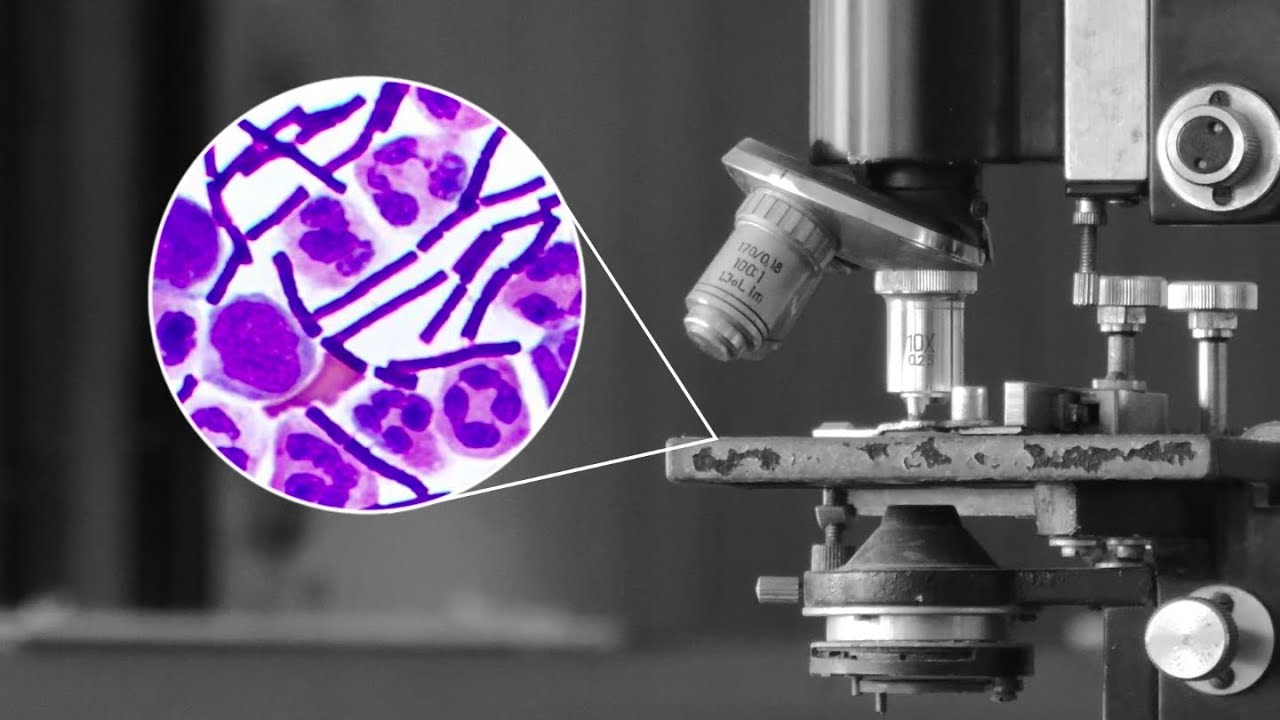
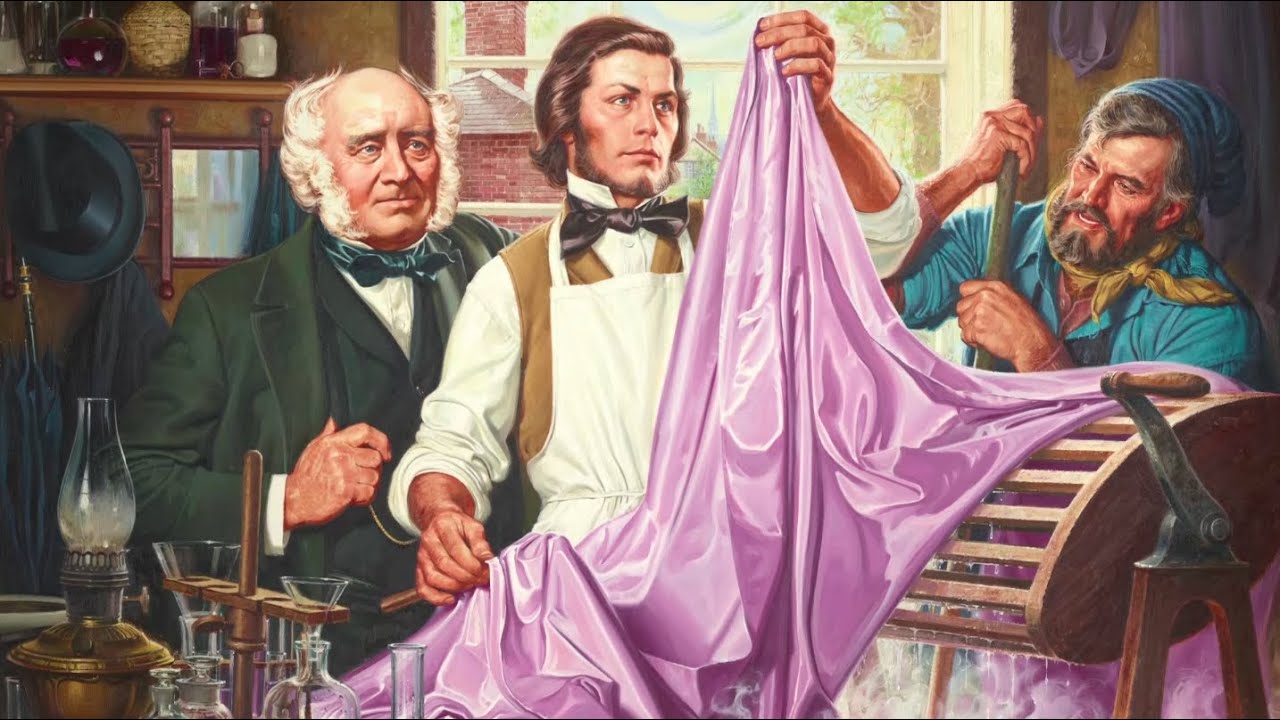
This class of compounds goes back to the early days of dye research at IG Farben. Indeed, the first phenothiazines were prepared as dyes, and found to stain bacteria. They were subsequently explored in Germany as anthelmintics, which are for treating parasitic worms, and antimalarials, which are for treating malaria.
At Rhone-Poulenc, chemists were interested in the antihistaminic properties of certain phenothiazines, which resulted in several market introductions. Given their sedative side effects, some of these compounds ended up being studied in the psychiatric clinic. One particularly interesting compound, RP-4560, later called Chlorpromazine, initially used as an anaesthetic booster during operations, was first tested on a psychotic patient in 1952.
The patient, an extremely agitated psychotic young man, responded well to the treatment, was able to engage in normal activities, and three weeks later was discharged from the clinic. This was an event of historic proportions, and prompted more selective and effective treatments, aided dramatically by developments in receptor research. Chlorpromazine was marketed in 1952 with the brand name Largactil to indicate its broad activity.
The drug has gangliolytic, adrenolytic, antifibrillatory, antipyretic, anticonvulsant, and antiemetic properties, as a result of its non-specific action on dopamine, serotonin, histamine, adrenergic, and muscarinic receptors. Although later drug design has afforded us with more selective receptor agonists and antagonists, Chlorpromazine was a breakthrough therapy which opened the doors to the treatment of psychiatric patients, and the return of many of them to a somewhat normal life. As we recall, the discovery of sulfa drugs in Germany in the 30s sparked the antibiotics revolution.
It was later proposed that sulfonamides interfere with the utilization of para-aminobenzoic acid, an essential bacterial metabolite and component of bacterial cell walls. Thus, sulfonamides were said to be acting as “anti-metabolites”. At Burroughs Wellcome in North Carolina, George Hitchings and Gertrude Elion initiated the search for antimetabolites as a treatment for cancer.
It was known that cells required a steady source of nucleic acids, and that rapidly multiplying cells like cancer cells need larger amounts of them than normal cells. Thus, it seemed possible to synthesize close analogs of purine nucleosides or bases that would mimic the structure of natural purines, but would inhibit their biosynthesis or absorption or integration into nucleic acids. As such, they would act as antimetabolites.
This was a revolutionary idea at the time, one of the first rational approaches to oncology, or tumor treatment, and it slowly bore fruit. The biologists, led by Hitchings, developed an assay to measure a compound’s ability to block purine utilization, while the chemists, led by Elion, prepared a number of purine analogs for testing. In 1951, the group discovered a potent anti-metabolite of adenine, 6-mercaptopurine, and Burroughs-Wellcome marketed this in 1953.
The drug was used against childhood leukemia. With a regime of 6-mercaptopurine and a steroid cocktail, children with leukemia lived on average one year longer, and some even achieved long-term remissions. It was not a cure, but certainly a step forward.
For this breakthrough and many later contributions, Hitchings and Elion received the Nobel Prize for Medicine in 1988. There are certainly many other important drugs which were discovered in the 50s, but we should already sense the unmistakable flavor of an exciting period filled with chemical, biological, and medical breakthroughs. Mankind was beginning to make inroads into diseases that most thought could never be treated.
In addition to curing diseases, chemists and biologists decided to work on drugs that had nothing to do with disease, but rather addressed the prevention of quite normal conditions. It was the beginning of research into the now popular field of “lifestyle drugs”, and this will be the topic of the next tutorial, which will bring us to a most unusual place for medical research: Mexico.